Results by title
1148 books match the query 'Political Ideologies' and 44 start with f
False Black Power?
Jason L. Riley
Templeton Press, 2017
Black civil rights leaders have long supported ethnic identity politics and prioritized the integration of political institutions, and seldom has that strategy been questioned. In False Black Power?, Jason L. Riley takes an honest, factual look at why increased black political power has not paid off in the ways that civil rights leadership has promised.
Recent decades have witnessed a proliferation of black elected officials, culminating in the historic presidency of Barack Obama. However, racial gaps in employment, income, homeownership, academic achievement, and other measures not only continue but in some cases have even widened. While other racial and ethnic groups in America have made economic advancement a priority, the focus on political capital for blacks has been a disadvantage, blocking them from the fiscal capital that helped power upward mobility among other groups.
Riley explains why the political strategy of civil rights leaders has left so many blacks behind. The key to black economic advancement today is overcoming cultural handicaps, not attaining more political power. The book closes with thoughtful responses from key thought leaders Glenn Loury and John McWhorter.

Fare Well, Illyria
David Binder
Central European University Press, 2014
Fascism Comes to America
A Century of Obsession in Politics and CultureBruce Kuklick
University of Chicago Press, 2022
From the time Mussolini took power in Italy in 1922, Americans have been obsessed with and brooded over the meaning of fascism and how it might migrate to the United States. Fascism Comes to America examines how we have viewed fascism overseas and its implications for our own country. Bruce Kuklick explores the rhetoric of politicians, who have used the language of fascism to smear opponents, and he looks at the discussions of pundits, the analyses of academics, and the displays of fascism in popular culture, including fiction, radio, TV, theater, and film. Kuklick argues that fascism has little informational meaning in the United States, but instead, it is used to denigrate or insult. For example, every political position has been besmirched as fascist. As a result, the term does not describe a phenomenon so much as it denounces what one does not like. Finally, in displaying fascism for most Americans, entertainment—and most importantly film—has been crucial in conveying to citizens what fascism is about. Fascism Comes to America has been enhanced by many illustrations that exhibit how fascism was absorbed into the US public consciousness.
Fascism Comes to America
A Century of Obsession in Politics and CultureBruce Kuklick
University of Chicago Press, 2022
A deeply relevant look at what fascism means to Americans.
From the time Mussolini took power in Italy in 1922, Americans have been obsessed with and brooded over the meaning of fascism and how it might migrate to the United States. Fascism Comes to America examines how we have viewed fascism overseas and its implications for our own country. Bruce Kuklick explores the rhetoric of politicians, who have used the language of fascism to smear opponents, and he looks at the discussions of pundits, the analyses of academics, and the displays of fascism in popular culture, including fiction, radio, TV, theater, and film. Kuklick argues that fascism has little informational meaning in the United States, but instead, it is used to denigrate or insult. For example, every political position has been besmirched as fascist. As a result, the term does not describe a phenomenon so much as it denounces what one does not like. Finally, in displaying fascism for most Americans, entertainment—and most importantly film—has been crucial in conveying to citizens what fascism is about. Fascism Comes to America has been enhanced by many illustrations that exhibit how fascism was absorbed into the US public consciousness.
Fascism
Comparison and DefinitionStanley G. Payne
University of Wisconsin Press, 1983
Fascism
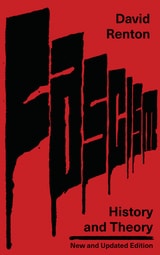
History and TheoryDavid Renton
Pluto Press, 2020
To explain this disturbing trend, David Renton surveys the history of fascism in Europe from its pre-war origins to the present day, examining Marxist responses to fascism in the age of Hitler and Mussolini, the writings of Trotsky and Gramsci and contemporary theorists. Renton theorizes that fascism was driven by the chaotic and unstable balance between reactionary ambitions and the mass character of its support. This approach will arm a new generation of anti-fascists to resist those who seek to re-enact fascism.
Rewritten and revised for the twentieth anniversary of its first publication, Renton's classic book synthesizes the Marxist theory of fascism and updates it for our own times.
Fascism
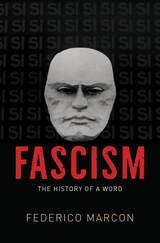
The History of a WordFederico Marcon
University of Chicago Press, 2025
The rise and popular support for authoritarianism around the world and within traditional democracies have spurred debates over the meaning of the term “fascist” and when and whether it is appropriate to use it. The landmark study Fascism: The History of a Word takes this debate further by tackling its most fundamental questions: How did the terms “fascism” and “fascist” come to be in the first place? How and in what circumstances have they been used? How can they be understood today? And what are the advantages (or disadvantages) of using “fascism” to make sense of interwar authoritarianism as well as contemporary politics?
Exploring the writings and deeds of political leaders, activists, artists, authors, and philosophers, Federico Marcon traces the history of the term’s use (and usefulness) in relation to Mussolini’s political regime, antifascist resistance, and the quest of postwar historians to develop a definition of a “fascist minimum.” This investigation of the semiotics of “fascism” also aims to inquire about people’s voluntary renunciation of the modern emancipatory ideals of freedom, equality, and solidarity.

Fatal Strategies
Jean Baudrillard
Pluto Press, 1999

Female Body Image and Beauty Politics in Contemporary Indian Literature and Culture
Edited by Srirupa Chatterjee and Shweta Rao Garg
Temple University Press, 2024
Influences from the colonial period through the age of the internet and globalization have reinforced Eurocentric ideals about femininity and womanhood. This long overdue volume addresses the pressures of beautification that Indian women face as they struggle with body acceptance and are often denied pride in their natural bodies.
Contributors: Annika Taneja, Anurima Chanda, Aratrika Bose, Kavita Daiya, Ketaki Chowkhani, Nishat Haider, Samrita Sinha, Shailendra Kumar Singh, Shubhra Ray, Sucharita Sarkar, Sukshma Vedere, Swatie, Tanupriya, Turni Chakrabarti, and the editors.
Feminist Post-Liberalism
Judith A. Baer
Temple University Press, 2020
Feminism and liberalism need each other, argues Judith Baer. Her provocative book, Feminist Post-Liberalism, refutes both conservative and radical critiques. To make her case, she rejects classical liberalism in favor of a welfare—and possibly socialist—post-liberalism that will prevent capitalism and a concentration of power that reinforces male supremacy. Together, feminism and liberalism can better elucidate controversies in American politics, law, and society.
Baer emphasizes that tolerance and self-examination are virtues, but within both feminist and liberal thought these virtues have been carried to extremes. Feminist theory needs liberalism's respect for reason, while liberal theory needs to incorporate emotion. Liberalism focuses too narrowly on the individual, while feminism needs a dose of individualism.
Feminist Post-Liberalism includes anthropological foundations of male dominance to explore topics ranging from crime to cultural appropriation. Baer develops a theory that is true to the principles of both feminist and liberal ideologies.
Feminist Theory
From Margin to CenterBell Hooks
Pluto Press, 2000

Fiction, Fact and Future
The Essence of EU DemocracyJames Elles
Haus Publishing, 2019
Fidel's Ethics of Violence
The Moral Dimension of the Political Thought of Fidel CastroDayan Jayatilleka
Pluto Press, 2007
This book makes a timely intervention into the question of Castro's historical role and contribution. The author argues that Castro's doctrine of armed struggle is the logical development of his idea of the ethical liberation fighter. At its core is an unremitting emphasis on the ethical use of violence.
Fighting Fascist Spain
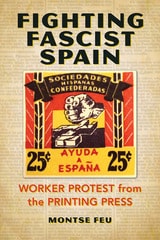
Worker Protest from the Printing PressMontse Feu
University of Illinois Press, 2020
Montse Feu merges España Libre's story with the drama of the Spanish immigrant community's fight against fascism. The periodical emerged as part of a transnational effort to link migrants and new exiles living in the United States to antifascist networks abroad. In addition to showing how workers' culture and politics shaped their antifascism, Feu brings to light creative works that ranged from literature to satire to cartoons to theater. As España Libre opened up radical practices, it encouraged allies to reject violence in favor of social revolution's potential for joy and inclusion.

Film and the Anarchist Imagination
Expanded Second EditionRichard Porton
University of Illinois Press, 2020
First Nationalism Then Identity
On Bosnian Muslims and Their Bosniak IdentityMirsad Kriještorac
University of Michigan Press, 2022
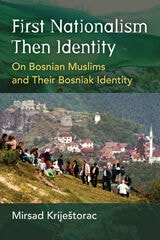
First Nationalism Then Identity focuses on the case of Bosnian Muslims, a rare historic instance of a new nation emerging. Although for Bosnian Muslims the process of national emergence and the assertion of a new salient identity have been going on for over two decades, Mirsad Kriještorac is the first to explain the significance of the whole process and how the adoption of their new Bosniak identity occurred. He provides a historical overview of Yugoslav and Bosnian Slavic Muslims’ transformation into a full-fledged distinct and independent national group as well as addresses the important question in the field of nationalism studies about the relationship between and workings of nationalism and identity. While this book is noteworthy for ordinary readers interested in the case of Bosnian Muslims, it is an important contribution to the scholarly debate on the role of nationalism in the political life of a group and adds an interdisciplinary perspective to comparative politics scholarship by drawing from anthropology, history, geography, and sociology.

Flying Against the Arrow
An Intellectual in Ceausescu's RomaniaHoria-Roman Patapievici
Central European University Press, 2003
The ‘unbearable 80s’, as the last decade of the Ceauşescu era has been called in Romania, are in the focus of this quasi-autobiographical work. The book vividly portrays the difficulties encountered by a young intellectual trying to shape himself under the oppressive regime and provides a stark depiction of a man’s intellectual suffocation under hard-line socialist rule.
Fools' Crusade
Yugoslavia, NATO and Western DelusionsDiana Johnstone
Pluto Press, 2002
Thanks to massive deception and self-deception by media and politicians, even the anti-globalisation movement failed to grasp the implications of the aggressive military globalisation pursued by the United States, from Iraq to Afghanistan and beyond.
In this study, Diana Johnstone identifies the common geopolitical interests running through all these past, present and future military interventions. She argues persuasively that outside intervention creates rather than solves problems and cannot be justified.
Johnstone shows that the 'War in Kosovo' was in reality the model for future destruction of countries seen as potential threats to the hegemony of the 'International Community', led by the United States.
For a Just and Better World
Engendering Anarchism in the Mexican Borderlands, 1900-1938Sonia Hernandez
University of Illinois Press, 2021
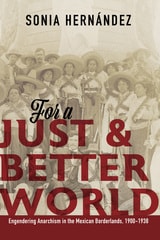
A vivid look at a radical activist and her times, For a Just and Better World illuminates the lives and work of Mexican women battling for labor rights and gender equality in the early twentieth century.
Forsaken Causes
Liberal Democracy and Anticommunism in Cold War LaosRyan Wolfson-Ford
University of Wisconsin Press, 2024
Forsaken Causes offers a groundbreaking intellectual history of the Royal Lao Government (RLG) from 1945 to 1975. In Ryan Wolfson-Ford’s account, the Lao people emerge as not merely pawns of the superpowers but agents in their own right, with the Lao elite wielding particular influence over the nation’s trajectory. Their prevailing ideologies—liberal democracy and anticommunism—were not imposed from outside, but rather established by Lao themselves in the fight against French colonialism. These ideologies were rooted in Lao culture, which prized its traditional monarchy, Buddhist faith, French learning, and nationalist conception of a Lao race. Against histories that have dismissed Lao elites as instruments of foreign powers, Wolfson-Ford shows that the RLG charted its own course, guided by complex motivations, rationales, and beliefs. During this time Lao enjoyed unprecedented democratic freedoms, many of which have not been seen since the government fell to communist takeover in 1975.
By recentering the Lao in their own history, Wolfson-Ford restores our understanding of this robust but often forgotten liberal democracy, recovers lost voices, and broadens our understanding of postcolonial and Cold War Southeast Asia as a whole.

Fractured Politics
Peruvian Democracy Past and PresentEdited by John Crabtree
University of London Press, 2011
Fragile but Resilient?
Turkish Electoral Dynamics, 2002-2015Ali Çarkoglu and Ersin Kalaycioglu
University of Michigan Press, 2021
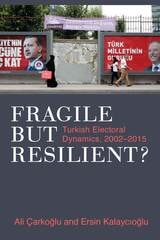
Ersin Kalaycıoğlu and Ali Çarkoğlu, who conducted surveys comparable to the American National Election Survey for the 2002 and 2015 national elections in Turkey, chart the dynamics that brought the pro-Islamist conservative Justice and Development Party (Adalet ve Kalkınma Partisi-AKP) to power in 2002, and that continue to influence electoral politics. The authors trace the uneven course of democratization in Turkey, as revealed through elections, since the first competitive, multi-party elections in 1950. Since the market liberalization reforms of 1980, Turkey has been rapidly evolving from a closed, agricultural, comparatively underdeveloped polity into an open and industrial state primarily integrated with the global economy. Kalaycıoğlu and Çarkoğlu analyze different dimensions of five elections surveys in 2002-2015 period to show how the consequent socio-economic changes and traditional socio-cultural divisions have affected elections, political parties, and individual voters. The authors conclude that the historical-cultural divide between rural, peripheral, conservative groups and more urban, centrist, and modernized groups not only persists but shapes elections more than ever. This book not only provides an original comprehensive and critical evaluation of the Turkish electoral and party politics, it also offers a case study of voting behavior in a state undergoing both democratization and market liberalization in a rapidly changing and volatile international environment.
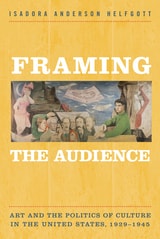
Framing the Audience
Art and the Politics of Culture in the United States, 1929-1945Isadora Helfgott
Temple University Press, 2015
Framing the Audience explores the cultural politics of the Great Depression and World War II through the prism of art appreciation. Isadora Helfgott interrogates the ideological and political motivations for breaking down barriers between fine art and popular culture. She charts the impact that changes in art appreciation had on the broader political, social, cultural, and artistic landscape.
Framing the Audience argues that efforts to expand the social basis of art became intertwined with—and helped shape—broader debates about national identity and the future of American political economy. Helfgott chronicles artists’ efforts toinfluence the conditions of artistic production and display. She highlights the influence of the Federal Art Project, the impact of the Museum of Modern Art as an institutional home for modernism in America and as an organizer of traveling exhibitions, and the efforts by LIFE and Fortune magazines to integrate art education into their visual record of modern life. In doing so, Helfgott makes critical observations about the changing relationship between art and the American public.
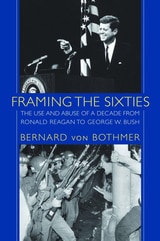
Framing the Sixties
The Use and Abuse of a Decade from Ronald Reagan to George W. BushBernard von Bothmer
University of Massachusetts Press, 2010
Over the past quarter century, American liberals and conservatives alike have invoked memories of the 1960s to define their respective ideological positions and to influence voters. Liberals recall the positive associations of what might be called the “good Sixties”—the “Camelot” years of JFK, the early civil rights movement, and the dreams of the Great Society—while conservatives conjure images of the “bad Sixties”—a time of urban riots, antiwar protests, and countercultural revolt.
In Framing the Sixties, Bernard von Bothmer examines this battle over the collective memory of the decade primarily through the lens of presidential politics. He shows how four presidents—Ronald Reagan, George H. W. Bush, Bill Clinton, and George W. Bush—each sought to advance his political agenda by consciously shaping public understanding of the meaning of “the Sixties.” He compares not only the way that each depicted the decade as a whole, but also their commentary on a set of specific topics: the presidency of John F. Kennedy, Lyndon Johnson's “Great Society” initiatives, the civil rights movement, and the Vietnam War.
In addition to analyzing the pronouncements of the presidents themselves, von Bothmer draws on interviews he conducted with more than one hundred and twenty cabinet members, speechwriters, advisers, strategists, historians, journalists, and activists from across the political spectrum—from Julian Bond, Daniel Ellsberg, Todd Gitlin, and Arthur Schlesinger to James Baker, Robert Bork, Phyllis Schlafly, and Paul Weyrich.
It is no secret that the upheavals of the 1960s opened fissures within American society that have continued to affect the nation's politics and to intensify its so-called culture wars. What this book documents is the extent to which political leaders, left and right, consciously exploited those divisions by “framing” the memory of that turbulent decade to serve their own partisan interests.
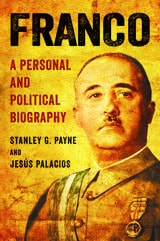
Franco
A Personal and Political BiographyStanley G. Payne and Jesús Palacios
University of Wisconsin Press, 2018
Franco: A Personal and Political Biography depicts his early life, explains his career and rise to prominence as an army officer who became Europe's youngest interwar brigadier general in 1926, and then discusses his role in the affairs of the troubled Second Spanish Republic (1931–36). Stanley G. Payne and Jesús Palacios examine in detail how Franco became dictator and how his leadership led to victory in the Spanish Civil War that consolidated his regime. They also explore Franco's role in the great repression that accompanied the Civil War—resulting in tens of thousands of executions—and examine at length his controversial role in World War II. This masterful biography highlights Franco's metamorphoses and adaptations to retain power as politics, culture, and economics shifted in the four decades of his dictatorship.
Best Books for General Audiences, selected by the American Association of School Librarians
Best Books for General Audiences, selected by the Public Library Reviewers
“An important book, destined to elicit a heated academic debate surrounding the man who ruled Spain for forty years and whose figure still casts a long shadow four decades after his death.”—Journal of Modern History

Frantz Fanon
Philosopher of the BarricadesPeter Hudis
Pluto Press, 2015
With FranzFanon, Peter Hudis presents a penetrating critical biography of the activist’s life and work. Countering the prevailing belief that Fanon’s contributions to modern thought can be wholly defined by an advocacy of violence, Hudis presents his work instead as an integrated whole, showing that its nuances—and thus its importance—can only be appreciated in light of Fanon’s efforts to fuse philosophical theory and actual practice. By taking seriously Fanon’s philosophical and psychological contributions, as well as his political activism, Hudis presents a powerful and perceptive new view of the man and his achievement.
This brief, richly perceptive introduction to Fanon will give new force to his ideas, his life, and his example for people engaged in radical political theory and taking action against oppression around the world today.
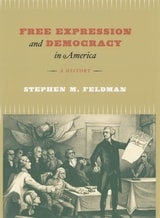
Free Expression and Democracy in America
A HistoryStephen M. Feldman
University of Chicago Press, 2008
Charting the course of free expression alongside the nation’s political evolution, from the birth of the Constitution to the quagmire of the Vietnam War, Stephen M. Feldman argues that our level of freedom is determined not only by the Supreme Court, but also by cultural, social, and economic forces. Along the way, he pinpoints the struggles of excluded groups—women, African Americans, and laborers—to participate in democratic government as pivotal to the development of free expression. In an age when our freedom of speech is once again at risk, this momentous book will be essential reading for legal historians, political scientists, and history buffs alike.
Free Speech and Koch Money
Manufacturing a Campus Culture WarRalph Wilson
Pluto Press, 2021
In recent years hundreds of high-profile ‘free speech’ incidents have rocked US college campuses. Milo Yiannopoulos, Ben Shapiro, Ann Coulter and other right-wing speakers have faced considerable protest, with many being disinvited from speaking. These incidents are widely circulated as examples of the academy’s intolerance towards conservative views.
But this response is not the spontaneous outrage of the liberal colleges. There is a darker element manufacturing the crisis, funded by political operatives, and designed to achieve specific political outcomes. If you follow the money, at the heart of the issue lies the infamous and ultra-libertarian Koch donor network.
Grooming extremist celebrities, funding media platforms that promote these controversies, developing legal organzations to sue universities and corrupting legislators, the influence of the Koch network runs deep. We need to abandon the ‘campus free speech’ narrative and instead follow the money if we ever want to root out this dangerous network from our universities.

Free Spirits
Spiritualism, Republicanism, and Radicalism in the Civil War EraMark A. Lause
University of Illinois Press, 2016
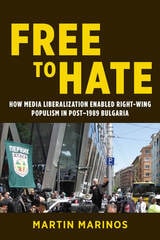
Free to Hate
How Media Liberalization Enabled Right-Wing Populism in Post-1989 BulgariaMartin Marinos
University of Illinois Press, 2023
Bulgaria’s media-driven pivot to right-wing populism parallels political developments taking place around the world. Martin Marinos applies a critical political economy approach to place Bulgarian right-wing populism within the structural transformation of the country’s media institutions. As Marinos shows, media concentration under Western giants like Westdeutsche Allgemeine Zeitung and News Corporation have led to a neoliberal turn of commercialization, concentration, and tabloidization across media. The Right have used the anticommunism and racism bred by this environment to not only undermine traditional media but position their own outlets to boost new political entities like the nationalist party Ataka. Marinos’s ethnographic observations and interviews with local journalists, politicians, and media experts add on-the-ground detail to his account. He also examines several related issues, including the performative appeal of populist media and the money behind it.
A timely and innovative analysis, Free to Hate reveals where structural changes in media intersect with right-wing populism.
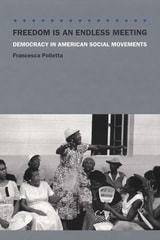
Freedom Is an Endless Meeting
Democracy in American Social MovementsFrancesca Polletta
University of Chicago Press, 2002
Polletta traces the history of democracy in early labor struggles and pre-World War II pacifism, in the civil rights, new left, and women's liberation movements of the sixties and seventies, and in today's faith-based organizing and anti-corporate globalization campaigns. In the process, she uncovers neglected sources of democratic inspiration—Depression-era labor educators and Mississippi voting registration workers, among them—as well as practical strategies of social protest. But Freedom Is an Endless Meeting also highlights the obstacles that arise when activists model their democracies after familiar nonpolitical relationships such as friendship, tutelage, and religious fellowship. Doing so has brought into their deliberations the trust, respect, and caring typical of those relationships. But it has also fostered values that run counter to democracy, such as exclusivity and an aversion to rules, and these have been the fault lines around which participatory democracies have often splintered. Indeed, Polletta attributes the fragility of the form less to its basic inefficiency or inequity than to the gaps between activists' democratic commitments and the cultural models on which they have depended to enact those commitments. The challenge, she concludes, is to forge new kinds of democratic relationships, ones that balance trust with accountability, respect with openness to disagreement, and caring with inclusiveness.
For anyone concerned about the prospects for democracy in America, Freedom Is an Endless Meeting will offer abundant historical, theoretical, and practical insights.
"This is an excellent study of activist politics in the United States over the past century. . . . Assiduously researched, impressively informed by a great number of thoughtful interviews with key members of American social movements, and deeply engaged with its subject matter, the book is likely to become a key text in the study of grass-roots democracy in America."—Kate Fullbrook, Times Literary Supplement
"Polletta's portrayal challenges the common assumption that morality and strategy are incompatible, that those who aim at winning must compromise principle while those who insist on morality are destined to be ineffective. . . . Rather than dwell on trying to explain the decline of 60s movements, Polletta shows how participatory democracy has become the guiding framework for many of today's activists."—Richard Flacks, Los Angeles Times Book Review
"In Freedom Is an Endless Meeting, Francesca Polletta has produced a remarkable work of historical sociology. . . . She provides the fullest theoretical work of historical sociology. . . . She provides the fullest theoretical picture of participatory democracy, rich with nuance, ambiguity, and irony, that this reviewer has yet seen. . . . This wise book should be studied closely by both academics and by social change activists."—Stewart Burns, Journal of American History
Freedom Not Yet
Liberation and the Next World OrderKenneth Surin
Duke University Press, 2009
Surin begins by examining the current regime of accumulation—the global domination of financial markets over traditional industrial economies—which is used as an instrument for the subordination and dependency of poorer nations. He then moves to the constitution of subjectivity, or the way humans are produced as social beings, which he casts as the key arena in which struggles against dispossession occur. Surin critically engages with the major philosophical positions that have been posed as models of liberation, including Derrida’s notion of reciprocity between a subject and its other, a reinvigorated militancy in political reorientation based on the thinking of Badiou and Zizek, the nomad politics of Deleuze and Guattari, and the politics of the multitude suggested by Hardt and Negri. Finally, Surin specifies the material conditions needed for liberation from the economic, political, and social failures of our current system. Seeking to illuminate a route to a better life for the world’s poorer populations, Surin investigates the philosophical possibilities for a Marxist or neo-Marxist concept of liberation from capitalist exploitation and the regimes of power that support it.
Freedom for Publishing, Publishing for Freedom
Timothy Garton Ash
Central European University Press, 1995

Friendship Fictions
The Rhetoric of Citizenship in the Liberal ImaginaryMichael A. Kaplan
University of Alabama Press, 2010
A criticism often leveled at liberal democratic culture is its emphasis on the individual over community and private life over civic participation. However, liberal democratic culture has a more complicated relationship to notions of citizenship. As Michael Kaplan shows, citizenship comprises a major theme of popular entertainment, especially Hollywood film, and often takes the form of friendship narratives; and this is no accident. Examining the representations of citizenship-as-friendship in four Hollywood films (The Big Chill, Thelma & Louise, Lost in Translation, and Smoke), Kaplan argues that critics have misunderstood some of liberal democracy’s most significant features: its resilience, its capacity for self-revision, and the cultural resonance of its model of citizenship.
From Blue to Red
The Rise of the GOP in ArkansasJohn C. Davis
University of Arkansas Press, 2024
John C. Davis’s From Blue to Red: The Rise of the GOP in Arkansas provides a rigorous yet accessible study of this partisan shift, tracking changes in voter preference at the top of the ticket in the 1960s, generational replacement in Arkansas’ political power structure in the 1990s, and the emergence of a more nationalized and polarized electorate in the 2000s, among other developments. From Blue to Red is a fascinating look at how Arkansas went from being one of the country’s most solidly Democratic states to one of its most ardently Republican in just a few years.
From Central Planning to the Market
Transformation of the Czech Economy 1989 – 2004Libor Zidek
Central European University Press, 2018

From East Germans to Germans?
The New Postcommunist ElitesJennifer A. Yoder
Duke University Press, 1999
Although the quick transplant of a ready-made democratic system supported by West German financial backing and expertise provided benefits, problems arose for the development of postcommunist political leadership and for the growth of mass support for the democratic system. Jennifer A. Yoder analyzes the implications of the transition process for democratic legitimation and integration. Based on field research in East Germany that included interviews with parliamentarians, her study addresses issues such as culture, identity, and the lack of continuity between the old and new political elites. Although the availability of West German role models, together with pressure to conform, allowed the process of decommunization to occur much faster than elsewhere in Eastern Europe, the cultural differences between east and west are more extensive and complex than previously assumed. Unification has also been followed by a reinvigoration of regional interests. Yoder shows how some political elites have adopted western German patterns, while others openly criticize many of the practices and policies originating in Bonn and present themselves as democratic alternatives and advocates for East German interests in the new Germany. Indeed, for many East Germans, these new regional elites are regarded as the only representatives of their interests in the western-dominated political system.
Providing insight into elite-building at a time of transition and a valuable alternative to the “institutions versus culture” debate found in traditional analyses of political change, this book will interest political scientists and students and scholars of European politics and German studies.
From Liberal Values to Democratic Transition
Essays in Honor of Janos KisRonald Dworkin
Central European University Press, 2004
From Multiculturalism to Democratic Discrimination
The Challenge of Islam and the Re-emergence of Europe’s NationalismAlberto Spektorowski and Daphna Elfersy
University of Michigan Press, 2020

From Noose to Needle
Capital Punishment and the Late Liberal StateTimothy V. Kaufman-Osborn
University of Michigan Press, 2002
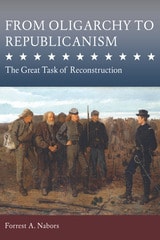
From Oligarchy to Republicanism
The Great Task of ReconstructionForrest A. Nabors
University of Missouri Press, 2026
In From Oligarchy to Republicanism: The Great Task of Reconstruction, Forrest A. Nabors shows that the ultimate goal of the Republican Party, the war, and Reconstruction was the same. This goal was to preserve and advance republicanism as the American founders understood it, against its natural, existential enemy: oligarchy. The principle of natural equality justified American republicanism and required abolition and equal citizenship. Likewise, slavery and discrimination on the basis of color stand on the competing moral foundation of oligarchy, the principle of natural inequality, which requires ranks.
The effect of slavery and the division of the nation into two “opposite systems of civilization” are causally linked. Charles Devens, a lawyer who served as a general in the Union Army, and his contemporaries understood that slavery’s existence transformed the character of political society.
One of those dramatic effects was the increased power of slaveowners over those who did not have slaves. When the slave state constitutions enumerated slaves in apportioning representation using the federal three-fifths ratio or by other formulae, intra-state sections where slaves were concentrated would receive a substantial grant of political power for slave ownership. In contrast, low slave-owning sections of the state would lose political representation and political influence over the state. This contributed to the non-slaveholders’ loss of political liberty in the slave states and provided a direct means by which the slaveholders acquired and maintained their rule over non-slaveholders.
This book presents a shared analysis of the slave South, synthesized from the writings and speeches of the Republicans who served in the Thirty-Eighth, Thirty-Ninth or Fortieth Congress from 1863-1869. The account draws from their writings and speeches dated before, during, and after their service in Congress. Nabors shows how the Republican majority, charged with the responsibility of reconstructing the South, understood the South.
Republicans in Congress were generally united around the fundamental problem and goal of Reconstruction. They regarded their work in the same way as they regarded the work of the American founders. Both they and the founders were engaged in regime change, from monarchy in the one case, and from oligarchy in the other, to republicanism. The insurrectionary states’ governments had to be reconstructed at their foundations, from oligarchic to republican. The sharp differences within Congress pertained to how to achieve that higher goal.

From Politics to the Pews
How Partisanship and the Political Environment Shape Religious IdentityMichele F. Margolis
University of Chicago Press, 2018
Michele F. Margolis offers a bold challenge to the conventional wisdom, arguing that the relationship between religion and politics is far from a one-way street that starts in the church and ends at the ballot box. Margolis contends that political identity has a profound effect on social identity, including religion. Whether a person chooses to identify as religious and the extent of their involvement in a religious community are, in part, a response to political surroundings. In today’s climate of political polarization, partisan actors also help reinforce the relationship between religion and politics, as Democratic and Republican elites stake out divergent positions on moral issues and use religious faith to varying degrees when reaching out to voters.
From Solidarity to Martial Law
The Polish Crisis of 1980–1981The National Security Archive Paczkowski
Central European University Press, 2007

Furnishing Fascism
Modernist Design and Politics in ItalyIgnacio G. Galán
University of Minnesota Press, 2025
The role of modernist interior design in the construction of Italian nationalism
Along with the rise of Mussolini’s fascist regime, the interwar years in Italy also saw the widespread development of its modernist interior design and furnishing practices. While the regime’s politics were overtly manifest in monumental government architecture, Furnishing Fascism examines the subtler yet effective role of household goods and decor in the cultivation of Italy’s exclusionary sense of national identity.
Presenting a fresh look at the work of various architects and designers, including iconic figures such as Gio Ponti and Carlo Enrico Rava, Ignacio G. Galán explores how seemingly neutral products of everyday life contributed to the propagation of fascist ideology. Through extensive promotion in popular magazines and department stores, on the film sets of Cinecittà Studios, and throughout the country’s colonial territories, Italy’s modernist design practices were part of a larger political project that aimed to produce a totalizing image of cultural hegemony.
Interweaving design theory, architectural history, and media scholarship, Furnishing Fascism reexamines the period’s so-called minor arts to reveal the political entanglement of modernism in early twentieth-century Italy and offers valuable insight into the complications of cultural production under the auspices of authoritarian power.
Retail e-book files for this title are screen-reader friendly with images accompanied by short alt text and/or extended descriptions.