Results by title
70 books match the query 'Postmodernism (Literature)' and 5 start with f
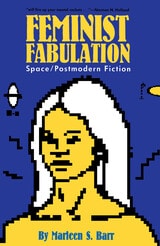
Feminist Fabulation
Space/Postmodern FictionMarleen S. Barr
University of Iowa Press, 1992
The surprising and controversial thesis of Feminist Fabulation is unflinching: the postmodern canon has systematically excluded a wide range of important women's writing by dismissing it as genre fiction. Marleen Barr issues an urgent call for a corrective, for the recognition of a new meta- or supergenre of contemporary writing--feminist fabulation--which includes both acclaimed mainstream works and works which today's critics consistently ignore.
[more]

Fiction, Crime, and Empire
CLUES TO MODERNITY AND POSTMODERNISMJon Thompson
University of Illinois Press, 1993
[more]
Fishing by Obstinate Isles
Modern and Postmodern British Poetry and American ReadersKeith Tuma
Northwestern University Press, 1998
Fishing by Obstinate Isles explores the relations of recent British and American poetries, challenging American views of a British poetry dominated by antimodernism while discussing the role of rhetorics of national identity on both sides of the Atlantic in the persistence of these views. Devoting its most extensive commentary to a collection of British modernist and postmodernist poets, it attacks the relegation of British poetry to the zones of the quaint, making a compelling case for renewed engagements with fields of British poetry deserving of attention.
[more]
Five Strands of Fictionality
The Institutional Construction of Contemporary American FictionDaniel Punday
The Ohio State University Press, 2010
Fictions, we are so often told, are everywhere in America today. The extravagant claims of advertising are everywhere, much of the day’s news concerns “pseudo-events” like rallies or ceremonies staged so that they can be reported on, and philosophers doubt even the possibility of any knowledge being objective. Thus we seem less and less able to distinguish between the real and the invented.
In Five Strands of Fictionality: The Institutional Construction of Contemporary American Fiction, Daniel Punday examines the “postmodern” expansion of fictionality—the feeling today that the line between the real and the invented is harder to draw—and argues that this feeling reflects a struggle by different cultural groups to define how we tell and use “literary” stories. He discusses the literary texts of John Barth, Alice Walker, and Ishmael Reed; paraliterary forms like science fiction and electronic writing; and resolutely nonliterary texts, especially role-playing games, in terms of how each responds to the institution of literature through its definition of fictionality.
For too long, postmodernism has been described by easy generalizations—relativist, indeterminate, commercialized—that have rendered the term nearly worthless. Punday applies a more nuanced understanding of fictionality to a variety of contemporary narrative forms that occupy different locations within postmodern literary culture. Approaching postmodernism as a configuration of institutions that legitimize fictionality, he illuminates the nature of creative writing and the conflicts between different literary groups in America today.
[more]
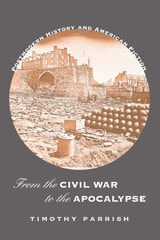
From the Civil War to the Apocalypse
Postmodern History and American FictionTimothy Parrish
University of Massachusetts Press, 2008
Why don't we read novels as if they were histories and histories as if they were novels? Recent postmodern theorists such as Hayden White and Linda Hutcheon have argued that since history is a narrative art, it must be understood as a form of narrative representation analogous to fiction. Yet, contrary to the fears of some historians, such arguments have not undermined the practice of history as a meaningful enterprise so much as they have highlighted the appeal history has as a narrative craft.
In addressing the postmodernist claim that history works no differently than fiction, Timothy Parrish rejects the implication that history is dead or hopelessly relativistic. Rather, he shows how the best postmodern novelists compel their readers to accept their narratives as true in the same way that historians expect their readers to accept their narratives as true. These novelists write history as a form of fiction.
If the great pre-modernist American historians are Francis Parkman, George Bancroft, and Henry Adams, who are the great modernist or postmodernist historians? In the twentieth century, Parrish argues, the most powerful works of American history were written by William Faulkner, Toni Morrison, Thomas Pynchon, Don DeLillo, Joan Didion, and Cormac McCarthy. What survives a reading of these novels is the sense that writers otherwise identified as multicultural or postmodern share the view that nothing matters more than history and what one believes its possibilities to be. In other words, Parrish concludes, history, not identity, is the ground of postmodern American fiction.
[more]