50 books match the query 'Press and politics' and 5 start with f

cover of Fanatics and Fire-eaters: Newspapers and the Coming of the Civil War

Fanatics and Fire-eaters

Newspapers and the Coming of the Civil War

Lorman A. Ratner and Dwight L. Teeter Jr.

University of Illinois Press, 2003

In the troubled years leading up to the Civil War, newspapers in the North and South presented the arguments for and against slavery, debated the right to secede, and in general denounced opposing viewpoints with imagination and vigor. At the same time, new technologies like railroads and the telegraph lent the debates an immediacy that both enflamed emotions and brought the slavery issue into every home. 

Lorman A. Ratner and Dwight L. Teeter Jr. look at the power of America's fast-growing media to influence perception and the course of events prior to the Civil War. Drawing on newspaper accounts from across the United States, the authors look at how the media covered—and the public reacted to—major events like the Dred Scott decision, John Brown's raid on Harper's Ferry, and the election of 1860. They find not only North-South disputes about the institution of slavery but differing visions of the republic itself—and which region was the true heir to the legacy of the American Revolution.
[more]
cover of First Ladies and the Press: The Unfinished Partnership of the Media Age

First Ladies and the Press

The Unfinished Partnership of the Media Age

Maurine H. Beasley

Northwestern University Press, 2005

At her first press conference, Eleanor Roosevelt, uncertain of her role as hostess or leader, passed a box of candied grapefruit peel to the thirty-five women journalists. Nearly sixty years later, Hillary Clinton, an accomplished professional woman and lawyer, tried to mollify her critics by handing out her chocolate-chip cookie recipe. These exchanges tells us as much about the social—and political—roles of women in America as they do about the relation of the first lady to the press and the public. Looking at the personal interaction between each first lady from Martha Washington to Laura Bush and the mass media of her day, Maurine H. Beasley traces the growth of the institution of the first lady as a part of the American political system. Her work shows how media coverage of first ladies, often limited to stereotypical ideas about women, has not adequately reflected the importance of their role.
[more]
cover of Forming the Public: A Critical History of Journalism in the United States

Forming the Public

A Critical History of Journalism in the United States

Frank D. Durham and Thomas P. Oates

University of Illinois Press, 2024

Throughout United States history, journalists and media workers have mobilized to promote and oppose various movements in public life. But a single meaning of the public remains elusive. Frank D. Durham and Thomas P. Oates provide an eye-opening analysis of the role played by journalism in the ongoing struggle to shape and transform ideas about the public. Using historical episodes and news reports, Durham and Oates offer examples of the influential words and images deployed by not only journalists but by media workers and activists. Their analysis moves from the patriot-inflamed emotions of the revolutionary period to the conventional and creative ways the American Indian Movement confronted the mainstream with their grievances.

Weaving eyewitness history through US history, Forming the Public reveals what understanding the journalism landscape can teach us about the nature of journalism’s own interests in race, gender, and class while tracing the factors that shaped the contours of dominant American culture.

[more]
cover of Freedom from the Press: Journalism and State Power in Singapore

Freedom from the Press

Journalism and State Power in Singapore

Cherian George

National University of Singapore Press, 2011
For several decades, the city-state of Singapore has been an international anomaly, combining an advanced, open economy with restrictions on civil liberties and press freedom. Freedom from the Press analyses the republic’s media system, showing how it has been structured ”like the rest of the political framework” to provide maximum freedom of manœuvre for the People's Action Party (PAP) government.
[more]
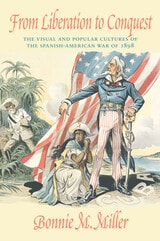
cover of From Liberation to Conquest: The Visual and Popular Cultures of the Spanish-American War of 1898

From Liberation to Conquest

The Visual and Popular Cultures of the Spanish-American War of 1898

Bonnie M. Miller

University of Massachusetts Press, 2011

The American people overwhelmingly supported the nation's entry into the Spanish-American War of 1898, which led to U.S. imperial expansion into the Caribbean and Pacific. In this book, Bonnie M. Miller explores the basis of that support, showing how the nation's leading media makers—editorialists, cartoonists, filmmakers, photographers, and stage performers—captured the public's interest in the Cuban crisis with heart-rending depictions of Cuban civilians, particularly women, brutalized by bloodthirsty Spanish pirates.

Although media campaigns initially advocated for the United States to step in to rescue Cuba from the horrors of colonial oppression, the war ended just months later with the U.S. acquisition of Spain's remaining empire, including Cuba, Puerto Rico, Guam, and the Philippines. President William McKinley heeded the call for war, with the American people behind him, and then proceeded to use the conflict to further his foreign policy agenda of expanding U.S. interests in the Caribbean and Far East.

Miller examines the shifting media portrayals of U.S. actions for the duration of the conflict, from liberation to conquest. She shows how the media capitalized on the public's thirst for drama, action, and spectacle and adapted to emerging imperial possibilities. Growing resistance to American imperialism by the war's end unraveled the consensus in support of U.S policy abroad and produced a rich debate that found expression in American visual and popular culture.
[more]