Results by title
117 books match the query 'Production and direction' and 4 start with f
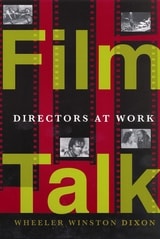
Film Talk
Directors at WorkDixon, Wheeler Winston
Rutgers University Press, 2007
What 1970s Hollywood filmmaker influenced Quentin Tarantino? How have contemporary Japanese horror films inspired Takashi Shimizu, director of the huge box office hit The Grudge? What is it like to be an African American director in the twenty-first century?
The answers to these questions, along with many more little-known facts and insights, can be found in Film Talk, an in-depth, behind-the-scenes look at filmmaking from the 1940s to the present. In eleven intimate and revealing interviews, contemporary film directors speak frankly about their work-their successes and their disappointments, their personal aspirations, struggles, relationships, and the politics that affect the industry.
A medley of directors including those working in pop culture and documentary, as well as feminist filmmakers, social satirists, and Hollywood mavericks recount stories that have never before been published. Among them are Monte Hellman, the auteur of the minimalist masterpiece Two-Lane Blacktop; Albert Maysles, who with his late brother David, created some of the most important documentaries of the 1960s, including Salesman and The Beatles: What's Happening?; Robert Downey Sr., whose social satires Putney Swope and Greaser's Palace paved the way for a generation of filmmakers; Bennett Miller, whose film Capote won an Academy Award in 2005; and Jamie Babbit, a lesbian crossover director whose low-budget film But I'm a Cheerleader! became a mainstream hit.
The candid conversations, complimented by more than fifty photographs, including many that are rare, make this book essential reading for aspiring moviemakers, film scholars, and everyone interested in the how movies are made and who the fascinating individuals are who make them.
[more]
Film as Argument
The Secret to Feature Film StorytellingDarren Paul Fisher
Rutgers University Press, 2025
If you’ve picked up this book, it’s most likely that you have an interest in movies over-and-above the typical audience member. Perhaps a screenwriter, producer or director looking to improve your work, always searching for any insight that will result in better cinematic storytelling. If that’s the case, then good news: this is the book for you. It asks a deceptively straightforward question. Why do we make feature films?
Is it to entertain? To move and audience? To tell a powerful story? For fame and fortune?
You may have answered yes to each, but those answers don’t account for the practice overall. Most books about screenwriting and directing are primarily concerned with craft and technique, but how can you truly understand filmmaking – or make the best films - unless you know what purpose it really serves.
So what’s the secret? As the title of this book suggests, making feature films is fundamentally the practice of making a very specific type of argument. To see how this works, we will deep-dive into how filmmakers are trained and taught to think about filmmaking, and what traditions they knowingly or unknowingly follow. We will look at hundreds of films and some major case studies, including Toy Story 3, Schindler’s List, Raiders of the Lost Ark, Amour, and mother!, to explore how and what films argue, and why knowing this can both unlock both a greater appreciation of the form, and improve the impact your films make.
[more]

Fornes
Theater in the Present TenseDiane Lynn Moroff
University of Michigan Press, 1996
The work of Maria Irene Fornes, author of such acclaimed plays as Fefu and Her Friends, Mud, and The Conduct of Life, has for over three decades earned the attention of theater-goers, scholars and critics. She has won eight Obie awards, has provoked considerable controversy, and has consistently challenged and delighted the reader and spectator with her idiosyncratic voice and her serious and yet profoundly playful approach to the theater and to the issues of humanity, gender politics, and art.
Diane Lynn Moroff focuses on Fornes's major plays, providing illuminating readings of her unique and irreverent body of work. The book traces the career of this influential playwright, director, and teacher, including the reception of her plays, the range of critical responses (particularly those of feminist critics), and an introduction to Fornes's theatrical philosophies. It looks at such critical issues in Fornes's work as the representation of female subjectivity, theater as metaphor and context, art as ritual, and the role of the spectator. In a final chapter, Fornes's plays including Abingdon Square and her most recent work, What of the Night? are examined in the context of the sexualization of character, an ongoing theme for Fornes.
Fornes: Theater in the Present Tense will appeal to scholars and students in theater studies and women's studies and to anyone interested or engaged in contemporary theater.
Diane Lynn Moroff is Assistant Professor of English, Oglethorpe University.
[more]
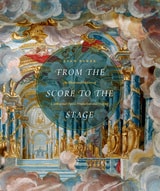
From the Score to the Stage
An Illustrated History of Continental Opera Production and StagingEvan Baker
University of Chicago Press, 2013
Without scenery, costumes, and stage action, an opera would be little more than a concert. But in the audience, we know little (and think less) about the enormous efforts of those involved in bringing an opera to life—by the stagehands who shift scenery, the scenic artists who create beautiful backdrops, the electricians who focus the spotlights, and the stage manager who calls them and the singers to their places during the performance. The first comprehensive history of the behind-the-scenes world of opera production and staging, From the Score to the Stage follows the evolution of visual style and set design in continental Europe from its birth in the seventeenth century up to today.
In clear, witty prose, Evan Baker covers all the major players and pieces involved in getting an opera onto the stage, from the stage director who creates the artistic concept for the production and guides the singers’ interpretation of their roles to the blocking of singers and placement of scenery. He concentrates on the people—composers, librettists, designers, and technicians—as well as the theaters and events that generated developments in opera production. Additional topics include the many difficulties in performing an opera, the functions of impresarios, and the business of music publishing. Delving into the absorbing and often neglected history of stage directing, theater architecture and technology, and scenic and lighting design, Baker nimbly links these technical aspects of opera to actual performances and performers, and the social context in which they appeared. Out of these details arise illuminating discussions of individual productions that cast new light on the operas of Wagner, Verdi, and others.
Packed with nearly two hundred color illustrations, From the Score to the Stage is a revealing, always entertaining look at what happens before the curtain goes up on opening night at the opera house.
[more]