Results by title
322 books match the query 'Regional' and 19 start with f
Field Guide to Amphibians and Reptiles of Illinois
Christopher A. Phillips, John A. Crawford, and Andrew R. Kuhns. Foreword by Ronald A. Brandon
University of Illinois Press, 2022
A one-of-a-kind resource, the Field Guide to Amphibians and Reptiles of Illinois is a definitive guide aimed at biologists, teachers, students, wildlife specialists, natural resource managers, conservationists, law enforcement officials, landowners, hobbyists, and everyone else eager to explore herpetology and nature in the Prairie State.
Field Guide to Coastal Wetland Plants of the Northeastern United States
Ralph W. Tiner
University of Massachusetts Press, 1987
Coastal wetlands are among our most important fish and wildlife habitats. For example, over two-thirds of our recreationally and commercially important marine fishes depend on coastal marshes and associated waters for nursery and spawning grounds.
This book is arranged in four major sections: (1) Coastal Wetland Ecology: A General Overview, (2) Identification of Coastal Wetland Plants, (3) Wetland Plant Descriptions and Illustrations, and (4) Places to Observe Coastal Wetlands, and (5) Sources of Other Information. In addition , a list of references used in preparing this book and a glossary of technical terms are provided.
Field Guide to Wisconsin Grasses
Emmet J. Judziewicz , Robert W. Freckmann, Lynn G. Clark, Merel R. Black
University of Wisconsin Press, 2014
The book includes:
• drawings of most species
• chapters on grass morphology and grasses in natural communities
• keys to all species, including an illustrated key to genera
• a glossary of grass terminology.
Field Guide to Wisconsin Streams
Plants, Fishes, Invertebrates, Amphibians, and ReptilesMichael A. Miller, Katie Songer, and Ron Dolen
University of Wisconsin Press, 2014
More than 1,000 images illustrate the species in this field guide. These images are augmented by detailed ecological and taxonomic notes, descriptions of look-alike species, and distribution maps. The guide identifies:
• more than 130 common plants
• all 120 fishes known to inhabit Wisconsin streams
• 8 crayfishes
• 50 mussels
• 10 amphibians
• 17 reptiles
• 70 families of insects
• other commonly found invertebrates.
Best Regional General Interest Books, selected by the American Association of School Librarians
Best Regional General Interest Books, selected by the Public Library Reviewers
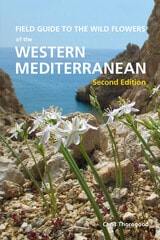
Field Guide to the Wild Flowers of the Western Mediterranean, Second Edition
Chris Thorogood
Royal Botanic Gardens, Kew, 2021
The western Mediterranean—running from Italy to Portugal and encompassing Corsica, Sardinia, the Balearic Islands, and coastal North Africa—is one of the most biodiverse regions in the world, home to more than 10,000 plant species. This updated edition of the Field Guide to the Wild Flowers of the Western Mediterranean is the most comprehensive plant identification guide to the area. Covering more than 2,500 plants, this accessible guide focuses on the most common and conspicuous species that occur in the area, with descriptions, color photographs, and illustrations throughout. The book also includes sections on where to find native plants in the wild, as well as a glossary of terms. An ideal companion for wildlife and plant enthusiasts, this guide will enable even the most botanically blind to reliably identify native flora in the sunny and coastal climes of the western Mediterranean.

Fishes of South Dakota
By Reeve M. Bailey and Marvin O. Allum
University of Michigan Press, 1962
Flora of the Guianas
Series A: Phanerogams Fascicle 30: 139 GentianaceaeEdited by Sylvia Mota de Oliveira
Royal Botanic Gardens, Kew, 2014

Flower Growing in the North
A Month-by-Month GuideGeorge E. Luxton
University of Minnesota Press, 1956
Flower Growing in the North was first published in 1956. Minnesota Archive Editions uses digital technology to make long-unavailable books once again accessible, and are published unaltered from the original University of Minnesota Press editions.
Since home gardeners living in regions of very cold winters and short growing seasons find little attention paid to their special problems in most gardening books, they will welcome this month-by-month guide. It relates times of planting, needs for winter protection, and selection of plant varieties to the limitations of the northern climate. The best of George Luxton's popular gardening columns in the Minneapolis Sunday Tribune form the basis of the book. For the winter season there is advice on the care of house plants and how to grow seedlings for transplanting outdoors. For the summer gardener there is information about annuals and perennials, fertilizers and insecticides, and garden equipment. Instructions on tree, shrub, and lawn care are given, too. Also included are many of the "Grandma sayings" from Mr. Luxton's newspaper columns. These homely bits of garden lore, which stem from his recollections of his own grandmother, are as intriguing and useful today as they were a generation of two ago.
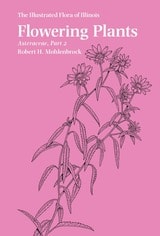
Flowering Plants
Asteraceae, Part 2Robert H. Mohlenbrock
Southern Illinois University Press, 2019
In addition, Mohlenbrock has identified the overall range for each species in Illinois, compiled from various sources, including examinations of herbarium material and Mohlenbrock’s own field studies. The range is given from the northeastern to the northwestern extremities, south to the southwestern limit, and then eastward to the southeastern limit.
As important to amateurs interested in wildflower identification as to botanists and land planners, this second volume of Mohlenbrock’s Asteraceae is an essential addition to the esteemed Illustrated Flora of Illinois series.
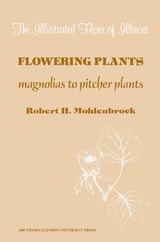
Flowering Plants
Magnolias to Pitcher PlantsRobert H. Mohlenbrock
Southern Illinois University Press, 1981
This volume, the eighth devoted to flowering plants in the Illustrated Flora of Illinois series, is the third of several devoted to dicotyledons, which include such well-known plants as roses, peas, mustards, mints, nightshades, milkweeds, and asters. Mohlenbrock here represents four orders (Annonales, Berberidales, Nymphaeales, and Sarraceniales) and fifteen families of plants. As in previous volumes in this series, the common names are those used locally in Illinois. An illustration of each species depicts the distinguishing features and the habitat in Illinois.
Fluorspar Mining
Photos from Illinois and Kentucky, 1905-1995Herbert K. Russell
Southern Illinois University Press, 2019
This first-ever pictorial record of the people and methods of the Illinois-Kentucky Fluorspar District from the 1900s to the 1990s covers early and modern means of extracting, hoisting, processing, and transporting the mineral from mine mouth to end user. Nearly one hundred images carefully selected by author Herbert K. Russell show early pick-and-shovel extraction and open-flame lighting as well as primitive drilling methods and transportation by barrels, buckets, barges, mule teams, and trams, in addition to the use of modern equipment and sophisticated refinement procedures such as froth flotation. Russell also provides an overview of the many industrial uses of fluorspar, from metal work by ancient Romans to the processing of uranium by scientists seeking to perfect the atomic bomb. Preserving what is known about the industry by miners, managers, and museums, this detailed and fascinating pictorial history looks both above and below ground at fluorspar mining.
Fly Fishing in Fast-Flowing Water
A Coming of Age in Michigan's Upper PeninsulaBruce C. Petersen
Michigan State University Press, 2027
With its rugged forests and swift rivers, Michigan’s Upper Peninsula offers the perfect setting for fly fishing. Following in the footsteps of Ernest Hemingway’s character Nick Adams, Bruce C. Petersen creates a unique coming-of-age memoir that departs from the typical story of growing from teen to adulthood. Instead, Petersen explores his seventh decade, chasing trout in the challenging waters of Northern Michigan while grappling with what it means to grow old. In this absorbing memoir, he relives his most memorable days as a fly fisher and offers thoughtful reflections on the healing power of nature, aging gracefully, and the unstoppable passage of time.
Following Michigan's Ink Trails
Writing Michigan, Reading MichiganDave Dempsey
Michigan State University Press, 2027
Michigan is renowned for its natural beauty and automotive history, yet its rich literary heritage often goes unrecognized. This engaging and extensively researched book aims to change that by providing vivid portraits of both well-known and overlooked authors. It also offers an enjoyable tour through the state’s libraries and bookstores. The book takes readers on a fascinating journey across the back roads and highways of Michigan writing, showcasing the remarkable diversity of authors who have called the state home as well as those who have found it inspirational. It is perfect for anyone interested in reading, Michigan’s literary heritage, and its culture.
Founding Farms
Portraits of Five Massachusetts Family FarmsStanley E. Sherer
University of Massachusetts Press, 1993
With each passing year, the number of family farms in the United States diminishes. Fewer people have the persistence and ingenuity to wrest a livelihood from the land in an era of corporate ownership and mass production. Yet some family farms survive.
Through words and photographs, this book documents the long lives of five of the oldest farms in Massachusetts. Each has remained in the same family for more than two, sometimes three, centuries and each has a distinctive history. The devotion to the land and family heritage is palpable in the stories these five families tell.
Stan Sherer’s remarkable photographs depict the activities of the family members as they go about their daily labors, planting crops, feeding animals, applying new technologies to ancient tasks, and coping with the vagaries of weather and state regulations. Michael E. C. Gery’s narrative traces how the farms began, what has sustained them through the generations, and how the families who run them today feel about their past, present, and future. These stories are told largely through the words of the people themselves.
The result is a complex portrait that moves beyond traditional stereotypes to reveal the realities of family farm life in an increasingly urbanized society.
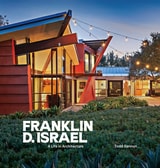
Franklin D. Israel
A Life in ArchitectureTodd Gannon
J. Paul Getty Trust, The, 2024
Acclaimed Los Angeles architect Franklin D. Israel (1945–1996) created innovative residential projects and office interiors that made him one of the most talked-about designers of his generation. In this vivid account, architectural historian Todd Gannon draws on archival resources, analyses of Israel’s buildings, and recent interviews with the architect’s colleagues, clients, and contemporaries, including Frank Gehry, Thom Mayne, and Robert A. M. Stern. Gannon traces Israel’s development from his early years and career on the East Coast to his formative world travels and residence at the American Academy in Rome. The author guides readers through the Los Angeles architectural context, Israel’s influential teaching at UCLA, his dalliance with Hollywood, and the personal motivations behind his architecture and design work—all aspects of an influential career that was cut short by his death from AIDS-related complications at the age of fifty.
Franklin D. Israel is a compelling work of architectural history and biography, chronicling one gay man’s engagement with the largely heteronormative world of American architectural culture. It explores the achievement of this central figure in the still largely unstudied history of late twentieth-century avant-garde Los Angeles architecture.
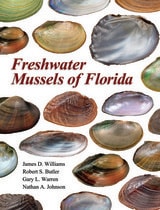
Freshwater Mussels of Florida
James D. Williams, Robert S. Butler, Gary L. Warren, and Nathan A. Johnson
University of Alabama Press, 2014
Each entry in this definitive guide provides a detailed description and multiple depictions of the species as well as select characteristics of its soft anatomy and miscellaneous notes of interest. Individual distribution maps pinpoint the historical and present occurrence of each bivalve species and are just one component of the rich set of 307 mussel and habitat photographs, seventy-four maps, and thirteen tables that illustrate the book. Of particular interest are remarkable electron micrographs of glochidia, the specialized larval life history stage parasitic upon fishes.
Freshwater Mussels of Florida will be of lasting value to state and federal conservation agencies as well as other government and nongovernment entities that manage aquatic resources in Florida. The research provides a key baseline for future study of Florida mussels. The survey results in this guide, along with extensive reviews of historical mussel collections in natural history museums, provide a complete picture of the Florida mussel fauna, past and present.
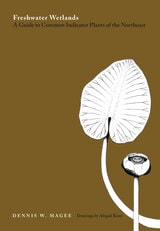
Freshwater Wetlands
A Guide to Common Indicator Plants of the NortheastDennis W. Magee
University of Massachusetts Press, 1981
Following a brief introduction that discusses the functional values of wetlands and describes their various types, the manual is organized into two major components, the first consisting of keys that are based on life form and arrangement of plant parts, the second consisting of a description of each species. Such factors as range, habitat, general characteristics, stem, leaves, inflorescence, fruit, and similar species are covered in the descriptions.

Friendly Fallout 1953
Ann Ronald
University of Nevada Press, 2011
Friendly Fallout 1953 is a hybrid work of literature that combines the actual history of aboveground atomic testing in the Nevada desert in 1953 with fictional vignettes that explore the impact of the tests on the people who participated in them and on civilian "downwinders." The book brings to life a turbulent era when Cold War fears, patriotic enthusiasm, scientific progress, and unacknowledged political agendas often collided with the welfare of ordinary citizens and the environment.

From the Lookout
Memories of Peninsula State Park’s Summer Camp for GirlsKathleen Harris
Wisconsin Historical Society Press, 2020
With big ideas, little money, and no experience, Alice Orr Clark and Frances Louise “Kidy” Mabley founded Meenahga as a place for young women to refine their manners, enjoy outdoor leisure activities, and learn woodcraft. From the Lookout is an account of these experiences, a history of Camp Meenahga informed by what campers, counselors, and others left behind, including letters home, notes from Clark and Mabley, and many pages from the camp yearbook and newsletter Pack and Paddle.
Brimming with nostalgia, From the Lookout brings to life the sights, sounds, and smells of an idyllic summer retreat, one that long after it closed lived on as a place of respite in the memories of those who knew and loved it best.