Results by title
346 books match the query 'Relations' and 12 start with f

FDR's Good Neighbor Policy
Sixty Years of Generally Gentle ChaosBy Fredrick B. Pike
University of Texas Press, 1995
During the 1930s, the United States began to look more favorably on its southern neighbors. Latin America offered expanded markets to an economy crippled by the Great Depression, while threats of war abroad nurtured in many Americans isolationist tendencies and a desire for improved hemispheric relations.
One of these Americans was Franklin Delano Roosevelt, the primary author of America's Good Neighbor Policy. In this thought-provoking book, Fredrick Pike takes a wide-ranging look at FDR's motives for pursuing the Good Neighbor Policy, at how he implemented it, and at how its themes have played out up to the mid-1990s.
Pike's investigation goes far beyond standard studies of foreign and economic policy. He explores how FDR's personality and Eleanor Roosevelt's social activism made them uniquely simpático to Latin Americans. He also demonstrates how Latin culture flowed north to influence U.S. literature, film, and opera. The book will be essential reading for everyone interested in hemispheric relations.
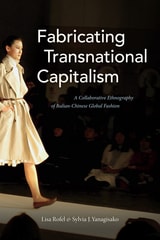
Fabricating Transnational Capitalism
A Collaborative Ethnography of Italian-Chinese Global FashionLisa Rofel and Sylvia J. Yanagisako
Duke University Press, 2018
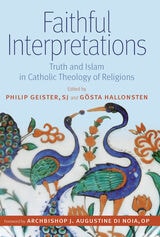
Faithful Interpretations
Truth and Islam in Catholic Theology of ReligionsPhilip Geister
Catholic University of America Press, 2021

Faithful Renderings
Jewish-Christian Difference and the Politics of TranslationNaomi Seidman
University of Chicago Press, 2006
Bringing together central issues in translation studies with episodes in Jewish–Christian history, Naomi Seidman considers a range of texts, from the Bible to Elie Wiesel’s Night, delving into such controversies as the accuracy of various Bible translations, the medieval use of converts from Judaism to Christianity as translators, the censorship of anti-Christian references in Jewish texts, and the translation of Holocaust testimony. Faithful Renderings ultimately reveals that translation is not a marginal phenomenon but rather a crucial issue for understanding the relations between Jews and Christians and indeed the development of each religious community.
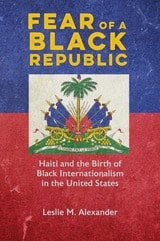
Fear of a Black Republic
Haiti and the Birth of Black Internationalism in the United StatesLeslie M. Alexander
University of Illinois Press, 2023
A bold exploration of Black internationalism’s origins, Fear of a Black Republic links the Haitian revolution to the global Black pursuit of liberation, justice, and social equality.

France and Algeria
A History of Decolonization and TransformationPhillip Naylor
University of Texas Press, 2024
An examination of the complicated history between France and Algeria since the latter’s independence.
While most related studies concentrate on the colonial era and Algeria's War of Independence, France and Algeria details the nations' postcolonial relationship. Phillip Naylor provides a philosophical approach, contending that France reformulated, rather than repudiated, “essential” strategic values during decolonization. It thus continued to pursue grandeur and independence, especially with regard to the Third World and Algeria, an essentialism that expedited France’s postcolonial transformation. But as a new nation, Algeria needed to pursue the “existential” project of self-definition. It became involved in state-building while also promulgating socialism, and it recognized how French oil concessions in the Sahara impeded its independence, leading to the industry's postcolonial decolonization. Finally, the postcolonial relationship has featured a human dimension involving immigrants, pieds-noirs (colonial settlers), and harkis (Algerian soldiers loyal to France), all of them central to bilateral relations.
In this revised and updated edition of his seminal work, first published over twenty years ago, Naylor expands his coverage of the decolonization era, drawing on new information while continuing to study the ever-evolving relationship between the two countries. These new additions expose the continually shifting relations of power, perception, and identity between the two states.

Freedom for Publishing, Publishing for Freedom
Timothy Garton Ash
Central European University Press, 1995

Friends and Relations
A NovelElizabeth Bowen
University of Chicago Press, 2012
In his introduction to a collection of criticism on the Anglo-Irish author Elizabeth Bowen, Harold Bloom wrote, “What then has Bowen given us except nuance, bittersweet and intelligent? Much, much more.” Born in 1899, Bowen became part of the famous Bloomsbury scene, and her novels have a much-deserved place in the modernist canon. In recent years, however, her work has not been as widely read or written about, and as Bloom points out, her evocative and sometimes enigmatic prose requires careful parsing. Yet in addition to providing a fertile ground for criticism, Bowen’s novels are both wonderfully entertaining, with rich humor, deep insight, and a tragic sense of human relationships.
Friends and Relations follows the exploits of four wealthy families whose lives are changed forever by a torrid affair. The Studdart sisters each take a husband; for beautiful Laurel there is Edward Tilney, and for the introverted Janet there is Rodney Meggatt. But the marriages are complicated by changeable passions, and each character must navigate the conflict between familial piety and individual desire. With Bowen’s signature blend of tragedy and comedy, Friends and Relations is truly an investigation into the human heart, and the book is as beautiful, mysterious, and moving as its subject.
Friendship in Islamic Ethics and World Politics
Edited by Mohammad Jafar Amir Mahallati
University of Michigan Press, 2019
Based on a decade of direct diplomatic engagement with the United Nations, a decade of teaching on international relations, and another decade of research and teaching on Islamic and comparative peace studies, this book offers a friendship-related academic framework that examines shared moral concepts, philosophical paradigms, and political experiences that can develop and expand multidisciplinary conversations between the Christian West and the Muslim East. By advancing multicultural and interreligious discourses on friendship, this book helps promote actual friendships among diverse cultures and peoples.
This is not a monologue. It provides a model of conversations among scholars and political actors who come from diverse international and interreligious backgrounds. The word “Islamic” should not mislead the reader to suspect that this edited volume delves only into religious discourses. Rather, it provides a forum for conversations within and between religious and philosophical perspectives. It sparks friendship conversations thematically and through disciplinary and cultural diversity. The result of the work of many prominent international scholars and diplomats over many years, it conveys at least one message clearly: friendship matters for not only our happiness but also for our survival.

From Black to Schwarz
Cultural Crossovers Between African America and GermanyMaria I. Diedrich
Michigan State University Press, 2011
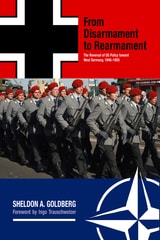
From Disarmament to Rearmament
The Reversal of US Policy toward West Germany, 1946–1955Sheldon A. Goldberg
Ohio University Press, 2017
At the end of World War II, the Allies were unanimous in their determination to disarm the former aggressor Germany. As the Cold War intensified, however, the decision whether to reverse that policy and to rearm West Germany as a bulwark against the Soviet threat led to disagreements both within the US government and among members of the nascent NATO alliance. The US military took the practical view that a substantial number of German troops would be required to deter any potential Soviet assault. The State Department, on the other hand, initially advocated an alternative strategy of strengthening European institutions but eventually came around to the military’s position that an armed West Germany was preferable to a weak state on the dividing line between the Western democracies and the Soviet satellite states.
Sheldon A. Goldberg traces the military, diplomatic, and political threads of postwar policy toward West Germany and provides insights into the inner workings of alliance building and the roles of bureaucrats and military officers as well as those of diplomats and statesmen. He draws on previously unexamined primary sources to construct a cogent account of the political and diplomatic negotiations that led to West Germany’s accession to NATO and the shaping of European order for the next forty years.
Functions of Victorian Culture at the Present Time
Christine L. Krueger
Ohio University Press, 2002