Results by title
4127 books match the query 'Science' and 235 start with f
FISHES OF OHIO
Milton B. Trautman
The Ohio State University Press, 1982
“The objectives of [this] edition are to demonstrate and explain distributional changes from 1750 to 1980, and to provide keys to the 166 species of Ohio fishes. These aims are admirably achieved. The natural factors influencing distribution of fishes are discussed in Part I, which relates the geology, physiography, topography, hydrology, and climatic history of the regions. . . . Part II reviews changes that have occurred from 1750 until 1980, and is an excellent chronicle of modern man's alternation and manipulation of essentially every aquatic ecosystem in Ohio. . . . Part III is a listing of species, synonomy and nomenclatorial history of Ohio’s fishes. . . . Part IV is an informative section of the systematics and nomenclature of fishes that is very useful to beginning students of ichthylogy. The glossary and family and species keys contained in Part V are excellent. Part VI contains the major content of the book, the 166 species accounts. . . .
“The updated range maps, a central focus of Trautman's approach, are excellent and obviously the result of endless efforts. Ohio is one of the most thoroughly surveyed of all states and to translate these data to visual understanding is an unenviable task for which the reader should be deeply appreciative. . . . Also of exceptional quality are the species illustrations originally rendered by Mrs. E. R. Weeks and Trautman himself for the 1957 edition. They are among the best of their kind in a fish reference work, and serve well to facilitate identification of specimens in hand. . . .
“Anyone concerned with or otherwise interested in the fishes, aquatic environments, or general natural history of Ohio or eastern North America should consider this book a valued addition to their library.”
—Ohio Journal of Science
Face/On
Face Transplants and the Ethics of the OtherSharrona Pearl
University of Chicago Press, 2017
The first comprehensive cultural study of face transplant surgery, Face/On reveals our true relationships to faces and facelessness, explains the significance we place on facial manipulation, and decodes how we understand loss, reconstruction, and transplantation of the face. To achieve this, Pearl draws on a vast array of sources: bioethical and medical reports, newspaper and television coverage, performances by pop culture icons, hospital records, personal interviews, films, and military files. She argues that we are on the cusp of a new ethics, in an opportune moment for reframing essentialist ideas about appearance in favor of a more expansive form of interpersonal interaction. Accessibly written and respectfully illustrated, Face/On offers a new perspective on face transplant surgery as a way to consider the self and its representation as constantly present and evolving. Highly interdisciplinary, this study will appeal to anyone wishing to know more about critical interventions into recent medicine, makeover culture, and the beauty industry.
Fact or Fluke?
A Critical Look at Statistical EvidenceRonald Meester
Amsterdam University Press, 2022
Ronald Meester and Klaas Slooten use a variety of examples – from court cases to theoretical physics – to present different views on statistics and provide arguments for what they think is the best point of view. This book is meant for anyone who is in some way concerned with, or interested in, statistical evidence: scientific researchers, students, teachers, mathematicians, philosophers, lawyers, managers, and no doubt many others.

Family Fantasies and Community Space
Aitken, Stuart C
Rutgers University Press, 1998
Family forms are changing rapidly in Western society, and with them, the microenvironments within which men, women, and children live together. Stuart Aitken argues that, whether environment is taken as physical space or as a metaphor for the social, economic, and psychological basis of families, there remains a tendency to keep defining the meaning of families and communities in terms of older, traditional, "imagined," and idealized structures of politics, gender, and geography.
Using the stories of several families in San Diego, Aitken describes geographies of everyday life that contest definitions of cities and communities as mosaics reflecting patterns of social relations. He begins inside the family circle, looking at patriarchal power and the subordination of women, men, and children. Moving beyond the household, he then stresses the importance of place in defining the social and political character of communities and families' interplay within them--whether "communities" are viewed as neighborhoods, towns, or organizations that provide space for fellowship and common purpose. In turn, he shows that as the individual child reaches beyond family life to find a place in these communities, political cultures are reproduced through the child.
Aitken suggests ways in which individual and family identities are complexly intertwined with the cultural politics of communities, cities, and regions. He concludes that family and community spaces reproduce and reconstruct themselves daily according to divisions of race, class, gender, and differential access to housing, work, and child-care.
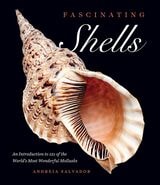
Fascinating Shells
An Introduction to 121 of the World’s Most Wonderful MollusksAndreia Salvador
University of Chicago Press, 2022
Beautiful photographs of stunning shells from London's Natural History Museum, home to one of the most significant and comprehensive collections in the world.
Collected and treasured for their beauty, used in religious rituals, or even traded as currency, shells have fascinated humans for millennia. Ancient and enchanting, dazzling in form and variety, these beautiful objects come from mollusks, one of the most diverse groups in the animal kingdom, including snails, oysters, cuttlefish, and chitons. Soft-bodied, these creatures rely on shells for protection from enemies and their environments, from snowy mountains to arid deserts, in deep-sea hydrothermal vents and the jungles of the tropics, on rocky shores, and in coral reefs.
In this book, mollusk expert Andreia Salvador profiles some of the world’s most beautiful and quirky shells, each selected from the more than eight million specimens held in the collection at London’s Natural History Museum. We lock eyes with the hundred-eyed cowry, named after "the all-seeing one," the giant Argus Panoptes of Greek mythology. We see how shells' appearances translate into defense strategies, as with the zigzag nerite, which varies its patterning to deceive and confuse predators. And we meet shell inhabitants, such as the amber snail, which eats earthworms by sucking them up like spaghetti. Reproduced in full color and striking detail, these shells have much to reveal about the history of collecting, the science of taxonomy, and the human desire to understand the natural world.
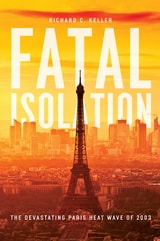
Fatal Isolation
The Devastating Paris Heat Wave of 2003Richard C. Keller
University of Chicago Press, 2015
Fatal Isolation tells the stories of these victims and the catastrophe that took their lives. It explores the multiple narratives of disaster--the official story of the crisis and its aftermath, as presented by the media and the state; the life stories of the individual victims, which both illuminate and challenge the ways we typically perceive natural disasters; and the scientific understandings of disaster and its management. Fatal Isolation is both a social history of risk and vulnerability in the urban landscape and a story of how a city copes with emerging threats and sudden, dramatic change.

Father Benito Viñes
The 19th-Century Life and Contributions of a Cuban Hurricane Observer and ScientistLuis E. Ramos Guadalupe
American Meteorological Society, 2014
Father Benito Viñes is a fascinating look at the life of a man who worked on the cutting edge of weather science while still remaining devoted to his religious life. It explores Viñes as both pioneer in the study of tropical meteorology and a colonial Jesuit priest. With notes that put his life into modern context, this book puts a much deserved spotlight on a figure who played a crucial role in making our lives safer.
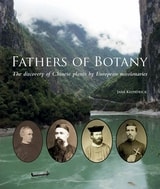
Fathers of Botany
The Discovery of Chinese Plants by European MissionariesJane Kilpatrick
Royal Botanic Gardens, Kew, 2014
But as Jane Kilpatrick shows in Fathers of Botany, the first Westerners to come upon and document this bounty were in fact cut from a different cloth: the clergy. Following the Opium Wars, European missionaries were the first explorers to dig further into the Chinese interior and send home evidence of one of the richest and most varied floras ever seen, and it was their discoveries that caused a sensation among Western plantsmen. Both men of faith and talented botanists alike, these missionaries lent their names to many of the plants they discovered, but their own stories disappeared into the leaf litter of history. Drawing on their letters and contemporary accounts, Kilpatrick focuses on the lives of four great French missionary botanists—Pères Armand David (of Davidia involucrata—the dove tree—and discoverer of the giant panda), Jean Marie Delavay, Paul Guillaume Farges, and Jean André Soulié—as well as a group of other French priests, Franciscan missionaries, and a single German Protestant pastor who all amassed significant plant collections, as she unearths a lost chapter of botanical history. In so doing, she reminds today’s gardeners and botanists—and any of us who stop to smell the roses—of the enormous debt owed to these obscure fathers of botany.
Fear of Food
A History of Why We Worry about What We EatHarvey Levenstein
University of Chicago Press, 2012
Fear of a Dead White Planet
More Worlds Collective. Joseph Masco, Tim Choy, Jake Kosek, M. Murphy
Duke University Press, 2025

Feeding Strategy
Jennifer Owen
University of Chicago Press, 1982
Among both plants and animals elaborate strategies have evolved for exploring the surrounding life as food. The feeding behavior of predators is based on a search and strike strategy. In contrast, grazers live surrounded by their food and are relatively immobile. Such animals as impalas and grasshoppers, whose persistent feeding make them ready prey, have evolved means of avoiding the notice of predators or methods of speedy escape. Plants that digest animal tissue have evolved complex and devious means to attract prey.
The variations in style of these feeding encounters and the precision involved in some of the feeding mechanisms are the themes of Feeding Strategy.
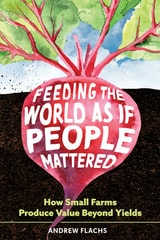
Feeding the World as if People Mattered
How Small Farms Produce Value Beyond YieldsAndrew Flachs
University of Arizona Press, 2026
The dominant view of agriculture has focused only on what we produce. It sees value in terms of capital gains or yield efficiency, masking how our global food system produces tremendous amounts of food commodities while failing to feed people, support rural communities, or enhance ecological well-being. Feeding the World as if People Mattered asks us to look more deeply and more humanely at what we perceive to be most valuable in our agricultural systems.
This book draws on fifteen years of anthropological research, taking readers to fields in South India, Eastern Europe, and North America, where people are already feeding the future amid global change. From these fields, Flachs shows us how a radical rethinking of the value of small farms and farmers is already happening. Bringing together conversations in agriculture, economics, anthropology, and the environmental humanities, Flachs deftly shows how small farms reproduce social and ecological relationships that are the only sustainable path forward.
For anyone who is curious about the food on their plate and the people who helped to get it there, Feeding the World as if People Mattered will offer a new way to find value in the food we grow and the people who grow it.

Feminism and the Biological Body
Birke, Lynda
Rutgers University Press, 2000
What is a body? What are our perceptions of our inner bodies? How are these perceptions influenced?
In recent years, thinking about the body has become highly fashionable. However, the renewed focus, while certainly welcome, seems to always end at the corporeal surface. While recent sociological and feminist theory has made important claims about the process of cultural inscription on the body, and about the cultural representation of the body, what actually appears in this new theory seems to be, ironically, disembodied. If this newly theorized form has interiority, it is one that is explained predominantly through psychoanalysis. The physiological processes remain a mystery to be explained, if at all, only in the esoteric language of biomedicine.
As a trained biologist, Lynda Birke was frustrated by the gap between feminist cultural analysis and her own scientific background. In this book, she seeks to bridge this gap using ideas in anatomy and physiology to develop the feminist view that the biological body is socially and culturally constructed. Birke rejects the assumption that bodily function is somehow fixed and unchanging, claiming that biology offers more than just a deterministic narrative of how nature works. Feminism and the Biological Body brings natural science and feminist theory together and suggests that we need a new politics that includes, rather than denies, our flesh.

Feminism in Twentieth-Century Science, Technology, and Medicine
Edited by Angela N. H. Creager, Elizabeth Lunbeck, and Londa Schiebinger
University of Chicago Press, 2001
Contributors:
Ruth Schwartz Cowan
Linda Marie Fedigan
Scott Gilbert
Evelynn M. Hammonds
Evelyn Fox Keller
Pamela E. Mack
Michael S. Mahoney
Emily Martin
Ruth Oldenziel
Nelly Oudshoorn
Carroll Pursell
Karen Rader
Alison Wylie
Feminist Rhetorical Science Studies
Human Bodies, Posthumanist WorldsEdited by Amanda K. Booher and Julie Jung
Southern Illinois University Press, 2018
Each essay addresses a question: How can feminist rhetoricians of science engage responsibly with emerging theories of the posthuman? Some contributors respond with case studies in medical practice (fetal ultrasound; patient noncompliance), medical science (the neuroscience of sex differences), and health policy (drug trials of the U.S. Food and Drug Administration); others respond with a critical review of object-oriented ontology and a framework for researching women technical writers in the workplace. The contributed essays are in turn framed by a comprehensive introduction and a final chapter from the editors, who argue that a key contribution of feminist posthumanist rhetoric is that it rethinks the agencies of people, things, and practices in ways that can bring about more ethical human relations.
Individually the contributions offer as much variety as consensus on matters of methodology. Together they demonstrate how feminist posthumanist and materialist approaches to science expand our notions of what rhetoric is and does, yet they manage to do so without sacrificing what makes their inquiries distinctively rhetorical.
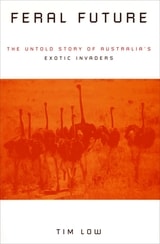
Feral Future
The Untold Story of Australia's Exotic InvadersTim Low
University of Chicago Press, 2002
Australia is far from alone in facing horrific ecological and economic damage from invading plants and animals, and in Low's capable hands, Australia's experiences serve as a wake-up call for all of us. He covers how invasive species like cane toads and pond apple got to Australia (often through misguided but intentional introductions) and what we can do to stop them. He also covers the many pests that Australia has exported to the world, including the paperbark tree (Melaleuca) that infests hundreds of thousands of acres in south Florida.
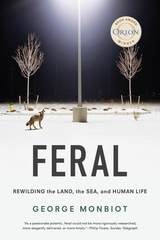
Feral
Rewilding the Land, the Sea, and Human LifeGeorge Monbiot
University of Chicago Press, 2014
So what if we stopped hedging? What if we grounded our efforts to solve environmental problems in hope instead, and let nature make our case for us? That’s what George Monbiot does in Feral, a lyrical, unabashedly romantic vision of how, by inviting nature back into our lives, we can simultaneously cure our “ecological boredom” and begin repairing centuries of environmental damage. Monbiot takes readers on an enchanting journey around the world to explore ecosystems that have been “rewilded”: freed from human intervention and allowed—in some cases for the first time in millennia—to resume their natural ecological processes. We share his awe, and wonder, as he kayaks among dolphins and seabirds off the coast of Wales and wanders the forests of Eastern Europe, where lynx and wolf packs are reclaiming their ancient hunting grounds. Through his eyes, we see environmental success—and begin to envision a future world where humans and nature are no longer separate and antagonistic, but are together part of a single, healing world.
Monbiot’s commitment is fierce, his passion infectious, his writing compelling. Readers willing to leave the confines of civilization and join him on his bewitching journey will emerge changed—and ready to change our world for the better.

Fermi Remembered
Edited by James W. Cronin
University of Chicago Press, 2004
Born out of a symposium held to commemorate the hundredth anniversary of Fermi's birth, Fermi Remembered combines essays and newly commissioned reminiscences with private material from Fermi's research notebooks, correspondence, speech outlines, and teaching to document the profound and enduring significance of Fermi's life and labors. The volume also features extensives archival material—including correspondence between Fermi and biophysicist Leo Szilard and a letter from Harry Truman—with new introductions that provide context for both the history of physics and the academic tradition at the University of Chicago.
Edited by James W. Cronin, a University of Chicago physicist and Nobel laureate himself, Fermi Remembered is a tender tribute to one of the greatest scientists of the twentieth century.
Contributors:
Harold Agnew
Nina Byers
Owen Chamberlain
Geoffrey F. Chew
James W. Cronin
George W. Farwell
Jerome I. Friedman
Richard L. Garwin
Murray Gell-Mann
Maurice Glicksman
Marvin L. Goldberger
Uri Haber-Schaim
Roger Hildebrand
Tsung Dao Lee
Darragh Nagle
Jay Orear
Marshall N. Rosenbluth
Arthur Rosenfeld
Robert Schluter
Jack Steinberger
Valentine Telegdi
Al Wattenberg
Frank Wilczek
Lincoln Wolfenstein
Courtenay Wright
Chen Ning Yang
Gaurang Yodh
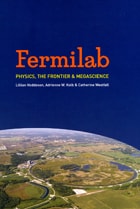
Fermilab
Physics, the Frontier, and MegascienceLillian Hoddeson, Adrienne W. Kolb, and Catherine Westfall
University of Chicago Press, 2008
Fermi National Accelerator Laboratory, located in the western suburbs of Chicago, has stood at the frontier of high-energy physics for forty years. Fermilab is the first history of this laboratory and of its powerful accelerators told from the point of view of the people who built and used them for scientific discovery.
Focusing on the first two decades of research at Fermilab, during the tenure of the laboratory’s charismatic first two directors, Robert R. Wilson and Leon M. Lederman, the book traces the rise of what they call “megascience,” the collaborative struggle to conduct large-scale international experiments in a climate of limited federal funding. In the midst of this new climate, Fermilab illuminates the growth of the modern research laboratory during the Cold War and captures the drama of human exploration at the cutting edge of science.
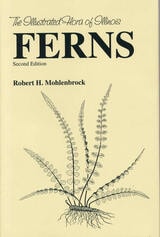
Ferns
Robert H. Mohlenbrock
Southern Illinois University Press, 1999
Perhaps no other group of plants attracts more interest among both professional and amateur botanists than ferns. As early as 1846, when one of the first lists of Illinois plants was published, sixteen species of ferns were already known in the state. The longtime interest of a great many people makes the distribution of ferns better known than that of any other group of plants in Illinois.
This detailed account of ferns and fern-allies was first published in 1967 as the first volume in the series The Illustrated Flora of Illinois. Eminent botanist Robert H. Mohlenbrock has now revised Ferns to include twenty-five additional taxa of ferns that have since been discovered in Illinois. In addition, numerous nomenclatural changes have occurred for plants already known in the state.
The introductory information of Ferns includes discussions of the morphology and life history of the ferns and fern-allies, the taxonomic history of the group in Illinois, and the habitats where they can be found.
The semitechnical keys and descriptions, familiar to the professional botanist, have been simplified for the novice and are accompanied by a glossary and a profuse use of illustrations. A new key has been included for the additional ferns. Two general keys enable the reader to identify the order and the genus of the fern or fern-ally in question. One of these is designed for use with specimens that have sporangia; the other is for use with sterile specimens. The keys are composed of a hierarchy of characteristics for determining the order, family, and genus of any given specimen. Once a genus is ascertained, the reader can apply its key to more than one species of the same genus.
Each species has its own description, statement of habitat and range, Illinois distribution, map, discussion, synonymy, and full-page line illustration showing its diagnostic characteristics.
Fi-Sci
Avatars of Science in FictionRhona Trauvitch
The Ohio State University Press, 2026
In Fi-Sci, Rhona Trauvitch melds literary and scientific thought to advance a theory of how narrative, and specifically fictionality, is one of the most powerful tools we have for understanding science, particularly those concepts that defy imagination. Centering her argument on a rhetorical approach to fictionality, she proposes that fiction uniquely offers a means of conceptualizing and understanding perplexing and counterintuitive scientific phenomena, such as recombinant DNA or quantum superposition: Through finding analogous patterns in fiction, we can open up new pathways to understanding. Put another way, our abilities to perceive strange and confounding science phenomena are bolstered and even enabled by our experiences with fiction.
Drawing on a range of theorists such as James Phelan, Gérard Genette, Erwin Schrödinger, and others in her analysis of texts by Jorge Luis Borges, Julio Cortázar, Ursula K. Le Guin, Richard Powers, and many more, Trauvitch shows how literary forms—such as metafiction, metalepsis, and recursion—mirror and clarify complex scientific concepts including genetics, spacetime curvature, and quantum mechanics. In this way, she shows us how fiction is key to unlocking conceptual access to the indiscernible and inconceivable.

Fictions of Certitude
Science, Faith, and the Search for Meaning, 1840–1920John S. Haller Jr.
University of Alabama Press, 2020
The search for belief and meaning among nineteenth-century intellectuals
The nineteenth century’s explosion of scientific theories and new technologies undermined many deep-seated beliefs that had long formed the basis of Western society, making it impossible for many to retain the unconditional faith of their forebears. A myriad of discoveries—including Faraday’s electromagnetic induction, Joule’s law of conservation of energy, Pasteur’s germ theory, Darwin’s and Wallace’s theories of evolution by natural selection, and Planck’s work on quantum theory—shattered conventional understandings of the world that had been dictated by traditional religious teachings and philosophical systems for centuries.
Fictions of Certitude: Science, Faith, and the Search for Meaning, 1840–1920 investigates the fin de siècle search for truth and meaning in a world that had been radically transformed. John S. Haller Jr. examines the moral and philosophical journeys of nine European and American intellectuals who sought deeper understanding amid such paradigmatic upheaval. Auguste Comte, John Henry Newman, Herbert Spencer, Alfred Russel Wallace, Thomas Henry Huxley, John Fiske, William James, Lester Frank Ward, and Paul Carus all belonged to an age in which one world was passing while another world that was both astounding and threatening was rising to take its place.
For Haller, what makes the work of these nine thinkers worthy of examination is how they strove in different ways to find certitude and belief in the face of an epochal sea change. Some found ways to reconceptualize a world in which God and nature coexist. For others, the challenge was to discern meaning in a world in which no higher power or purpose can be found. As explained by D. H. Meyer, “The later Victorians were perhaps the last generation among English-speaking intellectuals able to believe that man was capable of understanding his universe, just as they were the first generation collectively to suspect that he never would.”
Fictions of the Cosmos
Science and Literature in the Seventeenth CenturyFrédérique Aït-Touati
University of Chicago Press, 2011
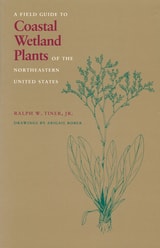
Field Guide to Coastal Wetland Plants of the Northeastern United States
Ralph W. Tiner
University of Massachusetts Press, 1987
Coastal wetlands are among our most important fish and wildlife habitats. For example, over two-thirds of our recreationally and commercially important marine fishes depend on coastal marshes and associated waters for nursery and spawning grounds.
This book is arranged in four major sections: (1) Coastal Wetland Ecology: A General Overview, (2) Identification of Coastal Wetland Plants, (3) Wetland Plant Descriptions and Illustrations, and (4) Places to Observe Coastal Wetlands, and (5) Sources of Other Information. In addition , a list of references used in preparing this book and a glossary of technical terms are provided.
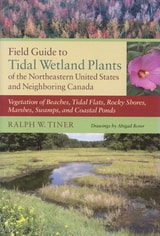
Field Guide to Tidal Wetland Plants of the Northeastern United States and Neighboring Canada
Vegetation of Beaches, Tidal Flats, Rocky Shores, Marshes, Swamps, and Coastal PondsRalph W. Tiner
University of Massachusetts Press, 2009
First published in 1987, Ralph W. Tiner's A Field Guide to Coastal Wetland Plants of the Northeastern United States soon established itself as the definitive work on its subject. Now Tiner has prepared a revised and expanded edition, broadening the coverage both botanically and geographically. It emphasizes plant identification and includes descriptions of over 700 species and illustrations of approximately 550 species. More tidal wetland types are covered (beaches, rocky shores, and tidal swamps) and the geographic scope extends as far north as Canada's Maritime Provinces.
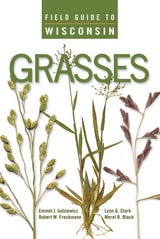
Field Guide to Wisconsin Grasses
Emmet J. Judziewicz , Robert W. Freckmann, Lynn G. Clark, Merel R. Black
University of Wisconsin Press, 2014
The book includes:
• drawings of most species
• chapters on grass morphology and grasses in natural communities
• keys to all species, including an illustrated key to genera
• a glossary of grass terminology.
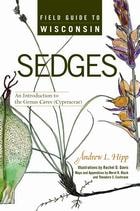
Field Guide to Wisconsin Sedges
An Introduction to the Genus Carex (Cyperaceae)Andrew L. Hipp; Illustrations by Rachel D. Davis; Maps and Appendices by Merel R. Black and Theodore S. Cochrane
University of Wisconsin Press, 2008
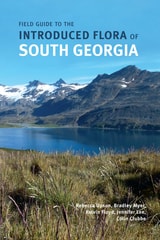
Field Guide to the Introduced Flora of South Georgia
Rebecca Upson, Bradley Myer, Kelvin Floyd, Jennifer Lee, and Colin Clubbe
Royal Botanic Gardens, Kew, 2017
This is the first field guide to comprehensively cover these species, providing full-color photographs, distribution maps, and species descriptions, plus keys to the grasses and sedges of the area. This guide is accessible even to non-botanists and also provides an opportunity for visitors to be part of a citizen science program contributing sightings and improving our knowledge of the introduced flora of South Georgia.
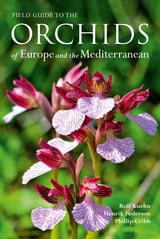
Field Guide to the Orchids of Europe and the Mediterranean
Rolf Kuehn, Henrik Pedersen, and Phillip Cribb
Royal Botanic Gardens, Kew, 2018
The book covers orchids from Europe and the Mediterranean, as well as areas in Turkey and the immediate near east of North Africa and Macaronesia. It includes thirty genera and their species including Ophrys, Cypripedium, Orchis, Dactylorhiza, Epipactis, and Serapias, as well as seventy natural hybrids. The authors emphasize the natural variability that exists in many wild species and work to eliminate the confusion that can arise due to the morphological variation. Each species includes multiple images to illustrate this diversity as well as notes on distinguishing features and distribution maps. Common names and important synonyms accompany each species alongside notes on habitat, flowering times, and distinguishing features.
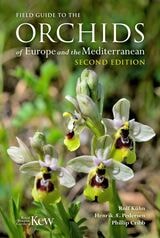
Field Guide to the Orchids of Europe and the Mediterranean
Rolf Kühn, Henrik Ærenlund Pedersen, and Phillip Cribb
Royal Botanic Gardens, Kew, 2024
Field Guide to the Orchids of Europe and the Mediterranean: Second Edition is a comprehensive photographic guide to the orchids of the region written by leading experts, who between them have decades of orchid field and research experience. The book covers orchids from Europe and the Mediterranean, extending to Turkey and the immediate near east of North Africa and Macaronesia.
Many guides to orchids of this region exist, but in this completely revised second edition, the authors have drawn on the latest scientific research to bring clarity to orchid identification and names, with an emphasis on the natural variability that exists in many wild species. This edition incorporates the latest updates in taxonomy. With over 2000 color photographs and new images, the book provides the reader with an accessible and easy-to-use identification guide to the natural variability seen in these orchids.
The book covers thirty genera and their species including Ophrys, Cypripedium, Orchis, Dactylorhiza, Epipactis, and Serapias, as well as seventy natural hybrids. Much of the confusion over identification is due to the morphological variation a species can have within a habitat and across its distribution, and therefore to simplify identification, several images accompany each species to illustrate this diversity, along with notes on distinguishing features and distribution maps. Each species is also accompanied by common names and important synonyms, as well as notes on habitat, flowering times, and distinguishing features.
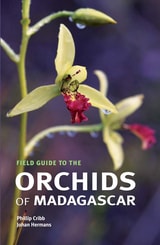
Field Guide to the Orchids of Madagascar
Phillip Cribb and Johan Hermans
Royal Botanic Gardens, Kew, 2009
As is the case with many other rare and sought-after species of plant and animal, Madagascar is one of the world’s prime locations for orchids, which make up the largest family of flowering plants on the island. Madagascar is home to nearly one thousand different species of orchids—which make up nearly ten percent of the island’s flora—nearly nine hundred of them endemic. Orchids are found in almost every habitat on the island, from the mountains to the coasts, and this field guide—the first of its kind, fully illustrated with color photographs and packed with details to aid identification—is an invaluable tool for researchers and ecotourists visiting the island.
Field Guide to the Plants of the Falkland Islands
Thomas Heller, Rebecca Upson, and Richard Lewis
Royal Botanic Gardens, Kew, 2018
Field Guide to the Sedges of the Pacific Northwest
Second EditionBarbara J. Wilson, Richard Brainerd, Danny Lytjen, Bruce Newhouse, and Nick Otting of the Carex Working Group
Oregon State University Press, 2014
Sedges can be difficult to identify, with differences between species based on small, technical characters. This comprehensive guide contains identification keys, descriptions, more than 650 color photographs, and distribution maps for each species, providing users with helpful tools and tips for identifying the plants in this challenging group. Information about sedge ecology, habitat, management and restoration, ethnobotanical uses, and propagation enhances the guide’s utility.
Field Guide to the Sedges of the Pacific Northwest provides an invaluable resource for botanists, land managers, restoration ecologists, and plant enthusiasts. And, as the genus Carex becomes increasingly important amongst landscapers, nurseries, and gardeners, the guide will serve as a handy tool for choosing Northwest natives for the garden.
Field Guide to the Wild Flowers of the Algarve
Chris Thorogood and Simon Hiscock
Royal Botanic Gardens, Kew, 2014
With the Field Guide, visitors can find the best places and times to see the plants. The Guide also explains their habitats and vegetation types. Richly illustrated, it includes hundreds of color photos and line drawings to aid identification, plus distribution maps that make it easy to plan trips and find nearby species.
Introductory passages give environmental context and cover climate, geology, agriculture, wildflower classification, and flower morphology. Written to appeal to both amateur naturalists and professional botanists alike, this is the essential companion for anyone drawn to the rich beauty of the Algarve.
Field Guide to the Wild Flowers of the Algarve
Second EditionChris Thorogood and Simon Hiscock
Royal Botanic Gardens, Kew, 2019
This second edition is fully updated with new species and new findings. Information is provided on where and when to see plants with information on their habitat and vegetation types. Rare and unusual plants of the region are highlighted, including orchids and parasitic plants. The more than one thousand descriptions are accompanied throughout with over 650 stunning color photographs, 780 line drawings, and distribution maps.
Field Guide to the Wild Flowers of the Eastern Mediterranean
Chris Thorogood
Royal Botanic Gardens, Kew, 2019
The geographic coverage of this book spans the Ionian Archipelago, mainland Greece, Peloponnese, Aegean Islands, Crete, Cyprus, Mediterranean Turkey, and the coasts of Israel, Palestine, Lebanon, and Syria. Featuring more than three thousand plants, this easy-to-use guide focuses on the most common and conspicuous species that occur in the area, with plant descriptions, color photographs, and illustrations throughout. A section on where to see wild flowers in the region is included, as well as a glossary of terms. An ideal companion for wildlife and plant enthusiasts, this guide will enable anyone to reliably identify wild flowers in the field.
Field Guide to the Wild Plants of Oman
Helen Pickering and Annette Patzelt
Royal Botanic Gardens, Kew, 2008
This compact volume is a handy, thorough guide to the wild plants found in the small Middle Eastern nation of Oman. A short introduction provides an overview of Oman’s geography and remarkable environmental diversity, followed by catalog of more than 250 common species of plants, enhanced by color photographs designed to assist with quick identification in the field. Descriptive accounts—including details of habitat, uses, and worldwide distribution—round out the individual entries, while a glossary of botanical terms, a bibliography, and an index of scientific and vernacular names combine to make this an invaluable reference.
Field Guide to the Wildflowers of the Western Mediterranean
Chris Thorogood
Royal Botanic Gardens, Kew, 2016
Field Techniques for Sea-Ice Research
Edited by Hajo Eicken and Maya Salganek
University of Alaska Press, 2009
As much as one-tenth of the world’s oceans are covered with sea ice, or frozen ocean water, at some point during the annual cycle. Sea ice thus plays an important, often defining, role in the natural environment and the global climate system. This book is a global look at the changes in sea ice and the tools and techniques used to measure and record those changes. The first comprehensive research done on sea-ice field techniques, this volume will be indispensable for the study of northern sea ice and a must-have for scientists in the field of climate change research.
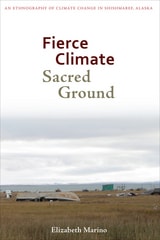
Fierce Climate, Sacred Ground
An Ethnography of Climate Change in Shishmaref, AlaskaElizabeth Marino
University of Alaska Press, 2015
Publications from the New York Times to Esquire have covered this disappearing village, yet few have taken the time to truly show the community and the two millennia of traditions at risk. In Fierce Climate, Sacred Ground, Elizabeth Marino brings Shishmaref into sharp focus as a place where people in a close-knit, determined community are confronting the realities of our changing planet every day. She shows how physical dangers challenge lives, while the stress and uncertainty challenge culture and identity. Marino also draws on Shishmaref’s experiences to show how disasters and the outcomes of climate change often fall heaviest on those already burdened with other social risks and often to communities who have contributed least to the problem. Stirring and sobering, Fierce Climate, Sacred Ground proves that the consequences of unchecked climate change are anything but theoretical.

Fighting for the Future of Food
Activists versus Agribusiness in the Struggle over BiotechnologyRachel Schurman
University of Minnesota Press, 2010
Fighting for the Future of Food tells the story of how a small group of social activists, working together across tables, continents, and the Internet, took on the biotech industry and achieved stunning success. Rachel Schurman and William A. Munro detail how the anti-biotech movement managed to alter public perceptions about GMOs and close markets to such products. Drawing strength from an alternative worldview that sustained its members' sense of urgency and commitment, the anti-GMO movement exploited political opportunities created by the organization and culture of the biotechnology industry itself.
Fighting for the Future of Food ultimately addresses society's understanding and trust (or mistrust) of technological innovation and the complexities of the global agricultural system that provides our food.
Filicineae, Gymnospermae and Other Monocots Excluding Cyperaceae
Ferns, Conifers, and Other Monocots Excluding SedgesRobert H. Mohlenbrock
Southern Illinois University Press, 2006
The second in a series of four illustrated guides to identifying aquatic and standing water plants in the central Midwest, this convenient reference volume includes descriptions, nomenclature, ecological information, and identification keys to plants in all of the monocot families except sedges—which are covered in the first volume in the series—that are found in Kentucky (except for the Cumberland region), Ohio, Indiana, Illinois, Iowa, Missouri, Kansas, and Nebraska.
Monocots covered in this volume include ferns, conifers, grasses, rushes, orchids, duckweeds, irises, sweet flags, arrowheads, aroids, flowering rushes, pipeworts, frog-bits, arrowgrasses, naiads, pickerelweeds, pondweeds, bur reeds, cattails, and yellow-eyed grasses. Robert H. Mohlenbrock includes three types of plants: submergents, those that spend their entire lives with their vegetative parts either completely submerged or at least floating on the water’s surface; emergents, which are typically rooted underwater with their vegetative parts standing out of water; and a third category of plants that live most of their lives out of water, but which may live in water at least three months a year.
With taxa arranged alphabetically, the volume is well organized and easy to use. In addition, basic synonymy, description, distribution, comments, and line drawings show the habits and distinguishing features for each plant. Habitat and nomenclatural notes are also listed, as are the official wetland designations given by the U.S. Fish and Wildlife Service.
Filicineae, Gymnospermae, and Other Monocots, Excluding Cyperaceae is a useful standard reference for state and federal employees who deal with both aquatic and wetland plants and environmental conservation and mitigation issues. It is furthermore an essential guide for students and instructors in college and university courses focusing on the identification of aquatic and wetland plants.
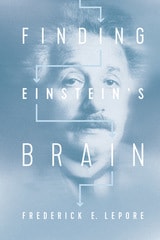
Finding Einstein's Brain
Lepore, Frederick E
Rutgers University Press, 2018
Following his death in 1955, Einstein’s brain was removed and preserved, but has never been fully or systematically studied. In fact, the sections are not even all in one place, and some are mysteriously unaccounted for! In this compelling tale, Frederick E. Lepore delves into the strange, elusive afterlife of Einstein’s brain, the controversy surrounding its use, and what its study represents for brain and/or intelligence studies.
Carefully reacting to the skepticism of 21st century neuroscience, Lepore more broadly examines the philosophical, medical, and scientific implications of brain-examination. Is the brain simply a computer? If so, how close are we to artificially creating a human brain? Could scientists create a second Einstein? This “biography of a brain” attempts to answer these questions, exploring what made Einstein’s brain anatomy exceptional, and how “found” photographs--discovered more than a half a century after his death--may begin to uncover the nature of genius.
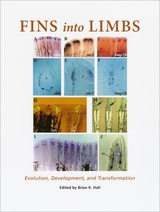
Fins into Limbs
Evolution, Development, and TransformationEdited by Brian K. Hall
University of Chicago Press, 2006
A comprehensive look at the current state of research on fin and limb evolution and development, this volume addresses a wide range of subjects—including growth, structure, maintenance, function, and regeneration. Divided into sections on evolution, development, and transformations, the book begins with a historical introduction to the study of fins and limbs and goes on to consider the evolution of limbs into wings as well as adaptations associated with specialized modes of life, such as digging and burrowing. Fins into Limbs also discusses occasions when evolution appears to have been reversed—in whales, for example, whose front limbs became flippers when they reverted to the water—as well as situations in which limbs are lost, such as in snakes.
With contributions from world-renowned researchers, Fins into Limbs will be a font for further investigations in the changing field of evolutionary developmental biology.
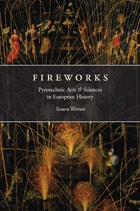
Fireworks
Pyrotechnic Arts and Sciences in European HistorySimon Werrett
University of Chicago Press, 2010
Fireworks are synonymous with celebration in the twenty-first century. But pyrotechnics—in the form of rockets, crackers, wheels, and bombs—have exploded in sparks and noise to delight audiences in Europe ever since the Renaissance. Here, Simon Werrett shows that, far from being only a means of entertainment, fireworks helped foster advances in natural philosophy, chemistry, mathematics, and many other branches of the sciences.
Fireworks brings to vibrant life the many artful practices of pyrotechnicians, as well as the elegant compositions of the architects, poets, painters, and musicians they inspired. At the same time, it uncovers the dynamic relationships that developed between the many artists and scientists who produced pyrotechnics. In so doing, the book demonstrates the critical role that pyrotechnics played in the development of physics, astronomy, chemistry and physiology, meteorology, and electrical science. Richly illustrated and drawing on a wide range of new sources, Fireworks takes readers back to a world where pyrotechnics were both divine and magical and reveals for the first time their vital contribution to the modernization of European ideas.
First the Seed
The Political Economy of Plant BiotechnologyJack Ralph Kloppenburg, Jr.
University of Wisconsin Press, 2005
1988 Cloth, 1990 Paperback, Cambridge University Press
Winner of the Theodore Saloutos Award of the Agricultural History Society
Winner of the Robert K. Merton Award of the American Sociological Association
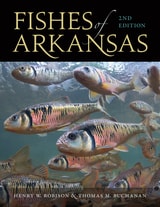
Fishes of Arkansas
Henry W. Robison
University of Arkansas Press, 2019
An invaluable reference for anyone interested in the state’s fish population—from professional ichthyologists, fisheries biologists, and managers of aquatic resources, to amateur naturalists and anglers—this new edition provides updated taxonomic keys as well as detailed descriptions, photographs, and line drawings to aid identification of the state’s 243 fish species. There is also much information on the distribution and biology of each species, including descriptions of habitat, foods eaten, reproductive biology, and conservation status.
This project and the preparation of this publication was funded in part by a grant from the Arkansas Game and Fish Commission.
Fishes of South Dakota
By Reeve M. Bailey and Marvin O. Allum
University of Michigan Press, 1962
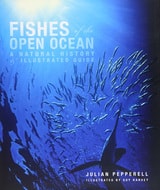
Fishes of the Open Ocean
A Natural History and Illustrated GuideJulian Pepperell
University of Chicago Press, 2010
Between the surface of the sea and depths of two hundred meters lies a remarkable range of fish, generally known as pelagics, or open-ocean dwellers. These creatures are among the largest, fastest, highest-leaping, and most migratory fish on the entire planet. Beautifully adapted to their world, they range from tiny drift fish and plankton-straining whale sharks to more streamlined predators such as tuna, marlin, sailfish, and wahoo.
Fishes of the Open Ocean, from leading marine biologist and world authority on the subject Julian Pepperell, is the first book to comprehensively describe these fishes and explore the complex and often fragile world in which they live. In what will be the definitive book on the subject for years to come—and, with over three hundred color images, the most lavishly produced as well—Pepperell details the environment and biology of every major species of fish that inhabits the open ocean, an expanse that covers 330 million cubic miles and is the largest aquatic habitat on the Earth. The first section of the book introduces the various evolutionary forms these fish have taken, as well as the ways in which specific species interact and coevolve with others in the food web. A chapter on commercial and sport fisheries explores the human element in this realm and considers such issues as sustainability, catch-and-release initiatives, and the risks of extinction.
The second section of the book provides species accounts of open ocean dwellers organized by group, with overviews and general descriptions that are inclusive of range and distribution, unique physiological and morphological attributes, and the role of each species within its ecosystem. Global distribution maps, original illustrations from renowned artist and scientist Guy Harvey, and truly stunning images from some of the world’s leading underwater photographers round out this copiously illustrated volume.
Fishing Lessons
Artisanal Fisheries and the Future of Our OceansKevin M. Bailey
University of Chicago Press, 2018
Bailey knows these waters, the artisanal fisheries, and their relationship with larger ocean ecology intimately. In a series of place-based portraits, he shares stories of decline and success as told by those at the ends of the long lines and hand lines, channeling us through the changing dynamics of small-scale fisheries and the sustainability issues they face—both fiscal and ecological. We encounter Paolo Vespoli and his tiny boat, the Giovanni Padre,in the Gulf of Naples; Wenche, a sea Sámi, one of the indigenous fisherwomen of Norway; and many more. From salmon to abalone, the Bay of Fundy to Monterey and the Amazon, Bailey’s catch is no fish tale. It is a global story, casting a net across waters as vast and distinct as Puget Sound and the Chilean coast. Sailing across the world, Bailey explores the fast-shifting current of how we gather food from the sea, what we gain and what we lose with these shifts, and potential solutions for the murky passage ahead.