Results by title
3064 books match the query 'Social conditions' and 109 start with f

FEASTS OF HONOR
RITUAL AND CHANGE IN THE TORAJA HIGHLANDToby Alice Volkman
University of Illinois Press, 1985

FEMINISM IN THE HEARTLAND
Judith Ezekiel
The Ohio State University Press, 2002
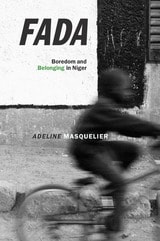
Fada
Boredom and Belonging in NigerAdeline Masquelier
University of Chicago Press, 2019
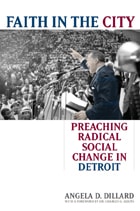
Faith in the City
Preaching Radical Social Change in DetroitAngela D. Dillard
University of Michigan Press, 2009
“The dynamics of Black Theology were at the center of the ‘Long New Negro Renaissance,’ triggered by mass migrations to industrial hubs like Detroit. Finally, this crucial subject has found its match in the brilliant scholarship of Angela Dillard. No one has done a better job of tracing those religious roots through the civil rights–black power era than Professor Dillard.”
—Komozi Woodard, Professor of History, Public Policy & Africana Studies at Sarah Lawrence College and author of A Nation within a Nation: Amiri Baraka (LeRoi Jones) and Black Power Politics
“Angela Dillard recovers the long-submerged links between the black religious and political lefts in postwar Detroit. . . . Faith in the City is an essential contribution to the growing literature on the struggle for racial equality in the North.”
—Thomas J. Sugrue, University of Pennsylvania, author of The Origins of the Urban Crisis: Race and Inequality in Postwar Detroit
Spanning more than three decades and organized around the biographies of Reverends Charles A. Hill and Albert B. Cleage Jr., Faith in the City is a major new exploration of how the worlds of politics and faith merged for many of Detroit’s African Americans—a convergence that provided the community with a powerful new voice and identity. While other religions have mixed politics and creed, Faith in the City shows how this fusion was and continues to be particularly vital to African American clergy and the Black freedom struggle.
Activists in cities such as Detroit sustained a record of progressive politics over the course of three decades. Angela Dillard reveals this generational link and describes what the activism of the 1960s owed to that of the 1930s. The labor movement, for example, provided Detroit’s Black activists, both inside and outside the unions, with organizational power and experience virtually unmatched by any other African American urban community.
Angela D. Dillard is Associate Professor of Afroamerican and African Studies at the University of Michigan. She specializes in American and African American intellectual history, religious studies, critical race theory, and the history of political ideologies and social movements in the United States.
Faithful Transformations
Islamic Self-Help in Contemporary SingaporeNurhaizatul Jamil
University of Illinois Press, 2025
The Islamic self-help classes in this book exist at the nexus of sacred texts, aphorisms, and social media engagements, scaffolded by the neoliberal economy that shapes idealized Muslim subjectivities. Within a context whereby the Singapore state discursively frames Malayness in terms of cultural deficiency, Malay Muslim women’s inward focus on transformative ethics rather than societal change underscores the appeal of gendered pious self-help discourses. At the same time, Jamil’s referencing of Black, Indigenous, and Ethnic studies offers a compelling analytical frame that places affective transformation within the context of racial capitalism, historical trauma, and embodied healing.
A provocative and rich ethnography, Faithful Transformations tells the stories of Malay Muslim women desiring piety and self-improvement as minoritized subjects in contemporary Singapore while exploring the limitations of self-care.

False Promises
The Struggle for Black Voting Rights in 1800s OhioRic S. Sheffield
Ohio University Press, 0
Brings to life the struggle for Black suffrage in nineteenth-century Ohio
In False Promises, the fight for Black voting rights in Ohio comes alive through narratives of men of color who defied the state’s nineteenth-century restrictions on suffrage. Though ratification of the Fifteenth Amendment ostensibly extended the franchise, state election laws still forced men of color into a perilous struggle for full citizenship. Ric S. Sheffield depicts their courage and determination, revealing their humanity through stories of sacrifice, resistance, and hope.
Drawing on Saidiya Hartman’s concept of critical fabulation, Sheffield weaves together historical records with imaginative reconstructions of dialogue, setting, and descriptive elements beyond the dusty courthouse pages. Grounded in archival evidence yet reimagined to fill in the silences, these stories recount the lived experiences of those who risked everything to exercise their right to vote.
False Promises also connects these historical battles to the present, illustrating how voter-suppression tactics in today’s Ohio have roots in the racial exclusions of the nineteenth century. By exposing the enduring legacy of white supremacist policies, the book challenges the widespread misconception that racial disenfranchisement was solely a southern problem. Ohio’s complex racial history—noted for its role in the Underground Railroad but also for its repressive Black Laws—also includes a fierce and ongoing struggle over the right to vote. Through compelling storytelling, historical analysis, and a reclamation of voices lost to history, False Promises urges readers to reconsider their understanding of democracy and the right to vote.
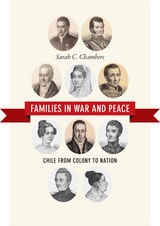
Families in War and Peace
Chile from Colony to NationSarah C. Chambers
Duke University Press, 2015
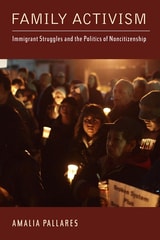
Family Activism
Immigrant Struggles and the Politics of NoncitizenshipPallares, Amalia
Rutgers University Press, 2014

Family Bible
Melissa J. Delbridge
University of Iowa Press, 2008
"Swimming and sex seemed a lot alike to me when I was growing up. You took off most of your clothes to do them and you only did them with people who were the same color as you. As your daddy got richer, you got to do them in fancier places." Starting with her father, who never met a whitetail buck he couldn't shoot, a whiskey bottle he couldn't empty, or a woman he couldn't charm, and her mother, who "invented road rage before 1960," Melissa Delbridge introduces us to the people in her own family bible. Readers will find elements of Southern Gothic and familiar vernacular characters, but Delbridge endows each with her startling and original interpretation. In this disarmingly unguarded and unapologetic memoir, she shows us what really happened in the "stew of religion and sex" that was 1960s Tuscaloosa.
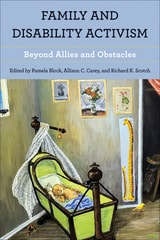
Family and Disability Activism
Beyond Allies and ObstaclesEdited by Pamela Block, Allison C. Carey, and Richard K. Scotch
Temple University Press, 2025
Family and Disability Activism reveals how families and disabled people who identify as BIPOC and/or LGBTQIA2S+ understand issues of rights versus justice. Contributions by Deaf and disabled activists emphasize the frequent need for either care or independence. Other chapters show how members of the disabled community and their families must navigate systemic issues of segregation, institutionalization, and access to special education services differently depending on their ethnic and racial identities.
Expanding the conversation about disability, kinship, biological and chosen families, and activism, this volume amplifies important voices in the fight for disability rights.
Contributors: Erin Compton, Diane Compton, Jaclyn Ellis, Laura LeBrun Hatcher, Elena Hung, Bridget Liang, Jenelle Rouse, Cheryl Najarian Souza, Jeneva Stone, Roger A. Stone, Lisette E. Torres, Grace Tsao, and the editors
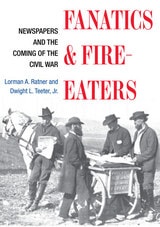
Fanatics and Fire-eaters
Newspapers and the Coming of the Civil WarLorman A. Ratner and Dwight L. Teeter Jr.
University of Illinois Press, 2003
In the troubled years leading up to the Civil War, newspapers in the North and South presented the arguments for and against slavery, debated the right to secede, and in general denounced opposing viewpoints with imagination and vigor. At the same time, new technologies like railroads and the telegraph lent the debates an immediacy that both enflamed emotions and brought the slavery issue into every home.
Lorman A. Ratner and Dwight L. Teeter Jr. look at the power of America's fast-growing media to influence perception and the course of events prior to the Civil War. Drawing on newspaper accounts from across the United States, the authors look at how the media covered—and the public reacted to—major events like the Dred Scott decision, John Brown's raid on Harper's Ferry, and the election of 1860. They find not only North-South disputes about the institution of slavery but differing visions of the republic itself—and which region was the true heir to the legacy of the American Revolution.
Fantasizing the Feminine in Indonesia
Laurie J. Sears, ed.
Duke University Press, 1996
The contributors examine the ways in which Indonesian women and men are enmeshed in networks of power and then pursue the stories of those who, sometimes at great political risk, challenge these powers. In this juxtaposition of voices and stories, we see how indigenous patriarchal fantasies of feminine behavior merged with Dutch colonial notions of proper wives and mothers to produce the Indonesian government’s present approach to controlling the images and actions of women. Facing the theoretical challenge of building a truly cross-cultural feminist analysis, Fantasizing the Feminine takes us into an ongoing conversation that reveals the contradictions of postcolonial positionings and the fragility of postmodern identities.
This book will be welcomed by readers with interests in contemporary Indonesian politics and society as well as historians, anthropologists, and other scholars concerned with literature, gender, and cultural studies.
Contributors. Benedict R. O’G. Anderson, Sita Aripurnami, Jane Monnig Atkinson, Nancy K. Florida, Daniel S. Lev, Dédé Oetomo, Laurie J. Sears, Ann Laura Stoler, Saraswati Sunindyo, Julia I. Suryakusuma, Jean Gelman Taylor, Sylvia Tiwon, Anna Lowenhaupt Tsing, Diane L. Wolf
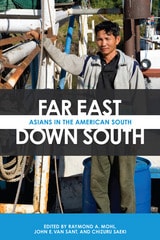
Far East, Down South
Asians in the American SouthEdited by Raymond A. Mohl, John E. Van Sant, and Chizuru Saeki
University of Alabama Press, 2016
Uncovering the overlooked histories of Asians in the American South.
In sharp contrast to the “melting pot” reputation of the United States, the American South—with its history of slavery, Jim Crow, and the civil rights movement—has been perceived in stark and simplistic demographic terms. In Far East, Down South, editors Raymond A. Mohl, John E. Van Sant, and Chizuru Saeki provide a collection of essential essays that restores and explores an overlooked part of the South’s story—that of Asian immigration to the region.
These essays form a comprehensive overview of key episodes and issues in the history of Asian immigrants to the South. During Reconstruction, southern entrepreneurs experimented with the replacement of slave labor with Chinese workers. As in the West, Chinese laborers played a role in the development of railroads. Japanese farmers also played a more widespread role than is usually believed. Filipino sailors recruited by the US Navy in the early decades of the twentieth century often settled with their families in the vicinity of naval ports such as Corpus Christi, Biloxi, and Pensacola. Internment camps brought Japanese Americans to Arkansas. Marriages between American servicemen and Japanese, Korean, Filipina, Vietnamese, and nationals in other theaters of war created many thousands of blended families in the South. In recent decades, the South is the destination of internal immigration as Asian Americans spread out from immigrant enclaves in West Coast and Northeast urban areas.
Taken together, the book’s essays document numerous fascinating themes: the historic presence of Asians in the South dating back to the mid-nineteenth century; the sources of numerous waves of contemporary Asian immigration to the South; and the steady spread of Asians out from the coastal port cities. Far East, Down South adds a vital new dimension to popular understanding of southern history.
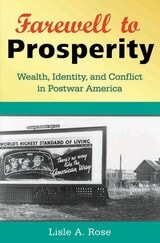
Farewell to Prosperity
Wealth, Identity, and Conflict in Postwar AmericaLisle A. Rose
University of Missouri Press, 2014
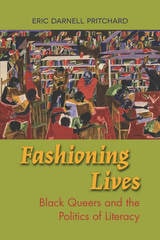
Fashioning Lives
Black Queers and the Politics of LiteracyEric Darnell Pritchard
Southern Illinois University Press, 2017
Winner, Lavender Rhetorics Award for Excellence in Queer Scholarship from CCCC, 2018
Winner, Advancement of Knowledge Award from CCCC, 2018
Winner, Outstanding Book Award from the Conference on Community Writing, 2017
Fashioning Lives: Black Queers and the Politics of Literacy analyzes the life stories of sixty Black lesbian, gay, bisexual, transgender, and queer (LGBTQ) people along with archival documents, literature, and film. Author Eric Darnell Pritchard provides a theoretical framework for studying the literacy work of Black LGBTQ people, who do not fit into the traditional categories imposed on their language practices and identities. Examining the myriad ways literacy is used to inflict harm, Pritchard discusses how these harmful events prompt Black LGBTQ people to ensure their own survival by repurposing literacy through literacy performances fueled by accountability to self and communal love towards social and political change, a process the author calls “restorative literacies.” Pritchard highlights restorative literacies in literacy institutions (e.g., libraries, schools), historical records repositories, religious and spiritual spaces, parties, community events, activist organizations, and digital spheres. This trailblazing study draws connections between race and queerness in literacy, composition, and rhetoric and provides the basis for a sustainable dialogue on their intersections in the discipline.
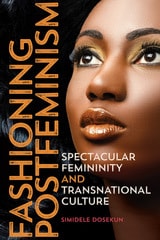
Fashioning Postfeminism
Spectacular Femininity and Transnational CultureSimidele Dosekun
University of Illinois Press, 2020
Simidele Dosekun's interviews and critical analysis consider the female subjectivities these women are performing and desiring. She finds that the women embody the postfeminist idea that their unapologetically immaculate beauty signals—but also constitutes—feminine power. As empowered global consumers and media citizens, the women deny any need to critique their culture or to take part in feminism's collective political struggle. Throughout, Dosekun unearths evocative details around the practical challenges to attaining their style, examines the gap between how others view these women and how they view themselves, and engages with ideas about postfeminist self-fashioning and subjectivity across cultures and class.
Intellectually provocative and rich with theory, Fashioning Postfeminism reveals why women choose to live, embody, and even suffer for a fascinating performative culture.
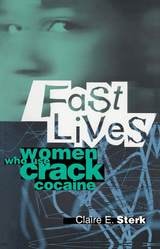
Fast Lives
Women Who Use Crack CocaineClaire E. Sterk
Temple University Press, 1999
Focusing on active crack users, Fast Lives compiles information from participant observation, informal conversations, individual interviews, and group discussions. Sterk details the ways in which use affects the lives of these crack users. She captures how these women arrived at their use; how they survive under current circumstances, such as the constant threat of HIV/AIDS and violence; how they combine the multiple social roles of mother and drug user; and how -- as they share their aspirations and expectations for the future -- their stories underscore the effects of poverty, sexism, and racism on their lives.
Many of these women recognize their own responsibility for ensuring positive change. Sterk's book, which includes an argument for a harm reduction approach, reminds us that their strength and courage will too often be futile without social policies that are realistic and appropriate for women.
Fast Lives will engage readers interested in social problems as well as students of cultural anthropology, sociology, criminology, public health, ethnography, substance abuse, and women's health.
Fault Lines
Life and Landscape in Saskatchewan's Oil EconomyValerie Zink
University of Manitoba Press, 2016
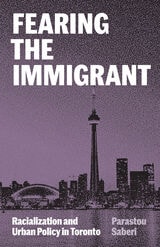
Fearing the Immigrant
Racialization and Urban Policy in TorontoParastou Saberi
University of Minnesota Press, 2022
A fascinating deep dive into one city’s urban policy—and the anxiety over immigrants that informs it
The city of Toronto is often held up as a leader in diversity and inclusion. In Fearing the Immigrant, however, Parastou Saberi argues that Toronto’s urban policies are influenced by a territorialized and racialized security agenda—one that parallels the “War on Terror.” Focusing on the figure of the immigrant and so-called immigrant neighborhoods as the targets of urban policy, Saberi offers an innovative, multidisciplinary approach to the politics of racialization and the governing of alterity through space in contemporary cities.
A comprehensive study of urban policymaking in Canada’s largest city from the 1990s to the late 2010s, Fearing the Immigrant uses Toronto as a jumping-off point to understand how the nexus of development, racialization, and security works at the urban and international levels. Saberi situates urban policymaking in Toronto in relation to the dominant policies of international development and public health, counterinsurgency, and humanitarian intervention. Engaging with the genealogies and contemporary developments of major policy techniques involving mapping and policy concepts such as poverty, security, policing, development, empowerment, as well as social determinants of health, equity, and prevention, she scrutinizes the parallel ways these techniques and concepts operate in urban policy and international relations.
Fearing the Immigrant ultimately asserts that the geopolitical fear of the immigrant is central to the formation of urban policy in Toronto. Rather than addressing the root causes of poverty, urban policy as it has been practiced aims to pacify the specter of urban unrest and to secure the production of a neocolonial urban order. As such, this book is an urgent call to reimagine urban policy in the name of equality and social justice.
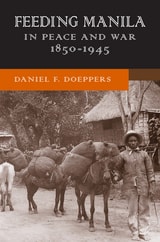
Feeding Manila in Peace and War, 1850–1945
Daniel F. Doeppers
University of Wisconsin Press, 2019
Doeppers follows key commodities for the city—rice, produce, fish, fowl, meat, milk, flour, coffee—and their complex interconnections. In the process he considers the changing ecology of the surrounding region as well as the social fabric that weaves together farmers, merchants, transporters, storekeepers, and door-to-door vendors.
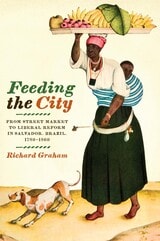
Feeding the City
From Street Market to Liberal Reform in Salvador, Brazil, 1780–1860By Richard Graham
University of Texas Press, 2010
Winner, Bolton-Johnson Prize, Conference on Latin American History, 2011
Murdo J. McLeod Book Prize, 2011
On the eastern coast of Brazil, facing westward across a wide magnificent bay, lies Salvador, a major city in the Americas at the end of the eighteenth century. Those who distributed and sold food, from the poorest street vendors to the most prosperous traders—black and white, male and female, slave and free, Brazilian, Portuguese, and African—were connected in tangled ways to each other and to practically everyone else in the city, and are the subjects of this book. Food traders formed the city's most dynamic social component during the late eighteenth and early nineteenth centuries, constantly negotiating their social place. The boatmen who brought food to the city from across the bay decisively influenced the outcome of the war for Brazilian independence from Portugal by supplying the insurgents and not the colonial army. Richard Graham here shows for the first time that, far from being a city sharply and principally divided into two groups—the rich and powerful or the hapless poor or enslaved—Salvador had a population that included a great many who lived in between and moved up and down.
The day-to-day behavior of those engaged in food marketing leads to questions about the government's role in regulating the economy and thus to notions of justice and equity, questions that directly affected both food traders and the wider consuming public. Their voices significantly shaped the debate still going on between those who support economic liberalization and those who resist it.
Feeling Asian American
Racial Flexibility Between Assimilation and OppressionWen Liu
University of Illinois Press, 2024
Asian Americans have become the love-hate subject of the American psyche: at times celebrated as the model minority, at other times hated as foreigners. Wen Liu examines contemporary Asian American identity formation while placing it within a historical and ongoing narrative of racial injury. The flexible racial status of Asian Americans oscillates between oppression by the white majority and offers to assimilate into its ranks. Identity emerges from the tensions produced between those two poles. Liu dismisses the idea of Asian Americans as a coherent racial population. Instead, she examines them as a raced, gendered, classed, and sexualized group producing varying physical and imaginary boundaries of nation, geography, and citizenship. Her analysis reveals repeated norms and acts that capture Asian Americanness as part of a racial imagination that buttresses capitalism, white supremacy, neoliberalism, and the US empire.
An innovative challenge to persistent myths, Feeling Asian American ranges from the wartime origins of Asian American psychology to anti-Asian attacks to present Asian Americanness as a complex political assemblage.
Feels Right
Black Queer Women and the Politics of Partying in ChicagoKemi Adeyemi
Duke University Press, 2022
Duke University Press Scholars of Color First Book Award recipient
Female Monarchs and Merchant Queens in Africa
Nwando Achebe
Ohio University Press, 2020
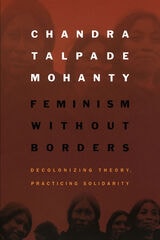
Feminism without Borders
Decolonizing Theory, Practicing SolidarityChandra Talpade Mohanty
Duke University Press, 2003
Feminism without Borders opens with Mohanty's influential critique of western feminism ("Under Western Eyes") and closes with a reconsideration of that piece based on her latest thinking regarding the ways that gender matters in the racial, class, and national formations of globalization. In between these essays, Mohanty meditates on the lives of women workers at different ends of the global assembly line (in India, the United Kingdom, and the United States); feminist writing on experience, identity, and community; dominant conceptions of multiculturalism and citizenship; and the corporatization of the North American academy. She considers the evolution of interdisciplinary programs like Women's Studies and Race and Ethnic Studies; pedagogies of accommodation and dissent; and transnational women's movements for grassroots ecological solutions and consumer, health, and reproductive rights. Mohanty's probing and provocative analyses of key concepts in feminist thought—"home," "sisterhood," "experience," "community"—lead the way toward a feminism without borders, a feminism fully engaged with the realities of a transnational world.
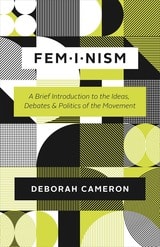
Feminism
A Brief Introduction to the Ideas, Debates, and Politics of the MovementDeborah Cameron
University of Chicago Press, 2019
In the era of #MeToo, Trump, and online harassment, innovative progressive feminist voices are more essential than ever. With her latest book, Deborah Cameron considers feminism from all sides—as an idea, as a theoretical approach, and as a political movement. Written in the succinct, sharp style that has made Cameron’s feminist linguistics blog so popular, this short book lays out past and present debates on seven key topics: domination, rights, work, femininity, sex, culture, and the future. Feminism emphasizes the diversity of feminist thought, including queer, women-of-color, and trans perspectives. Cameron’s clear and incisive account untangles the often confusing strands of one of history’s most important intellectual and political movements.
Broad in scope but refreshingly concise, this book is perfect for anyone who needs a straightforward primer on the complex history of feminism, a nuanced explanation of key issues and debates, or strategic thinking about the questions facing activists today.
Feminist Post-Liberalism
Judith A. Baer
Temple University Press, 2020
Feminism and liberalism need each other, argues Judith Baer. Her provocative book, Feminist Post-Liberalism, refutes both conservative and radical critiques. To make her case, she rejects classical liberalism in favor of a welfare—and possibly socialist—post-liberalism that will prevent capitalism and a concentration of power that reinforces male supremacy. Together, feminism and liberalism can better elucidate controversies in American politics, law, and society.
Baer emphasizes that tolerance and self-examination are virtues, but within both feminist and liberal thought these virtues have been carried to extremes. Feminist theory needs liberalism's respect for reason, while liberal theory needs to incorporate emotion. Liberalism focuses too narrowly on the individual, while feminism needs a dose of individualism.
Feminist Post-Liberalism includes anthropological foundations of male dominance to explore topics ranging from crime to cultural appropriation. Baer develops a theory that is true to the principles of both feminist and liberal ideologies.
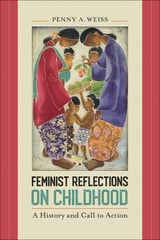
Feminist Reflections on Childhood
A History and Call to ActionPenny A. Weiss
Temple University Press, 2021
In Feminist Reflections on Childhood, Penny Weiss rediscovers the radically feminist tradition of advocating for the liberatory treatment of youth. Weiss looks at both historical and contemporary feminists to understand what issues surrounding the inequality experienced by both women and children were important to the authors as feminist activists and thinkers. She uses the writings of Mary Wollstonecraft, Elizabeth Cady Stanton, and Simone de Beauvoir to show early feminist arguments for the improved status and treatment of youth. Weiss also shows how Charlotte Perkins Gilman, a socialist feminist, and Emma Goldman, an anarchist feminist, differently understood and re-visioned children’s lives, as well as how children continue to show up on feminist agendas and in manifestos that demand better conditions for children’s lives.
Moving to contemporary theory, Feminist Reflections on Childhood also looks at how feminist disability theory is well-positioned to recognize the voices of children, and how queer theory provides lessons on contemporary trends that provide visions and strategies for more constructive adult-child relations. Weiss, who includes her own experiences as a mother and foster mother throughout the book, closes her distinctively feminist takes on childhood with a consideration of speculative fiction stories that offer examples of what feminists think makes childhood (un)livable.

Fictions Of Feminist Ethnography
Kamala Visweswaran
University of Minnesota Press, 1994
Although feminist ethnography is an emerging genre, the question of what the term means remains open. Recent texts that fall under this rubric rely on unexamined notions of "sisterhood" and the recovery of "lost" voices. Writing about her work with women in Southern India, Kamala Visweswaran addresses such troubled questions in the essays that make up Fictions of Feminist Ethnography. Blurring distinctions between ethnographic and literary genres, the author employs the narrative strategies of history, fiction, autobiography and biography, deconstruction, and postcolonial discourse to reveal the fictions of ethnography and the ethnography in fiction. In the process of reflecting on the nature of anthropology itself Visweswaran devises an experimental approach to writing feminist ethnography.
What sets this work apart from other self-reflexive feminist ethnographies is its rigorous engagement with the concrete inequalities, refusals, and misunderstandings between the author and the women she worked with in India. In each essay, she takes up the specific ellipses of power differentials in her field research and works out their epistemological consequences. The result is a series of contextualizations of the politics of identity in the field, at "home," and within the lives of women who particpated in the Indian nationalist movement. We learn in lucid detail about the partiality of knowledge and the inevitable difficulties and violations involved in representing the lives of women, both inside and outside the United States. Clearly and forcefully written, this book should be of interest not only to anthropologists but also to cultural theorists and critics, feminist scholars and writers, and other social scientists who grapple with epistemological and political issues in their fields.
Fieldwork Dilemmas
Anthropologists In Postsocialist StatesHermine G. De Soto
University of Wisconsin Press, 2000
In Fieldwork Dilemmas ten anthropologists disclose the political and physical dangers inherent in field research. Focusing on former socialist states, they vividly depict the upheavals of everyday life in eastern Euorpe, revealing how their informants and the communities in which they live undergo political and economic dislocations, plummeting living standards, emerging gender inequalities, and ethnic and nationalist violence.
Reports from Armenia, Bulgaria, eastern Germany, Kyrgyzstan, Macedonia, Russia, Serbia, and Uzbekistan show how fieldworkers struggle to reconcile previous experiences with postsocialist stereotypes about Soviet culture, the West, and the effects of the penetration of capitalism into noncapitalist societies. These fieldwork dilemmas are analyzed by anthropologists who are learning to position themselves professionally and personally in the field under often unstable, unpredictable situations. This volume will interest not only anthropologists but fieldworkers of all kinds, and not only scholars of eastern Europe but all those who study rapid societal changes.
Fifty Years of Change on the U.S.-Mexico Border
Growth, Development, and Quality of LifeBy Joan B. Anderson and James Gerber
University of Texas Press, 2007
Winner, Book Award, Associaton for Borderland Studies, 2008
The U.S. and Mexican border regions have experienced rapid demographic and economic growth over the last fifty years. In this analysis, Joan Anderson and James Gerber offer a new perspective on the changes and tensions pulling at the border from both sides through a discussion of cross-border economic issues and thorough analytical research that examines not only the dramatic demographic and economic growth of the region, but also shifts in living standards, the changing political climate, and environmental pressures, as well as how these affect the lives of people in the border region.
Creating what they term a Border Human Development Index, the authors rank the quality of life for every U.S. county and Mexican municipio that touches the 2,000-mile border. Using data from six U.S. and Mexican censuses, the book adeptly illustrates disparities in various aspects of economic development between the two countries over the last six decades.
Anderson and Gerber make the material accessible and compelling by drawing an evocative picture of how similar the communities on either side of the border are culturally, yet how divided they are economically. The authors bring a heightened level of insight to border issues not just for academics but also for general readers. The book will be of particular value to individuals interested in how the border between the two countries shapes the debates on quality of life, industrial growth, immigration, cross-border integration, and economic and social development.
Fight the Tower
Asian American Women Scholars’ Resistance and Renewal in the AcademyKieu Linh Caroline Valverde
Rutgers University Press, 2020
However, change is in the air. Fight the Tower is a continuation of the Fight the Tower movement, which supports women standing up for their rights to claim their earned place in academia and to work for positive change for all within academic institutions. The essays provide powerful portraits, reflections, and analyses of a population often rendered invisible by the lies that sustain intersectional injustices in order to operate an oppressive system.
Fighting Invisibility
Asian Americans in the MidwestMonica Mong Trieu
Rutgers University Press, 2023
Drawing from in-depth interviews, census data, and cultural productions from Asian Americans in Ohio, Wisconsin, Nebraska, Minnesota, Illinois, Iowa, Indiana, and Michigan, this interdisciplinary research examines how post-1950s Midwest Asian Americans navigate identity and belonging, racism, educational settings, resources within co-ethnic communities, and pan-ethnic cultural community. Their experiences and life narratives are heavily framed by three pervasive themes of spatially defined isolation, invisibility, and racialized visibility.
Fighting Invisibility makes an important contribution to racialization literature, while also highlighting the necessity to further expand the scope of Asian American history-telling and knowledge production.
Fighting Like a Community
Andean Civil Society in an Era of Indian UprisingsRudi Colloredo-Mansfeld
University of Chicago Press, 2009
The indigenous population of the Ecuadorian Andes made substantial political gains during the 1990s in the wake of a dynamic wave of local activism. The movement renegotiated land development laws, elected indigenous candidates to national office, and successfully fought for the constitutional redefinition of Ecuador as a nation of many cultures. Fighting Like a Community argues that these remarkable achievements paradoxically grew out of the deep differences—in language, class, education, and location—that began to divide native society in the 1960s.
Drawing on fifteen years of fieldwork, Rudi Colloredo-Mansfeld explores these differences and the conflicts they engendered in a variety of communities. From protestors confronting the military during a national strike to a migrant family fighting to get a relative released from prison, Colloredo-Mansfeld recounts dramatic events and private struggles alike to demonstrate how indigenous power in Ecuador is energized by disagreements over values and priorities, eloquently contending that the plurality of Andean communities, not their unity, has been the key to their political success.
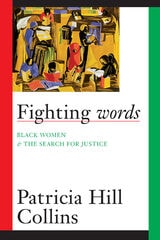
Fighting Words
Black Women and the Search for JusticePatricia Hill Collins
University of Minnesota Press, 1998
Finding Mecca in America
How Islam Is Becoming an American ReligionMucahit Bilici
University of Chicago Press, 2012

Fine Boys
A NovelEghosa Imasuen
Ohio University Press, 2021
A coming-of-age tale told from the perspective of Nigeria’s Generation X, caught amid the throes of a nascent pro-democracy movement, demoralizing corruption, and campus violence.
Ewaen is a Nigerian teenager, bored at home in Warri and eager to flee from his parents’ unhappy marriage and incessant quarreling. When Ewaen is admitted to the University of Benin, he makes new friends who, like him, are excited about their newfound independence. They hang out in parking lots, trading gibes in pidgin and English and discovering the pleasures that freedom affords them. But when university strikes begin and ruthlessly violent confraternities unleash mayhem on their campus, Ewaen and his new friends must learn to adapt—or risk becoming the confras' next unwilling recruits.
In his trademark witty, colloquial style, critically acclaimed author Eghosa Imasuen presents everyday Nigerian life against the backdrop of the pro-democracy riots of the 1980s and 1990s, the lost hopes of June 12 (Nigeria’s Democracy Day), and the terror of the Abacha years. Fine Boys is a chronicle of time, not just in Nigeria, but also for its budding post-Biafran generation.

Finland-Swedes in Michigan
Mika Roinila
Michigan State University Press, 2012
Who are the Finland-Swedes? Defined as citizens of Finland with a Swedish mother tongue, many know these people as “Swede- Finns” or simply “Swedes.” This book, the first ever to focus on this ethnolinguistic minority living in Michigan, examines the origins of the Finland-Swedes and traces their immigration patterns, beginning with the arrival of hundreds in the United States in the 1860s. A growing population until the 1920s, when immigration restrictions were put in place, the Finland-Swedes brought with them unique economic, social, cultural, religious, and political institutions, explored here in groundbreaking detail. Drawing on archival, church, and congregational records, interviews, and correspondence, this book paints a vivid portrait of Finland-Swedish life in photographs and text, and also includes detailed maps that show the movement of this group over time. The latest title in the Discovering the Peoples of Michigan series even includes a sampling of traditional Finland-Swedish recipes.
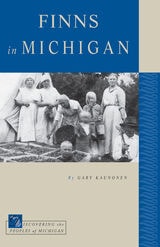
Finns in Michigan
Gary Kaunonen
Michigan State University Press, 2009
In Finns in Michigan Gary Kaunonen probes the intricacies of immigration, labor, and ideology among the members of this intriguing and historically important ethnic group. He skillfully traces the evolution of a vibrant, diverse, dramatic, and at times deeply quarrelsome people who left an indelible mark on the state's history.
Kaunonen examines the many schisms and splits that define the course of Finnish social life in Michigan. Michigan's Finns flocked to diverse cultural organizations that span a broad ideological spectrum. This book examines an extraordinarily wide range of organizations, including religious institutions, temperance societies, working-class political and labor groups, the cooperative movement, and a nationalist association of Finns.
Finns in Michigan is a study of the contributions of Michigan's Finns in the workplace, in society, and in cultural life. Unlike previous, sometimes mythologized, histories of the Finns in Michigan, Kaunonen's rendition strives to be a more accurate representation of "the good, the bad, and the other" activities of a group he calls "possibly America's most diverse family."
Fire in the Big House
America’s Deadliest Prison DisasterMitchel P. Roth
Ohio University Press, 2019
On April 21, 1930—Easter Monday—some rags caught fire under the Ohio Penitentiary’s dry and aging wooden roof, shortly after inmates had returned to their locked cells after supper. In less than an hour, 320 men who came from all corners of Prohibition-era America and from as far away as Russia had succumbed to fire and smoke in what remains the deadliest prison disaster in United States history.
Within 24 hours, moviegoers were watching Pathé’s newsreel of the fire, and in less than a week, the first iteration of the weepy ballad “Ohio Prison Fire” was released. The deaths brought urgent national and international focus to the horrifying conditions of America’s prisons (at the time of the fire, the Ohio Penitentiary was at almost three times its capacity). Yet, amid darkening world politics and the first years of the Great Depression, the fire receded from public concern.
In Fire in the Big House, Mitchel P. Roth does justice to the lives of convicts and guards and puts the conflagration in the context of the rise of the Big House prison model, local and state political machinations, and American penal history and reform efforts. The result is the first comprehensive account of a tragedy whose circumstances—violent unrest, overcrowding, poorly trained and underpaid guards, unsanitary conditions, inadequate food—will be familiar to prison watchdogs today.

Fire, Pestilence, and Death
St. Louis, 1849Christopher Alan Gordon
Missouri Historical Society Press, 2018

Firefly
Jabbour Douaihy
Seagull Books, 2022
Firefly paints a searing portrait of the city of Beirut at the outbreak of the Lebanese Civil War in the early 1970s, as seen through the eyes of its simple, yet perplexing, protagonist, Nizam al-Alami. On Nizam’s national ID card, no religion is listed. Muslim by birth, he is Christian by baptism. As a young boy, he found his way into an orchard while playing, and its owners, Touma and Rakheema, instantly fell for him and agreed to raise him as their own, as a Christian, without much resistance from his Muslim parents.
When he is grown, Nizam makes his way to Beirut to study law. Unable to bear the confines of the classroom, he abandons college to explore the city as he pleases. His apartment soon becomes a meeting place for his communist comrades, and he falls in love with Janan, the tormented artist whose dark paintings prophesy the city’s bloody future. When Beirut explodes, and the city is divided into a Christian East and a Muslim West, Nizam’s apartment turns into a hideout for armed militiamen, and Burj Square is emptied of everything except the Martyrs’ Statue that bears witness to the city’s most difficult moments. Nizam, too, bears witness, as he sees the corpses of the civil war’s victims pile up.
Jabbour Douaihy takes us through Nizam’s adventures and struggles as he faces stigmatization, homelessness, and violence in a society that considers him an outsider. Like the light-producing, charismatic fireflies that captured his imagination and eluded him as a child, Nizam is the glimmer of hope epitomized by those who reject binary identities in favor of the in-between. But how long, Douaihy asks, can this glimmer of hope truly last?
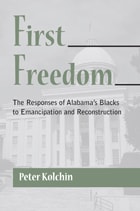
First Freedom
The Responses of Alabama's Blacks to Emancipation and ReconstructionPeter Kolchin
University of Alabama Press, 2008

First the Transition, then the Crash
Eastern Europe in the 2000sEdited by Gareth Dale
Pluto Press, 2011
The 1989-91 upheavals in Eastern Europe sparked a turbulent process of social and economic transition. Two decades on, with the global economic crisis of 2008-10, a new phase has begun.
This book explores the scale and trajectory of the crisis through case studies of the Czech Republic, Hungary, Latvia, Poland, Russia, Ukraine and the former Yugoslavia. The contributors focus upon the relationships between geopolitics, the world economy and class restructuring.
The book covers the changing relationship between business and states; foreign capital flows; financialisation and asset price bubbles; austerity and privatisation; and societal responses, in the form of reactionary populism and progressive social movements.
Challenging neoliberal interpretations that envisage the transition as a process of unfolding liberty, the dialectic charted in these pages reveals uneven development, attenuated freedoms and social polarisation.
Firsts Abroad
First-Generation Students' Journeys Outward and UpwardJeremy Townley
Rutgers University Press, 2026
Across the country, flagship universities and liberal arts colleges, regional state campuses and Ivy League institutions continue to adapt to a globalized economy. One key internationalization strategy is study abroad. But who gets to have an overseas experience? In Firsts Abroad, Jeremy Townley explores the stories of first-generation college students who participated in study abroad. Because of their multicultural, multilingual backgrounds, nontraditional paths to and through college, and hard-won life experiences, first-generation students possess knowledge, skills, and savvy developed in their families that help them take advantage of their time overseas. While abroad, these students also experience significant gains in social networks and cultural knowledge, as well as important transformations in worldview, that allow for the possibility of upward social mobility. This powerfully argued book reveals that study abroad, so important in a globalized world, may be most essential for students historically underserved by higher education.
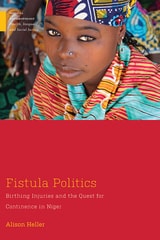
Fistula Politics
Birthing Injuries and the Quest for Continence in NigerHeller, Alison
Rutgers University Press, 2019

Flash Effect
Science and the Rhetorical Origins of Cold War AmericaDavid J. Tietge
Ohio University Press, 2002
The ways science and technology are portrayed in advertising, in the news, in our politics, and in the culture at large inform the way we respond to these particular facts of life. The better we are at recognizing the rhetorical intentions of the purveyors of information and promoters of mass culture, the more adept we become at responding intelligently to them.
Flash Effect, a startling book by David J. Tietge, documents the manner in which those at the highest levels of our political and cultural institutions conflated the rhetoric of science and technology with the rhetorics of religion and patriotism to express their policies for governance at the onset of the Cold War and to explain them to the American public.
Professor Tietge details our cultural attitudes about science in the early years of the Cold War, when on the heels of a great technological victory Americans were faced with the possibility of destruction by the very weapons that had saved them.
In Flash Effect we learn how, by symbolizing the scientist as both a father figure and a savior—and by celebrating the technological objects of his labor—the campaign to promote science took hold in the American consciousness. The products of that attitude are with us today more than ever.
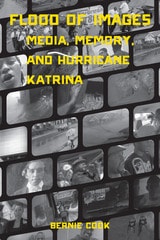
Flood of Images
Media, Memory, and Hurricane KatrinaBy Bernie Cook
University of Texas Press, 2015
Anyone who was not in New Orleans during Hurricane Katrina and the subsequent flooding of the city experienced the disaster as a media event, a flood of images pouring across television and computer screens. The twenty-four-hour news cycle created a surplus of representation that overwhelmed viewers and complicated understandings of the storm, the flood, and the aftermath. As time passed, documentary and fictional filmmakers took up the challenge of explaining what had happened in New Orleans, reaching beyond news reports to portray the lived experiences of survivors of Katrina. But while these narratives presented alternative understandings and more opportunities for empathy than TV news, Katrina remained a mediated experience.
In Flood of Images, Bernie Cook offers the most in-depth, wide-ranging, and carefully argued analysis of the mediation and meanings of Katrina. He engages in innovative, close, and comparative visual readings of news coverage on CNN, Fox News, and NBC; documentaries including Spike Lee’s When the Levees Broke and If God Is Willing and Da Creek Don’t Rise, Tia Lessin and Carl Deal’s Trouble the Water, and Dawn Logsdon and Lolis Elie’s Faubourg Treme; and the HBO drama Treme. Cook examines the production practices that shaped Katrina-as-media-event, exploring how those choices structured the possible memories and meanings of Katrina and how the media’s memory-making has been contested. In Flood of Images, Cook intervenes in the ongoing process of remembering and understanding Katrina.
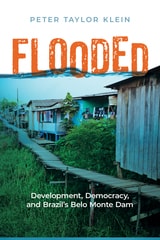
Flooded
Development, Democracy, and Brazil’s Belo Monte DamPeter Taylor Klein
Rutgers University Press, 2022
In the middle of the twentieth century, governments ignored the negative effects of large-scale infrastructure projects. In recent decades, many democratic countries have continued to use dams to promote growth, but have also introduced accompanying programs to alleviate these harmful consequences of dams for local people, to reduce poverty, and to promote participatory governance. This type of dam building undoubtedly represents a step forward in responsible governing. But have these policies really worked?
Flooded provides insights into the little-known effects of these approaches through a close examination of Brazil’s Belo Monte hydroelectric facility. After three decades of controversy over damming the Xingu River, a tributary of the Amazon, the dam was completed in 2019 under the left-of-center Workers’ Party, becoming the world’s fourth largest. Billions of dollars for social welfare programs accompanied construction. Nonetheless, the dam brought extensive social, political, and environmental upheaval to the region. The population soared, cost of living skyrocketed, violence spiked, pollution increased, and already overextended education and healthcare systems were strained. Nearly 40,000 people were displaced and ecosystems were significantly disrupted. Klein tells the stories of dam-affected communities, including activists, social movements, non-governmental organizations, and public defenders and public prosecutors. He details how these groups, as well as government officials and representatives from private companies, negotiated the upheaval through protests, participating in public forums for deliberation, using legal mechanisms to push for protections for the most vulnerable, and engaging in myriad other civic spaces. Flooded provides a rich ethnographic account of democracy and development in the making. In the midst of today’s climate crisis, this book showcases the challenges and opportunities of meeting increasing demands for energy in equitable ways.

Flows of Violence
Water, Infrastructures, and the State in Buenaventura, ColombiaFelipe Fernández
University of Arizona Press, 2025
Flows of Violence offers a profound ethnographic exploration of the intricate relationship between violence and water infrastructure in one of Colombia’s most marginalized cities. This groundbreaking work engages with the concept of “infrastructural violence,” revealing how the Colombian state’s neglect and inadequate provision of water services perpetuate inequality and suffering among Buenaventura’s residents. Through extensive fieldwork, Fernández provides rich empirical data and firsthand accounts that bring to light the daily struggles and resilience of the city’s inhabitants.
The book critically examines how everyday crime and state neglect intersect, altering the improvised practices of water storage and access among the population. It also highlights the innovative mechanisms employed by social movements and ordinary citizens to cope with and resist these challenges.
Flows of Violence is an essential read for scholars in anthropology, geography, and Latin American studies, offering valuable insights into the sociopolitical impacts of infrastructure. This timely contribution underscores the urgent need for equitable infrastructure development and social justice, making it a pivotal text for understanding urban poverty and state dynamics in Latin America and beyond.