Results by title
661 books match the query 'South America' and 18 start with f
Families in War and Peace
Chile from Colony to NationSarah C. Chambers
Duke University Press, 2015
Feeding the City
From Street Market to Liberal Reform in Salvador, Brazil, 1780–1860By Richard Graham
University of Texas Press, 2010
Winner, Bolton-Johnson Prize, Conference on Latin American History, 2011
Murdo J. McLeod Book Prize, 2011
On the eastern coast of Brazil, facing westward across a wide magnificent bay, lies Salvador, a major city in the Americas at the end of the eighteenth century. Those who distributed and sold food, from the poorest street vendors to the most prosperous traders—black and white, male and female, slave and free, Brazilian, Portuguese, and African—were connected in tangled ways to each other and to practically everyone else in the city, and are the subjects of this book. Food traders formed the city's most dynamic social component during the late eighteenth and early nineteenth centuries, constantly negotiating their social place. The boatmen who brought food to the city from across the bay decisively influenced the outcome of the war for Brazilian independence from Portugal by supplying the insurgents and not the colonial army. Richard Graham here shows for the first time that, far from being a city sharply and principally divided into two groups—the rich and powerful or the hapless poor or enslaved—Salvador had a population that included a great many who lived in between and moved up and down.
The day-to-day behavior of those engaged in food marketing leads to questions about the government's role in regulating the economy and thus to notions of justice and equity, questions that directly affected both food traders and the wider consuming public. Their voices significantly shaped the debate still going on between those who support economic liberalization and those who resist it.
Feminist Agendas and Democracy in Latin America
Jane S. Jaquette, ed.
Duke University Press, 2009
The book is organized around three broad topics. The first, women’s access to political power at the national level, is addressed by essays on the election of Michelle Bachelet in Chile, gender quotas in Argentina and Brazil, and the responses of the women’s movement to the “Bolivarian revolution” in Venezuela. The second topic, the use of legal strategies, is taken up in essays on women’s rights across the board in Argentina, violence against women in Brazil, and gender in the work of the Truth and Reconciliation Commission in Peru. Finally, the international impact of Latin American feminists is explored through an account of their participation in the World Social Forum, an assessment of a Chilean-led project carried out by women’s organizations in several countries to hold governments to the promises they made at international conferences in Cairo and Beijing, and an account of cross-border organizing to address femicides and domestic abuse in the Juárez-El Paso border region. Jane S. Jaquette provides the historical and political context of women’s movement activism in her introduction, and concludes the volume by engaging contemporary debates about feminism, civil society, and democracy.
Contributors. Jutta Borner, Mariana Caminotti, Alina Donoso, Gioconda Espina, Jane S. Jaquette, Beatriz Kohen, Julissa Mantilla Falcón, Jutta Marx, Gabriela L. Montoya, Flávia Piovesan, Marcela Ríos Tobar, Kathleen Staudt, Teresa Valdés, Virginia Vargas
Feminist Rehearsals
Gender at the Theatre in Early Twentieth-Century Argentina and MexicoMay Summer Farnsworth
University of Iowa Press, 2023
2023 George Freedley Memorial Award, Finalist
As feminism gained prominence in twentieth-century popular culture, dramatic conventions progressed accordingly, offering larger and more diverse roles for women characters. Feminist Rehearsals documents the early stages of feminist theatre in Argentina and Mexico, revealing how various aspects of performance culture—spectator formation, playwriting, professional acting and directing, and dramatic techniques—paralleled political activism and championed the goals of the women’s rights movement. Through performance and protest, feminists enacted new identities and pushed for myriad social and legislative reforms during a time when women were denied suffrage and full citizenship status. Together, feminist theatre and demonstrations politicized women spectators’ collective presence and promoted women’s rights in the public sphere.
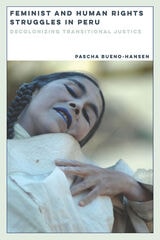
Feminist and Human Rights Struggles in Peru
Decolonizing Transitional JusticePascha Bueno-Hansen
University of Illinois Press, 2015
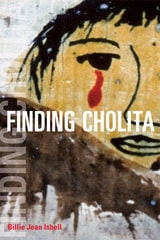
Finding Cholita
Billie Jean Isbell
University of Illinois Press, 2008
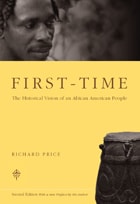
First-Time
The Historical Vision of an African American PeopleRichard Price
University of Chicago Press, 2002
First-Time's unique style of presentation preserves the integrity of both its oral and documentary sources, uniting them in a profound meditation on the roles of history and memory. This second edition includes a new preface by the author, discussing First-Time's impact and recounting the continuing struggles of the Saramaka people.

For Glory and Bolívar
The Remarkable Life of Manuela SáenzBy Pamela S. Murray
University of Texas Press, 2008
She was a friend, lover, and confidante of charismatic Spanish American independence hero Simón Bolívar and, after her death, a nationalist icon in her own right. Yet authors generally have chosen either to romanticize Manuela Sáenz or to discount her altogether. For Glory and Bolivar: The Remarkable of Life of Manuela Sáenz, by contrast, offers a comprehensive and clear-eyed biography of her. Based on unprecedented archival research, it paints a vivid portrait of the Quito-born "Libertadora," revealing both an exceptional figure and a flesh-and-blood person whose life broadly reflected the experiences of women during Spanish America's turbulent Age of Revolution.
Already married at the time of her meeting with the famous Liberator, Sáenz abandoned her husband in order to become not only Bolívar's romantic companion, but also his official archivist, a member of his inner circle, and one of his most loyal followers. She played a central role in Spanish South America's independence drama and eventually in developments leading to the consolidation of new nations. Pamela Murray, for the first time, closely examines Sáenz's political trajectory including her vital, often-overlooked years in exile. She exposes the myths that still surround her. She offers, in short, a nuanced and much-needed historical perspective, one that balances recognition of Sáenz's uniqueness with awareness of the broader forces that shaped this dynamic nineteenth-century woman.
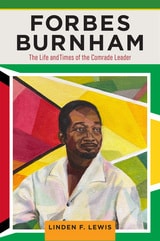
Forbes Burnham
The Life and Times of the Comrade LeaderLinden F. Lewis
Rutgers University Press, 2024
Forbes Burnham: The Life and Times of the Comrade Leader is the first political biography of this complex and influential figure. It charts how the political party he founded, the People’s National Congress, combined nationalist rhetoric, socialist policies, and Pan-Africanist philosophies. It also explores how, in a country already deeply divided between the descendants of African slaves and Indian indentured servants, Burnham consolidated political power by intensifying ethnic polarizations. Drawing from historical archives as well as new interviews with the people who knew Burnham best, sociologist Linden F. Lewis examines how his dictatorial tendencies coexisted with his progressive convictions. Forbes Burnham is a compelling study of the nature of postcolonial leadership and its pitfalls.
Forever Familias
Race, Gender, and Indigeneity in Peruvian MormonismJason Palmer
University of Illinois Press, 2024
Peruvian members of the Church of Jesus Christ of Latter-day Saints face the dilemma of embracing their faith while finding space to nourish their Peruvianness. Jason Palmer draws on eight years of fieldwork to provide an on-the-ground look at the relationship between Peruvian Saints and the racial and gender complexities of the contemporary Church.
Peruvian Saints discovered that the foundational ideas of kinship and religion ceased being distinct categories in their faith. At the same time, they came to see that LDS rituals and reenactments placed coloniality in opposition to the Peruvians’ indigenous roots and family against the more expansive Peruvian idea of familia. In part one, Palmer explores how Peruvian Saints resolved the first clash by creating the idea of a new pioneer indigeneity that rejected victimhood in favor of subtle engagements with power. Part two illuminates the work performed by Peruvian Saints as they stretched the Anglo Church’s model of the nuclear family to encompass familia.

Foundations of Colonial Rule
Rebuilding Lima after the Earthquake of 1687Judith Mansilla
University of Alabama Press, 2026
Foundations of Colonial Rule analyzes diverse primary documents to understand how the viceroyalty, the Catholic clergy, local authorities, and everyday citizens of Lima, Peru, managed and rebuilt after the 1687 earthquake.
Framing a Lost City
Science, Photography, and the Making of Machu PicchuBy Amy Cox Hall
University of Texas Press, 2017
When Hiram Bingham, a historian from Yale University, first saw Machu Picchu in 1911, it was a ruin obscured by overgrowth whose terraces were farmed a by few families. A century later, Machu Picchu is a UNESCO world heritage site visited by more than a million tourists annually. This remarkable transformation began with the photographs that accompanied Bingham’s article published in National Geographic magazine, which depicted Machu Picchu as a lost city discovered. Focusing on the practices, technologies, and materializations of Bingham’s three expeditions to Peru (1911, 1912, 1914–1915), this book makes a convincing case that visualization, particularly through the camera, played a decisive role in positioning Machu Picchu as both a scientific discovery and a Peruvian heritage site.
Amy Cox Hall argues that while Bingham’s expeditions relied on the labor, knowledge, and support of Peruvian elites, intellectuals, and peasants, the practice of scientific witnessing, and photography specifically, converted Machu Picchu into a cultural artifact fashioned from a distinct way of seeing. Drawing on science and technology studies, she situates letter writing, artifact collecting, and photography as important expeditionary practices that helped shape the way we understand Machu Picchu today. Cox Hall also demonstrates that the photographic evidence was unstable, and, as images circulated worldwide, the “lost city” took on different meanings, especially in Peru, which came to view the site as one of national patrimony in need of protection from expeditions such as Bingham’s.
Francisco de Paula Brito
A Black Publisher in Imperial BrazilRodrigo Camargo de Godoi
Vanderbilt University Press, 2020
During that period, Francisco de Paula Brito became one of the central figures in the cultural and political scene in the Imperial capital, particularly through his work as a publisher. Paula Brito’s success was due in part to his ability to forge solid alliances with the Empire’s ruling elite—among them leading politicians responsible for the unification of the vast Brazilian territory and for the maintenance of slavery and the illegal trafficking of Africans. Consequently, through the books and newspapers he published, Francisco de Paula Brito became part of a much larger project.
From Fanatics to Folk
Brazilian Millenarianism and Popular CulturePatricia R. Pessar
Duke University Press, 2004
Pessar combines cultural history spanning the colonial period to the present; comparative case studies of the Canudos, Contestado, Juazeiro, and Santa Brígida movements; and three decades of ethnographic research in the Brazilian Northeast. Highlighting the involvement of a broad range of individuals and institutions, the cross-fertilization between movements, contestation and accommodation vis-à-vis the church and state, and matters of spirituality and faith, From Fanatics to Folk reveals Brazilian millenarianism as long-enduring and constantly in flux.

From Man to Ape
Darwinism in Argentina, 1870-1920Adriana Novoa and Alex Levine
University of Chicago Press, 2010
Upon its publication, The Origin of Species was critically embraced in Europe and North America. But how did Darwin’s theories fare in other regions of the world? Adriana Novoa and Alex Levine offer here a history and interpretation of the reception of Darwinism in Argentina, illuminating the ways culture shapes scientific enterprise.
In order to explore how Argentina’s particular interests, ambitions, political anxieties, and prejudices shaped scientific research, From Man to Ape focuses on Darwin’s use of analogies. Both analogy and metaphor are culturally situated, and by studying scientific activity at Europe’s geographical and cultural periphery, Novoa and Levine show that familiar analogies assume unfamiliar and sometimes startling guises in Argentina. The transformation of these analogies in the Argentine context led science—as well as the interaction between science, popular culture, and public policy—in surprising directions. In diverging from European models, Argentine Darwinism reveals a great deal about both Darwinism and science in general.
Novel in its approach and its subject, From Man to Ape reveals a new way of understanding Latin American science and its impact on the scientific communities of Europe and North America.

From Two Republics to One Divided
Contradictions of Postcolonial Nationmaking in Andean PeruMark Thurner
Duke University Press, 2001
Working within an innovative and panoramic historical and linguistic framework, Thurner examines the paradoxes of a resurgent Andean peasant republicanism during the mid-1800s and provides a critical revision of the meaning of republican Peru’s bloodiest peasant insurgency, the Atusparia Uprising of 1885. Displacing ahistorical and nationalist readings of Inka or Andean continuity, and undermining the long-held notion that the colonial legacy is the dominant historical force shaping contemporary Andean reality, Thurner suggests that in Peru, the postcolonial legacy of Latin America’s nation-founding nineteenth century transfigured, and ultimately reinvented, the colonial legacy in its own image.
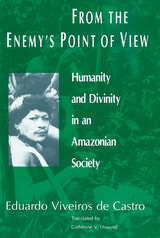
From the Enemy's Point of View
Humanity and Divinity in an Amazonian SocietyEduardo Viveiros de Castro
University of Chicago Press, 1992
Building upon ethnographic description and interpretation, Viveiros de Castro addresses the central aspect of the Arawete's concept of divinity—consumption—showing how its cannibalistic expression differs radically from traditional representations of other Amazonian societies. He situates the Araweté in contemporary anthropology as a people whose vision of the world is complex, tragic, and dynamic, and whose society commands our attention for its extraordinary openness to exteriority and transformation. For the Araweté the person is always in transition, an outlook expressed in the mythology of their gods, whose cannibalistic ways they imitate. From the Enemy's Point of View argues that current concepts of society as a discrete, bounded entity which maintains a difference between "interior" and "exterior" are wholly inappropriate in this and in many other Amazonian societies.
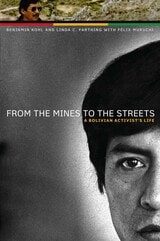
From the Mines to the Streets
A Bolivian Activist’s LifeBy Benjamin Kohl and Linda C. Farthing, with Félix Muruchi
University of Texas Press, 2011
From the Mines to the Streets draws on the life of Félix Muruchi to depict the greater forces at play in Bolivia and elsewhere in South America during the last half of the twentieth century. It traces Félix from his birth in an indigenous family in 1946, just after the abolition of bonded labor, through the next sixty years of Bolivia's turbulent history. As a teenager, Félix followed his father into the tin mines before serving a compulsory year in the military, during which he witnessed the 1964 coup d'état that plunged the country into eighteen years of military rule. He returned to work in the mines, where he quickly rose to become a union leader. The reward for his activism was imprisonment, torture, and exile. After he came home, he participated actively in the struggles against neoliberal governments, which led in 2006—the year of his sixtieth birthday—to the inauguration of Evo Morales as Bolivia's first indigenous president.
The authors weave Muruchi's compelling recollections with contextual commentary that elucidates Bolivian history. The combination of an unforgettable life story and in-depth text boxes makes this a gripping, effective account, destined to become a classic sourcebook.