Results by title
1214 books match the query 'Subjects & Themes' and 38 start with f
FROM OLD WOMAN TO OLDER WOMEN
Contemporary Culture and Women’s NarrativesSally Chivers
The Ohio State University Press, 2003
Sally Chivers provides a fascinating look at and challenge to how North American popular culture has portrayed old age as a time of disease, decline, and death. Within contemporary Canadian literary and film production, a tradition of articulate central elderly female characters challenges what the aging body has come to signify in a broader cultural context. Rather than seek positive images of aging, which can do their own prescriptive damage, the author focuses on constructive depictions that provide a basis on which to create new stories and readings of growing old. This type of humanities approach to the study of aging promises neither to fixate on nor avoid consideration of the role of the body in the much broader process of getting older. The progression implied in the title from the solitary symbol of The Old Woman toward a community of older women, indicates not a move toward euphemism, but rather an increasing and necessary awareness of the social and cultural dimensions of aging.
Fair Rosamond
A Study of the Development of a Literary ThemeVirgil B. Heltzel
Northwestern University Press, 1947
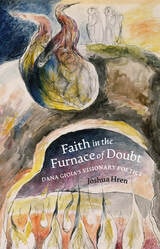
Faith in the Furnace of Doubt
Dana Gioia's Poetics of BeliefJoshua Hren
Catholic University of America Press, 2025
Faithful Error
Sarah Louise Garrido
University Press of Colorado, 2026
Exploring the tension between freedom and fidelity, Faithful Error meditates on life’s most sacred and often difficult loves—romantic, parental, familial, and spiritual—against a backdrop of environmental unease. These poems, rich in natural imagery, trace an emotional journey from intimate contemplation to transcendent questioning, grappling with the value of devotion in a world seemingly designed to extinguish hope. A palpable emotional intensity simmers beneath the restrained language, mirroring the manuscript's central dynamic: a yearning to err, yet ultimately finding freedom in a return—however complicated—to faith.

Fantasy Travel
Vintage People on Photo PostcardsTom Phillips
Bodleian Library Publishing, 2012
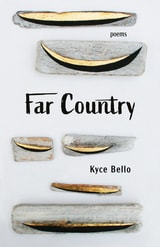
Far Country
PoemsKyce Bello
University of Nevada Press, 2025

Fashion Cities Africa
Edited by Hannah Azieb Pool
Intellect Books, 2016
Tied to the Fashion Cities Africa exhibition at the Brighton Museum, the book gives much needed attention to four key African fashion scenes: Nairobi, Lagos, Casablanca, and Johannesburg—one from each region of the continent. Filled with interviews of leading African fashion designers, stylists, and commentators, alongside hundreds of exclusive street-style images, Fashion Cities Africa is a landmark book that should be celebrated in fashion houses the world over.
Fashion Knowledge
Theories, Methods, Practices and PoliticsEdited by Elke Gaugele and Monica Titton
Intellect Books, 2024
At a point when fashion studies are expanding and the fashion industry is at a crucial point of change, Fashion Knowledge makes a valuable contribution to the field. The book explores current issues in fashion research, with a focus on the relationship between theory and practice. This edited collection assembles academic essays and intellectual activism next to visual essays and artistic interventions, proposing a different concept for fashion research that eschews the traditional logic of academic fashion studies. It features acclaimed designers, artists, curators, and theorists whose work investigates the multi-faceted debates on the rise of practice-based research in fashion. Contributors look at new forms of fashion knowledge that are forming along with shifting practices, shedding light on the entanglement of fashion and politics in both contemporary and historical moments.
Fashioning Femininity and English Renaissance Drama
Karen Newman
University of Chicago Press, 1991
Through the critical lens of poststructuralism, Newman reads anatomies, conduct and domesticity handbooks, sermons, homilies, ballads, and court cases to delineate the ideologies of femininity they represented and produced. Arguing that drama, as spectacle, provides a peculiarly useful locus for analyzing the management of femininity, Newman considers the culture of early modern London to reveal how female subjectivity was fashioned and staged in the plays of Shakespeare, Jonson, and others.
Fiction Beyond Secularism
Justin Neuman
Northwestern University Press, 2014
Modernist thinkers once presumed a progressive secularity, with the novel replacing religious texts as society’s moral epics. Yet religion—beginning with the Iranian revolution of 1979, through the collapse of communism, and culminating in the singular rupture of September 11, 2001—has not retreated quietly out of sight.
In Fiction Beyond Secularism, Justin Neuman argues that contemporary novelists who are most commonly identified as antireligious—among them Orhan Pamuk, Salman Rushdie, Ian McEwan, Margaret Atwood, Nadine Gordimer, Haruki Murakami, and J. M. Coetzee—have defied assumptions and have instead written some of the most trenchant critiques of secular ideologies, as well as the most exciting and rigorous inquiries into the legacies of the religious imagination. As a result, many readers (or nonreaders) on either side of the religious divide neglect the insights of works like The Satanic Verses, Disgrace, and Snow. Fiction Beyond Secularism serves as a timely corrective.
Fictional Environments
Mimesis, Deforestation, and Development in Latin AmericaVictoria Saramago
Northwestern University Press, 2021
Winner of the Brazilian Studies Association’s Roberto Reis Book Award for First Monograph • Honorable Mention for the Latin American Studies Association’s Antonio Candido Book Award • Shortlisted for the Association for the Study of Literature and Environment Book Award
Fictional Environments: Mimesis, Deforestation, and Development in Latin America investigates how fictional works have become sites for the production of knowledge, imagination, and intervention in Latin American environments. It investigates the dynamic relationship between fictional images and real places, as the lasting representations of forests, rural areas, and deserts in novels clash with collective perceptions of changes like deforestation and urbanization.
From the backlands of Brazil to a developing Rio de Janeiro, and from the rainforests of Venezuela and Peru to the Mexican countryside, rapid deforestation took place in Latin America in the second half of the twentieth century. How do fictional works and other cultural objects dramatize, resist, and intervene in these ecological transformations? Through analyses of work by João Guimarães Rosa, Alejo Carpentier, Juan Rulfo, Clarice Lispector, and Mario Vargas Llosa, Victoria Saramago shows how novels have inspired conservationist initiatives and offered counterpoints to developmentalist policies, and how environmental concerns have informed the agendas of novelists as essayists, politicians, and public intellectuals. This book seeks to understand the role of literary representation, or mimesis, in shaping, sustaining, and negotiating environmental imaginaries during the deep, ongoing transformations that have taken place from the 1950s to the present.
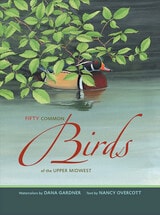
Fifty Common Birds of the Upper Midwest
Dana Gardner
University of Iowa Press, 2006
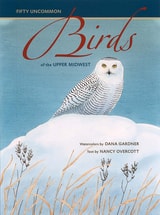
Fifty Uncommon Birds of the Upper Midwest
Dana Gardner
University of Iowa Press, 2007
Fighting Over There
U.S. War Making and Contemporary Refugee LiteratureAlaina Kaus
University of Massachusetts Press, 2023
U.S. foreign policy has long been built on a dichotomy of an irreplaceable “here” and an expendable “there.” In his 2003 announcement of the military campaign in Iraq, George W. Bush declared that we would fight in the Middle East so we wouldn’t have to fight “on the streets of our cities.” But what do the millions of people who live over “there” have to say about U.S. interventions and the displacement they provoke?
In this pathbreaking study, Alaina Kaus analyzes literature by and about refugees who fled Southeast Asia, Central America, the Caribbean, North Africa, and the Middle East, in the wake of U.S. military occupation and economic intervention. Narratives by authors such as Lan Cao, Viet Thanh Nguyen, Demetria Martínez, Héctor Tobar, Dave Eggers, Mohsin Hamid, and Riverbend reveal contradictions in the human rights pledges that undergird U.S. foreign policy, which promote freedom while authorizing intervention and displacement, and favor market-based solutions over social justice and racial equality.
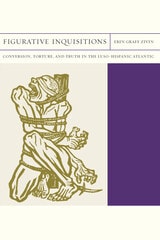
Figurative Inquisitions
Conversion, Torture, and Truth in the Luso-Hispanic AtlanticErin Graff Zivin
Northwestern University Press, 2014
Winner, 2015 LAJSA Best Book in Latin American Jewish Studies
The practices of interrogation, torture, and confession have resurfaced in public debates since the early 2000s following human rights abuses around the globe. Yet discussion of torture has remained restricted to three principal fields: the legal, the pragmatic, and the moral, eclipsing the less immediate but vital question of what torture does.Figurative Inquisitions seeks to correct this lacuna by approaching the question of torture from a literary vantage point.
This book investigates the uncanny presence of the Inquisition and marranismo (crypto-Judaism) in modern literature, theater, and film from Mexico, Brazil, and Portugal. Through a critique of fictional scenes of interrogation, it underscores the vital role of the literary in deconstructing the relation between torture and truth. Figurative Inquisitions traces the contours of a relationship among aesthetics, ethics, and politics in an account of the "Inquisitional logic" that continues to haunt contemporary political forms. In so doing, the book offers a unique humanistic perspective on current torture debates.
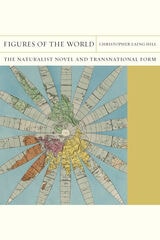
Figures of the World
The Naturalist Novel and Transnational FormChristopher Laing Hill
Northwestern University Press, 2020
The book begins by tracing the history of naturalist fiction from the 1860s into the twentieth century and the reasons it spread around the world. Hill explores the development of three naturalist figures—the degenerate body, the self-liberated woman, and the social milieu—through close readings of fiction from France, Japan, and the United States. Rather than genealogies of European influence or the domination of cultural “peripheries” by the center, novels by Émile Zola, Tayama Katai, Frank Norris, and other writers reveal conspicuous departures from metropolitan models as writers revised naturalist methods to address new social conditions. Hill offers a new approach to studying culture on a large scale for readers interested in literature, the arts, and the history of ideas.
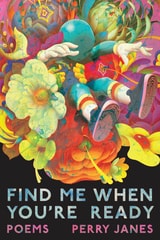
Find Me When You're Ready
PoemsPerry Janes
Northwestern University Press, 2024
A powerful debut and a lyric coming-of-age narrative that interrogates the myths we carry
In Find Me When You’re Ready, Perry Janes traces a sweeping journey from Detroit to Los Angeles. As he leaves home and forges toward California, the speaker in these poems considers how we learn and mislearn ideas about manhood, confronts the aftershocks of childhood sexual abuse, and questions the human need for belonging. By embracing the touchstones of youth—movies, lore, graphic novels—these poems assert the speaker’s defiant right to childhood even amid damage.
As the collection arcs toward adulthood, the speaker embodies a vision of healing that refuses easy binaries and embraces the joys of intimacy. Across each of its five acts, Perry Janes’s debut collection is driven by an interest troubling our creation myths, asking who built them, why we carry them, and how we might set them aside.
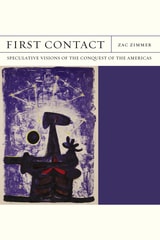
First Contact
Speculative Visions of the Conquest of the AmericasZac Zimmer
Northwestern University Press, 2025
Examining the power of speculative fiction to reimagine historical accounts of the conquest of the Americas
The historical conquest of the Americas resides at the core of all first-contact narratives, which stage colonization and resistance in the generic guise of speculative fiction. Starting from this axiom, First Contact: Speculative Visions of the Conquest of the Americas moves through a corpus of Mexican novels, Andean visual arts practices, and other cultural artifacts that have dramatized counterfactual narratives. Reimagining the early colonial period’s historiography from a south-to-north directionality while inventing parallel realities, these texts, which are concerned with limit cases, alterities, and alternative temporalities, refuse any reliance on the imperial ontologies of European expansion. Zac Zimmer examines these works to explore the slippage that exists between science fiction as the exemplary genre of the modern, colonial reality and literary speculation as an aesthetic tool that can be used to imagine other possible worlds. First Contact thus poses a foundational question: Can we understand the conquest as an originary world-historical event without eclipsing the other cosmologies that existed, and continue to exist, within the contact zone? Can we decolonize the speculative imagination itself?
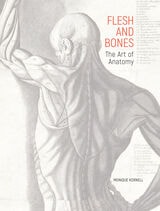
Flesh and Bones
The Art of AnatomyMonique Kornell
J. Paul Getty Trust, The, 2022
This illustrated volume examines the different methods artists and anatomists used to reveal the inner workings of the human body and evoke wonder in its form.
For centuries, anatomy was a fundamental component of artistic training, as artists such as Leonardo da Vinci and Michelangelo sought to skillfully portray the human form. In Europe, illustrations that captured the complex structure of the body—spectacularly realized by anatomists, artists, and printmakers in early atlases such as Andreas Vesalius’s De humani corporis fabrica libri septem of 1543—found an audience with both medical practitioners and artists.
Flesh and Bones examines the inventive ways anatomy has been presented from the sixteenth through the twenty-first century, including an animated corpse displaying its own body for study, anatomized antique sculpture, spectacular life-size prints, delicate paper flaps, and 3-D stereoscopic photographs. Drawn primarily from the vast holdings of the Getty Research Institute, the over 150 striking images, which range in media from woodcut to neon, reveal the uncanny beauty of the human body under the skin.
This volume is published to accompany an exhibition on view at the Getty Research Institute at the Getty Center from February 22 to July 10, 2022.
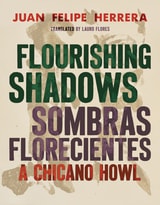
Flourishing Shadows / Sombras Florecientes
A Chicano HowlJuan Felipe Herrera; Translated by Lauro Flores
University of Arizona Press, 2026
From former U.S. poet laureate Juan Felipe Herrera comes a searing bilingual collection that speaks directly to America and all its peoples. Flourishing Shadows / Sombras Florecientes is a lyrical journey through migration, memory, and resistance—an urgent address to a nation grappling with its identity. Blending autobiography and Indigenous, Chicanx, and Beat traditions, Herrera reclaims language as a tool of compassion and truth. With ink drawings and evocative verse, this book honors the migrants who traverse borders and histories, flourishing even in the shadows. A call to listen, to remember, and to act.
More than a poetic critique, this book initiates a conversation—a direct address to readers that invites reflection, solidarity, and action. Drawing on his anthropological training and lived experience, Herrera weaves together the cultural richness of Indigenous Mexico, the urban vibrancy of San Francisco’s literary scene, and the enduring legacy of migrant journeys. Flourishing Shadows / Sombras Florecientes is a vital addition to the Camino del Sol series and a powerful testament to the resilience and humanity of those too often relegated to the margins.
Flying through a Hole in the Storm
PoemsFleda Brown
Ohio University Press, 2021

Folk Physics
New and Selected PoemsMolly Brodak
University of Iowa Press, 2027
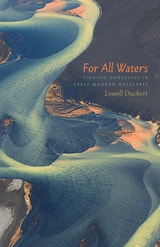
For All Waters
Finding Ourselves in Early Modern WetscapesLowell Duckert
University of Minnesota Press, 2017
Recent years have witnessed a surge in early modern ecostudies, many devoted to Shakespearean drama. Yet in this burgeoning discipline, travel writing appears moored in historicization, inorganic subjects are far less prevalent than organic ones, and freshwater sites are hardly visited. For All Waters explores these uncharted wetscapes.
Lowell Duckert shows that when playwrights and travel writers such as Sir Walter Raleigh physically interacted with rivers, glaciers, monsoons, and swamps, they composed “hydrographies,” or bodily and textual assemblages of human and nonhuman things that dissolved notions of human autonomy and its singular narrativity. With a playful, punning touch woven deftly into its theoretical rigor, For All Waters disputes fantasies of ecological solitude that would keep our selves high and dry and that would try to sustain a political ecology excluding water and the poor. The lives of both humans and waterscapes can be improved simultaneously through direct engagement with wetness.
For All Waters concludes by investigating waterscapes in peril today—West Virginia’s chemical rivers and Iceland’s vanishing glaciers—and outlining what we can learn from early moderns’ eco-ontological lessons. By taking their soggy and storied matters to heart, and arriving at a greater realization of our shared wetness, we can conceive new directions to take within the hydropolitical crises afflicting us today.
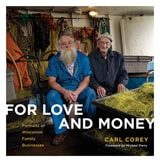
For Love and Money
Portraits of Wisconsin Family BusinessesCarl Corey
Wisconsin Historical Society Press, 2014
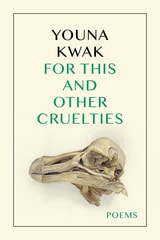
For This and Other Cruelties
Youna Kwak
University of Iowa Press, 2025
CALIBA’s 2025 Golden Poppy Book Award Winner, Poetry
The shadow of mothering has never been given a richer, fuller, more debased vision than in Youna Kwak’s For This and Other Cruelties. Kwak casts a cold eye on the splendid and cruel intransigence of maternal paradoxes in all their impossible double binds, monstrous pleasures, and profane mystifications. Shifting between lyric and prose poems, this collection throws slanted light on the ineffability of our deepest attachments, envisioning a world where mother is “a creature whose only enemy could be human.” Kwak brings us face to face with the irreconcilable facts of being mother, mothered, and alive.
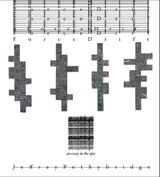
Force Drift
An Essay in the EpicJeffrey Pethybridge
Tupelo Press, 2025
The poems in Force Drift recall Gilles Deleuze’s insight that art “is not a matter of reproducing or inventing forms, but of capturing forces.” Through the formal range of this dynamic sequence, Pethybridge achieves something like a synthesis of Deleuze’s opposition whereby the invention of poetic form becomes the very means of capturing, registering forces: “a reckoning lyric.”
The task of reckoning renders visible the violence of the state that lies at the heart of the matter precisely because the state intends to conceal or justify its brutality through the invocation of emergency powers, as well as the state of exception, or how the state disappears persons in its network of black site prisons. As the political scientist Darius Rejali has demonstrated, it is in fact democracies that have refined “invisible tortures” such as sensory deprivation, stress-positions, and the waterboard.
Working at the intersection of documentary poetics and theories of the epic, Pethybridge recommits poetry to a responsibility for a description of history. As a poet-researcher, he asks: “what would be possible…if listening / were the leading-form of being.” Driven by argument, abstraction, and assemblage, the poems in Force Drift address themselves to the irreparable, the “traumaeffect,” within the war on terror’s record of atrocity. Force Drift is a cri de coeur, political critique, and essay in the epic.
Against the world-destroying violence of the US torture program, Force Drifts juxtaposes a catalog of energies, forms, and genres. It is abolitionist, citational, architectural, chromatic, and replete with visual poetries ranging from the arabasques of tzahibs to erasures to extreme measures of leading and kerning. Even when its language is reduced to the pure transcription of pain––”aiai aiai aiai”––Force Drift is committed to aliveness and embodiment as “final treaty of the person,” as conscience and counterworld to the history as catastrophe of US imperialism, “irrefutable as the sun to the eye.”
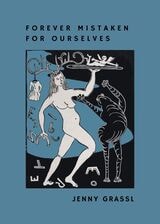
Forever Mistaken for Ourselves
Jenny Grassl
Tupelo Press, 2026
A collection of poems envisioned as a magic wardrobe of mirrors, vast with ocean and meadow, revealing reflections of the muses, a deer woman, and a sea-monster lover.
Forever Mistaken for Ourselves tells a story of transformations. Iron dresses, veils nailed to an hourglass, and a sex-changing flower/human defy or define a woman and her place in daily life and history. Queen Anne's black lace leaves holes open for a ghost. Never just coy, these characters and artifacts get up and do battle with complacency, in an all too often misogynistic world. Beasts come and go through the mirrors, a fish-man breaking through to deliver a whole-body kiss to a woman. Forests rise, and lawns “lean lethargies” to hold the reflected images of the speakers. Is there a confirmation of existence? “If she is—a silver say-so.”
Form and Instability
Eastern Europe, Literature, Postimperial DifferenceAnita Starosta
Northwestern University Press, 2015
Located at the intersection of comparative literature, area studies, and literary theory, this interdisciplinary study has a twofold commitment: to Eastern Europe on the one hand and to literature on the other. It aims to intervene in the way we conceive of Eastern Europe by seeking to develop a more equitable way of thinking, one that avoids subordinating it to Eurocentric narratives of progress. At the same time, it marshals literature as both object and method of this rethinking, in order to extend existing conceptions of the usefulness and of the proper organization of literary studies. The three terms in the title of this book mark a passage—via literature—from “Eastern Europe” as an inadequate and obsolescent category to “post-imperial difference” as a more accurate, if provisional, account of the region. By way of original readings of particular texts, and by attending to literature as a critical
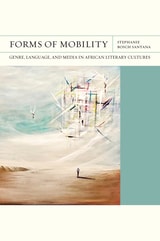
Forms of Mobility
Genre, Language, and Media in African Literary CulturesStephanie Bosch Santana
Northwestern University Press, 2025
Presents alternative categories of fiction through which to examine how contemporary writers have envisaged Africa’s changing literary terrains
Stephanie Bosch Santana analyzes southern African writers’ experimentations with literary form in periodical print and digital media since the mid-twentieth century in order to offer an alternative account of contemporary African imaginations of mobility. Based on an understudied archive of texts in English and Chichewa/Nyanja from Malawi, South Africa, Zimbabwe, and Zambia, Forms of Mobility: Genre, Language, and Media in African Literary Cultures examines new, noncanonical categories of fiction, including migrant forms, township tales, weekend stories, and digital diaries. These generically, linguistically, and geographically mobile forms map changing ideas of interconnection and belonging. By reading them “in motion,” as they travel across space, time, genre, and language and between publications and platforms, Bosch Santana limns multiple centers of literary influence and relation across southern African and Black diasporas, revealing forms of literary mobility and space making that are occluded by current models of world literature.
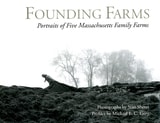
Founding Farms
Portraits of Five Massachusetts Family FarmsStanley E. Sherer
University of Massachusetts Press, 1993
With each passing year, the number of family farms in the United States diminishes. Fewer people have the persistence and ingenuity to wrest a livelihood from the land in an era of corporate ownership and mass production. Yet some family farms survive.
Through words and photographs, this book documents the long lives of five of the oldest farms in Massachusetts. Each has remained in the same family for more than two, sometimes three, centuries and each has a distinctive history. The devotion to the land and family heritage is palpable in the stories these five families tell.
Stan Sherer’s remarkable photographs depict the activities of the family members as they go about their daily labors, planting crops, feeding animals, applying new technologies to ancient tasks, and coping with the vagaries of weather and state regulations. Michael E. C. Gery’s narrative traces how the farms began, what has sustained them through the generations, and how the families who run them today feel about their past, present, and future. These stories are told largely through the words of the people themselves.
The result is a complex portrait that moves beyond traditional stereotypes to reveal the realities of family farm life in an increasingly urbanized society.
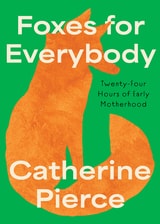
Foxes for Everybody
Twenty-Four Hours of Early MotherhoodCatherine Pierce
Northwestern University Press, 2026
Like a newborn’s patterns of sleeping and waking, the revelations of motherhood don’t follow a reasonable schedule, and there’s no clocking out. Organized around the hours of the day, Foxes for Everybody gives voice to the marvels, fears, absurdities, and astonishments of parenthood. These essays offer twenty-four glimpses into how we experience time, our families, our planet, and all of those small moments that aren’t small at all. In memories and reflections that weave through tornadoes and jellyfish, cemeteries and carousels, mortality, mental health, and the exquisite gift of a perfect sentence, acclaimed writer Catherine Pierce reminds us that fear and joy can and do live side by side, and urges us to stay awake—even when, especially when, we’re at the brink of exhaustion—to the possibility of wonder.

Frank Lloyd Wright’s Penwern
A Summer EstateMark Hertzberg
Wisconsin Historical Society Press, 2019
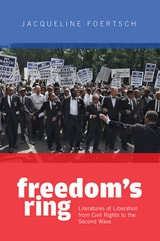
Freedom’s Ring
Literatures of Liberation from Civil Rights to the Second WaveJacqueline Foertsch
Rutgers University Press, 2021
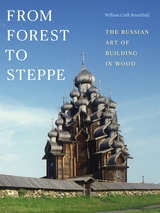
From Forest to Steppe
The Russian Art of Building in WoodWilliam Craft Brumfield
Duke University Press, 2025
In From Forest to Steppe, renowned scholar and photographer William Craft Brumfield offers a panoramic survey of Russia’s centuries-long heritage of wooden architecture. Lavishly illustrated with more than 400 color photographs, the volume links log-built barns, windmills, houses, and churches in the Far North; Buddhist shrines in the Transbaikal region; and eighteenth-century palaces on the outskirts of Moscow. Brumfield also takes readers to the estate houses of many Russian literary giants, from Chekhov and Tolstoy to Dostoevsky and Pushkin. Spanning thousands of photographed sites, five decades of field work, and seven time zones, Brumfield’s photographs offer compelling evidence of the adaptability of log construction and its ability to transcend class, cultural, and aesthetic boundaries.
In the decades since Brumfield began photographing Russian architecture, many of the buildings he has documented have been demolished or abandoned and left to rot at alarming rates. Brumfield observes a contradiction in contemporary Russia: It acknowledges the cultural importance of wooden buildings yet struggles to find and dedicate the resources and solutions needed to save them. A hymn and elegy to the long Russian practice of building with wood, From Forest to Steppe is an unparalleled look into one of the world’s most singular architectural traditions.
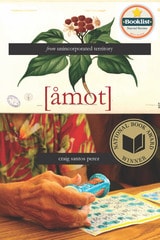
From Unincorporated Territory [åmot]
Craig Santos Perez
Omnidawn, 2023
This book is the fifth collection in Craig Santos Perez’s ongoing from unincorporated territory series about the history of his homeland, the western Pacific island of Guåhan (Guam), and the culture of his indigenous Chamoru people. “Åmot” is the Chamoru word for “medicine,” commonly referring to medicinal plants. Traditional Chamoru healers were known as yo’åmte; they gathered åmot in the jungle and recited chants and invocations of taotao’mona, or ancestral spirits, in the healing process.
Through experimental and visual poetry, Perez explores how storytelling can become a symbolic form of åmot, offering healing from the traumas of colonialism, militarism, migration, environmental injustice, and the death of elders.
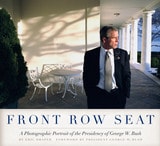
Front Row Seat
A Photographic Portrait of the Presidency of George W. BushBy Eric Draper
University of Texas Press, 2013
America’s forty-third president, George W. Bush, presided over eight of the most dramatic years in recent history, from the 9/11 attacks early in his administration to the worldwide economic crisis of 2008. By his side, recording every event from the momentous to the intimate, was his personal White House photographer, Eric Draper. From a collection of nearly one million photographs, Draper has selected more than one hundred images of President Bush that portray both the public figure and the private man.
Front Row Seat presents a compelling, behind-the-scenes view of the presidency of George W. Bush. Through Draper’s lens, we follow Bush through moments of crisis that called for strong leadership, such as 9/11; emotional meetings with troops in war zones, wounded soldiers at home, and Katrina survivors; and happy, relaxed times with his wife Laura, daughters Barbara and Jenna, and parents President George H. W. and Barbara Bush. We also see Bush at work within his inner circle of trusted advisors, including Vice President Richard Cheney, National Security Advisor and Secretary of State Condoleezza Rice, and Secretary of Defense Donald Rumsfeld.
Capturing moments that reveal the essence of the man, Front Row Seat is an irreplaceable portrait of George W. Bush.
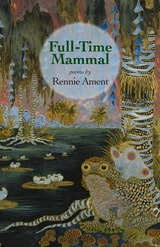
Full-Time Mammal
Rennie Ament
University of Iowa Press, 2026
In Full-Time Mammal, perception becomes both subject and site of excavation. Rennie Ament wrestles with what it means to be awake and aware in a disorienting world. How are you supposed to know what you don’t know? As ancient defense mechanisms fail, the brain must be retrained, and poetry becomes a divination tool, a game, a portal, a potential weapon, a way through fog.
Survival requires becoming a poet-cum-scientist. Drool becomes data. Ants carry thoughts to rot beneath earth. Animals, plants, and objects are not symbols but companionate presences. This collection feels its way through the failure of imagination at the heart of preordained systems, turning to the natural world not for refuge, but reinvention.
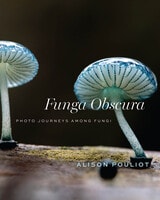
Funga Obscura
Photo Journeys Among FungiAlison Pouliot
University of Chicago Press, 2025
An unforgettable visual journey through the kingdom of fungi, both enigmatic and entrancing.
Recyclers, creators of soil, enablers of life, and food for many—fungi are as dynamic as they are diverse. And, throughout her career, Alison Pouliot has observed these organisms with a unique vision. As a scientist and photographer, she has led hundreds of forays through the forests of the Americas, Australia, and Europe. In this book, readers can travel along with her on these global explorations through stunning photographs and meditations on the landscape. She says her camera is where fungal lives come most clearly into focus. And like the camera obscura, this book, Funga Obscura, captures brief mycological moments and unforgettable fungus microcosms.
The word funga refers to the fungi of a region, and Pouliot’s photography spans continents. We see a parade of violet webcap mushrooms, spotted in the understory of a Pacific Northwest forest; brilliantly blue pixie’s parasols in Australia; an Italian alpine lichen, looking for all the world like a treasure map; and a showstopping whitelaced shank, ready to spread its spores in Switzerland. We learn that fungi live almost everywhere, from our lawns to forests and woodlands, from the ocean’s depths to deserts and alpine peaks. Yet, like a web of rootlike mycelium, Funga Obscura goes deeper to investigate how fungi shape landscapes and interact with other organisms, including humans. This journey spans eons, from long ago in evolutionary time, when fungi first emerged from the ocean onto land, to today, when we witness their work all around us. The scenes here challenge our ideas about what fungi are, what they do, and why they matter.
In Pouliot’s photographs, you might recognize a few old friends, but many mushrooms will be new acquaintances. Sometimes they make their presence immediately known; at other times, they just provide clues—and trails to follow.