Results by title
52 books match the query 'Tale' and 5 start with f
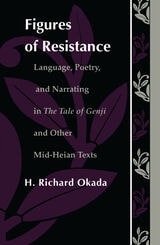
Figures of Resistance
Language, Poetry, and Narrating in The Tale of the Genji and Other Mid-Heian TextsH. Richard Okada
Duke University Press, 1991
Okada develops a highly original and sophisticated reading strategy that demonstrates how readers might understand texts belonging to a different time and place without being complicit in their assimilation to categories derived from Western literary traditions. The author’s reading stratgey is based on the texts’ own resistance to modes of analysis that employ such Western canonical terms as novel, lyric, and third-person narrative. Emphasis is also given to the distinctive cultural circles, as well as socio-political and genealogical circumstances that surrounded the emergence of the texts.
Indispensable readings for specialists in literature, cultural studies, and Japanese literature and history, Figures of Resistance will also appeal to general readers interested in the problems and complexities of studying another culture.
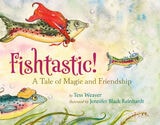
Fishtastic!
A Tale of Magic and FriendshipTess Weaver, illustrated by Jennifer Black Reinhardt
University of Iowa Press, 2021
Inspired by the fish sculptures installed along the walkways welcoming visitors to Hancher, Fishtastic! is a delightful blend of lovable characters and whimsical watercolor illustrations that celebrate the joy of discovering your own path to enchantment.
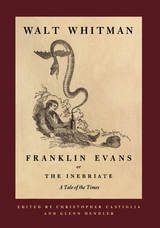
Franklin Evans, or The Inebriate
A Tale of the TimesWalt Whitman
Duke University Press, 2007
The novel tells the rags-to-riches story of Franklin Evans, an innocent young man from the Long Island countryside who seeks his fortune in New York City. Corrupted by music halls, theaters, and above all taverns, he gradually becomes a drunkard. Until the very end of the tale, Evans’s efforts to abstain fail, and each time he resumes drinking, another series of misadventures ensues. Along the way, Evans encounters a world of mores and conventions rapidly changing in response to the vicissitudes of slavery, investment capital, urban mass culture, and fervent reform. Although Evans finally signs a temperance pledge, his sobriety remains haunted by the often contradictory and unsettling changes in antebellum American culture.
The editors’ substantial introduction situates Franklin Evans in relation to Whitman’s life and career, mid-nineteenth-century American print culture, and many of the developments and institutions the novel depicts, including urbanization, immigration, slavery, the temperance movement, and new understandings of class, race, gender, and sexuality. This edition includes a short temperance story Whitman published at about the same time as he did Franklin Evans, the surviving fragment of what appears to be another unfinished temperance novel by Whitman, and a temperance speech Abraham Lincoln gave the same year that Franklin Evans was published.
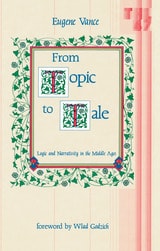
From Topic to Tale
Logic and Narrativity in the Middle AgesEugene VanceForeword by Wlad Godzich
University of Minnesota Press, 1987
From Topic to Tale was first published in 1987. Minnesota Archive Editions uses digital technology to make long-unavailable books once again accessible, and are published unaltered from the original University of Minnesota Press editions.
The transition from the Middle Ages to the Renaissance has been discussed since the 1940s as a shift from a Latinate culture to one based on a vernacular language, and, since the 1960s, as a shift from orality to literacy. From Topic to Tale focuses on this multifaceted transition, but it poses the problem in different terms: it shows how a rhetorical tradition was transformed into a textual one, and ends ultimately in a discussion of the relationship between discourse and society.
The rise of French vernacular literacy in the twelfth century coincided with the emergence of logic as a powerful instrument of the human mind. With logic come a new concern for narrative coherence and form, a concern exemplified by the work of Chretien de Troyes. Many brilliant poetic achievements crystallized in the narrative art of Chretien, establishing an enduring tradition of literary technique for all of Europe. Eugene Vance explores the intellectual context of Chretien's vernacular literacy, and in particular, the interaction between the three "arts of language" (grammar, logic, and rhetoric) compromising the trivium. Until Vance, few critics have studied the contribution of logic to Chretiens poetics, nor have they assessed the ethical bond between rationalism and the new heroic code of romance.
Vance takes Chretien de Troyes' great romance, Yvain ou le chevalier au lion,as the centerpiece of the Twelfth-Century Renaissance. It is also central to his own thesis, which shows how Chretien forged a bold new vision of humans as social beings situated between beasts and angels and promulgated the symbolic powers of language, money, and heraldic art to regulate the effects of human desire. Vance's reading of the Yvain contributes not only to the intellectual history of the Middle Ages, but also to the continuing dialogue between contemporary critical theory and medieval culture.
Eugene Vance is professor of French and comparative literature at Emory University and principal editor of a University of Nebraska series, Regents Studies in Medieval Culture. Wlad Godzich is director of the Center for Humanistic Studies at the University of Minnesota and co-editor of the series Theory and History of Literature.
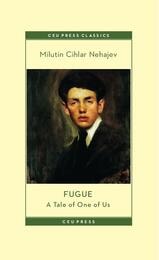
Fugue
A Tale of One of UsMilutin Nehajev
Central European University Press, 2024