Results by title
134 books match the query 'Transformation' and 12 start with f
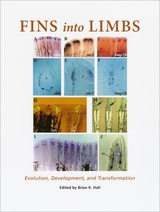
Fins into Limbs
Evolution, Development, and TransformationEdited by Brian K. Hall
University of Chicago Press, 2006
A comprehensive look at the current state of research on fin and limb evolution and development, this volume addresses a wide range of subjects—including growth, structure, maintenance, function, and regeneration. Divided into sections on evolution, development, and transformations, the book begins with a historical introduction to the study of fins and limbs and goes on to consider the evolution of limbs into wings as well as adaptations associated with specialized modes of life, such as digging and burrowing. Fins into Limbs also discusses occasions when evolution appears to have been reversed—in whales, for example, whose front limbs became flippers when they reverted to the water—as well as situations in which limbs are lost, such as in snakes.
With contributions from world-renowned researchers, Fins into Limbs will be a font for further investigations in the changing field of evolutionary developmental biology.
Food and Transformation in Ancient Mediterranean Literature
Meredith J. C. Warren
SBL Press, 2019
New research that transforms how to understand food and eating in literature
Meredith J. C. Warren identifies and defines a new genre in ancient texts that she terms hierophagy, a specific type of transformational eating where otherworldly things are consumed. Multiple ancient Mediterranean, Jewish, and Christian texts represent the ramifications of consuming otherworldly food, ramifications that were understood across religious boundaries. Reading ancient texts through the lens of hierophagy helps scholars and students interpret difficult passages in Joseph and Aseneth, 4 Ezra, Revelation 10, and the Persephone myths, among others.
Features:
- Exploration of how ancient literature relies on bending, challenging, inverting, and parodying cultural norms in order to make meaning out of genres
- Analysis of hierophagy as social action that articulates how patterns of communication across texts and cultures emerge and diverge
- A new understanding of previously confounding scenes of literary eating

For Fun And Profit
The Transformation of Leisure into ConsumptionRichard Butsch
Temple University Press, 1990
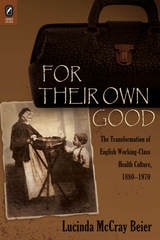
For Their Own Good
The Transformation of English Working-Class Health Culture, 1880–1970Lucinda Mccray Beier
The Ohio State University Press, 2008

Forms Of Power
From Domination to TransformationThomas Wartenberg
Temple University Press, 1991

From Central Planning to the Market
Transformation of the Czech Economy 1989 – 2004Libor Zidek
Central European University Press, 2018

From Cotton Belt to Sunbelt
Federal Policy, Economic Development, and the Transformation of the South 1938–1980Bruce J. Schulman
Duke University Press, 1994

From Liberty to Democracy
The Transformation of American GovernmentRandall G. Holcombe
University of Michigan Press, 2002
The government's activities during two world wars and the Great Depression greatly increased its involvement in people's economic affairs, and by the time of Lyndon Johnson's Great Society, the transformation was complete. By the end of the twentieth century, the fundamental principle underlying American government had been transformed to democracy, and public policy was designed to further the will of the majority. The result has been a government that is larger and broader in scope.
From Liberty to Democracy examines American political history using the framework of public choice theory to show how American government grew more democratic, and how this resulted in an increase in the size and scope of government. It should appeal to historians, political scientists, and economists who are interested in the evolution of American government but does not assume any specialized training and can be read by anyone interested in American political history.
Randall G. Holcombe is DeVoe Moore Professor of Economics, Florida State University

From Market-Places to a Market Economy
The Transformation of Rural Massachusetts, 1750-1850Winifred Barr Rothenberg
University of Chicago Press, 1992
Rothenberg forcefully disputes recent historical interpretations of the preindustrial New England village as a so-called moral economy, insulated from the exigencies of the market. She discovers the simultaneous emergence of markets for farm produce, farm labor, and rural capital. Then, linking market integration to labor productivity growth and agricultural improvement, she confirms that market-led growth in Massachusetts agriculture lay at the origins of the American industrial revolution.
From Monastery to Hospital
Christian Monasticism and the Transformation of Health Care in Late AntiquityAndrew T. Crislip
University of Michigan Press, 2005
From Monastery to Hospital traces the origin of the late Roman hospital to the earliest groups of Christian monastics. Often characterized as holy men and miracle-workers who transformed late antique spirituality, monks held an equally significant impact on the development of medicine in Late Antiquity. Andrew Crislip illuminates the innovative approaches to health care within the earliest monasteries that provided the model for the greatest medical achievement of Late Antiquity: the hospital.
From Monastery to Hospital draws on some of the most vibrant areas of scholarship of the ancient world, including asceticism, the study of the body, history of the family, and the history of medicine. The book will be of interest to scholars and students of early Christianity, Roman History, the history of medicine, and Catholic, Coptic, and Eastern Orthodox history and theology. It will also be of interest to the broader field of history of Christianity, especially with its connections to charitable traditions in the church through the modern period.
Andrew Crislip is Assistant Professor of Religion at the University of Hawaii.
From Union Halls to the Suburbs
Americans for Democratic Action and the Transformation of Postwar LiberalismScott Kamen
University of Massachusetts Press, 2023
For decades, Americans for Democratic Action (ADA) exerted an outsized pull on the political stage. Formed in 1947 by anticommunist liberals such as economist John Kenneth Galbraith and historian Arthur Schlesinger Jr., the ADA established itself as the most prominent liberal organization in the United States for more than a quarter century. Shaped by the ADA, the New Politics movement upended Democratic Party politics with its challenge to the Vietnam War, demands for redistributive economic policies, and development of a far-reaching politics of race, gender, and sexuality.
By bringing the ADA and its influential public intellectuals into the story of the New Politics movement, Scott Kamen reveals how American liberalism shifted away from the working-class concerns of the New Deal era and began to cater to the interests of a new, suburban professional class. By the 1980s, many Democratic politicians, activists, and voters had embraced a neoliberal ideology that coupled socially liberal attitudes with market-based solutions, eschewing an older progressive politics steeped in labor issues.

From Yorktown to Valmy
The Transformation of the French Army in an Age of RevolutionSamuel F. Scott
University Press of Colorado, 1998