Results by title
195 books match the query 'Utah' and 7 start with f

Feed My Sheep
The Life of Alberta HenryColleen Whitley
University of Utah Press, 2019
Henry endured intolerance by leaning on her faith and her commitment to a cause that she believed God had called her to follow. When she came to Utah in 1949 she thought it would be a brief stay, but she ended up making it her home for more than fifty years. In Utah, Henry committed herself to helping all races, religions, and ethnic groups coexist in appreciation of each other. While Martin Luther King Jr., Medgar Evers, and Malcolm X led the struggle for civil rights at a national level, Alberta Henry campaigned tirelessly for equality at a local level, talking at school board meetings, before city councils, and in the homes of her neighbors.
Henry was a member or officer of more than forty civic organizations and served for twelve years as president of the Salt Lake City branch of the NAACP, where she lobbied for civil rights, education, and justice. The dozens of awards and commendations she received speak to her accomplishments. While much of Henry’s story is told in her own words, Colleen Whitley provides expert and personal context to her speeches, writing, and interviews. The result is an exceptional first-person account of an African American woman leader and her role in the Civil Rights Movement in Utah.
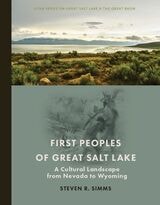
First Peoples of Great Salt Lake
A Cultural Landscape from Nevada to WyomingSteven R. Simms
University of Utah Press, 2023
Great Salt Lake is a celebrated, world-recognized natural landmark. It, and the broader region bound to it, is also a thoroughly cultural landscape; generations of peoples made their lives there. In an eminently readable narrative, Steven Simms, one of the foremost archaeologists of the region, traces the scope of human history dating from the Pleistocene, when First Peoples interacted with the lapping waters of Lake Bonneville, to nearly the present day. Through vivid descriptions of how people lived, migrated, and mingled, with persistence and resilience, Simms honors the long human presence on the landscape.
First Peoples of Great Salt Lake takes a different approach to understanding the ancients than is typical of archaeology. De-emphasizing categories and labels, it traces changing environments, climates, and peoples through the notion of place. It challenges the "Pristine Myth," the cultural bias that Indigenous peoples were timeless, changeless, primitive, and the landscapes they lived in sparsely populated and perpetually pristine. First Peoples and their descendants modified the forests and understory vegetation, shaped wildlife populations, and adapted to long-term climate change. Native Americans of Great Salt Lake were very much part of their world, and the story here is one of long continuity through dramatic cultural change.
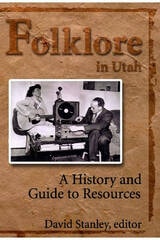
Folklore in Utah
A History and Guide to ResourcesDavid Stanley
Utah State University Press, 2004
Over thirty scholars examine the development of folklore studies through the lens of over one hundred years of significant activity in a state that has provided grist for the mills of many prominent folklorists. In the past the Folklore Society of Utah has examined the work of such scholars in biographical and other essays published in its newsletters. This book incorporates those essays and goes well beyond them to include many other topices, offering a thorough history of folklore studies and a guide to resources for those pursuing research in Utah now and in the future.
The essays survey the development and contributions of folklore studies in Utah from 1892 to 2004 but also represent developments in both academic and public-sector folklore throughout the United States. Following a thorough historical introduction, part I profiles the first folklorists working in the state, including Hector Lee, Thomas Cheney, Austin and Alta Fife, Wayland Hand, and Lester Hubbard. Part II looks at the careers of prominent Utah folklorists Jan Harold Brunvand, Barre Toelken, and William B. Wilson, as well as the works of the next, current generation of folklorists. Part III covers studies in major folklore genres, with essays on the study of material culture, vernacular architecture, and Mormon, ethnic, Native American, and Latino folklore. Part IV examines public folklore programs including organizations, conferences, and tourism. Back matter describes academic programs at Utah institutions of higher education, summarizes the holdings of the various folklore archives in the state, and provides a complete cross-indexed bibliography of articles, books, and recordings of Utah folklore.
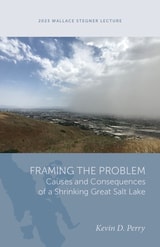
Framing the Problem
Causes and Consequences of a Shrinking Great Salt LakeKevin D. Perry
University of Utah Press, 2024

France Davis
An American Story ToldDavis, France
University of Utah Press, 2007
As I was coming up, it was painful to me not to have been given my own nickname. It made me feel different, or rather that I was being treated differently from other family members. I wondered why everybody else was spoken to in terms of their identity, their character, their behavior, and I was simply identified by the 'tag,' my given name. But then, when I read in a book that France meant free, I began to think of it as imbuing me with a sense of flight, of movement. Ultimately, I came to believe my name spoke for itself and that I did not need any other.'—from the book
Imbued with rich detail of family life in a rural community, as well as a system of values at a time of transition in American history, this is the life story of France Davis, the dynamic pastor of the Calvary Baptist Church in Salt Lake City. It is an engaging story of courage and vision that describes coming of age in the segregation-era South, of dreaming, enduring with honor, and living at the forefront of major issues within the United States.
Recorded and skillfully written by Nayra Atiya, France Davis: An American Story Told, is an oral history, ethnography, memoir, perhaps even a life-enhancing sermon delivered with the strong voice of a preacher. The gathered strands of a life lived with conviction and grace will appeal to a broad spectrum of readers from the curious to those seeking inspiration.
Winner of the Utah Book Award in Nonfiction.

Frank J. Cannon
Saint, Senator, ScoundrelVal Holley
University of Utah Press, 2020
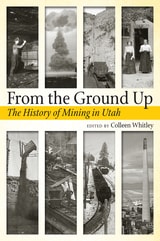
From the Ground Up
A History of Mining in Utahedited by Colleen K. Whitley
Utah State University Press, 2025
Mining had an enormous role, only partly measurable, in the history of Utah. Its multidimensional impact continues today. Economically, it made a major long-term contribution to the wealth, employment, and tax base of the state and stimulated a seemingly endless range of secondary businesses and enterprises. It helped shape the state's social history, determining the location, distribution, and composition of many communities and bringing transportation systems and a wide variety of institutions to them. It developed cultural diversity by drawing to Utah miners and families from otherwise underrepresented ethnic and national backgrounds. It ignited strife, particularly between labor and management, but those issues often spread into or connected with other conflicts in and between communities, classes, and factions. It influenced political platforms, generated candidates, and helped decide elections. Throughout the state, mining dramatically transformed the landscape, most obviously at what has been called the world's largest open-pit mine, which removed much of a mountain on the west side of Salt Lake Valley, but at innumerable other places too.
Despite all mining has done and meant, there has not been, until now, a book that surveyed its history in Utah. From the Ground Up fills that gap in a collection of essays by leading experts, among them historians Thomas G. Alexander, Martha Sonntag Bradley-Evans, James E. Fell Jr., Laurence P. James, Brigham D. Madsen, Philip F. Notarianni, Allen Kent Powell, W. Paul Reeve, Raye C. Ringholz, and Janet Burton Seegmiller and geologists J. Wallace Gwynn and William T. Parry. The book is divided into three comprehensive parts. The first looks at "The Ground of Utah Mining": the geology that has produced extractable minerals, the economic history of the industry, "father of Utah mining" Patrick E. Connor, and the lore of mines and miners. Part II reviews the history of a handful of particularly significant mineral industries: salines, coal, uranium, and beryllium. The last part takes a region-by-region approach to survey the important, primarily for hard-rock mining, areas of the state, including places from Silver Reef to Alta, the East Tintic Range to the Uinta Basin, and Park City to Frisco.