Results by title
127 books match the query 'World politics' and 4 start with f
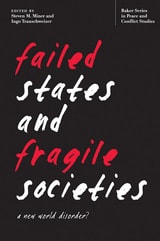
Failed States and Fragile Societies
A New World Disorder?Ingo Trauschweizer
Ohio University Press, 2014
Since the end of the Cold War, a new dynamic has arisen within the international system, one that does not conform to established notions of the state’s monopoly on war. In this changing environment, the global community must decide how to respond to the challenges posed to the state by military threats, political and economic decline, and social fragmentation. This insightful work considers the phenomenon of state failure and asks how the international community might better detect signs of state decay at an early stage and devise legally and politically legitimate responses.
This collection of essays brings military and social historians into conversation with political and social scientists and former military officers. In case studies from the former Yugoslavia, Somalia, Iraq, and Colombia, the distinguished contributors argue that early intervention to stabilize social, economic, and political systems offers the greatest promise, whereas military intervention at a later stage is both costlier and less likely to succeed.
Contributors: David Carment, Yiagadeesen Samy, David Curp, Jonathan House, James Carter, Vanda Felbab-Brown, Robert Rotberg, and Ken Menkhaus.
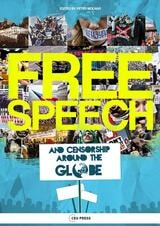
Free Speech and Censorship Around the Globe
Peter Molnar
Central European University Press, 2015
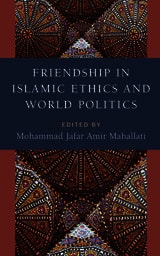
Friendship in Islamic Ethics and World Politics
Edited by Mohammad Jafar Amir Mahallati
University of Michigan Press, 2019
Based on a decade of direct diplomatic engagement with the United Nations, a decade of teaching on international relations, and another decade of research and teaching on Islamic and comparative peace studies, this book offers a friendship-related academic framework that examines shared moral concepts, philosophical paradigms, and political experiences that can develop and expand multidisciplinary conversations between the Christian West and the Muslim East. By advancing multicultural and interreligious discourses on friendship, this book helps promote actual friendships among diverse cultures and peoples.
This is not a monologue. It provides a model of conversations among scholars and political actors who come from diverse international and interreligious backgrounds. The word “Islamic” should not mislead the reader to suspect that this edited volume delves only into religious discourses. Rather, it provides a forum for conversations within and between religious and philosophical perspectives. It sparks friendship conversations thematically and through disciplinary and cultural diversity. The result of the work of many prominent international scholars and diplomats over many years, it conveys at least one message clearly: friendship matters for not only our happiness but also for our survival.
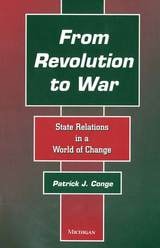
From Revolution to War
State Relations in a World of ChangePatrick J. Conge
University of Michigan Press, 2000