Results by title
295 books match the query 'Zoology' and 14 start with f
FISHES OF OHIO
Milton B. Trautman
The Ohio State University Press, 1982
“The objectives of [this] edition are to demonstrate and explain distributional changes from 1750 to 1980, and to provide keys to the 166 species of Ohio fishes. These aims are admirably achieved. The natural factors influencing distribution of fishes are discussed in Part I, which relates the geology, physiography, topography, hydrology, and climatic history of the regions. . . . Part II reviews changes that have occurred from 1750 until 1980, and is an excellent chronicle of modern man's alternation and manipulation of essentially every aquatic ecosystem in Ohio. . . . Part III is a listing of species, synonomy and nomenclatorial history of Ohio’s fishes. . . . Part IV is an informative section of the systematics and nomenclature of fishes that is very useful to beginning students of ichthylogy. The glossary and family and species keys contained in Part V are excellent. Part VI contains the major content of the book, the 166 species accounts. . . .
“The updated range maps, a central focus of Trautman's approach, are excellent and obviously the result of endless efforts. Ohio is one of the most thoroughly surveyed of all states and to translate these data to visual understanding is an unenviable task for which the reader should be deeply appreciative. . . . Also of exceptional quality are the species illustrations originally rendered by Mrs. E. R. Weeks and Trautman himself for the 1957 edition. They are among the best of their kind in a fish reference work, and serve well to facilitate identification of specimens in hand. . . .
“Anyone concerned with or otherwise interested in the fishes, aquatic environments, or general natural history of Ohio or eastern North America should consider this book a valued addition to their library.”
—Ohio Journal of Science

Feeding Strategy
Jennifer Owen
University of Chicago Press, 1982
Among both plants and animals elaborate strategies have evolved for exploring the surrounding life as food. The feeding behavior of predators is based on a search and strike strategy. In contrast, grazers live surrounded by their food and are relatively immobile. Such animals as impalas and grasshoppers, whose persistent feeding make them ready prey, have evolved means of avoiding the notice of predators or methods of speedy escape. Plants that digest animal tissue have evolved complex and devious means to attract prey.
The variations in style of these feeding encounters and the precision involved in some of the feeding mechanisms are the themes of Feeding Strategy.
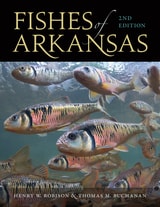
Fishes of Arkansas
Henry W. Robison
University of Arkansas Press, 2019
An invaluable reference for anyone interested in the state’s fish population—from professional ichthyologists, fisheries biologists, and managers of aquatic resources, to amateur naturalists and anglers—this new edition provides updated taxonomic keys as well as detailed descriptions, photographs, and line drawings to aid identification of the state’s 243 fish species. There is also much information on the distribution and biology of each species, including descriptions of habitat, foods eaten, reproductive biology, and conservation status.
This project and the preparation of this publication was funded in part by a grant from the Arkansas Game and Fish Commission.
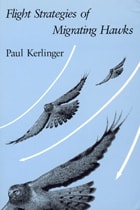
Flight Strategies of Migrating Hawks
Paul Kerlinger
University of Chicago Press, 1989
Kerlinger begins with an overview, discussing ecology and geography, research methods, natural history, and evolution, and atmospheric structure. He then addresses specific aspects of flight behavior: aerodynamics, morphology, mechanics, direction, altitude, flocking, water crossing, speed selection, daily distance traveled, and flight strategies. Kerlinger describes each aspect of behavior quantitatively, testing mechanistic hypotheses. In conclusion, he examines how migrants integrate these behavioral components. Throughout the text he draws comparisons between the migratory flight behavior of hawks and that of other taxa. By means of such comparisons, researchers can gain insight into the selective pressures that shape the behavior of migrant species.

Food Hoarding in Animals
Stephen B. Vander Wall
University of Chicago Press, 1990
Drawings, photographs, and appendixes document complex and intrinsically interesting food-hoarding behaviors, and the bibliography of nearly 1,500 sources is itself an invaluable and unique reference.
Foraging for Survival
Yearling Baboons in AfricaStuart A. Altmann
University of Chicago Press, 1998
Fossil Lake and the Rise of Modern Birds
Snapshots from Early Avian EvolutionLance Grande, Daniel T Ksepka, and Gerald Mayr
University of Chicago Press, 2027
Lavishly produced with color fossil photographs throughout, the first comprehensive summary of findings at one of the world’s best fossil bird localities, offering profound insight into early avian evolution after the end-of-Cretaceous extinction event.
What is today a high mountain desert in southwestern Wyoming was, 52 million years ago, a magnificent subtropical lake system. Part of the famed Green River Formation, the limestone layers of this region’s Fossil Lake provide an unparalleled record of life in the Early Eocene of North America. Evolutionary biologist Lance Grande has spent much of his career collecting and studying the beautiful and diverse assemblage of fossils from this locality. Since his 2013 book, The Lost World of Fossil Lake, researchers have uncovered many new fossil bird specimens—often stunningly preserved skeletons, sometimes even including feathers—and benefited from significant advances in our understanding of avian evolution. Their findings help to illuminate the early days of bird life on Earth.
In this volume, Grande and his collaborators—paleornithologists Daniel T. Ksepka and Gerald Mayr—explore these birds of Fossil Lake, where various researchers have formally named and described thirty avian species. The authors also present an additional twenty possible new species awaiting further study and formal review, birds that may soon be added to that list. Fossil Lake and the Rise of Modern Birds then places these avian ancestors within the global context of other fossil birds. Like Grande’s previous publications, this comprehensive work features stunning imagery, including nearly two hundred detailed fossil photographs—fifty that have never appeared elsewhere.
Whether you are an ornithologist, paleontologist, evolutionary biologist, or amateur fossil enthusiast interested in the early evolutionary diversification of modern birds, this book is a treasure.
Foundations of Animal Behavior
Classic Papers with CommentariesEdited by Lynne D. Houck and Lee C. Drickamer
University of Chicago Press, 1996
The papers are divided into six sections, each introduced by prominent researchers. Sections one and two cover the origins and history of the field and the emergence of basic methods and approaches. They provide a background for sections three through six, which focus on development and learning; neural and hormonal mechanisms of behavior; sensory processes, orientation, and communication; and the evolution of behavior.
This outstanding collection will serve as the basis for undergraduate and graduate seminars and as a reference for researchers in animal behavior, whether they focus on ethology, behavioral ecology, comparative psychology, or anthropology.
Published in association with the Animal Behavior Society

Foundations of Macroecology
Classic Papers with CommentariesEdited by Felisa A. Smith, John L. Gittleman, and James H. Brown
University of Chicago Press, 2014
Foundations of Macroecology charts the evolutionary trajectory of these concepts—from the species-area relationship and the latitudinal gradient of species richness to the relationship between body size and metabolic rate—through forty-six landmark papers originally published between 1920 and 1998. Divided into two parts—“Macroecology before Macroecology” and “Dimensions of Macroecology”—the collection also takes the long view, with each paper accompanied by an original commentary from a contemporary expert in the field that places it in a broader context and explains its foundational role. Providing a solid, coherent assessment of the history, current state, and potential future of the field, Foundations of Macroecology will be an essential text for students and teachers of ecology alike.
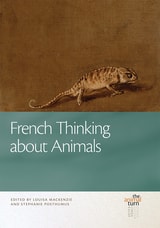
French Thinking about Animals
Louisa Mackenzie
Michigan State University Press, 2015
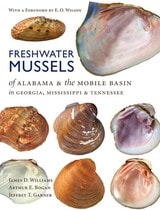
Freshwater Mussels of Alabama and the Mobile Basin in Georgia, Mississippi, and Tennessee
James D. Williams
University of Alabama Press, 2008
The authors offer encyclopedic entries on each of the 178 mussel species currently identified in Alabama and the Mobile River Basin—the scientific and common names; a morphological description as well as color photographs of the shell appearance; analysis of the soft anatomy; information about ecology, biology, and conservation status; and a color distribution map. With an extensive glossary of terms and full index, plus additional material on the archaeological record, a history of commercial uses of mussels, and the work of significant biologists studying these species, this volume is a long overdue and invaluable resource, not only for scholars of aquatic biology and zoology but also conservationists interested in the preservation of ecological diversity and protection of inland environments.
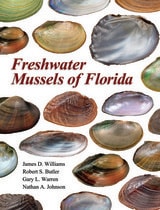
Freshwater Mussels of Florida
James D. Williams, Robert S. Butler, Gary L. Warren, and Nathan A. Johnson
University of Alabama Press, 2014
Each entry in this definitive guide provides a detailed description and multiple depictions of the species as well as select characteristics of its soft anatomy and miscellaneous notes of interest. Individual distribution maps pinpoint the historical and present occurrence of each bivalve species and are just one component of the rich set of 307 mussel and habitat photographs, seventy-four maps, and thirteen tables that illustrate the book. Of particular interest are remarkable electron micrographs of glochidia, the specialized larval life history stage parasitic upon fishes.
Freshwater Mussels of Florida will be of lasting value to state and federal conservation agencies as well as other government and nongovernment entities that manage aquatic resources in Florida. The research provides a key baseline for future study of Florida mussels. The survey results in this guide, along with extensive reviews of historical mussel collections in natural history museums, provide a complete picture of the Florida mussel fauna, past and present.
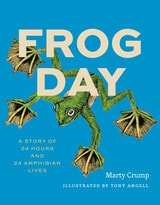
Frog Day
A Story of 24 Hours and 24 Amphibian LivesMarty Crump
University of Chicago Press, 2024
In this short book, celebrated biologist Marty Crump leads readers on a worldwide field trip in search of frogs. Each chapter of Frog Day covers a single frog during a single hour, highlighting how twenty-four different species spend their time. Our day begins at midnight in Indonesia, with the rustle of leaves above. It’s not a bird, but Wallace’s flying frog, using its webbed feet and emerald-green skin flaps to glide through the forest canopy. In the early hours of the morning, we hear a horned marsupial frog “bopping” and a wood frog “quacking” to attract mates. At six o’clock in the morning, beneath a streetlight in Honolulu, we meet a corpulent, invasive cane toad slurping insects—and sometimes snakes, lizards, turtles, birds, and mice. At noon, we watch parenting in action as an African bullfrog bulldozes a path through the mud to free his tadpoles from a drying pond. At dusk, in a Peruvian rain forest, we observe “the ultimate odd couple”—a hairy tarantula and what looks like a tiny amphibian pet taking shelter in the spider’s burrow. Other frogs make a tasty meal for this tarantula, but the dotted humming frog is a friend, eating the ants that might otherwise make a meal of the tarantula’s eggs.
For each hour in our Frog Day, award-winning artist Tony Angell has depicted these scenes with his signature pen and ink illustrations. Working closely together to narrate and illustrate these unique moments in time, Crump and Angell have created an engaging read that is a perfect way to spend an hour or two—and a true gift for readers, amateur scientists, and all frog fans.
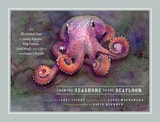
From the Seashore to the Seafloor
An Illustrated Tour of Sandy Beaches, Kelp Forests, Coral Reefs, and Life in the Ocean's DepthsJanet Voight and Peggy Macnamara
University of Chicago Press, 2022
Have you ever walked along the beach and wondered what kind of creatures can be found beneath the waves? Have you pictured what it would be like to see the ocean not from the shore but from its depths? These questions drive Janet Voight, an expert on mollusks who has explored the seas in the submersible Alvin that can dive some 14,000 feet below the water’s surface. In this book, she partners with artist Peggy Macnamara to invite readers to share her undersea journeys of discovery.
With accessible scientific descriptions, Voight introduces the animals that inhabit rocky and sandy shores, explains the fragility of coral reefs, and honors the extraordinary creatures that must search for food in the ocean’s depths, where light and heat are rare. These fascinating insights are accompanied by Macnamara’s stunning watercolors, which illuminate these ecosystems and other scenes from Voight’s research. Together, they show connections between life at every depth—and warn of the threats these beguiling places and their eccentric denizens face.