Results by title
36 books match the query 'Meditations'
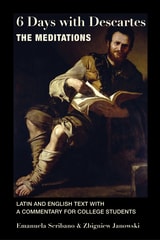
6 Days with Descartes
The Meditations, Latin and English Text with a Commentary for College StudentsRene Descartes
St. Augustine's Press, 2019
This new edition of Descartes’ Meditations by Zbigniew Janowski, wrote extensively on Descartes and 17th c. philosophy, was prepared with the first-year college student in mind. unlike all existing editions in english, which contain bare text of the Meditations, the novelty of this edition is that it includes a short commentary to each meditation, in which the editors help the reader follow Descartes’ steps and arguments.
In addition to their brief commentaries, the author also included short footnotes to the books and articles by contemporary Cartesian specialists who discuss in greater detail specific questions and problems which the text of the Meditations raises. In doing so, the author hopes to familiarize students with authors and titles of major works on Descartes, and with on-going scholarly controversies which this masterpiece of modern thought still inspires
Six Days with Descartes: The Meditations, Latin and English Text with a Commentary for College Students can also serve as a helpful tool for young and less experienced teachers of philosophy.
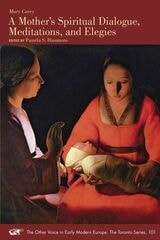
A Mother’s Spiritual Dialogue, Meditations, and Elegies
Mary Carey
Iter Press, 2023
Lady Mary Carey (c. 1609–c. 1680) was a noblewoman who examined her life and expressed her views in a handwritten manuscript that she intended for self-reflection and for sharing with restricted audiences of family and friends, rather than for print publication. Her poetry and prose, composed and revised between 1650 and 1658, were important enough to her inner circle, however, that her autograph manuscript was carefully copied by another hand in 1681. In addition to providing us with key insights into women’s multidimensional roles as wives, widows, and mothers during the seventeenth century in England, Carey’s work teaches us a great deal about a woman’s deepest emotional and spiritual states while confronting the hardships of life—from the fears of childbearing to the sorrows over child loss to the terrors of war.
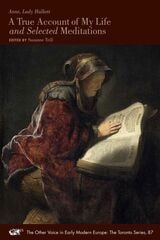
A True Account of My Life and Selected Meditations
Lady Anne Halkett
Iter Press, 2022
Born in the early 1620s, Anne, Lady Halkett (née Murray) grew up on the fringes of the English court during a period of increasing political tension. From 1644 to 1699, Halkett recorded her personal and political experiences in both England and Scotland in a series of manuscript meditations and an autobiographical narrative called A True Account of My Life. Royalism, romance, and contemporary religious debates are central to Halkett’s vivid portrayal of her life as a single woman, wife, mother, and widow. Collectively, the materials edited here offer the opportunity to explore how Halkett’s meditational practice informed her life writing in the only version of her writings to date available in a fully modernized edition. The forty-four meditations in this volume redefine the importance of Halkett’s contribution to seventeenth-century life writing.
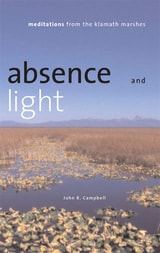
Absence And Light
Meditations From The Klamath MarshesJohn R. Campbell
University of Nevada Press, 2002
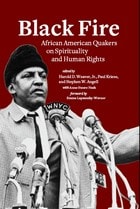
Black Fire
African American Quakers on Spirituality and Human RightsHarold D. Weaver, Jr.
QuakerPress, 2011
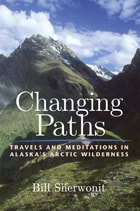
Changing Paths
Travels and Meditations in Alaska's Arctic WildernessBill Sherwonit
University of Alaska Press, 2009
Changing Paths: Travels and Meditations in Alaska’s Arctic Wilderness is an autobiographical exploration of author Bill Sherwonit’s relationship with the Alaska wilderness. Written in three parts, it first describes Sherwonit’s introduction to the Brooks Range and his years as an exploration geologist. Taking a step back, the author then takes us into the past to explore his childhood roots in rural Connecticut and his recognition of wild nature as a refuge. He concludes with his emergence as a nature writer and wilderness advocate.
An engrossing, fascinating, and eye-opening tale of one man’s life and of wilderness conceptions, this vivid description of an area of Alaska that few people get to experience is authentic and enlightening. It is an extraordinary contribution to the literature of place from one of Alaska’s most accomplished nature writers.

Conscience and Memory
Meditations in a Museum of the HolocaustHarold Kaplan
University of Chicago Press, 1994
Kaplan simulates the response to a long visit to the new Holocaust museum in Washington, D.C., which, crucially for Kaplan, is sited in direct view of the Jefferson and Lincoln monuments, powerful symbols of humanist democracy. He insists the Holocaust be viewed not only in terms of personal ethics but modern political ethics as well: for Kaplan the affirmative legacy of the Holocaust is its focus on the dangers of nationalism, racism, and all forms of separatist group identities. It challenges the historicism, cults of power, and scientistic politics of modernity. And it challenges the moral passivity and relativism of mass politics in Western and Eastern societies.
The opening of the Holocaust museum has sparked a debate that reflects a larger debate over the Holocaust's "meaning," its translatability for ordinary understanding. Some deny any possible response except that of overwhelming grief and horror. For others, the "lesson" of the Holocaust implies, in the words of Robert Nozick, that "mankind has fallen. . . . Humanity has lost its claim to continue." The moral life and political institutions will remain endlessly tormented by the Holocaust. That, Kaplan tells us, is the ultimate content of its "meaning," and is what makes the discussion of "meaning" much more than a mourner's symposium.
The Museum itself, according to Kaplan, has become an impressive memorial to the principle of humanism, instructing the collective memory of this democracy and that of nations everywhere which aspire to civil existence. Out of its awful darkness the Holocaust throws the light of conscience for those capable of receiving it.
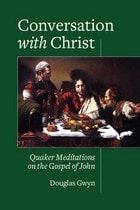
Conversation with Christ
Douglas Gwyn
QuakerPress, 2011
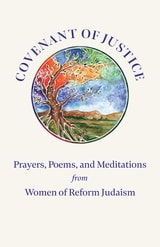
Covenant of Justice
Prayers, Poems, and Meditations from Women of Reform JudaismWomen of Reform Judaism
Central Conference of American Rabbis, 2025
Copublished with Women of Reform Judaism
Descartes and His Contemporaries
Meditations, Objections, and RepliesEdited by Roger Ariew and Marjorie Grene
University of Chicago Press, 1995
Descartes and his Contemporaries recreates the tumultuous intellectual community of seventeenth-century Europe and provides a detailed, modern analysis of the Meditations in its historical context. The book's chapters examine the arguments and positions of each of the objectors—Hobbes, Gassendi, Arnauld, Morin, Caterus, Bourdin, and others whose views were compiled by Mersenne. They illuminate Descartes' relationships to the scholastics and particularly the Jesuits, to Mersenne's circle with its debates about the natural sciences, to the Epicurean movements of his day, and to the Augustinian tradition. Providing a glimpse of the interactions among leading 17th-century intellectuals as they grappled with major philosophical issues, this book sheds light on how Descartes' thought developed and was articulated in opposition to the ideas of his contemporaries.
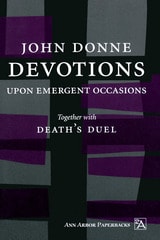
Devotions Upon Emergent Occasions
Together with Death's DuelJohn Donne
University of Michigan Press, 1959
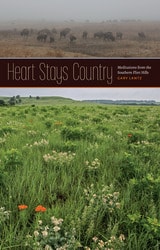
Heart Stays Country
Meditations from the Southern Flint HillsGary Lantz
University of Iowa Press, 2017
As proud grasslanders know, the prairie is biologically fulfilling, unique, and increasingly rare: biologists from the National Park Service and the Nature Conservancy agree that a healthy prairie remains one of the most ecologically diverse and dynamic ecosystems on this planet—as well as one of the rarest left on earth. This landscape that once inspired rapturous exclamations from travelers headed west on horseback now mostly exists in fragments exiled from each other by cropland, cities, and interstate highways.
Historically, tallgrass prairie stretched from Canada to Texas, from central Kansas to Indiana. Now the last major expanse of tallgrass occurs in the Flint Hills, a verdant landscape extending in a north-south strip across eastern Kansas and into northern Oklahoma’s Osage County. In these essays, Gary Lantz brings the beautiful diversity of the prairie home to all of us.
Legacy
A Step-By-Step Guide To Writing Personal HistoryLinda Spence
Ohio University Press, 1997
When Linda Spence asked her aging mother to write her life story, her mother stared at a blank sheet of paper and asked—“How? Where do I begin?” In this practical guide to capturing those memories that have been stored away, Linda Spence provides the questions that are the keys to unlocking the memories that make up a life.
Beyond the vital statistics are the personal stories that tell what it was like, what we did, and why we did it, how we feel about our choices, and what our circumstances were. Through encouraging coaching, shared memories, and open-ended questions, the process of producing a personal history becomes intriguing and engaging.
With Legacy the possibilities expand: a personal record is preserved—with its myths, traditions, joys, pains, gains, and losses; a family opens a potential dialogue that will last for generations; the writer has an opportunity for insight and resolution; the culture of a time and place is noted; the tradition of personal story is revitalized, and our present and future find nourishment and knowledge in the past.
Either as a gift that can act as a shared experience as the memories are recounted or as a personal way to take account of one’s experiences, often long since forgotten, Legacy is indeed a way to get one’s story down.
Loving Yusuf
Conceptual Travels from Present to PastMieke Bal
University of Chicago Press, 2008
Through this inquiry she develops concepts for the analysis of texts that are both strange and overly familiar—culturally remote yet constantly retold. As she puts personal memories in dialogue with scholarly exegesis, Bal asks how all of these different versions complicate her own and others’ experience of the story, and how the different truths of these texts in their respective traditions illuminate the process of canonization.

Meditation as Spiritual Therapy
Bernard of Clairvaux's <i>De consideratione</i>Matthew McWhorter
Catholic University of America Press, 2024
Meditations on Rising and Falling
Meditations on Rising and FallingPhilip Pardi
University of Wisconsin Press, 2008
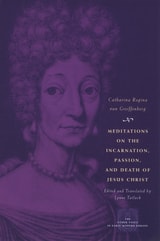
Meditations on the Incarnation, Passion, and Death of Jesus Christ
Catharina Regina von Greiffenberg
University of Chicago Press, 2009
Read by Protestants and Catholics alike, Catharina Regina von Greiffenberg (1633–94) was the foremost German woman poet and writer in the seventeenth-century German-speaking world. Privileged by her social station and education, she published a large body of religious writings under her own name to a reception unequaled by any other German woman during her lifetime. But once the popularity of devotional writings as a genre waned, Catharina’s works went largely unread until scholars devoted renewed attention to them in the twentieth century.
For this volume, Lynne Tatlock translates for the first time into English three of the thirty-six meditations, restoring Catharina to her rightful place in print. These meditations foreground women in the life of Jesus Christ—including accounts of women at the Incarnation and the Tomb—and in Scripture in general. Tatlock’s selections give the modern reader a sense of the structure and nature of Catharina’s devotional writings, highlighting the alternative they offer to the male-centered view of early modern literary and cultural production during her day, and redefining the role of women in Christian history.
Meditations, With Distractions
Poems, 1988-1998James McAuley
University of Arkansas Press, 2001
At the center of James McAuley’s new collection—the work of over a decade since his previous book, Coming & Going, New & Selected—is the sequence, “God’s Pattern,” meditations on the Stations of the Cross, an old devotional form of pilgrimage or “pattern” still practiced in rural parishes of the poet’s native country, Ireland. Theme and treatment vary throughout the collection, from somber reflection on the fate of a drunk in a cheap hotel room, “Cantata for the Feast of St. Anonymous,” to the scathing Celtic-style satire, “The Gingriad.” McAuley is well regarded for his experiments with traditional forms and rhythms: examples included are blank-verse narratives and elegies, a Haiku sequence, sonnets, a variation on the topographical poetry of the seventeenth century, even a carmen figurata.
Meditations, With Distractions has the qualities that all good poetry should possess: depth, erudition, accessibility, a joy in the practice of language. Combine these qualities with McAuley’s humanity and humor, and the result is a collection that readers will come to enjoy and appreciate more and more with each successive reading.
New Each Day
A Spiritual Practice for Reading PsalmsRabbi Debra J. Robbins
Central Conference of American Rabbis, 2024
Every day of the year, Jewish liturgy includes the Shir Shel Yom, a psalm recited to mark the day of the week. New Each Day by Rabbi Debra J. Robbins breathes new life into this ancient practice, inviting us to engage with psalms in a fresh, inspiring way. Daily “Reflections for Focus” offer unique insights on each psalm, with a structure for meditation and writing that encourages the reader to develop their own personal routine. Reflections for each month, based on the psalm for Rosh Chodesh, provide a full year of spiritual practice. Just as Rabbi Robbins did for the High Holy Day season in Opening Your Heart with Psalm 27, New Each Day guides us along the journey of the year with intention and meaning.
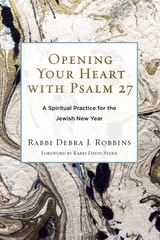
Opening Your Heart with Psalm 27
A Spiritual Practice for the Jewish New YearRabbi Debra J. Robbins
Central Conference of American Rabbis, 2019
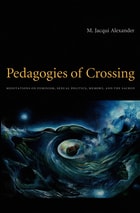
Pedagogies of Crossing
Meditations on Feminism, Sexual Politics, Memory, and the SacredM. Jacqui Alexander
Duke University Press, 2005
In these meditations, Alexander deftly unites large, often contradictory, historical processes across time and space. She focuses on the criminalization of queer communities in both the United States and the Caribbean in ways that prompt us to rethink how modernity invents its own traditions; she juxtaposes the political organizing and consciousness of women workers in global factories in Mexico, the Caribbean, and Canada with the pressing need for those in the academic factory to teach for social justice; she reflects on the limits and failures of liberal pluralism; and she presents original and compelling arguments that show how and why transgenerational memory is an indispensable spiritual practice within differently constituted women-of-color communities as it operates as a powerful antidote to oppression. In this multifaceted, visionary book, Alexander maps the terrain of alternative histories and offers new forms of knowledge with which to mold alternative futures.
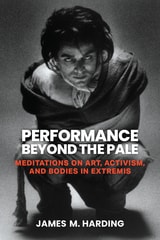
Performance Beyond the Pale
Meditations on Art, Activism, and Bodies in ExtremisJames M. Harding
University of Michigan Press, 2026
The metaphor “beyond the pale” refers to something that’s unacceptable and, as James M. Harding argues in this book, “almost always refers to something—an activity, an action, or an act—that is performed.” In this book, Harding recalls that historically the pale marked contested political boundaries and that what lay beyond the pale was considered to be a dangerous frontier. Siding with seemingly excessive and unreasonable acts and with the artists and activists who produce them, Harding brings together a series of ideas and performances that operate beyond the pale and asks readers to examine them on their own terms.
Drawing on political science, critical theory, and philosophy, Harding investigates instances of self-immolation, life-threatening journeys across deserts and seas, radical political hoaxes, extreme speech acts, and anti-police activism. The book’s five chapters consist of a series of meditations, each with an easily identifiable scholarly logic and clear argument, though the connections between the meditations are left up to the reader. Together these meditations urge readers to understand that “beyond the pale” acts are frequently the product of a sense of urgency that preempts the dictates of accepted reason, conventional logic, and safety.
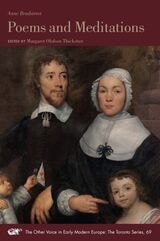
Poems and Meditations
Anne Bradstreet
Iter Press, 2019
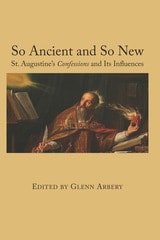
So Ancient and So New
St. Augustine's Confessions and Its InfluenceGlenn Arbery
St. Augustine's Press, 2016
The essays uncover a variety of themes, from Augustine’s act of reading (Marc LePain and Bercier), his emphasis on memory (Roger Corriveau), and his choice to reveal to the world his “hidden and unworldly activity” (Daniel Maher), to the way Augustine’s own education might serve as a corrective to contemporary understandings of “assessment” (Gavin Colvert). The vast wake of Augustine’s work includes writers from Dante and Montaigne to Nabokov, but three representative figures were chosen to show his influence: Jean-Jacques Rousseau in the Confessions (Rick Sorenson), James Joyce in the whole range of his work (Eloise Knowlton), and T.S. Eliot in the Four Quartets (Glenn Arbery). The most direct engagement with Augustine is obviously Rousseau’s. In his essay comparing and contrasting the pivotal moments of the two Confessions, Rick Sorenson explores major differences between the way of faith and the path of reliance on reason. Joyce might be said to have taken Rousseau’s path (at least in rejecting revelation), whereas Eliot took Augustine’s.
In its sophistications and anxieties, the late antiquity Augustine inhabited feels a great deal like the late modernity we inhabit now. Certainly, the barbarians of materialist thought long ago sacked the civilization our ancestors inhabited. When Eliot published The Waste Land in 1922, he already saw the old order of antiquity and Christendom as “stony rubble,” “a heap of broken images.” As one of his speakers puts it, “Dry bones can harm no one.” This old book, the Confessions, might seem to our contemporaries as dry and dead as those bones, but it is not so.
Without being a defense of Christianity (as the City of God is) or a work of catechesis, the Confessions might be the greatest counter to the materialist creed in Western literature. It recounts Augustine’s central, intensely personal, and ultimately liberating struggle to conceive of spiritual substance, an intellectual achievement without which he cannot even hope to accommodate his understanding to the reality of God. This book of essays has one primary end, which is to entice the reader to reopen Augustine’s book, to look over his shoulder and see what the act of reading means to him and what it has accomplished: the world-changing encounter with the substance of the Word.
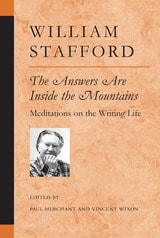
The Answers Are Inside the Mountains
Meditations on the Writing LifeWilliam Stafford, Edited by Paul Merchant & Vincent Wixon
University of Michigan Press, 2003
In this fourth collection of reflections on writing and the writing life, the late William Stafford's lifelong refusal to separate his work from the task of living responsibly -- "What a person is shows up in what a person does" -- rings clear.
The Answers Are Inside the Mountains collects unpublished interviews, poems, articles, aphorisms, and writing exercises from this great American man of letters and hugely prolific author, who kept a journal for nearly half a century and produced over 20,000 poems -- a staggering output by any standard.
The book begins with the words "To overwhelm by rightness," a phrase evoking the two demands Stafford made on himself: to write daily, and to live uprightly. The Answers Are Inside the Mountains lives up to those deceptively simple ethics, and confirms William Stafford's enduringly important voice for our uncertain age.
William Stafford (1914-93) authored more than thirty-five books of poetry and prose, including the highly acclaimed Writing the Australian Crawl, You Must Revise Your Life, Crossing Unmarked Snow: Further Views on the Writer's Vocation, and Traveling Through the Dark, winner of the National Book Award for Poetry.
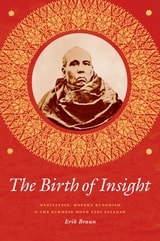
The Birth of Insight
Meditation, Modern Buddhism, and the Burmese Monk Ledi SayadawErik Braun
University of Chicago Press, 2013
Braun focuses on the Burmese monk Ledi Sayadaw, a pivotal architect of modern insight meditation, and explores Ledi’s popularization of the study of crucial Buddhist philosophical texts in the early twentieth century. By promoting the study of such abstruse texts, Braun shows, Ledi was able to standardize and simplify meditation methods and make them widely accessible—in part to protect Buddhism in Burma after the British takeover in 1885. Braun also addresses the question of what really constitutes the “modern” in colonial and postcolonial forms of Buddhism, arguing that the emergence of this type of meditation was caused by precolonial factors in Burmese culture as well as the disruptive forces of the colonial era. Offering a readable narrative of the life and legacy of one of modern Buddhism’s most important figures, The Birth of Insight provides an original account of the development of mass meditation.
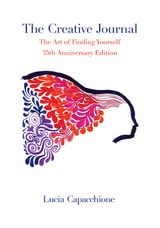
The Creative Journal
The Art of Finding Yourself: 35th Anniversary EditionLucia Capacchione
Ohio University Press, 2015
Originally released in 1980, Lucia Capacchione’s The Creative Journal has become a classic in the fields of art therapy, memoir and creative writing, art journaling, and creativity development. Using more than fifty prompts and vibrantly illustrated examples, Capacchione guides readers through drawing and writing exercises to release feelings, explore dreams, and solve problems creatively. Topics include emotional expression, healing the past, exploring relationships, self-inventory, health, life goals, and more. The Creative Journal introduced the world to Capacchione’s groundbreaking technique of writing with the nondominant hand for brain balancing, finding innate wisdom, and developing creative potential.
This thirty-fifth anniversary edition includes a new introduction and an appendix listing the many venues that have adopted Capacchione’s methods, including public schools, recovery programs, illness support groups, spiritual retreats, and prisons. The Creative Journal has become a mainstay text for college courses in psychology, art therapy, and creative writing. It has proven useful for journal keepers, counselors, and teachers. Through doodles, scribbles, written inner dialogues, and letters, people of all ages have discovered vast inner resources.
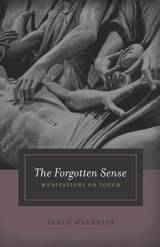
The Forgotten Sense
Meditations on TouchPablo Maurette
University of Chicago Press, 2018
The Forgotten Sense gives touch its due, addressing it in multifarious ways through a series of six essays. Literary in feel, ambitious in conception, admirable in their range of reference and insight, these meditations address questions fundamental to the understanding of touch: What do we mean when we say that an artwork touches us? How does language affect our understanding of touch? Is the skin the deepest part of the human body? Can we philosophize about a kiss? To aid him in answering these questions, Pablo Maurette recruits an impressive roster of cultural figures from throughout history: Homer, Lucretius, Chrétien de Troyes, Melville, Sir Thomas Browne, Knausgaard, Michel Henry and many others help him unfurl the underestimated importance of the sense of touch and tactile experience.
The resulting book is essay writing at its best—exploratory, surprising, dazzling, a reading experience like no other. You will come away from it with a new appreciation of touch, and a new way of understanding our interactions with the world around us.
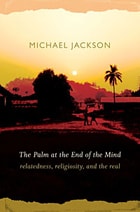
The Palm at the End of the Mind
Relatedness, Religiosity, and the RealMichael Jackson
Duke University Press, 2009
Through sixty-one beautifully crafted essays based on sojourns in Europe, West Africa, the United States, Australia, and New Zealand, and taking his cue from Wallace Stevens’s late poem, “Of Mere Being,” Jackson explores a range of experiences where “the palm at the end of the mind” stands “beyond thought,” on “the edge of space,” “a foreign song.” Moments of crisis as well as everyday experiences in cafés, airports, and offices disclose the subtle ways in which a single life shades into others, the boundaries between cultures become blurred, fate unfolds through genealogical time, elective affinities make their appearance, and different values contend.
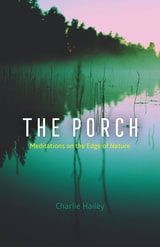
The Porch
Meditations on the Edge of NatureCharlie Hailey
University of Chicago Press, 2021
Hailey writes from a modest porch on the Homosassa River in Florida. He sleeps there, studies the tides, listens for osprey and manatee, welcomes shipwrecked visitors, watches shadows on its screens, reckons with climate change, and reflects on his own acclimation to his environment. The profound connections he unearths anchor an armchair exploration of past porches and those of the future, moving from ancient Greece to contemporary Sweden, from the White House roof to the Anthropocene home. In his ruminations, he links up with other porch dwellers including environmentalist Rachel Carson, poet Wendell Berry, writers Eudora Welty and Zora Neale Hurston, philosopher John Dewey, architect Louis Kahn, and photographer Paul Strand.
As close as architecture can bring us to nature, the porch is where we can learn to contemplate anew our evolving place in a changing world—a space we need now more than ever. Timeless and timely, Hailey’s book is a dreamy yet deeply passionate meditation on the joy and gravity of sitting on the porch.

The Sea Within
Waves and the Meaning of All ThingsPeter Kreeft
St. Augustine's Press, 2006
To You I Call
Psalms Throughout Our LivesRabbi Jade Sank Ross
Central Conference of American Rabbis, 2024
Torah Today
A Renewed Encounter with ScriptureBy Pinchas H. Peli
University of Texas Press, 2005
The central element of Jewish worship is the yearly cycle of reading the first five books of the Bible, the Five Books of Moses, called the Torah in Hebrew. Torah Today, a compilation of fifty-four essays that grew out of Pinchas Peli's Torah column in the Jerusalem Post, comments upon the weekly readings from the Torah. Written in a wonderfully clear style, each essay brings the reader closer to the rich spiritual world of Torah as it confronts the challenges of modern society. This reissue of Torah Today, with a new preface by Rabbi Harold M. Schulweis, makes this classic work available to a new generation of Bible students.
Transcendental Meditation in America
How a New Age Movement Remade a Small Town in IowaJoseph Weber
University of Iowa Press, 2014
The Indian spiritual entrepreneur Maharishi Mahesh Yogi took the West by storm in the 1960s and ’70s, charming Baby Boomers fed up with war and social upheaval with his message of meditation and peace. Heeding his call, two thousand followers moved to tiny Fairfield, Iowa, to set up their own university on the campus of a failed denominational college. Soon, they started a school for prekindergarten through high school, allowing followers to immerse themselves in Transcendental Meditation from toddlerhood through PhDs.
Although Fairfield’s longtime residents were relieved to see that their new neighbors were clean-cut and respectably dressed—not the wild-haired, drug-using hippies they had feared—the newcomers nevertheless quickly began to remake the town. Stores selling exotic goods popped up, TM followers built odd-looking homes that modeled the guru’s rules for peace-inspiring architecture, and the new university knocked down a historic chapel, even as it erected massive golden-domed buildings for meditators. Some newcomers got elected—and others were defeated—when they ran for local and statewide offices. At times, thousands from across the globe visited the small town.
Yet Transcendental Meditation did not always achieve its aims of personal and social tranquility. Suicides and a murder unsettled the meditating community over the years, and some followers were fleeced by con men from their own ranks. Some battled a local farmer over land use and one another over doctrine. Notably, the world has not gotten more peaceful.
Today the guru is dead. His followers are graying, and few of their children are moving into leadership roles. The movement seems rudderless, its financial muscle withering, despite the efforts of high-profile supporters such as filmmaker David Lynch and media magnate Oprah Winfrey. Can TM reinvent itself? And what will be the future of Fairfield itself? By looking closely at the transformation of this small Iowa town, author Joseph Weber assesses the movement’s surprisingly potent effect on Western culture, sketches out its peculiar past, and explores its possible future.
Travels in a Tree House
Essays on Life and Other JoysJohn Workman
University of Arkansas Press, 2001
Walk Till the Dogs Get Mean
Meditations on the Forbidden from Contemporary AppalachiaAdrian Blevins
Ohio University Press, 2015
In Walk Till the Dogs Get Mean, Adrian Blevins and Karen Salyer McElmurray collect essays from today’s finest established and emerging writers with roots in Appalachia. Together, these essays take the theme of silencing in Appalachian culture, whether the details of that theme revolve around faith, class, work, or family legacies.
In essays that take wide-ranging forms—making this an ideal volume for creative nonfiction classes—contributors write about families left behind, hard-earned educations, selves transformed, identities chosen, and risks taken. They consider the courage required for the inheritances they carry.
Toughness and generosity alike characterize works by Dorothy Allison, bell hooks, Silas House, and others. These writers travel far away from the boundaries of a traditional Appalachia, and then circle back—always—to the mountains that made each of them the distinctive thinking and feeling people they ultimately became. The essays in Walk Till the Dogs Get Mean are an individual and collective act of courage.
Contributors:
Dorothy Allison, Rob Amberg, Pinckney Benedict, Kathryn Stripling Byer, Sheldon Lee Compton, Michael Croley, Richard Currey, Joyce Dyer, Sarah Einstein, Connie May Fowler, RJ Gibson, Mary Crockett Hill, bell hooks, Silas House, Jason Howard, David Huddle, Tennessee Jones, Lisa Lewis, Jeff Mann, Chris Offutt, Ann Pancake, Jayne Anne Phillips, Melissa Range, Carter Sickels, Aaron Smith, Jane Springer, Ida Stewart, Jacinda Townsend, Jessie van Eerden, Julia Watts, Charles Dodd White, and Crystal Wilkinson.