Results by title
22279 books match the query 'Social Science' and 955 start with f

Forget Burial
HIV Kinship, Disability, and Queer/Trans Narratives of CareMarty Fink
Rutgers University Press, 2021
Queers and trans people in the 1980s and early ‘90s were dying of AIDS and the government failed to care. Lovers, strangers, artists, and community activists came together take care of each other in the face of state violence. In revisiting these histories alongside ongoing queer and trans movements, this book uncovers how early HIV care-giving narratives actually shape how we continue to understand our genders and our disabilities. The queer and trans care-giving kinships that formed in response to HIV continue to inspire how we have sex and build chosen families in the present. In unearthing HIV community newsletters, media, zines, porn, literature, and even vampires, Forget Burial bridges early HIV care-giving activisms with contemporary disability movements. In refusing to bury the legacies of long-term survivors and of those we have lost, this book brings early HIV kinships together with ongoing movements for queer and trans body self-determination.

Forget Me Not
The Rise of the British Literary Annual, 1823–1835Katherine D. Harris
Ohio University Press, 2015
By November 1822, the British reading public had already voraciously consumed both Walter Scott’s expensive novels and Rudolf Ackermann’s exquisite lithographs. The next decade, referred to by some scholars as dormant and unproductive, is in fact bursting with Forget Me Nots, Friendship’s Offerings, Keepsakes, and Literary Souvenirs. By wrapping literature, poetry, and art into an alluring package, editors and publishers saturated the market with a new, popular, and best-selling genre, the literary annual. In Forget Me Not, Katherine D. Harris assesses the phenomenal rise of the annual and its origins in other English, German, and French literary forms as well as its social influence on women, its redefinition of the feminine, and its effects on late nineteenth- and early twentieth-century print culture. Harris adopts an interdisciplinary approach that uses textual and social contexts to explore a forum of subversive femininity, where warfare and the masculine hero were not celebrated.
Initially published in diminutive, decoratively bound volumes filled with engravings of popularly recognized artwork and “sentimental” poetry and prose, the annuals attracted a primarily middle-class female readership. The annuals were released each November, making them an ideal Christmas gift, lover’s present, or token of friendship. Selling more than 100,000 copies during each holiday season, the annuals were accused of causing an epidemic and inspiring an “unmasculine and unbawdy age” that lasted through 1860 and lingered in derivative forms until the early twentieth century in both the United States and Europe. The annual thrived in the 1820s and after despite—or perhaps because of—its “feminine” writing and beautiful form.
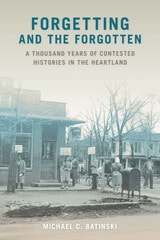
Forgetting and the Forgotten
A Thousand Years of Contested Histories in the HeartlandMichael C. Batinski
Southern Illinois University Press, 2022
Revealing the forgotten in community histories
Histories try to forget, as this evocative study of one community reveals. Forgetting and the Forgotten details the nature of how a community forged its story against outsiders. Historian Michael C. Batinski explores the habits of forgetting that enable communities to create an identity based on silencing competing narratives. The white settlers of Jackson County, Illinois, shouldered the hopes of a community and believed in the justice of their labor as it echoed the national story. The county’s pastkeepers, or keepers of the past, emphasizing the white settlers’ republican virtue, chose not to record violence against Kaskaskia people and African Americans and to disregard the numerous transient laborers. Instead of erasing the presence of outsiders, the pastkeepers could offer only silence, but it was a silence that could be broken.
Batinski’s historiography critically examines local historical thought in a way that illuminates national history. What transpired in Jackson County was repeated in countless places throughout the nation. At the same time, national history writing rarely turns to experiences that can be found in local archives such as court records, genealogical files, archaeological reports, coroner’s records, and veterans’ pension files. In this archive, juxtaposed with the familiar actors of Jackson County history—Benningsen Boon, John A. Logan, and Daniel Brush—appear the Sky People, Italian immigrant workers, black veterans of the Civil War and later champions of civil rights whose stories challenge the dominant narrative.

Forging Arizona
A History of the Peralta Land Grant and Racial Identity in the WestAnita Huizar-Hernández
Rutgers University Press, 2019
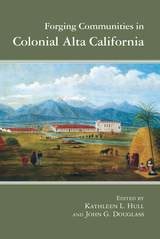
Forging Communities in Colonial Alta California
Edited by Kathleen L. Hull and John G. Douglass
University of Arizona Press, 2018
Forging Communities in Colonial Alta California reorients understandings of this dynamic period, which challenged both Native and non-Native people to reimagine communities not only in different places and spaces but also in novel forms and practices. The contributors draw on archaeological and historical archival sources to analyze the generative processes and nature of communities of belonging in the face of rapid demographic change and perceived or enforced difference.
Contributors provide important historical background on the effects that colonialism, missions, and lives lived beyond mission walls had on Indigenous settlement, marriage patterns, trade, and interactions. They also show the agency with which Indigenous peoples make their own decisions as they construct and reconstruct their communities. With nine different case studies and an insightful epilogue, this book offers analyses that can be applied broadly across the Americas, deepening our understanding of colonialism and community.
Contributors:
Julienne Bernard
James F. Brooks
John Dietler
Stella D’Oro
John G. Douglass
John Ellison
Glenn Farris
Heather Gibson
Kathleen L. Hull
Linda Hylkema
John R. Johnson
Kent G. Lightfoot
Lee M. Panich
Sarah Peelo
Seetha N. Reddy
David W. Robinson
Tsim D. Schneider
Christina Spellman
Benjamin Vargas
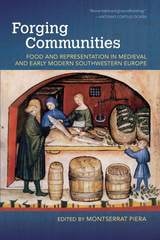
Forging Communities
Food and Representation in Medieval and Early Modern Southwestern EuropeMontserrat Piera
University of Arkansas Press, 2018
This interdisciplinary study of food in medieval and early modern communities connects threads of history conventionally examined separately or in isolation. The intersection of foodstuffs with politics, religion, economics, and culture enhances our understanding of historical developments and cultural continuities through the centuries, giving insight that today, as much as in the past, we are what we eat and what we eat is never devoid of meaning.

Forging Gay Identities
Organizing Sexuality in San Francisco, 1950-1994Elizabeth A. Armstrong
University of Chicago Press, 2002
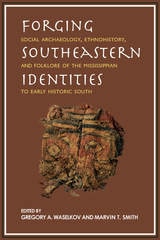
Forging Southeastern Identities
Social Archaeology, Ethnohistory, and Folklore of the Mississippian to Early Historic SouthGregory A. Waselkov
University of Alabama Press, 2017
Forging Southeastern Identities explores the many ways archaeologists and ethnohistorians define and trace the origins of Native Americans’ collective social identity.
Forging Southeastern Identities: Social Archaeology and Ethnohistory of the Mississippian to Early Historic South, a groundbreaking collection of ten essays, covers a broad expanse of time—from the ninth to the nineteenth centuries—and focuses on a common theme of identity. These essays represent the various methods used by esteemed scholars today to study how Native Americans in the distant past created new social identities when old ideas of the self were challenged by changes in circumstance or by historical contingencies.
Archaeologists, anthropologists, and folklorists working in the Southeast have always recognized the region’s social diversity; indeed, the central purpose of these disciplines is to study peoples overlooked by the mainstream. Yet the ability to define and trace the origins of a collective social identity—the means by which individuals or groups align themselves, always in contrast to others—has proven to be an elusive goal. Here, editors Gregory A. Waselkov and Marvin T. Smith champion the relational identification and categorical identification processes, taken from sociological theory, as effective analytical tools.
Taking up the challenge, the contributors have deployed an eclectic range of approaches to establish and inform an overarching theme of identity. Some investigate shell gorgets, textiles, shell trade, infrastructure, specific sites, or plant usage. Others focus on the edges of the Mississippian world or examine colonial encounters between Europeans and native peoples. A final chapter considers the adaptive malleability of historical legend in the telling and hearing of slave narratives.
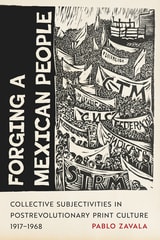
Forging a Mexican People
Collective Subjectivities in Postrevolutionary Print Culture, 1917–1968Pablo Zavala
University of Arizona Press, 2026
Forging a Mexican People shows how illustrated print culture helped to construct and deconstruct versions of “a people” in postrevolutionary Mexico.
Through meticulous research, Pablo Zavala uncovers the ways photographers, graphic artists, writers, and activists used print culture to challenge hegemonic conceptions of state-guided narratives and forge alternative collective subjectivities. This book offers a fresh perspective on the sociopolitical landscape of postrevolutionary Mexico, revealing how cultural artifacts simultaneously crafted and reflected the people vis-à-vis different political and social categories. By examining print culture, editorial practices, and related processes such as the creation, consumption, and distribution of said culture, Zavala’s research contributes to scholarship that has recently reexamined the construction of nationalism by moving away from the focus on state formation and addressing the horizontal and aesthetic dimensions in products by cultural producers from nonstate and grassroots political sectors.
Zavala examines the conceptual parameters of el pueblo by analyzing El Universal Ilustrado, El Machete, the Taller de Gráfica Popular, the protest graphic art used in Mexico City’s 1968 popular student movement, and graphic art used in California’s Chicano farmworkers’ struggle. Based on in-depth archival research, the work includes primary sources that have never been digitized, offering readers unique insights into the visual manifestations of Mexico’s postrevolutionary identity and their enduring significance.

Forgive Us Our Debts
How Black Churches Use Bankruptcy to SurvivePamela Foohey
University of Chicago Press, 2026
A revelatory study of how Black churches turn the financial system back against predatory lenders.
When American churches face financial difficulties, a disproportionately high number of Black churches reorganize under chapter 11 bankruptcy. There are no easy explanations for this distinction: not location, denomination, leadership structure, or the reasons for the loans. In Forgive Us Our Debts, legal scholar Pamela Foohey asks why, then, Black churches account for two-thirds of all congregations that file for chapter 11 bankruptcy every year.
Drawing on case studies of six Black churches and one white church, and 150 interviews with church leaders, members, and attorneys, Foohey finds answers in a long history of predatory lending. Unable to negotiate with recalcitrant loan officers, Black churches turn to the legal system to force reasonable concessions from lenders to prevent the stripping of their wealth and the destruction of their communities. While the structural discrimination remains, these churches have found in the bankruptcy system a refuge and some power to fight back.
Forgiveness & Reconciliation
Public Policy & Conflict TransformationRaymond G. Helmick
Templeton Press, 2001
This book brings together a unique combination of experts in conflict resolution and focuses on the role forgiveness can play in the process. It deals with theology, public policy, psychological and social theory, and social policy implementation of forgiveness. This book is essential for libraries, scholars, conflict negotiators, and all people who hope to understand the role of forgiveness in the peace process.
The book's first section explores how ideas like "forgiveness" and "reconciliation" are moving out from the seminary and academy into the world of public policy and how these terms have been used and defined in the past. The second section looks at forgiveness and public policy. One of the chapters, by Donald W. Shriver Jr., addresses forgiveness in a secular political forum.
The third section of the book draws us to a more thorough analysis of the relationship between forgiveness and reconciliation from voices in the academic and theological community, and the final section highlights the work of practitioners currently working with religion, public policy, and conflict transformation, particularly in areas such as Ireland and Africa.
Contributors include Desmond M. Tutu, Rodney L. Petersen, Miroslav Volf, Stanley S. Harakas, Raymond G. Helmick, SJ, Joseph V. Montville, Douglas M. Johnston, Donna Hicks, Donald W. Shriver, Jr., Everett L. Worthington, Jr., John Paul Lederach, Ervin Staub, Laurie Anne Pearlman, John Dawson, Audrey R. Chapman, Olga Botcharova, Anthony da Silva, SJ, Geraldine Smythe, OP, Andrea Bartoli, Ofelia Ortega, and George F. R. Ellis.
Forgotten Bodies
Imperialism, Chuukese Migration, and Stratified Reproduction in GuamSarah A. Smith
Rutgers University Press, 2024

Forgotten Readers
Recovering the Lost History of African American Literary SocietiesElizabeth McHenry
Duke University Press, 2002
Forgotten Readers expands our definition of literacy and urges us to think of literature as broadly as it was conceived of in the nineteenth century. Elizabeth McHenry delves into archival sources, including the records of past literary societies and the unpublished writings of their members. She examines particular literary associations, including the Saturday Nighters of Washington, D.C., whose members included Jean Toomer and Georgia Douglas Johnson. She shows how black literary societies developed, their relationship to the black press, and the ways that African American women’s clubs—which flourished during the 1890s—encouraged literary activity. In an epilogue, McHenry connects this rich tradition of African American interest in books, reading, and literary conversation to contemporary literary phenomena such as Oprah Winfrey’s book club.

Forgotten Towns of Southern New Jersey
Beck, Henry
Rutgers University Press, 1983

Forgotten Veterans, Invisible Memorials
How American Women Commemorated the Great War, 1917–1945Allison S. Finkelstein
University of Alabama Press, 2021
Investigates the groundbreaking role American women played in commemorating those who served and sacrificed in World War I
In Forgotten Veterans, Invisible Memorials: How American Women Commemorated the Great War, 1917–1945 Allison S. Finkelstein argues that American women activists considered their own community service and veteran advocacy to be forms of commemoration just as significant and effective as other, more traditional forms of commemoration such as memorials. Finkelstein employs the term “veteranism” to describe these women’s overarching philosophy that supporting, aiding, and caring for those who served needed to be a chief concern of American citizens, civic groups, and the government in the war’s aftermath. However, these women did not express their views solely through their support for veterans of a military service narrowly defined as a group predominantly composed of men and just a few women. Rather, they defined anyone who served or sacrificed during the war, including women like themselves, as veterans.
These women veteranists believed that memorialization projects that centered on the people who served and sacrificed was the most appropriate type of postwar commemoration. They passionately advocated for memorials that could help living veterans and the families of deceased service members at a time when postwar monument construction surged at home and abroad. Finkelstein argues that by rejecting or adapting traditional monuments or by embracing aspects of the living memorial building movement, female veteranists placed the plight of all veterans at the center of their commemoration efforts. Their projects included diverse acts of service and advocacy on behalf of people they considered veterans and their families as they pushed to infuse American memorial traditions with their philosophy. In doing so, these women pioneered a relatively new form of commemoration that impacted American practices of remembrance, encouraging Americans to rethink their approach and provided new definitions of what constitutes a memorial. In the process, they shifted the course of American practices, even though their memorialization methods did not achieve the widespread acceptance they had hoped it would.
Meticulously researched, Forgotten Veterans, Invisible Memorials utilizes little-studied sources and reinterprets more familiar ones. In addition to the words and records of the women themselves, Finkelstein analyzes cultural landscapes and ephemeral projects to reconstruct the evidence of their influence. Readers will come away with a better understanding of how American women supported the military from outside its ranks before they could fully serve from within, principally through action-based methods of commemoration that remain all the more relevant today.

Forjando Patria
Pro-NacionalismoManuel Gamio
University Press of Colorado, 2026
Armstrong-Fumero's translation allows readers to develop a more nuanced understanding of this foundational work, which is often misrepresented in contemporary critical analyses. As much about national identity as anthropology, this text gives Anglophone readers access to a particular set of topics that have been mentioned extensively in secondary literature but are rarely discussed with a sense of their original context. Forjando Patria also reveals the many textual ambiguities that can lend themselves to different interpretations.
The book highlights the history and development of Mexican anthropology and archaeology at a time when scholars in the United States are increasingly recognizing the importance of cross-cultural collaboration with their Mexican colleagues. It will be of interest to anthropologists and archaeologists studying the region, as well as those involved in the history of the discipline.

Form and the Art of Theatre
Paul Newell Campbell
University of Wisconsin Press, 1984

Form, Meaning, and Focus in American Sign Language
Miako N. P. Rankin
Gallaudet University Press, 2013
The meaning of any linguistic expression resides not only in the words, but also in the ways that those words are conveyed. In her new study, Miako N. P. Rankin highlights the crucial interrelatedness of form and meaning at all levels in order to consider specific types of American Sign Language (ASL) expression. In particular, Form, Meaning, and Focus in American Sign Language considers how ASL expresses non-agent focus, similar to the meaning of passive voice in English.
Rankin’s analyses of the form-meaning correspondences of ASL expressions of non-agent focus reveals an underlying pattern that can be traced across sentence and verb types. This pattern produces meanings with various levels of focus on the agent. Rankin has determined in her meticulous study that the pattern of form-meaning characteristic of non-agent focus in ASL is used prolifically in day-to-day language. The recognition of the frequency of this pattern holds implications regarding the acquisition of ASL, the development of curricula for teaching ASL, and the analysis of ASL discourse in effective interpretation.

Formal Modeling in Social Science
Carol Mershon and Olga Shvetsova
University of Michigan Press, 2019
A formal model in the social sciences builds explanations when it structures the reasoning underlying a theoretical argument, opens venues for controlled experimentation, and can lead to hypotheses. Yet more importantly, models evaluate theory, build theory, and enhance conjectures. Formal Modeling in Social Science addresses the varied helpful roles of formal models and goes further to take up more fundamental considerations of epistemology and methodology.
The authors integrate the exposition of the epistemology and the methodology of modeling and argue that these two reinforce each other. They illustrate the process of designing an original model suited to the puzzle at hand, using multiple methods in diverse substantive areas of inquiry. The authors also emphasize the crucial, though underappreciated, role of a narrative in the progression from theory to model.
Transparency of assumptions and steps in a model means that any analyst will reach equivalent predictions whenever she replicates the argument. Hence, models enable theoretical replication, essential in the accumulation of knowledge. Formal Modeling in Social Science speaks to scholars in different career stages and disciplines and with varying expertise in modeling.
Formation Processes of the Archaeological Record
Michael Brian Schiffer
University of Utah Press, 1987
This handbook synthesizes the most important principles of cultural and environmental formation processes for both students and practicing archaeologists.
Formation Process of the Archaeological Record embodies a vision that the cultural past is knowable, but only when the nature of the evidence is thoroughly understood. It shows how the past is accessible in practice by identifying variability introduced by the diverse effects of people and nature that in some sum, form the archaeological record.
For students, it is intended as both an introduction and guide in method and theory, field work, and analysis. Practicing archaeologists will find it a valuable checklist of sources of variability when observations on the archaeological record are used to justify inferences.

Formations of Ritual
Colonial and Anthropological Discourses on the Sinhala YaktovilDavid Scott
University of Minnesota Press, 1994
Formations of Ritual was first published in 1994. Minnesota Archive Editions uses digital technology to make long-unavailable books once again accessible, and are published unaltered from the original University of Minnesota Press editions.
Yaktovil is an elaborate healing ceremony employed by Sinhalas in Sri Lanka to dispel the effects of the eyesight of a pantheon of malevolent supernatural figures known as yakku. Anthropology, traditionally, has articulated this ceremony with the concept metaphor of "demonism." Yet, as David Scott demonstrates in this provocative book, this use of "demonism" reveals more about the discourse of anthropology than it does about the ritual itself. His investigation of yaktovil and yakku within the Sinhala cosmology is also an inquiry into the ways in which anthropology, by ignoring the discursive history of the rituals, religions, and relationships it seeks to describe, tends to reproduce ideological-often, specifically colonial-objects.
To do this, Scott describes the discursive apparatus through which yakku are positioned in the moral universe of Sinhala, traces the appearance of yakku and yaktovil in Western discourse, evaluates the contribution of these figures and this ceremony in anthropology, and attempts to show how the larger anthropology of Buddhism, in which the anthropology of yaktovil is embedded, might be reconfigured. Finally, he offers a rereading of the ritual in terms of the historically selfconscious approach he proposes.The result points to a major rethinking of the historical nature not only of the objects, but also of the concepts through which they are constructed in anthropological discourse.David Scott teaches in the Department of Anthropology at the University of Chicago.

Formations of United States Colonialism
Alyosha Goldstein
Duke University Press, 2014
Contributors. Julian Aguon, Joanne Barker, Berenika Byszewski, Jennifer Nez Denetdale, Augusto Espiritu, Alyosha Goldstein, J. K?haulani Kauanui, Barbara Krauthamer, Lorena Oropeza, Vicente L. Rafael, Dean Itsuji Saranillio, Lanny Thompson, Lisa Uperesa, Manu Vimalassery

Formations of Violence
The Narrative of the Body and Political Terror in Northern IrelandAllen Feldman
University of Chicago Press, 1991
"A sophisticated and persuasive late-modernist political analysis that consistently draws the reader into the narratives of the author and those of the people of violence in Northern Ireland to whom he talked. . . . Simply put, this book is a feast for the intellect"—Thomas M. Wilson, American Anthropologist
"One of the best books to have been written on Northern Ireland. . . . A highly imagination and significant book. Formations of Violence is an important addition to the literature on political violence."—David E. Schmitt, American Political Science Review
Formative Mesoamerican Exchange Networks with Special Reference to the Valley of Oaxaca
Jane W. Pires-Ferreira
University of Michigan Press, 2019

Forming the Public
A Critical History of Journalism in the United StatesFrank D. Durham and Thomas P. Oates
University of Illinois Press, 2024
Weaving eyewitness history through US history, Forming the Public reveals what understanding the journalism landscape can teach us about the nature of journalism’s own interests in race, gender, and class while tracing the factors that shaped the contours of dominant American culture.
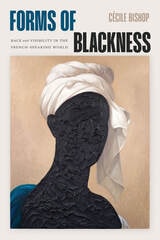
Forms of Blackness
Race and Visibility in the French-Speaking WorldCécile Bishop
Duke University Press, 2025
Considering race as form across literature, theory, painting, and photography, Cécile Bishop’s Forms of Blackness explores the formal devices that make blackness both visible and recognizable. In keeping with black Francophone theorists like Édouard Glissant and Frantz Fanon, Bishop uses the ambiguities these aesthetic forms carry to explore a range of identity concepts like opacity, formlessness, and doubleness. Bishop puts blackness-as-race and blackness-as-form in dialogue, showing how race disrupts the concept of artistic autonomy and how the aesthetic challenges race as a self-evident visual phenomenon. When thought together, form does not isolate blackness from race but rather calls attention to the material substrate that turns race into a phenomenon that can be experienced through sense perception. Moving between careful analysis and experimental modes of critique, Forms of Blackness offers a new way of thinking about the politics of visibility and offers a pressing invitation to question the ways we interpret what we see.
Forms of Expansion
Recent Long Poems by WomenLynn Keller
University of Chicago Press, 1997
Arguing that women poets no longer feel intimidated by the traditional associations of long poems with the heroic, public realm or with great artistic ambition, Keller shows how the long poem's openness to sociological, anthropological, and historical material makes it an ideal mode for exploring women's roles in history and culture. In addition, the varied forms of long poems—from sprawling free verse epics to regular sonnet sequences to highly disjunctive experimental collages—make this hybrid genre easily adaptable to diverse visions of feminism and of contemporary poetics.
Forms of Worship
How Orisa Worship Became Religion in Nigeria and BrazilAyodeji Ogunnaike
Duke University Press, 2026

Formulas for Motherhood in a Chinese Hospital
Suzanne Gottschang
University of Michigan Press, 2018
Formulas for Motherhood follows a group of women over eighteen months as they visited a Beijing Baby- Friendly Hospital over the course of their pregnancies and throughout their postpartum recoveries. The book shows how the space of the hospital operates as a microcosm of the larger social, political, and economic forces that urban Chinese women navigate in the process of becoming a mother. Relations between biomedical practices, heightened expectations of femininity and sexuality demanded by a consumer culture, alongside international and national agendas to promote maternal and child health, reveal new agents of maternal governance emerging at the very moment China’s economy heats up. This ethnography provides insight into how women’s creative pragmatism in a rapidly changing society leads to their views and decisions about motherhood.

Fornes
Theater in the Present TenseDiane Lynn Moroff
University of Michigan Press, 1996
Diane Lynn Moroff focuses on Fornes's major plays, providing illuminating readings of her unique and irreverent body of work. The book traces the career of this influential playwright, director, and teacher, including the reception of her plays, the range of critical responses (particularly those of feminist critics), and an introduction to Fornes's theatrical philosophies. It looks at such critical issues in Fornes's work as the representation of female subjectivity, theater as metaphor and context, art as ritual, and the role of the spectator. In a final chapter, Fornes's plays including Abingdon Square and her most recent work, What of the Night? are examined in the context of the sexualization of character, an ongoing theme for Fornes.
Fornes: Theater in the Present Tense will appeal to scholars and students in theater studies and women's studies and to anyone interested or engaged in contemporary theater.
Diane Lynn Moroff is Assistant Professor of English, Oglethorpe University.

Forsaken
The Menstruant in Medieval Jewish MysticismSharon Faye Koren
Brandeis University Press, 2011
Fort Bowie Material Culture
Robert M. Herskovitz
University of Arizona Press, 1978

Fortunate People in a Fortunate Land
At Home in Santa Monica's Rent-Controlled HousingLauren E. M. Everett
Temple University Press, 2025
Everett seeks to understand the extent to which individuals feel at home or not at home and what factors contribute to those experiences. She also explores the nexus of Santa Monica’s tenant protection policies, infrastructure, and resources and the extent to which they inform stability—both perceived and actual—and life decisions.
The first scholarly book to take a tenant-centered approach to examining the benefits and problems of rent control, Fortunate People in a Fortunate Land examines the residential experience in this specific local context and explains how it relates to policy and other externalities in cities where homeownership is not financially viable for most renters.
In the series Urban Life, Landscape, and Policy

Fortune Is a Woman
Gender and Politics in the Thought of Niccolo MachiavelliHanna Fenichel Pitkin
University of Chicago Press, 1999
Hanna Pitkin's provocative and enduring study of Machiavelli was the first to systematically place gender at the center of its exploration of his political thought. In this edition, Pitkin adds a new afterword, in which she discusses the book's critical reception and situates the book's arguments in the context of recent interpretations of Machiavelli's thought.
"A close and often brilliant exegesis of Machiavelli's writings."—The American Political Science Review

Fortune’s Wheel
Dickens and the Iconography of Women’s TimeElizabeth A. Campbell
Ohio University Press, 2003
In the first half of the nineteenth century, England became quite literally a world on wheels. The sweeping technological changes wrought by the railways, steam-powered factory engines, and progressively more sophisticated wheeled conveyances of all types produced a corresponding revolution in Victorian iconography: the image of the wheel emerged as a dominant trope for power, modernity, and progress.
In Fortune’s Wheel, an original and illuminating study, Elizabeth Campbell explores the ways in which Charles Dickens appropriated and made central to his novels the dominant symbol of his age. Between 1840 and 1860, a transformation took place in Dickens’ thinking about gender and time, and this revolution is recorded in iconographic representations of the goddess Fortune and wheel imagery that appear in his work.
Drawing on a rich history of both literary and visual representations of Fortune, Professor Campbell argues that Dickens’ contribution to both the iconographic and narrative traditions was to fuse the classical image of the wheel with the industrial one. As the wheel was increasingly identified as the official Victorian symbol for British industrial and economic progress, Dickens reacted by employing this icon to figure a more pessimistic historical vision—as the tragic symbol for human fate in the nineteenth century.
Fortune’s Wheel ably portrays the concept that, in both text and illustrations, images of fortune and the wheel in Dickens’ work record his abandonment of a linear, progressive, and arguably masculine view of history to embrace a cyclical model that has been identified with “women’s time.”

Forty Years of Texas Storytelling
Historical and Contemporary Tales from Diverse Writers and PoetsTed Parkhurst
Parkhurst Brothers, Inc., 2024
Foucault and Feminist Philosophy of Disability
Shelley L. Tremain
University of Michigan Press, 2017

Foundations and Government
State and Federal Law SupervisionMarion R. Fremont-Smith
Russell Sage Foundation, 1965
Foundations of Anasazi Culture
The Basketmaker Pueblo TransitionPaul F Reed
University of Utah Press, 2002
This major synthesis of work explores new evidence gathered at Basketmaker III sites on the Colorado Plateau in search of further understanding of Anasazi development.
Since the 1960s, large-scale cultural resource management projects have revealed the former presence of Anasazi within the entire northern Southwest. These discoveries have resulted in a greatly expanded view of the BMIII period (A.D. 550-750) which immediately proceeds the Pueblo phase. Particularly noteworthy are finding of Basketmaker remains under those of later periods and in sites with open settings, as opposed to the more classic Basketmaker cave and rock shelter sites.
Foundations of Anasazi Culture explores this new evidence in search of further understanding of Anasazi development. Several chapters address the BMII-BMIII transition, including the initial production and use of pottery, greater reliance on agriculture, and the construction of increasingly elaborate structures. Other chapters move beyond the transitional period to discuss key elements of the Anasazi lifestyle, including the use of gray-,red-, and white-ware ceramics, pit structures, storage cists, surface rooms, full dependence on agriculture, and varying degrees of social specialization and differentiation. A number of contributions address one or more of these issues as they occur at specific sites. Other contributors consider the material culture of the period in terms of common elements in architecture, ceramics, lithic technology, and decorative media.
This work on BMIII sites on the Colorado Plateau will be useful to anyone with an interest in the earliest days of Anasazi civilization.
Foundations of Black Epistemology
Knowledge Discourse in Africana PhilosophyAdebayo Oluwayomi
Temple University Press, 2025
Foundations of Black Epistemology examines writings by Phillis Wheatley, Frederick Douglass, Ida B. Wells, W.E.B. DuBois, Frantz Fanon, Steve Bantu Biko, Huey P. Newton, and Kathleen Neal Cleaver. Each chapter addresses issues of self-knowledge, self-assertion, Black consciousness, or anticolonialism and its relation to personal and political epistemologies.
Oluwayomi offers innovative perspectives on the formulation, deduction, and interrogation of epistemological themes within Black Africana philosophy. By considering the important epistemological theories and arguments in Black philosophy particularly in the last 150 to 200 years, Foundations of Black Epistemology promises to generate new discussions around this necessary field of Black Africana philosophy.
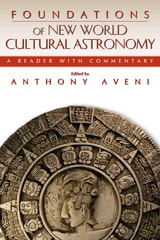
Foundations of New World Cultural Astronomy
A Reader with CommentaryAnthony Aveni
University Press of Colorado, 2008
Cultural astronomy, first called archaeoastronomy, has evolved at ferocious speed since its genesis in the 1960s, with seminal essays and powerful rebuttals published in far-flung, specialized journals. Until now, only the most closely involved scholars could follow the intellectual fireworks. In Foundations of New World Cultural Astronomy, Anthony Aveni, one of cultural astronomy's founders and top scholars, offers a selection of the essays that built the field, from foundational works to contemporary scholarship.
Including four decades of research throughout the Americas by linguists, archaeologists, historians, ethnologists, astronomers, and engineers, this reader highlights the evolution of the field through thematic organization and point-counterpoint articles. Aveni - an award-winning author and former National Professor of the Year - serves up incisive commentary, background for the uninitiated, and suggested reading, questions, and essay topics. Students, readers, and scholars will relish this collection and its tour of a new field in which discoveries about ancient ways of looking at the skies cast light on our contemporary views.

Foundations of the Unity of Science, Volume 2
Edited by Otto Neurath, Rudolf Carnap, and Charles F. W. Morris
University of Chicago Press, 1971

Founders of the Future
The Science and Industry of Spanish ModernizationÓscar Iván Useche
Bucknell University Press, 2022
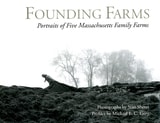
Founding Farms
Portraits of Five Massachusetts Family FarmsStanley E. Sherer
University of Massachusetts Press, 1993
With each passing year, the number of family farms in the United States diminishes. Fewer people have the persistence and ingenuity to wrest a livelihood from the land in an era of corporate ownership and mass production. Yet some family farms survive.
Through words and photographs, this book documents the long lives of five of the oldest farms in Massachusetts. Each has remained in the same family for more than two, sometimes three, centuries and each has a distinctive history. The devotion to the land and family heritage is palpable in the stories these five families tell.
Stan Sherer’s remarkable photographs depict the activities of the family members as they go about their daily labors, planting crops, feeding animals, applying new technologies to ancient tasks, and coping with the vagaries of weather and state regulations. Michael E. C. Gery’s narrative traces how the farms began, what has sustained them through the generations, and how the families who run them today feel about their past, present, and future. These stories are told largely through the words of the people themselves.
The result is a complex portrait that moves beyond traditional stereotypes to reveal the realities of family farm life in an increasingly urbanized society.
Founding Mothers of the Society for Ethnomusicology
Charlotte J. Frisbie
University of Illinois Press, 2026
An enlightening eyewitness account, Founding Mothers of the Society for Ethnomusicology is an invaluable window into the work and contributions of women scholars and the obstacles they faced.

Foundlings
Lesbian and Gay Historical Emotion before StonewallChristopher Nealon
Duke University Press, 2001
The young runaways in Cather’s novels, the way critics conflated Crane’s homosexual body with his verse, the suggestive poses and utopian captions of muscle magazines, and Beebo Brinker, the aging butch heroine from Ann Bannon’s pulp novels—all embody for Nealon the uncertain space between two models of lesbian and gay sexuality. The “inversion” model dominant in the first half of the century held that homosexuals are souls of one gender trapped in the body of another, while the more contemporary “ethnic” model refers to the existence of a distinct and collective culture among gay men and lesbians. Nealon’s unique readings, however, reveal a constant movement between these two discursive poles, and not, as is widely theorized, a linear progress from one to the other.
This startlingly original study will interest those working on gay and lesbian studies, American literature and culture, and twentieth-century history.
Four Classic Mormon Village Studies
Howard M. Bahr
University of Utah Press, 2014

Four Germanys
A Chronicle of the Schorcht FamilyDonald S. Pitkin
Temple University Press, 2016
In this last book by the late Donald Pitkin, author of The House that Giacomo Built, comes a story of the Schorcht family, through whose fortunes and struggles one can see the transformations of Germany through the long twentieth century.
Each chapter of Four Germanys is reflective of generational rather than historical time. In 1922, Edwin Schorcht inherited his family farm, and in Part One, Pitkin traces the derivation of this farmstead. Part Two focuses on Schorcht’s children who came of age in Hitler’s Germany. Part Three has the Schorchts growing up in the Ulbricht years (1950–73) of the German Democratic Republic. The book concludes with the great-granddaughter, Maria, looking back to the past in relation to the new Germany that history had bequeathed her.
Ultimately, Four Germanys reflects the impact of critical historical events on ordinary East Germans while it also reveals how one particular family managed its own historical adaptation to these events.

Four Jazz Lives
A. B. Spellman
University of Michigan Press, 2004
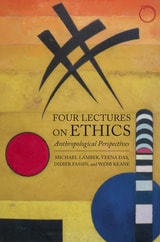
Four Lectures on Ethics
Anthropological PerspectivesMichael Lambek, Veena Das, Didier Fassin, and Webb Keane
HAU, 2015
The authors explore the ways we understand morality across many different cultural settings, asking questions such as: How do we recognize the ethical in different ethnographic worlds? What constitutes agency and awareness in everyday life? What might an anthropology of ordinary ethics look like? And what happens when ethics approaches the political in both Western and non-Western societies. Contrasting perspectives and methods—and yet in complimentary ways—this masterclass will serve as an essential guide for how an anthropology of ethics can be formulated in the twenty-first century.