Results by title
379 books match the query 'Botany' and 75 start with f
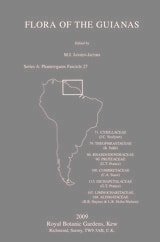
Flora of the Guianas Series A
Phanerogams Fascicle 27: 71. Cyrillaceae, 79. Theophrastaceae, 86. Habdodendraceae, 90. Proteaceae, 100. Combretaceae, 113. Dichapetalaceae, 167. Limnocharitaceae, 168. AlismataceaeEdited by M.J. Jansen-Jacobs
Royal Botanic Gardens, Kew, 2009
71. Cyrillaceae, 79. Theophrastaceae, 86. Habdodendraceae, 90. Proteaceae, 100. Combretaceae, 113. Dichapetalaceae 167. Limnochoaritaceae, 168. Alismataceae
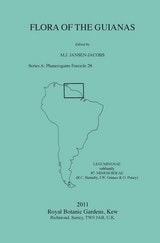
Flora of the Guianas Series A
Phanerogams Fascicle 28: Leguminosae Subfamily 87. Mimosoideae.Edited by M. J. Jansen-Jacobs
Royal Botanic Gardens, Kew, 2011
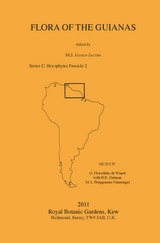
Flora of the Guianas Series C
Bryophytes Fascicle 2Edited by M. J. Jansen-Jacobs
Royal Botanic Gardens, Kew, 2011
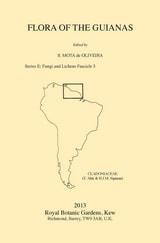
Flora of the Guianas Series E (Fungi and Lichens)
CladoniaceaeEdited by Sylvia Mota de Oliveira
Royal Botanic Gardens, Kew, 2014
Flora of the Guianas. Series A
Phanerogams Fascicle 23M. J. Jansen-Jacobs
Royal Botanic Gardens, Kew, 2006
Flora of the Guianas. Series A
Phanerogams Fascicle 24M. J. Jansen-Jacobs
Royal Botanic Gardens, Kew, 2007
Flora of the Guianas. Series A
Phanerogams Fascicle 25M. J. Jansen-Jacobs
Royal Botanic Gardens, Kew, 2007
105a. Eremolepidaceae
105b. Loranthaceae
106. Viscaceae
Flora of the Guianas. Series A
Phanerogams Fascicle 26Edited by M.J. Jansen-Jacobs
Royal Botanic Gardens, Kew, 2008
A critical, illustrated Flora of Guyana, Suriname and French Guiana, designed to treat phanerogams as well as cryptogams of the area.
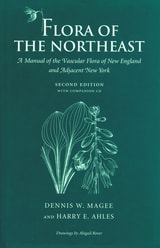
Flora of the Northeast
A Manual of the Vascular Flora of New England and Adjacent New YorkDennis W. Magee
University of Massachusetts Press, 2007
The "General Keys" section contains fourteen keys that include such groups as aquatic plants, vines, and woody plants in winter condition. For both woody and herbaceous families, the keys cover flowering as well as fruiting conditions and rely heavily on the use of vegetative features to extend the utility of the book beyond the reproductive period.The "Descriptive Flora" section includes keys to all of the genera and species, descriptions of the families and genera, and accounts of the individual species. The latter incorporates information on wetland site index, rare status, wildlife food value, food and medicinal value for humans, and poisonous or hallucinogenic properties.
This revised edition includes an updating of plant scientific names that changed since the first edition and an alphabetized list of plant families with page numbers on the inside front cover for easy reference. Additional resources will soon be available on the publisher's website, including a multiple-entry identification guide, hundreds of accompanying photographic images of genera, an illustrated glossary, and page reference numbers to genus descriptions in the manual. Presenting a wealth of scientifically accurate information in a precise and clear format, this volume serves as a reference work, as a textbook for classes in plant identification, and as a field manual.
Flore Générique des Arbres de Madagascar
George E. Schatz
Royal Botanic Gardens, Kew, 2001
Florula of Mucuge
R. M. Harley and N. A. Simmons
Royal Botanic Gardens, Kew, 1986
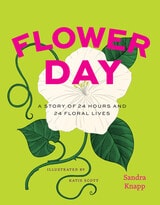
Flower Day
A Story of 24 Hours and 24 Floral LivesSandra Knapp
University of Chicago Press, 2025
Is it 4 AM or chicory o’clock? In this short book, botanist and award-winning author Sandra Knapp walks us through a day in a global garden. Each chapter of Flower Day introduces a single flower during a single hour, highlighting twenty-four different species from around the world.
Beginning at midnight in the Americas, we spot the long tubular flowers of the moonflower, Ipomoea alba; they attract a frenzy of hawk moths before the dawn arrives and the flowers wither and collapse. As day breaks, dandelions and chicory open their heads—actually made up of many individual flowers tightly packed together—and flies and bees visit to get the energy they need to lay eggs and raise their young. Later, at eight o’clock in the morning, the sun rises over the watery Amazon basin, and we meet the giant waterlily, slowly turning from white to pink and purple. Trapped inside are the beetles who feasted on the flowers during the night. That evening, at seven o’clock, we travel to the Caribbean to smell night-blooming jessamine’s powerful—some may say nauseating—sweet scent. But this member of the nightshade family isn’t just a thing of beauty—it has a reputation as both a poison and invasive species, crowding out endangered native trees.
For each hour in our flower day, celebrated artist Katie Scott has depicted these scenes with gorgeous pen-and-ink illustrations. Working closely together to narrate and illustrate these unique moments in time, Knapp and Scott have created an engaging read that is a perfect way to spend an hour or two—and a true gift for amateur botanists, gardeners, and anyone who wants to stop and appreciate the flowers.
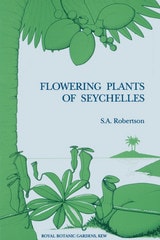
Flowering Plants of Seychelles
S. A. Robertson
Royal Botanic Gardens, Kew, 1989
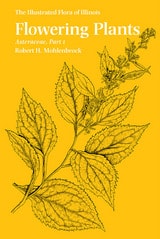
Flowering Plants
Asteraceae, Part 1Robert H. Mohlenbrock
Southern Illinois University Press, 2015
This, the first of three volumes on the aster family planned for the Illustrated Flora of Illinois series, recognizes 388 species in 119 genera, as well as 20 hybrids and 73 lesser taxa. In Asteraceae, Part 1, author Robert Mohlenbrock presents new and historic information in a clear and easy-to-read style. The volume provides an easy-to-use key to the genera and species and a complete description and nomenclatural and habitat notes for each plant, including its usefulness, if applicable. New nomenclatural combinations are shown for several species. The precise illustrations and detailed information allow for the identification of some of the most difficult to identify plants in the state—goldenrods, asters, artemisias, and fleabanes, among others. Includes 128 original illustrations by Paul Nelson.
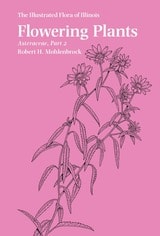
Flowering Plants
Asteraceae, Part 2Robert H. Mohlenbrock
Southern Illinois University Press, 2019
In addition, Mohlenbrock has identified the overall range for each species in Illinois, compiled from various sources, including examinations of herbarium material and Mohlenbrock’s own field studies. The range is given from the northeastern to the northwestern extremities, south to the southwestern limit, and then eastward to the southeastern limit.
As important to amateurs interested in wildflower identification as to botanists and land planners, this second volume of Mohlenbrock’s Asteraceae is an essential addition to the esteemed Illustrated Flora of Illinois series.
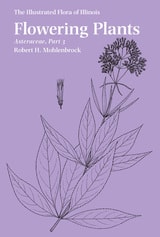
Flowering Plants
Asteraceae, Part 3Robert H. Mohlenbrock
Southern Illinois University Press, 2017
In addition, Mohlenbrock has identified the overall range for each species in Illinois, compiled from various sources, including examinations of herbarium material and Mohlenbrock’s own field studies. The overall range for each species is given from the northeastern to the northwestern extremities, south to the southwestern limit, then eastward to the southeastern limit.
As important to amateurs interested in wildflower identification as to professional botanists and land planners, this last volume of Mohlenbrock’s Asteraceae is an essential addition to the esteemed Illustrated Flora of Illinois series.
Flowering Plants
Basswoods to SpurgesRobert H. Mohlenbrock
Southern Illinois University Press, 1982
This is the fourth volume in The Illustrated Flora of Illinois devoted to dicotyledons, or dicot plants. Dicots are the greatest group of flowering plants, exceeding the monocotyledons, or monocots. Dicots produce a pair of seed leaves during germination while monocots produce only a single seed leaf.
This volume contains four orders and ten families of dicots. The orders included in this volume are Malvales, Urticales, Rhamnales, and Euphorbiales. Within the Malvales are the families Tiliaceae, Sterculiaceae, and Malvaceae. The families Ulmaceae, Moraceae, and Urticaceae comprise the Urticales. Rhamnaceae and Elaeagnaceae make up the Rhamnales. The Euphorbiales include only the Thymelaeceae and the Euphorbiaceae.
Flowering Plants
Lilies to OrchidsRobert H. Mohlenbrock
Southern Illinois University Press, 1970
A continuation of “The Illustrated Flora of Illinois” series, this volume features Illinois flowering plants. This series is designed to provide a working reference for the identification and classification of all the plant forms found in the state. This series is the first of its kind, as no other study of this sort has been undertaken in any other state, and as such, is an unparalleled contribution to its field.
In his introduction to this volume, Mr. Mohlenbrock discusses some of the terms and procedures used in the identification and classification of the plants. He outlines the life histories and morphologies of some of the representative monocots, and also illustrates some of their habits and frequencies in Illinois. Since these volumes are meant to be used by the amateur as well as the professional botanist, the methods and terms used in the text are explained. The directions for the use of the various identification keys are given so that even the novice plant lover will be able to identify the species encountered. For the uninitiated, a glossary is provided which gives definitions for all terms that might be unfamiliar.
All necessary aids to identification are included in the text itself. The identification keys make it initially possible to classify the plants according to order, family, genus and finally, species and the identifying characteristics of each descending class are given in detail. The morphology of each species is outlined, along with data on frequency of occurrence, related soil and climate conditions and history of past collections, and history of past collections. An illustration showing the more important features of the species in detail is included with the description, as well as a map indicating its geographical locations in Illinois.
This book will be invaluable to students, teachers and professionals; particularly those who are interested in observing the plants in their natural habitat. Those who use it will find it possible to obtain a broad view of changing plant forms as they relate to soil and climate variations throughout the state. And it will provide a delightful diversion for all who enjoy viewing beautiful forms in nature. A walk through the forest will become an opportunity for discovery and appreciation.
Flowering Plants
Magnolias to Pitcher PlantsRobert H. Mohlenbrock
Southern Illinois University Press, 1981
This volume, the eighth devoted to flowering plants in the Illustrated Flora of Illinois series, is the third of several devoted to dicotyledons, which include such well-known plants as roses, peas, mustards, mints, nightshades, milkweeds, and asters. Mohlenbrock here represents four orders (Annonales, Berberidales, Nymphaeales, and Sarraceniales) and fifteen families of plants. As in previous volumes in this series, the common names are those used locally in Illinois. An illustration of each species depicts the distinguishing features and the habitat in Illinois.
Flowering Plants
Nightshades to MistletoeRobert H. Mohlenbrock
Southern Illinois University Press, 1990
This sixth volume of dicots contains three orders and eight families. The orders included are Solanales, Campanulales, and Santalales. Within the Solanales are the families Solanaceae, Convolvulaceae, Cuscutaceae, and Polemoniaceae. The Campanulales contain only the family Campanulaceae. The Santalales include the families Celastraceae, Santalaceae, and Viscaceae. As with each volume in this series Mohlenbrock includes a complete plant description, illustrations showing diagnostic features, distribution maps, and ecological notes.
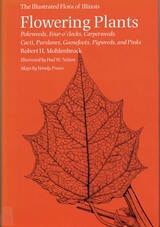
Flowering Plants
Pokeweeds, Four-o'clocks, Carpetweeds, Cacti, Purslanes, Goosefoots, Pigweeds, and PinksRobert H. Mohlenbrock
Southern Illinois University Press, 2001
Robert H. Mohlenbrock provides a definitive account of the pokeweed, four-o'clock, carpetweed, cactus, purslane, goosefoot, pigweed, and pink families in Illinois.
Flowering Plants: Pokeweeds, Four-o’clocks, Carpetweeds, Cacti, Purslanes, Goosefoots, Pigweeds, and Pinks is the fifteenth volume of the Illustrated Flora of Illinois series and the ninth devoted to dicots, or plants that have two seed-leaves, or cotyledons, upon germination. Each of the 141 plants is beautifully illustrated by Paul W. Nelson.
Nelson shows the full habitat of the plant and close-ups of various vegetative and reproductive structures that are crucial for the identification of individual species. Each illustration includes detailed drawings of the flowers, fruits, and seeds of the plant covered. Mohlenbrock provides a complete description of each species as well as a discussion of the nomenclature and habitats, and his fifty-three years of experience enable him to present little-known diagnostic features for many species. Range maps show the county distribution of each species in Illinois. Mohlenbrock includes a statement giving the overall range of each species in the United States as well as a detailed key for the identification of the species.
Flowering Plants contains many plants whose obscure flower parts make them exceedingly difficult to identify. The close-up illustrations of these parts will aid the user of the book immensely in identification of the species. Included are several species previously unknown in Illinois.
New illustrations, which include detailed drawings of the flowers, fruits, and seeds are presented for each species covered in this book. Mohlenbrock’s fifty-three years of experience enable him to present little-known diagnostic features for many species.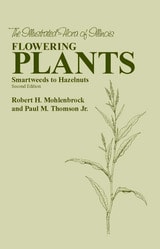
Flowering Plants
Smartweeds to HazelnutsRobert H. Mohlenbrock and Paul M. Thomson Jr.
Southern Illinois University Press, 2009
Since the publication of the first edition of Smartweeds to Hazelnuts in 1987, thirteen additional species and one hybrid have been discovered in Illinois. In addition, numerous nomenclatural changes have occurred for plants already known.
This second edition updates the status of the Polygonaceae, Hamamelidaceae, Platanaceae, Fagaceae, Betulaceae, and Corylaceae in Illinois. Each of the newly discovered species has been added and is fully illustrated. Updated nomenclature as well as Illinois distributional data are included for each species. In addition to the fourteen new plant illustrations, the appendix contains new information on the descriptions and the geographical locations of plants in the first edition, and revised identification keys.
Robert H. Mohlenbrock and Paul M. Thomson Jr. have included a complete description, illustrations showing diagnostic features, distribution maps, and ecological notes for each plant included in this volume.
This new edition will be invaluable to scholars of botany as well as laypersons interested in observing plants in their natural habitat.
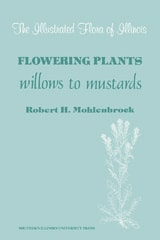
Flowering Plants
Willows to MustardsRobert H. Mohlenbrock
Southern Illinois University Press, 1980
This eighth volume in the comprehensive Illustrated Flora of Illinois series is the seventh volume devoted to flowering plants (the eighth volume is devoted to ferns) and the second treating dicotyledons, which include such well-known plants as roses, peas, mustards, mints, nightshades, milkweeds, and asters. The previous volume on dicots, Flowering Plants: Hollies to Loasas, was published in 1978.
In the present volume, Mohlenbrock includes three orders of vascular plants encompassing five families. The orders are Salicales and Tamaricales, of the Salicaceae and Tamaricaceae families, and Capparidales, of the Capparidaceae, Resedaceae, and Brassicaceae families. In all, 44 genera and 117species are treated in this volume, each species illustrated in detail.

Freshwater Wetlands
A Guide to Common Indicator Plants of the NortheastDennis W. Magee
University of Massachusetts Press, 1981
Following a brief introduction that discusses the functional values of wetlands and describes their various types, the manual is organized into two major components, the first consisting of keys that are based on life form and arrangement of plant parts, the second consisting of a description of each species. Such factors as range, habitat, general characteristics, stem, leaves, inflorescence, fruit, and similar species are covered in the descriptions.
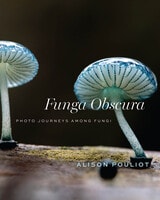
Funga Obscura
Photo Journeys Among FungiAlison Pouliot
University of Chicago Press, 2025
An unforgettable visual journey through the kingdom of fungi, both enigmatic and entrancing.
Recyclers, creators of soil, enablers of life, and food for many—fungi are as dynamic as they are diverse. And, throughout her career, Alison Pouliot has observed these organisms with a unique vision. As a scientist and photographer, she has led hundreds of forays through the forests of the Americas, Australia, and Europe. In this book, readers can travel along with her on these global explorations through stunning photographs and meditations on the landscape. She says her camera is where fungal lives come most clearly into focus. And like the camera obscura, this book, Funga Obscura, captures brief mycological moments and unforgettable fungus microcosms.
The word funga refers to the fungi of a region, and Pouliot’s photography spans continents. We see a parade of violet webcap mushrooms, spotted in the understory of a Pacific Northwest forest; brilliantly blue pixie’s parasols in Australia; an Italian alpine lichen, looking for all the world like a treasure map; and a showstopping whitelaced shank, ready to spread its spores in Switzerland. We learn that fungi live almost everywhere, from our lawns to forests and woodlands, from the ocean’s depths to deserts and alpine peaks. Yet, like a web of rootlike mycelium, Funga Obscura goes deeper to investigate how fungi shape landscapes and interact with other organisms, including humans. This journey spans eons, from long ago in evolutionary time, when fungi first emerged from the ocean onto land, to today, when we witness their work all around us. The scenes here challenge our ideas about what fungi are, what they do, and why they matter.
In Pouliot’s photographs, you might recognize a few old friends, but many mushrooms will be new acquaintances. Sometimes they make their presence immediately known; at other times, they just provide clues—and trails to follow.