Results by title
1488 books match the query 'Media Studies' and 59 start with f

From NWICO to WSIS
30 Years of Communication Geopolitics: Actors and Flows, Structures and DividesEdited by Divina Frau-Meigs, Jérémie Nicey, Michael Palmer, Julia Pohle, and Patricio Tupper
Intellect Books, 2012
From Theory to Practice
How to Assess and Apply Impartiality in News and Current AffairsEdited by Leon Barkho
Intellect Books, 2013
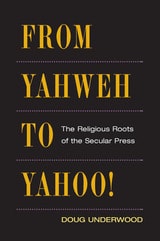
From Yahweh to Yahoo!
The Religious Roots of the Secular PressDoug Underwood
University of Illinois Press, 2001
Presenting religion as journalism's silent partner, From Yahweh to Yahoo!provides a fresh and surprising view of the religious impulses at work in contemporary newsrooms. Focusing on how the history of religion in the United States entwines with the growth of the media, Doug Underwood argues that American journalists draw from the nation's moral and religious heritage and operate, in important ways, as personifications of the old religious virtues.
Underwood traces religion's influence on mass communication from the biblical prophets to the Protestant Reformation, from the muckraker and Social Gospel campaigns of the late nineteenth and early twentieth centuries to the modern age of mass media. While forces have pushed journalists away from identifying themselves with religion, they still approach such secular topics as science, technology, and psychology in reverential ways. Underwood thoughtful analysis covers the press's formulaic coverage of spiritual experience, its failure to cover new and non-Christian religions in America, and the complicity of the mainstream media in launching the religious broadcasting movement.
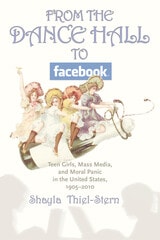
From the Dance Hall to Facebook
Teen Girls, Mass Media, and Moral Panic in the United States, 1905-2010Shayla Thiel-Stern
University of Massachusetts Press, 2014
In From the Dance Hall to Facebook, Shayla Thiel-Stern takes a close look at several historical snapshots, including working-class girls in dance halls of the early 1900s; girls' track and field teams in the 1920s to 1940s; Elvis Presley fans in the mid-1950s; punk rockers in the late 1970s and early 1980s; and girls using the Internet in the early twenty-first century. In each case, issues of gender, socioeconomic status, and race are explored within their historical context. The book argues that by marginalizing and stereotyping teen girls over the past century, mass media have perpetuated a pattern of gendered crisis that ultimately limits the cultural and political power of the young women it covers.

Front Office Fantasies
The Rise of Managerial Sports MediaBranden Buehler
University of Illinois Press, 2023
Front office executives have become high-profile commentators, movie and video game protagonists, and role models for a generation raised in the data-driven, financialized world of contemporary sports. Branden Buehler examines the media transformation of these once obscure management figures into esteemed experts and sporting idols.
Moving from Moneyball and Football Manager to coverage of analytics gurus like Daryl Morey, Buehler shows how a fixation on managerial moves has taken hold across the entire sports media landscape. Buehler’s chapter-by-chapter look at specific media forms illustrates different facets of the managerial craze while analyzing the related effects on what fans see, hear, and play. Throughout, Buehler explores the unsettling implications of exalting the management class and its logics, in the process arguing that sports media’s managerial lionization serves as one of the clearest reflections of major material and ideological changes taking place across culture and society.
Insightful and timely, Front Office Fantasies reveals how sports media moved the action from the field to the executive suite.
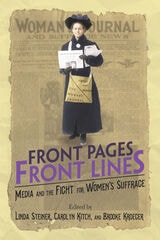
Front Pages, Front Lines
Media and the Fight for Women's SuffrageEdited by Linda Steiner, Carolyn Kitch, and Brooke Kroeger
University of Illinois Press, 2020
This collection offers new research on media issues related to the women's suffrage movement. Contributors incorporate media theory, historiography, and innovative approaches to social movements while discussing the vexed relationship between the media and debates over suffrage. Aiming to correct past oversights, the essays explore overlooked topics such as coverage by African American and Mormon-oriented media, media portrayals of black women in the movement, suffragist rhetorical strategies, elites within the movement, suffrage as part of broader campaigns for social transformation, and the influence views of white masculinity had on press coverage.
Contributors: Maurine H. Beasley, Sherilyn Cox Bennion, Jinx C. Broussard, Teri Finneman, Kathy Roberts Forde, Linda M. Grasso, Carolyn Kitch, Brooke Kroeger, Linda J. Lumsden, Jane Marcellus, Jane Rhodes, Linda Steiner, and Robin Sundaramoorthy
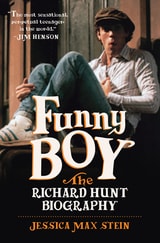
Funny Boy
The Richard Hunt BiographyJessica Max Stein
Rutgers University Press, 2024
"The most sensational, perpetual teenager in the world.” —Jim Henson
"To know him was to love him, and we do." —Mark Hamill
Funny Boy: The Richard Hunt Biography tells the life story of a gifted performer whose gleeful irreverence, sharp wit and generous spirit inspired millions. Richard Hunt was one of the original main five performers in the Muppet troupe. He brought to life an impressive range of characters on The Muppet Show, Sesame Street, Fraggle Rock and various Muppet movies, everyone from eager gofer Scooter to elderly heckler Statler, groovy girl Janice to freaked-out lab helper Beaker, even early versions of Miss Piggy and Elmo. Hunt also acted, directed and mentored the next generation of performers. His accomplishments are all the more remarkable in that he crammed them all into only 40 years.
Richard Hunt was just 18 years old when he joined Jim Henson’s company, where his edgy humor quickly helped launch the Muppets into international stardom. Hunt lived large, savoring life’s delights, amassing a vivid, disparate community of friends. Even when the AIDS epidemic wrought its devastation, claiming the love of Hunt’s life and threatening his own life, he showed an extraordinary sense of resilience, openness and joy. Hunt’s story exemplifies how to follow your passion, foster your talents, adapt to life’s surprises, genuinely connect with everyone from glitzy celebrities to gruff cab drivers – and have a hell of a lot of fun along the way.
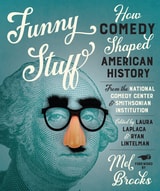
Funny Stuff
How Comedy Shaped American HistoryLaura LaPlaca
Rutgers University Press, 2026
A Junior Library Guild Gold Standard Selection
The National Comedy Center and Smithsonian Institution hold unparalleled collections of artifacts that illustrate the vitality and importance of comedy in American life, from vaudeville, silent films, and TV sitcoms to stand-up, sketch, and cartoons. Now, for the first time, these collections are brought together in vibrant photographs and illuminating essays that tell the story of how comedy shaped American history.
Written by historians responsible for safeguarding these cultural treasures, the book takes readers behind the scenes to uncover the stories behind American heirlooms like Groucho Marx’s tailcoat, George Carlin’s joke files, Carol Burnett’s “Went with the Wind” dress, Johnny Carson’s monologues, and the very first Saturday Night Live script, alongside materials from cultural touchstones like The Simpsons, The Muppet Show, In Living Color, All In the Family, and I Love Lucy.
With a foreword by comedy legend Mel Brooks, this dynamic work offers pop culture aficionados, history lovers, and comedy nerds alike a new perspective on America’s past and who we are as a nation through our comedy.
Futures of Digital Scholarly Editing
Matt Cohen
University of Minnesota Press, 2025
Exploring technology, ethics, and culture to unlock digital scholarship’s future
Futures of Digital Scholarly Editing navigates the ever-shifting terrain of digital academia, examining practical and ethical considerations as technology continues to evolve. In this indispensable collection, digital humanities practitioners and scholars work with a wide range of archival materials to confront key challenges surrounding the adaptation and sustainability of digital editorial projects as well as their societal impact.
Broaching essential questions at the nexus of technology and culture, Futures of Digital Scholarly Editing is organized around three principal frameworks: access, sustainability, and interoperability; ethics and community involvement; and the evolution of textual scholarship. From addressing outdated technical infrastructures to fostering new collaborations, this volume serves as a beacon guiding scholars and institutions through the complexities of digital editing in an era of profound technological and societal transformation.
Contributors: Stephanie P. Browner, The New School; Julia Flanders, Northeastern U; Ed Folsom, U of Iowa; Nicole Gray, U of Nebraska–Lincoln; Cassidy Holahan, U of Nevada, Las Vegas; Fotis Jannidis, U of Würzburg; Aylin Malcolm, U of Guelph; Sarah Lynn Patterson, U of Massachusetts Amherst; Elena Pierazzo, U of Tours; K.J. Rawson, Northeastern U; Whitney Trettien, U of Pennsylvania; John Unsworth, U of Virginia; Dirk Van Hulle, U of Oxford; Robert Warrior, U of Kansas; Marta L. Werner, Loyola U Chicago.
Retail e-book files for this title are screen-reader friendly with images accompanied by short alt text and/or extended descriptions.