Results by title
2335 books match the query 'Modern' and 97 start with f
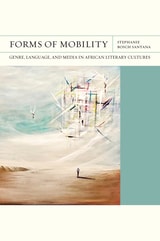
Forms of Mobility
Genre, Language, and Media in African Literary CulturesStephanie Bosch Santana
Northwestern University Press, 2025
Presents alternative categories of fiction through which to examine how contemporary writers have envisaged Africa’s changing literary terrains
Stephanie Bosch Santana analyzes southern African writers’ experimentations with literary form in periodical print and digital media since the mid-twentieth century in order to offer an alternative account of contemporary African imaginations of mobility. Based on an understudied archive of texts in English and Chichewa/Nyanja from Malawi, South Africa, Zimbabwe, and Zambia, Forms of Mobility: Genre, Language, and Media in African Literary Cultures examines new, noncanonical categories of fiction, including migrant forms, township tales, weekend stories, and digital diaries. These generically, linguistically, and geographically mobile forms map changing ideas of interconnection and belonging. By reading them “in motion,” as they travel across space, time, genre, and language and between publications and platforms, Bosch Santana limns multiple centers of literary influence and relation across southern African and Black diasporas, revealing forms of literary mobility and space making that are occluded by current models of world literature.
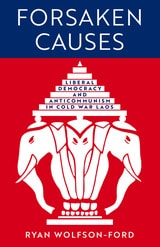
Forsaken Causes
Liberal Democracy and Anticommunism in Cold War LaosRyan Wolfson-Ford
University of Wisconsin Press, 2024
Forsaken Causes offers a groundbreaking intellectual history of the Royal Lao Government (RLG) from 1945 to 1975. In Ryan Wolfson-Ford’s account, the Lao people emerge as not merely pawns of the superpowers but agents in their own right, with the Lao elite wielding particular influence over the nation’s trajectory. Their prevailing ideologies—liberal democracy and anticommunism—were not imposed from outside, but rather established by Lao themselves in the fight against French colonialism. These ideologies were rooted in Lao culture, which prized its traditional monarchy, Buddhist faith, French learning, and nationalist conception of a Lao race. Against histories that have dismissed Lao elites as instruments of foreign powers, Wolfson-Ford shows that the RLG charted its own course, guided by complex motivations, rationales, and beliefs. During this time Lao enjoyed unprecedented democratic freedoms, many of which have not been seen since the government fell to communist takeover in 1975.
By recentering the Lao in their own history, Wolfson-Ford restores our understanding of this robust but often forgotten liberal democracy, recovers lost voices, and broadens our understanding of postcolonial and Cold War Southeast Asia as a whole.

Fort Ticonderoga, The Last Campaigns
The War in the North, 1777–1783Mark Edward Lender
Westholme Publishing, 2027
During the War for Independence, Fort Ticonderoga’s guns, sited critically between Lakes Champlain and George, dominated north-south communications in upstate New York that were vital to both the British and American war efforts. In the public mind Ticonderoga was the “American Gibraltar” or the “Key to the Continent,” and patriots considered holding the fort essential to the success of the Revolutionary cause. Ticonderoga was a primary target in British Lieutenant General John Burgoyne’s 1777 campaign to crush American resistance in the north and end the rebellion in a decisive stroke. American efforts to defend the fort in June against overwhelming odds entailed political and military intrigue, bungling, heroism, and ultimately a narrow escape for the Continental and provincial forces under Major General Arthur St. Clair. The loss of Ticonderoga stunned patriot morale and ignited one of the greatest political firestorms of the war. But the fortunes of war turned. Two months later, the rebels mounted a sensational—if little known—counter-attack on Ticonderoga that had major implications for Burgoyne’s eventual defeat at Saratoga in October. Yet Saratoga brought no peace, and Ticonderoga would be central to additional military and political maneuverings—many of them known only to specialist historians—that would keep the region on edge until the end of the war in 1783.
Based on new archival research and taking advantage of the latest scholarship, Fort Ticonderoga, The Last Campaigns: The War in the North, 1777-1783 by distinguished historian Mark Edward Lender highlights the strategic importance of the fort as British, American, and regional forces (including those of an independent Vermont Republic) fought for control of the northern front at a critical point in the war. The book tells the Ticonderoga story in all of its complexity and drama, correcting misconceptions embedded in many previous accounts, and sheds vital new light on this key chapter in America’s struggle for independence.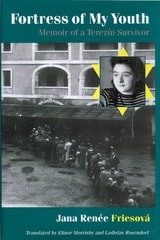
Fortress of My Youth
Memoir of a Terezín SurvivorJana Renée Friesová
University of Wisconsin Press, 2011
Jana Renée Friesová was fifteen when she was imprisoned by the Nazis in the Czech ghetto town of Terezín. Her memoir tells the poignantly familiar story of a young girl who, even under the most abominable circumstances, engages in intense adolescent friendships, worries with her companions over her looks, and falls in love.
Anne Frank’s diary ends with deportation to a concentration camp; Fortress of My Youth, in contrast, takes the reader deep into the horrors of daily life in a camp that were faced by a young girl and her family. But Friesová also tells of love, joy, sacrifice, and the people who shared in the most profound experiences of her life.
Foucault
Gilles Deleuze
University of Minnesota Press, 1988
Foucault And Heidegger
Critical EncountersAlan Milchman
University of Minnesota Press, 2003

Foucault and His Interlocutors
Edited by Arnold I. Davidson
University of Chicago Press, 1997
This volume also includes several important works by Foucault previously unpublished in English. The other contributors are Georges Canguilhem, Gilles Deleuze, Jacques Derrida, Pierre Hadot, Michel Serres, and Paul Veyne.
Here for the first time is the French Foucault.
This volume offers lucid and important texts that will appeal to students and professors at every level of study. It is essential reading for all scholars of twentieth-century philosophy and critical theory.

Foundations of Colonial Rule
Rebuilding Lima after the Earthquake of 1687Judith Mansilla
University of Alabama Press, 2026
Foundations of Colonial Rule analyzes diverse primary documents to understand how the viceroyalty, the Catholic clergy, local authorities, and everyday citizens of Lima, Peru, managed and rebuilt after the 1687 earthquake.
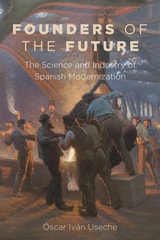
Founders of the Future
The Science and Industry of Spanish ModernizationÓscar Iván Useche
Bucknell University Press, 2022
Frames of Evil
The Holocaust as Horror in American FilmCaroline J. S. Picart, and David A. Frank. Foreword by Dominick LaCapra. Introduction by Edward J. Ingebretsen
Southern Illinois University Press, 2006
Challenging the classic horror frame in American film
American filmmakers appropriate the “look” of horror in Holocaust films and often use Nazis and Holocaust imagery to explain evil in the world, say authors Caroline Joan (Kay) S. Picart and David A. Frank. In Frames of Evil: The Holocaust as Horror in American Film, Picart and Frank challenge this classic horror frame—the narrative and visual borders used to demarcate monsters and the monstrous. After examining the way in which directors and producers of the most influential American Holocaust movies default to this Gothic frame, they propose that multiple frames are needed to account for evil and genocide.
Using Schindler’s List, The Silence of the Lambs, and Apt Pupil as case studies, the authors provide substantive and critical analyses of these films that transcend the classic horror interpretation. For example, Schindler’s List, say Picart and Frank, has the appearance of a historical docudrama but actually employs the visual rhetoric and narrative devices of the Hollywood horror film. The authors argue that evil has a face: Nazism, which is configured as quintessentially innate, and supernaturally crafty.
Frames of Evil, which is augmented by thirty-six film and publicity stills, also explores the commercial exploitation of suffering in film and offers constructive ways of critically evaluating this exploitation. The authors suggest that audiences will recognize their participation in much larger narrative formulas that place a premium on monstrosity and elide the role of modernity in depriving millions of their lives and dignity, often framing the suffering of others in a manner that allows for merely “documentary” enjoyment.
Framing the Holocaust
Edited by Valerie Hébert
University of Wisconsin Press, 2023
While photographs are central to our memory of modern historical events, they often inhabit an ambivalent intellectual space. What separates the sincere desire to understand from voyeuristic curiosity? Comprehending atrocity photographs requires viewers to place themselves in the very positions of the perpetrators who took the images. When we engage with these photographs, do we risk replicating the original violence? In this tightly organized book, scholars of history, photography, language, gender, photojournalism, and pedagogy examine the images of the Šķēde atrocity along with other difficult images, giving historical, political, and ethical depth to the acts of looking and interpreting.
With a foreword by Edward Anders, who narrowly escaped the December 1941 shooting, Framing the Holocaust represents an original approach to an iconic series of Holocaust photographs. This book will contribute to compelling debates in the emerging field of visual history, including the challenges and responsibilities of using photographs to teach about atrocity.
Frances Burney and Narrative Prior to Ideology
Brian McCrea
University of Delaware Press, 2014
Frances Burney and Narrative Prior to Ideology works between Burney’s Journals and Letters and her fiction more thoroughly than any study of her in the past twenty-five years. By doing so, it offers significant reinterpretations of Burney’s four novels: Evelina, Cecilia, Camilla, and The Wanderer. It describes Burney’s eluding the major modern–isms through which critics have tried to read her: Feminism (with its “gendering” of beauty and reversal of gender roles); Capitalism and its Marxist critique (here the details of Burney’s housekeeping become important); Professionalism (as a response to status inconsistency and class conflict); and Ian Watt’s “Formal Realism” (Burney perhaps saved the novel from a sharp decline it suffered in the 1770s, even as she tried to distance herself from the genre).
Burney’s most successful writing appeared before the coining of “ideology.” But her standing “prior to ideology” is not a matter of chronological accident. Rather, she quietly but forcefully resisted shared explanations—domesticity as model for household management, debt as basis for family finance, professional status as a means to social confidence, the novel as the dominant literary genre—that became popular during her long and eventful life.
Frederic Jameson has described Paul de Man, “in private conversation,” claiming, “Marxism . . . has no way of understanding the eighteenth century.” Frances Burney and Narrative Prior to Ideology conjoins Burney’s “eighteenth-centuryness” with her modernity.
Published by University of Delaware Press. Distributed worldwide by Rutgers University Press.
Francisco de Paula Brito
A Black Publisher in Imperial BrazilRodrigo Camargo de Godoi
Vanderbilt University Press, 2020
During that period, Francisco de Paula Brito became one of the central figures in the cultural and political scene in the Imperial capital, particularly through his work as a publisher. Paula Brito’s success was due in part to his ability to forge solid alliances with the Empire’s ruling elite—among them leading politicians responsible for the unification of the vast Brazilian territory and for the maintenance of slavery and the illegal trafficking of Africans. Consequently, through the books and newspapers he published, Francisco de Paula Brito became part of a much larger project.
Franco
Michael Streeter
Haus Publishing, 2025
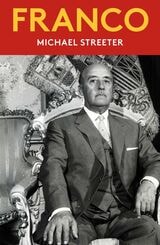
A narrative of the life of Francisco Franco, Spanish general and dictator.
Growing up in the wake of the Spanish military’s shattering defeat at the hands of the United States in 1898 over Cuba and having survived a bullet to the stomach while serving his country in Morocco, Francisco Franco’s fame and notoriety were eventually guaranteed by his ruthless pursuit of victory for the Nationalists in the Spanish Civil War.
Franco played a major role on the world stage until his death in 1975. At once intensely sentimental and affecting cool indifference at times of bad news, he emphasized the need to obey orders, the importance of individual bravery, absolute loyalty to the Fatherland, and the crucial role of the army. Franco was variously courted by the liberal democracies of Britain and France, the Fascist alliance of Hitler and Mussolini, and then by anti-communist administrations in Washington, but the memory of his successful policies, leading to rapid growth during a time of economic depression, is tempered by his government’s extreme repression of political opponents and perpetration of mass violence during the White Terror.
In this updated edition of Franco, featuring a new introduction by the author, Michael Streeter explores the Generalissimo’s legacy as the subject of a cult of personality in one of Europe’s longest-lasting modern dictatorships and considers his genesis, his successes (decades of relative stability and prosperity during a period of great European conflict), and the terrible cost at which they came.
Frankenstein and STEAM
Essays for Charles E. RobinsonRobin Hammerman
University of Delaware Press, 2022
Charles E. Robinson, Professor Emeritus of English at The University of Delaware, definitively transformed study of the novel Frankenstein with his foundational volume The Frankenstein Notebooks and, in nineteenth century studies more broadly, brought heightened attention to the nuances of writing and editing. Frankenstein and STEAM consolidates the generative legacy of his later work on the novel's broad relation to topics in science, technology, engineering, arts, and mathematics (STEAM). Seven chapters written by leading and emerging scholars pay homage to Robinson's later perspectives of the novel and a concluding postscript contains remembrances by his colleagues and students. This volume not only makes explicit the question of what it means to be human, a question Robinson invited students and colleagues to examine throughout his career, but it also illustrates the depth of the field and diversity of those who have been inspired by Robinson's work. Frankenstein and STEAM offers direction for continuing scholarship on the intersections of literature, science, and technology.
Published by the University of Delaware Press. Distributed worldwide by Rutgers University Press.

Fratricide in the Holy Land
A Psychoanalytic View of the Arab-Israeli ConflictAvner Falk
University of Wisconsin Press, 2004
Falk suggests that a way to understand and explain such irrational matters is to examine the unconscious aspects of the conflict. He examines large-group psychology, nationalism, group narcissism, psychogeography, the Arab and Israeli minds, and suicidal terrorism, and he offers psychobiographical studies of Ariel Sharon and Yasser Arafat, two key players in this tragic conflict today.
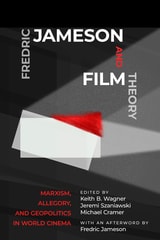
Fredric Jameson and Film Theory
Marxism, Allegory, and Geopolitics in World CinemaKeith B. Wagner
Rutgers University Press, 2022
Free Speech and Censorship Around the Globe
Peter Molnar
Central European University Press, 2015
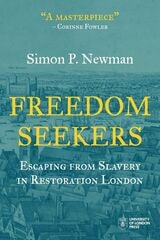
Freedom Seekers
Escaping from Slavery in Restoration LondonSimon P. Newman
University of London Press, 2021
This book brings the history of slavery in England to light, revealing the powerful untold stories of resistance by enslaved workers from Africa, South Asia, and First-Nations America forced to work in London as sailors and dockworkers, wet-nurses and washerwomen. Featuring a series of original case studies on those enslaved people who escaped captivity, this volume provides a rich source of information about slavery in eighteenth-century mainland Britain and the “freedom seekers” therein. Using maps, photographs, newspaper advertisements, and more, the book details escape routes, the networks of slaveholders, and the community of people of color across the London region.
Freedom Seekers demonstrates that not only were enslaved people present in Restoration London but that white Londoners were intimately involved in the construction of the system of racial slavery, a process traditionally regarded as happening in the colonies rather than the British Isles. Freedom Seekers is an utterly unmissable and important book that seeks to delve into Britain’s colonial past.
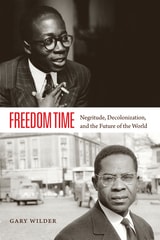
Freedom Time
Negritude, Decolonization, and the Future of the WorldGary Wilder
Duke University Press, 2015
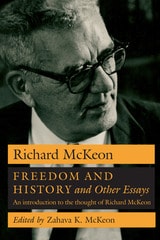
Freedom and History and Other Essays
An Introduction to the Thought of Richard McKeonRichard McKeon
University of Chicago Press, 1990
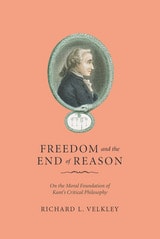
Freedom and the End of Reason
On the Moral Foundation of Kant's Critical PhilosophyRichard L. Velkley
University of Chicago Press, 1989
Freedom for Publishing, Publishing for Freedom
Timothy Garton Ash
Central European University Press, 1995
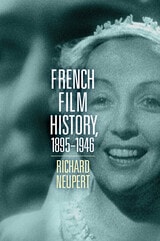
French Film History, 1895–1946
Richard Neupert
University of Wisconsin Press, 2022
Neupert explains the contexts behind the rise of cinema in France, including groundbreaking work by the Lumière family, Georges Méliès, and Alice Guy; the powerhouse studios of Pathé and Gaumont; directors such as René Clair, Germaine Dulac, Marcel Pagnol, and Jean Renoir; and an array of stars, including Max Linder, Jean Gabin, Josephine Baker, and Michèle Morgan. The first fifty years of French film practice established cinema’s cultural and artistic potential, setting the stage for the global post–World War II explosion in commercial movies and art cinema alike. French film and its rich history remain at the heart of cinematic storytelling and our moviegoing pleasure.
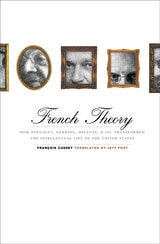
French Theory
How Foucault, Derrida, Deleuze, & Co. Transformed the Intellectual Life of the United StatesFrancois Cusset
University of Minnesota Press, 2008
“A great story, full of twists and turns. . . . Careers made and ruined, departments torn apart, writing programs turned into sensitivity seminars, political witch hunts, public opprobrium, ignorant media attacks, the whole ball of wax. Read it and laugh or read it and weep. I can hardly wait for the movie.” —Stanley Fish, Think Again, New York Times
“In such a difficult genre, full of traps and obstacles, French Theory is a success and a remarkable book in every respect: it is fair, balanced, and informed. I am sure this book will become the reference on both sides of the Atlantic.” —Jacques Derrida
“The Atlantic Ocean has two sides, and so does French Theory. Reinvented in America and betrayed in its own country, it has become the most radical intellectual movement in the West with global reach, rewriting Marx in light of late capitalism. Breathtakingly moving back and forth between the two cultures, Francois Cusset takes us through a dazzling intellectual adventure that illuminates the past thirty years, and many more decades to come.” —Sylvere Lotringer
During the last three decades of the twentieth century, a disparate group of radical French thinkers achieved an improbable level of influence and fame in the United States. Compared by at least one journalist to the British rock ‘n’ roll invasion, the arrival of works by Michel Foucault, Jacques Derrida, Jean-François Lyotard, Jean Baudrillard, Gilles Deleuze, and Félix Guattari on American shores in the late 1970s and 1980s caused a sensation.
Outside the academy, “French theory” had a profound impact on the era’s emerging identity politics while also becoming, in the 1980s, the target of right-wing propagandists. At the same time in academic departments across the country, their poststructuralist form of radical suspicion transformed disciplines from literature to anthropology to architecture. By the 1990s, French theory was woven deeply into America’s cultural and intellectual fabric.
French Theory is the first comprehensive account of the American fortunes of these unlikely philosophical celebrities. François Cusset looks at why America proved to be such fertile ground for French theory, how such demanding writings could become so widely influential, and the peculiarly American readings of these works. Reveling in the gossipy history, Cusset also provides a lively exploration of the many provocative critical practices inspired by French theory. Ultimately, he dares to shine a bright light on the exultation of these thinkers to assess the relevance of critical theory to social and political activism today-showing, finally, how French theory has become inextricably bound with American life.
François Cusset, a writer and intellectual historian, teaches contemporary French thought in Paris at the Institut d’Etudes Politiques and at Columbia University’s Reid Hall. His books include Queer Critics and La Décennie.
Jeff Fort is assistant professor of French at the University of California, Davis. He has translated works by Maurice Blanchot, Jean Genet, and Jean-Luc Nancy.
Friars, Nobles and Burghers – Sermons, Images and Prints
Studies of Culture and Society in Early-Modern Europe - In Memoriam István György TóthLászló Kontler
Central European University Press, 2010

Frigate HMS Leander
Jantinus Mulder
Amsterdam University Press, 2023

Frigate HNLMS Jacob van Heemskerck
Rindert van Zinderen-Bakker
Amsterdam University Press, 2023

Frigate USS Clark
Rindert van Zinderen-Bakker
Amsterdam University Press, 2023

Frigate USS Clark
Rindert van Zinderen-Bakker
Amsterdam University Press, 2023
From Arcadia to Revolution
The Neapolitan Monitor and Other WritingsEleonora Fonseca Pimentel
Iter Press, 2019
The Other Voice in Early Modern Europe: The Toronto Series, Volume 67
From Central Planning to the Market
Transformation of the Czech Economy 1989 – 2004Libor Zidek
Central European University Press, 2018
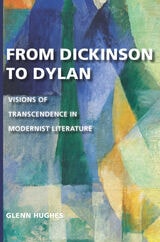
From Dickinson to Dylan
Visions of Transcendence in Modernist LiteratureGlenn Hughes
University of Missouri Press, 2020
This work is unique in its extended focus, in a comparative study spanning a century, on the persistence and centrality in modernist literature of the struggle to understand and articulate the dependence of human meaning on the mystery of transcendent meaning. Hughes shows us that each of these authors is a mystic in his or her way, and that none are tempted by the modern inclination to suppose that meaning originates with human beings. Together, they address one of the most difficult and important challenges of modern literature: how to be a mystic in modernity.
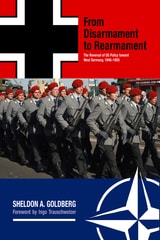
From Disarmament to Rearmament
The Reversal of US Policy toward West Germany, 1946–1955Sheldon A. Goldberg
Ohio University Press, 2017
At the end of World War II, the Allies were unanimous in their determination to disarm the former aggressor Germany. As the Cold War intensified, however, the decision whether to reverse that policy and to rearm West Germany as a bulwark against the Soviet threat led to disagreements both within the US government and among members of the nascent NATO alliance. The US military took the practical view that a substantial number of German troops would be required to deter any potential Soviet assault. The State Department, on the other hand, initially advocated an alternative strategy of strengthening European institutions but eventually came around to the military’s position that an armed West Germany was preferable to a weak state on the dividing line between the Western democracies and the Soviet satellite states.
Sheldon A. Goldberg traces the military, diplomatic, and political threads of postwar policy toward West Germany and provides insights into the inner workings of alliance building and the roles of bureaucrats and military officers as well as those of diplomats and statesmen. He draws on previously unexamined primary sources to construct a cogent account of the political and diplomatic negotiations that led to West Germany’s accession to NATO and the shaping of European order for the next forty years.
From Du Bois to Obama
African American Intellectuals in the Public ForumCharles Pete Banner-Haley
Southern Illinois University Press, 2014
In his groundbreaking new book Charles Pete Banner-Haley explores the history of African American intellectualism and reveals the efforts of black intellectuals in the ongoing struggle against racism, showing how they have responded to Jim Crow segregation, violence against black Americans, and the more subtle racism of the postintegration age. Banner-Haley asserts that African American intellectuals—including academicians, social critics, activists, and writers—serve to generate debate, policy, and change, acting as a moral force to persuade Americans to acknowledge their history of slavery and racism, become more inclusive and accepting of humanity, and take responsibility for social justice.
Other topics addressed in this insightful study include the disconnection over time between black intellectuals and the masses for which they speak; the ways African American intellectuals identify themselves in relation to the larger black community, America as a whole, and the rest of the world; how black intellectuals have gained legitimacy in American society and have accrued moral capital, especially in the area of civil rights; and how that moral capital has been expended. Among the influential figures covered in the book are W. E. B. Du Bois, Ralph Ellison, Richard Wright, James Weldon Johnson, E. Franklin Frazier, Ralph Bunche, Oliver C. Cox, George S. Schuyler, Zora Neale Hurston, Martin Luther King, Jr., Jesse Jackson, Cornel West, Toni Morrison, bell hooks, Charles Johnson, and Barack Obama.
African American intellectuals, as Banner-Haley makes clear, run the political gamut from liberal to conservative. He discusses the emergence of black conservatism, with its accompanying questions about affirmative action, government intervention on behalf of African Americans, and the notion of a color-blind society. He also looks at how popular music—particularly rap and hip-hop—television, movies, cartoons, and other media have functioned as arenas for investigating questions of identity, exploring whether African American intellectuals can also be authentically black.
A concluding discussion of the so-called browning of America, and the subsequent rise in visibility and influence of black intellectuals culminates with the historic election of President Barack Obama, an African American intellectual who has made significant contributions to American society through his books, articles, and speeches. Banner-Haley ponders what Obama’s election will mean for the future of race relations and black intellectualism in America.
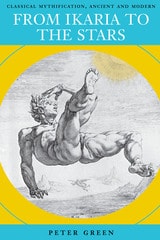
From Ikaria to the Stars
Classical Mythification, Ancient and ModernBy Peter Green
University of Texas Press, 2004
"I hadn't, till I really started digging, gauged the fierce intensity of the need for myth in the human psyche, of any age, or sensed the variety of motives dictating that need," writes Peter Green in the introduction to this wide-ranging collection of essays on classical mythology and the mythic experience. Using the need for myth as the starting point for exploring a number of topics in Greek mythology and history, Green advances new ideas about why the human urge to make myths persists across the millennia and why the borderland between mythology and history can sometimes be hard to map.
Green looks at both specific problems in classical mythology and larger theoretical issues. His explorations underscore how mythic expression opens a door into non-rational and quasi-rational modes of thought in which it becomes possible to rewrite painful truths and unacceptable history—which is, Green argues, a dangerous enterprise. His study of the intersections between classical mythology and Greek history ultimately drives home a larger point, "the degree of mythification and deception (of oneself no less than of others) of which the human mind is capable."
From Kant and Royce to Heidegger
Essays in Modern PhilosophyCharles Sherover
Catholic University of America Press, 2019
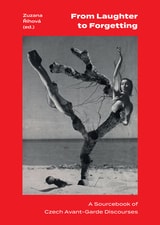
From Laughter to Forgetting
A Sourcebook of Czech Avant-Garde DiscoursesEdited by Zuzana Ríhová
Karolinum Press, 2023
In recent years a prominent trend in the study of European modernism and the avant-garde has been increased attention to texts and traditions that have long stood in the shadow of the French, German, and British traditions that dominate the canon. Yet this more expansive view of European modernism and the avant-garde has been hindered by the limited range of texts available outside the original languages. This book addresses that problem by offering a wide-ranging selection of literary, theoretical, and documentary sources from one of the most dynamic and original European avant-garde traditions: that of the first Czechoslovak Republic and of the Bohemian lands. The Czech avant-garde is in many respects the ideal “alternative” avant-garde to present in detail to a wider readership: it tracks Central European developments and was often influential internationally while being deeply embedded in particular cultural dynamics that produced original forms. This volume returns interwar Czech avant-garde writings to their place as a firmly embedded component of the European avant-garde.
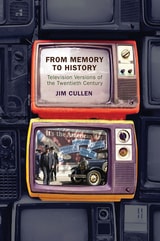
From Memory to History
Television Versions of the Twentieth CenturyJim Cullen
Rutgers University Press, 2021
From Memory to History takes readers on a journey through over fifty years of historical dramas and sitcoms that were set in earlier decades of the twentieth century. Along the way, it explores how comedies like M*A*S*H and Hogan’s Heroes offered veiled commentary on the Vietnam War, how dramas ranging like Mad Men echoed current economic concerns, and how The Americans and Halt and Catch Fire used the Cold War and the rise of the internet to reflect upon the present day. Cultural critic Jim Cullen is lively, informative, and incisive, and this book will help readers look at past times, present times, and prime time in a new light.

From Racism to Genocide
Anthropology in the Third ReichGretchen E. Schafft
University of Illinois Press, 2007
In paperback for the first time, From Racism to Genocide is an explosive, richly detailed account of how Nazi anthropologists justified racism, developed practical applications of racist theory, and eventually participated in every phase of the Holocaust.
Using original sources and previously unpublished documentation, Gretchen E. Schafft shows the total range of anti-human activity from within the confines of a particular discipline. Based on seven years of archival research in the United States and abroad, the work includes many original photos and documents, most of which have never before been published. It uses primary data and original texts whenever possible, including correspondence written by perpetrators. The book also reveals that the United States was not merely a bystander in this research, but instead contributed professional and financial support to early racial research that continued through the first five years of Hitler’s regime.
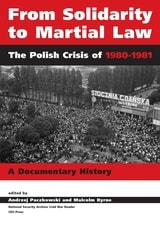
From Solidarity to Martial Law
The Polish Crisis of 1980–1981The National Security Archive Paczkowski
Central European University Press, 2007
From Union Halls to the Suburbs
Americans for Democratic Action and the Transformation of Postwar LiberalismScott Kamen
University of Massachusetts Press, 2023
For decades, Americans for Democratic Action (ADA) exerted an outsized pull on the political stage. Formed in 1947 by anticommunist liberals such as economist John Kenneth Galbraith and historian Arthur Schlesinger Jr., the ADA established itself as the most prominent liberal organization in the United States for more than a quarter century. Shaped by the ADA, the New Politics movement upended Democratic Party politics with its challenge to the Vietnam War, demands for redistributive economic policies, and development of a far-reaching politics of race, gender, and sexuality.
By bringing the ADA and its influential public intellectuals into the story of the New Politics movement, Scott Kamen reveals how American liberalism shifted away from the working-class concerns of the New Deal era and began to cater to the interests of a new, suburban professional class. By the 1980s, many Democratic politicians, activists, and voters had embraced a neoliberal ideology that coupled socially liberal attitudes with market-based solutions, eschewing an older progressive politics steeped in labor issues.
From Washington to Moscow
US-Soviet Relations and the Collapse of the USSRLouis Sell
Duke University Press, 2016

From that Place and Time
A Memoir, 1938-1947Dawidowicz, Lucy
Rutgers University Press, 2008
Nancy Sinkoff's new introduction explores the historical forces, particularly the dynamic world of secular Yiddish culture, which shaped Dawidowicz's decision to journey to Poland and her reassessment of those forces in the last years of her life.

From the Blue Windows
Recollections of Life in Queenstown, Singapore, in the 1960s and 1970sTan Kok Yang
National University of Singapore Press, 2013
From the Blue Windows is a collection of Tan Kok Yang's memories of growing up in Queenstown back when the tallest residential building there was fourteen storeys, the Alexandra Canal flooded regularly, and wayang shows were a regular feature on Mei Ling Street. He stayed in Princess Estate, an area that was colloquially known as "the Blue Windows" because of its unique blue glass louvred windows.
With nostalgia and a sense of loss, this memoir is a personal tribute to and celebration of Queenstown and a simple but fulfilling way of life that has all but vanished from modern Singapore.
From the Nature of the Mind to Personal Dignity
The Significance of Rosmini's PhilosophyJuan F. Franck
Catholic University of America Press, 2006
Functions of Victorian Culture at the Present Time
Christine L. Krueger
Ohio University Press, 2002