Results by title
3027 books match the query 'Sociology' and 102 start with f

Fluid New York
Cosmopolitan Urbanism and the Green ImaginationMay Joseph
Duke University Press, 2013
Joseph considers New York's relation to the water that surrounds and defines it. Her reflections reach back to the city's heyday as a world-class port—a past embodied in a Dutch East India Company cannon recently unearthed from the rubble at the World Trade Center site—and they encompass the devastation caused by Hurricane Sandy in 2012. They suggest that New York's future lies in the reclamation of its great water resources—for artistic creativity, civic engagement, and ecological sustainability.
Follow the Maid
Domestic Worker Migration from IndonesiaOlivia Killias
National University of Singapore Press, 2017
This fascinating study unveils the workings of the Indonesian migration regime, one that sends hundreds of thousands of women abroad as domestic workers each year. Drawing on extended ethnographic research since 2007, the book literally follows migrant women from one particular village in Central Java and tracks the moral, social, economic and legal processes by which they are turned into ‘maids’. From recruitment by local brokers to the ‘training’ received in secluded camps in Jakarta, employment in gated middle-class homes in Malaysia and back home again, Olivia Killias highlights the implications of the migration process on gendered practices of labour mobility (and immobilisation). She also reveals the disciplinary power that states, recruitment agencies and employers exercise over migrant domestic workers as well as highlighting frictions within the system. Killias’s analysis demonstrates that ironically, the “legalisation” of the migration industry, under the joint pressures of the Indonesian migration bureaucracy and international humanitarian agencies, does not automatically improve the situation of the women who embark on the migration adventure. Rather, Killias unmasks the gendered moralizing discourses on “illegal” migration and “trafficking” as legitimizing indentured labour and constraining migrant mobility. By exploring the workings of the Indonesian state’s overseas legal labour migration regime for migrants, she brings the reader directly into the nerve-racking lives of migrant village women, and reveals the richness and ambiguity of their experiences, going beyond stereotypical representations of them as “victims of trafficking”.
Food And Evolution
Toward a Theory of Human Food Habitsedited by Marvin Harris and Eric B. Ross
Temple University Press, 1989
For Better or For Worse
Vietnamese International Marriages in the New Global EconomyThai, Hung Cam
Rutgers University Press, 2008
In For Better or For Worse, Hung Cam Thai takes a closer look at marriage and migration, with a specific focus on the unions between Vietnamese men living in the United States and the women who marry them. Weaving together a series of personal stories, he underscores the ironies and challenges that these unions face. He includes the voices of working-class immigrant men dealing with marginalization in their adopted country. These men speak about wanting "traditional" wives who they hope will recognize their gendered authority. Meanwhile, young Vietnamese college-educated women, undesirable to bachelors in their own country who are seeking subservient wives, express a preference for men of the same ethnicity but with a more liberal outlook on gender-men they imagine they will find in the United States.
A sense of foreboding pervades the book as Thai captures the incompatible viewpoints of the couples who appear to be separated not only geographically but ideologically.
For Customers Only
Public Bathrooms and the Making of American InequalityBryant Simon
University of Chicago Press, 2026
Public toilets determine who gets everyday dignity, freedom of movement, and civic belonging—and who doesn’t.
Americans have nowhere to go. Nationwide, countless public spaces lack one crucial thing: bathrooms, never mind ones that are safe and functional. Yet in the past, political leaders celebrated the opening of public bathrooms with boisterous press conferences and showy ribbon-cutting ceremonies.
For Customers Only is the first book to tell the larger history of public bathrooms in the United States, a fascinating story characterized by persistent discrimination, squeamishness about unknown bodies, and disinvestment in public amenities. Acclaimed writer and historian Bryant Simon argues that restrooms aren’t only an architectural feature, but an emblem of control and inequality. In the late nineteenth century, cities vied for the newest and biggest comfort stations to meet the demands of their bustling economies and accommodate a broad and growing public. They built restrooms with gold-domed entrances and ornamented stall doors to inspire cleanliness and order.
But officials soon grew anxious about who might take advantage of this privacy: gay men, the unhoused, and eventually drug users. And as the civil rights movement challenged segregation, officials in the north and south closed public toilets rather than integrate them. By the end of the twentieth century, only people with means could use private bathrooms while out and about—provided they made a purchase at a business. Today, as the fights over trans rights reveal, bathroom access remains a flash point across the country. Meanwhile, some municipalities are again calling for widely available public toilets, but as a tool for economic revitalization, not a public necessity.
The political and cultural history of a squirm-inducing subject, For Customers Only reveals the real and symbolic power of the most ordinary of things. Bathrooms, Simon shows, have always reflected our fragmented national values. Whether these spaces will ever become more accessible and inclusive is ultimately up to us.
For Fun And Profit
The Transformation of Leisure into ConsumptionRichard Butsch
Temple University Press, 1990
For Rent
Understanding Landlords, Rental Housing, and Evictions in PhiladelphiaJohn Balzarini and Melody L. Boyd
Temple University Press, 2027
Landlords are often painted as “rich, indifferent, and miserly.” For Rent humanizes small-scale landlords who are highly involved in their property management and tenant interaction. John Balzarini and Melanie Boyd interview small-scale landlords in Philadelphia to understand how they think, why they invest in rental housing, and how their experiences as housing providers shape both their supportive and detrimental behaviors toward renters. They reveal an earnest desire to provide decent rental housing and resolve rent issues through communication, flexibility, and compromise rather than eviction.
For Rent describes these landlords’ challenges, from social problems connected to high poverty rates, to the increasing consolidation of rental housing by large-scale corporate landlords, which can push small-scale landlords out of the rental housing market. The authors argue that the decline of small-scale landlords could reduce housing affordability and increase evictions. Instead, collectively valuing rental housing and implementing policies that support small-scale landlords can strengthen housing stability and improve outcomes for renters.
Providing a regional focus that is indicative of national trends, For Rent shows the many advantages small-scale landlords have over their corporate competitors, while also critically analyzing the broader housing system that places them on the front lines of managing market contradictions.
For a Liberatory Politics of Home
Michele Lancione
Duke University Press, 2023
For the City Yet to Come
Changing African Life in Four CitiesAbdouMaliq Simone
Duke University Press, 2004
Drawing on his nearly fifteen years of work in African cities—as an activist, teacher, development worker, researcher, and advisor to ngos and local governments—Simone provides a series of case studies illuminating the provisional networks through which most of Africa’s urban dwellers procure basic goods and services. He examines informal economies and social networks in Pikine, a large suburb of Dakar, Senegal; in Winterveld, a neighborhood on the edge of Pretoria, South Africa; in Douala, Cameroon; and among Africans seeking work in Jeddah, Saudi Arabia. He contextualizes these particular cases through an analysis of the broad social, economic, and historical conditions that created present-day urban Africa. For the City Yet to Come is a powerful argument that any serious attempt to reinvent African urban centers must acknowledge the particular history of these cities and incorporate the local knowledge reflected in already existing informal urban economic and social systems.

For the Prevention of Cruelty
The History and Legacy of Animal Rights Activism in the United StatesDiane L. Beers
Ohio University Press, 2006
For the Sake of the Children
The Social Organization of Responsibility in the Hospital and the HomeCarol A. Heimer and Lisa R. Staffen
University of Chicago Press, 1998
Rather than treating responsibility as an ethical issue, the authors focus on how responsibility is socially produced and sustained. The authors ask: How do staff members encourage parents to take responsibility, but keep them from interfering in medical matters, and how do parents encourage staff vigilance when they are novices attempting to supervise the experts?
The authors conclude that it is not sufficient simply to be responsible individuals. Instead, we must learn how to be responsible in an organizational world, and organizations must learn how to support responsible individuals.

Forcing Divorce
Intimate and Non-Intimate Coercive Control in Marriage DissolutionPéter Berta
Rutgers University Press, 2027
Forcing Divorce seeks to contribute to a more nuanced understanding of what possible causes, motivations, constraints, and dynamics may lie behind forced divorce cases in various social and political contexts. This volume points out that coercive and controlling behavior plays a key role in forcing divorce and provides a detailed insight into the diverse set of strategies and tactics of marital coercive control, as well as the negative emotional, psychological, social, economic, legal , and physical consequences of their use. The chapters reveal that marital coercive control can develop not only in cases of forced divorce related to intimate partnerships, but also in non-intimate, large-scale social contexts, such as the relationship between the state and its citizens, or between religious leaders and their followers. They also highlight why contextual pressure is significant and how it operates, and why it is useful to distinguish between conducive contexts (soft contextual pressure) and coercive contexts (hard contextual pressure) in order to gain a more thorough understanding of the dynamics of restriction of individual marital choice and consent in cases of forced divorce.

Forever 17
Coming of Age in the German Asylum SystemUlrike Bialas
University of Chicago Press, 2023
Heartbreaking images of children in distress have propelled some of the most urgent calls for action on immigration crises, and that compassion often affects how state asylum policies are structured. In Germany, for example, the immigration system is engineered to protect minors, which leads to unintended consequences for migrants.
In Forever 17, Ulrike Bialas follows young African and Central Asian migrants in Germany as they navigate that system. Without official paperwork or even, in many cases, knowledge of their exact age, migrants must decide how to present their complicated life stories to government officials. They quickly realize that their age can have an outsized effect on the outcome of their cases. A migrant under 18, for example, can’t be deported, but might instead be placed in a youth home, where they will be subject to strict curfew laws. An 18-year-old adult, on the other hand, can get permission to work, but not opportunities to go to school.
Regardless of their age—actual or assumed—migrants face great difficulties. Those classified as minors must live with the psychological burden of being treated like children, while those classified as adults must live without the practical support and legal protections reserved for minors. The significance of age stands in stark contrast to the ambiguities inherent in its determination. Though Germany’s infamous bureaucracy is designed to issue clear statements about refugees and migrants, the truth is often more complicated, and officials are forced to grapple with the difficult implications of their decisions. Ultimately, Bialas shows, policies surrounding asylum seekers fall dramatically short of their humanitarian ideals. Even those policies designed to help the most vulnerable can lead to outcomes that drastically limit the possibilities for migrants in real need of protection and keep them from leading fulfilling lives.
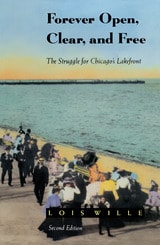
Forever Open, Clear, and Free
The Struggle for Chicago's LakefrontLois Wille
University of Chicago Press, 1991
Illustrated with historic and contemporary photographs, Wille's book tells how Chicago's lakefront has survived a century of development. The story serves as a warning to anyone who thinks the struggle for the lakefront is over, or who takes for granted the beauty of its public beaches and parks.
"A thoroughly fascinating and well-documented narrative which draws the reader into the sights, smells and sounds of Chicago's story. . . . Everyone who cares about the development of land and its conservation will benefit from reading Miss Wille's book."—Daniel J. Shannon, Architectural Forum
"Not only good reading, it is also a splendid example of how to equip concerned citizens for their necessary participation in the politics of planning and a more livable environment."—Library Journal
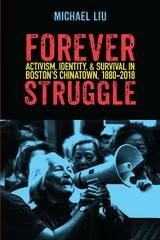
Forever Struggle
Activism, Identity, and Survival in Boston's Chinatown, 1880–2018Michael Liu
University of Massachusetts Press, 2020
In writing about Boston Chinatown's long history, Michael Liu, a lifelong activist and scholar of the community, charts its journey and efforts for survival—from its emergence during a time of immigration and deep xenophobia to the highway construction and urban renewal projects that threatened the neighborhood after World War II to its more recent efforts to keep commercial developers at bay. At the ground level, Liu depicts its people, organizations, internal battles, and varied and complex strategies against land-taking by outside institutions and public authorities. The documented courage, resilience, and ingenuity of this low-income immigrant neighborhood of color have earned it a place amongst our urban narratives. Chinatown has much to teach us about neighborhood agency, the power of organizing, and the prospects of such neighborhoods in rapidly growing and changing cities.
Forging Gay Identities
Organizing Sexuality in San Francisco, 1950-1994Elizabeth A. Armstrong
University of Chicago Press, 2002

Forgotten Towns of Southern New Jersey
Beck, Henry
Rutgers University Press, 1983
Fortunate People in a Fortunate Land
At Home in Santa Monica's Rent-Controlled HousingLauren E. M. Everett
Temple University Press, 2025
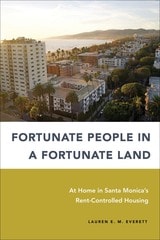
Everett seeks to understand the extent to which individuals feel at home or not at home and what factors contribute to those experiences. She also explores the nexus of Santa Monica’s tenant protection policies, infrastructure, and resources and the extent to which they inform stability—both perceived and actual—and life decisions.
The first scholarly book to take a tenant-centered approach to examining the benefits and problems of rent control, Fortunate People in a Fortunate Land examines the residential experience in this specific local context and explains how it relates to policy and other externalities in cities where homeownership is not financially viable for most renters.
In the series Urban Life, Landscape, and Policy

Foucault and Law
Towards a Sociology of Law As GovernanceAlan Hunt and Gary Wickham
Pluto Press, 1994

Foundations of the Unity of Science, Volume 2
Edited by Otto Neurath, Rudolf Carnap, and Charles F. W. Morris
University of Chicago Press, 1971
Fractured Communities
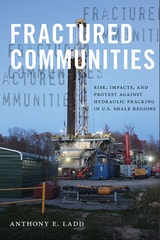
Risk, Impacts, and Protest Against Hydraulic Fracking in U.S. Shale RegionsLadd, Anthony E.
Rutgers University Press, 2017

Fragments of Development
Nation, Gender, and the Space of ModernitySuzanne Bergeron
University of Michigan Press, 2005
---Isabella C. Bakker, York University
"Bergeron's pathbreaking analysis challenges orthodox development theories, questions current feminist economic thinking and highlights crucial new gendered challenges to globalization."
---Jane Parpart, Dalhousie University
"Cutting-edge scholarship. Bergeron deftly engages the complexity of current debates while retaining clarity, improving analyses, and illuminating alternatives."
---V. S. Peterson, University of Arizona
By tracing out the intersection between the imagined space of the national economy and the gendered construction of "expert" knowledge in development thought, Suzanne Bergeron provides a provocative analysis of development discourse and practice. By elaborating a framework of including/excluding economic subjects and activities in development economics, she provides a rich account of the role that economists have played in framing the contested political and cultural space of development.
Bergeron's account of the construction of the national economy as an object of development policy follows its shifting meanings through modernization and growth models, dependency theory, structural adjustment, and contemporary debates about globalization and highlights how intersections of nation and economy are based on gendered and colonial scripts. The author's analysis of development debates effectively demonstrates that critics of development who ignore economists' nation stories may actually bolster the formation they are attempting to subvert. Fragments of Development is essential reading for those interested in development studies, feminist economics, international political economy, and globalization studies.
Framing Fat
Competing Constructions in Contemporary CultureKwan, Samantha
Rutgers University Press, 2013
Alongside public health officials at the Centers for Disease Control and Prevention are advertisers of the fashion-beauty complex, food industry advocates at the Center for Consumer Freedom, and activists at the National Association to Advance Fat Acceptance.
Framing Fat takes a bird’s-eye view of how these multiple actors construct the fat body by identifying the messages these groups put forth, particularly where issues of beauty, health, choice and responsibility, and social justice are concerned. Samantha Kwan and Jennifer Graves examine how laypersons respond to these conflicting messages and illustrate the gendered, raced, and classed implications within them. In doing so, they shed light on how dominant ideas about body fat have led to the moral indictment of body nonconformists, essentially “framing” them for their fat bodies.
Framing Finance
The Boundaries of Markets and Modern CapitalismAlex Preda
University of Chicago Press, 2009
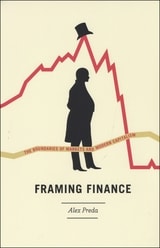
As Preda discovers through extensive research, the public was once much more skeptical. For investing to become accepted, a deep-seated prejudice against speculation had to be overcome, and Preda reveals that over the course of the eighteenth and nineteenth centuries groups associated with stock exchanges in New York, London, and Paris managed to redefine finance as a scientific pursuit grounded in observational technology. But Preda also notes that as the financial data in which they trafficked became ever more difficult to understand, charismatic speculators emerged whose manipulations of the market undermined the benefits of widespread investment. And so, Framing Finance ends with an eye on the future, proposing a system of public financial education to counter the irrational elements that still animate the appeal of finance.

Franchising Dreams
The Lure of Entrepreneurship in AmericaPeter M. Birkeland
University of Chicago Press, 2002
Peter M. Birkeland worked for three years in the front-line operations of franchise units for three companies, met with CEOs and executives, and attended countless trade shows, seminars, and expositions. All this firsthand experience gave him unprecedented access to the hopes and aspirations of franchisees. His book closely traces different franchisees and follows them as their dreams of wealth and independence buckle beneath the weight of frustrating logistics and contractual technicalities. Through extensive interviews and research, Birkeland not only discovers what makes franchisees succeed or fail, he uncovers the difficulties in running a business according to someone else's system and values. Bearing witness to a market flooded with fierce competitors and dependent on the inscrutable whims of consumers, he uncovers the numerous challenges that franchisees face in making their businesses succeed.

Freak Show
Presenting Human Oddities for Amusement and ProfitRobert Bogdan
University of Chicago Press, 1990
Robert Bogdan's fascinating social history brings to life the world of the freak show and explores the culture that nurtured and, later, abandoned it. In uncovering this neglected chapter of show business, he describes in detail the flimflam artistry behind the shows, the promoters and the audiences, and the gradual evolution of public opinion from awe to embarrassment. Freaks were not born, Bogdan reveals; they were manufactured by the amusement world, usually with the active participation of the freaks themselves. Many of the "human curiosities" found fame and fortune, becoming the celebrities of their time, until the ascent of professional medicine transformed them from marvels into pathological specimans.
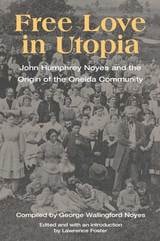
Free Love in Utopia
John Humphrey Noyes and the Origin of the Oneida CommunityCompiled by George Wallingford Noyes
University of Illinois Press, 2001
Free Love in Utopia provides the first in-depth account of how complex marriage was introduced among previously monogamous or single Oneida Community members. Bringing together vivid, firsthand writings by members of the community--including personal correspondence, memoranda on spiritual and material concerns, and official pronouncements--this volume portrays daily life in Oneida and the deep religious commitment that permeated every aspect of it. It also presents a complex portrait of the community's founder, John Humphrey Noyes, who demanded not only complete religious loyalty from his followers but also minute control over their sexual lives. It recounts the formidable legal suits faced by the community--one of which almost forced it to disband in 1852--and the critical behind-the-scenes work of Noyes's second-in-command, John L. Miller. Most important, Free Love in Utopia describes in detail how Oneida's "enlarged family" was created and how its unorthodox practices affected its members.
Key selections from a large collection of primary documents detailing Oneida's early years were compiled by George Wallingford Noyes, nephew of the founder. The present volume, astutely edited and introduced by noted communitarian scholar Lawrence Foster, marks the first publication of G. W. Noyes's remarkable manuscript, excerpted from the irreplaceable original documents that were deliberately burned after his death. The volume also reproduces Oneida's First Annual Report, which contains the sexual manifesto that underlay the community.

Free Time
The Forgotten American DreamBenjamin Hunnicutt
Temple University Press, 2013
Hunnicutt provides an incisive intellectual, cultural, and political history of the original "American Dream" from the colonial days to the present. Taking his cue from Walt Whitman's "higher progress," he follows the traces of that dream, cataloging the myriad voices that prepared for and lived in an opening "realm of freedom."
Free Time reminds Americans of the forgotten, best part of the "American Dream"-that more and more of our lives might be lived freely, with an enriching family life, with more time to enjoy nature, friendship, and the adventures of the mind and of the spirit.
Free Trade & Uneven Development
North American Apparel Industry After Naftaedited by Gary Gereffi, David Spener and Jennifer Bair
Temple University Press, 2002
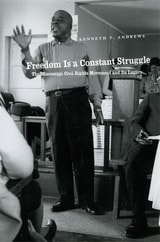
Freedom Is a Constant Struggle
The Mississippi Civil Rights Movement and Its LegacyKenneth T. Andrews
University of Chicago Press, 2004
Freedom Is a Constant Struggle is also the first book of its kind to detail the activities of white supremacists in Mississippi, revealing how white repression and intimidation sparked black activism and simultaneously undermined the movement's ability to achieve far-reaching goals. Andrews shows that the federal government's role was important but reactive as federal actors responded to the sustained struggles between local movements and their opponents. He tracks the mobilization of black activists by the NAACP, the creation of Freedom Summer, efforts to galvanize black voters, the momentous desegregation of public schools and the rise of all-white private academies, and struggles over the economic development of black communities. From this complex history, Andrews shows how the civil rights movement built innovative organizations and campaigns that empowered local leadership and had a lasting legacy in Mississippi and beyond.
Based on an original and creative research design that combines extensive archival research, interviews with activists, and quantitative historical data, Freedom Is a Constant Struggle provides many new insights into the civil rights struggle, and it presents a much broader theory to explain whether and how movements have enduring impacts on politics and society. What results is a work that will be invaluable to students of social movements, democratic politics, and the struggle for racial freedom in the U.S.
Freedom Not Yet
Liberation and the Next World OrderKenneth Surin
Duke University Press, 2009
Surin begins by examining the current regime of accumulation—the global domination of financial markets over traditional industrial economies—which is used as an instrument for the subordination and dependency of poorer nations. He then moves to the constitution of subjectivity, or the way humans are produced as social beings, which he casts as the key arena in which struggles against dispossession occur. Surin critically engages with the major philosophical positions that have been posed as models of liberation, including Derrida’s notion of reciprocity between a subject and its other, a reinvigorated militancy in political reorientation based on the thinking of Badiou and Zizek, the nomad politics of Deleuze and Guattari, and the politics of the multitude suggested by Hardt and Negri. Finally, Surin specifies the material conditions needed for liberation from the economic, political, and social failures of our current system. Seeking to illuminate a route to a better life for the world’s poorer populations, Surin investigates the philosophical possibilities for a Marxist or neo-Marxist concept of liberation from capitalist exploitation and the regimes of power that support it.

Freedom without Permission
Bodies and Space in the Arab RevolutionsFrances S. Hasso and Zakia Salime, editors
Duke University Press, 2016

Friends Disappear
The Battle for Racial Equality in EvanstonMary Barr
University of Chicago Press, 2014
In Friends Disappear Barr goes back to her old neighborhood and pieces together a history of Evanston with a particular emphasis on its neighborhoods, its schools, and its work life. She finds that there is a detrimental myth of integration surrounding Evanston despite bountiful evidence of actual segregation, both in the archives and from the life stories of her subjects. Curiously, the city’s own desegregation plan is partly to blame. The initiative called for the redistribution of students from an all-black elementary school to institutions situated in white neighborhoods. That, however, required busing, and between the tensions it generated and obvious markers of class difference, the racial divide, far from being closed, was widened. Friends Disappear highlights how racial divides limited the life chances of blacks while providing opportunities for whites, and offers an insider’s perspective on the social practices that doled out benefits and penalties based on race—despite attempts to integrate.

Friendship as Social Justice Activism
Critical Solidarities in a Global PerspectiveEdited by Niharika Banerjea, Debanuj DasGupta, Rohit K. Dasgupta, and Jaime M. Grant
Seagull Books, 0
Recent scholarship in different disciplinary fields as well as activist literature have brought attention to the political possibilities within friendship. The essays, memoirs, poems, and artwork in Friendship as Social Justice Activism address these political possibilities within the context of gender, sexuality, and economic justice movements.

From Boom to Bubble
How Finance Built the New ChicagoRachel Weber
University of Chicago Press, 2015
In From Boom to Bubble, Rachel Weber debunks the idea that booms occur only when cities are growing and innovating. Instead, she argues, even in cities experiencing employment and population decline, developers rush to erect new office towers and apartment buildings when they have financial incentives to do so. Focusing on the main causes of overbuilding during the early 2000s, Weber documents the case of Chicago’s “Millennial Boom,” showing that the Loop’s expansion was a response to global and local pressures to produce new assets. An influx of cheap cash, made available through the use of complex financial instruments, helped transform what started as a boom grounded in modest occupant demand into a speculative bubble, where pricing and supply had only tenuous connections to the market. From Boom to Bubble is an innovative look at how property markets change and fail—and how that affects cities.
From Counterculture to Cyberculture
Stewart Brand, the Whole Earth Network, and the Rise of Digital UtopianismFred Turner
University of Chicago Press, 2006
In the early 1960s, computers haunted the American popular imagination. Bleak tools of the cold war, they embodied the rigid organization and mechanical conformity that made the military-industrial complex possible. But by the 1990s—and the dawn of the Internet—computers started to represent a very different kind of world: a collaborative and digital utopia modeled on the communal ideals of the hippies who so vehemently rebelled against the cold war establishment in the first place.
From Counterculture to Cyberculture is the first book to explore this extraordinary and ironic transformation. Fred Turner here traces the previously untold story of a highly influential group of San Francisco Bay–area entrepreneurs: Stewart Brand and the Whole Earth network. Between 1968 and 1998, via such familiar venues as the National Book Award–winning Whole Earth Catalog, the computer conferencing system known as WELL, and, ultimately, the launch of the wildly successful Wired magazine, Brand and his colleagues brokered a long-running collaboration between San Francisco flower power and the emerging technological hub of Silicon Valley. Thanks to their vision, counterculturalists and technologists alike joined together to reimagine computers as tools for personal liberation, the building of virtual and decidedly alternative communities, and the exploration of bold new social frontiers.
Shedding new light on how our networked culture came to be, this fascinating book reminds us that the distance between the Grateful Dead and Google, between Ken Kesey and the computer itself, is not as great as we might think.
From Fugitive Slave to Free Man
The Autobiographies of William Wells BrownEdited with an Introduction by William L. Andrews
University of Missouri Press, 2003
From Improvement to City Planning
Spatial Management in Cincinnati from the Early Republic through the Civil War DecadeHenry C. Binford
Temple University Press, 2021
From Improvement to City Planning emphasizes the ways people in nineteenth-century America managed urban growth. Historian Henry Binford shows how efforts to improve space were entwined with the evolution of urban governance (i.e., regulation)—and also influenced by a small group of advantaged families.
Binford looks specifically at Cincinnati, Ohio, then the largest and most important interior city west of the Appalachian Mountains. He shows that it was not just industrialization, but also beliefs about morality, race, health, poverty, and “slum” environments, that demanded an improvement of urban space. As such, movements for public parks and large-scale sanitary engineering in the 1840s and ’50s initiated the beginning of modern city planning. However, there were limitations and consequences to these efforts..
Many Americans believed that remaking city environments could also remake citizens. From Improvement to City Planning examines how the experiences of city living in the early republic prompted city dwellers to think about and shape urban space.
From Notes to Narrative
Writing Ethnographies That Everyone Can ReadKristen Ghodsee
University of Chicago Press, 2016
From Notes to Narrative picks up where methodological training leaves off. Kristen Ghodsee, an award-winning ethnographer, addresses common issues that arise in ethnographic writing. Ghodsee works through sentence-level details, such as word choice and structure. She also tackles bigger-picture elements, such as how to incorporate theory and ethnographic details, how to effectively deploy dialogue, and how to avoid distracting elements such as long block quotations and in-text citations. She includes excerpts and examples from model ethnographies. The book concludes with a bibliography of other useful writing guides and nearly one hundred examples of eminently readable ethnographic books.

From Parents to Children
The Intergenerational Transmission of AdvantageJohn Ermisch
Russell Sage Foundation, 2012

From Power to Prejudice
The Rise of Racial Individualism in Midcentury AmericaLeah N. Gordon
University of Chicago Press, 2015
To answer these questions, From Power to Prejudice examines American academia—both black and white—in the 1940s and ’50s. Gordon presents four competing visions of “the race problem” and documents how an individualistic paradigm, which presented white attitudes as the source of racial injustice, gained traction. A number of factors, Gordon shows, explain racial individualism’s postwar influence: individuals were easier to measure than social forces; psychology was well funded; studying political economy was difficult amid McCarthyism; and individualism was useful in legal attacks on segregation. Highlighting vigorous midcentury debate over the meanings of racial justice and equality, From Power to Prejudice reveals how one particular vision of social justice won out among many contenders.
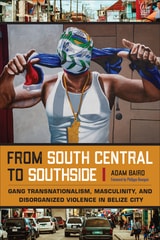
From South Central to Southside
Gang Transnationalism, Masculinity, and Disorganized Violence in Belize CityAdam Baird
Temple University Press, 2024
From South Central to Southside charts the genesis and evolution of a transnational gang culture. Baird provides firsthand interviews with gang members and “narco” families and explains the surprising source of Belize City’s severe violence and skyrocketing homicide rates. He identifies gang violence in the U.S. and Belize as stemming from populations blighted by historical, brutal inequality and marginalization. Analyzing the gendered dynamics as young men and women face the temptations, risks, and dangers of gang life, Baird shines a light on “chronic vulnerability" in Belize City.
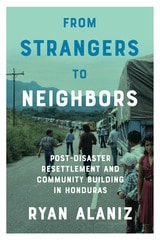
From Strangers to Neighbors
Post-Disaster Resettlement and Community Building in HondurasBy Ryan Alaniz
University of Texas Press, 2017
Natural disasters, the effects of climate change, and political upheavals and war have driven tens of millions of people from their homes and spurred intense debates about how governments and nongovernmental organizations (NGOs) should respond with long-term resettlement strategies. Many resettlement efforts have focused primarily on providing infrastructure and have done little to help displaced people and communities rebuild social structure, which has led to resettlement failures throughout the world. So what does it take to transform a resettlement into a successful community?
This book offers the first long-term comparative study of social outcomes through a case study of two Honduran resettlements built for survivors of Hurricane Mitch (1998) by two different NGOs. Although residents of each arrived from the same affected neighborhoods and have similar demographics, twelve years later one resettlement wrestles with high crime, low participation, and low social capital, while the other maintains low crime, a high degree of social cohesion, participation, and general social health. Using a multi-method approach of household surveys, interviews, ethnography, and analysis of NGO and community documents, Ryan Alaniz demonstrates that these divergent resettlement trajectories can be traced back to the type and quality of support provided by external organizations and the creation of a healthy, cohesive community culture. His findings offer important lessons and strategies that can be utilized in other places and in future resettlement policy to achieve the most effective and positive results.
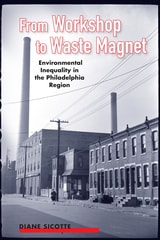
From Workshop to Waste Magnet
Environmental Inequality in the Philadelphia RegionSicotte, Diane
Rutgers University Press, 2016

From a Shattered Sun
Hierarchy, Gender, and Alliance in the Tanimbar IslandsSusan Mckinnon
University of Wisconsin Press, 1991
Among a growing number of ethnographies of eastern Indonesia that deal with cosmology, exchange, and kinship, From a Shattered Sun is the first to address squarely issues originally broached by Edmund Leach and Claude Lévi-Strauss concerning the relation between hierarchy and equality in asymmetric systems of marriage.
On the basis of extensive fieldwork in the Tamimbar islands, Susan McKinnon analyzes the simultaneous presence of both closed, asymmetric cycles and open, asymmetric pathways of alliance—of both egalitarian and hierarchical configurations. In addition, Tamimbarese society is marked by the existence of multiple, differentially valued forms of marriage, affiliation, and residence. Rather than seeing these various forms as analytically separable types, McKinnon demonstrates that it is only by viewing them as integrally related—in terms of culturally specific understandings of "houses," gender, and exchange—that one can perceive the processes through which hierarchy and equality are created.
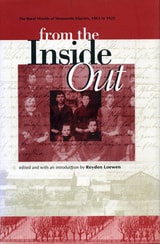
From the Inside Out
The Rural Worlds of Mennonite DiaristsRoyden Loewen
University of Manitoba Press, 1999
Front Page Economics
Gerald D. Suttles, with Mark D. Jacobs
University of Chicago Press, 2010
In an age when pundits constantly decry overt political bias in the media, we have naturally become skeptical of the news. But the bluntness of such critiques masks the highly sophisticated ways in which the media frame important stories. In Front Page Economics, Gerald Suttles delves deep into the archives to examine coverage of two major economic crashes—in 1929 and 1987—in order to systematically break down the way newspapers normalize crises.
Poring over the articles generated by the crashes—as well as the people in them, the writers who wrote them, and the cartoons that ran alongside them—Suttles uncovers dramatic changes between the ways the first and second crashes were reported. In the intervening half-century, an entire new economic language had arisen and the practice of business journalism had been completely altered. Both of these transformations, Suttles demonstrates, allowed journalists to describe the 1987 crash in a vocabulary that was normal and familiar to readers, rendering it routine.
A subtle and probing look at how ideologies are packaged and transmitted to the casual newspaper reader, Front Page Economics brims with important insights that shed light on our own economically tumultuous times.

Frontier Doctor
Observations on Central Oregon and the Changing WestUrling C. Coe
Oregon State University Press, 1996
Fueling Development
How Black Radical Trade Unionism Transformed Trinidad and TobagoZophia Edwards
Duke University Press, 2025
Fundamental Development of the Social Sciences
Rockefeller Philanthropy and the United States Social Science Research CouncilDonald Fisher
University of Michigan Press, 1993
The United States Social Science Research Council (SSRC), founded in 1923, was the first national social science institution in the world and might be said to represent the creation of a "science of society." In Fundamental Development of the Social Sciences , Donald Fisher shows how this institution, under the considerable influence of Rockefeller philanthropy, shaped an entire discipline.
Fisher demonstrates that the creation and growth of the SSRC during the 1920s and 1930s is essential to our understanding of the major developments in the social sciences since World War II. He shows that during this period, the place of social science and social scientists in American society was fixed in a way that has had substantial, lasting impact.
The author weaves a number of larger, related issues into his account of the wide-ranging influence of the SSRC: the role of social scientists in the political life of the societies in which they live; the way in which knowledge systems develop and change; the role of philanthropy in industrialized societies; and the formation and preservation of the modern capitalist state.
Donald Fisher's discussion of how an American institution sculpted an entire discipline will be of interest to all social scientists and historians of social science.