1441 books match the query 'World' and 61 start with f
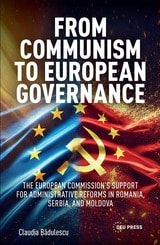
cover of From Communism to European Governance: The European Commission’s Support for Administrative Reforms in Romania, Serbia,and Moldova

From Communism to European Governance

The European Commission’s Support for Administrative Reforms in Romania, Serbia,and Moldova

Claudia Badulescu

Central European University Press, 2027
The fall of communism promised a new era of European governance – open, accountable, efficient administration – across Central and Eastern Europe and the Western Balkans. Three decades later, that promise feels yet to be fulfilled. From Communism to European Governance traces why. The book reconstructs the genesis, institutionalisation, and implementation of the European Commission’s support for domestic administrative reform in Romania (EU member), Serbia (EU candidate), and Moldova (EU neighbour), from 2000 to 2020. The findings challenge both optimistic narratives of EU-driven transformation and sceptical claims of external impotence. While EU engagement has strengthened legal frameworks, strategic planning, and administrative capacity, the depth and sustainability of reform depend on domestic ownership, credible incentives, and the resilience of political commitment. At a moment when EU enlargement has returned to the centre of European geopolitics, this is an essential read for scholars and policymakers engaged in governance reform across Europe and its neighbourhood.
[more]
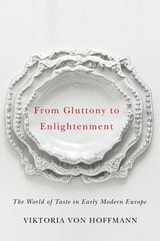
cover of From Gluttony to Enlightenment: The World of Taste in Early Modern Europe

From Gluttony to Enlightenment

The World of Taste in Early Modern Europe

Viktoria von Hoffmann

University of Illinois Press, 2016

Scorned since antiquity as low and animal, the sense of taste is celebrated today as an ally of joy, a source of adventure, and an arena for pursuing sophistication. The French exalted taste as an entrée to ecstasy, and revolutionized their cuisine and language to express this new way of engaging with the world.

Viktoria von Hoffmann explores four kinds of early modern texts--culinary, medical, religious, and philosophical--to follow taste's ascent from the sinful to the beautiful. Combining food studies and sensory history, she takes readers on an odyssey that redefined a fundamental human experience. Scholars and cooks rediscovered a vast array of ways to prepare and present foods. Far-sailing fleets returned to Europe bursting with new vegetables, exotic fruits, and pungent spices. Hosts refined notions of hospitality in the home while philosophers pondered the body and its perceptions. As von Hoffmann shows, these labors produced a sea change in perception and thought, one that moved taste from the base realm of the tongue to the ethereal heights of aesthetics.
[more]
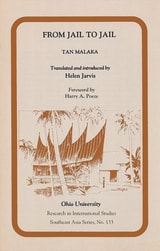
cover of From Jail to Jail

From Jail to Jail

Tan Malaka

Ohio University Press, 2020

From Jail to Jail  is the political autobiography of Sutan Ibrahim gelar Tan Malaka, an enigmatic and colorful political thinker of twentieth-century Asia, who was one of the most influential figures of the Indonesian Revolution. Variously labeled a communist, Trotskyite, and nationalist, Tan Malaka managed to run afoul of nearly every political group and faction involved in the Indonesian struggle for independence. During his decades of political activity, he spent periods of exile and hiding in nearly every country in Southeast Asia. As a Marxist who was expelled from and became a bitter enemy of his country’s Communist Party and as a nationalist who was imprisoned and murdered by his own government’s forces as a danger to its anticolonial struggle, Tan Malaka was and continues to be soaked in contradiction and controversy.

Translated by Helen Javis and with a new introduction from Harry A. Poeze, this edition of From Jail to Jail contextualizes the life and political accomplishments of Tan Malaka in one of the few known autobiographies by a Marxist of this political era and region.
[more]
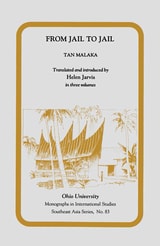
cover of From Jail to Jail: Mis Sea#83 Tpg#8

From Jail to Jail

Mis Sea#83 Tpg#8

Tan Malaka

Ohio University Press, 1991

From Jail to Jail  is the political autobiography of Sutan Ibrahim gelar Tan Malaka, an enigmatic and colorful political thinker of twentieth-century Asia, who was one of the most influential figures of the Indonesian Revolution. Variously labeled a communist, Trotskyite, and nationalist, Tan Malaka managed to run afoul of nearly every political group and faction involved in the Indonesian struggle for independence. During his decades of political activity, he spent periods of exile and hiding in nearly every country in Southeast Asia. As a Marxist who was expelled from and became a bitter enemy of his country’s Communist Party and as a nationalist who was imprisoned and murdered by his own government’s forces as a danger to its anticolonial struggle, Tan Malaka was and continues to be soaked in contradiction and controversy.
[more]
cover of From Popular to Insurgent Intellectuals: Peasant Catechists in the Salvadoran Revolution

From Popular to Insurgent Intellectuals

Peasant Catechists in the Salvadoran Revolution

Leigh Binford

Rutgers University Press, 2023
From Popular to Insurgent Intellectuals explains how a group of Catholic lay catechists educated in liberation theology came to take up arms and participate on the side of the rebel FMLN during El Salvador’s revolutionary war (1980-92). In the process they became transformed from popular intellectuals to insurgent intellectuals who put their organizational and cognitive skills at the service of a collective effort to create a more egalitarian and democratic society. The book highlights the key roles that peasant catechists in northern Morazán played in disseminating liberation theology before the war and supporting the FMLN during it—as quartermasters, political activists, and musicians, among other roles. Throughout, From Popular to Insurgent Intellectuals highlights the dialectical nature of relations between Catholic priests and urban revolutionaries, among others, in which the latter learned from the former and vice-versa. Peasant catechists proved capable at making independent decisions based on assessment of their needs and did not simply follow the dictates of those with superior authority, and played an important role for the duration of the twelve-year military conflict. 
[more]
cover of From Revolution to War: State Relations in a World of Change

From Revolution to War

State Relations in a World of Change

Patrick J. Conge

University of Michigan Press, 2000
In the history of international relations, few events command as much attention as revolution and war. Over the centuries, revolutionary transformations have produced some of the most ruinous and bloody wars. Nevertheless, the breakdown of peace in time of revolution is poorly understood. Patrick Conge offers a groundbreaking study of the relationship between war and revolution.
How can we best understand the effect of revolutionary transformations on the politics of war and peace? Conge argues that it is only by bringing in, first, the organizational capacity of revolutionary regimes to extract resources and convert them into military strength and, second, the power of transformative ideas to transcend national boundaries and undermine the ability of opposing regimes to compromise that we are best able to understand the effect of revolution on the origins and persistence of war. By incorporating such key elements, this book provides a new, more comprehensive explanation of the relationship between revolution, war, and peace.
Conditions that lead to and sustain wars in general are identified and placed in the light of revolutionary transformations. Once the argument is presented, historical case studies are used to test its plausibility. Conge demonstrates the importance of the effect of revolutionary organization and ideas on the outcome of conflicts.
Political scientists, historians, sociologists, and the general reader interested in the politics of war and peace in revolutionary times are given new perspectives on the relationship between revolution and war as well as on the implications of political organization for military power and the process of consolidation of new regimes.
Patrick J. Conge is Assistant Professor of Political Science, University of Arkansas.
[more]
cover of From Strangers to Neighbors: Post-Disaster Resettlement and Community Building in Honduras

From Strangers to Neighbors

Post-Disaster Resettlement and Community Building in Honduras

By Ryan Alaniz

University of Texas Press, 2017

Natural disasters, the effects of climate change, and political upheavals and war have driven tens of millions of people from their homes and spurred intense debates about how governments and nongovernmental organizations (NGOs) should respond with long-term resettlement strategies. Many resettlement efforts have focused primarily on providing infrastructure and have done little to help displaced people and communities rebuild social structure, which has led to resettlement failures throughout the world. So what does it take to transform a resettlement into a successful community?

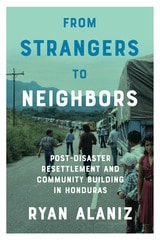
This book offers the first long-term comparative study of social outcomes through a case study of two Honduran resettlements built for survivors of Hurricane Mitch (1998) by two different NGOs. Although residents of each arrived from the same affected neighborhoods and have similar demographics, twelve years later one resettlement wrestles with high crime, low participation, and low social capital, while the other maintains low crime, a high degree of social cohesion, participation, and general social health. Using a multi-method approach of household surveys, interviews, ethnography, and analysis of NGO and community documents, Ryan Alaniz demonstrates that these divergent resettlement trajectories can be traced back to the type and quality of support provided by external organizations and the creation of a healthy, cohesive community culture. His findings offer important lessons and strategies that can be utilized in other places and in future resettlement policy to achieve the most effective and positive results.
[more]
cover of From War to Genocide: Criminal Politics in Rwanda, 1990–1994

From War to Genocide

Criminal Politics in Rwanda, 1990–1994

André Guichaoua, Translated by Don E. Webster, Foreword by Scott Straus

University of Wisconsin Press, 2017

In April 1994 Rwanda exploded in violence, with political, social, and economic divisions most visible along ethnic lines of the Hutu and Tutsi factions. The ensuing killings resulted in the deaths of as much as 20 percent of Rwanda's population. André Guichaoua, who was present as the genocide began, unfolds a complex story with multiple actors, including three major political parties that each encompassed a spectrum of positions, all reacting to and influencing a rapidly evolving situation. Economic polarities, famine-fueled privation, clientelism, corruption, north-south rivalries, and events in the neighboring nations of Burundi and Uganda all deepened ethnic tensions, allowing extremists to prevail over moderates.

Guichaoua draws on years of meticulous research to describe and analyze this history. He emphasizes that the same virulent controversies that fueled the conflict have often influenced judicial, political, and diplomatic responses to it, reproducing the partisan cleavages between the former belligerents and implicating state actors, international institutions, academics, and the media. Guichaoua insists upon the imperative of absolute intellectual independence in pursuing the truth about some of the gravest human rights violations of the twentieth century.
[more]
cover of From Yorktown to Valmy: The Transformation of the French Army in an Age of Revolution

From Yorktown to Valmy

The Transformation of the French Army in an Age of Revolution

Samuel F. Scott

University Press of Colorado, 1998
[more]
cover of From the Margins: Historical Anthropology and Its Futures

From the Margins

Historical Anthropology and Its Futures

Brian Keith Axel, ed.

Duke University Press, 2002

Historical anthropology: critical exchange between two decidedly distinct disciplines or innovative mode of knowledge production? As this volume’s title suggests, the essays Brian Keith Axel has gathered in From the Margins seek to challenge the limits of discrete disciplinary epistemologies and conventions, gesturing instead toward a transdisciplinary understanding of the emerging relations between archive and field.
In original articles encompassing a wide range of geographic and temporal locations, eminent scholars contest some of the primary preconceptions of their fields. The contributors tackle such topics as the paradoxical nature of American Civil War monuments, the figure of the “New Christian” in early seventeenth-century Peru, the implications of statistics for ethnography, and contemporary South Africa's “occult economies.” That anthropology and history have their provenance in—and have been complicit with—colonial formations is perhaps commonplace knowledge. But what is rarely examined is the specific manner in which colonial processes imbue and threaten the celebratory ideals of postcolonial reason or the enlightenment of today’s liberal practices in the social sciences and humanities.
By elaborating this critique, From the Margins offers diverse and powerful models that explore the intersections of historically specific local practices with processes of a world historical order. As such, the collection will not only prove valuable reading for anthropologists and historians, but also for scholars in colonial, postcolonial, and globalization studies.

Contributors.
Talal Asad, Brian Keith Axel, Bernard S. Cohn, Jean Comaroff, John L. Comaroff, Nicholas B. Dirks, Irene Silverblatt, Paul A. Silverstein, Teri Silvio, Ann Laura Stoler, Michel-Rolph Trouillot
[more]
cover of Fueling Development: How Black Radical Trade Unionism Transformed Trinidad and Tobago

Fueling Development

How Black Radical Trade Unionism Transformed Trinidad and Tobago

Zophia Edwards

Duke University Press, 2025

Despite Trinidad and Tobago’s economic dependence on oil and gas production and its history of colonial exploitation of labor and resources, it enjoys relatively high democratic and redistributive development compared to other nations in the global South. In Fueling Development, Zophia Edwards draws on archival data, historical analysis, and Black radical political economic thought to trace Trinidad and Tobago’s success to a specific form of working-class mobilization she calls “liberation unionism.” A Black radical labor tradition, liberation unionism was multiracial, multisectoral, and gender inclusive; and Pan-African, anti-imperial, anticolonial, and diasporic; it advocated not only for workplace issues, but for economic, political, and social transformation. Emerging during the colonial period, liberation unionism forced the colonial state to increase its institutional capacity to promote equitable development. The movement persisted into the post-independence period and further compelled the independent state to channel oil windfalls toward increasing its ability to better serve the needs of the people. By uncovering liberation unionism’s power to create robust social and economic change, Edwards expands understandings of the relationship between development, race, labor, and political economy.
[more]