Results by title
3369 books match the query 'Cultural & Social' and 148 start with f

Formations of Violence
The Narrative of the Body and Political Terror in Northern IrelandAllen Feldman
University of Chicago Press, 1991
"A sophisticated and persuasive late-modernist political analysis that consistently draws the reader into the narratives of the author and those of the people of violence in Northern Ireland to whom he talked. . . . Simply put, this book is a feast for the intellect"—Thomas M. Wilson, American Anthropologist
"One of the best books to have been written on Northern Ireland. . . . A highly imagination and significant book. Formations of Violence is an important addition to the literature on political violence."—David E. Schmitt, American Political Science Review
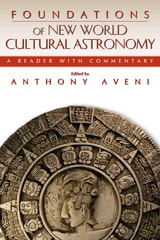
Foundations of New World Cultural Astronomy
A Reader with CommentaryAnthony Aveni
University Press of Colorado, 2008
Cultural astronomy, first called archaeoastronomy, has evolved at ferocious speed since its genesis in the 1960s, with seminal essays and powerful rebuttals published in far-flung, specialized journals. Until now, only the most closely involved scholars could follow the intellectual fireworks. In Foundations of New World Cultural Astronomy, Anthony Aveni, one of cultural astronomy's founders and top scholars, offers a selection of the essays that built the field, from foundational works to contemporary scholarship.
Including four decades of research throughout the Americas by linguists, archaeologists, historians, ethnologists, astronomers, and engineers, this reader highlights the evolution of the field through thematic organization and point-counterpoint articles. Aveni - an award-winning author and former National Professor of the Year - serves up incisive commentary, background for the uninitiated, and suggested reading, questions, and essay topics. Students, readers, and scholars will relish this collection and its tour of a new field in which discoveries about ancient ways of looking at the skies cast light on our contemporary views.
Founding Mothers of the Society for Ethnomusicology
Charlotte J. Frisbie
University of Illinois Press, 2026
An enlightening eyewitness account, Founding Mothers of the Society for Ethnomusicology is an invaluable window into the work and contributions of women scholars and the obstacles they faced.

Four Germanys
A Chronicle of the Schorcht FamilyDonald S. Pitkin
Temple University Press, 2016
In this last book by the late Donald Pitkin, author of The House that Giacomo Built, comes a story of the Schorcht family, through whose fortunes and struggles one can see the transformations of Germany through the long twentieth century.
Each chapter of Four Germanys is reflective of generational rather than historical time. In 1922, Edwin Schorcht inherited his family farm, and in Part One, Pitkin traces the derivation of this farmstead. Part Two focuses on Schorcht’s children who came of age in Hitler’s Germany. Part Three has the Schorchts growing up in the Ulbricht years (1950–73) of the German Democratic Republic. The book concludes with the great-granddaughter, Maria, looking back to the past in relation to the new Germany that history had bequeathed her.
Ultimately, Four Germanys reflects the impact of critical historical events on ordinary East Germans while it also reveals how one particular family managed its own historical adaptation to these events.
Four Lectures on Ethics
Anthropological PerspectivesMichael Lambek, Veena Das, Didier Fassin, and Webb Keane
HAU, 2015
The authors explore the ways we understand morality across many different cultural settings, asking questions such as: How do we recognize the ethical in different ethnographic worlds? What constitutes agency and awareness in everyday life? What might an anthropology of ordinary ethics look like? And what happens when ethics approaches the political in both Western and non-Western societies. Contrasting perspectives and methods—and yet in complimentary ways—this masterclass will serve as an essential guide for how an anthropology of ethics can be formulated in the twenty-first century.

Foxboy
Intimacy and Aesthetics in Andean StoriesBy Catherine J. Allen
University of Texas Press, 2011
Once there was a Quechua folktale. It begins with a trickster fox's penis with a will of its own and ends with a daughter returning to parents who cannot recognize her until she recounts the uncanny adventures that have befallen her since she ran away from home. Following the strange twists and turnings of this tale, Catherine J. Allen weaves a narrative of Quechua storytelling and story listening that links these arts to others—fabric weaving, in particular—and thereby illuminates enduring Andean strategies for communicating deeply felt cultural values.
In this masterful work of literary nonfiction, Allen draws out the connections between two prominent markers of ethnic identity in Andean nations—indigenous language and woven cloth—and makes a convincing case that the connection between language and cloth affects virtually all aspects of expressive culture, including the performing arts. As she explores how a skilled storyteller interweaves traditional tales and stock characters into new stories, just as a skilled weaver combines traditional motifs and colors into new patterns, she demonstrates how Andean storytelling and weaving both embody the same kinds of relationships, the same ideas about how opposites should meet up with each other. By identifying these pervasive patterns, Allen opens up the Quechua cultural world that unites story tellers and listeners, as listeners hear echoes and traces of other stories, layering over each other in a kind of aural palimpsest.
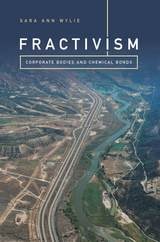
Fractivism
Corporate Bodies and Chemical BondsSara Ann Wylie
Duke University Press, 2018

Fragments of Culture
The Everyday of Modern TurkeyKandiyoti, Deniz
Rutgers University Press, 2002
In this volume, some of the most innovative scholars of post 1980s Turkey address the complex ways that suburbanization and the growth of a globalized middle class have altered gender and class relations, and how Turkish society is being shaped and redefined through consumption. They also explore the increasingly polarized cultural politics between secularists and Islamists, and the ways that previously repressed Islamic elements have reemerged to complicate the idea of an "authentic" Turkish identity. Contributors examine a range of issues from the adjustments to religious identity as the Islamic veil becomes marketed as a fashion item, to the media's increased attention in Turkish transsexual lifestyle, to the role of folk dance as a ritualized part of public life. Fragments of Culture shows how attention to the minutiae of daily life can successfully unravel the complexities of a shifting society. This book makes a significant contribution to both modern Turkish studies and the scholarship on cross-cultural perspectives in Middle Eastern studies.
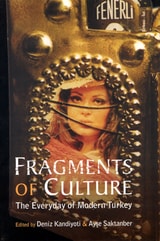
Fragments of Culture
The Everyday of Modern TurkeyKandiyoti, Deniz
Rutgers University Press, 2002
In this volume, some of the most innovative scholars of post 1980s Turkey address the complex ways that suburbanization and the growth of a globalized middle class have altered gender and class relations, and how Turkish society is being shaped and redefined through consumption. They also explore the increasingly polarized cultural politics between secularists and Islamists, and the ways that previously repressed Islamic elements have reemerged to complicate the idea of an "authentic" Turkish identity. Contributors examine a range of issues from the adjustments to religious identity as the Islamic veil becomes marketed as a fashion item, to the media's increased attention in Turkish transsexual lifestyle, to the role of folk dance as a ritualized part of public life. Fragments of Culture shows how attention to the minutiae of daily life can successfully unravel the complexities of a shifting society. This book makes a significant contribution to both modern Turkish studies and the scholarship on cross-cultural perspectives in Middle Eastern studies.
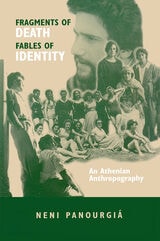
Fragments of Death, Fables of Identity
An Athenian AnthropographyEleni Panourgia
University of Wisconsin Press, 1996
The death of her grandfather sets Neni Panourgiá and her readers on a path through the rituals of mourning and memory in modern urban Greece. Blending emotional richness and intellectual rigor, the anthropologist returns home in this exploration of kinship and identity within her own family and native city of Athens. What emerges is not only a new anthropological view of contemporary Greek culture, but also a reflective consideration of the self and subject.
Following men and women grappling with questions of mortality, Panourgiá moves through the streets and neighborhoods of Athens, seaside resorts and pistachio groves, the corridors and rooms of the Cancer Institute, wakes in apartments and observances in cemeteries. She mingles popular culture, venerable traditions, and contemporary theory as she considers how individuals define their identity as Athenians, as members of a family, as subjects of a polity, in sickness and in health, in death or in mourning. Memory is their guide as it negotiates their relationships with a personal, collective, and cultural past—and the memory of many deaths challenges and reaffirms, deconstructs and reconstructs who they are.
As intellectually ambitious as it is moving, Fragments of Death, Fables of Identity reconfigures the subject and object of anthropological study and recasts the line where experience ends and analysis begins.
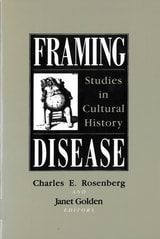
Framing Disease
Studies in Cultural HistoryRosenberg, Charles E
Rutgers University Press, 1992
"In some ways disease does not exist until we have agreed that it does, by perceiving, naming, and responding to it, " writes Charles E. Rosenberg in his introduction to this stimulating set of essays. Disease is both a biological event and a social phenomenon. Patient, doctor, family, and social institutions—including employers, government, and insurance companies—all find ways to frame the biological event in terms that make sense to them and serve their own ends.
Many diseases discussed here—endstage renal disease, rheumatic fever, parasitic infectious diseases, coronary thrombosis—came to be defined, redefined, and renamed over the course of several centuries. As these essays show, the concept of disease has also been used to frame culturally resonant behaviors: suicide, homosexuality, anorexia nervosa, chronic fatigue syndrome. Disease is also framed by public policy, as the cases of industrial disability and of forensic psychiatry demonstrate. Medical institutions, as managers of people with disease, come to have vested interests in diagnoses, as the histories of facilities to treat tuberculosis or epilepsy reveal. Ultimately, the existence and conquest of disease serves to frame a society's sense of its own "healthiness" and to give direction to social reforms.
The contributors include Steven J. Peitzman, Peter C. English, John Farley, Christopher Lawrence, Michael MacDonald, Bert Hansen, Joan Jacobs Brumberg, Robert A. Aronowitz, Gerald Markowitz, David Rosner, Janet A. Tighe, Barbara Bates, Ellen Dwyer, John M. Eyler, and Elizabeth Fee. For any student of disease and society, this book is essential, compelling reading.

Francophonie en Orient
Aux croisements France-Asie (1840-1940)Mathilde Kang
Amsterdam University Press, 2017

Frankenstein
Penetrating the Secrets of NatureLederer, Susan E
Rutgers University Press, 2002
As science penetrates the secrets of nature, with each discovery generating new questions, Mary Shelley's Frankenstein will sound its note of warning. Many scientific developments have provoked references to Frankenstein, a story that, for nearly two centuries, has gripped our imaginations and haunted our nightmares. How can society balance the benefits of medical discoveries against the ethical or spiritual questions posed?
Frankenstein: Penetrating the Secrets of Nature accompanies a traveling exhibit of the same name. This lavishly illustrated volume begins by highlighting Shelley's novel and the context in which she conceived it. It next focuses on the redefinition of the Frankenstein myth in popular culture. Here, the fate of the monster becomes a moral lesson illustrating the punishment for ambitious scientists who seek to usurp the place of God by creating life. The final section examines the continuing power of the Frankenstein story to articulate present-day concerns raised by new developments in biomedicine such as cloning and xenografting (the use of animal organs in human bodies), and the role scientists and citizens play in determining acceptable limits of scientific and medical advances.
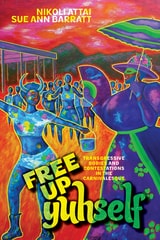
Free Up Yuhself
Transgressive Bodies and Contestations in the CarnivalesqueNikoli A. Attai
Rutgers University Press, 2025
Free Up Yuhself explores and theorizes what it means to embody and be empowered by the chaos of transgression, evaluating the implications for people who destabilize the Caribbean region’s dominant gender and sexuality politics within the Caribbean and the Caribbean diaspora. This book examines how people actively utilize the carnivalesque—spaces of festivity and places of excitement, the extraordinary, the ritualistic—to confront, negotiate, disrupt, and transgress normative trends, boundaries, and perspectives in the Caribbean and Caribbean diaspora communities. This book is particularly concerned with the ways that Caribbean people contest sexual and gendered expectations through their bodily performances across regional and diasporic festival spaces. Through illustrative, analytical, evaluative, and reflective chapters, the collection contemplates the themes of freedom, belonging, acceptance, and recognition as these affect the experience of people’s sense of being. The authors reflect on “freeing up” as a contentious politics, understanding that people have the capacity to enact their freedom through transgressive movements and performances that persistently grapple with notions of respectability, agency, empowerment, disruption, and the meanings and consequences of their varied social and political locations.

Freedom in Entangled Worlds
West Papua and the Architecture of Global PowerEben Kirksey
Duke University Press, 2012
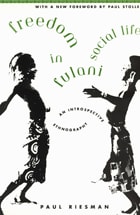
Freedom in Fulani Social Life
An Introspective EthnographyPaul Riesman
University of Chicago Press, 1977
"Freedom in Fulani Social Life richly documents how the ethnographer's own personal and cultural background is implicated in the research process. . . . For this reason, [Riesman's] book will be of paramount interest to all ethnographers."—Philip L. Kilbride, Reviews in Anthropology
"A remarkably well-written and insightful account of Fulani life. . . . In addition to using the conventional approaches of participating in and observing the daily activities of the Jelgobe . . . Riesman enriches his account by examining his personal feelings about particular incidents."—Library Journal
"An interesting and provocative study."—Choice
At the time of his death in 1988, Paul Riesman was an anthropologist who taught at Carleton College.
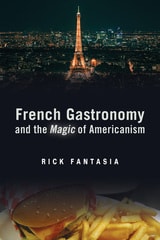
French Gastronomy and the Magic of Americanism
Rick Fantasia
Temple University Press, 2019
A tectonic shift has occurred in the gastronomic field in France, upsetting the cultural imagination. In a European country captivated by a high-stakes power struggle between chefs and restaurants in the culinary field, the mass marketing of factory-processed industrial cuisine and fast foods has created shock waves in French society, culture, and the economy.
In this insightful book, French Gastronomy and the Magic of Americanism, Rick Fantasia examines how national identity and the dynamics of cultural meaning-making within gastronomy have changed during a crucial period of transformation, from the 1970s through the 1990s. He illuminates the tensions and surprising points of cooperation between the skill, expertise, tradition, artistry, and authenticity of grand chefs and the industrial practices of food production, preparation, and distribution.
Fantasia examines the institutions and beliefs that have reinforced notions of French cultural supremacy—such as the rise and reverence of local cuisine—as well as the factors that subvert those notions, such as when famous French chefs lend their names to processed, frozen, and pre-packaged foods available at the supermarket. Ultimately, French Gastronomy and the Magic of Americanism shows what happens to a cultural field, like French gastronomy, when the logic and power of the economic field imposes itself upon it.
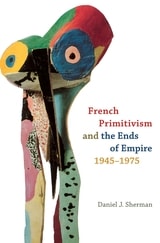
French Primitivism and the Ends of Empire, 1945-1975
Daniel J. Sherman
University of Chicago Press, 2011
For over a century, the idea of primitivism has motivated artistic modernism. Focusing on the three decades after World War II, known in France as “les trentes glorieuses” despite the loss of most of the country’s colonial empire, this probing and expansive book argues that primitivism played a key role in a French society marked by both economic growth and political turmoil.

Friar and the Maya
Diego de Landa and the Account of the Things of Yucatanby Matthew Restall, Amara Solari, John F. Chuchiak IV & Traci Ardren
University Press of Colorado, 2023
For generations, scholars used (and misused) the Account as the sole eyewitness insight into an ancient civilization. It is credited to the sixteenth-century Spanish Franciscan, monastic inquisitor, and bishop Diego de Landa, whose legacy is complex and contested. His extensive writings on Maya culture and history were lost in the seventeenth century, save for the fragment that is the Account, discovered in the nineteenth century, and accorded near-biblical status in the twentieth as the first “ethnography” of the Maya. However, the Account is not authored by Landa alone; it is a compilation of excerpts, many from writings by other Spaniards—a significant revelation made here for the first time.
This new translation accurately reflects the style and vocabulary of the original manuscript. It is augmented by a monograph—comprising an introductory chapter, seven essays, and hundreds of notes—that describes, explains, and analyzes the life and times of Diego de Landa, the Account, and the role it has played in the development of modern Maya studies. The Friar and the Maya is an innovative presentation on an important and previously misunderstood primary source.

Friars, Nobles and Burghers – Sermons, Images and Prints
Studies of Culture and Society in Early-Modern Europe - In Memoriam István György TóthLászló Kontler
Central European University Press, 2010

From Antz to Titanic
Reinventing Film AnalysisMartin Barker and Thomas Austin
Pluto Press, 2000

From Black to Schwarz
Cultural Crossovers Between African America and GermanyMaria I. Diedrich
Michigan State University Press, 2011

From Bureaucracy to Bullets
Extreme Domicide and the Right to HomeBree Akesson
Rutgers University Press, 2022

From Gluttony to Enlightenment
The World of Taste in Early Modern EuropeViktoria von Hoffmann
University of Illinois Press, 2016
Viktoria von Hoffmann explores four kinds of early modern texts--culinary, medical, religious, and philosophical--to follow taste's ascent from the sinful to the beautiful. Combining food studies and sensory history, she takes readers on an odyssey that redefined a fundamental human experience. Scholars and cooks rediscovered a vast array of ways to prepare and present foods. Far-sailing fleets returned to Europe bursting with new vegetables, exotic fruits, and pungent spices. Hosts refined notions of hospitality in the home while philosophers pondered the body and its perceptions. As von Hoffmann shows, these labors produced a sea change in perception and thought, one that moved taste from the base realm of the tongue to the ethereal heights of aesthetics.
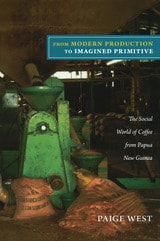
From Modern Production to Imagined Primitive
The Social World of Coffee from Papua New GuineaPaige West
Duke University Press, 2012

From North Africa to France
Family Migration in Text and FilmIsabel Hollis-Touré
University of London Press, 2015
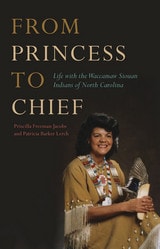
From Princess to Chief
Life with the Waccamaw Siouan Indians of North CarolinaPriscilla Freeman Jacobs
University of Alabama Press, 2013

From Quarry to Cornfield
The Political Economy of Mississippian Hoe ProductionCharles Richard Cobb
University of Alabama Press, 2001
An innovative model for examining the technology of hoe production and its contribution to the agriculture of Mississippian communities.
Lithic specialist Charles Cobb examines the political economy in Mississippian communities through a case study of raw material procurement and hoe production and usage at the Mill Creek site on Dillow Ridge in southwest Illinois. Cobb outlines the day-to-day activities in a Mississippian chiefdom village that flourished from about A.D. 1250 to 1500. In so doing, he provides a fascinating window into the specialized tasks of a variety of "day laborers" whose contribution to the community rested on their production of stone hoes necessary in the task of feeding the village. Overlooked in most previous studies, the skills and creativity of the makers of the hoes used in village farming provide a basis for broader analysis of the technology of hoe use in Mississippian times.
Although Cobb's work focuses on Mill Creek, his findings at this site are representative of the agricultural practices of Mississippian communities throughout the eastern United States. The theoretical underpinnings of Cobb's study make a clear case for a reexamination of the accepted definition of chiefdom, the mobilization of surplus labor, and issues of power, history, and agency in Mississippian times. In a well-crafted piece of writing, Cobb distinguishes himself as one of the leaders in the study of lithic technology. From Quarry to Cornfield will find a well-deserved place in the ongoing discussions of power and production in the Mississippian political economy.
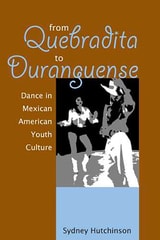
From Quebradita to Duranguense
Dance in Mexican American Youth CultureSydney Hutchinson
University of Arizona Press, 2007
Quebradita, meaning “little break,” is a modern Mexican American dance style that became hugely popular in Los Angeles and across the southwestern United States during the early to mid 1990s. Over the decade of its popularity, this dance craze offered insights into the social and cultural experience of Mexican American youth. Accompanied by banda, an energetic brass band music style, quebradita is recognizable by its western clothing, hat tricks, and daring flips. The dance’s combination of Mexican, Anglo, and African American influences represented a new sensibility that appealed to thousands of young people. Hutchinson argues that, though short-lived, the dance filled political and sociocultural functions, emerging as it did in response to the anti-immigrant and English-only legislation that was then being enacted in California. Her fieldwork and interviews yield rich personal testimony as to the inner workings of the quebradita’s aesthetic development and social significance. The emergence of pasito duranguense, a related yet distinct style originating in Chicago, marks the evolution of the Mexican American youth dance scene.
Like the quebradita before it, pasito duranguense has picked up the task of demonstrating the relevance of regional Mexican music and dance within the U.S. context.
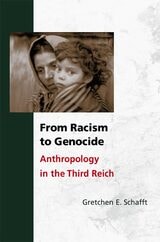
From Racism to Genocide
Anthropology in the Third ReichGretchen E. Schafft
University of Illinois Press, 2007
In paperback for the first time, From Racism to Genocide is an explosive, richly detailed account of how Nazi anthropologists justified racism, developed practical applications of racist theory, and eventually participated in every phase of the Holocaust.
Using original sources and previously unpublished documentation, Gretchen E. Schafft shows the total range of anti-human activity from within the confines of a particular discipline. Based on seven years of archival research in the United States and abroad, the work includes many original photos and documents, most of which have never before been published. It uses primary data and original texts whenever possible, including correspondence written by perpetrators. The book also reveals that the United States was not merely a bystander in this research, but instead contributed professional and financial support to early racial research that continued through the first five years of Hitler’s regime.
From Russia with Code
Programming Migrations in Post-Soviet TimesMario Biagioli and Vincent Antonin Lepinay, editors
Duke University Press, 2019
Contributors. Irina Antoschyuk, Mario Biagioli, Ksenia Ermoshina, Marina Fedorova, Andrey Indukaev, Alina Kontareva, Diana Kurkovsky, Vincent Lépinay, Alexandra Masalskaya, Daria Savchenko, Liubava Shatokhina, Alexandra Simonova, Ksenia Tatarchenko, Zinaida Vasilyeva, Dimitrii Zhikharevich

From San Francisco Eastward
Victorian Theater in the American WestCarolyn Grattan Eichin
University of Nevada Press, 2020
Finalist for the 2021 Will Rogers Medallion Award in Western Non-Fiction
Carolyn Grattan Eichin’s From San Francisco Eastward explores the dynamics and influence of theater in the West during the Victorian era. San Francisco, Eichin argues, served as the nucleus of the western theatrical world, having attained prominence behind only New York and Boston as the nation’s most important theatrical center by 1870. By focusing on the West’s hinterland communities, theater as a capitalist venture driven by the sale of cultural forms is illuminated against the backdrop of urbanization.
Using the vagaries of the West’s notorious boom-bust economic cycles, Eichin traces the fiscal, demographic, and geographic influences that shaped western theater. With an emphasis on the 1860s and 70s, this thoroughly researched work uses distinct notions of ethnicity, class, and gender to examine a cultural institution driven by a market economy. From San Francisco Eastward is a thorough analysis of the ever-changing theatrical personalities and strategies that shaped Victorian theater in the West, and the ways in which theater as a business transformed the values of a region.

From Small Talk to Microaggression
A History of ScaleMichael Lempert
University of Chicago Press, 2024
In this ambitious, wide-ranging book, anthropologist Michael Lempert offers a conceptual history that explores how, why, and with what effects we have come to think of interactions as “scaled.” Focusing on the sciences of interaction in midcentury America, Lempert traces how they harnessed diverse tools and media technologies, from dictation machines to 16mm film, to study communication “microscopically.” In looking closely, many hoped to transform interaction: to improve efficiency, grow democracy, curb racism, and much else. Yet their descent into a microworld created troubles, with some critics charging that these scientists couldn’t see the proverbial forest for the trees. Exploring talk therapy and group dynamics studies, social psychology and management science, conversation analysis, “micropolitics,” and more, Lempert shows how scale became a defining problem across the behavioral sciences.
Ultimately, he argues, if we learn how our objects of study have been scaled in advance, we can better understand how we think and interact with them—and with each other—across disciplinary and ideological divides. Even as once-fierce debates over micro and macro have largely subsided, Lempert shows how scale lives on and continues to affect the ethics and politics of language and communication today.
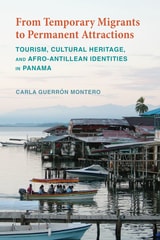
From Temporary Migrants to Permanent Attractions
Tourism, Cultural Heritage, and Afro-Antillean Identities in PanamaCarla Guerrón Montero
University of Alabama Press, 2020
A new reading of Panama’s nation-building process, interpreted through a lens of transnational tourism
Based on long-term ethnographic and archival research, From Temporary Migrants to Permanent Attractions: Tourism, Cultural Heritage, and Afro-Antillean Identities in Panama considers the intersection of tourism, multiculturalism, and nation building. Carla Guerrón Montero analyzes the ways in which tourism becomes a vehicle for the development of specific kinds of institutional multiculturalism and nation-building projects in a country that prides itself on being multiethnic and racially democratic.
The narrative centers on Panamanian Afro-Antilleans who arrived in Panama in the nineteenth century from the Greater and Leeward Antilles as a labor force for infrastructural projects and settled in Panama City, Colón, and the Bocas del Toro Archipelago. The volume discusses how Afro-Antilleans, particularly in Bocas del Toro, have struggled since their arrival to become part of Panama’s narrative of nationhood and traces their evolution from plantation workers for the United Fruit Company to tourism workers. Guerrón Montero notes that in the current climate of official tolerance, they have seized the moment to improve their status within Panamanian society, while also continuing to identify with their Caribbean heritage in ways that conflict with their national identity.
From Tribalism to Nationalism
The Anthropological Turn in Laos – A Tribute to Grant EvansEdited by Yves Goudineau and Vanina Bouté
National University of Singapore Press, 2022
From Tribute to Communal Sovereignty
The Tarascan and Caxcan Territories in TransitionEdited by Andrew Roth-Seneff, Robert V. Kemper, and Julie Adkins
University of Arizona Press, 2015
The continuities elucidated concern ancestral territorial claims that date back centuries and reflect the stable geographic locations occupied by core populations of indigenous language–speakers in or near their pre-Columbian territories since the Postclassical period, from the thirteenth to late fifteenth centuries. A common theme of this volume is the strong cohesive forces present, not only in the colonial construction of Christian village communities in Purhépecha and Nahuatl groups in Michoacán but also in the demographically less inclusive Huichol (Wixarika), Cora, and Tepehuan groups, whose territories were more extensive.
The authors review a cluster of related themes: settlement patterns of the last five centuries in central western Mexico, language distribution, ritual representation of territoriality, processes of collective identity, and the forms of participation and resistance during different phases of Mexican state formation. From such research, the question arises: does the village community constitute a unique level of organization of the experience of the original peoples of central western Mexico? The chapters address this question in rich and complex ways by first focusing on the past configurations and changes in lifeways during the transition from pre-Columbian to Spanish rule in tributary empires, then examining the long-term postcolonial process of Mexican independence that introduced the emerging theme of the communal sovereignty.
From a Shattered Sun
Hierarchy, Gender, and Alliance in the Tanimbar IslandsSusan Mckinnon
University of Wisconsin Press, 1991
Among a growing number of ethnographies of eastern Indonesia that deal with cosmology, exchange, and kinship, From a Shattered Sun is the first to address squarely issues originally broached by Edmund Leach and Claude Lévi-Strauss concerning the relation between hierarchy and equality in asymmetric systems of marriage.
On the basis of extensive fieldwork in the Tamimbar islands, Susan McKinnon analyzes the simultaneous presence of both closed, asymmetric cycles and open, asymmetric pathways of alliance—of both egalitarian and hierarchical configurations. In addition, Tamimbarese society is marked by the existence of multiple, differentially valued forms of marriage, affiliation, and residence. Rather than seeing these various forms as analytically separable types, McKinnon demonstrates that it is only by viewing them as integrally related—in terms of culturally specific understandings of "houses," gender, and exchange—that one can perceive the processes through which hierarchy and equality are created.
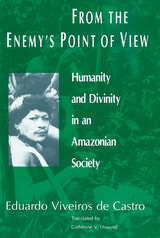
From the Enemy's Point of View
Humanity and Divinity in an Amazonian SocietyEduardo Viveiros de Castro
University of Chicago Press, 1992
Building upon ethnographic description and interpretation, Viveiros de Castro addresses the central aspect of the Arawete's concept of divinity—consumption—showing how its cannibalistic expression differs radically from traditional representations of other Amazonian societies. He situates the Araweté in contemporary anthropology as a people whose vision of the world is complex, tragic, and dynamic, and whose society commands our attention for its extraordinary openness to exteriority and transformation. For the Araweté the person is always in transition, an outlook expressed in the mythology of their gods, whose cannibalistic ways they imitate. From the Enemy's Point of View argues that current concepts of society as a discrete, bounded entity which maintains a difference between "interior" and "exterior" are wholly inappropriate in this and in many other Amazonian societies.
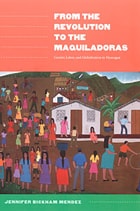
From the Revolution to the Maquiladoras
Gender, Labor, and Globalization in NicaraguaJennifer Bickham Mendez
Duke University Press, 2005
Mendez draws on interviews with leaders and program participants, including maquiladora workers; her participant observation while she worked as a volunteer within the organization; and analysis of the public statements, speeches, and texts written by mec members. She provides a sense of the day-to-day operations of the group as well as its strategies. By exploring the tension between mec and transnational feminist, labor, and solidarity networks, she illustrates how mec women’s outlooks are shaped by both their revolutionary roots within the Sandinista regime and their exposure to global discourses of human rights and citizenship. The complexities of the women’s labor movement analyzed in From the Revolution to the Maquiladoras speak to social and economic justice movements in the many locales around the world.
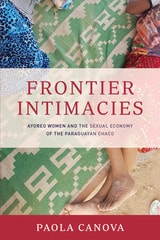
Frontier Intimacies
Ayoreo Women and the Sexual Economy of the Paraguayan ChacoBy Paola Canova
University of Texas Press, 2020
Until the 1960s, the Ayoreo people of Paraguay's Chaco region had remained uncontacted by the world. But as development encroached on their territory, the Ayoreo began to experience rapid cultural change. Paola Canova looks at one aspect of this change in Frontier Intimacies: the sexual practices of Ayoreo women, specifically the curajodie, or single women who exchange sex for money or material goods with non-Ayoreo men, often Mennonite settlers.
Weaving personal anecdotes into her extensive research, Canova shows how the advancement of economic and missionary frontiers has reconfigured gender roles, sexual ethics, and notions of desire in the region. Ayoreo women, she shows, have reappropriated their sexual practices, approaching intimate liaisons on their own terms and seeing the involvement of money not as morally problematic but as constitutive of sexual encounters. By using their sexuality to construct an intimate frontier operating according to their own logics, Canova reveals, Ayoreo women expose the fractured workings of frontier capitalism in spaces of rapid transformation. Inviting broader examination of the ways in which contemporary frontier economies are constructed and experienced, Frontier Intimacies brings a captivating new perspective to the economic development of the Chaco region.
Frontier Romance
Environment, Culture, and Alaska IdentityJudith Kleinfeld
University of Alaska Press, 2012

Frontiers of Capital
Ethnographic Reflections on the New EconomyMelissa S. Fisher and Greg Downey, eds.
Duke University Press, 2006
Some contributors highlight how expedited flows of information allow business professionals to develop new knowledge practices. They analyze dynamics ranging from the decision-making processes of the Federal Reserve Board to the legal maneuvering necessary to buttress a nascent Japanese market in over-the-counter derivatives. Others focus on the social consequences of globalization and new modes of communication, evaluating the introduction of new information technologies into African communities and the collaborative practices of open-source computer programmers. Together the essays suggest that social relations, rather than becoming less relevant in the high-tech age, have become more important than ever. This finding dovetails with the thinking of many corporations, which increasingly employ anthropologists to study and explain the “local” cultural practices of their own workers and consumers. Frontiers of Capital signals the wide-ranging role of anthropology in explaining the social and cultural contours of the New Economy.
Contributors. Jean Comaroff, John L. Comaroff, Greg Downey, Melissa S. Fisher, Douglas R. Holmes, George E. Marcus, Siobhán O’Mahony, Aihwa Ong, Annelise Riles, Saskia Sassen, Paul A. Silverstein, AbdouMaliq Simone, Neil Smith, Caitlin Zaloom
Fugitive Anthropology
Embodying Activist ResearchEdited by Shanya Cordis, Maya J. Berry, Claudia Chávez Argüelles, Sarah Ihmoud, and R. Elizabeth Velásquez Estrada
University of Texas Press, 2026
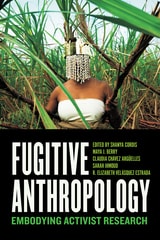
A personal, provocative, and boundary-breaking volume on the power relations that racialized, gendered, and sexualized researchers grapple with while conducting activist research.
Fugitive Anthropology is a transnational, intergenerational engagement that extends feminist theory, activist research methodologies, and the discipline of anthropology in new directions. Contributors examine the tensions that arise from conducting politically engaged, collaborative research alongside communities in struggle, in particular theorizing from the experiences of racialized women, queer, trans, and gender nonconforming researchers across distinct geographies. Essays contend with the matrices of colonial, imperial, and patriarchal violence that afflict the researchers and communities with which they seek political alignment.
Articulating an ethnographic practice grounded in Black and Indigenous political struggles and committed to collective liberation, the volume reflects on what it means to navigate violent relations of power, systemic inequities, and current onslaughts shaping field research and US academia. Ultimately, Fugitive Anthropology argues that a feminist ethos—one that embraces embodied knowledges and fugitive sensibilities—forges liberatory spaces that break from dominant masculinist frames of the “political” and challenge colonial regimes within and beyond the neoliberal university.
Functions of Victorian Culture at the Present Time
Christine L. Krueger
Ohio University Press, 2002

Fungible Life
Experiment in the Asian City of LifeAihwa Ong
Duke University Press, 2016
Fusion of the Worlds
An Ethnography of Possession among the Songhay of NigerPaul Stoller
University of Chicago Press, 1989
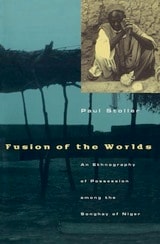
"Stoller brilliantly recreates the reality of spirit presence; hosts are what they mediate, and spirits become flesh and blood in the 'fusion' with human existence. . . . An excellent demonstration of the benefits of a new genre of ethnographic writing. It expands our understanding of the harsh world of Songhay mediums and sorcerers."—Bruce Kapferer, American Ethnologist
"A vivid story that will appeal to a wide audience. . . . The voices of individual Songhay are evident and forceful throughout the story. . . . Like a painter, [Stoller] is concerned with the rich surface of things, with depicting images, evoking sensations, and enriching perceptions. . . . He has succeeded admirably." —Michael Lambek, American Anthropologist
"Events (ceremonies and life histories) are evoked in cinematic style. . . . [This book is] approachable and absorbing—it is well written, uncluttered by jargon and elegantly structured."—Richard Fardon, Times Higher Education Supplement
"Compelling, insightful, rich in ethnographic detail, and worthy of becoming a classic in the scholarship on Africa."—Aidan Southall, African Studies Review

Futureproof
Security Aesthetics and the Management of LifeD. Asher Ghertner, Daniel M. Goldstein, and Hudson McFann, editors
Duke University Press, 2020
Contributors. Victoria Bernal, Jon Horne Carter, Alexandra Demshock, Zaire Z. Dinzey-Flores, Didier Fassin, D. Asher Ghertner, Daniel M. Goldstein, Rachel Hall, Rivke Jaffe, Ieva Jusionyte, Catherine Lutz, Alejandra Leal Martínez, Hudson McFann, Limor Samimian-Darash, AbdouMaliq Simone, Austin Zeiderman
Futures after Progress
Hope and Doubt in Late Industrial BaltimoreChloe Ahmann
University of Chicago Press, 2024
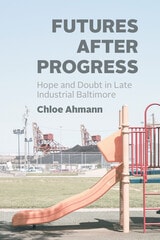
Factory fires, chemical explosions, and aerial pollutants have inexorably shaped South Baltimore into one of the most polluted places in the country. In Futures after Progress, anthropologist Chloe Ahmann explores the rise and fall of industrial lifeways on this edge of the city and the uncertainties that linger in their wake. Writing from the community of Curtis Bay, where two hundred years of technocratic hubris have carried lethal costs, Ahmann also follows local efforts to realize a good future after industry and the rifts competing visions opened between neighbors.
Examining tensions between White and Black residents, environmental activists and industrial enthusiasts, local elders and younger generations, Ahmann shows how this community has become a battleground for competing political futures whose stakes reverberate beyond its six square miles in a present after progress has lost steam. And yet—as one young resident explains—“that’s not how the story ends.” Rigorous and moving, Futures after Progress probes the deep roots of our ecological predicament, offering insight into what lies ahead for a country beset by dreams deferred and a planet on the precipice of change.