Results by title
4127 books match the query 'Science' and 235 start with f
Flora of the Guianas. Series A
Phanerogams Fascicle 24M. J. Jansen-Jacobs
Royal Botanic Gardens, Kew, 2007
Flora of the Guianas. Series A
Phanerogams Fascicle 25M. J. Jansen-Jacobs
Royal Botanic Gardens, Kew, 2007
105a. Eremolepidaceae
105b. Loranthaceae
106. Viscaceae
Flora of the Guianas. Series A
Phanerogams Fascicle 26Edited by M.J. Jansen-Jacobs
Royal Botanic Gardens, Kew, 2008
A critical, illustrated Flora of Guyana, Suriname and French Guiana, designed to treat phanerogams as well as cryptogams of the area.
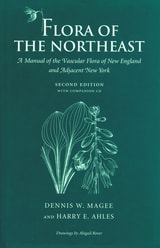
Flora of the Northeast
A Manual of the Vascular Flora of New England and Adjacent New YorkDennis W. Magee
University of Massachusetts Press, 2007
The "General Keys" section contains fourteen keys that include such groups as aquatic plants, vines, and woody plants in winter condition. For both woody and herbaceous families, the keys cover flowering as well as fruiting conditions and rely heavily on the use of vegetative features to extend the utility of the book beyond the reproductive period.The "Descriptive Flora" section includes keys to all of the genera and species, descriptions of the families and genera, and accounts of the individual species. The latter incorporates information on wetland site index, rare status, wildlife food value, food and medicinal value for humans, and poisonous or hallucinogenic properties.
This revised edition includes an updating of plant scientific names that changed since the first edition and an alphabetized list of plant families with page numbers on the inside front cover for easy reference. Additional resources will soon be available on the publisher's website, including a multiple-entry identification guide, hundreds of accompanying photographic images of genera, an illustrated glossary, and page reference numbers to genus descriptions in the manual. Presenting a wealth of scientifically accurate information in a precise and clear format, this volume serves as a reference work, as a textbook for classes in plant identification, and as a field manual.
Flore Générique des Arbres de Madagascar
George E. Schatz
Royal Botanic Gardens, Kew, 2001
Florida
A Fire SurveyStephen J. Pyne
University of Arizona Press, 2016
In this important new collection of essays on the region, Stephen J. Pyne colorfully explores the ways the region has approached fire management. Florida has long resisted national models of fire suppression in favor of prescribed burning, for which it has ideal environmental conditions and a robust culture. Out of this heritage the fire community has created institutions to match. The Tallahassee region became the ignition point for the national fire revolution of the 1960s. Today, it remains the Silicon Valley of prescription burning. How and why this happened is the topic of a fire reconnaissance that begins in the panhandle and follows Floridian fire south to the Everglades.
Florida is the first book in a multivolume series describing the nation’s fire scene region by region. The volumes in To the Last Smoke will also cover California, the Northern Rockies, the Great Plains, the Southwest, and several other critical fire regions. The series serves as an important punctuation point to Pyne’s fifty-year career with wildland fire—both as a firefighter and a fire scholar. These unique surveys of regional pyrogeography are Pyne’s way of “keeping with it to the end,” encompassing the directive from his rookie season to stay with every fire “to the last smoke.”
Florula of Mucuge
R. M. Harley and N. A. Simmons
Royal Botanic Gardens, Kew, 1986

Flow Turbulence Engineering in Transport
David S-K. Ting
The Institution of Engineering and Technology, 2026
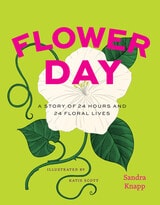
Flower Day
A Story of 24 Hours and 24 Floral LivesSandra Knapp
University of Chicago Press, 2025
Is it 4 AM or chicory o’clock? In this short book, botanist and award-winning author Sandra Knapp walks us through a day in a global garden. Each chapter of Flower Day introduces a single flower during a single hour, highlighting twenty-four different species from around the world.
Beginning at midnight in the Americas, we spot the long tubular flowers of the moonflower, Ipomoea alba; they attract a frenzy of hawk moths before the dawn arrives and the flowers wither and collapse. As day breaks, dandelions and chicory open their heads—actually made up of many individual flowers tightly packed together—and flies and bees visit to get the energy they need to lay eggs and raise their young. Later, at eight o’clock in the morning, the sun rises over the watery Amazon basin, and we meet the giant waterlily, slowly turning from white to pink and purple. Trapped inside are the beetles who feasted on the flowers during the night. That evening, at seven o’clock, we travel to the Caribbean to smell night-blooming jessamine’s powerful—some may say nauseating—sweet scent. But this member of the nightshade family isn’t just a thing of beauty—it has a reputation as both a poison and invasive species, crowding out endangered native trees.
For each hour in our flower day, celebrated artist Katie Scott has depicted these scenes with gorgeous pen-and-ink illustrations. Working closely together to narrate and illustrate these unique moments in time, Knapp and Scott have created an engaging read that is a perfect way to spend an hour or two—and a true gift for amateur botanists, gardeners, and anyone who wants to stop and appreciate the flowers.
Flowering Plants of Seychelles
S. A. Robertson
Royal Botanic Gardens, Kew, 1989
Flowering Plants
Asteraceae, Part 1Robert H. Mohlenbrock
Southern Illinois University Press, 2015
This, the first of three volumes on the aster family planned for the Illustrated Flora of Illinois series, recognizes 388 species in 119 genera, as well as 20 hybrids and 73 lesser taxa. In Asteraceae, Part 1, author Robert Mohlenbrock presents new and historic information in a clear and easy-to-read style. The volume provides an easy-to-use key to the genera and species and a complete description and nomenclatural and habitat notes for each plant, including its usefulness, if applicable. New nomenclatural combinations are shown for several species. The precise illustrations and detailed information allow for the identification of some of the most difficult to identify plants in the state—goldenrods, asters, artemisias, and fleabanes, among others. Includes 128 original illustrations by Paul Nelson.
Flowering Plants
Asteraceae, Part 2Robert H. Mohlenbrock
Southern Illinois University Press, 2019
In addition, Mohlenbrock has identified the overall range for each species in Illinois, compiled from various sources, including examinations of herbarium material and Mohlenbrock’s own field studies. The range is given from the northeastern to the northwestern extremities, south to the southwestern limit, and then eastward to the southeastern limit.
As important to amateurs interested in wildflower identification as to botanists and land planners, this second volume of Mohlenbrock’s Asteraceae is an essential addition to the esteemed Illustrated Flora of Illinois series.
Flowering Plants
Asteraceae, Part 3Robert H. Mohlenbrock
Southern Illinois University Press, 2017
In addition, Mohlenbrock has identified the overall range for each species in Illinois, compiled from various sources, including examinations of herbarium material and Mohlenbrock’s own field studies. The overall range for each species is given from the northeastern to the northwestern extremities, south to the southwestern limit, then eastward to the southeastern limit.
As important to amateurs interested in wildflower identification as to professional botanists and land planners, this last volume of Mohlenbrock’s Asteraceae is an essential addition to the esteemed Illustrated Flora of Illinois series.
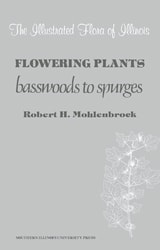
Flowering Plants
Basswoods to SpurgesRobert H. Mohlenbrock
Southern Illinois University Press, 1982
This is the fourth volume in The Illustrated Flora of Illinois devoted to dicotyledons, or dicot plants. Dicots are the greatest group of flowering plants, exceeding the monocotyledons, or monocots. Dicots produce a pair of seed leaves during germination while monocots produce only a single seed leaf.
This volume contains four orders and ten families of dicots. The orders included in this volume are Malvales, Urticales, Rhamnales, and Euphorbiales. Within the Malvales are the families Tiliaceae, Sterculiaceae, and Malvaceae. The families Ulmaceae, Moraceae, and Urticaceae comprise the Urticales. Rhamnaceae and Elaeagnaceae make up the Rhamnales. The Euphorbiales include only the Thymelaeceae and the Euphorbiaceae.
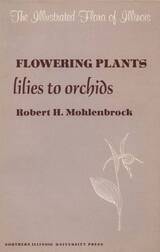
Flowering Plants
Lilies to OrchidsRobert H. Mohlenbrock
Southern Illinois University Press, 1970
A continuation of “The Illustrated Flora of Illinois” series, this volume features Illinois flowering plants. This series is designed to provide a working reference for the identification and classification of all the plant forms found in the state. This series is the first of its kind, as no other study of this sort has been undertaken in any other state, and as such, is an unparalleled contribution to its field.
In his introduction to this volume, Mr. Mohlenbrock discusses some of the terms and procedures used in the identification and classification of the plants. He outlines the life histories and morphologies of some of the representative monocots, and also illustrates some of their habits and frequencies in Illinois. Since these volumes are meant to be used by the amateur as well as the professional botanist, the methods and terms used in the text are explained. The directions for the use of the various identification keys are given so that even the novice plant lover will be able to identify the species encountered. For the uninitiated, a glossary is provided which gives definitions for all terms that might be unfamiliar.
All necessary aids to identification are included in the text itself. The identification keys make it initially possible to classify the plants according to order, family, genus and finally, species and the identifying characteristics of each descending class are given in detail. The morphology of each species is outlined, along with data on frequency of occurrence, related soil and climate conditions and history of past collections, and history of past collections. An illustration showing the more important features of the species in detail is included with the description, as well as a map indicating its geographical locations in Illinois.
This book will be invaluable to students, teachers and professionals; particularly those who are interested in observing the plants in their natural habitat. Those who use it will find it possible to obtain a broad view of changing plant forms as they relate to soil and climate variations throughout the state. And it will provide a delightful diversion for all who enjoy viewing beautiful forms in nature. A walk through the forest will become an opportunity for discovery and appreciation.
Flowering Plants
Nightshades to MistletoeRobert H. Mohlenbrock
Southern Illinois University Press, 1990
This sixth volume of dicots contains three orders and eight families. The orders included are Solanales, Campanulales, and Santalales. Within the Solanales are the families Solanaceae, Convolvulaceae, Cuscutaceae, and Polemoniaceae. The Campanulales contain only the family Campanulaceae. The Santalales include the families Celastraceae, Santalaceae, and Viscaceae. As with each volume in this series Mohlenbrock includes a complete plant description, illustrations showing diagnostic features, distribution maps, and ecological notes.
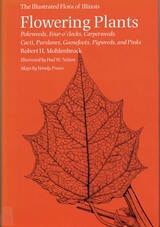
Flowering Plants
Pokeweeds, Four-o'clocks, Carpetweeds, Cacti, Purslanes, Goosefoots, Pigweeds, and PinksRobert H. Mohlenbrock
Southern Illinois University Press, 2001
Robert H. Mohlenbrock provides a definitive account of the pokeweed, four-o'clock, carpetweed, cactus, purslane, goosefoot, pigweed, and pink families in Illinois.
Flowering Plants: Pokeweeds, Four-o’clocks, Carpetweeds, Cacti, Purslanes, Goosefoots, Pigweeds, and Pinks is the fifteenth volume of the Illustrated Flora of Illinois series and the ninth devoted to dicots, or plants that have two seed-leaves, or cotyledons, upon germination. Each of the 141 plants is beautifully illustrated by Paul W. Nelson.
Nelson shows the full habitat of the plant and close-ups of various vegetative and reproductive structures that are crucial for the identification of individual species. Each illustration includes detailed drawings of the flowers, fruits, and seeds of the plant covered. Mohlenbrock provides a complete description of each species as well as a discussion of the nomenclature and habitats, and his fifty-three years of experience enable him to present little-known diagnostic features for many species. Range maps show the county distribution of each species in Illinois. Mohlenbrock includes a statement giving the overall range of each species in the United States as well as a detailed key for the identification of the species.
Flowering Plants contains many plants whose obscure flower parts make them exceedingly difficult to identify. The close-up illustrations of these parts will aid the user of the book immensely in identification of the species. Included are several species previously unknown in Illinois.
New illustrations, which include detailed drawings of the flowers, fruits, and seeds are presented for each species covered in this book. Mohlenbrock’s fifty-three years of experience enable him to present little-known diagnostic features for many species.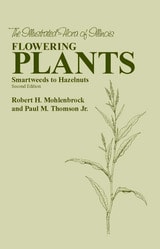
Flowering Plants
Smartweeds to HazelnutsRobert H. Mohlenbrock and Paul M. Thomson Jr.
Southern Illinois University Press, 2009
Since the publication of the first edition of Smartweeds to Hazelnuts in 1987, thirteen additional species and one hybrid have been discovered in Illinois. In addition, numerous nomenclatural changes have occurred for plants already known.
This second edition updates the status of the Polygonaceae, Hamamelidaceae, Platanaceae, Fagaceae, Betulaceae, and Corylaceae in Illinois. Each of the newly discovered species has been added and is fully illustrated. Updated nomenclature as well as Illinois distributional data are included for each species. In addition to the fourteen new plant illustrations, the appendix contains new information on the descriptions and the geographical locations of plants in the first edition, and revised identification keys.
Robert H. Mohlenbrock and Paul M. Thomson Jr. have included a complete description, illustrations showing diagnostic features, distribution maps, and ecological notes for each plant included in this volume.
This new edition will be invaluable to scholars of botany as well as laypersons interested in observing plants in their natural habitat.
Flowering Plants
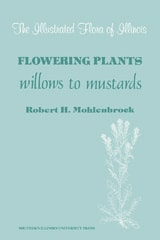
Willows to MustardsRobert H. Mohlenbrock
Southern Illinois University Press, 1980
This eighth volume in the comprehensive Illustrated Flora of Illinois series is the seventh volume devoted to flowering plants (the eighth volume is devoted to ferns) and the second treating dicotyledons, which include such well-known plants as roses, peas, mustards, mints, nightshades, milkweeds, and asters. The previous volume on dicots, Flowering Plants: Hollies to Loasas, was published in 1978.
In the present volume, Mohlenbrock includes three orders of vascular plants encompassing five families. The orders are Salicales and Tamaricales, of the Salicaceae and Tamaricaceae families, and Capparidales, of the Capparidaceae, Resedaceae, and Brassicaceae families. In all, 44 genera and 117species are treated in this volume, each species illustrated in detail.
Fluid Geographies
Water, Science, and Settler Colonialism in New MexicoK. Maria D. Lane
University of Chicago Press, 2024
Maria Lane’s Fluid Geographies traces New Mexico’s transition from a community-based to an expert-led system of water management during the pre-statehood era. To understand this major shift, Lane carefully examines the primary conflict of the time, which pitted Indigenous and Nuevomexicano communities, with their long-established systems of irrigation management, against Anglo-American settlers, who benefitted from centralized bureaucratic management of water. The newcomers’ system eventually became settled law, but water disputes have continued throughout the district courts of New Mexico’s Rio Grande watershed ever since.
Using a fine-grained analysis of legislative texts and nearly two hundred district court cases, Lane analyzes evolving cultural patterns and attitudes toward water use and management in a pivotal time in New Mexico’s history. Illuminating complex themes for a general audience, Fluid Geographies helps readers understand how settler colonialism constructed a racialized understanding of scientific expertise and legitimized the dispossession of nonwhite communities in New Mexico.
Fluid New York
Cosmopolitan Urbanism and the Green ImaginationMay Joseph
Duke University Press, 2013
Joseph considers New York's relation to the water that surrounds and defines it. Her reflections reach back to the city's heyday as a world-class port—a past embodied in a Dutch East India Company cannon recently unearthed from the rubble at the World Trade Center site—and they encompass the devastation caused by Hurricane Sandy in 2012. They suggest that New York's future lies in the reclamation of its great water resources—for artistic creativity, civic engagement, and ecological sustainability.

Food Hoarding in Animals
Stephen B. Vander Wall
University of Chicago Press, 1990
Drawings, photographs, and appendixes document complex and intrinsically interesting food-hoarding behaviors, and the bibliography of nearly 1,500 sources is itself an invaluable and unique reference.
Food Systems in an Unequal World
Pesticides, Vegetables, and Agrarian Capitalism in Costa RicaRyan E. Galt
University of Arizona Press, 2014
Food Systems in an Unequal World examines the agrochemical-dependent agriculture of Costa Rica and how its uneven regulation in export versus domestic markets affects Costa Rican vegetable farmers. Examining pesticide-dependent vegetable production within two food systems, the author shows that pesticide use is shaped by three main forces: agrarian capitalism, the governance of food systems throughout the commodity chain, and ecological dynamics driving local food production. Those processes produce unequal outcomes that disadvantage less powerful producers who have more limited choices than larger farmers, who usually have access to better growing environments and thereby can reduce pesticide use and production costs.
Food Webs
Stuart L. Pimm
University of Chicago Press, 2002
Although it was first published twenty years ago, Stuart Pimm's Food Webs remains the clearest introduction to the study of food webs. Reviewing various hypotheses in the light of theoretical and empirical evidence, Pimm shows that even the most complex food webs follow certain patterns and that those patterns are shaped by a limited number of biological processes, such as population dynamics and energy flow. Pimm provides a variety of mathematical tools for unravelling these patterns and processes, and demonstrates their application through concrete examples. For this edition, he has written a new foreword covering recent developments in the study of food webs and demonstrates their continuing importance to conservation biology.
Food Webs at the Landscape Level
Edited by Gary A. Polis, Mary E. Power, and Gary R. Huxel
University of Chicago Press, 2004
But given the complexities of food webs—think of following the flow of nutrients through the microbes, fungi, roots, worms, ants, and birds that pass over or through a single cubic meter of prairie soil—it's not difficult to see why most experiments on food-web dynamics focus on small, local habitats. Yet as this book convincingly shows, important insights come when scientists expand the temporal and spatial scope of their research to look at the ways energy, organisms, nutrients, and pollutants flow not just at the local level, but across whole landscapes—between and among food webs in a wide variety of habitats.
Paying special attention to the fertile boundaries between terrestrial, freshwater, and marine ecosystems, Food Webs at the Landscape Level not only shows what this new methodology means for ecology, conservation, and agriculture but also serves as a fitting tribute to Gary Polis and his major contributions to the field.
Food, Fiber, and the Arid Lands
Edited by William G. McGinnies, Bram J. Goldman, and Patricia G. Paylore
University of Arizona Press, 1971
The world’s dramatic awakening to the impact of ecology on the quality of human life, and a new awareness of the potential for exploitation of the desert environment—in which our particular interest lies—give rise to more thoughtful, even sober, attention to the problems faced by those aspiring only to bigger yields from crops and more protein from animals. To these very basic needs of food and fiber, we are, therefore, addressing ourselves further to a consideration of housing, educational programs, and nonagrarian resource evolution, to the end that the planners and the decision makers may have the benefit of the most intelligent and contemporary understanding possible of the cultural and social aspects of arid lands as well as the latest technological advances on a wide-ranging spectrum of scientific developments.
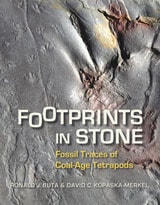
Footprints in Stone
Fossil Traces of Coal-Age TetrapodsRonald J. Buta and David C. Kopaska-Merkel
University of Alabama Press, 2016
Where ancient creatures walked—science uncovers their lasting impressions.
The Steven C. Minkin (Union Chapel) Paleozoic Footprint Site ranks among the most important fossil sites in the world today, and Footprints in Stone recounts the accidental revelation of its existence and detailed findings about its fossil record.
Currently 2,500 miles from the equator and more than 250 miles north of the Gulf of Mexico, the Minkin site was a swampy tropical forest adjacent to a tidal flat during the Coal Age or Carboniferous Period more than 300 million years ago. That fecund strand of sand and mud at the ocean’s edge teemed with the earth’s earliest reptiles as well as amphibians, fish, horseshoe crabs, spiders, jumping insects, and other fascinating organisms. Unlike dinosaurs and other large animals whose sturdy bodies left hard fossil records, most of these small, soft-bodied creatures left no concrete remains. But they did leave something else. Preserved in the site’s coal beds along with insect wings and beautifully textured patterns of primeval plants are their footprints, fossilized animal tracks from which modern paleontologists can glean many valuable insights about their physical anatomies and behaviors.
The paleontological examination of fossil tracks is now the cutting-edge of contemporary scholarship, and the Minkin site is the first and largest site of its kind in eastern North America. Discovered by a local high school science teacher, the site provides both professional and amateur paleontologists around the world with a wealth of fossil track samples along with an inspirational story for amateur explorers and collectors.
Authoritative and extensively illustrated, Footprints in Stone brings together the contributions of many geologists and paleontologists who photographed, documented, and analyzed the Minkin site’s fossil trackways. An engrossing tale of its serendipitous discovery and a detailed study of its fossil records, Footprints in Stone is a landmark publication in the history of paleontology.
For Love of Lakes
Darby Nelson
Michigan State University Press, 2011
America has more than 130,000 lakes of significant size. Ninety percent of all Americans live within fifty miles of a lake, and our 1.8 billion trips to watery places make them our top vacation choice. Yet despite this striking popularity, more than 45 percent of surveyed lakes and 80 percent of urban lakes do not meet water quality standards. For Love of Lakes weaves a delightful tapestry of history, science, emotion, and poetry for all who love lakes or enjoy nature writing. For Love of Lakes is an affectionate account documenting our species’ long relationship with lakes—their glacial origins, Thoreau and his environmental message, and the major perceptual shifts and advances in our understanding of lake ecology. This is a necessary and thoughtful book that addresses the stewardship void while providing improved understanding of our most treasured natural feature.

For and Against Method
Including Lakatos's Lectures on Scientific Method and the Lakatos-Feyerabend CorrespondenceImre Lakatos and Paul Feyerabend
University of Chicago Press, 1999
For and Against Method opens with an imaginary dialogue between Lakatos and Feyerabend, which Matteo Motterlini has constructed, based on their published works, to synthesize their positions and arguments. Part one presents the transcripts of the last lectures on method that Lakatos delivered. Part two, Feyerabend's response, consists of a previously published essay on anarchism, which began the attack on Lakatos's position that Feyerabend later continued in Against Method. The third and longest section consists of the correspondence Lakatos and Feyerabend exchanged on method and many other issues and ideas, as well as the events of their daily lives, between 1968 and Lakatos's death in 1974.
The delight Lakatos and Feyerabend took in philosophical debate, and the relish with which they sparred, come to life again in For and Against Method, making it essential and lively reading for anyone interested in these two fascinating and controversial thinkers and their immense contributions to philosophy of science.
"The writings in this volume are of considerable intellectual importance, and will be of great interest to anyone concerned with the development of the philosophical views of Lakatos and Feyerabend, or indeed with the development of philosophy of science in general during this crucial period."—Donald Gillies, British Journal for the Philosophy of Science (on the Italian edition)
"A stimulating exchange of letters between two philosophical entertainers."—Tariq Ali, The Independent
Imre Lakatos (1922-1974) was professor of logic at the London School of Economics. He was the author of Proofs and Refutations and the two-volume Philosophical Papers. Paul Feyerabend (1924-1994) was educated in Europe and held numerous teaching posts throughout his career. Among his books are Against Method; Science in a Free Society; Farewell to Reason; and Killing Time: The Autobiography of Paul Feyerabend, the last published by the University of Chicago Press.
For the Birds
Protecting Wildlife through the Naturalist GazeElizabeth Cherry
Rutgers University Press, 2019
One in five people in the United States is a birdwatcher, yet the popular understanding of birders reduces them to comical stereotypes, obsessives who only have eyes for their favorite rare species. In real life, however, birders are paying equally close attention to the world around them, observing the devastating effects of climate change and mass extinction, while discovering small pockets of biodiversity in unexpected places.
For the Birds offers readers a glimpse behind the binoculars and reveals birders to be important allies in the larger environmental conservation movement. With a wealth of data from in-depth interviews and over three years of observing birders in the field, environmental sociologist Elizabeth Cherry argues that birders learn to watch wildlife in ways that make an invaluable contribution to contemporary conservation efforts. She investigates how birders develop a “naturalist gaze” that enables them to understand the shared ecosystem that intertwines humans and wild animals, an appreciation that motivates them to participate in citizen science projects and wildlife conservation.

For the Love of Mars
A Human History of the Red PlanetMatthew Shindell
University of Chicago Press, 2023
Mars and its secrets have fascinated and mystified humans since ancient times. For the Love of Mars surveys the red planet’s place in the human imagination, beginning with ancient astrologers and skywatchers and ending in our present moment of exploration and virtual engagement.
National Air and Space Museum curator Matthew Shindell describes how historical figures across eras and around the world have made sense of this mysterious planet. We meet Mayan astrologer priests who incorporated Mars into seasonal calendars and religious ceremonies, Babylonian astrologers who discerned bad omens, figures of the Scientific Revolution who struggled to comprehend Mars as a world, Victorian astronomers who sought signs of intelligent life, and twentieth- and twenty-first-century scientists who have established a technological presence on the planet’s surface. Along the way, we encounter writers and artists from each of these periods who took readers and viewers along on imagined journeys to Mars.
By focusing on the diverse human stories behind the telescopes and behind the robots we know and love, Shindell shows how Mars exploration has evolved in ways that have also expanded knowledge about other facets of the universe. Captained by an engaging and erudite expert, For the Love of Mars is a captivating voyage through time and space for anyone curious about Curiosity and the red planet.
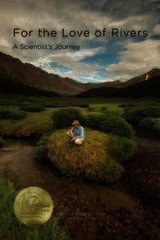
For the Love of Rivers
A Scientist's JourneyKurt D. Fausch
Oregon State University Press, 2015
In For the Love of Rivers, stream ecologist Kurt Fausch draws readers across the reflective surface of streams to view and ponder what is beneath, and how they work. While celebrating their beauty and mystery, he uses his many years of experience as a field biologist to explain the underlying science connecting these aquatic ecosystems to their streamside forests and the organisms found there—including humans.
For the Love of Rivers introduces readers to the life and work of Shigeru Nakano, a pioneering river ecologist who inspired other scientists around the world with his innovative research on stream-forest connections. Fausch takes readers along as he journeys to Japan, where he awakens to an unfamiliar culture, to Nakano, and his research.
Nakano’s life was abruptly ended in a tragic field accident, and his death was deeply mourned. Fausch joins Japanese and American colleagues to continue Nakano’s research legacy, learn everything they can about the effects that humans have on rivers, fish, and their intricate links with riparian zones, and share this knowledge with others.
More than a book about stream ecology, For the Love of Rivers is a celebration of the interconnectedness of life. It is an authoritative and accessible look at the science of rivers and streams, but it also ponders the larger questions of why rivers are important to humans, why it is in our nature to want to be near them, and what we can do now to ensure the future of these essential ecosystems.

Foraging for Survival
Yearling Baboons in AfricaStuart A. Altmann
University of Chicago Press, 1998
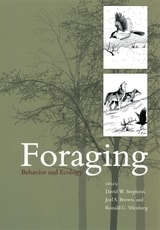
Foraging
Behavior and EcologyEdited by David W. Stephens, Joel S. Brown, and Ronald C. Ydenberg
University of Chicago Press, 2007
Foraging is the first comprehensive review of the topic in more than twenty years. A monumental undertaking, this volume brings together twenty-two experts from throughout the field to offer the latest on the mechanics of foraging, modern foraging theory, and foraging ecology. The fourteen essays cover all the relevant issues, including cognition, individual behavior, caching behavior, parental behavior, antipredator behavior, social behavior, population and community ecology, herbivory, and conservation. Considering a wide range of taxa, from birds to mammals to amphibians, Foraging will be the definitive guide to the field.

Forbidden Knowledge
Medicine, Science, and Censorship in Early Modern ItalyHannah Marcus
University of Chicago Press, 2020
Forbidden Knowledge explores the censorship of medical books from their proliferation in print through the prohibitions placed on them during the Counter-Reformation. How and why did books banned in Italy in the sixteenth century end up back on library shelves in the seventeenth? Historian Hannah Marcus uncovers how early modern physicians evaluated the utility of banned books and facilitated their continued circulation in conversation with Catholic authorities.
Through extensive archival research, Marcus highlights how talk of scientific utility, once thought to have begun during the Scientific Revolution, in fact, began earlier, emerging from ecclesiastical censorship and the desire to continue to use banned medical books. What’s more, this censorship in medicine, which preceded the Copernican debate in astronomy by sixty years, has had a lasting impact on how we talk about new and controversial developments in scientific knowledge. Beautiful illustrations accompany this masterful, timely book about the interplay between efforts at intellectual control and the utility of knowledge.
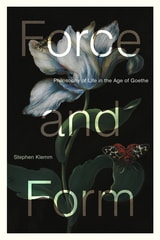
Force and Form
Philosophy of Life in the Age of GoetheStephen Klemm
Bucknell University Press, 2027
This book offers a bold rethinking of how modern ideas of life, nature, and subjectivity took shape in late-eighteenth- and early-nineteenth-century German thought. Moving beyond familiar narratives based on Kantian autonomy or Romantic irrationalism, it uncovers a vitalist tradition stretching from Herder to Schiller and Goethe, one that understood nature as dynamic, self-forming, and internally animated by life-force. Drawing on philosophy, the life sciences, and aesthetics, this innovative study reveals how these thinkers challenged mechanistic models of matter and resisted strict divisions between mind and nature. In doing so, they developed a historically contingent and embodied concept of subjectivity in which reason emerges from natural, cultural, and physiological processes rather than standing outside them. By situating this tradition within debates about epigenesis, form, and development, the book not only reshapes our understanding of German intellectual history but also sheds new light on contemporary debates about naturalism, posthumanism, and theories of life.
Published by Bucknell University Press. Distributed worldwide by Rutgers University Press.

Forensics Under Fire
Are Bad Science and Dueling Experts Corrupting Criminal Justice?Jim Fisher
Rutgers University Press, 2008
Television shows like CSI, Forensic Files, and The New Detectives make it look so easy. A crime-scene photographer snaps photographs, a fingerprint technician examines a gun, uniformed officers seal off a house while detectives gather hair and blood samples, placing them carefully into separate evidence containers. In a crime laboratory, a suspect's hands are meticulously examined for gunshot residue. An autopsy is performed in order to determine range and angle of the gunshot and time-of-death evidence. Dozens of tests and analyses are performed and cross-referenced. A conviction is made. Another crime is solved. The credits roll.
The American public has become captivated by success stories like this one with their satisfyingly definitive conclusions, all made possible because of the wonders of forensic science. Unfortunately, however, popular television dramas do not represent the way most homicide cases in the United States are actually handled. Crime scenes are not always protected from contamination; physical evidence is often packaged improperly, lost, or left unaccounted for; forensic experts are not always consulted; and mistakes and omissions on the autopsy table frequently cut investigations short or send detectives down the wrong investigative path.
In Forensics Under Fire, Jim Fisher makes a compelling case that these and other problems in the practice of forensic science allow offenders to escape justice and can also lead to the imprisonment of innocent people. Bringing together examples from a host of high-profile criminal cases and familiar figures, such as the JonBenet Ramsey case and Dr. Henry Lee who presented physical evidence in the O. J. Simpson trial, along with many lesser known but fascinating stories, Fisher presents daunting evidence that forensic science has a long way to go before it lives up to its potential and the public's expectations.
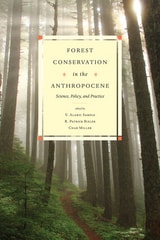
Forest Conservation in the Anthropocene
Science, Policy, and PracticeV. Alaric Sample
University Press of Colorado, 2016
Forest Conservation in the Anthropocene provides thought-provoking insight into the ongoing environmental crises that climate change is generating and raises critical questions about how public and private land managers in North America will adapt to the climatological disruptions that are already transforming the ecological structures of these forests.
In this pathbreaking anthology, a team of leading environmental researchers probes the central dilemmas that ecologists, forest land managers, state and federal agencies, and grassroots organizations are confronting—and will continue to confront—in the coming century. Each chapter examines strategies that are currently being tested across the country as scientists, citizen-scientists, policy makers, academics, and activists work to grasp their options and opportunities for a future that will be shaped by ongoing environmental upheaval.
Successful adaptation to the challenges of climate change requires a transdisciplinary perspective. Forest Conservation in the Anthropocene provides a compelling set of arguments and case studies that underscores the need for innovative policies and energetic actions.
Contributors: Craig D. Allen, Mark Anderson, Susan Beecher, R. Travis Belote, Timothy J. Brown, Anne A. Carlson, Tim Caro, Grace K. Charles, Dave Cleaves, Dena J. Clink, Ayesha Dinshaw, R. Kasten Dumroese, Jonas Epstein, Alexander M. Evans, Todd Gartner, Jessica E. Halofsky, Nels Johnson, Linda A. Joyce, Paige Lewis, Laura Falk McCarthy, Heather McGray, Constance I. Millar, James Mulligan, Chadwick Dearing, David L. Peterson, Will Price, Janine M. Rice, Jason Riggio, Tania Schoennagel, Mark L. Shaffer, Curt Stager, Scott L. Stephens, Thomas W. Swetnam, Gary M. Tabor, Christopher Topik, Monica G. Turner, Thomas T. Veblen, Alexandra M. Weill, Anthony L. Westerling, Carolyn Whitesell, Mary I. Williams
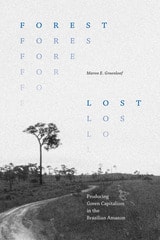
Forest Lost
Producing Green Capitalism in the Brazilian AmazonMaron E. Greenleaf
Duke University Press, 2024
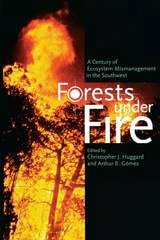
Forests under Fire
A Century of Ecosystem Mismanagement in the SouthwestEdited by Christopher J. Huggard and Arthur R. Gómez
University of Arizona Press, 2001
In this book, leading environmental historians show us what has been happening to these fragile woodlands. Taking us from lumber towns to Indian reservations to grazing lands, Forests under Fire reveals the interaction of Anglos, Hispanics, and Native Americans with the forests of the American Southwest. It examines recent controversies ranging from red squirrel conservation on Mt. Graham to increased tourism in our national forests. These case studies offer insights into human-forest relationships in places such as the Coconino National Forest, the Vallecitos Sustained Yield Unit, and the Gila Wilderness Area while also drawing on issues and concerns about similar biospheres in other parts of the West.
Over the past century, forest management has evolved from a field dominated by the "conservationist" perspective—with humans exploiting natural resources-to one that emphasizes biocentrism, in which forests are seen as dynamic ecosystems. Yet despite this progressive shift, the assault on our forests continues through overgrazing of rangelands, lumbering, eroding mountainsides, fire suppression, and threats to the habitats of endangered species. Forests under Fire takes a closer look at the people calling the shots in our national forests, from advocates of timber harvesting to champions of ecosystem management, and calls for a reassessment of our priorities—before our forests are gone.
Contents
Introduction: Toward a Twenty-First-Century Forest Ecosystem Management Strategy / Christopher J. Huggard
Industry and Indian Self-Determination: Northern Arizona’s Apache Lumbering Empire, 1870-1970 / Arthur R. Gómez
A Social History of McPhee: Colorado’s Largest Lumber Town / Duane A. Smith
The Vallecitos Federal Sustained-Yield Unit: The (All Too) Human Dimension of Forest Management in Northern New Mexico, 1945-1998 / Suzanne S. Forrest
Grazing the Southwest Borderlands: The Peloncillo-Animas District of the Coronado National Forest in Arizona and New Mexico, 1906-1996 / Diana Hadley
America’s First Wilderness Area: Aldo Leopold, the Forest Service, and the Gila of New Mexico, 1924-1980 / Christopher J. Huggard
"Where There’s Smoke": Wildfire Policy and Suppression in the American Southwest / John Herron
Struggle in an Endangered Empire: The Search for Total Ecosystem Management in the Forests of Southern Utah, 1976-1999 / Thomas G. Alexander
Biopolitics: A Case Study of Political Influence on Forest Management Decisions, Coronado National Forest, Arizona, 1980s-1990s / Paul W. Hirt
Epilogue: Seeing the Forest Not for the Trees: The Future of Southwestern Forests in Retrospect / Hal K. Rothman

Forever Open, Clear, and Free
The Struggle for Chicago's LakefrontLois Wille
University of Chicago Press, 1991
Illustrated with historic and contemporary photographs, Wille's book tells how Chicago's lakefront has survived a century of development. The story serves as a warning to anyone who thinks the struggle for the lakefront is over, or who takes for granted the beauty of its public beaches and parks.
"A thoroughly fascinating and well-documented narrative which draws the reader into the sights, smells and sounds of Chicago's story. . . . Everyone who cares about the development of land and its conservation will benefit from reading Miss Wille's book."—Daniel J. Shannon, Architectural Forum
"Not only good reading, it is also a splendid example of how to equip concerned citizens for their necessary participation in the politics of planning and a more livable environment."—Library Journal
Form and Meaning in Language
Volume I, Papers on Semantic RolesCharles Fillmore
CSLI, 2003

Formal Methods and Empirical Practices
Conversations with Patrick SuppesRoberta Ferrario and Viola Schiaffonati
CSLI, 2012
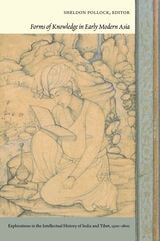
Forms of Knowledge in Early Modern Asia
Explorations in the Intellectual History of India and Tibet, 1500-1800Sheldon Pollock, ed.
Duke University Press, 2011
Contributors. Muzaffar Alam, Imre Bangha, Aditya Behl, Allison Busch, Sumit Guha, Janet Gyatso, Matthew T. Kapstein, Françoise Mallison, Sheldon Pollock, Velcheru Narayana Rao, Kurtis R. Schaeffer, Sunil Sharma, David Shulman, Sanjay Subrahmanyam, Mohamad Tavakoli-Targhi
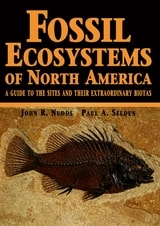
Fossil Ecosystems of North America
A Guide to the Sites and Their Extraordinary BiotasJohn R. Nudds and Paul A. Selden
University of Chicago Press, 2008
Fossil Ecosystems of North America describes these and eleven other sites that range across the continent.
Fossil Lake and the Rise of Modern Birds
Snapshots from Early Avian EvolutionLance Grande, Daniel T Ksepka, and Gerald Mayr
University of Chicago Press, 2027
Lavishly produced with color fossil photographs throughout, the first comprehensive summary of findings at one of the world’s best fossil bird localities, offering profound insight into early avian evolution after the end-of-Cretaceous extinction event.
What is today a high mountain desert in southwestern Wyoming was, 52 million years ago, a magnificent subtropical lake system. Part of the famed Green River Formation, the limestone layers of this region’s Fossil Lake provide an unparalleled record of life in the Early Eocene of North America. Evolutionary biologist Lance Grande has spent much of his career collecting and studying the beautiful and diverse assemblage of fossils from this locality. Since his 2013 book, The Lost World of Fossil Lake, researchers have uncovered many new fossil bird specimens—often stunningly preserved skeletons, sometimes even including feathers—and benefited from significant advances in our understanding of avian evolution. Their findings help to illuminate the early days of bird life on Earth.
In this volume, Grande and his collaborators—paleornithologists Daniel T. Ksepka and Gerald Mayr—explore these birds of Fossil Lake, where various researchers have formally named and described thirty avian species. The authors also present an additional twenty possible new species awaiting further study and formal review, birds that may soon be added to that list. Fossil Lake and the Rise of Modern Birds then places these avian ancestors within the global context of other fossil birds. Like Grande’s previous publications, this comprehensive work features stunning imagery, including nearly two hundred detailed fossil photographs—fifty that have never appeared elsewhere.
Whether you are an ornithologist, paleontologist, evolutionary biologist, or amateur fossil enthusiast interested in the early evolutionary diversification of modern birds, this book is a treasure.
Fossil Vertebrates of Alabama
John T. Thurmond and Douglas E. Jones
University of Alabama Press, 1981
The only comprehensive description of the fossil-vertebrate content of this important part of the world.
Fossils in the Making
Vertebrate Taphonomy and PaleoecologyAnna K. Behrensmeyer and Andrew P. Hill
University of Chicago Press, 1988
"Taphonomy is plainly here to stay, and this book makes a first class introduction to its range and appeal."—Anthony Smith, Interdisciplinary Science Reviews
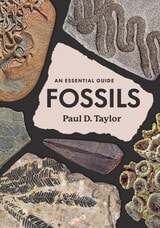
Fossils
An Essential GuidePaul D. Taylor
University of Chicago Press, 2025
Ancient Earth seems like an alien world. But the fossil record can help reveal the mysteries of the organisms that have lived on our planet since its formation some 4,600 million years ago. In this engaging and beautifully illustrated book, world-renowned paleontologist Paul D. Taylor provides a comprehensive guide to all aspects of fossils to tell the story of life on Earth.
Taylor begins with the basics: how fossils form, how they mark geological time, and what they tell us about the origins of life and major evolutionary events like the Cambrian Explosion. He then shows the oldest fossils—single-celled bacteria in amazing, three-billion-year-old microbial rock structures—before introducing the first animals in the fossil record. From fishes to amphibians, reptiles, and mammals, we meet these animal fossils in an appropriate evolutionary parade. Next, we imagine plants long past, charting the evolution of this kingdom and learning how ephemeral botanical remains can become permanent records. While comprehensive in his coverage of fossil groups and ages, Taylor pays particular attention to specimens fossil hunters are most likely to encounter, like crinoids and the iconic ammonites. Throughout, he introduces us to fascinating fossil folklore—like the idea that ammonites are the petrified remains of coiled snakes—and helps us distinguish true fossils from fakes.
With stunning color images of many original specimens from the collections of London’s Natural History Museum, Fossils is an essential introduction, connecting life on Earth today to the ancient past.

Foundations and Methods from Mathematics to Neuroscience
Essays Inspired by Patrick SuppesEdited by Colleen E Crangle, Adolfo García de la Sienra, and Helen E. Longino
CSLI, 2014