Results by title
5550 books match the query 'Biography & Autobiography' and 222 start with f
Frank O'Hara
The Poetics of CoterieLytle Shaw
University of Iowa Press, 2006
Frankie Manning
Ambassador of Lindy HopFrankie Manning
Temple University Press, 2008
In the early days of swing dancing, Frankie Manning stood out for his moves and his innovative routines; he created the "air step" in the Lindy hop, a dance that took the U.S. and then the world by storm. In this fascinating autobiography, the choreographer and Tony Award winner (Black and Blue) Frankie Manning recalls how his first years of dancing as a teenager at Harlem's Savoy Ballroom led to his becoming chief choreographer and a lead dancer for Whitey's Lindy Hoppers, a group that appeared on Broadway, in Hollywood musicals, and on stages around the globe. Manning brings the Swing Era vividly back to life with his recollections of the crowded ballrooms, and of Lindy hoppers trying to outdo each other in spectacular performances. His memories of the many headliners and film stars, as well as uncelebrated dancers with whom he shared the stage, create a unique portrait of an era in which African American performers enjoyed the spotlight if not a star's prerogatives and salary.
With collaborator Cynthia Millman, Manning traces the evolution of swing dancing from its early days in Harlem through the post-World War II period, until it was eclipsed by rock 'n' roll and then disco. When swing made a comeback, Manning's 30-year hiatus ended. He has been performing, choreographing, and teaching ever since.
Franklin D. Roosevelt
Road to the New Deal, 1882-1939Roger Daniels
University of Illinois Press, 2015
Franklin D. Roosevelt
The War Years, 1939-1945Roger Daniels
University of Illinois Press, 2016
Franklin in His Own Time
A Biographical Chronicle of His Life, Drawn from Recollections, Interviews, and Memoirs by Family, Friends, and AssociatesKevin J. Hayes
University of Iowa Press, 2011
@font-face { font-family: "Courier New";}@font-face { font-family: "Times";}@font-face { font-family: "Cambria";}@font-face { font-family: "Palatino";}p.MsoNormal, li.MsoNormal, div.MsoNormal { margin: 0in 0in 0.0001pt; font-size: 12pt; font-family: "Times New Roman"; }div.Section1 { page: Section1; }
In his time Benjamin Franklin (1706–1790) was the most famous American in the world. Even those personally unacquainted with the man knew him as the author of Poor Richard’s Almanack, as a pioneer in the study of electricity and a major figure in the American Enlightenment, as the creator of such life-changing innovations as the lightning rod and America’s first circulating library, and as a leader of the American Revolution. His friends also knew him as a brilliant conversationalist, a great wit, an intellectual filled with curiosity, and most of all a master anecdotist whose vast store of knowledge complemented his conversational skills. In Franklin in His Own Time, by reprinting the original documents in which those anecdotes occur, Kevin Hayes and Isabelle Bour restore those oft-told stories to their cultural contexts to create a comprehensive narrative of his life and work.
The thirty-five recollections gathered in Franklin in His Own Time form an animated, collaborative biography designed to provide a multitude of perspectives on the “First American.” Opening with an account by botanist Peter Kalm showing that Franklin was doing all he could to encourage the development of science in North America, it includes on-the-spot impressions from Daniel Fisher’s diary, the earliest surviving interview with Franklin, recollections from James Madison and Abigail Adams, Manasseh Cutler’s detailed description of the library at Franklin Court, and extracts from Alexander Hamilton’s unvarnished Minutes of the Tuesday Club. Franklin’s political missions to Great Britain and France, where he took full advantage of rich social and intellectual opportunities, are a source of many reminiscences, some published here in new translations. Genuine memories from such old friends as Thomas Jefferson and John Adams, as opposed to memories influenced by the Autobiography, clarify Franklin’s reputation. Robert Carr may have been the last remaining person who knew Franklin personally, and thus his recollections are particularly signific
Frankly Speaking
The Extraordinary Life of United States Senator Frank R. LautenbergBonnie Lautenberg
Rutgers University Press, 2024
Told by one of the people who knew him best, his widow Bonnie, Frankly Speaking reveals the political strategies that made Lautenberg one of the Senate’s most powerful advocates for the health and safety of America’s citizens. He championed seemingly minor, unglamorous reforms that made a big difference to everyday lives, from raising the national drinking age to preventing domestic abusers from purchasing guns. These campaigns earned him powerful enemies in the alcohol, tobacco, and firearms industries, and he was subjected to some of the most brutal campaign mudslinging in American history. Yet, as this inspiring biography reveals, New Jersey’s longest-serving senator was not afraid to take big political risks if it meant standing up for his principles, whether that meant opposing the Iraq War or protecting LGBTQ and women’s rights.
Frantz Fanon
Philosopher of the BarricadesPeter Hudis
Pluto Press, 2015
With FranzFanon, Peter Hudis presents a penetrating critical biography of the activist’s life and work. Countering the prevailing belief that Fanon’s contributions to modern thought can be wholly defined by an advocacy of violence, Hudis presents his work instead as an integrated whole, showing that its nuances—and thus its importance—can only be appreciated in light of Fanon’s efforts to fuse philosophical theory and actual practice. By taking seriously Fanon’s philosophical and psychological contributions, as well as his political activism, Hudis presents a powerful and perceptive new view of the man and his achievement.
This brief, richly perceptive introduction to Fanon will give new force to his ideas, his life, and his example for people engaged in radical political theory and taking action against oppression around the world today.
Frantz Fanon
Toward a Revolutionary HumanismChristopher J. Lee
Ohio University Press, 2015
Psychiatrist, philosopher, and revolutionary, Frantz Fanon is one of the most important intellectuals of the twentieth century. He presented powerful critiques of racism, colonialism, and nationalism in his classic books, Black Skin, White Masks (1952) and The Wretched of the Earth (1961). This biography reintroduces Fanon for a new generation of readers, revisiting these enduring themes while also arguing for those less appreciated—namely, his anti-Manichean sensibility and his personal ethic of radical empathy, both of which underpinned his utopian vision of a new humanism. Written with clarity and passion, Christopher J. Lee’s account ultimately argues for the pragmatic idealism of Frantz Fanon and his continued importance today.
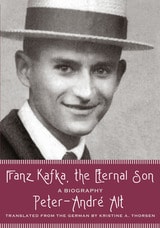
Franz Kafka, the Eternal Son
A BiographyPeter-André Alt, Translated from the German by Kristine A. Thorsen
Northwestern University Press, 2018
Franz Kafka remains one of the most influential writers of the twentieth century. His novels, stories, and letters are still regarded today as the epitome of the dark, fascinating, and uncanny, a model of the modernist aesthetic. Peter-André Alt’s landmark biography, Franz Kafka, the Eternal Son, recounts and explores Kafka’s life and literary work throughout the cultural and political upheavals of central Europe.
Alt’s biography explores Franz Kafka’s own view of life and writing as a unity that shaped his identity. He locates links and echoes among the author’s work, life, and surroundings, situating him within the traditions of Prague's German literature, modernity, psychoanalysis, and philosophy as well as within its Jewish culture, arts, theater, and intellectual tradition.
In this biographical tour de force, Kafka emerges as an observant flaneur and wistful loner, an anxious ascetic, an ecstatic and skeptic, a specialist in terror, and a master of irony. Alt masterfully illuminates Kafka's life not as source material but as a mirror of his literary genius. Readers begin to see Kafka’s unforgettable novels and stories as shards reflecting the life of their creator.
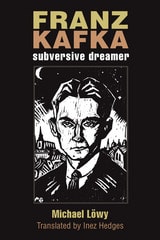
Franz Kafka
Subversive DreamerMichael Löwy, translated by Inez Hedges
University of Michigan Press, 2016
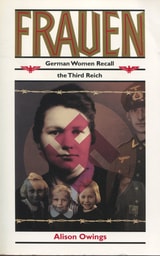
Frauen
German Women Recall the Third ReichOwings, Alison
Rutgers University Press, 1995
What were the women of Germany doing during the Third Reich? What were they thinking? And what do they have to say a half century later?
In Frauen we hear their voices––most for the first time. Alison Owings interviewed and here records the words of twenty-nine German women who were there: Working for the Resistance. Joining the Nazi Party. Outsmarting the Gestapo. Disliking a Jewish neighbor. Hiding a Jewish friend. Witnessing "Kristallnacht." Witnessing the firebombing of Dresden. Shooting at Allied planes. Welcoming Allied troops. Being a prisoner. And being a guard. The women recall their own and others' enthusiasm, doubt, fear, fury, cowardice, guilt, and anguish.
Alison Owings, in her pursuit of such memories, was invited into the homes of these women. Because she is neither Jewish nor German, and because she speaks fluent colloquial German, many of the women she interviewed felt comfortable enough with her to unlock the past. What they have to say will surprise Americans, just as they surprised the women themselves.
Not since Marcel Ophuls's controversial film The Sorrow and the Pity have we been on such intimate terms with "the enemy." In this case, the story is that of the women, those who did not make policy but were forced to participate in its effects and to witness its results. What they did and did not do is not just a reflection on them and their country––it also leads us to question what actions we might have taken in their place. The interviews do not allow for easy, smug answers.
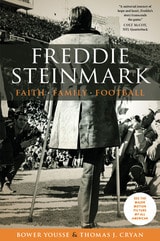
Freddie Steinmark
Faith, Family, FootballBy Bower Yousse and Thomas J. Cryan
University of Texas Press, 2015
Freddie Steinmark tells the story of a legendary University of Texas football player whose courage on the field and in battling cancer still inspires the Longhorn nation.
Freddie Steinmark started at safety for the undefeated University of Texas Longhorns in 1969. In the thrilling “Game of the Century,” a come-from-behind victory against Arkansas that ensured Texas the national championship, Steinmark played with pain in his left leg. Two days later, X-rays revealed a bone tumor so large that it seemed a miracle Steinmark could walk, let alone play football. Within a week of the Arkansas game, his leg was amputated.
A gritty, undersized player, Steinmark had quickly become a fan favorite at Texas. What he endured during the Longhorns’ memorable 1969 season, and what he encountered afterward, captivated not only Texans but the country at large. Americans watched closely as Steinmark confronted life’s ultimate challenge, and his openness during his battle against savage odds helped reframe the national conversation surrounding cancer and the ongoing race for a cure.
Written with unfettered access to the Steinmark family and archives, Freddie Steinmark: Faith, Family, Football is the exploration of a brief but full life, one that began humbly but ended on a grand stage. It is a fitting tribute to a legendary Longhorn whose photograph, emblazoned with the word “Heart,” flashes on the Freddie Steinmark Scoreboard’s Jumbotron prior to each home football game in UT’s Darrell K Royal–Texas Memorial Stadium at Joe Jamail Field.

Frederic Manning
An Unfinished LifeJonathan L. Marwil
Duke University Press, 1988
How did a classical and noncommercial author come to write a grittily realistic war novel? Manning fled from the attendant publicity, avoiding the limelight assiduously and successfully. Marwil's search for the answer to this riddle and for the details of his life (in some ways the search is as interesting and revealing as the results) and his account of Manning's life and work reveal a great deal of the intellectual and social world of Edwardian and Georgian England.
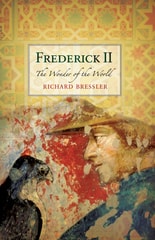
Frederick II
The Wonder of the WorldRichard Bressler
Westholme Publishing, 2010
One of the most remarkable personalities of the Middle Ages, Frederick II of Hohenstaufen was born in 1194. His parents—the reigning Holy Roman Emperor and the heiress to the Kingdom of Sicily—belonged to two of the leading ruling families in medieval Europe. The lands controlled by these two families extended from southern Denmark to Sicily, from modern Belgium to Bohemia. Frederick II eventually ruled the joint kingdom, and the story of how he gained and maintained this status is the primary thread running through his life. As a child in Sicily, Frederick was a ward of Pope Innocent III. When he came of age, he sought to be crowned Holy Roman Emperor but only succeeded in 1220 after many years of negotiations with the Vatican, which was reluctant to give up or share power. Resenting the influence and pressure from the papacy, Frederick became its leading opponent. As a result, the new pope, Gregory IX, condemned Frederick as the Antichrist. However, Frederick believed he was a sincere Christian, and led the Sixth Crusade to the Holy Land while under excommunication.
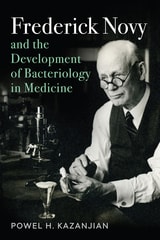
Frederick Novy and the Development of Bacteriology in Medicine
Kazanjian, Powel H
Rutgers University Press, 2017
In Frederick Novy and the Development of Bacteriology in Medicine, medical historian, medical researcher, and clinician Powel H. Kazanjian uses Novy’s archived letters, laboratory notebooks, lecture notes, and published works to examine medical research and educational activities at the University of Michigan and other key medical schools during a formative period in modern medical science.
Frederik Pohl
Michael Page
University of Illinois Press, 2015

Fredrik Barth
An Intellectual BiographyThomas Hylland Eriksen
Pluto Press, 2015
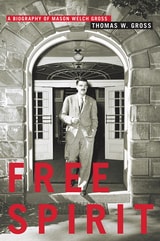
Free Spirit
A Biography of Mason Welch GrossThomas W. Gross
Rutgers University Press, 2022
Free Spirit explores how Gross helped reshape Rutgers from a sleepy college into a world-renowned public research university. It also reveals how he steered the university through the tumult of the Red Scare, civil rights era, and the Vietnam War by taking principled stands in favor of both racial equality and academic freedom. This biography tells the story of how, from an early age, Gross came to believe in the importance of doing what was right, even when the backlash took a toll on his own health.
Written by his youngest son Thomas, this book offers a uniquely well-rounded portrait of Gross as both a public figure and a private person. Covering everything from his service in World War II to his stints as a game-show personality, Free Spirit introduces the reader to a remarkable academic leader.
Free-Market Socialists
European Émigrés Who Made Capitalist Culture in America, 1918–1968Joseph Malherek
Central European University Press, 2022
The Hungarian artist-designer László Moholy-Nagy, the Austrian sociologist Paul Lazarsfeld, and his fellow Viennese Victor Gruen—an architect and urban planner—made careers in different fields. Yet they shared common socialist politics, Jewish backgrounds, and experience as refugees from the Nazis. This book tells the story of their intellectual migration from Central Europe to the United States, beginning with the collapse of the Habsburg Empire, and moving through the heady years of newly independent social-democratic republics before the descent into fascism. It follows their experience of exile and adaptation in a new country, and culminates with a surprising outcome of socialist thinking: the opening of the first fully enclosed, air-conditioned suburban shopping center in the United States. Although the American culture they encountered ostensibly celebrated entrepreneurial individualism and capitalistic “free enterprise,” Moholy-Nagy, Lazarsfeld, and Gruen arrived at a time of the progressive economic reforms of the New Deal and an extraordinary open-mindedness about social democracy. This period of unprecedented economic experimentation nurtured a business climate that, for the most part, did not stifle the émigrés’ socialist idealism but rather channeled it as the source of creative solutions to the practical problems of industrial design, urban planning, and consumer behavior.
Based on a vast array of original sources, Malherek interweaves the biographies of these three remarkable personalities and those of their wives, colleagues, and friends with whom they collaborated on innovative projects that would shape the material environment and consumer culture of their adopted home. The result is a narrative of immigration and adaptation that challenges the crude binary of capitalism and socialism with a story of creative economic hybridization.

Freedom In Our Lifetime
The Collected Writings Of Anton Muziwakhe LembedeAnton Muziwakhe Lembede
Ohio University Press, 1996
When a group of young political activists met in 1944 to launch the African National Congress Youth League, it included the nucleus of a remarkable generation of leaders who forged the struggle for freedom and equality in South Africa for the next half century: Nelson Mandela, Oliver Tambo, Walter Sisulu, Jordan Ngubane, Ellen Kuzwayo, Albertina Smith, A. P. Mda, Dan Tloome, and David Bopape. It was Anton Lembede, however whom they chose as their first president.
Lembede, who had just begun practicing law in Johannesburg, was known for his sharp intellect, fiery personality, and unwavering commitment to the struggle at hand. The son of farm laborers from the district of Georgedale, Natal, Lembede had worked tirelessly to put himself through school and college, and then to qualify for the bachelor of laws degree. When he began law practice in 1943, he had also earned the respect of his fellows, not only for his intellectual achievements (which were many), but also for his dedication to the cause of freedom in South Africa. “I am,” he explained, “Africa’s own child.”
His untimely death in 1947 at the age of 33 sent a wave of grief through the Congress Youth, who had looked to him for moral as well as political leadership. With the publication of Freedom In Our Lifetime, the editors acknowledge Lembede’s early contribution to the freedom movement, in particular his passionate and eloquent articulation of the African-centered philosophy he called “Africanism.”
Freedom Train North
Stories of the Underground Railroad in WisconsinJulia Pferdehirt
Wisconsin Historical Society Press, 2011
People running from slavery made many hard journeys to find freedom—on steamboats and in carriages, across rivers and in hay-covered wagons. Some were shot at. Many were chased by slave catchers. Others hid in tunnels and secret rooms. But these troubles were worth it for the men, women, and children who eventually reached freedom. Freedom Train North tells the stories of fugitive slaves who found help in Wisconsin. Young readers (ages 7 to 12) will meet people like Joshua Glover, who was broken out of jail by a mob of freedom workers in Milwaukee, and Jacob Green, who escaped five times before he finally made it to freedom.
This compelling book also introduces stories of the strangers who hid fugitive slaves and helped them on their way, brave men and women who broke the law to do what was right. As both a historian and a storyteller, author Julia Pferdehirt shares these exciting and important stories of a dangerous time in Wisconsin’s past. Using manuscripts, letters, and artifacts from the period, as well as stories passed down from one generation to another, Pferdehirt takes us deep into our state’s past, challenging and inspiring us with accounts of courage and survival.
Freedom's Champion
Elijah LovejoyElijah Lovejoy. Revised by Paul Simon. Foreword by Clarence Page
Southern Illinois University Press, 1994
In this revised edition of his earlier biography, Paul Simon provides an inspiring account of the life and work of Elijah Lovejoy, an avid abolitionist in the 1830s and the first martyr to freedom of the press in the United States.
Lovejoy was a native New Englander, the son of a Congregational minister. He came to the Midwest in 1827 in pursuit of a teaching career and succeeded in running his own school for two years in St. Louis. Teaching failed to challenge Lovejoy, however, so he bought a half interest in the St. Louis Times and became its editor. In 1832, after experiencing a religious conversion, he returned east to study for the ministry at Princeton Theological Seminary. After his graduation, Lovejoy was called back to St. Louis by a group of Christian businessmen to serve as the editor of a new religious newspaper, the Observer, promoting religion, morality, and education. It was through this forum that Lovejoy took an ever stronger stance against slavery.
In the slave state of Missouri, such a view was not onlyunpopular, but in the eyes of many, criminal. As a result, Lovejoy and his family suffered repeated persecution and acts of violence from angry mobs. In July 1836, in hopes of finding a more tolerant community in a "free" state, he moved both his printing press and his family across the Mississippi River to Alton, Illinois.
The move to Alton was a fateful one. Lovejoy’s press was dismantled and thrown into the river by a mob on the night of its arrival. Lovejoy ordered a new printing press, and it, too, was destroyed eleven months later. A determined and dedicated man, Lovejoy ordered a third press, and city officials took special precautions to ensure its safety after delivery. Nevertheless, an organized and angry mob rolled this third press, still in its crate, into the river exactly one month after Lovejoy’s second press had been destroyed. A fourth press, housed in a large stone warehouse and guarded by Lovejoy and his supporters, met the same fate but only after a drunken mob had killed Lovejoy himself. He was buried two days later, 9 November 1837, on his thirty-fifth birthday. No one was ever convicted of his murder.
Rather than suppressing the abolitionist movement, Lovejoy’s death caused an eruption of antislavery activity throughout the nation. At a protest meeting in Ohio, John Brown dedicated his life to fighting slavery, and Wendell Phillips emerged from a Lovejoy protest meeting in Boston to become a leader in the antislavery fight.
Simon defines Lovejoy’s fight as a struggle for human dignity and the oppressed. He distinguishes Lovejoy as a courageous and admirable individual and his story as an important and enduring one for both the cause of freedom for the slaves and the cause of freedom of the press.
Freedom's Witness
The Civil War Correspondence of Henry McNeal TurnerJean Lee Cole
University of Delaware Press, 0
In a series of columns published in the African American newspaper the Christian Recorder, the young, charismatic preacher Henry McNeal Turner described his experience of the Civil War, first from the perspective of a civilian observer in Washington, DC, and later, as one of the Union army’s first Black chaplains.
In the halls of Congress, Turner witnessed the debates surrounding emancipation and Black enlistment. As army chaplain, Turner dodged “grape” and cannon, comforted the sick and wounded, and settled disputes between white southerners and their former slaves. He was dismayed by the destruction left by Sherman’s army in the Carolinas, but buoyed by the bravery displayed by Bck soldiers in battle. After the war ended, he helped establish churches and schools for the freedmen, who previously had been prohibited from attending either.
Throughout his columns, Turner evinces his firm belief in the absolute equality of Blacks with whites and insists on civil rights for all Black citizens. In vivid, detailed prose, laced with a combination of trenchant commentary and self-deprecating humor, Turner established himself as more than an observer: he became a distinctive and authoritative voice for the Black community and a leader in the African Methodist Episcopal church. After Reconstruction failed, Turner became disillusioned with the American dream and became a vocal advocate of black emigration to Africa, prefiguring black nationalists such as Marcus Garvey and Malcolm X. Here, however, we see Turner’s youthful exuberance and optimism and his open-eyed wonder at the momentous changes taking place in American society.
Well-known in his day, Turner has been relegated to the fringes of African American history, in large part because neither his views nor the forms in which he expressed them were recognized by either the black or white elite. With an introduction by Jean Lee Cole and a foreword by Aaron Sheehan-Dean, Freedom’s Witness: The Civil War Correspondence of Henry McNeal Turner restores this important figure to the historical and literary record.
Fremont
Explorer For A Restless NationFerol Egan
University of Nevada Press, 1985
French Lessons
A MemoirAlice Kaplan
University of Chicago Press, 1993
The daughter of a Jewish lawyer who prosecuted Nazi war criminals at Nuremburg, Kaplan grew up in the 1960s in the Midwest. After her father's death when she was seven, French became her way of "leaving home" and finding herself in another language and culture. In spare, midwestern prose, by turns intimate and wry, Kaplan describes how, as a student in a Swiss boarding school and later in a junior year abroad in Bordeaux, she passionately sought the French "r," attentively honed her accent, and learned the idioms of her French lover.
When, as a graduate student, her passion for French culture turned to the elegance and sophistication of its intellectual life, she found herself drawn to the language and style of the novelist Louis-Ferdinand Celine. At the same time she was repulsed by his anti-Semitism. At Yale in the late 70s, during the heyday of deconstruction she chose to transgress its apolitical purity and work on a subject "that made history impossible to ignore:" French fascist intellectuals. Kaplan's discussion of the "de Man affair" — the discovery that her brilliant and charismatic Yale professor had written compromising articles for the pro-Nazi Belgian press—and her personal account of the paradoxes of deconstruction are among the most compelling available on this subject.
French Lessons belongs in the company of Sartre's Words and the memoirs of Nathalie Sarraute, Annie Ernaux, and Eva Hoffman. No book so engrossingly conveys both the excitement of learning and the moral dilemmas of the intellectual life.
French Lessons
A MemoirAlice Kaplan
University of Chicago Press, 2018
The daughter of a Jewish lawyer who prosecuted Nazi war criminals at Nuremburg, Kaplan grew up in the 1960s in the Midwest. After her father's death when she was seven, French became her way of "leaving home" and finding herself in another language and culture. In spare, midwestern prose, by turns intimate and wry, Kaplan describes how, as a student in a Swiss boarding school and later in a junior year abroad in Bordeaux, she passionately sought the French "r," attentively honed her accent, and learned the idioms of her French lover.
When, as a graduate student, her passion for French culture turned to the elegance and sophistication of its intellectual life, she found herself drawn to the language and style of the novelist Louis-Ferdinand Celine. At the same time she was repulsed by his anti-Semitism. At Yale in the late 70s, during the heyday of deconstruction she chose to transgress its apolitical purity and work on a subject "that made history impossible to ignore:" French fascist intellectuals. Kaplan's discussion of the "de Man affair" — the discovery that her brilliant and charismatic Yale professor had written compromising articles for the pro-Nazi Belgian press—and her personal account of the paradoxes of deconstruction are among the most compelling available on this subject.
French Lessons belongs in the company of Sartre's Words and the memoirs of Nathalie Sarraute, Annie Ernaux, and Eva Hoffman. No book so engrossingly conveys both the excitement of learning and the moral dilemmas of the intellectual life.

Frida Kahlo
Gannit Ankori
Reaktion Books, 2013

Frida Kahlo
An Illustrated LifeBy María Hesse, translated by Achy Obejas
University of Texas Press, 2018
One of the most important artists of the twentieth century and an icon of courageous womanhood, Frida Kahlo lives on in the public imagination, where her popularity shows no signs of waning. She is renowned for both her paintings and her personal story, which were equally filled with pain and anguish, celebration and life. Thousands of words, including her own, have been written about Kahlo, but only one previous biography has recorded her fascinating, difficult life. Frida Kahlo by María Hesse offers a highly unique way of getting to know the artist by presenting her life in graphic novel form, with striking illustrations that reimagine many of Kahlo’s famous paintings.
Originally published in Spanish in 2016, Frida Kahlo has already found an enthusiastic audience in the Spanish-speaking world, with some 20,000 copies sold in just a few months. This translation introduces English-language readers to Kahlo’s life, from her childhood and the traumatic accident that would change her life and her artwork, to her complicated love for Diego Rivera and the fierce determination that drove her to become a major artist in her own right. María Hesse tells the story in a first-person narrative, which captures both the depths of Frida’s suffering and her passion for art and life.
Friedrich Ebert
GermanyHarry Harmer
Haus Publishing, 2009
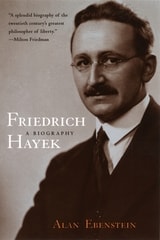
Friedrich Hayek
A BiographyAlan Ebenstein
University of Chicago Press, 2003

Friedrich Schleiermacher
The Evolution of a NationalistBy Jerry F. Dawson
University of Texas Press, 1966
Nationalism was a driving, moving spirit in the nineteenth-century Germany of Friedrich Schleiermacher. Jerry F. Dawson, through his thoughtful and well-wrought study of Friedrich Schleiermacher, provides an insight into contemporary nationalistic movements and the people who have a part in them. Schleiermacher, a prominent theologian and educator, was also a leading contributor to the tide of nationalism which swept Germany during the Napoleonic era. Dawson does not present Schleiermacher as an archetype for nationalists, but rather as an example of one man who was willing to sacrifice everything for the good of the nation.
Examining the influence of Pietism, rationalism, and romanticism on Schleiermacher, the author explains the origins of his subject's nationalistic activities and traces the evolution of his patriotic point of view. Dawson depicts the development of Schleiermacher's patriotism from Prussian particularism to German nationalism—an allegiance to an idealized Germany unified in religion, language, folkways. He describes the diverse approaches utilized by Schleiermacher to achieve a patriotic awakening among his countrymen: "…he preached nationalistic sermons; he delivered scholarly lectures; he repeatedly risked his life on dangerous missions which would help free Germany from France; he used his journalistic talents to try to stimulate the national consciousness of the German people; and he even served in the government of Prussia in an attempt to reconstruct the educational system so that nationalism might be advanced."
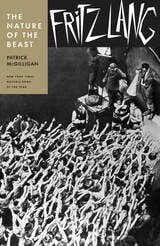
Fritz Lang
The Nature of the BeastPatrick McGilligan
University of Minnesota Press, 2013
The name of Fritz Lang—the visionary director of Metropolis, M, Fury, The Big Heat, and thirty other unforgettable films—is hallowed the world over. But what lurks behind his greatest legends and his genius as a filmmaker? Patrick McGilligan, placed among “the front rank of film biographers” by the Washington Post, spent four years in Europe and America interviewing Lang’s dying contemporaries, researching government and film archives, and investigating the intriguing life story of Fritz Lang. This critically acclaimed biography—lauded as one of the year’s best nonfiction books by Publishers Weekly—reconstructs the compelling, flawed human being behind the monster with the monocle.
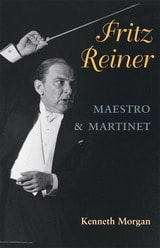
Fritz Reiner, Maestro and Martinet
Kenneth Morgan
University of Illinois Press, 2010
This award-winning book, now available in paperback, is the first solid appraisal of the legendary career of the eminent Hungarian-born conductor Fritz Reiner (1888-1963). Personally enigmatic and often described as difficult to work with, he was nevertheless renowned for the dynamic galvanization of the orchestras he led, a nearly unrivaled technical ability, and high professional standards. Reiner's influence in the United States began in the early 1920s and lasted until his death. Reiner was also deeply committed to serious music in American life, especially through the promotion of new scores. In Fritz Reiner, Maestro and Martinet, Kenneth Morgan paints a very real portrait of a man who was both his own worst enemy and one of the true titans of his profession.
Fritz Reiner
A BiographyPhilip Hart
Northwestern University Press, 1996
From Anzio to the Alps
An American Soldier's StoryLloyd M. Wells
University of Missouri Press, 2019
From Beacon Hill to the Crystal Palace
The 1851 Travel Diary of a Working-Class WomanLorenza Stevens Berbineau
University of Iowa Press, 2002
Because prior studies of American women’s travel writing have focused exclusively on middle-class and wealthy travelers, it has been difficult to assess the genre and its participants in a holistic fashion. One of the very few surviving working-class travel diaries, Lorenza Stevens Berbineau’s account provides readers with a unique perspective of a domestic servant in the wealthy Lowell family in Boston. Staying in luxurious hotels and caring for her young charge Eddie during her six-month grand tour, Berbineau wrote detailed and insightful entries about the people and places she saw.
Contributing to the traditions of women’s, diary, and travel literature from the perspective of a domestic servant, Berbineau's narrative reveals an arresting and intimate outlook on both her own life and the activities, places, and people she encounters. For example, she carefully records Europeans’ religious practices, working people and their behavior, and each region’s aesthetic qualities. Clearly writing in haste and with a pleasing freedom from the constraints of orthographic and stylistic convention, Berbineau offers a distinctive voice and a discerning perspective. Alert to nuances of social class, her narrative is as appealing and informative to today's readers as it no doubt was to her fellow domestics in the Lowell household.
Unobtrusively edited to retain as much as possible the individuality and texture of the author’s original manuscript, From Beacon Hill to the Crystal Palace offers readers brief framing summaries, informative endnotes, and a valuable introduction that analyzes Berbineau’s narrative in relation to gender and class issues and compares it to the published travel writing of her famous contemporary, Harriet Beecher Stowe.
From Here to There and Back Again
Sue Hubbell
University of Michigan Press, 2004
"Sue Hubbell's From Here to There and Back Again is stylish and thought-provoking. As her brother I have long admired her mince pies and her ability to knit her own thermal underwear."
---Bil Gilbert
"The real masterwork that Sue Hubbell has created is her life."
---New York Times Book Review
"A latter-day Henry Thoreau with a sense of the absurd."
---Chicago Sun-Times
"Sue Hubbell writes splendidly."
---William Least Heat-Moon
"Prose as clear, languorous and beautiful as honey poured from a jar."
---People
From Here to There and Back Again is the much-anticipated collection of essays on an array of offbeat and engrossing subjects by magazine essayist and nature writer Sue Hubbell, author of A Country Year, Shrinking the Cat, and Waiting for Aphrodite.
Reading Sue Hubbell is like embarking on a journey of discovery with a close friend. Her writing is witty, learned yet unassuming, intensely personal, and pointedly honest as she ranges far and wide on such topics as after-hours truck stops, the country's best pie restaurants, bowling shoes, Costa Rica's blue morpho butterfly, earthquakes, and the honey trade. Several of her pieces take place in Michigan locales as well, including Elvis sightings in Vicksburg and the magicians' convention in Colon. In the end you'll return from these travels refreshed, enlightened-and wiser.
From Jail to Jail
Tan Malaka
Ohio University Press, 2020
From Jail to Jail is the political autobiography of Sutan Ibrahim gelar Tan Malaka, an enigmatic and colorful political thinker of twentieth-century Asia, who was one of the most influential figures of the Indonesian Revolution. Variously labeled a communist, Trotskyite, and nationalist, Tan Malaka managed to run afoul of nearly every political group and faction involved in the Indonesian struggle for independence. During his decades of political activity, he spent periods of exile and hiding in nearly every country in Southeast Asia. As a Marxist who was expelled from and became a bitter enemy of his country’s Communist Party and as a nationalist who was imprisoned and murdered by his own government’s forces as a danger to its anticolonial struggle, Tan Malaka was and continues to be soaked in contradiction and controversy.
Translated by Helen Javis and with a new introduction from Harry A. Poeze, this edition of From Jail to Jail contextualizes the life and political accomplishments of Tan Malaka in one of the few known autobiographies by a Marxist of this political era and region.
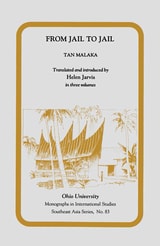
From Jail to Jail
Mis Sea#83 Tpg#8Tan Malaka
Ohio University Press, 1991
From Jail to Jail is the political autobiography of Sutan Ibrahim gelar Tan Malaka, an enigmatic and colorful political thinker of twentieth-century Asia, who was one of the most influential figures of the Indonesian Revolution. Variously labeled a communist, Trotskyite, and nationalist, Tan Malaka managed to run afoul of nearly every political group and faction involved in the Indonesian struggle for independence. During his decades of political activity, he spent periods of exile and hiding in nearly every country in Southeast Asia. As a Marxist who was expelled from and became a bitter enemy of his country’s Communist Party and as a nationalist who was imprisoned and murdered by his own government’s forces as a danger to its anticolonial struggle, Tan Malaka was and continues to be soaked in contradiction and controversy.
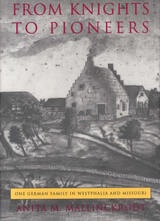
From Knights to Pioneers
One German Family in Westphalia and MissouriAnita M. Mallinckrodt
Southern Illinois University Press, 1994
Anita M. Mallinckrodt traces the 750-year history of the Mallinckrodt family from its earliest documented beginnings in thirteenth-century Westphalia (in the Dortmund area) through immigration to Missouri in 1831 and beyond.
In part 1, Mallinckrodt tells the story of some of her family’s leading personalities in order to explicate the history and society of medieval and early modern Germany: the life and times of knight Ludwig (c. 1241) and crusader Gerd (c. 1450–1504); the 1451 and 1492 adventures of the mercenary knight Hermann and his son Wilhelm; the 1594 feuding of the noble brothers Dietrich and Hermann, which led to a double murder; the liberal Dortmund publisher Arnold’s struggles in the early 1800s to establish freedom of the press and to free Westphalian farmers from serfdom; and the wealthy, aristocratic Sister Pauline (b. 1817), founder of the Sisters of Charity and recently beatified for her efforts on behalf of the poor and blind children of her day.
In parts 2 and 3, Mallinckrodt focuses on the first of her forebears to immigrate to the New World—Julius and Emil in 1831, followed by Conrad, Hermann, August, Helene, Sophie, and Luise in 1838—and their immediate families and descendants in Missouri. These early pioneers cleared the forests, built schools and churches, supported German-language periodicals, and founded social and cultural organizations that would benefit later waves of immigrants. In the 1860s, they participated in their adopted country’s Civil War and held strong views toward slavery and the Union. Mallinckrodt ends her family’s history with the deaths of the Dortmund pioneers in the 1890s.
But From Knights to Pioneers is much more than a single family’s history. The experiences Mallinckrodt relates reflect those of many German families who left their mark on centuries of history and of many midwestern families transplanted from the Old World. Especially interesting is the continuity between the old and new ways of life—entries on genealogical tables need not end with the comment "immigrated to the USA," for immigrants often wrote notable chapters of family history that deserve recognition in their old homelands. Similarly, knowledge of pre-immigration history is essential for those Americans whose traditions surely did not begin, as oral history often suggests, with the fact that "great-grandfather arrived in the Midwest from Germany in 1831." Thus the purpose of this book is to set a family’s immigration chapter against its European background, without passing judgment on the cultural influence of outstanding individuals in the United States or of German immigration per se.
Drawing on her extensive research in both Europe and the United States, Mallinckrodt presents an exceptionally detailed picture of the social and political contexts of each of her subjects. The richness of her exposition of both the Old World background and the lives of the immigrants to the New World offers important insights into aspects of European and American history.
From Little Houses to Little Women
Revisiting a Literary ChildhoodNancy McCabe
University of Missouri Press, 2018
McCabe, who grew up in Kansas just a few hours from the Ingalls family’s home in Little House on the Prairie, always felt a deep connection with Laura Ingalls Wilder, author of the Little House series. McCabe read Little House on the Prairie during her childhood and visited Wilder sites around the Midwest with her aunt when she was thirteen. But then she didn’t read the series again until she decided to revisit in adulthood the books that had so influenced her childhood. It was this decision that ultimately sparked her desire to visit the places that inspired many of her childhood favorites, taking her on a journey that included stops in the Missouri of Laura Ingalls Wilder, the Minnesota of Maud Hart Lovelace, the Massachusetts of Louisa May Alcott, and even the Canada of Lucy Maud Montgomery.
From Little Houses to Little Women reveals McCabe’s powerful connection to the characters and authors who inspired many generations of readers. Traveling with McCabe as she rediscovers the books that shaped her and ultimately helped her to forge her own path, readers will enjoy revisiting their own childhood favorites as well.
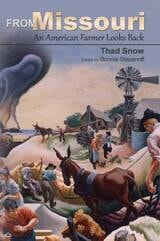
From Missouri
An American Farmer Looks BackThad Snow, Edited by Bonnie Stepenoff
University of Missouri Press, 2012
After years of subjecting the editors of St. Louis newspapers to eloquent letters on subjects as diverse as floods, tariffs, and mules, Thad Snow published his memoir From Missouri in his mid-seventies in 1954. He was barely retired from farming for more than half a century, mostly in the Missouri Bootheel, or “Swampeast Missouri,” as he called it. Now back in print with a new introduction by historian Bonnie Stepenoff, these sketches of a life, a region, and an era will delight readers new to this distinctive American voice as well as readers already familiar with this masterpiece of the American Midwest.
Snow purchased a thousand acres of southeast Missouri swampland in 1910, cleared it, drained it, and eventually planted it in cotton. Although he employed sharecroppers, he grew to become a bitter critic of the labor system after a massive flood and the Great Depression worsened conditions for these already-burdened workers. Shocking his fellow landowners, Snow invited the Southern Tenant Farmers Union to organize the workers on his land. He was even once accused of fomenting a strike and publicly threatened with horsewhipping.
Snow’s admiration for Owen Whitfield, the African American leader of the Sharecroppers’ Roadside Demonstration, convinced him that nonviolent resistance could defeat injustice. Snow embraced pacifism wholeheartedly and denounced all war as evil even as America mobilized for World War II after the attack on Pearl Harbor. In the late 1940s and early 1950s, he became involved with creating Missouri’s conservation movement. Near the end of his life, he found a retreat in the Missouri Ozarks, where he wrote this recollection of his life.
This unique and honest series of personal essays expresses the thoughts of a farmer, a hunter, a husband, a father and grandfather, a man with a soft spot for mules and dogs and all kinds of people. Snow’s prose reveals much about a way of life in the region during the first half of the twentieth century, as well as the social and political events that affected the entire nation. Whether arguing that a good stock dog should be left alone to do its work, explaining the process of making swampland suitable for agriculture, or putting forth his case for world peace, Snow’s ideas have a special authenticity because they did not come from an ivory tower or a think tank—they came From Missouri.
From Mountain Man to Millionaire
The "Bold and Dashing Life" of Robert Campbell, Revised and Expanded EditionWilliam R. Nester
University of Missouri Press, 2011
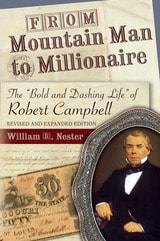
Campbell came to America from Ireland in 1822 and entered the fur trade soon after. He quickly rose from trapper to brigade leader to partner, all within a half dozen years, and this new edition includes an expanded narrative of his adventures in the Rocky Mountain fur trade. In the mid-1830s, having amassed considerable wealth, Campbell retired from the mountains and embarked on a new career. He returned to St. Louis and built up a business empire that embraced mercantile, steamboat, railroad, and banking interests, thus becoming a leading force behind the region’s economic development. A more extensive account of the cutthroat business world in which Campbell operated now enriches this portion of the book.
Nester masterfully depicts the “sterling character” for which Campbell was renowned. Campbell enjoyed deep and enduring friendships and strong familial ties, both in America and abroad. Although he was an outstanding businessman and philanthropist, his personal life was marred by tragedy. Ten of his thirteen children died prematurely. Despite those tragic losses, his faith in God never faltered. He believed that all worldly successes should honor God and once wrote that , “all worldly gain is but dross.” This edition elucidates the complex relations among his family and chronicles both tragic events and humorous incidents in more depth.
Exploring the letters, journals, and account books that Campbell left behind, Nester places him in the context of the times in which he lived, showing the economic, political, social, and cultural forces that provided the opportunities and challenges that shaped his life. Nester provides new insights into Campbell’s ownership of slaves, his attitudes toward slavery, and his behind-the-scenes political and economic activities during the Civil War. This comprehensive exploration of Robert Campbell’s life depicts a fascinating era in American history.
From Peaks to Prairie
The Gifts of Walking in an Anxious LifeCara Chamberlain
Oregon State University Press, 2026
Along twenty-nine trails near Yellowstone National Park, Cara Chamberlain leads readers on a journey of perseverance, drawing lessons from human and natural history. She reflects on being diagnosed with generalized anxiety disorder (GAD) and obsessive-compulsive disorder (OCD) and explores how walking helps manage anxiety, opening rich pathways of perception.
In From Peaks to Prairie, Chamberlain examines her personal life, family history, and struggles as she encounters animals and plants of Montana and Wyoming. Each essay is an episode mingling the past with the present, combining sightings of bears, birds, and wildflowers with memories of her Utah childhood and family. She observes, “I walk. It’s the way I’ve found not to eliminate GAD and OCD, as I used to long to do, but to live with them.” Mountains and prairies offer strength and nurture those who need them. It is on their paths that Chamberlain finds clarity.

From Protest to President
A Social Justice Journey through the Emergence of Adult Education and the Birth of Distance LearningGeorge A Pruitt
Rutgers University Press, 2023
From barbershop encounters with Malcolm X to death threats at Illinois State University and gunfire at Towson State, Pruitt provides a powerful narrative poised at the intersection of social justice, higher education and politics. He recounts leadership experiences at HBCUs and public universities across the country, as he advocated for autonomy at Morgan State and fought to preserve Tennessee State University.
His steadfast activism, integrity and courage led to groundbreaking work in providing access to higher education for working adults and the military.
From his days as a student protester in high school and college to his appearances on Capitol Hill, Pruitt has earned the reputation as a candid and influential leader in higher education.
From Scratch
Writings in Music TheoryJames TenneyEdited by Larry Polansky, Lauren Pratt, Robert Wannamaker, and Michael Winter
University of Illinois Press, 2019
From Slave to State Legislator
John W. E. Thomas, Illinois' First African American LawmakerDavid A. Joens
Southern Illinois University Press, 2012
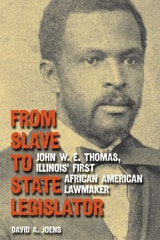
As the first African American elected to the Illinois General Assembly, John W. E. Thomas was the recognized leader of the state’s African American community for nearly twenty years and laid the groundwork for the success of future Black leaders in Chicago politics. Despite his key role in the passage of Illinois’ first civil rights act and his commitment to improving his community against steep personal and political barriers, Thomas’s life and career have been long forgotten by historians and the public alike. This fascinating full-length biography—the first to address the full influence of Thomas or any Black politician from Illinois during the Reconstruction Era—is also a pioneering effort to explain the dynamics of African American politics and divisions within the Black community in post–Civil War Chicago.
In From Slave to State Legislator, David A. Joens traces Thomas’s trajectory from a slave owned by a doctor’s family in Alabama to a prominent attorney believed to be the wealthiest African American man in Chicago at the time of his death in 1899. Providing one of the few comprehensive looks at African Americans in Chicago during this period, Joens reveals how Thomas’s career represents both the opportunities available to African Americans in the postwar period and the limits still placed on them. When Thomas moved to Chicago in 1869, he started a grocery store, invested in real estate, and founded the first private school for African Americans before becoming involved in politics.
From Slave to State Legislator provides detailed coverage of Thomas’s three terms in the legislature during the 1870s and 1880s, his multiple failures to be nominated for reelection, and his loyalty to the Republican Party at great political cost, calling attention to the political differences within a Black community often considered small and homogenous. Even after achieving his legislative legacy—the passage of the first state civil rights law—Thomas was plagued by patronage issues and an increasingly bitter split with the African American community frustrated with slow progress toward true equality. Drawing on newspapers and an array of government documents, Joens provides the most thorough review to date of the first civil rights legislation and the two controversial “colored conventions” chaired by Thomas.
Joens cements Thomas’s legacy as a committed and conscientious lawmaker amid political and personal struggles. In revealing the complicated rivalries and competing ambitions that shaped Black northern politics during the Reconstruction Era, Joens shows the long-term impact of Thomas’s friendship with other burgeoning African American political stars and his work to get more black representatives elected. The volume is enhanced by short biographies of other key Chicago African American politicians of the era.
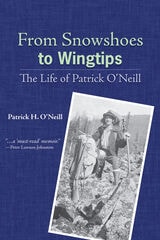
From Snowshoes to Wingtips
The Life of Patrick O'NeillPatrick H. O'Neill
University of Alaska Press, 2007
O'Neill shares his story in this homespun tale full of anecdotes about mining and life in Alaska.
Published by the University of Alaska Foundation; distributed by the University of Alaska Press.
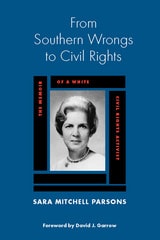
From Southern Wrongs to Civil Rights
The Memoir of a White Civil Rights ActivistSara Mitchell Parsons
University of Alabama Press, 2009
This first-hand account tells the story of turbulent civil rights era Atlanta through the eyes of a white upper-class woman who became an outspoken advocate for integration and racial equality
As a privileged white woman who grew up in segregated Atlanta, Sara Mitchell Parsons was an unlikely candidate to become a civil rights agitator. After all, her only contacts with blacks were with those who helped raise her and those who later helped raise her children. As a young woman, she followed the conventional path expected of her, becoming the dutiful wife of a conservative husband, going to the country club, and playing bridge. But unlike many of her peers, Parsons harbored an increasing uneasiness about racial segregation.In a memoir that includes candid diary excerpts, Parsons chronicles her moral awakening. With little support from her husband, she runs for the Atlanta Board of Education on a quietly integrationist platform and, once elected, becomes increasingly outspoken about inequitable school conditions and the slow pace of integration. Her activities bring her into contact with such civil rights leaders as Martin Luther King, Jr., and his wife, Coretta Scott King. For a time, she leads a dual existence, sometimes traveling the great psychic distance from an NAACP meeting on Auburn Avenue to an all-white party in upscale Buckhead. She eventually drops her ladies' clubs, and her deepening involvement in the civil rights movement costs Parsons many friends as well as her first marriage.
From That Terrible Field
Civil War Letters of James M. Williams, 21st Alabama Infantry VolunteersJames M. Williams
University of Alabama Press, 1981
“The well-written and candid letters of a reasonably articulate Southern officer, who paints a lucid picture of everyday life in the Confederate army in a little-known theater… Williams’s letters, personally written and shot through with his sharp sense of humor and folksy artwork, provide an excellent account of a long neglected theater of the American Civil War.” – Western Pennsylvania History