Results by title
29 books match the query 'Fossils'
Ancient Life of the Great Lakes Basin
Precambrian to PleistoceneJ. Alan Holman
University of Michigan Press, 1995
Bryozoan Evolution
Frank K. McKinney and Jeremy B. C. Jackson
University of Chicago Press, 1991
"Bryozoan Evolution is profusely illustrated and has a bibliography of over 400 titles. It will find an appreciative audience of paleontologists, invertebrate zoologists, and ecologists thanks to its innovative and detailed evaluations of the roles of ecology, adaptive and functional morphology, life histories, biomechanics, developmental constraints, and chance on the evolution of the marine taxa of this speciose group."—Russel L. Zimmer, Science
"This book is an excellent source of information on the functional morphology and variety of colonial architecture in bryozoans, very well illustrated, and worth reading at least twice."-Robert L. Anstey, Paleobiology
"Even as one of the converted, I found the book a stimulating combination of paleobiology and ecology. In many ways it is a 'teaser'-the authors suggest a number of interesting hypotheses, and can test only some of them. Perhaps most important, McKinney and Jackson provide a plethora of fascinating ideas and examples that demonstrate the potential of this group of animals, and that should stimulate more work."-Michael S. Keough, TREE
"This stimulating book is sure to promote further interest in bryozoans. It will appeal to biologists and paleontologists alike."-Paul Taylor, Times Higher Education Supplement
Dinosaurs and Other Ancient Animals of Big Bend
Cindi Sirois Collins and Asher Elbein
University of Texas Press, 2023
A time-traveling field guide to the ancient version of Big Bend National Park.
The sheer beauty of Big Bend National Park, along the shores of the Rio Grande in west Texas, never fails to astonish. Yet what lies beneath this natural treasure may be even more extraordinary than what meets the eye. Hidden in the rocks of Big Bend are the remains of giants: toothy sea lizards, enormous flying reptiles, and dinosaurs.
Dinosaurs and Other Ancient Animals of Big Bend is a field guide to what once was. Inspired by the latest research, Cindi Sirois Collins and Asher Elbein imagine what it was like to walk among the plants and animals whose fossil remains tell the story of evolution and geological transformation in this singular landscape. We glimpse the drama of Big Bend’s rugged landscape in creation—the desert’s emergence from retreating oceans and volcanic eruptions. Immersive vignettes introduce dinosaurs, giant fish, and saber-toothed cats. And the history of discovery in the park proves a gripping tale, as paleontologists sifted major scientific insights from the soils, rocks, and riverbeds. Complete with vivid illustrations, this is a wholly original sensory and narrative experience that will deepen any reader’s knowledge and sense of wonder.
Evolution of Fossil Ecosystems
Paul A. Selden and John R. Nudds
University of Chicago Press, 2005
Beginning with a general introduction to fossil Lagerstätten, Evolution of Fossil Ecosystems goes on, chapter by chapter, to consider each fossil site, detailing its evolutionary position and significance; a brief history of the locality; its background sedimentology, stratigraphy, and paleoenvironment; its biota and paleoecology; and its commonalities with similar Lagerstätten. Considering deposits both marine and terrestrial, the book covers one fossil site from the Precambrian era, five sites from the Paleozoic era, five sites from the Mesozoic era, and three sites from the Cenozoic era.
Illustrated with hundreds of color photographs and drawings, Evolution of Fossil Ecosystems is a sophisticated yet accessible guide to these critical sites. Containing useful appendixes listing important museums, instructions on how to visit the fossil sites, and additional suggested reading, this book will attract students, academics, and professionals in paleontology, evolution, and the earth and life sciences, as well as dedicated amateurs interested in fossils and geology.
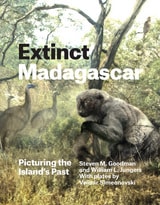
Extinct Madagascar
Picturing the Island's PastSteven M. Goodman and William L. Jungers
University of Chicago Press, 2014
In Extinct Madagascar, noted scientists Steven M. Goodman and William L. Jungers explore the recent past of these land animal extinctions. Beginning with an introduction to the geologic and ecological history of Madagascar that provides context for the evolution, diversification, and, in some cases, rapid decline of the Malagasy fauna, Goodman and Jungers then seek to recapture these extinct mammals in their environs. Aided in their quest by artist Velizar Simeonovski’s beautiful and haunting digital paintings—images of both individual species and ecosystem assemblages reproduced here in full color—Goodman and Jungers reconstruct the lives of these lost animals and trace their relationships to those still living.
Published in conjunction with an exhibition of Simeonovski’s artwork set to open at the Field Museum, Chicago, in the fall of 2014, Goodman and Jungers’s awe-inspiring book will serve not only as a sobering reminder of the very real threat of extinction, but also as a stunning tribute to Madagascar’s biodiversity and a catalyst for further research and conservation.
Fossil Ecosystems of North America
A Guide to the Sites and Their Extraordinary BiotasJohn R. Nudds and Paul A. Selden
University of Chicago Press, 2008
Fossil Ecosystems of North America describes these and eleven other sites that range across the continent.
Fossil Vertebrates of Alabama
John T. Thurmond and Douglas E. Jones
University of Alabama Press, 1981
The only comprehensive description of the fossil-vertebrate content of this important part of the world.
Fossils in the Making
Vertebrate Taphonomy and PaleoecologyAnna K. Behrensmeyer and Andrew P. Hill
University of Chicago Press, 1988
"Taphonomy is plainly here to stay, and this book makes a first class introduction to its range and appeal."—Anthony Smith, Interdisciplinary Science Reviews
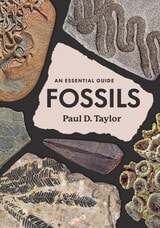
Fossils
An Essential GuidePaul D. Taylor
University of Chicago Press, 2025
Ancient Earth seems like an alien world. But the fossil record can help reveal the mysteries of the organisms that have lived on our planet since its formation some 4,600 million years ago. In this engaging and beautifully illustrated book, world-renowned paleontologist Paul D. Taylor provides a comprehensive guide to all aspects of fossils to tell the story of life on Earth.
Taylor begins with the basics: how fossils form, how they mark geological time, and what they tell us about the origins of life and major evolutionary events like the Cambrian Explosion. He then shows the oldest fossils—single-celled bacteria in amazing, three-billion-year-old microbial rock structures—before introducing the first animals in the fossil record. From fishes to amphibians, reptiles, and mammals, we meet these animal fossils in an appropriate evolutionary parade. Next, we imagine plants long past, charting the evolution of this kingdom and learning how ephemeral botanical remains can become permanent records. While comprehensive in his coverage of fossil groups and ages, Taylor pays particular attention to specimens fossil hunters are most likely to encounter, like crinoids and the iconic ammonites. Throughout, he introduces us to fascinating fossil folklore—like the idea that ammonites are the petrified remains of coiled snakes—and helps us distinguish true fossils from fakes.
With stunning color images of many original specimens from the collections of London’s Natural History Museum, Fossils is an essential introduction, connecting life on Earth today to the ancient past.
Frozen Fauna of the Mammoth Steppe
The Story of Blue BabeR. Dale Guthrie
University of Chicago Press, 1990
The 36,000-year-old bison mummy, coated with blue mineral crystals, was dubbed "Blue Babe." Guthrie conveys the excitement of its excavation and shows how he made use of evidence from living animals, other Pleistocene mummies, Paleolithic art, and geological data. With photographs and scores of detailed drawings, he takes the reader through the excavation and subsequent detective work, analyzing the animal's carcass and its surroundings, the circumstances of its death, its appearance in life, the landscape it inhabited, and the processes of preservation by freezing. His examination shows that Blue Babe died in early winter, falling prey to lions that inhabited the Arctic during the Pleistocene era.
Guthrie uses information gleaned from his study of Blue Babe to provide a broad picture of bison evolutionary history and ecology, including speculations on the interactions of bison and Ice Age peoples. His description of the Mammoth Steppe as a cold, dry, grassy plain is based on an entirely new way of reading the fossil record.
Guide to Fossil Man
Michael H. Day
University of Chicago Press, 1986
Day begins with an introduction to the anatomy of human fossils. He then describes the forty-nine sites in Europe, the Near East, Africa, the Middle East, Asia, and Oceania that have yielded the most significant information on the development of hominid species and the appearance of early man. Grouped geographically, each site description includes data on the hominid remains, other finds such as tools and animal bones, the local geology and contemporary geomorphology and ecology, and dating and other references. Sites featured for the first time in this edition include Kow Swamp and Mungo in Australia; Dali and Maba in China; and West Turkana in Kenya, which contained the almost complete skeleton of a boy determined to be 1,600,000 years old.
Short essays on problems associated with neandertal, australpithecine, and Homo erectus remains are included, as well as a glossary, a geological time scale, charts and comprehensive illustrations. Day's Guide to Fossil Man is invaluable not only for working palaeontologists, palaeolithic archaeologists, and physical anthropologists, but also for anyone interested in human evolution.
Murray Springs
A Clovis Site with Multiple Activity Areas in the San Pedro Valley, ArizonaEdited by C. Vance Haynes, Jr., and Bruce B. Huckell
University of Arizona Press, 2007
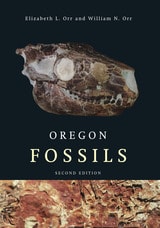
Oregon Fossils, Second Edition
Elizabeth L. Orr
Oregon State University Press, 2009
Unique among fossil field guides, Oregon Fossils includes both specimen identification and interesting notes about their discovery, naming, and conservation. The narrative is sprinkled with biographical sketches of paleontologists who have contributed to the state’s fossil record, and the text is richly illustrated with photographs, line drawings, charts, and maps. A complete bibliography lists full citations to fossil material. The only single volume that provides Oregon’s fossil record and history, Oregon Fossils is a well-written, well-organized guide. It is an excellent reference for classroom and library use, for researchers, and for private collectors and hobbyists.

Owls, Caves and Fossils
Predation, Preservation and Accumulation of Small Mammal Bones in Caves, with an Analysis of the Pleistocene Cave Faunas From Westbury-Sub-Mendip, Somerset, U.K.Peter Andrews
University of Chicago Press, 1990
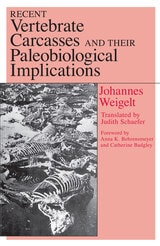
Recent Vertebrate Carcasses and Their Paleobiological Implications
Johannes Weigelt
University of Chicago Press, 1989
Weigelt spent sixteen months on the Gulf Coast in the mid-1920s, gathering evidence from the carcasses of cattle and other animals in the early stages of preservation. This book reports his observations. He discusses death and decomposition; classifies various modes of death (drowning, cold, dehydration, fire, mud, quicksand, oil slicks, etc.); documents and analyzes the positions of carcasses; presents detailed data on carcass assemblages at the Smither's Lake site in Texas; and, in a final chapter, makes comparisons to carcass assemblages from the geologic past. He raises questions about whether much of the fossil record is a product of unusual events and, if so, what the implications are for paleoecological studies.
The English edition of Recent Vertebrate Carcasses includes a foreword and a translator's note that comment on Weigelt's life and the significance of his work. The original bibliography has been brought up to date, and, where necessary, updated scientific and place names have been added to the text in brackets. An index of names, places, and subjects is included, and Weigelt's own photographs of carcasses and drawings of skeletons illustrate the text.
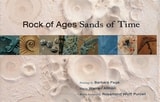
Rock of Ages, Sands of Time
Paintings by Barbara Page, Text by Warren AllmonBarbara Page and Warren D. Allmon
University of Chicago Press, 2001
These are just a few scenes from the magnificent drama that unfolds in glorious full color and three-dimensional texture in Rock of Ages, Sands of Time. Each of Barbara Page's 544 contiguous painted panels represents a million years of the history of life on earth, with fossil plants and animals depicted at the same scale and in association with each other just as they might be found by a paleontologist in the field. A muted rainbow of background colors evoke the rocks in which the fossils were found—the Texas Red Beds, for instance, or the yellow Solnhofen limestone—and keystone events are shown metaphorically, with fat rolls of paint marking major extinctions or continental drift.
To fully experience the awesome impact of an eon's worth of time spread across 500 feet of bas-relief panels, you'd have to visit the Museum of the Earth in Ithaca, New York, where Page's specially commissioned work will be installed when the museum opens in 2002. But this book is the next best thing. Not only does it contain crisp color reproductions of each painting, but it also includes an accessible essay from paleontologist Warren Allmon giving the scientific context behind the art.
For fossil lovers of all ages, and anyone interested in the merging of art and science, Rock of Ages, Sands of Time will be the find of a lifetime.
Species and Speciation in the Fossil Record
Edited by Warren D. Allmon and Margaret M. Yacobucci
University of Chicago Press, 2016
After outlining views of the Modern Synthesis of evolutionary disciplines and detailing the development within paleobiology of quantitative methods for documenting and analyzing variation within fossil assemblages, contributors explore the challenges of recognizing and defining species from fossil specimens—and offer potential solutions. Addressing both the tempo and mode of speciation over time, they show how with careful interpretation and a clear species concept, fossil species may be sufficiently robust for meaningful paleobiological analyses. Indeed, they demonstrate that the species concept, if more refined, could unearth a wealth of information about the interplay between species origins and extinctions, between local and global climate change, and greatly deepen our understanding of the evolution of life.
Strata
William Smith’s Geological MapsEdited by the Oxford University Museum of Natural History
University of Chicago Press, 2020
This sumptuous volume begins with an introduction by Douglas Palmer that places Smith’s work in the context of earlier, concurrent, and subsequent ideas regarding the structure and natural processes of the earth, geographical mapping, and biostratigraphical theories. The book is then organized into four parts, each beginning with four sheets from Smith’s hand-colored, 1815 strata map, accompanied by related geological cross-sections and county maps, and followed by fossil illustrations by Smith contemporary James Sowerby, all organized by strata. Essays between each section explore the aims of Smith’s work and its application in the fields of mining, agriculture, cartography and hydrology. Strata concludes with reflections on Smith’s later years as an itinerant geologist and surveyor, plagiarism by a rival, receipt of the first Wollaston Medal in recognition of his achievements, and the influence of his geological mapping and biostratigraphical theories on the sciences—all of which culminated in the establishment of the modern geological timescale.
Featuring a foreword by Robert Macfarlane, Strata is a glorious testament to the lasting geological and illustrative genius of William Smith, a collection as colossal and awe-inspiring as the layers of the Earth themselves.
Stratigraphic Paleobiology
Understanding the Distribution of Fossil Taxa in Time and SpaceMark E. Patzkowsky and Steven M. Holland
University of Chicago Press, 2012
The Common Fossils of Missouri
A. G. Unklesbay
University of Missouri Press, 1955
The Missouri Handbooks are intended to bring the products of extensive research to the general public in nontechnical yet scholarly terms and in a convenient paperback format.
The Earth on Show
Fossils and the Poetics of Popular Science, 1802-1856Ralph O'Connor
University of Chicago Press, 2007
Shrewd science-writers, O’Connor shows, marketed spectacular visions of past worlds, piquing the public imagination with glimpses of man-eating mammoths, talking dinosaurs, and sea-dragons spawned by Satan himself. These authors—including men of science, women, clergymen, biblical literalists, hack writers, blackmailers, and prophets—borrowed freely from the Bible, modern poetry, and the urban entertainment industry, creating new forms of literature in order to transport their readers into a vanished and alien past.
In exploring the use of poetry and spectacle in the promotion of popular science, O’Connor proves that geology’s success owed much to the literary techniques of its authors. An innovative blend of the history of science, literary criticism, book history, and visual culture, The Earth on Show rethinks the relationship between science and literature in the nineteenth century.
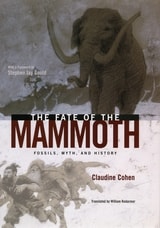
The Fate of the Mammoth
Fossils, Myth, and HistoryClaudine Cohen
University of Chicago Press, 2002
Cohen uses the mammoth and the theories that naturalists constructed around it to illuminate wider issues in the history of science, showing how changing views about a single object reveal the development of scientific methods, practices, and ideas. How are fossils discovered, reconstructed, displayed, and interpreted? What stories are told about them, by whom, and how do these stories reflect the cultures and societies in which they are told?
To find out, Cohen takes us on a grand tour of the study of mammoth remains, from England, Germany, and France to Russia and America, and from the depths of Africa to the frozen frontiers of Alaska and Siberia, where intact mammoth corpses have been discovered in the permafrost. Along the way, she shows how paleontologists draw on myth and history, as well as on scientific evidence, to explore the deep history of the earth and of life. Cohen takes her history from the sixteenth century right up to the present, when researchers are using molecular biology to retrieve mammoth DNA, calling up dreams of cloning the mammoth and one day seeing herds of woolly mammoths roaming the frozen steppes.
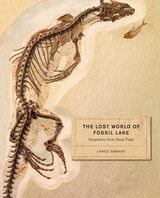
The Lost World of Fossil Lake
Snapshots from Deep TimeLance Grande
University of Chicago Press, 2013
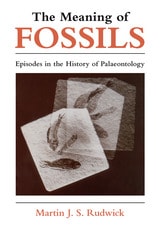
The Meaning of Fossils
Episodes in the History of PalaeontologyMartin J. S. Rudwick
University of Chicago Press, 1985
"Rudwick has not merely written the first book-length history of palaeontology in the English language; he has written a very intelligent one. . . . His accounts of sources are rounded and organic: he treats the structure of arguments as Cuvier handled fossil bones."—Roy S. Porter, History of Science
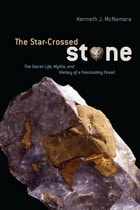
The Star-Crossed Stone
The Secret Life, Myths, and History of a Fascinating FossilKen McNamara
University of Chicago Press, 2010
Throughout the four hundred thousand years that humanity has been collecting fossils, sea urchin fossils, or echinoids, have continually been among the most prized, from the Paleolithic era, when they decorated flint axes, to today, when paleobiologists study them for clues to the earth’s history.
In The Star-Crossed Stone, Kenneth J. McNamara, an expert on fossil echinoids, takes readers on an incredible fossil hunt, with stops in history, paleontology, folklore, mythology, art, religion, and much more. Beginning with prehistoric times, when urchin fossils were used as jewelry, McNamara reveals how the fossil crept into the religious and cultural lives of societies around the world—the roots of the familiar five-pointed star, for example, can be traced to the pattern found on urchins. But McNamara’s vision is even broader than that: using our knowledge of early habits of fossil collecting, he explores the evolution of the human mind itself, drawing striking conclusions about humanity’s earliest appreciation of beauty and the first stirrings of artistic expression. Along the way, the fossil becomes a nexus through which we meet brilliant eccentrics and visionary archaeologists and develop new insights into topics as seemingly disparate as hieroglyphics, Beowulf, and even church organs.
An idiosyncratic celebration of science, nature, and human ingenuity, The Star-Crossed Stone is as charming and unforgettable as the fossil at its heart.
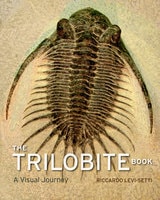
The Trilobite Book
A Visual JourneyRiccardo Levi-Setti
University of Chicago Press, 2014
Featuring specimens from Bohemia to Newfoundland, California to the Tucson Gem and Mineral Show, and Wales to the Anti-Atlas Mountains of Morocco, Levi-Setti’s magnificent book reanimates these “butterflies of the seas” in 235 astonishing full-color photographs. All original, Levi-Setti’s images serve as the jumping-off point for tales of his global quests in search of these highly sought-after fossils; for discussions of their mineralogical origins, as revealed by their color; and for unraveling the role of the now-extinct trilobites in our planetary history.
Sure to enthrall paleontologists with its scientific insights and amateur enthusiasts with its beautiful and informative images, The Trilobite Book combines the best of science, technology, aesthetics, and personal adventure. It will inspire new collectors for eras to come.
Trilobites
Riccardo Levi-Setti
University of Chicago Press, 1995
This second edition features coverage of a greater variety of trilobites, an improved photographic atlas reorganized to present their evolutionary progression, and over 200 photographs.
Under Ohio
The Story of Ohio’s Rocks and FossilsCharles Ferguson Barker
Ohio University Press, 2007
When Dinosaurs Roamed New Jersey
William B. Gallagher
Rutgers University Press, 1997
Did you know that Benjamin Franklin examined the first dinosaur bone in America from Woodbury, Gloucester County, in 1787--decades before the word dinosaur was even coined? Or that when the first reasonably complete dinosaur skeleton in the world was unearthed in Haddonfield, Camden County, in 1858, it was a major scientific breakthrough which forced paleontologists to completely revise their picture of dinosaur anatomy? Few people know that New Jersey is the nursery of American vertebrate paleontology!
When Dinosaurs Roamed New Jersey provides a succinct and readable history of the geology and paleontology of New Jersey from the time the region was covered by Cambrian seas, 543 million years ago, to the Pleistocene Ice Age only 10-15,000 years ago. William Gallagher tells the stories of professional and amateur fossil hunters, their discoveries, and their impact on the history of paleontological thought. He points out places in New Jersey and nearby where specimens characteristic of each era were found. He shows how fossil evidence found in the state is helping paleontologists uncover the ecological interactions and behavior of dinosaurs, and discusses such ongoing scientific controversies as the reason for the extinction of the dinosaurs.
From tracking dinosaur footprints across the Newark basin, to digging for the last dinosaurs in the greensands of South Jersey, to finding a mushroom in ancient amber in East Brunswick, this book is the ideal introduction to the Garden State's fossils and prehistory.