Results by title
4127 books match the query 'Science' and 235 start with f
From Boom to Bubble
How Finance Built the New ChicagoRachel Weber
University of Chicago Press, 2015
In From Boom to Bubble, Rachel Weber debunks the idea that booms occur only when cities are growing and innovating. Instead, she argues, even in cities experiencing employment and population decline, developers rush to erect new office towers and apartment buildings when they have financial incentives to do so. Focusing on the main causes of overbuilding during the early 2000s, Weber documents the case of Chicago’s “Millennial Boom,” showing that the Loop’s expansion was a response to global and local pressures to produce new assets. An influx of cheap cash, made available through the use of complex financial instruments, helped transform what started as a boom grounded in modest occupant demand into a speculative bubble, where pricing and supply had only tenuous connections to the market. From Boom to Bubble is an innovative look at how property markets change and fail—and how that affects cities.

From Borderland to Burgenland
Science, Geopolitics, Identity, and the Making of a RegionFerenc Jankó
Central European University Press, 2024
The area that constitutes the Austrian federal province of Burgenland belonged to the Hungarian part of the Habsburg empire until the end of World War I. This book helps us realize that geographical knowledge does not come ready-made. Instead, it is created by knowledge makers: geographers, historians, statisticians etc. This knowledge-making helped to legitimatize the area transferred between Austria and Hungary, shape the Burgenland identity, and depict its geopolitical role in the rise of national socialism. This book is about how those studying Burgenland, the creators of its geographical knowledge, saw and represented the province. It explores how they grasped the geographical characteristics of the region through their own perspective, influenced by their own professional positions, individual careers, motivations, and by the broader historical and social medium.
The way the area between the provinces of Lower Austria and Styria came about as Burgenland is enthralling, as is how the people there experienced this change of sovereignty and how everyday social and economic relationships were transformed. Tracing the geographical discourses in the interwar period and beyond, the book argues that Burgenland became a successful geographical project, and departs from thoughts of subdivision, unviability, and backwardness, concentrating instead on fertility, unity, and modernization.
From California's Gold Fields to the Mendocino Coast
A Settlement History Across Time and PlaceSamuel M. Otterstrom
University of Nevada Press, 2017
The development of San Francisco’s outlying region from a wilderness into a prosperous village and farming mecca shows how quickly in-migration coupled with economic diversification can establish a stable settlement structure upon the landscape. Otterstrom describes an intricately woven tapestry of interrelated people who were contributing creators of a wide variety of prosperous northern California environs. He uncovers the processes that converted this sleepy post-Mexican outpost into a focal point of nearly hyperactive youthful growth. The narrative follows this crucial story of settlement development until the dawn of the twentieth century, through the interconnected framework of individual and family ingenuity, migration trajectories, and diverse geographical scales.
Multiplying individualistic experiences from across far-flung appendages of the Northern California system into larger and larger scales, Otterstrom has achieved a matchless historical and sociological study that will form the basis for any future studies of the area.
From Chaos to Stability
How the Brain Invents Our Conscious WorldsIsrael Rosenfield
University of Iowa Press, 2024
To make sense of this chaos, the brain must simplify the sensory inputs by creating, or inventing, the colors, sounds, smells, forms, and faces that are perceived in consciousness, which become a proxy for the chaotic world in which we live. The brain’s ability to generalize and categorize these invented perceptions, and to relate them to one another, enables it to form memories, which are not fixed representations of things past, but a dynamic and malleable function of the brain that is relational.
When formation of these worlds breaks down, neurological differences arise. Although the mechanisms that transform sensory chaos into the simplified perceptions experienced in consciousness remain elusive, Rosenfield and Ziff relate what they have learned by means of imaging brain activity and by mapping the neural circuits that comprise memory traces. In addition, the authors offer perspectives for future studies of consciousness.
From Data to Quanta
Niels Bohr’s Vision of PhysicsSlobodan Perovic
University of Chicago Press, 2021
Niels Bohr was a central figure in quantum physics, well known for his work on atomic structure and his contributions to the Copenhagen interpretation of quantum mechanics. In this book, philosopher of science Slobodan Perović explores the way Bohr practiced and understood physics, and analyzes its implications for our understanding of modern science. Perović develops a novel approach to Bohr’s understanding of physics and his method of inquiry, presenting an exploratory symbiosis of historical and philosophical analysis that uncovers the key aspects of Bohr’s philosophical vision of physics within a given historical context.
To better understand the methods that produced Bohr’s breakthrough results in quantum phenomena, Perović clarifies the nature of Bohr’s engagement with the experimental side of physics and lays out the basic distinctions and concepts that characterize his approach. Rich and insightful, Perović’s take on the early history of quantum mechanics and its methodological ramifications sheds vital new light on one of the key figures of modern physics.
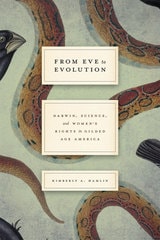
From Eve to Evolution
Darwin, Science, and Women's Rights in Gilded Age AmericaKimberly A. Hamlin
University of Chicago Press, 2014
Hamlin chronicles the lives and writings of the women who combined their enthusiasm for evolutionary science with their commitment to women’s rights, including Antoinette Brown Blackwell, Eliza Burt Gamble, Helen Hamilton Gardener, Charlotte Perkins Gilman, and Elizabeth Cady Stanton. These Darwinian feminists believed evolutionary science proved that women were not inferior to men, that it was natural for mothers to work outside the home, and that women should control reproduction. The practical applications of this evolutionary feminism came to fruition, Hamlin shows, in the early thinking and writing of the American birth control pioneer Margaret Sanger.
Much scholarship has been dedicated to analyzing what Darwin and other male evolutionists had to say about women, but very little has been written regarding what women themselves had to say about evolution. From Eve to Evolution adds much-needed female voices to the vast literature on Darwin in America.

From Extraterrestrials to Animal Minds
Six Myths of EvolutionMorris, Simon Conway
Templeton Press, 2022
In this learned romp of science writing, Cambridge professor Simon Conway Morris cheerfully challenges six assumptions—what he calls ‘myths’—that too often pass as unquestioned truths amongst the evolutionary orthodox.
His convivial tour begins with the idea that evolution is boundless in the kinds of biological systems it can produce. Not true, he says. The process is highly circumscribed and delimited. Nor is it random. This popular notion holds that evolution proceeds blindly, with no endgame. But Conway Morris suggests otherwise, pointing to evidence that the processes of evolution are “seeded with inevitabilities.”
If that is so, then what about mass extinctions? Don’t they steer the development of life in radically new directions? Rather the reverse, claims Conway Morris. Such cataclysms accelerate evolutionary developments that were going to happen anyway. And what about that other evolutionary canard: the “missing link”? There is plenty to choose from in the fossil record, but persistently overlooked is that in any group, there is not one but a phalanx of “missing links.” Once again, we under-score the near-inevitability of evolutionary outcomes.
Turning from fossils to minds, Conway Morris critically examines the popular tenet that the intelligence of humans and animals are the same thing, a difference of degree, not kind. A closer scrutiny of our minds shows that, in reality, an unbridgeable gulf separates us from even the chimpanzees, so begging questions of consciousness and Mind.
Finally, Conway Morris tackles the question of extraterrestrials. Undoubtedly, the size and scale of the universe suggest that alien life must exist somewhere beyond Earth and our tiny siloed solar system? After all, evolutionary convergence more than hints that human-like forms are universal. But Dr. Conway Morris has serious doubts. The famous Fermi Paradox (“Where are they?”) appears to hold: Alone in the cosmos—and unique, but not quite in the way one might expect.
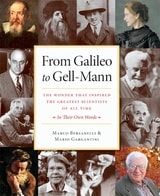
From Galileo to Gell-Mann
The Wonder that Inspired the Greatest Scientists of All Time: In Their Own WordsMarco Bersanelli
Templeton Press, 2009
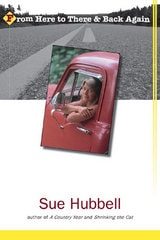
From Here to There and Back Again
Sue Hubbell
University of Michigan Press, 2004
"Sue Hubbell's From Here to There and Back Again is stylish and thought-provoking. As her brother I have long admired her mince pies and her ability to knit her own thermal underwear."
---Bil Gilbert
"The real masterwork that Sue Hubbell has created is her life."
---New York Times Book Review
"A latter-day Henry Thoreau with a sense of the absurd."
---Chicago Sun-Times
"Sue Hubbell writes splendidly."
---William Least Heat-Moon
"Prose as clear, languorous and beautiful as honey poured from a jar."
---People
From Here to There and Back Again is the much-anticipated collection of essays on an array of offbeat and engrossing subjects by magazine essayist and nature writer Sue Hubbell, author of A Country Year, Shrinking the Cat, and Waiting for Aphrodite.
Reading Sue Hubbell is like embarking on a journey of discovery with a close friend. Her writing is witty, learned yet unassuming, intensely personal, and pointedly honest as she ranges far and wide on such topics as after-hours truck stops, the country's best pie restaurants, bowling shoes, Costa Rica's blue morpho butterfly, earthquakes, and the honey trade. Several of her pieces take place in Michigan locales as well, including Elvis sightings in Vicksburg and the magicians' convention in Colon. In the end you'll return from these travels refreshed, enlightened-and wiser.

From Man to Ape
Darwinism in Argentina, 1870-1920Adriana Novoa and Alex Levine
University of Chicago Press, 2010
Upon its publication, The Origin of Species was critically embraced in Europe and North America. But how did Darwin’s theories fare in other regions of the world? Adriana Novoa and Alex Levine offer here a history and interpretation of the reception of Darwinism in Argentina, illuminating the ways culture shapes scientific enterprise.
In order to explore how Argentina’s particular interests, ambitions, political anxieties, and prejudices shaped scientific research, From Man to Ape focuses on Darwin’s use of analogies. Both analogy and metaphor are culturally situated, and by studying scientific activity at Europe’s geographical and cultural periphery, Novoa and Levine show that familiar analogies assume unfamiliar and sometimes startling guises in Argentina. The transformation of these analogies in the Argentine context led science—as well as the interaction between science, popular culture, and public policy—in surprising directions. In diverging from European models, Argentine Darwinism reveals a great deal about both Darwinism and science in general.
Novel in its approach and its subject, From Man to Ape reveals a new way of understanding Latin American science and its impact on the scientific communities of Europe and North America.
From Mastery to Mystery
A Phenomenological Foundation for an Environmental EthicBryan E. Bannon
Ohio University Press, 2014
From Mastery to Mystery is an original and provocative contribution to the burgeoningfield of ecophenomenology. Informed by current debates in environmental philosophy, Bannon critiques the conception of nature as u200a“substance” that he finds tacitly assumed by the major environmental theorists. Instead, this book reconsiders the basic goals of an environmental ethic by questioning the most basic presupposition that most environmentalists accept: that nature is in need of preservation.
Beginning with Bruno Latour’s idea that continuing to speak of nature in the way we popularly conceive of it is ethically and politically disastrous, this book describes a way in which the concept of nature can retain its importance in our discussion of the contemporary state of the environment. Based upon insights from the phenomenological tradition, specifically the work of Martin Heidegger and Maurice Merleau-Ponty, the concept of nature developed in the book preserves the best antihumanistic intuitions of environmentalists without relying on either a reductionistic understanding of nature and the sciences or dualistic metaphysical constructions.
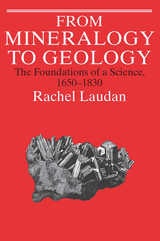
From Mineralogy to Geology
The Foundations of a Science, 1650-1830Rachel Laudan
University of Chicago Press, 1987
From Natural Philosophy to the Sciences
Writing the History of Nineteenth-Century ScienceEdited by David Cahan
University of Chicago Press, 2003
In this book, eleven leading historians of science assess what their field has taught us about this exciting time and identify issues that remain unexamined or require reconsideration. They treat both scientific disciplines—biology, physics, chemistry, the earth sciences, mathematics, and the social sciences—in their specific intellectual and sociocultural contexts as well as the broader topics of science and medicine; science and religion; scientific institutions and communities; and science, technology, and industry.
Providing a much-needed overview and analysis of a rapidly expanding field, From Natural Philosophy to the Sciences will be essential for historians of science, but also of great interest to scholars of all aspects of nineteenth-century life and culture.
Contributors:
Bernadette Bensaude-Vincent, Jed Z. Buchwald, David Cahan, Joseph Dauben, Frederick Gregory, Michael Hagner, Sungook Hong, David R. Oldroyd, Theodore M. Porter, Robert J. Richards, Ulrich Wengenroth
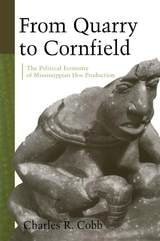
From Quarry to Cornfield
The Political Economy of Mississippian Hoe ProductionCharles Richard Cobb
University of Alabama Press, 2001
An innovative model for examining the technology of hoe production and its contribution to the agriculture of Mississippian communities.
Lithic specialist Charles Cobb examines the political economy in Mississippian communities through a case study of raw material procurement and hoe production and usage at the Mill Creek site on Dillow Ridge in southwest Illinois. Cobb outlines the day-to-day activities in a Mississippian chiefdom village that flourished from about A.D. 1250 to 1500. In so doing, he provides a fascinating window into the specialized tasks of a variety of "day laborers" whose contribution to the community rested on their production of stone hoes necessary in the task of feeding the village. Overlooked in most previous studies, the skills and creativity of the makers of the hoes used in village farming provide a basis for broader analysis of the technology of hoe use in Mississippian times.
Although Cobb's work focuses on Mill Creek, his findings at this site are representative of the agricultural practices of Mississippian communities throughout the eastern United States. The theoretical underpinnings of Cobb's study make a clear case for a reexamination of the accepted definition of chiefdom, the mobilization of surplus labor, and issues of power, history, and agency in Mississippian times. In a well-crafted piece of writing, Cobb distinguishes himself as one of the leaders in the study of lithic technology. From Quarry to Cornfield will find a well-deserved place in the ongoing discussions of power and production in the Mississippian political economy.
From Science to Computational Sciences
Studies in the History of Computing and its Influence on Today‘s SciencesEdited by Gabriele Gramelsberger
Diaphanes, 2011
During the last decades hundreds of computational departments have been established all over the world and countless computer-based simulations have been conducted. This volume explores the epoch-making influence of automatic computing machines on science, in particular as simulation tools.

From Sea Charts to Satellite Images
Interpreting North American History through MapsEdited by David Buisseret
University of Chicago Press, 1990
"An extraordinarily wide range of maps is depicted, which makes for good browsing, pondering and close study. . . . This is a very good, highly attractive, and worthwhile book; it will have great impact on the use of old (and new!) maps in teaching. As well, this is a tantalizing survey of mapping the United States and will whet the appetites of students and encourage them to learn more about maps and their origins."—John Warketin, Cartographica
From Sight to Light
The Passage from Ancient to Modern OpticsA. Mark Smith
University of Chicago Press, 2014
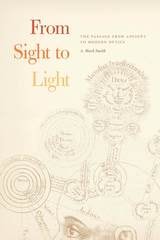
Breaking from previous scholarship that sees Johannes Kepler as the culmination of a long-evolving optical tradition that traced back to Greek antiquity via the Muslim Middle Ages, Smith presents Kepler instead as marking a rupture with this tradition, arguing that his theory of retinal imaging, which was published in 1604, was instrumental in prompting the turn from sight to light. Kepler’s new theory of sight, Smith reveals, thus takes on true historical significance: by treating the eye as a mere light-focusing device rather than an image-producing instrument—as traditionally understood—Kepler’s account of retinal imaging helped spur the shift in analytic focus that eventually led to modern optics.
A sweeping survey, From Sight to Light is poised to become the standard reference for historians of optics as well as those interested more broadly in the history of science, the history of art, and cultural and intellectual history.
From Squaw Tit to Whorehouse Meadow
How Maps Name, Claim, and InflameMark Monmonier
University of Chicago Press, 2006
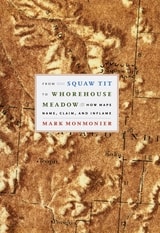
From Squaw Tit to Whorehouse Meadow probes this little-known chapter in American cartographic history by considering the intersecting efforts to computerize mapmaking, standardize geographic names, and respond to public concern over ethnically offensive appellations. Interweaving cartographic history with tales of politics and power, celebrated geographer Mark Monmonier locates his story within the past and present struggles of mapmakers to create an orderly process for naming that avoids confusion, preserves history, and serves different political aims. Anchored by a diverse selection of naming controversies—in the United States, Canada, Cyprus, Israel, Palestine, and Antarctica; on the ocean floor and the surface of the moon; and in other parts of our solar system—From Squaw Tit to Whorehouse Meadow richly reveals the map’s role as a mediated portrait of the cultural landscape. And unlike other books that consider place names, this is the first to reflect on both the real cartographic and political imbroglios they engender.
From Squaw Tit to Whorehouse Meadow is Mark Monmonier at his finest: a learned analysis of a timely and controversial subject rendered accessible—and even entertaining—to the general reader.
From White Dwarfs to Black Holes
The Legacy of S. ChandrasekharEdited by G. Srinivasan
University of Chicago Press, 1999
Over the course of more than six decades of active research Chandrasekhar investigated a dizzying array of subjects. G. Srinivasan notes in the preface to this book that "the range of Chandra's contributions is so vast that no one person in the physics or astronomy community can undertake the task of commenting on his achievements." Thus, in this collection, ten eminent scientists evaluate Chandrasekhar's contributions to their own fields of specialization. Donald E. Osterbrock closes the volume with a historical discussion of Chandrasekhar's interactions with graduate students during his more than quarter century at Yerkes Observatory.
Contributors are James Binney, John L. Friedman, Norman R. Lebovitz, Donald E. Osterbrock, E. N. Parker, Roger Penrose, A. R. P. Rau, George B. Rybicki, E. E. Salpeter, Bernard F. Schutz, and G. Srinivasan.
From Workshop to Waste Magnet
Environmental Inequality in the Philadelphia RegionSicotte, Diane
Rutgers University Press, 2016
From the Ground Up
A History of Mining in Utahedited by Colleen K. Whitley
Utah State University Press, 2025
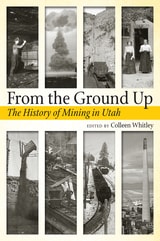
Mining had an enormous role, only partly measurable, in the history of Utah. Its multidimensional impact continues today. Economically, it made a major long-term contribution to the wealth, employment, and tax base of the state and stimulated a seemingly endless range of secondary businesses and enterprises. It helped shape the state's social history, determining the location, distribution, and composition of many communities and bringing transportation systems and a wide variety of institutions to them. It developed cultural diversity by drawing to Utah miners and families from otherwise underrepresented ethnic and national backgrounds. It ignited strife, particularly between labor and management, but those issues often spread into or connected with other conflicts in and between communities, classes, and factions. It influenced political platforms, generated candidates, and helped decide elections. Throughout the state, mining dramatically transformed the landscape, most obviously at what has been called the world's largest open-pit mine, which removed much of a mountain on the west side of Salt Lake Valley, but at innumerable other places too.
Despite all mining has done and meant, there has not been, until now, a book that surveyed its history in Utah. From the Ground Up fills that gap in a collection of essays by leading experts, among them historians Thomas G. Alexander, Martha Sonntag Bradley-Evans, James E. Fell Jr., Laurence P. James, Brigham D. Madsen, Philip F. Notarianni, Allen Kent Powell, W. Paul Reeve, Raye C. Ringholz, and Janet Burton Seegmiller and geologists J. Wallace Gwynn and William T. Parry. The book is divided into three comprehensive parts. The first looks at "The Ground of Utah Mining": the geology that has produced extractable minerals, the economic history of the industry, "father of Utah mining" Patrick E. Connor, and the lore of mines and miners. Part II reviews the history of a handful of particularly significant mineral industries: salines, coal, uranium, and beryllium. The last part takes a region-by-region approach to survey the important, primarily for hard-rock mining, areas of the state, including places from Silver Reef to Alta, the East Tintic Range to the Uinta Basin, and Park City to Frisco.
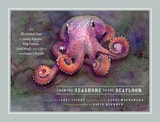
From the Seashore to the Seafloor
An Illustrated Tour of Sandy Beaches, Kelp Forests, Coral Reefs, and Life in the Ocean's DepthsJanet Voight and Peggy Macnamara
University of Chicago Press, 2022
Have you ever walked along the beach and wondered what kind of creatures can be found beneath the waves? Have you pictured what it would be like to see the ocean not from the shore but from its depths? These questions drive Janet Voight, an expert on mollusks who has explored the seas in the submersible Alvin that can dive some 14,000 feet below the water’s surface. In this book, she partners with artist Peggy Macnamara to invite readers to share her undersea journeys of discovery.
With accessible scientific descriptions, Voight introduces the animals that inhabit rocky and sandy shores, explains the fragility of coral reefs, and honors the extraordinary creatures that must search for food in the ocean’s depths, where light and heat are rare. These fascinating insights are accompanied by Macnamara’s stunning watercolors, which illuminate these ecosystems and other scenes from Voight’s research. Together, they show connections between life at every depth—and warn of the threats these beguiling places and their eccentric denizens face.
Frontiers Of Illusion
Science, Technology, and the Politics of ProgressDaniel Sarewitz
Temple University Press, 1996
For the past fifty years, science and technology—supported with billions of dollars from the U.S. government—have advanced at a rate that would once have seemed miraculous, while society's problems have grown more intractable, complex, and diverse. Yet scientists and politicians alike continue to prescribe more science and more technology to cure such afflictions as global climate change, natural resource depletion, overpopulation, inadequate health care, weapons proliferation, and economic inequality.
Daniel Sarewitz scrutinizes the fundamental myths that have guided the formulation of science policy for half a century—myths that serve the professional and political interests of the scientific community, but often fail to advance the interests of society as a whole. His analysis ultimately demonstrates that stronger linkages between progress in science and progress in society will require research agendas that emerge not from the intellectual momentum of science, but from the needs and goals of society.
Fuckology
Critical Essays on John Money's Diagnostic ConceptsLisa Downing, Iain Morland, and Nikki Sullivan
University of Chicago Press, 2014
In Fuckology, the authors contextualize and interrogate Money's writings and practices. The book focuses on his three key diagnostic concepts, “hermaphroditism,” “transsexualism,” and “paraphilia,” but also addresses his lesser-known work on topics ranging from animal behavior to the philosophy of science. The result is a comprehensive collection of new insights for researchers and students within cultural, historical, and gender studies, as well as for practitioners and activists in sexology, psychology, and patient rights.
Fuel Cycle to Nowhere
U.S. Law and Policy on Nuclear WasteRichard Burleson Stewart
Vanderbilt University Press, 2011
The first comprehensive history and overview of U.S. nuclear waste law and regulation, Fuel Cycle to Nowhere traces sixty years of nuclear weapons programs, the growth of nuclear power, and their waste legacies, the rise of environmentalism, and the responses of federal agencies. Richard and Jane Stewart expertly analyze the changing policies for storing low-level waste, transuranic waste, spent nuclear fuel, and high-level waste and for regulating their transport by rail and by truck. They also chronicle "a tale of two repositories"--one, the Waste Isolation Pilot Plant in New Mexico, known as WIPP, the world's only operating deep geologic nuclear waste disposal facility, which emerged from a contentious but ultimately successful struggle between federal and state interests; the other, Yucca Mountain, mandated top down by Congress and a failure.
Fuel Cycle to Nowhere provides the critical information and analysis on the waste disposal issues and solutions that the commission, Congress, the administration, journalists, policymakers, and the public so urgently need.
This book is a project of the Consortium for Risk Evaluation with Stakeholder Participation (CRESP), a Vanderbilt University-led, multi-university consortium supported as a cooperative agreement by the U.S. Department of Energy, Office of Environmental This book is a project of the Consortium for Risk Evaluation with Stakeholder Participation (CRESP), a Vanderbilt University-led, multi-university consortium supported as a cooperative agreement by the U.S. Department of Energy, Office of Environmental Management to support safe, effective, publicly credible, risk informed management of existing and future nuclear waste from government and civilian sources through independent strategic analysis, review, applied research and education.
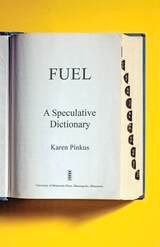
Fuel
A Speculative DictionaryKaren Pinkus
University of Minnesota Press, 2016
Fuel is an idiosyncratic, speculative dictionary of fuels, real and imagined, historical and futuristic, hopeless and utopian. Drawing on literature, film, and scientific treatises—most produced long before “climate change” was in circulation—Fuel argues for a distinction between energy (a system of power) and fuel (a substance, which can be thought of as “potentiality”) as it endeavors to undo the dream that we can simply switch to renewables and all will be golden.
From “Air” to “Zyklon B,” entries in this unusual “dictionary” include Algae, Clathrates, Dilithium, Fleece, Goats, Theology, Whale Oil, and many, many more. The tone of the entries ranges as widely as the topics: from historical anecdotes (the Ford Fiesta “boozemobile”) to eccentric readings of the classics of “energy lit” (Germinal and Oil!); from literary observations (a high octane Odyssey?) to excursions into literary theory. The dictionary draws from an eccentric canon, including works by Jules Verne, George Eliot’s Silas Marner, Paolo Bacigalupi’s Windup Girl, and the Tom Cruise vehicle Oblivion, among others.
A message from this ambitious project is that energy can be understood as a heterogeneous set of self-mystifying systems or machines that block access to thought as they fascinate us. Fuels emerge as more primal elements that the audience can grasp at various points along the way to consumption/combustion. This dictionary can help scramble our thinking about fuel—not in order to demonize energy and not in order to create a new hierarchy in which certain renewables take over from fossil fuels but instead to open up potential ways of interacting with real and imaginary substances, by wrenching them out of narrative and placing them into an idiosyncratic dictionary to be applied by readers into new narratives.
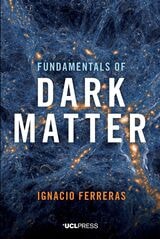
Fundamentals of Dark Matter
Ignacio Ferreras
University College London, 2025
Fundamentals of Dark Matter provides a comprehensive and accessible introduction to one of the greatest mysteries in astrophysics. Designed for advanced undergraduates and graduate students, this textbook presents the key discoveries that led to the dark matter hypothesis and also fosters critical thinking with thought-provoking “How about…?” questions in each chapter.
Ignacio Ferreras guides readers through the historical challenges in galactic astrophysics and the cosmic microwave background, outlining the evidence that has made dark matter a fundamental component of modern cosmology. The book also explores the latest developments in galaxy formation and the ongoing search for the true nature of dark matter.
Each chapter includes clear learning outcomes and discussion questions, making it an ideal resource for courses in extragalactic astrophysics or cosmology. With its engaging pedagogical approach, Fundamentals of Dark Matter equips students with both the knowledge and the curiosity to explore one of the most dynamic areas of modern astrophysics.
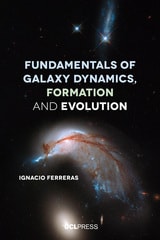
Fundamentals of Galaxy Dynamics, Formation and Evolution
Ignacio Ferreras
University College London, 2019

Fundamentals of Tree Ring Research
James H. Speer
University of Arizona Press, 2010
This comprehensive text addresses all of the subjects that a reader who is new to the field will need to know and will be a welcome reference for practitioners at all levels. It includes a history of the discipline, biological and ecological background, principles of the field, basic scientific information on the structure and growth of trees, the complete range of dendrochronology methods, and a full description of each of the relevant subdisciplines.
Individual chapters address the composition of wood, methods of field and laboratory study, dendroarchaeology, dendroclimatology, dendroecology, dendrogeomorphology, and dendrochemistry. The book also provides thorough introductions to common computer programs and methods of statistical analysis. In the final chapter, the author describes “frontiers in dendrochronology,” with an eye toward future directions in the field. He concludes with several useful appendixes, including a listing of tree and shrub species that have been used successfully by dendrochronologists. Throughout, photographs and illustrations visually represent the state of knowledge in the field.
Fundamentals of Wave Phenomena
Akira Hirose
The Institution of Engineering and Technology, 2010
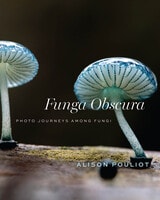
Funga Obscura
Photo Journeys Among FungiAlison Pouliot
University of Chicago Press, 2025
An unforgettable visual journey through the kingdom of fungi, both enigmatic and entrancing.
Recyclers, creators of soil, enablers of life, and food for many—fungi are as dynamic as they are diverse. And, throughout her career, Alison Pouliot has observed these organisms with a unique vision. As a scientist and photographer, she has led hundreds of forays through the forests of the Americas, Australia, and Europe. In this book, readers can travel along with her on these global explorations through stunning photographs and meditations on the landscape. She says her camera is where fungal lives come most clearly into focus. And like the camera obscura, this book, Funga Obscura, captures brief mycological moments and unforgettable fungus microcosms.
The word funga refers to the fungi of a region, and Pouliot’s photography spans continents. We see a parade of violet webcap mushrooms, spotted in the understory of a Pacific Northwest forest; brilliantly blue pixie’s parasols in Australia; an Italian alpine lichen, looking for all the world like a treasure map; and a showstopping whitelaced shank, ready to spread its spores in Switzerland. We learn that fungi live almost everywhere, from our lawns to forests and woodlands, from the ocean’s depths to deserts and alpine peaks. Yet, like a web of rootlike mycelium, Funga Obscura goes deeper to investigate how fungi shape landscapes and interact with other organisms, including humans. This journey spans eons, from long ago in evolutionary time, when fungi first emerged from the ocean onto land, to today, when we witness their work all around us. The scenes here challenge our ideas about what fungi are, what they do, and why they matter.
In Pouliot’s photographs, you might recognize a few old friends, but many mushrooms will be new acquaintances. Sometimes they make their presence immediately known; at other times, they just provide clues—and trails to follow.

Fungible Life
Experiment in the Asian City of LifeAihwa Ong
Duke University Press, 2016
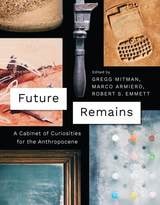
Future Remains
A Cabinet of Curiosities for the AnthropoceneEdited by Gregg Mitman, Marco Armiero, Robert S. Emmett
University of Chicago Press, 2018
Future Remains is a thoughtful and creative meditation on these questions. The fifteen objects gathered in this book resemble more the tarots of a fortuneteller than the archaeological finds of an expedition—they speak of planetary futures. Marco Armiero, Robert S. Emmett, and Gregg Mitman have assembled a cabinet of curiosities for the Anthropocene, bringing together a mix of lively essays, creatively chosen objects, and stunning photographs by acclaimed photographer Tim Flach. The result is a book that interrogates the origins, implications, and potential dangers of the Anthropocene and makes us wonder anew about what exactly human history is made of.
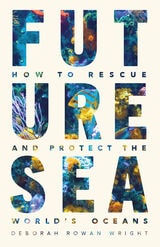
Future Sea
How to Rescue and Protect the World’s OceansDeborah Rowan Wright
University of Chicago Press, 2020
The world’s oceans face multiple threats: the effects of climate change, pollution, overfishing, plastic waste, and more. Confronted with the immensity of these challenges and of the oceans themselves, we might wonder what more can be done to stop their decline and better protect the sea and marine life. Such widespread environmental threats call for a simple but significant shift in reasoning to bring about long-overdue, elemental change in the way we use ocean resources. In Future Sea, ocean advocate and marine-policy researcher Deborah Rowan Wright provides the tools for that shift. Questioning the underlying philosophy of established ocean conservation approaches, Rowan Wright lays out a radical alternative: a bold and far-reaching strategy of 100 percent ocean protection that would put an end to destructive industrial activities, better safeguard marine biodiversity, and enable ocean wildlife to return and thrive along coasts and in seas around the globe.
Future Sea is essentially concerned with the solutions and not the problems. Rowan Wright shines a light on existing international laws intended to keep marine environments safe that could underpin this new strategy. She gathers inspiring stories of communities and countries using ocean resources wisely, as well as of successful conservation projects, to build up a cautiously optimistic picture of the future for our oceans—counteracting all-too-prevalent reports of doom and gloom. A passionate, sweeping, and personal account, Future Sea not only argues for systemic change in how we manage what we do in the sea but also describes steps that anyone, from children to political leaders (or indeed, any reader of the book), can take toward safeguarding the oceans and their extraordinary wildlife.
Futures of the Sun
The Struggle over Renewable LifeImre Szeman
University of Minnesota Press, 2024
Who will lead the transition from fossil fuel–dependent societies into renewable energy futures?
Energy transition is crucial to the struggle against climate change. But even while embracing the death of fossil fuels, some want to preserve the current social and political order. Futures of the Sun explores the competing eco-stories being offered by people intent on shaping the transition to fit their vision and version of a renewable society. Imre Szeman explains how and why key players are working hard to make sure a greener, cleaner future will look much like the world we live in today. He examines the rhetoric, ideology, and politics of liberal nationalists intent on fighting a war against climate change, billionaire solar entrepreneurs who believe only in themselves, and the populist far right who want no change at all.
Offering possible new critical and political avenues, Szeman reveals how those on the environmental left can ensure their vision of egalitarianism beyond the status quo can become the reality of our renewable future.