Results by title
28167 books match the query 'History' and 1092 start with f
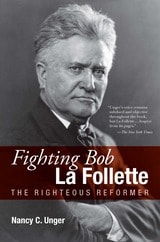
Fighting Bob La Follette
The Righteous ReformerNancy C Unger
Wisconsin Historical Society Press, 2008
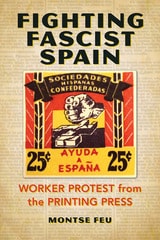
Fighting Fascist Spain
Worker Protest from the Printing PressMontse Feu
University of Illinois Press, 2020
Montse Feu merges España Libre's story with the drama of the Spanish immigrant community's fight against fascism. The periodical emerged as part of a transnational effort to link migrants and new exiles living in the United States to antifascist networks abroad. In addition to showing how workers' culture and politics shaped their antifascism, Feu brings to light creative works that ranged from literature to satire to cartoons to theater. As España Libre opened up radical practices, it encouraged allies to reject violence in favor of social revolution's potential for joy and inclusion.
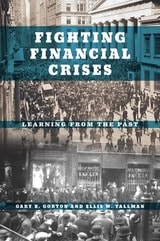
Fighting Financial Crises
Learning from the PastGary B. Gorton and Ellis W. Tallman
University of Chicago Press, 2018
Yet these pre-Fed banking panics, as Gary B. Gorton and Ellis W. Tallman show, bear striking similarities to our recent financial crisis. Fighting Financial Crises thus turns to the past to better understand our uncertain present, investigating how panics during the National Banking Era played out and how they were eventually quelled and prevented. The authors then consider the Fed’s and the SEC’s reactions to the recent crisis, building an informative new perspective on how the modern economy works.
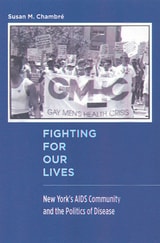
Fighting For Our Lives
New York's AIDS Community and the Politics of DiseaseChambré, Susan M
Rutgers University Press, 2006
In the first decade of the AIDS epidemic, New York City was struck like no other. By the early nineties, it was struggling with more known cases than the next forty most infected cities, including San Francisco, combined.
Fighting for Our Lives is the first comprehensive social history of New York's AIDS community-a diverse array of people that included not only gay men, but also African Americans, Haitians, Latinos, intravenous drug users, substance abuse professionals, elite supporters, and researchers. Looking back over twenty-five years, Susan Chambré focuses on the ways that these disparate groups formed networks of people and organizations that-both together and separately-supported persons with AIDS, reduced transmission, funded research, and in the process, gave a face to an epidemic that for many years, whether because of indifference, homophobia, or inefficiency, received little attention from government or health care professionals.
Beyond the limits of New York City, and even AIDS, this case study also shows how any epidemic provides a context for observing how societies respond to events that expose the inadequacies of their existing social and institutional arrangements. By drawing attention to the major faults of New York's (and America's) response to a major social and health crisis at the end of the twentieth century, the book urges more effective and sensitive actions-both governmental and civil-in the future.

Fighting Invisibility
Asian Americans in the MidwestMonica Mong Trieu
Rutgers University Press, 2023
Drawing from in-depth interviews, census data, and cultural productions from Asian Americans in Ohio, Wisconsin, Nebraska, Minnesota, Illinois, Iowa, Indiana, and Michigan, this interdisciplinary research examines how post-1950s Midwest Asian Americans navigate identity and belonging, racism, educational settings, resources within co-ethnic communities, and pan-ethnic cultural community. Their experiences and life narratives are heavily framed by three pervasive themes of spatially defined isolation, invisibility, and racialized visibility.
Fighting Invisibility makes an important contribution to racialization literature, while also highlighting the necessity to further expand the scope of Asian American history-telling and knowledge production.
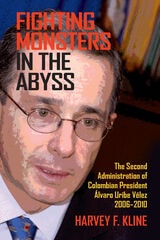
Fighting Monsters in the Abyss
The Second Administration of Colombian President Álvaro Uribe Vélez, 2006–2010Harvey F. Kline
University of Alabama Press, 2015
Studies the complex constraints and trade-offs the second administration of Colombian President Uribe (2006–2010) encountered as it attempted to resolve that nation’s violent Marxist insurrection and to have a more efficient judicial system
Fighting Monsters in the Abyss offers a deeply insightful analysis of the efforts by the second administration of Colombian President Álvaro Uribe Vélez (2006–2010) to resolve a decades-long Marxist insurgency in one of Latin America’s most important nations. Continuing work from his prior books about earlier Colombian presidents and yet written as a stand-alone study, Colombia expert Harvey F. Kline illuminates the surprising successes and setbacks in Uribe’s response to this existential threat.
In State Building and Conflict Resolution in Colombia, 1986–1994, Kline documented and explained the limited successes of Presidents Virgilio Barco and César Gaviria in putting down the revolutionaries while also confronting challenges from drug dealers and paramilitary groups. The following president Andrés Pastrana then boldly changed course and attempted resolution through negotiations, an effort whose failure Kline examines in Chronicle of a Failure Foretold. In his third book, Showing Teeth to the Dragons, Kline shows how in his first term President Álvaro Uribe Vélez more successfully quelled the insurrection through a combination of negotiated demobilization of paramilitary groups and using US backing to mount more effective military campaigns.
Kline opens Fighting Monsters in the Abyss with a recap of Colombia’s complex political history, the development of Marxist rebels and paramilitary groups and their respective relationships to the narcotics trade, and the attempts of successive Colombian presidents to resolve the crisis. Kline next examines the ability of the Colombian government to reimpose rule in rebel-controlled territories as well as the challenges of administering justice. He recounts the difficulties in the enforcement of the landmark Law of Justice and Peace as well as two significant government scandals, that of the “false positives” (“falsos positivos”) in which innocent civilians were killed by the military to inflate the body counts of dead insurgents and a second scandal related to illegal wiretapping.
In tracing Uribe’s choices, strategies, successes, and failures, Kline also uses the example of Colombia to explore a dimension quite unique in the literature about state building: what happens when some members of a government resort to breaking rules or betraying their societies’ values in well-intentioned efforts to build a stronger state?
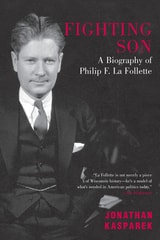
Fighting Son
A Biography of Philip F. La FolletteJonathan Kasparek
Wisconsin Historical Society Press, 2006
Former Wisconsin governor Philip F. La Follette forged a political path characterized by his progressive, innovative vision. Growing up in the shadow of revered senator "Fighting Bob" La Follette made for a politically charged childhood and laid the groundwork for Phil's emergence as a powerful figure in Wisconsin politics. A gregarious and fiery politician, Phil's efforts led to the passage of the country's first unemployment compensation act, aid programs for workers and farmers, and the reorganization of state government.
This approachable, comprehensive book traces La Follette's journey through public office as well as his life after the waning of the Progressive era. Phil La Follette’s is a history of continuing progressivism, of innovative solutions to social problems, and of loyalty to a political ethos that goes far beyond love of country. Kasparek's treatment of this Fighting Son is a monument not only to La Follette but to progressive politics in Wisconsin.
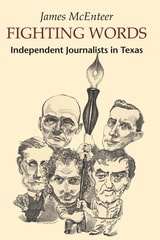
Fighting Words
Independent Journalists in TexasBy James McEnteer
University of Texas Press, 1992
Fighting Words profiles five journalists who published the truth as they saw it, no matter how their reporting angered politicians, social and religious leaders, or other journalists.
The five journalists are William Brann (1855–1898), Don Biggers (1868–1957), John Granbery (1874–1953), Archer Fullingim (1902–1984), and Stoney Burns [Brent Stein] (1942–2011). Though they lived in different eras, all these men dealt with issues that society continues to face—racism, official corruption, religious freedom, educational reform, political extremism of the left and right, the clash of urban and rural values, and the fear of change. Their lives and work constitute a unique, alternative perspective on Texas history and the history of journalism itself.
In addition to the troubling questions they raised on social issues, these independent journalists challenge us, as they challenged the mainline media of their own times, to define the function of journalism and to examine the mandate of the First Amendment. We may doubt the wisdom of some of their convictions, but not the courage they needed to express them in the face of ridicule, hostility, intimidation, and even death. More than the specific causes they fought for, the independents’ passion for truth and their absolute belief in free speech constitute their greatest legacy to us and to journalism.
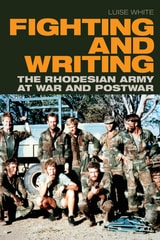
Fighting and Writing
The Rhodesian Army at War and PostwarLuise White
Duke University Press, 2021
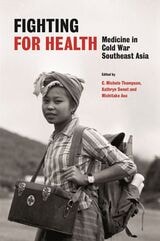
Fighting for Health
Medicine in Cold War Southeast AsiaEdited by C. Michele Thompson, Kathryn Sweet, and Michitake Aso
National University of Singapore Press, 2024
For far too long, Southeast Asia has been treated as a static backdrop for the exploits and discoveries of Western biomedical doctors. Yet, Southeast Asians have been vital to the significant developments in the prevention and treatment of diseases that have taken place in the region and beyond. Many of the institutions and people that shaped subsequent responses to outbreaks, epidemics, and pandemics first began their work in Southeast Asia during the Cold War. The diversity of approaches to health and medicine during that era also reminds us of the possibilities, and limits, of human intervention in the face of political, social, economic, and microbial realities. The people and places of Southeast Asia have provided clinical trials for different health regimes. Fighting for Health highlights new perspectives and methods that have evolved from research presented at regional conferences, including the History of Medicine in Southeast Asia (HOMSEA) series. These insights serve to challenge dominant models of the medical humanities.

Fighting for NOW
Diversity and Discord in the National Organization for WomenKelsy Kretschmer
University of Minnesota Press, 2019
An unparalleled exploration of NOW’s trajectory, from its founding to the present—and its future
A new wave of feminist energy has swept the globe since 2016—from women’s marches and the #MeToo movement to transwomen’s inclusion and exclusion in feminism and participation in institutional politics. Amid all this, an organization declared dead or dying for thirty years—the National Organization for Women—has seen a membership boom. NOW presents an intriguing puzzle for scholars and activists alike. Considered one of the most stable organizations in the feminist movement, it has experienced much conflict and schism. Scholars have long argued that factionalism is the death knell of organizations, yet NOW continues to thrive despite internal conflicts.
Fighting for NOW seeks to better understand how bureaucratic structures like NOW’s simultaneously provide stability and longevity, while creating space for productive and healthy conflict among members. Kelsy Kretschmer explores these ideas through an examination of conflict in NOW’s local chapters, its task forces and committees, and its satellite groups. NOW’s history provides evidence for three basic arguments: bureaucratic groups are not insulated from factionalism; they are important sites of creativity and innovation for their movements; and schisms are not inherently bad for movement organizations. Hence, Fighting for NOW is in stark contrast to conventional scholarship, which has conceptualized factionalism as organizational failure. It also provides one of the few book-length explorations of NOW’s trajectory, from its founding to the modern context.
Scholars will welcome the book’s insights that draw on open systems and resource dependency theories, as well as its rethinking of how conflict shapes activist communities. Students will welcome its clear and compelling history of the feminist movement and of how feminist ideas have changed over the past five decades.
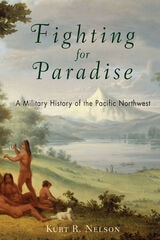
Fighting for Paradise
A Military History of the Pacific NorthwestKurt R. Nelson
Westholme Publishing, 2007
One of the Most Important Battlegrounds in the History of America
While it is in the eastern United States where most Americans identify our military history, the vast, resource-rich Pacific Northwest, stretching from Northern California through British Columbia, endured a series of battles and wars over the course of the nineteenth century that were of regional and national importance. It was here where Great Britain and the United States had their final confrontation in the Americas, where Chief Joseph attempted to secure independence for the Nez Perce, and where the Oregon Trail marked the first great migration to the West of settlers bent on carving out new lives in the wilderness. The Pacific Northwest also saw some of the only attacks on the mainland by Japan during World War II.
Beginning with the earliest known accounts of wars among the American Indians of the region, Fighting for Paradise: A Military History of the Pacific Northwest describes early European contact, including British trappers of the Hudson's Bay Company, the Lewis and Clark Expedition, Jedediah Smith, and John Jacob Astor's trading post. The competition over the lucrative fur trade led to the "Pig War," which almost resulted in another armed conflict between Great Britain and the United States, but it was the influx of settlers from the Oregon Trail that touched off the long bitter battles between whites and American Indians. Starting with the 1847 Whitman Massacre and the ensuing war it touched off, the book covers the next three decades of violence, ending with the Sheepeater's War in 1879. Kurt R. Nelson then relates the Pacific Northwest's contributions to the Spanish-American and Philippine-American Wars, the Mexican Punitive Expedition, World War I, and finally World War II, where the region fought Japanese submarine attacks and was harassed by balloon bombs. Throughout, the author provides current information about the state of preservation of various battle sites and other points of historical interest. Accompanied by maps and photographs, Fighting for Paradise provides insight into an area of American military history, rich in drama, that is not generally known.

Fighting for Public Services
Better Lives, A Better WorldFritz Keller and Andreas Hoferl
Pluto Press, 2008
It provides a full account of trade union history and activism across the public sector worldwide. Examining the major political events of the 20th century, the book shows what challenges they presented to the PSI and its major unions. It shows how the public sector responded to the two World Wars, the rise of fascism, the Cold war, and the independence struggles in the former colonies.
It also provides a comprehensive account of the evolution of public service provision, from public health to policing, water, pensions, security and culture. It includes many examples of how the recent liberalization and privatization of public services has failed to secure efficiency and equity.
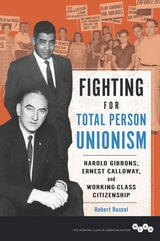
Fighting for Total Person Unionism
Harold Gibbons, Ernest Calloway, and Working-Class CitizenshipRobert Bussell
University of Illinois Press, 2015
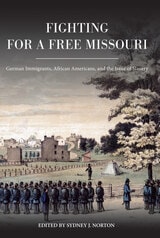
Fighting for a Free Missouri
German Immigrants, African Americans, and the Issue of SlaverySydney J. Norton
University of Missouri Press, 2023
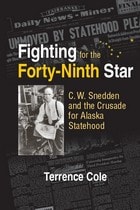
Fighting for the Forty-Ninth Star
C. W. Snedden and the Crusade for Alaska StatehoodTerrence Cole
University of Alaska Press, 2010
C.W. "Bill" Snedden, the publisher of America's farthest north daily newspaper, the Fairbanks Daily News-Miner, helped lead the battle of the Far North against the Deep South. Working behind the scenes with his protege, a young attorney named Ted Stevens, and a fellow Republican newspaperman, Secretary of Interior Fred Seaton, Snedden's "magnificent obsession" would open the door to development of the oil fields at Prudhoe Bay, inspire establishment of the Arctic Wildlife Range (now the Arctic National Wildlife Refuge), and add the forty-ninth star to the flag.
Fighting for the Forty-Ninth Star is the story of how the publisher of a little newspaper four thousand miles from Washington, D.C., helped convince Congress that Alaskans should be second-class citizens no more.
Fighting for the King and the Gods
A Survey of Warfare in the Ancient Near EastCharlie Trimm
SBL Press, 2017
The most up-to-date sourcebook on warfare in the ancient Near East
Fighting for the King and the Gods provides an introduction to the topic of war and the variety of texts concerning many aspects of warfare in the ancient Near East. These texts illustrate various viewpoints of war and show how warfare was an integral part of life. Trimm examines not only the victors and the famous battles, but also the hardship that war brought to many. While several of these texts treated here are well known (i.e., Ramses II's battle against the Hittites at Qadesh), others are known only to specialists. This work will allow a broader audience to access and appreciate these important texts as they relate to the history and ideology of warfare.
Features
- References to recent secondary literature for further study
- Early Greek and Chinese illustrative texts for comparisons with other cultures
- Indices to help guide the reader
Fighting from a Distance
How Filipino Exiles Helped Topple a DictatorJose V. Fuentecilla
University of Illinois Press, 2013
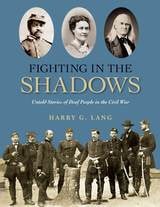
Fighting in the Shadows
Untold Stories of Deaf People in the Civil WarHarry G. Lang
Gallaudet University Press, 2017
Lang pieces together hundreds of stories, accompanied by numerous historical images, to reveal a powerful new perspective on the Civil War. These soldiers and civilians were not “disabled” by their deafness. On the contrary, despite the marginalization and paternalism they experienced in society, they were able to apply their skills and knowledge to support the causes in which they ardently believed.
Fighting in the Shadows is a story of how deaf civilians and soldiers put aside personal concerns about deafness, in spite of the discrimination they faced daily, in order to pursue a cause larger than themselves. Yet their stories have remained in the shadows, leaving most Americans, hearing and deaf, largely unaware of the deaf people who made significant contributions to the events that changed the course of our nation’s history. This book provides new insights into Deaf history as well as into mainstream interpretations of the Civil War.

Fighting the Death Penalty
A Fifty-Year Journey of Argument and PersuasionEugene G. Wanger
Michigan State University Press, 2019
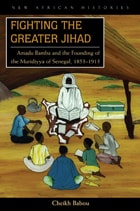
Fighting the Greater Jihad
Amadu Bamba and the Founding of the Muridiyya of Senegal, 1853–1913Cheikh Anta Babou
Ohio University Press, 2007
In Senegal, the Muridiyya, a large Islamic Sufi order, is the single most influential religious organization, including among its numbers the nation’s president. Yet little is known of this sect in the West. Drawn from a wide variety of archival, oral, and iconographic sources in Arabic, French, and Wolof, Fighting the Greater Jihad offers an astute analysis of the founding and development of the order and a biographical study of its founder, Cheikh Ahmadu Bamba Mbakke.
Cheikh Anta Babou explores the forging of Murid identity and pedagogy around the person and initiative of Amadu Bamba as well as the continuing reconstruction of this identity by more recent followers. He makes a compelling case for reexamining the history of Muslim institutions in Africa and elsewhere in order to appreciate believers’ motivation and initiatives, especially religious culture and education, beyond the narrow confines of political collaboration and resistance. Fighting the Greater Jihad also reveals how religious power is built at the intersection of genealogy, knowledge, and spiritual force, and how this power in turn affected colonial policy.
Fighting the Greater Jihad will dramatically alter the perspective from which anthropologists, historians, and political scientists study Muslim mystical orders.
Fighting the Plague in Seventeenth-Century Italy
Carlo M. Cipolla
University of Wisconsin Press, 1981
After the great pandemic of 1348, the plague became endemic in Europe, affecting life at every level for more than three hundred years. In attempting to fight the dread enemy, the North Italian states had developed, by the early sixteenth century, a highly sophisticated system of public health. Special permanent magistracies combining legislative and executive powers were established to administer all public health matters.
In this volume, Carlo M. Cipolla throws new light on the subject, utilizing newly uncovered and significant archival material.
In the first essay, the author analyzes the complex set of interrelationships that existed between theory and practice in Renaissance epidemiology. The significance of this essay goes beyond the history of public health and extends to the larger history of science.
In the second essay, Cipolla studies a case in which health matters became the object of intense diplomatic activity. In that instance, fully sovereign states envisaged interstate controls and relinquished discretionary powers for the sake of the “common health.” Although the concerted effort was short-lived, it does represent an attempt at international health cooperation that was unmatched for another two centuries, until the first International Sanitary Conference, held in Paris in 1851.
In the third essay, unusually detailed statistical documentation allows the author to analyze in detail the demographic, economic, and social aspects of the fight against the plague in a Tuscan city—Pistoia—during the epidemic of 1630–31.
A richly documented appendix, forming an essay in itself, illustrates present knowledge of the clinical, pathological, and epidemiological features of the plague in the sixteenth and seventeenth centuries in Europe.
Fighting the Slave Trade
West African StrategiesSylviane A. Diouf
Ohio University Press, 2003
While most studies of the slave trade focus on the volume of captives and on their ethnic origins, the question of how the Africans organized their familial and communal lives to resist and assail it has not received adequate attention. But our picture of the slave trade is incomplete without an examination of the ways in which men and women responded to the threat and reality of enslavement and deportation.
Fighting the Slave Trade is the first book to explore in a systematic manner the strategies Africans used to protect and defend themselves and their communities from the onslaught of the Atlantic slave trade and how they assaulted it.
It challenges widely held myths of African passivity and general complicity in the trade and shows that resistance to enslavement and to involvement in the slave trade was much more pervasive than has been acknowledged by the orthodox interpretation of historical literature.
Focused on West Africa, the essays collected here examine in detail the defensive, protective, and offensive strategies of individuals, families, communities, and states. In chapters discussing the manipulation of the environment, resettlement, the redemption of captives, the transformation of social relations, political centralization, marronage, violent assaults on ships and entrepôts, shipboard revolts, and controlled participation in the slave trade as a way to procure the means to attack it, Fighting the Slave Trade presents a much more complete picture of the West African slave trade than has previously been available.
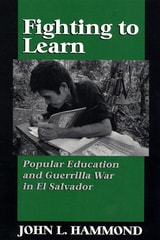
Fighting to Learn
Popular Education and Guerilla War in El SalvadorHammond, John L
Rutgers University Press, 1998
Popular education played a vital role in the twelve-year guerrilla war against the Salvadoran government. Fighting to Learn is a study of its pedagogy and politics. Inspired by Paulo Freire's literacy work in Brazil in the 1950s, popular education brought literacy to poor rural communities abandoned by the official education system and to peasant combatants in the guerrilla army. Those who had little education taught those who had none. Popular education taught people skills, raised the morale that sustained them in unequal combat, and stimulated the creation of an organizational network to hold them together.
Hammond interviewed more than 100 Salvadoran students and teachers for this book. He recounts their experiences in their own words, vividly conveying how they coped with the hardships of war and organized civilian communities politically to support a guerrilla insurgency. Fighting to Learn tells how poorly educated peasants overcame their sense of inferiority to discover that they could teach each other and work together in a common struggle.
First examining the Christian base communities through which popular education came to El Salvador, Hammond then discusses how guerrilla combatants, political prisoners, and refugees learned. He shows that education was both a pedagogical and a political practice: he discusses the training of completely inexperienced teachers, the linking of basic literacy skills with politics, and the organizing of communities. Fighting to Learn offers both a detailed account of an historical moment and a broad theoretical discussion of the relationship between education, community organizing, and the political process.
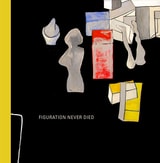
Figuration Never Died
New York Painterly Painting, 1950–1970Karen Wilkin
The Artist Book Foundation, 2020
By 1950, forward-looking New York painting was seen as synonymous with abstraction, especially charged, gestural Abstract Expressionism. But there was also a strong group of dissenters; artists, all born in the 1920s and many of them students of Hans Hofmann, who never lost their enthusiasm for recognizable imagery, without rejecting Abstract Expressionism's love of malleable oil paint. Although most of them began as abstract artists, they all evolved into painters working from observation, using a fluid, urgent touch to translate their perceptions into eloquent, highly individualized visual languages, almost always informed by the hand; that is, unlike the Color Field and Minimalist artists, these artists remained, for the most part, "painterly" painters. In light of their important contributions to twentieth-century American art, The Artist Book Foundation presents the cataloge for the Brattleboro Museum & Art Center's eponymous 2020 exhibition, Figuration Never Died: New York Painterly Painting, 1950–1970.
These rebellious artists include Lois Dodd, Jane Freilicher, Paul Georges, Grace Hartigan, Wolf Kahn, Alex Katz, Albert Kresch, Robert de Niro Sr., Paul Resika, and Anne Tabachnick. The compelling figurative work they made between about 1950 and 1970, in contrast to the prevailing Abstract Expressionism of the time, constitutes a significat chapter in the history of recent American Modernism. Their work not only greatly expands our conception of the story of New York painting, but it also presages and contextualizes today's multiplicity of artistic concepts and processes. Given both the aesthetic diversity of today's New York art world and the dependence of many younger artists on digital media or the appearance of digital media, it seems an appropriate moment to reconsider the work of these daring pioneers, as both precursor and opposition to current norms.

Figurations of France
Literary Nation-Building in Times of Crisis (1550-1650)Marcus Keller
University of Delaware Press, 2011
In Figurations of France: Literary Nation-Building in Times of Crisis (1550-1650), Marcus Keller explores the often indirect and subtle ways in which key texts of early modern French literature, from Joachim Du Bellay’s Défense et illustration de la langue française to Corneille’s Le Cid, contribute to the fiction of France as a nation. Through his fresh take on these and other classics, he shows that they not only create the French as an imaginary community but also provide venues for an incisive critique of the political and cultural construct that underpins the modern nation-state.
Current theories of nationhood, in particular the concepts of the nation form and fictive ethnicity (Étienne Balibar), inform the close readings of Du Bellay’s Défense, Ronsard’s Discours, d’Aubigné’s Tragiques, Montaigne’s Essays, Malherbe’s odes, and Corneille’s Le Cid and Horace. They reveal the imaginary power and unifying force of early modern figurations of France that come to bear in this heteregoneous corpus of French literature, with texts ranging from manifesto and epic poem to essay and tragedy. Situating each author and text in their particular historical context, the study suggests that the literary invention of France in the sixteenth and seventeenth centuries is as abundant as it is conceptually innovative: Du Bellay, for example, develops an idea of France by portraying the French language as a pruned and grafted tree while d’Aubigné proposes to think of the French as a nuclear but fatherless family. Blood functions as a highly charged metaphor of nationhood in all texts.
Opening up new perspectives on these canonical works, the focus on literary nation-building also puts them into unexpected and thought-provoking relationships to each other. Figurations of France deliberately crosses the fictive boundary between the sixteenth and the seventeenth centuries and argues that, in terms of imaginary nation-building, the contours that delineate the early modern period and separate it from what we call the modern era quickly begin to dissolve. Ultimately, the book makes the case for early modern literature as a creative and critical discourse, able to nourish and nuance our thinking about the nation as the postmodern nation-state is increasingly called into question by the economical, political, and cultural effects of globalization.
Published by University of Delaware Press. Distributed worldwide by Rutgers University Press.
Figure Skating in the Formative Years
Singles, Pairs, and the Expanding Role of WomenJames R. Hines
University of Illinois Press, 2015
Renowned sports historian James R. Hines chronicles figure skating's rise from its earliest days through its head-turning debut at the 1908 Olympics and its breakthrough as entertainment in the 1930s. Hines credits figure skating's explosive expansion to an ever-increasing number of women who had become proficient skaters and wanted to compete, not just in singles but with partners as well.
Matters reached a turning point when British skater Madge Syers entered the otherwise-male 1902 World Championship held in London and finished second. Called skating's first feminist, Syers led a wave of women who made significant contributions to figure skating and helped turn it into today's star-making showcase at every Winter Olympics.
Packed with stories and hard-to-find details, Figure Skating in the Formative Years tells the early history of a sport loved and followed by fans around the world.
Figure Skating
A HIstoryJames R. Hines
University of Illinois Press, 2005
The only comprehensive history of figure skating in over forty years
Figure skating, unique in its sublimely beautiful combination of technical precision, musicality, and interpretive elements, has undergone many dramatic developments since the only previous history of the sport was published in 1959. This exciting and information-packed new history by James R. Hines explains skating’s many technical and artistic advances, its important figures, its intrigues and scandals, and the historical high points during its long evolution.
Hines divides his history into three periods separated by the World Wars. In the first section, he follows functional and recreational ice skating through its evolution into national schools, culminating in the establishment of the International Skating Union and the ascendancy of an international style of skating. The second section explains the changes that occurred as the sport expanded into the form we recognize and enjoy today, and the final section shows how skating became increasingly athletic, imaginative, and intense following World War II, as the main focus turns to skaters themselves. The profiles include some 148 World and Olympic Champions as well as others who, in Dick Button’s words, "left the sport better because they were in it."
Beginning with mythological tales from twelfth- and thirteenth-century Scandinavians, Hines describes hundreds who have contributed to the sport. They include figure skating’s patron saint Lydwina of Schiedam, whose late-fourteenth-century skating tumble has been documented in a woodcut; Ulrich Salchow and Axel Paulsen, who gave their names to distinctive jumps; Madge Syers, who entered and medaled at the previously all-male World Championships in 1902; and Sonja Henie, who took skating to the silver screen. The history ends with the 2002 skating season, when Maria Butyrskaya and Michelle Kwan commanded the most attention and an unfortunate judging decision rocked the pairs’ competition, resulting in the adoption of a new judging system.
Beyond the contributions of individual skaters, Figure Skating also traces the growth of competitions and show skating (professional and amateur), and discussions of relevant social, political, and ethical concerns that have affected the sport. Along with over seventy magnificent historical pictures spread throughout the book, a very special gallery features the picture of every world and Olympic champion. Figure Skating is an informative and inspiring resource, sure to be enjoyed by anyone who has ever skated recreationally or in competition as well as by the many fans who have this beautiful sport as spectators.

Figures of Conversion
“The Jewish Question” and English National IdentityMichael Ragussis
Duke University Press, 1995
—Daniel Defoe, The Farther Adventures of Robinson Crusoe (1719)
When the hero of Defoe’s novel listens skeptically to this anecdote related by a French Roman Catholic priest, he little suspects that in less than a century the conversion of the Jews would become nothing short of a national project—not in France but in England. In this book, Michael Ragussis explores the phenomenon of Jewish conversion—the subject of popular enthusiasm, public scandal, national debate, and dubbed "the English madness" by its critics—in Protestant England from the 1790s through the 1870s.
Moving beyond the familiar catalog of anti-Semitic stereotypes, Ragussis analyzes the rhetoric of conversion as it was reinvented by the English in sermons, stories for the young, histories of the Jews, memoirs by Jewish converts, and popular novels. Alongside these texts and the countertexts produced by English Jews, he situates such writers as Edgeworth, Scott, Disraeli, Arnold, Trollope, and Eliot within the debate over conversion and related issues of race, gender, and nation-formation. His work reveals how a powerful group of emergent cultural projects—including a revisionist tradition of the novel, the new science of ethnology, and the rewriting of European history—redefined English national identity in response to the ideology of conversion, the history of the Jews, and "the Jewish question."
Figures of Conversion offers an entirely new way of regarding Jewish identity in nineteenth-century British culture and will be of importance not only to literary scholars but also to scholars of Judaic and religious studies, history, and cultural studies.
Figures of Speech
Men and Maidens in Ancient GreeceGloria Ferrari
University of Chicago Press, 2002
Ferrari begins by developing a theoretical perspective on visual representation, arguing that artistic images give us access to how their subjects were imagined rather than to the way they really were. For instance, Ferrari's examinations of the many representations of women working wool reveal that these images constitute powerful metaphors—metaphors, she argues, which both reflect and construct Greek conceptions of the ideal woman and her ideal behavior.
From this perspective, Ferrari studies a number of icons representing blameless femininity and ideal masculinity to reevaluate the rites of passage by which girls are made ready for marriage and boys become men. Representations of the nude male body in Archaic statues known as kouroi, for example, symbolize manhood itself and shed new light on the much-discussed institution of paiderastia. And, in Ferrari's hands, imagery equating maidens with arable land and buried treasure provides a fresh view of Greek ideas of matrimony.
Innovative, thought-provoking, and insightful throughout, Figures of Speech is a powerful demonstration of how the study of visual images as well as texts can reshape our understanding of ancient Greek culture.
Figures of Speech
Six Histories of Language and Identity in the Age of RevolutionsTim Cassedy
University of Iowa Press, 2018
Tim Cassedy’s fascinating study examines the role that language played at the turn of the nineteenth century as a marker of one’s identity. During this time of revolution (U.S., French, and Haitian) and globalization, language served as a way to categorize people within a world that appeared more diverse than ever. Linguistic differences, especially among English-speakers, seemed to validate the emerging national, racial, local, and regional identity categories that took shape in this new world order.
Focusing on six eccentric characters of the time—from the woman known as “Princess Caraboo” to wordsmith Noah Webster—Cassedy shows how each put language at the center of their identities and lived out the possibilities of their era’s linguistic ideas. The result is a highly entertaining and equally informative look at how perceptions about who spoke what language—and how they spoke it—determined the shape of communities in the British American colonies and beyond.
This engagingly written story is sure to appeal to historians of literature, culture, and communication; to linguists and book historians; and to general readers interested in how ideas about English developed in the early United States and throughout the English-speaking world.
Figuring Jerusalem
Politics and Poetics in the Sacred CenterSidra DeKoven Ezrahi
University of Chicago Press, 2022
For two thousand years, Hebrew writers used their exile from the Holy Land as a license for invention. The question at the heart of Figuring Jerusalem is this: how did these writers bring their imagination “home” in the Zionist century? Sidra DeKoven Ezrahi finds that the same diasporic conventions that Hebrew writers practiced in exile were maintained throughout the first half of the twentieth century. And even after 1948, when the state of Israel was founded but East Jerusalem and its holy sites remained under Arab control, Jerusalem continued to figure in the Hebrew imagination as mediated space. It was only in the aftermath of the Six Day War that the temptations and dilemmas of proximity to the sacred would become acute in every area of Hebrew politics and culture.
Figuring Jerusalem ranges from classical texts, biblical and medieval, to the post-1967 writings of S. Y. Agnon and Yehuda Amichai. Ultimately, DeKoven Ezrahi shows that the wisdom Jews acquired through two thousand years of exile, as inscribed in their literary imagination, must be rediscovered if the diverse inhabitants of Jerusalem are to coexist.

Filaments
Theological Profiles: Selected Essays, Volume 2David Tracy
University of Chicago Press, 2020
Two volumes of selected essays from the most important Catholic theologian in North America.
Filaments arranges its subjects in rough chronological order, from choices in ancient theology, such as Augustine, through the likes of William of St. Thierry in the medieval period and Martin Luther and Michelangelo in the early modern, and, finally, to modern and contemporary thinkers, including Bernard Lonergan, Paul Tillich, Simone Weil, Karl Rahner, Reinhold Niebuhr, and Iris Murdoch. Taken together, these essays can be understood as a partial initiation into a history of Christian theology defined by Tracy’s key virtues of plurality and ambiguity. Filaments bring the work of one of North America’s most important religious thinkers once again to the forefront to be celebrated by long-time readers and new ones alike.
Filibustering
A Political History of Obstruction in the House and SenateGregory Koger
University of Chicago Press, 2010
In the modern Congress, one of the highest hurdles for major bills or nominations is gaining the sixty votes necessary to shut off a filibuster in the Senate. But this wasn’t always the case. Both citizens and scholars tend to think of the legislative process as a game played by the rules in which votes are the critical commodity—the side that has the most votes wins. In this comprehensive volume,Gregory Koger shows, on the contrary, that filibustering is a game with slippery rules in which legislators who think fast and try hard can triumph over superior numbers.
Filibustering explains how and why obstruction has been institutionalized in the U.S. Senate over the last fifty years, and how this transformation affects politics and policymaking. Koger also traces the lively history of filibustering in the U.S. House during the nineteenth century and measures the effects of filibustering—bills killed, compromises struck, and new issues raised by obstruction. Unparalleled in the depth of its theory and its combination of historical and political analysis, Filibustering will be the definitive study of its subject for years to come.

Filibusters and Expansionists
Jeffersonian Manifest Destiny, 1800-1821Frank L. Owsley
University of Alabama Press, 2004
Uncover the untold story of America’s 19th-century adventurers and their quest for empire.
The first two decades of the 19th century found many Americans eager to move away from the crowded eastern seaboard and into new areas where their goals of landownership might be realized. Such movement was encouraged by Presidents Jefferson, Madison, and Monroe—collectively known as the Jeffersonians—who believed that the country's destiny was to have total control over the entire North American continent. Migration patterns during this time changed the country considerably and included the roots of the slavery controversy that ultimately led to the Civil War. By the end of the period, although expansionists had not succeeded in moving into British Canada, they had obtained command of large areas from the Spanish South and Southwest, including acreage previously controlled by Native Americans.
Utilizing memoirs, diaries, biographies, newspapers, and vast amounts of both foreign and domestic correspondence, Frank Lawrence Owsley Jr. and Gene A. Smith reveal an insider’s view of the filibusters and expansionists, the colorful—if not sometimes nefarious—characters on the front line of the United States’s land grab. Owsley and Smith describe in detail the actions and characters involving both the successful and the unsuccessful efforts to expand the United States during this period—as well as the outspoken opposition to expansion, found primarily among the Federalists in the Northeast.

Fill 'er Up
The Glory Days of Wisconsin Gas StationsJim Draeger
Wisconsin Historical Society Press, 2008

Filling in the Gap
The Post Pentecost Series of Gospel AntiphonesDavid Eben, Štefánia Hanusa Demská, and Jan Bilwachs
Karolinum Press, 2025
Provides insight into the world of the Carolingian monks and clerics who created the Liturgy of the Hours.
Filling in the Gap recounts the creative process behind a specific part of the Gregorian Office repertoire that has not been addressed so far. By linking historical and liturgical evidence with musical analysis, the study opens new avenues for grouping manuscripts and interpreting their interrelationships. The catalogue of melodies included in this volume contains transcriptions of the post-Pentecost antiphon repertoire from twenty-four manuscripts across Western Europe.

Film Nation
Hollywood Looks at U.S. History, Revised EditionRobert Burgoyne
University of Minnesota Press, 2010
Film and Genocide
Kristi M. Wilson
University of Wisconsin Press, 2011
Film and Genocide brings together scholars of film and of genocide to discuss film representations, both fictional and documentary, of the Holocaust, the Armenian genocide, and genocides in Chile, Australia, Rwanda, and the United States. Since 1955, when Alain Resnais created his experimental documentary Night and Fog about the Nazis’ mass killings of Jews and other ostracized groups, filmmakers have struggled with using this medium to tell such difficult stories, to re-create the sociopolitical contexts of genocide, and to urge awareness and action among viewers. This volume looks at such issues as realism versus fiction, the challenge of depicting atrocities in a manner palatable to spectators and film distributors, the Holocaust film as a model for films about other genocides, and the role of new technologies in disseminating films about genocide.
Film and Genocide also includes interviews with three film directors, who discuss their experiences in working with deeply disturbing images and bringing hidden stories to life: Irek Dobrowolski, director of The Portraitist (2005) a documentary about Wilhelm Brasse, an Auschwitz-Birkenau prisoner ordered to take more than 40,000 photos at the camp; Nick Hughes, director of 100 Days (2005) a dramatic film about the Rwandan mass killings; and Greg Barker, director of Ghosts of Rwanda (2004), a television documentary for Frontline.
Film and Television After 9/11
Edited by Wheeler Winston Dixon
Southern Illinois University Press, 2004
In Film and Television After 9/11, editor Wheeler Winston Dixon and eleven other distinguished film scholars discuss the production, reception, and distribution of Hollywood and foreign films after the terrorist attacks of September 11, 2001, and examine how moviemaking has changed to reflect the new world climate.
While some contemporary films offer escapism, much of mainstream American cinema since 9/11 is centered on the desire for a “just war” in which military reprisals and escalation of warfare appear to be both inevitable and justified. Films of 2002 such as Black Hawk Down, Collateral Damage, and We Were Soldiers demonstrate a renewed audience appetite for narratives of conflict, reminiscent of the wave of filmmaking that surrounded American involvement in World War II.
The attacks on the World Trade Center and the Pentagon galvanized the American public initially, yet film critics wonder how this will play out over time. Film and Television After 9/11 is the first book to provide original insights into topics ranging from the international reception of post-9/11 American cinema, re-viewing films of our shared cinematic past in light of the attacks, and exploring parallels between post-9/11 cinema and World War II-era productions.
Film and the American Moral Vision of Nature
Theodore Roosevelt to Walt DisneyRonald B. Tobias
Michigan State University Press, 2011
Film and the German Left in the Weimar Republic
From Caligari to Kuhle WampeBy Bruce Murray
University of Texas Press, 1990
The Weimar Republic of Germany, covering the post-World War I period of civil and governmental strife, witnessed a great struggle among a variety of ideologies, a struggle for which the arts provided one important arena. Leftist individuals and organizations critiqued mainstream art production and attempted to counter what they perceived as its conservative-to-reactionary influence on public opinion. In this groundbreaking study, Bruce Murray focuses on the leftist counter-current in Weimar cinema, offering an alternative critical approach to the traditional one of close readings of the classical films.
Beginning with a brief review of pre-Weimar cinema (1896-1918), he analyzes the film activity of the Social Democratic Party, the German Communists, and independent leftists in the Weimar era. Leftist filmmakers, journalists, and commentators, who in many cases contributed significantly to marginal leftist as well as mainstream cinema, have, until now, received little scholarly attention. Drawing on exhaustive archival research and personal interviews, Murray shows how the plurality of aesthetic models represented in the work of individuals who participated in leftist experiments with cinema in the 1920S collapsed as Germany underwent the transition from parliamentary democracy to fascist dictatorship. He suggests that leftists shared responsibility for that collapse and asserts the value of such insights for those who contemplate alternatives to institutional forms of cinematic discourse today.

Film on The Faultline
Edited by Alan Wright
Intellect Books, 2015

Film's Ghosts
Tatsumi Hijikata's Butoh and the Transmutation of 1960s JapanStephen Barber
Diaphanes, 2019

Films That Explode Like Grenades
Robert Kramer and the Search for a Radical CinemaWhitney Strub
University of Chicago Press, 2026
Robert Kramer (1939–99) was the emblematic filmmaker of the late-1960s New Left in the United States. Yet because most of his three dozen films have been out of circulation for decades, he has long been neglected by film historians and the Left. Kramer was the cofounder of the leftist documentary collective Newsreel and the director of underground films such as Ice (1970), Milestones (1975), and Route One/USA (1989). His films provide distinctive insights into how America’s political terrain has changed over time, capturing each era’s revolutionary ethos and its contradictions. Whitney Strub’s Films That Explode Like Grenades tracks the histories of leftist film and global revolutionary movements via Kramer’s life and travels. Moving among New York City, Chicago, North Vietnam, Paris, Portugal, Angola, and other crucial flashpoints, Kramer left a major and influential body of work in his wake that has fundamentally shaped the work of radical filmmakers across the globe.
For Strub, Kramer’s career is a key thread in an intimate history of the 1960s New Left, one that emphasizes the complexities of the movement’s internal tensions and its legacies. Drawing on visual analysis, extensive archival research across the United States and France, and myriad interviews with Kramer contemporaries, including Bernardine Dohrn, Tom Hayden, Jonas Mekas, and Kramer’s relatives, Strub transforms Kramer’s life story into a dynamic and engaging social history of 1960s radicalism and its generational legacies.
With detailed mapping of Robert Kramer’s many social and artistic contexts, Films That Explode Like Grenades restores him to a place of global importance in leftist cinema.
Films That Spill
Beyond the Cinema of TransgressionMarie Sophie Beckmann
Rutgers University Press, 2025
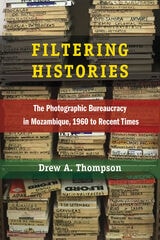
Filtering Histories
The Photographic Bureaucracy in Mozambique, 1960 to Recent TimesDrew A. Thompson
University of Michigan Press, 2021
Photographers and their images were critical to the making of Mozambique, first as a colony of Portugal and then as independent nation at war with apartheid in South Africa. When the Mozambique Liberation Front came to power, it invested substantial human and financial resources in institutional structures involving photography, and used them to insert the nation into global debates over photography's use. The materiality of the photographs created had effects that neither the colonial nor postcolonial state could have imagined.
Filtering Histories: The Photographic Bureaucracy in Mozambique, 1960 to Recent Times tells a history of photography alongside state formation to understand the process of decolonization and state development after colonial rule. At the center of analysis are an array of photographic and illustrated materials from Mozambique, South Africa, Portugal, and Italy. Thompson recreates through oral histories and archival research the procedures and regulations that engulfed the practice and circulation of photography. If photographers and media bureaucracy were proactive in placing images of Mozambique in international news, Mozambicans were agents of self-representation, especially when it came to appearing or disappearing before the camera lens. Drawing attention to the multiple images that one published photograph may conceal, Filtering Histories introduces the popular and material formations of portraiture and photojournalism that informed photography's production, circulation, and archiving in a place like Mozambique. The book reveals how the use of photography by the colonial state and the liberation movement overlapped, and the role that photography played in the transition of power from colonialism to independence.

Filth
Dirt, Digust, and Modern LifeWilliam A. Cohen
University of Minnesota Press, 2004
Final Solutions
Human Nature, Capitalism and GenocideSabby Sagall
Pluto Press, 2013
Final Solutions offers a ground-breaking and genuinely unique analysis of modern genocide. Sabby Sagall draws on the insights of the Frankfurt school and Wilhelm Reich to create an innovative combination of Marxism and psychoanalysis. He argues that genocide is a product of an ‘irrational’ destructiveness by social classes or communities that have suffered major historical defeats or similar forms of extreme stress.
Sagall shows how the denial of human needs and the ensuing feelings of isolation and powerlessness propel groups to project their impotent rage, hatred and destructiveness engendered by these defeats on to the 'outsider' and the 'other'.
The book applies this theoretical framework to four modern genocides – that of the Native Americans, the Armenians, the Jews and the Rwandan Tutsis. This is a truly pioneering contribution which adds to our understanding of some of the darkest hours of humanity – and how we can stop them from happening again.

Finance in America
An Unfinished StoryKevin R. Brine and Mary Poovey
University of Chicago Press, 2017
To understand finance, however, we have to learn its history, and this book fills that need. Kevin R. Brine, an industry veteran, and Mary Poovey, an acclaimed historian, show that finance as we know it today emerged gradually in the late nineteenth century and only coalesced after World War II, becoming ever more complicated—and ever more central to the American economy. The authors explain the models, regulations, and institutions at the heart of modern finance and uncover the complex and sometimes surprising origins of its critical features, such as corporate accounting standards, the Federal Reserve System, risk management practices, and American Keynesian and New Classic monetary economics. This book sees finance through its highs and lows, from pre-Depression to post-Recession, exploring the myriad ways in which the practices of finance and the realities of the economy influenced one another through the years.
A masterwork of collaboration, Finance in America lays bare the theories and practices that constitute finance, opening up the discussion of its role and risks to a broad range of scholars and citizens.