Results by title
28167 books match the query 'History' and 1092 start with f
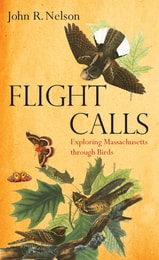
Flight Calls
Exploring Massachusetts through BirdsJohn R. Nelson
University of Massachusetts Press, 2019
With style, humor, and a sense of wonder, Nelson blends his field adventures with a history of the birding community; natural and cultural history; bird stories from authors such as Henry David Thoreau, Emily Dickinson, and Mary Oliver; current scientific research; and observations about the fascinating habits of birds and their admirers. These essays are capped off with a plea for bird conservation, in Massachusetts and beyond.

Floating Gold
A Natural (and Unnatural) History of AmbergrisChristopher Kemp
University of Chicago Press, 2012
A fascinating natural history of an incredibly curious substance.
“Preternaturally hardened whale dung” is not the first image that comes to mind when we think of perfume, otherwise a symbol of glamour and allure. But the key ingredient that makes the sophisticated scent linger on the skin is precisely this bizarre digestive by-product—ambergris. Despite being one of the world’s most expensive substances (its value is nearly that of gold and has at times in history been triple it), ambergris is also one of the world’s least known. But with this unusual and highly alluring book, Christopher Kemp promises to change that by uncovering the unique history of ambergris.
A rare secretion produced only by sperm whales, which have a fondness for squid but an inability to digest their beaks, ambergris is expelled at sea and floats on ocean currents for years, slowly transforming, before it sometimes washes ashore looking like a nondescript waxy pebble. It can appear almost anywhere but is found so rarely, it might as well appear nowhere. Kemp’s journey begins with an encounter on a New Zealand beach with a giant lump of faux ambergris—determined after much excitement to nothing more exotic than lard—that inspires a comprehensive quest to seek out ambergris and its story. He takes us from the wild, rocky New Zealand coastline to Stewart Island, a remote, windswept island in the southern seas, to Boston and Cape Cod, and back again. Along the way, he tracks down the secretive collectors and traders who populate the clandestine modern-day ambergris trade.
Floating Gold is an entertaining and lively history that covers not only these precious gray lumps and those who covet them, but presents a highly informative account of the natural history of whales, squid, ocean ecology, and even a history of the perfume industry. Kemp’s obsessive curiosity is infectious, and eager readers will feel as though they have stumbled upon a precious bounty of this intriguing substance.
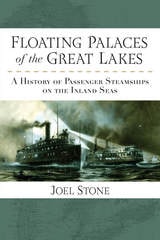
Floating Palaces of the Great Lakes
A History of Passenger Steamships on the Inland SeasJoel Stone
University of Michigan Press, 2015
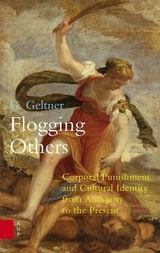
Flogging Others
Corporal Punishment and Cultural Identity from Antiquity to the PresentG. Geltner
Amsterdam University Press, 2015
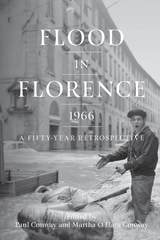
Flood in Florence, 1966
A Fifty-Year RetrospectivePaul Conway and Martha O’Hara Conway
Michigan Publishing Services, 2018

Florence in the Forgotten Centuries, 1527-1800
A History of Florence and the Florentines in the Age of the Grand DukesEric Cochrane
University of Chicago Press, 1976
Eric Cochrane shows that the Florentines maintained their creativity long after they had lost their position as the cultural leaders of Europe. When their political philosophy and historiography ran dry, they turned to the practical problems of civil administration. When their artists finally yielded to outside influence, they turned to music and the natural sciences. Even during the darkest days of the great economic depression of the late seventeenth and early eighteenth centuries, they succeeded in preserving—almost alone in Europe—the blessings of external peace and domestic tranquility.
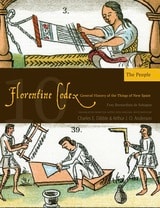
Florentine Codex
Book 10: Book 10: The PeopleBernardino de Sahagun
University of Utah Press, 1981
Two of the world’s leading scholars of the Aztec language and culture have translated Sahagún’s monumental and encyclopedic study of native life in Mexico at the time of the Spanish Conquest. This immense undertaking is the first complete translation into any language of Sahagún’s Nahuatl text, and represents one of the most distinguished contributions in the fields of anthropology, ethnography, and linguistics.
Written between 1540 and 1585, the Florentine Codex (so named because the manuscript has been part of the Laurentian Library’s collections since at least 1791) is the most authoritative statement we have of the Aztecs’ lifeways and traditions—a rich and intimate yet panoramic view of a doomed people.
The Florentine Codex is divided by subject area into twelve books and includes over 2,000 illustrations drawn by Nahua artists in the sixteenth century.
Book Ten gives a broad overview of the different occupations, classes, and characteristics of Aztecs during this time period. Arguably the most fascinating part of this book is the detailed documentation of human anatomy and commonly used cures for physical ailments.
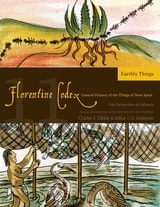
Florentine Codex
Book 11: Book 11: Earthly ThingsBernardino de Sahagun
University of Utah Press, 1963
Two of the world’s leading scholars of the Aztec language and culture have translated Sahagún’s monumental and encyclopedic study of native life in Mexico at the time of the Spanish Conquest. This immense undertaking is the first complete translation into any language of Sahagún’s Nahuatl text, and represents one of the most distinguished contributions in the fields of anthropology, ethnography, and linguistics.
Written between 1540 and 1585, the Florentine Codex (so named because the manuscript has been part of the Laurentian Library’s collections since at least 1791) is the most authoritative statement we have of the Aztecs’ lifeways and traditions—a rich and intimate yet panoramic view of a doomed people.
The Florentine Codex is divided by subject area into twelve books and includes over 2,000 illustrations drawn by Nahua artists in the sixteenth century.
Book Eleven is a beautifully written and careful documentation of all of the animals and plants known to the Aztecs in the sixteenth century. As the volume with the most illustrations, Earthly Things allows the reader to look at the natural world through the eyes of the Aztec.
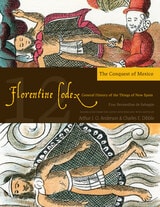
Florentine Codex
Book 12: Book 12: The Conquest of MexicoBernardino de Sahagun
University of Utah Press, 1975
Two of the world’s leading scholars of the Aztec language and culture have translated Sahagún’s monumental and encyclopedic study of native life in Mexico at the time of the Spanish Conquest. This immense undertaking is the first complete translation into any language of Sahagún’s Nahuatl text, and represents one of the most distinguished contributions in the fields of anthropology, ethnography, and linguistics.
Written between 1540 and 1585, the Florentine Codex (so named because the manuscript has been part of the Laurentian Library’s collections since at least 1791) is the most authoritative statement we have of the Aztecs’ lifeways and traditions—a rich and intimate yet panoramic view of a doomed people.
The Florentine Codex is divided by subject area into twelve books and includes over 2,000 illustrations drawn by Nahua artists in the sixteenth century.
Book Twelve contains a meticulous retelling of the Spanish conquest of Mexico, from the days leading up to the first arrival of Cortes to the eventual submission of the Tlatilulcans, the Tenochtitlans, and their rulers to the Spaniards.
Florentine Codex
Book 1: Book 1: The GodsBernardino de Sahagun
University of Utah Press, 1981
Two of the world’s leading scholars of the Aztec language and culture have translated Sahagún’s monumental and encyclopedic study of native life in Mexico at the time of the Spanish Conquest. This immense undertaking is the first complete translation into any language of Sahagún’s Nahuatl text, and represents one of the most distinguished contributions in the fields of anthropology, ethnography, and linguistics.
Written between 1540 and 1585, the Florentine Codex (so named because the manuscript has been part of the Laurentian Library’s collections since at least 1791) is the most authoritative statement we have of the Aztecs’ lifeways and traditions—a rich and intimate yet panoramic view of a doomed people.
The Florentine Codex is divided by subject area into twelve books and includes over 2,000 illustrations drawn by Nahua artists in the sixteenth century.
Book One describes in detail the gods of the Aztec people, including Uitzilopochtli, Tlatoc, and Quetzalcoatl. This colorful and clear translation brings to life characteristics of each god, describing such items as clothing or adornment worn by individual gods, as well as specific personality traits.
Florentine Codex
Book 2: The CeremoniesBernardino de Sahagun
University of Utah Press, 1981
Two of the world’s leading scholars of the Aztec language and culture have translated Sahagún’s monumental and encyclopedic study of native life in Mexico at the time of the Spanish Conquest. This immense undertaking is the first complete translation into any language of Sahagún’s Nahuatl text, and represents one of the most distinguished contributions in the fields of anthropology, ethnography, and linguistics.
Written between 1540 and 1585, the Florentine Codex (so named because the manuscript has been part of the Laurentian Library’s collections since at least 1791) is the most authoritative statement we have of the Aztecs’ lifeways and traditions—a rich and intimate yet panoramic view of a doomed people.
The Florentine Codex is divided by subject area into twelve books and includes over 2,000 illustrations drawn by Nahua artists in the sixteenth century.
Book Two gives comprehensive accounts of the religious ceremonies and days of feasting during the time of the Aztecs, including prayers, songs, and the duties and roles of Aztecs inside the temples during the ceremonies. This book also details the various tributes and sacrifices given to specific gods.
Florentine Codex
Book 3: Book 3: The Origin of the GodsBernardino de Sahagun
University of Utah Press, 1981
Two of the world’s leading scholars of the Aztec language and culture have translated Sahagún’s monumental and encyclopedic study of native life in Mexico at the time of the Spanish Conquest. This immense undertaking is the first complete translation into any language of Sahagún’s Nahuatl text, and represents one of the most distinguished contributions in the fields of anthropology, ethnography, and linguistics.
Written between 1540 and 1585, the Florentine Codex (so named because the manuscript has been part of the Laurentian Library’s collections since at least 1791) is the most authoritative statement we have of the Aztecs’ lifeways and traditions—a rich and intimate yet panoramic view of a doomed people.
The Florentine Codex is divided by subject area into twelve books and includes over 2,000 illustrations drawn by Nahua artists in the sixteenth century.
Book Three describes in detail the excitingand sometimes bloody—origin stories of Uitzilopochtli, Titlacauan, and Quetzalcoatl. The appendix discusses other significant religious aspects of the Aztec religion, such as how boys are raised to be high priests and what happens to Aztecs after death.
Florentine Codex
Book 6: Book 6: Rhetoric and Moral PhilosophyBernardino de Sahagun
University of Utah Press, 1969
Two of the world’s leading scholars of the Aztec language and culture have translated Sahagún’s monumental and encyclopedic study of native life in Mexico at the time of the Spanish Conquest. This immense undertaking is the first complete translation into any language of Sahagún’s Nahuatl text, and represents one of the most distinguished contributions in the fields of anthropology, ethnography, and linguistics.
Written between 1540 and 1585, the Florentine Codex (so named because the manuscript has been part of the Laurentian Library’s collections since at least 1791) is the most authoritative statement we have of the Aztecs’ lifeways and traditions—a rich and intimate yet panoramic view of a doomed people.
The Florentine Codex is divided by subject area into twelve books and includes over 2,000 illustrations drawn by Nahua artists in the sixteenth century.
Book Six includes prayers to various gods asking for cures, riches, rain, and for the gods to bless or admonish a chosen ruler. In addition to these prayers, the book displays examples of formal conversation used in Aztec life, from the ruler and ambassador to others in the noble class.
Florentine Codex
Book 7: Book 7: The Sun, the Moon and Stars, and the Binding of the YearsBernardino de Sahagun
University of Utah Press, 1953
Two of the world’s leading scholars of the Aztec language and culture have translated Sahagún’s monumental and encyclopedic study of native life in Mexico at the time of the Spanish Conquest. This immense undertaking is the first complete translation into any language of Sahagún’s Nahuatl text, and represents one of the most distinguished contributions in the fields of anthropology, ethnography, and linguistics.
Written between 1540 and 1585, the Florentine Codex (so named because the manuscript has been part of the Laurentian Library’s collections since at least 1791) is the most authoritative statement we have of the Aztecs’ lifeways and traditions—a rich and intimate yet panoramic view of a doomed people.
The Florentine Codex is divided by subject area into twelve books and includes over 2,000 illustrations drawn by Nahua artists in the sixteenth century.
Book Seven tells the origin stories of the sun, the moon, and the stars—which gods created them, what powers they each embody, and how they are related to Aztec astrology. This book also discusses the meaning and cause behind hail, lightning, rainbows, wind, and different types of weather.
Florentine Codex
Book 8: Book 8: Kings and LordsBernardino de Sahagun
University of Utah Press, 1954
Two of the world’s leading scholars of the Aztec language and culture have translated Sahagún’s monumental and encyclopedic study of native life in Mexico at the time of the Spanish Conquest. This immense undertaking is the first complete translation into any language of Sahagún’s Nahuatl text, and represents one of the most distinguished contributions in the fields of anthropology, ethnography, and linguistics.
Written between 1540 and 1585, the Florentine Codex (so named because the manuscript has been part of the Laurentian Library’s collections since at least 1791) is the most authoritative statement we have of the Aztecs’ lifeways and traditions—a rich and intimate yet panoramic view of a doomed people.
The Florentine Codex is divided by subject area into twelve books and includes over 2,000 illustrations drawn by Nahua artists in the sixteenth century.
Book Eight lists the rulers of Tenochtitlan from the first, Acamapichtli, to the sixteenth, Don Cristobal Cecepatic. It also documents the rulers of the ancient Aztec cities of Tlatillco, Texcoco, and Uexotla. Several chapters are devoted to describing the various articles of clothing that the rulers and noblemen wore and the foods they ate for differing ceremonies and activities.
Florentine Codex
Book 9: Book 9: The MerchantsBernardino de Sahagun
University of Utah Press, 1959
Two of the world’s leading scholars of the Aztec language and culture have translated Sahagún’s monumental and encyclopedic study of native life in Mexico at the time of the Spanish Conquest. This immense undertaking is the first complete translation into any language of Sahagún’s Nahuatl text, and represents one of the most distinguished contributions in the fields of anthropology, ethnography, and linguistics.
Written between 1540 and 1585, the Florentine Codex (so named because the manuscript has been part of the Laurentian Library’s collections since at least 1791) is the most authoritative statement we have of the Aztecs’ lifeways and traditions—a rich and intimate yet panoramic view of a doomed people.
The Florentine Codex is divided by subject area into twelve books and includes over 2,000 illustrations drawn by Nahua artists in the sixteenth century.
Book Nine begins with how commerce grew in Mexico from the trade of only feathers to jewelry, precious stones, animal skins, embroidered clothing, and chocolate. It discusses how the merchants prepare for a journey and the celebrations that take place when they arrive home safely. This book also lists different types of merchants, such as lapidaries, who worked with precious stones, and ornamenters, who made feather articles.
Florentine Codex
Books 4 and 5: Book 4 and 5: The Soothsayers, the OmensBernardino de Sahagun
University of Utah Press, 1981
Two of the world’s leading scholars of the Aztec language and culture have translated Sahagún’s monumental and encyclopedic study of native life in Mexico at the time of the Spanish Conquest. This immense undertaking is the first complete translation into any language of Sahagún’s Nahuatl text, and represents one of the most distinguished contributions in the fields of anthropology, ethnography, and linguistics.
Written between 1540 and 1585, the Florentine Codex (so named because the manuscript has been part of the Laurentian Library’s collections since at least 1791) is the most authoritative statement we have of the Aztecs’ lifeways and traditions—a rich and intimate yet panoramic view of a doomed people.
The Florentine Codex is divided by subject area into twelve books and includes over 2,000 illustrations drawn by Nahua artists in the sixteenth century.
Book Four delves into the Aztec’s complex astrological beliefs. The date of birth was so significant that it ultimately determined one’s personality and future; for example, almost all born on the second day sign—called One Ocelot—became slaves.
Book Five explains the meaning of the many evil omens Aztecs believed in, which usually took the form of animals and insects. It describes the consequences of each omen and the remedies, if any, that will reverse these effects.
Florentine Codex
Introduction and Indices: Introductory BookBernardino de Sahagun
University of Utah Press, 1982
Two of the world’s leading scholars of the Aztec language and culture have translated Sahagún’s monumental and encyclopedic study of native life in Mexico at the time of the Spanish Conquest. This immense undertaking is the first complete translation into any language of Sahagún’s Nahuatl text, and represents one of the most distinguished contributions in the fields of anthropology, ethnography, and linguistics.
Written between 1540 and 1585, the Florentine Codex (so named because the manuscript has been part of the Laurentian Library’s collections since at least 1791) is the most authoritative statement we have of the Aztecs’ lifeways and traditionsa rich and intimate yet panoramic view of a doomed people.
The Florentine Codex is divided by subject area into twelve books and includes over 2,000 illustrations drawn by Nahua artists in the sixteenth century.
This introduction to the Florentine Codex contains the original prologues to each volume written by Bernadino de Sahagun, which detail his intentions and personal experiences in compiling the Codex. Authors Dibble and Anderson dig into Sahagun’s past in “Sahagun’s Historia” and “Sahagun: Career and Character,” and discuss dating the Codex in “The Watermarks in the Florentine Codex.” This volume also includes indices of subject matter, persons and deities, and places for all twelve books.
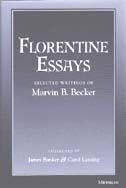
Florentine Essays
Selected Writings of Marvin B. BeckerMarvin B. Becker
University of Michigan Press, 2002
In the capital of humanism, he initiated what was to be a lifelong examination of the Western civil tradition. In Florence he could study the interplay of ideas and action in what he was to call the "public world." The rise of this world out of the private, feudal and corporate structures of the medieval commune, its functioning and its eventual subversion by the authoritarian structures of the early modern state were, he thought, valuable information for modern political cultures. In the 1950s and 1960s, Becker produced approximately twenty papers dealing with a wide variety of themes and issues raised by the work of other scholars such as Davidson, Salvemini, Ottokar, Panella, Rodolico, Barbadoro, Baron, and others. He also introduced his own formulations on a range of subjects including the political role of Florence's minor guilds, usury, taxation, public debt, popular heresy, church-state relations, the city's chroniclers, the influence of "new men" upon Florentine government and changing mentalities.
These papers, in their originality, their richness of documentation and their suggestiveness, are still relevant for current scholarship. The editors of this volume have chosen the papers for the convenience of readers who may know Becker only through his books, or from the myriad of footnotes of other scholars who have drawn so much from his work. This volume will be of interest to scholars, students, and others interested in Renaissance history, whether it be social or political.
Marvin B. Becker is Professor Emeritus in the Department of History, University of Michigan. James Banker is Professor of History, North Carolina State University. Carol Lansing is Professor of History, University of California, Santa Barbara.
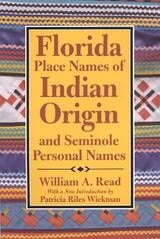
Florida Place-Names of Indian Origin and Seminole Personal Names
William A. Read
University of Alabama Press, 2003
A compendium of Indian-derived names from the three languages of the Muskhogean family—Seminole, Hitchiti, and Choctaw.
The first Native peoples of what is now the United States who met and interacted with Europeans were the people of the lower Southeast. They were individuals of the larger Maskókî linguistic family who inhabited much of present-day Florida, Georgia, Alabama, Mississippi, South Carolina, and eastern portions of Tennessee, Kentucky, and Louisiana. Today, sixteen federally recognized tribes trace their heritage from these early Maskókî peoples, and many of them in both Florida and Oklahoma still speak and understand this root language.
The continuing vitality of this core language, and of Seminole culture and influence, makes this linguistic examination by William Read ever more valuable. A companion to his study of Indian Place Names in Alabama, this long out-of-print guide offers a new introduction from Patricia Wickman in which she provides current understandings of Seminole language and derivations and a brief analysis of Read's contribution to the preservation of the Native linguistic record.
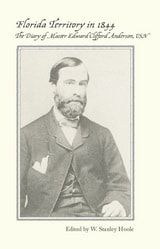
Florida Territory in 1844
The Diary of Master Edward Clifford Anderson, USNEdward Anderson, edited by W. Stanley Hoole
University of Alabama Press, 1977
Covers Edward Anderson’s service in Florida Territory from March 16 to December 31, 1844

Florida and the Mariel Boatlift of 1980
The First Twenty DaysKate Dupes Hawk, Ron Villella, and Adolfo Leyva de Varona, with Kristen Cifers
University of Alabama Press, 2014
WINNER OF THE FLORIDA HISTORICAL SOCIETY'S STETSON KENNEDY AWARD
The definitive account of the first twenty days that transformed Florida, Cuba, and the American immigration debate.
The 1980 Mariel Boatlift was a profound episode in twentieth-century American history, impacting not just Florida, but the entire country. During the first twenty days of the boatlift, with little support from the federal government, the state of Florida coordinated and responded to the sudden arrival in Key West of more than thirty thousand Cuban refugees, the first wave of immigrants who became known as “Marielitos.”
Kathleen Dupes Hawk, Ron Villella, Adolfo Leyva de Varona, and Kristen Cifers combine the insights of expert observers with the experiences of actual participants. The authors organize and present a wealth of primary sources, first-hand accounts, archival research, government records, and interviews with policy-makers, volunteers, and refugees that bring into focus the many far-reaching human, political, and cultural outcomes of the Mariel Boatlift that continue to influence Florida, the United States, and Cuba today.
Emerging from these key records and accounts is a grand narrative of high human drama. Castro’s haphazard and temporary opening of Cuba spurred many thousands of Cubans to depart in calamitously rushed, unprepared, and dangerous conditions. The book tells the stories of these Cuban citizens, most legitimately seeking political asylum but also including subversive agents, convicted criminals, and the mentally ill, who began arriving in the US beginning in April 1980. It also recounts how local and state agencies and private volunteers with few directives or resources were left to improvise ways to provide the Marielitos food, shelter, and security as well as transportation away from Key West.
The book provides a definitive account of the political, legal, and administrative twists on the local, state, and federal levels in response to the crisis as well as of the often-dysfunctional attempts at collaboration between governmental and private institutions. Vivid and readable, Florida and the Mariel Boatlift of 1980 presents the significant details that illuminate and humanize this complex humanitarian, political, and logistical crisis.

Florida
A Fire SurveyStephen J. Pyne
University of Arizona Press, 2016
In this important new collection of essays on the region, Stephen J. Pyne colorfully explores the ways the region has approached fire management. Florida has long resisted national models of fire suppression in favor of prescribed burning, for which it has ideal environmental conditions and a robust culture. Out of this heritage the fire community has created institutions to match. The Tallahassee region became the ignition point for the national fire revolution of the 1960s. Today, it remains the Silicon Valley of prescription burning. How and why this happened is the topic of a fire reconnaissance that begins in the panhandle and follows Floridian fire south to the Everglades.
Florida is the first book in a multivolume series describing the nation’s fire scene region by region. The volumes in To the Last Smoke will also cover California, the Northern Rockies, the Great Plains, the Southwest, and several other critical fire regions. The series serves as an important punctuation point to Pyne’s fifty-year career with wildland fire—both as a firefighter and a fire scholar. These unique surveys of regional pyrogeography are Pyne’s way of “keeping with it to the end,” encompassing the directive from his rookie season to stay with every fire “to the last smoke.”

Flour for Man’s Bread
A History of MillingWalter Dorwin TeagueJohn Storck, EditorIllustrations by Harold Rydell
University of Minnesota Press, 1952
Flour for Man's Bread was first published in 1952. Minnesota Archive Editions uses digital technology to make long-unavailable books once again accessible, and are published unaltered from the original University of Minnesota Press editions.
From prehistoric times to the present, the ways in which man has made flour for his bread have forged the patterns of technological progress and have greatly influenced his social development. This book describes in detail how people of the western world have ground their grain - by hand, by animal-driven wheels, by crude water-powered mills, and, finally, by complex engineering methods. The story of milling provides a graphic history of man's ingenuity in the mechanical arts, his harnessing of power sources, and his development of agricultural skill.
While the central theme is the improvement of technical processes, this development is presented, not in a vacuum, but in the context of economic geography and social history. Thus the volume offers much of importance to students of social economic history, archaeology, anthropology, sociology, agriculture, and general technology, as well as those with a specific interest in milling methods.
The book brings to readers some of the advantages of what was originally projected as a museum of flour milling several years ago by General Mills. Walter Dorwin Teague, the noted industrial designer, drew plans for the museum and arranged for the fundamental research, which was carried out by Dr. John Storck, anthropologist and former professor at Columbia University and Sarah Lawrence College. Hundreds of detailed drawings illustrating the processes and devices described were prepared under their direction. Although plans for the museum had to be abandoned, the extensive research and excellent illustrative material are now made available in this comprehensive, single volume history of milling and its social and economic implications.
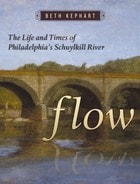
Flow
The Life and Times of Philadelphia's Schuylkill RiverBeth Kephart
Temple University Press, 2014

Flower Chronicles
E. Buckner Hollingsworth
University of Chicago Press, 2004
A tremendously entertaining and charming book, not only for its richness of information but because Hollingsworth clearly enjoys her material, Flower Chronicles has an antiquarian feel about it-with line drawings, woodcuts, and translations from the Greek—but the text never feels dated. Out of print for nearly thirty years, Flower Chronicles reemerges as a garden literature classic.
"With humor and literary taste, Mrs. Hollingworth has compiled an astonishing amount of scholarly yet entertaining material from her studies in archaeology and mythology and her researches in ancient pharmacopeias, botanies, cookbooks, herbals, and stillroom books."-New Yorker
"Mrs. Hollingsworth writes gaily and quotes from old books, with a wonderful taste for the curious English of Elizabethan gardeners, and sharp notice of what poets and translators of talent have set down. To this she has added the excitement of discovery of forms not noticed by her predecessors."-New York Herald Tribune Book Review

Flowering of the Cumberland
Harriette Simpson Arnow
Michigan State University Press, 2013
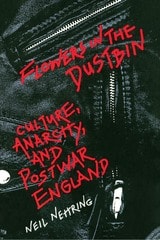
Flowers in the Dustbin
Culture, Anarchy, and Postwar EnglandNeil Nehring
University of Michigan Press, 1993
Flowers in the Dustbin looks at the volatile relations between literature, rock music, and youth subcultures in postwar England. Neil Nehring traces the continuities between the original avant-garde of the twenties and thirties and the postwar youth culture, arguing that anarchism never really disappeared from the world. The author shows that British youth groups like the Mods, the Rockers, Punks, and Teddy Boys and the music that inspired them appear increasingly more acute than their literary counterparts, belying conventional assumptions about the relative powers of "high" and "low" culture. By examining literary texts as part of a larger sampling of cultural forms and their uses in everyday life, Flowers in the Dustbin provides a striking illustration of the significance the field of cultural studies holds for studies in English.
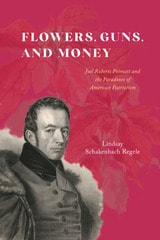
Flowers, Guns, and Money
Joel Roberts Poinsett and the Paradoxes of American PatriotismLindsay Schakenbach Regele
University of Chicago Press, 2023
Joel Roberts Poinsett’s (1779–1851) brand of self-interested patriotism illuminates the paradoxes of the antebellum United States. He was a South Carolina investor and enslaver, a confidant of Andrew Jackson, and a secret agent in South America who fought surreptitiously in Chile’s War for Independence. He was an ambitious Congressman and Secretary of War who oversaw the ignominy of the Trail of Tears and orchestrated America’s longest and costliest war against Native Americans, yet also helped found the Smithsonian. In addition, he was a naturalist, after whom the poinsettia—which he appropriated while he was serving as the first US ambassador to Mexico—is now named.
As Lindsay Schakenbach Regele shows in Flowers, Guns, and Money, Poinsett personified a type of patriotism that emerged following the American Revolution, one in which statesmen served the nation by serving themselves, securing economic prosperity and military security while often prioritizing their own ambitions and financial interests. Whether waging war, opposing states’ rights yet supporting slavery, or pushing for agricultural and infrastructural improvements in his native South Carolina, Poinsett consistently acted in his own self-interest. By examining the man and his actions, Schakenbach Regele reveals an America defined by opportunity and violence, freedom and slavery, and nationalism and self-interest.
Flowers, Guns, and Money
Joel Roberts Poinsett and the Paradoxes of American PatriotismLindsay Schakenbach Regele
University of Chicago Press, 2023
A fascinating historical account of a largely forgotten statesman, who pioneered a form of patriotism that left an indelible mark on the early United States.
Joel Roberts Poinsett’s (1779–1851) brand of self-interested patriotism illuminates the paradoxes of the antebellum United States. He was a South Carolina investor and enslaver, a confidant of Andrew Jackson, and a secret agent in South America who fought surreptitiously in Chile’s War for Independence. He was an ambitious Congressman and Secretary of War who oversaw the ignominy of the Trail of Tears and orchestrated America’s longest and costliest war against Native Americans, yet also helped found the Smithsonian. In addition, he was a naturalist, after whom the poinsettia—which he appropriated while he was serving as the first US ambassador to Mexico—is now named.
As Lindsay Schakenbach Regele shows in Flowers, Guns, and Money, Poinsett personified a type of patriotism that emerged following the American Revolution, one in which statesmen served the nation by serving themselves, securing economic prosperity and military security while often prioritizing their own ambitions and financial interests. Whether waging war, opposing states’ rights yet supporting slavery, or pushing for agricultural and infrastructural improvements in his native South Carolina, Poinsett consistently acted in his own self-interest. By examining the man and his actions, Schakenbach Regele reveals an America defined by opportunity and violence, freedom and slavery, and nationalism and self-interest.
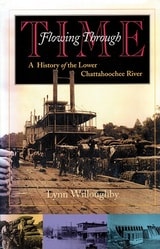
Flowing Through Time
A History of the Lower Chattahoochee RiverLynn Willoughby
University of Alabama Press, 1998
Fluent Bodies
Ayurvedic Remedies for Postcolonial ImbalanceJean M. Langford
Duke University Press, 2002
Interweaving theory with narrative, Langford explores the strategies of contemporary practitioners who reconfigure Ayurvedic knowledge through institutions and technologies such as hospitals, anatomy labs, clinical trials, and sonograms. She shows how practitioners appropriate, transform, or circumvent the knowledge practices implicit in these institutions and technologies, destabilizing such categories as medicine, culture, science, symptom, and self, even as they deploy them in clinical practice. Ultimately, this study points to the future of Ayurveda in a transnational era as a remedy not only for the wounds of colonialism but also for an imagined cultural emptiness at the heart of global modernity.
Fluid Arguments
Five Centuries of Western Water ConflictEdited by Char Miller
University of Arizona Press, 2001
Seventeen contributors—representing history, geography, ethnography, political science, law, and urban studies—provide an interdisciplinary perspective on the many dimensions of water in the West: Spanish colonial water law, Native American water rights, agricultural concerns, and dam building. A concluding essay looks toward the future by examining the impact of cities on water and of water marketing on the western economy.
As farmers and ranchers from Kansas to California compete for water with powerful urban economies, the West will continue to be reshaped by this scarce and precious resource. Fluid Arguments clearly shows that many of the current disputes over water take place without a real appreciation for the long history of the debate. By shedding new light on how water allocation is established—and who controls it—this book makes a vital contribution to our understanding of water and growth in the region.
CONTENTS
Divining the Past: An Introduction / Char Miller
Part 1. Land and Water on New Spain’s Frontiers
1. "Only Fit for Raising Stock": Spanish and Mexican Land and Water Rights in the Tamaulipan Cession / Jesús F. de la Teja
2. Water, the Gila River Pimas, and the Arrival of the Spanish / Shelly C. Dudley
3. "Between This River and That": Establishing Water Rights in the Chama Basin of New Mexico / Sandra K. Mathews-Lamb
Part 2. The Native American Struggle for Water
4. Maggot Creek and Other Tales: Kiowa Identity and Water, 1870-1920 / Bonnie Lynn-Sherow
5. The Dilemmas of Indian Water Policy, 1887-1928 / Donald J. Pisani
6. First in Time: Tribal Reserved Water Rights and General Adjudications in New Mexico / Alan S. Newell
7. Winters Comes Home to Roost / Daniel McCool
Part 3. Agricultural Conundrums
8. Water, Sun, and Cattle: The Chisholm Trail as an Ephemeral Ecosystem / James E. Sherow
9. Private Irrigation in Colorado’s Grand Valley / Brad F. Raley
10. A Rio Grande "Brew": Agriculture, Industry, and Water Quality in the Lower Rio Grande Valley / John P. Tiefenbacher
11. Specialization and Diversification in the Agricultural System of Southwestern Kansas, 1887-1980 / Thomas C. Schafer
12. John Wesley Powell Was Right: Resizing the Ogallala High Plains / John Opie
Part 4. Dam those Waters!
13. Private Initiative, Public Works: Ed Fletcher, the Santa Fe Railway, and Phoenix’s Cave Creek Flood Control Dam / Donald C. Jackson
14. The Changing Fortunes of the Big Dam Era in the American West / Mark Harvey
15. Building Dams and Damning People in the Texas-Mexico Border Region: Mexico’s El Cuchillo Dam Project / Raúl M. Sánchez
Part 5. The Coming Fight
16. Water and the Western Service Economy: A New Challenge / Hal K. Rothman
Fluid Geographies
Water, Science, and Settler Colonialism in New MexicoK. Maria D. Lane
University of Chicago Press, 2024
Maria Lane’s Fluid Geographies traces New Mexico’s transition from a community-based to an expert-led system of water management during the pre-statehood era. To understand this major shift, Lane carefully examines the primary conflict of the time, which pitted Indigenous and Nuevomexicano communities, with their long-established systems of irrigation management, against Anglo-American settlers, who benefitted from centralized bureaucratic management of water. The newcomers’ system eventually became settled law, but water disputes have continued throughout the district courts of New Mexico’s Rio Grande watershed ever since.
Using a fine-grained analysis of legislative texts and nearly two hundred district court cases, Lane analyzes evolving cultural patterns and attitudes toward water use and management in a pivotal time in New Mexico’s history. Illuminating complex themes for a general audience, Fluid Geographies helps readers understand how settler colonialism constructed a racialized understanding of scientific expertise and legitimized the dispossession of nonwhite communities in New Mexico.
Fluid New York
Cosmopolitan Urbanism and the Green ImaginationMay Joseph
Duke University Press, 2013
Joseph considers New York's relation to the water that surrounds and defines it. Her reflections reach back to the city's heyday as a world-class port—a past embodied in a Dutch East India Company cannon recently unearthed from the rubble at the World Trade Center site—and they encompass the devastation caused by Hurricane Sandy in 2012. They suggest that New York's future lies in the reclamation of its great water resources—for artistic creativity, civic engagement, and ecological sustainability.
Fluorspar Mining
Photos from Illinois and Kentucky, 1905-1995Herbert K. Russell
Southern Illinois University Press, 2019
This first-ever pictorial record of the people and methods of the Illinois-Kentucky Fluorspar District from the 1900s to the 1990s covers early and modern means of extracting, hoisting, processing, and transporting the mineral from mine mouth to end user. Nearly one hundred images carefully selected by author Herbert K. Russell show early pick-and-shovel extraction and open-flame lighting as well as primitive drilling methods and transportation by barrels, buckets, barges, mule teams, and trams, in addition to the use of modern equipment and sophisticated refinement procedures such as froth flotation. Russell also provides an overview of the many industrial uses of fluorspar, from metal work by ancient Romans to the processing of uranium by scientists seeking to perfect the atomic bomb. Preserving what is known about the industry by miners, managers, and museums, this detailed and fascinating pictorial history looks both above and below ground at fluorspar mining.
Fluxus Administration
George Maciunas and the Art of PaperworkColby Chamberlain
University of Chicago Press, 2024
Though widely recognized as the founder of the legendary Fluxus movement, George Maciunas has long been a puzzling figure in the history of twentieth-century art. Many have questioned whether he should be considered an artist at all. In Fluxus Administration, critic and art historian Colby Chamberlain reveals the consistent artistic practice hidden behind Maciunas’s varied work in architecture, music, performance, publication, graphic design, film, and real estate as an attempt to create models for community through structures of bureaucracy.
In this deeply researched study, Chamberlain traces how Maciunas’s art insinuated itself into settings as unlikely as the routes of the postal service, the fine print of copyright law, the zoning strictures of urban planning, and the corridors of hospitals. These shifting frames of reference expand our understanding of where an artistic practice can operate and what forms it might assume. In particular, Chamberlain draws on media theory to highlight Maciunas’s ingeniously crafted paperwork, much of which is beautifully reproduced here for the first time.

Fluxus Forms
Scores, Multiples, and the Eternal NetworkNatilee Harren
University of Chicago Press, 2020
While today the Fluxus collective is recognized for its radical neo-avant-garde works of performance, publishing, and relational art and its experimental, interdisciplinary approach, it was not taken seriously in its own time. With Fluxus Forms, Natilee Harren captures the magnetic energy of Fluxus activities and collaborations that emerged at the intersections of art, music, performance, and literature. The book offers insight into the nature of art in the 1960s as it traces the international development of the collective’s unique intermedia works—including event scores and Fluxbox multiples—that irreversibly expanded the boundaries of contemporary art.
Fluxus and the Essential Questions of Life
Edited by Jacquelynn Baas
University of Chicago Press, 2011
Fluxus—from the Latin, meaning “to flow”—was a radical, international network of artists, composers, and designers in the 1960s and 1970s noted for blurring the boundaries between what we term “art” and what makes up everyday life. Following the work of American Fluxus founder George Maciunus, Fluxus and the Essential Questions of Life presents a variety of objects that express the Fluxus mission, while empowering readers to challenge the presumptions we bring to the concept and practice of art making.
Based on a large-scale traveling exhibition first organized at Dartmouth College’s Hood Museum of Art, this book chronicles the movement in the form of an art self-help book, playfully providing answers to fourteen key questions such as “Art—what is it good for?” and “What am I?” via Fluxus works. Featuring over eighty color and black-and-white illustrations, accompanied by essays from curator Jacquelynn Baas, Fluxus scholars Hannah Higgins and Jacob Proctor, and Fluxus artist Ken Friedman, this book will make an original contribution to our understanding of this provocative moment in modern art.
Fly in the Buttermilk
The Life Story of Cecil ReedCecil A. Reed
University of Iowa Press, 1993
Flying Against the Arrow
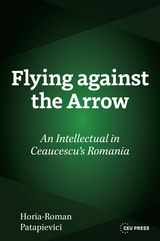
An Intellectual in Ceausescu's RomaniaHoria-Roman Patapievici
Central European University Press, 2003
The ‘unbearable 80s’, as the last decade of the Ceauşescu era has been called in Romania, are in the focus of this quasi-autobiographical work. The book vividly portrays the difficulties encountered by a young intellectual trying to shape himself under the oppressive regime and provides a stark depiction of a man’s intellectual suffocation under hard-line socialist rule.

Flying Out of this World
Peter Greenaway
University of Chicago Press, 1994
As guest curator, Greenaway selected from the Louvre's collection of European prints and drawings ninety-one masterpieces that illustrate the human longing for flight. Greenaway's text, a compilation of brief commentaries that combine description, allusion, and interpretation, illuminate the images as depictions of flight desired and denied. Including works by Redon, Goya, Brueghel, Michelangelo, Mantegna, Rubens, Poussin, and Delacroix, this volume offers a combination of literary and visual art, of sight and insight.
A pursuit through the Bible, classical mythology, cosmology, theology, etymology, ornithology, and meteorology, Flying out of This World is not just an illustrated history of imagined flight, but a meditation on its meaning as a metaphor for the human condition, caught between a weighty body and a soaring spirit.

Flying Saucers Rock 'n' Roll
Conversations with Unjustly Obscure Rock 'n' Soul EccentricsJake Austen, ed.
Duke University Press, 2011
Contributors
Steve Albini
Ben Austen
Jake Austen
John Battles
Bosco
Ken Burke
Mike Maltese
King Merinuk
Ken Mottet
Jonathan Poletti
James Porter
"Colonel" Dan Sorenson
Jacqueline Stewart
Flying Under the Radar with the Royal Chicano Air Force
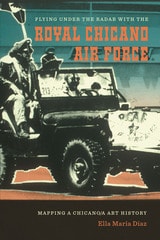
Mapping a Chicano/a Art HistoryBy Ella Maria Diaz
University of Texas Press, 2017
Winner, National Association for Chicana and Chicano Studies Book Award, 2019
The Royal Chicano Air Force produced major works of visual art, poetry, prose, music, and performance during the second half of the twentieth century and first decades of the twenty-first. Materializing in Sacramento, California, in 1969 and established between 1970 and 1972, the RCAF helped redefine the meaning of artistic production and artwork to include community engagement projects such as breakfast programs, community art classes, and political and labor activism. The collective’s work has contributed significantly both to Chicano/a civil rights activism and to Chicano/a art history, literature, and culture.
Blending RCAF members’ biographies and accounts of their artistic production with art historical, cultural, and literary scholarship, Flying under the Radar with the Royal Chicano Air Force is the first in-depth study of this vanguard Chicano/a arts collective and activist group. Ella Maria Diaz investigates how the RCAF questioned and countered conventions of Western art, from the canon taught in US institutions to Mexican national art history, while advancing a Chicano/a historical consciousness in the cultural borderlands. In particular, she demonstrates how women significantly contributed to the collective’s output, navigating and challenging the overarching patriarchal cultural norms of the Chicano Movement and their manifestations in the RCAF. Diaz also shows how the RCAF’s verbal and visual architecture—a literal and figurative construction of Chicano/a signs, symbols, and texts—established the groundwork for numerous theoretical interventions made by key scholars in the 1990s and the twenty-first century.

Flying Yoginis
Irwin Allan Sealy
Seagull Books, 2026
Irwin Allan Sealy—master chronicler of the Indian imagination—sets off on a singular quest: to follow in the wake of the yoginis, those fierce, flying, shape-shifting female adepts of yoga whose images were carved in stone a thousand years ago across India and who now sit, displaced, in American museums.
Part travelogue, part philosophical musing, part cultural excavation, Flying Yoginis is a meditation on art, power, devotion, and the subversive energy of women who step out of line. With wit and wonder, Sealy traces their transcontinental journey from lost temples near Kanchipuram to glass-walled galleries in Kansas City and Minneapolis—finding along the way unexpected kinship with rebels and visionaries, from Rosa Parks to Carson McCullers. Blending the spiritual with the personal, the mythic with the mundane, Sealy offers a dazzling, genre-defying reflection on how the sacred persists, how memory travels, and how history is always being rewritten by those bold enough to reclaim it.

Flying with the Fifteenth Air Force
A B-24 Pilot's Missions from Italy during World War IITom Faulkner
University of North Texas Press, 2018

Fokker C.11w
Edwin Hoogschagen
Amsterdam University Press, 2024
Fokker C.X
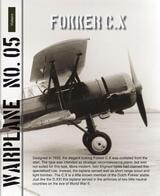
Edwin Hoogschagen
Amsterdam University Press, 2023
The C.X is a little-known member of the Dutch Fokker stable. Just like the D.XXI this biplane served in the air forces of two little neutral countries on the eve of World War II. Both fought gallantly in a war of David versus Goliath proportions, and the complete operational history of the type spans a total of 25 years. In retrospect, the C.X was the last fighting biplane type built by Fokker and the company's last pre-war military type to survive.
Folded Selves
Colonial New England Writing in the World SystemMichelle Burnham
Dartmouth College Press, 2014

Folk Songs from the West Virginia Hills
PATRICK W. GAINER
West Virginia University Press, 2017
Folk Songs from the West Virginia Hills stands out as a book with multiple audiences. As a musical text, it offers comparatively easy access to a rich variety of folk songs that could provide a new repertoire for Appalachian singers. As an ethnographic text, it has the potential to reintroduce significant data about the musical lives of many West Virginians into conversations around Appalachian music—discourses that are being radically reshaped by scholars working in folklore, ethnomusicology, and Appalachian studies. As a historical document, it gives readers a glimpse into the research methods commonly practiced by mid-twentieth-century folklorists. And when read in conjunction with John Harrington Cox’s Folk Songs of the South (also available from WVU Press), it sheds important light on the significant role that West Virginia University has played in documenting the state’s vernacular traditions.