Results by title
22279 books match the query 'Social Science' and 955 start with f

First Person Jewish
Alisa S. Lebow
University of Minnesota Press, 2008
Documentaries have increasingly used the first person, with a number of prominent filmmakers finding critical and commercial success with this intimate approach. Jewish filmmakers have particularly thrived in this genre, using it to explore disparate definitions of the self in relation to the larger groups of family and community.
In First Person Jewish, Alisa S. Lebow examines more than a dozen films from Jewish artists to reveal how the postmodern impulse to turn the lens inward intersects provocatively (and at times unwittingly) with historical tropes and stereotypes of the Jew. Focusing her efforts on Jewish filmmakers working on the margins, Lebow analyzes the work of Jonathan Caouette, Chantal Akerman, and Alan Berliner, among others, also including a discussion of her own first person film Treyf (1998), made with Cynthia Madansky. The filmmakers in this study, Lebow argues, are confronting a desire to both define and reimagine contemporary Jewishness.
Using a multidisciplinary approach to first person films, Lebow shows how this form of self-expression is challenging both autobiography and documentary and, in the process, changing the art of cinema and recording the cultural shifts of our time.
Alisa S. Lebow is a filmmaker and lecturer in film and TV studies at Brunel University.
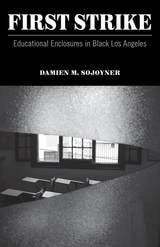
First Strike
Educational Enclosures in Black Los AngelesDamien M. Sojoyner
University of Minnesota Press, 2016
California is a state of immense contradictions. Home to colossal wealth and long portrayed as a bastion of opportunity, it also has one of the largest prison populations in the United States and consistently ranks on the bottom of education indexes. Taking a unique, multifaceted insider’s perspective, First Strike delves into the root causes of its ever-expansive prison system and disastrous educational policy.
Recentering analysis of Black masculinity beyond public rhetoric, First Strike critiques the trope of the “school-to-prison pipeline” and instead explores the realm of public school as a form of “enclosure” that has influenced the schooling (and denial of schooling) and imprisonment of Black people in California. Through a fascinating ethnography of a public school in Los Angeles County, and a “day in the life tour” of the effect of prisons on the education of Black youth, Damien M. Sojoyner looks at the contestation over education in the Black community from Reconstruction to the civil rights and Black liberation movements of the past three decades.
Policy makers, school districts, and local governments have long known that there is a relationship between high incarceration rates and school failure. First Strike is the first book that demonstrates why that connection exists and shows how school districts, cities and states have been complicit and can reverse a disturbing and needless trend. Rather than rely upon state-sponsored ideological or policy-driven models that do nothing more than to maintain structures of hierarchal domination, it allows us to resituate our framework of understanding and begin looking for solutions in spaces that are readily available and are immersed in radically democratic social visions of the future.

First, Do No Harm
Power, Oppression, and Violence in HealthcareEdited by Nancy L. Diekelmann
University of Wisconsin Press, 2002
First, Do No Harm shows how health care professionals, with the best intentions of providing excellent, holistic health care, can nonetheless perpetuate violence against vulnerable patients. The essays investigate the need to rethink contemporary healthcare practices in ways that can bring the art and science of medicine back into sorely needed balance.
These ground-breaking studies by noted scholars question commonly held assumptions in contemporary healthcare that underlie oppressive power dynamics and even violence for patients and their families. The contributors discuss such topics as women and violence, life-support technologies, and healthcare professionals’ own experiences as patients. First, Do No Harm opens the discourse for reaching new understandings, from reassessing the meaning of "quality of life" to questioning the appropriateness of the very language used by healthcare professionals. It will be welcomed by healthcare workers and by scholars in nursing, medicine, and the allied health sciences.
First-Generation Faculty of Color
Reflections on Research, Teaching, and ServiceTracy Lachica Buenavista
Rutgers University Press, 2023
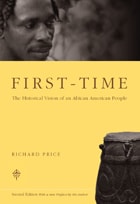
First-Time
The Historical Vision of an African American PeopleRichard Price
University of Chicago Press, 2002
First-Time's unique style of presentation preserves the integrity of both its oral and documentary sources, uniting them in a profound meditation on the roles of history and memory. This second edition includes a new preface by the author, discussing First-Time's impact and recounting the continuing struggles of the Saramaka people.
Firsting and Lasting
Writing Indians out of Existence in New EnglandJean M. O’Brien
University of Minnesota Press, 2010
Fistula Politics
Birthing Injuries and the Quest for Continence in NigerHeller, Alison
Rutgers University Press, 2019

Fit to Be Tied
Sterilization and Reproductive Rights in America, 1950-1980Kluchin, Rebecca M
Rutgers University Press, 2011
During the first half of the twentieth century, sterilization (tubal ligation and vasectomy) was a tool of eugenics. Individuals who endorsed crude notions of biological determinism sought to control the reproductive decisions of women they considered "unfit" by nature of race or class, and used surgery to do so. Incorporating first-person narratives, court cases, and official records, Rebecca M. Kluchin examines the evolution of forced sterilization of poor women, especially women of color, in the second half of the century and contrasts it with demands for contraceptive sterilization made by white women and men. She chronicles public acceptance during an era of reproductive and sexual freedom, and the subsequent replacement of the eugenics movement with "neo-eugenic" standards that continued to influence American medical practice, family planning, public policy, and popular sentiment.
Fitness Fiesta!
Selling Latinx Culture through ZumbaPetra R. Rivera-Rideau
Duke University Press, 2024
Fitness in American Culture
Images of Health, Sport, and the Body, 1830-1940Kathryn Grover
University of Massachusetts Press, 1989
Fitter, Happier
The Eugenic Strain in Twentieth-Century Cancer RhetoricLois Peters Agnew
University of Alabama Press, 0
A critical investigation into how eugenic logics quietly animated twentieth‑century cancer rhetoric, reshaping cultural narratives of health, risk, and human worth.
Fitter, Happier: The Eugenic Strain in Twentieth-Century Cancer Rhetoric is a thought-provoking exploration of the relationship between cancer rhetoric, American ideals, and eugenic influences in the twentieth century. This groundbreaking work delves into the paradoxical interplay between acknowledging the genuine threat of cancer and the ingrained American ethos of confidence and control.
Agnew’s meticulous research traces the topic’s historical context, unveiling how cancer discourses evolved from a hushed personal concern to a public issue thanks to the rise of cancer research centers and advocacy organizations. However, she unearths a troubling dimension to these discussions—subtle yet persistent eugenic ideologies that taint cancer arguments and advocacy groups. By dissecting prevailing cancer narratives, Agnew brings into focus how ideals rooted in eliminating imperfections and embracing progress converge with concerns for safeguarding societal fitness.
Fitter, Happier scrutinizes the military origins and metaphors that permeate government policies and medical research, the transformation of cancer’s association with melancholy into a rallying cry for a positive outlook, and the nuanced implications of prevention-focused dialogues. Reflecting on the varied experiences of actual cancer patients, Agnew resists the neat assimilation of these stories into a eugenic framework. Agnew’s insights prompt readers to contemplate the societal meanings of disease and disability as well as how language constructs our shared reality.
Fitting In and Getting Happy
How Conformity to Societal Norms Affects Subjective Well-beingOlga Stavrova
Campus Verlag, 2014
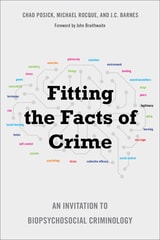
Fitting the Facts of Crime
An Invitation to Biopsychosocial CriminologyChad Posick, Michael Rocque, and J.C. Barnes
Temple University Press, 2022
Biosocial criminology—and biosocial criminologists—focuses on both the environmental and biological factors that contribute to antisocial behavior. Importantly, these two domains are not separate parts of an equation but pieces of the same puzzle that fit together for a complete picture of the causes of crime/antisocial behavior.
Fitting the Facts of Crime applies a biopsychosocial lens to the “13 facts of crime” identified by John Braithwaite in his classic book, Crime, Shame and Reintegration. The authors unpack established facts—about gender and sex, age, environment, education, class, social bonds and associations, stress, and other influences—providing both empirical research and evidence from biopsychosocial criminology to address the etiology behind these facts and exactly how they are related to deviant behavior.
With their approach, the authors show how biopsychosocial criminology can be a unifying framework to enrich our understanding of the most robust and well-established topics in the field. In so doing, they demonstrate how biological and psychological findings can be responsibly combined with social theories to lend new insight into existing inquiries and solutions. Designed to become a standard text for criminology in general, Fitting the Facts of Crime introduces key concepts and applies them to real-world situations.
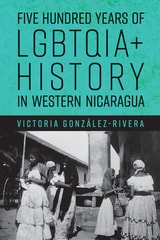
Five Hundred Years of LGBTQIA+ History in Western Nicaragua
Victoria González-Rivera
University of Arizona Press, 2024
In this expansive history, González-Rivera documents connections between Indigeneity, local commerce, and femininity (cis and trans), demonstrating the long history of LGBTQIA+ Nicaraguans. She sheds light on historical events, such as Andres Caballero’s 1536 burning at the stake for sodomy. González-Rivera discusses how elite efforts after independence to “modernize” open-air markets led to increased surveillance of LGBTQIA+ working-class individuals. She also examines the 1960s and the Somoza dictatorship, when another wave of persecution emerged, targeting working-class gay men and trans women, leading to a more stringent anti-sodomy law.
The centuries prior to the post-1990 political movement for greater LGBTQIA+ rights demonstrate that, far from being marginal, LGBTQIA+ Nicaraguans have been active in every area of society for hundreds of years.
Five Manifestos for the Beautiful World
The Alchemy LecturePhoebe Boswell, Saidiya Hartman, Janaina Oliveira, Joseph M. Pierce, and Cristina Rivera Garza
Duke University Press, 2025
Five Years After
The Long-Term Effects of Welfare-to-Work ProgramsDaniel Friedlander
Russell Sage Foundation, 1995
Fixing Sex
Intersex, Medical Authority, and Lived ExperienceKatrina Karkazis
Duke University Press, 2008
Drawing extensively on interviews with adults with intersex conditions, parents, and physicians, Karkazis moves beyond the heated rhetoric to reveal the complex reality of how intersexuality is understood, treated, and experienced today. As she unravels the historical, technological, social, and political forces that have culminated in debates surrounding intersexuality, Karkazis exposes the contentious disagreements among theorists, physicians, intersex adults, activists, and parents—and all that those debates imply about gender and the changing landscape of intersex management. She argues that by viewing intersexuality exclusively through a narrow medical lens we avoid much more difficult questions. Do gender atypical bodies require treatment? Should physicians intervene to control the “sex” of the body? As this illuminating book reveals, debates over treatment for intersexuality force reassessment of the seemingly natural connections between gender, biology, and the body.
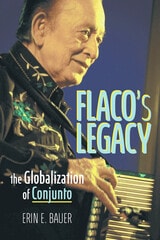
Flaco’s Legacy
The Globalization of ConjuntoErin E. Bauer
University of Illinois Press, 2023
A combination of button accordion and bajo sexto, conjunto originated in the Texas-Mexico borderlands as a popular dance music and became a powerful form of regional identity. Today, listeners and musicians around the world have embraced the genre and the work of conjunto masters like Flaco Jiménez and Mingo Saldívar.
Erin E. Bauer follows conjunto from its local origins through three processes of globalization--migration via media, hybridization, and appropriation--that boosted the music’s reach. As Bauer shows, conjunto’s encounter with globalizing forces raises fundamental questions. What is conjunto stylistically and socioculturally? Does context change how we categorize it? Do we consider the music to be conjunto based on its musical characteristics or due to its performance by Jiménez and other regional players? How do similar local genres like Tejano and norteño relate to ideas of categorization?
A rare look at a fascinating musical phenomenon, Flaco’s Legacy reveals how conjunto came to encompass new people, places, and styles.

Flame Wars
The Discourse of CybercultureMark Dery
Duke University Press, 1994
The subcultural practices of the "incurably informed," to borrow the cyberpunk novelist Pat Cadigan’s coinage, offer a precognitive glimpse of mainstream culture in the near future, when many of us will be part-time residents in virtual communities. Yet, as the essays in this expanded edition of a special issue of the South Atlantic Quarterly confirm, there is more to fringe computer culture than cyberspace. Within these pages, readers will encounter flame warriors; new age mutant ninja hackers; technopagans for whom the computer is an occult engine; and William Gibson’s "Agrippa," a short story on software that can only be read once because it gobbles itself up as soon as the last page is reached. Here, too, is Lady El, an African American cleaning woman reincarnated as an all-powerful cyborg; devotees of on-line swinging, or "compu-sex"; the teleoperated weaponry and amok robots of the mechanical performance art group, Survival Research Laboratories; an interview with Samuel Delany, and more.
Rallying around Fredric Jameson’s call for a cognitive cartography that "seeks to endow the individual subject with some new heightened sense of place in the global system," the contributors to Flame Wars have sketched a corner of that map, an outline for a wiring diagram of a terminally wired world.
Contributors. Anne Balsamo, Gareth Branwyn, Scott Bukatman, Pat Cadigan, Gary Chapman, Erik Davis, Manuel De Landa, Mark Dery, Julian Dibbell, Marc Laidlaw, Mark Pauline, Peter Schwenger, Vivian Sobchack, Claudia Springer
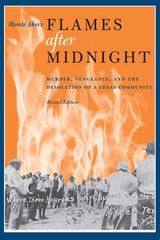
Flames after Midnight
Murder, Vengeance, and the Desolation of a Texas Community, Revised EditionBy Monte Akers
University of Texas Press, 2011
What happened in Kirven, Texas, in May 1922, has been forgotten by the outside world. It was a coworker's whispered words, "Kirven is where they burned the [Negroes]," that set Monte Akers to work at discovering the true story behind a young white woman's brutal murder and the burning alive of three black men who were almost certainly innocent of it. This was followed by a month-long reign of terror as white men killed blacks while local authorities concealed the real identity of the white probable murderers and allowed them to go free.
Writing nonfiction with the skill of a novelist, Akers paints a vivid portrait of a community desolated by race hatred and its own refusal to face hard truths. He sets this tragedy within the story of a region prospering from an oil boom but plagued by lawlessness, and traces the lynching's repercussions down the decades to the present day. In the new epilogue, Akers adds details that have come to light as a result of the book's publication, including an eyewitness account of the burnings from an elderly man who claimed to have castrated two of the men before they were lynched.
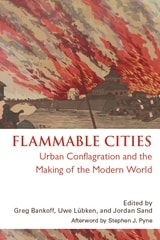
Flammable Cities
Urban Conflagration and the Making of the Modern WorldGreg Bankoff
University of Wisconsin Press, 2012
In most cities today, fire has been reduced to a sporadic and isolated threat. But throughout history the constant risk of fire has left a deep and lasting imprint on almost every dimension of urban society. This volume, the first truly global study of urban conflagration, shows how fire has shaped cities throughout the modern world, from Europe to the imperial colonies, major trade entrepôts, and non-European capitals, right up to such present-day megacities as Lagos and Jakarta. Urban fire may hinder commerce or even spur it; it may break down or reinforce barriers of race, class, and ethnicity; it may serve as a pretext for state violence or provide an opportunity for displays of state benevolence. As this volume demonstrates, the many and varied attempts to master, marginalize, or manipulate fire can turn a natural and human hazard into a highly useful social and political tool.
Flash Effect
Science and the Rhetorical Origins of Cold War AmericaDavid J. Tietge
Ohio University Press, 2002
The ways science and technology are portrayed in advertising, in the news, in our politics, and in the culture at large inform the way we respond to these particular facts of life. The better we are at recognizing the rhetorical intentions of the purveyors of information and promoters of mass culture, the more adept we become at responding intelligently to them.
Flash Effect, a startling book by David J. Tietge, documents the manner in which those at the highest levels of our political and cultural institutions conflated the rhetoric of science and technology with the rhetorics of religion and patriotism to express their policies for governance at the onset of the Cold War and to explain them to the American public.
Professor Tietge details our cultural attitudes about science in the early years of the Cold War, when on the heels of a great technological victory Americans were faced with the possibility of destruction by the very weapons that had saved them.
In Flash Effect we learn how, by symbolizing the scientist as both a father figure and a savior—and by celebrating the technological objects of his labor—the campaign to promote science took hold in the American consciousness. The products of that attitude are with us today more than ever.

Flavor and Soul
Italian America at Its African American EdgeJohn Gennari
University of Chicago Press, 2017
In Flavor and Soul, John Gennari spotlights this affinity, calling it “the edge”—now smooth, sometimes serrated—between Italian American and African American culture. He argues that the edge is a space of mutual emulation and suspicion, a joyous cultural meeting sometimes darkened by violent collision. Through studies of music and sound, film and media, sports and foodways, Gennari shows how an Afro-Italian sensibility has nourished and vitalized American culture writ large, even as Italian Americans and African Americans have fought each other for urban space, recognition of overlapping histories of suffering and exclusion, and political and personal rispetto.
Thus, Flavor and Soul is a cultural contact zone—a piazza where people express deep feelings of joy and pleasure, wariness and distrust, amity and enmity. And it is only at such cultural edges, Gennari argues, that America can come to truly understand its racial and ethnic dynamics.
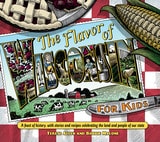
Flavor of Wisconsin for Kids
A Feast of History, with Stories and Recipes Celebrating the Land and People of Our StateTerese Allen
Wisconsin Historical Society Press, 2012
What are some food favorites in Wisconsin, and why are they special to us? How have our landscape and the people who have inhabited it contributed to our food heritage? This unique blend of history book and cookbook gives kids a real taste for hands-on history by showing them how to create and sample foods that link us to the resources found in our state and the heritage of those who produce them.
Designed for kids and adults to use together, The Flavor of Wisconsin for Kids draws upon the same source material that makes The Flavor of Wisconsin by Harva Hachten and Terese Allen a fascinating and authoritative document of the history and traditions of food in our state, and presents it in a colorful, kid-friendly format that’s both instructional and fun. Mindful of the importance of teaching kids about where the foods they eat come from, each chapter examines a different food source—forests; waters; vegetable, meat, and dairy farms; gardens; and communities. The authors explore our state’s foodways, from their origins to how they have changed over the years, and then offer a selection of related recipes. The recipes are written for modern kitchens but use many traditional ingredients and techniques. Level of difficulty is clearly noted, as well as whether a recipe requires a heat source to prepare.
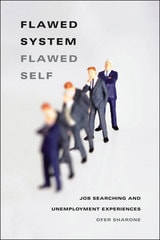
Flawed System/Flawed Self
Job Searching and Unemployment ExperiencesOfer Sharone
University of Chicago Press, 2013
Flawed System/Flawed Self delves beneath these staggering numbers to explore the world of job searching and unemployment across class and nation. Through in-depth interviews and observations at job-search support organizations, Ofer Sharone reveals how different labor-market institutions give rise to job-search games like Israel’s résumé-based “spec games”—which are focused on presenting one’s skills to fit the job—and the “chemistry games” more common in the United States in which job seekers concentrate on presenting the person behind the résumé. By closely examining the specific day-to-day activities and strategies of searching for a job, Sharone develops a theory of the mechanisms that connect objective social structures and subjective experiences in this challenging environment and shows how these different structures can lead to very different experiences of unemployment.
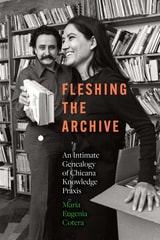
Fleshing the Archive
An Intimate Genealogy of Chicana Knowledge PraxisMaría Eugenia Cotera
University of Texas Press, 2025
The history of the Chicana por mi Raza Digital Memory Collective, an archive dedicated to preserving Chicana feminist knowledge of the 1970s and memory work.
The late 1960s and early 1970s witnessed an explosion of publishing by Chicana activists as they took part in the Movimiento against oppression of ethnic Mexicans in the United States. Today, thousands of these documents, including written works and oral histories, have been assembled by the Chicana por mi Raza Digital Memory Collective. Drawing on these unique resources, Fleshing the Archive traces the innovative Chicana knowledge projects of the Movimiento years.
Seeking to think with the past rather than about it, María Cotera explores transgressive sites and discourses of Chicana knowledge, from poems and essays to newspapers, bibliographies, and testimonies. Often published independently and distributed by readers themselves, these works embodied a praxis of feminist and queer consciousness-raising. Observing the startling convergences between Chicana praxis of the 1970s and digital knowledge production in the present, Cotera argues that the Chicana archive enables transformative moments of recognition across time that unsettle supposedly objective accounts of history. The materials preserved by Chicana por mi Raza offer Chicana scholars a model of teaching and learning liberated from a corporate academy that is increasingly hostile to intellectual inquiry.
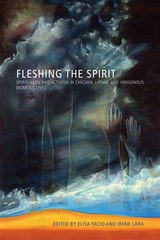
Fleshing the Spirit
Spirituality and Activism in Chicana, Latina, and Indigenous Women’s LivesEdited by Elisa Facio and Irene Lara
University of Arizona Press, 2014
The anthology incorporates different genres of writing—such as poetry, testimonials, critical essays, and historical analysis—and stimulates the reader to engage spirituality in a critical, personal, and creative way. This interdisciplinary work is the first that attempts to theorize the radical interconnection between women of color, spirituality, and social activism. Before transformative political work can be done, the authors say in multiple ways, we must recognize that our spiritual need is a desire to more fully understand our relations with others. Conflict experienced on many levels sometimes severs those relations, separating us from others along racial, class, gender, sexual, national, or other socially constructed lines.
Fleshing the Spirit offers a spiritual journey of healing, health, and human revolution. The book’s open invitation to engage in critical dialogue and social activism—with the spirit and spirituality at the forefront—illuminates the way to social change and the ability to live in harmony with life’s universal energies.
Contributors
Volume Editors
Elisa Facio
Irene Lara
Chapter Authors
Angelita Borbón
Norma E. Cantú
Berenice Dimas
C. Alejandra Elenes
Alicia Enciso Litschi
Oliva M. Espín
Maria Figueroa
Patrisia Gonzales
Inés Hernández- Avila
Rosa María Hernández Juárez
Cinthya Martinez
Lara Medina
Felicia Montes
Sarahi Nuñez- Mejia
Laura E. Pérez
Brenda Sendejo
Inés Talamantez
Michelle Téllez
Beatriz Villegas
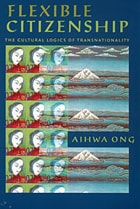
Flexible Citizenship
The Cultural Logics of TransnationalityAihwa Ong
Duke University Press, 1998
Explaining how intensified travel, communications, and mass media have created a transnational Chinese public, Aihwa Ong argues that previous studies have mistakenly viewed transnationality as necessarily detrimental to the nation-state and have ignored individual agency in the large-scale flow of people, images, and cultural forces across borders. She describes how political upheavals and global markets have induced Asian investors, in particular, to blend strategies of migration and of capital accumulation and how these transnational subjects have come to symbolize both the fluidity of capital and the tension between national and personal identities. Refuting claims about the end of the nation-state and about “the clash of civilizations,” Ong presents a clear account of the cultural logics of globalization and an incisive contribution to the anthropology of Asia-Pacific modernity and its links to global social change.
This pioneering investigation of transnational cultural forms will appeal to those in anthropology, globalization studies, postcolonial studies, history, Asian studies, Marxist theory, and cultural studies.
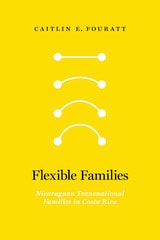
Flexible Families
Nicaraguan Transnational Families in Costa RicaCaitlin Fouratt
Vanderbilt University Press, 2022
The book situates transnational families in an analysis of the history of unstable family life in Nicaragua due to decades of war and economic crisis, rather than in the migration process itself, which is often blamed for family breakdown in public discourse. Fouratt argues that the kinds of family configurations often seen as problematic consequences of migration—specifically single mothers, absent fathers, and grandmother caregivers—represent flexible family configurations that have enabled Nicaraguan families to survive the chronic crises of the past decades. By examining the work that goes into forging and sustaining transnational kinship, the book argues for a rethinking of national belonging and discourses of solidarity.
In parallel, the book critically examines conditions in Costa Rica, especially the ways the instabilities and inequalities that have haunted the rest of the region have begun to take shape there, resulting in perceptions of increased crime rates and a declining quality of life. By linking this crisis of Costa Rican exceptionalism to recent immigration reform, the book also builds on scholarship about the production and experiences of immigrant exclusion. Flexible Families offers insight into the impacts of increasingly restrictive immigration policies in the everyday lives of transnational families within the developing world.
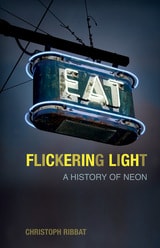
Flickering Light
A History of NeonChristoph Ribbat
Reaktion Books, 2013
Flickering Shadows
Cinema and Identity in Colonial ZimbabweJ. M. Burns
Ohio University Press, 2002
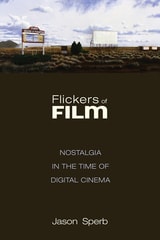
Flickers of Film
Nostalgia in the Time of Digital CinemaSperb, Jason
Rutgers University Press, 2015
In Flickers of Film, Jason Sperb offers nuanced and unexpected answers to these questions, examining the benefits of certain types of film nostalgia, while also critiquing how Hollywood’s nostalgic representations of old technologies obscure important aspects of their histories. He interprets this affection for the prehistory and infancy of digital technologies in relation to an industry-wide anxiety about how the digital has grown to dominate Hollywood, pushing it into an uncertain creative and economic future. Yet he also suggests that Hollywood’s nostalgia for old technologies ignores the professionals who once employed them, as well as the labor opportunities that have been lost through the computerization and outsourcing of film industry jobs.
Though it deals with nostalgia, Flickers of Film is strikingly cutting-edge, one of the first studies to critically examine Pixar’s role in the film industry, cinematic representations of videogames, and the economic effects of participatory culture. As he takes in everything from Terminator: Salvation to The Lego Movie, Sperb helps us see what’s distinct about this recent wave of self-aware nostalgic films—how Hollywood nostalgia today isn’t what it used to be.
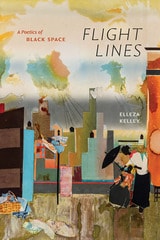
Flight Lines
A Poetics of Black SpaceElleza Kelley
Duke University Press, 2026

Flinders Petrie
A Life in ArchaeologyMargaret S. Drower
University of Wisconsin Press, 1995
Flinders Petrie has been called the “Father of Modern Egyptology”—and indeed he is one of the pioneers of modern archaeological methods. This fascinating biography of Petrie was first published to high acclaim in England in 1985. Margaret S. Drower, a student of Petrie’s in the early 1930s, traces his life from his boyhood, when he was already a budding scholar, through his stunning career in the deserts of Egypt to his death in Jerusalem at the age of eighty-nine. Drower combines her first-hand knowledge with Petrie’s own voluminous personal and professional diaries to forge a lively account of this influential and sometimes controversial figure.
Drower presents Petrie as he was: an enthusiastic eccentric, diligently plunging into the uncharted past of ancient Egypt. She tells not only of his spectacular finds, including the tombs of the first Pharaohs, the earliest alphabetic script, a Homer manuscript, and a collection of painted portraits on mummy cases, but also of Petrie’s important contributions to the science of modern archaeology, such as orderly record-keeping of the progress of a dig and the use of pottery sherds in historical dating. Petrie's careful academic methods often pitted him against such rival archaeologists as Amélineau, who boasted he had smashed the stone jars he could not carry away to be sold, and Maspero and Naville, who mangled a pyramid at El Kula they had vainly tried to break into.
Flintknapping
Making and Understanding Stone ToolsBy John C. Whittaker
University of Texas Press, 1994
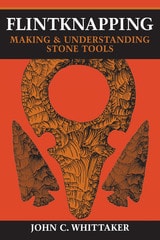
Flintknapping is an ancient craft enjoying a resurgence of interest among both amateur and professional students of prehistoric cultures. John C. Whitaker's bestselling guide is a detailed handbook on flintknapping, written from the archaeological perspective of interpreting stone tools as well as making them.
Flintknapping contains detailed, practical information on making stone tools. Whittaker starts at the beginner level and progresses to discussion of a wide range of techniques. He includes information on necessary tools and materials, as well as step-by-step instructions for making several basic stone tool types. Numerous diagrams allow the reader to visualize the flintknapping process, and drawings of many stone tools illustrate the discussions and serve as models for beginning knappers.
Written for a wide amateur and professional audience, Flintknapping will be essential for practicing knappers as well as for teachers of the history of technology, experimental archaeology, and stone tool analysis.
Flintknapping
Making and Understanding Stone ToolsJohn C. Whittaker
University of Texas Press, 2026
An updated edition of the classic guide to the ancient skill of flintknapping.
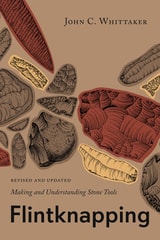
Flintknapping, the art of making stone tools, is an ancient craft generating renewed interest among both amateurs and professional students of prehistoric cultures. John C. Whittaker’s best-selling guide is a foundational and highly regarded handbook that combines practical instruction with the archaeological perspective of interpreting as well as making stone tools.
This updated edition provides clear, step-by-step guidance on tools, materials, and techniques for producing basic stone tool types. Diagrams and illustrations help readers visualize each stage and model their work. Whittaker also introduces the history of the field, the role of stone tools in human technological development, and experimental archaeology, concluding with an accessible discussion of how archaeologists study stone tools to understand the lives of our ancestors. For more than thirty years, Flintknapping has been essential for knappers, archaeologists, and teachers. This expanded and revised edition adds new insights, illustrations, and guidance for a new generation of readers.
Flip the Script
European Hip Hop and the Politics of PostcolonialityJ. Griffith Rollefson
University of Chicago Press, 2017
Through analysis of recorded music and other media, as well as interviews and fieldwork with hip hop communities, J. Griffith Rollefson shows how this music created by black Americans is deployed by Senegalese Parisians, Turkish Berliners, and South Asian Londoners to both differentiate themselves from and relate themselves to the dominant culture. By listening closely to the ways these postcolonial citizens in Europe express their solidarity with African Americans through music, Rollefson shows, we can literally hear the hybrid realities of a global double consciousness.

Floating Power
Energy, Infrastructure, and South-South RelationsGökçe Günel
Duke University Press, 2026
Flogging Others
Corporal Punishment and Cultural Identity from Antiquity to the PresentG. Geltner
Amsterdam University Press, 2015
Flooded
Development, Democracy, and Brazil’s Belo Monte DamPeter Taylor Klein
Rutgers University Press, 2022
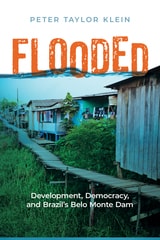
In the middle of the twentieth century, governments ignored the negative effects of large-scale infrastructure projects. In recent decades, many democratic countries have continued to use dams to promote growth, but have also introduced accompanying programs to alleviate these harmful consequences of dams for local people, to reduce poverty, and to promote participatory governance. This type of dam building undoubtedly represents a step forward in responsible governing. But have these policies really worked?
Flooded provides insights into the little-known effects of these approaches through a close examination of Brazil’s Belo Monte hydroelectric facility. After three decades of controversy over damming the Xingu River, a tributary of the Amazon, the dam was completed in 2019 under the left-of-center Workers’ Party, becoming the world’s fourth largest. Billions of dollars for social welfare programs accompanied construction. Nonetheless, the dam brought extensive social, political, and environmental upheaval to the region. The population soared, cost of living skyrocketed, violence spiked, pollution increased, and already overextended education and healthcare systems were strained. Nearly 40,000 people were displaced and ecosystems were significantly disrupted. Klein tells the stories of dam-affected communities, including activists, social movements, non-governmental organizations, and public defenders and public prosecutors. He details how these groups, as well as government officials and representatives from private companies, negotiated the upheaval through protests, participating in public forums for deliberation, using legal mechanisms to push for protections for the most vulnerable, and engaging in myriad other civic spaces. Flooded provides a rich ethnographic account of democracy and development in the making. In the midst of today’s climate crisis, this book showcases the challenges and opportunities of meeting increasing demands for energy in equitable ways.
Florentine Codex
Book 10: Book 10: The PeopleBernardino de Sahagun
University of Utah Press, 1981
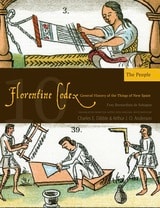
Two of the world’s leading scholars of the Aztec language and culture have translated Sahagún’s monumental and encyclopedic study of native life in Mexico at the time of the Spanish Conquest. This immense undertaking is the first complete translation into any language of Sahagún’s Nahuatl text, and represents one of the most distinguished contributions in the fields of anthropology, ethnography, and linguistics.
Written between 1540 and 1585, the Florentine Codex (so named because the manuscript has been part of the Laurentian Library’s collections since at least 1791) is the most authoritative statement we have of the Aztecs’ lifeways and traditions—a rich and intimate yet panoramic view of a doomed people.
The Florentine Codex is divided by subject area into twelve books and includes over 2,000 illustrations drawn by Nahua artists in the sixteenth century.
Book Ten gives a broad overview of the different occupations, classes, and characteristics of Aztecs during this time period. Arguably the most fascinating part of this book is the detailed documentation of human anatomy and commonly used cures for physical ailments.
Florentine Codex
Book 11: Book 11: Earthly ThingsBernardino de Sahagun
University of Utah Press, 1963
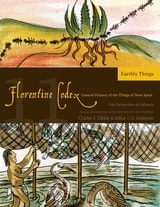
Two of the world’s leading scholars of the Aztec language and culture have translated Sahagún’s monumental and encyclopedic study of native life in Mexico at the time of the Spanish Conquest. This immense undertaking is the first complete translation into any language of Sahagún’s Nahuatl text, and represents one of the most distinguished contributions in the fields of anthropology, ethnography, and linguistics.
Written between 1540 and 1585, the Florentine Codex (so named because the manuscript has been part of the Laurentian Library’s collections since at least 1791) is the most authoritative statement we have of the Aztecs’ lifeways and traditions—a rich and intimate yet panoramic view of a doomed people.
The Florentine Codex is divided by subject area into twelve books and includes over 2,000 illustrations drawn by Nahua artists in the sixteenth century.
Book Eleven is a beautifully written and careful documentation of all of the animals and plants known to the Aztecs in the sixteenth century. As the volume with the most illustrations, Earthly Things allows the reader to look at the natural world through the eyes of the Aztec.
Florentine Codex
Book 12: Book 12: The Conquest of MexicoBernardino de Sahagun
University of Utah Press, 1975
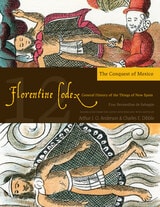
Two of the world’s leading scholars of the Aztec language and culture have translated Sahagún’s monumental and encyclopedic study of native life in Mexico at the time of the Spanish Conquest. This immense undertaking is the first complete translation into any language of Sahagún’s Nahuatl text, and represents one of the most distinguished contributions in the fields of anthropology, ethnography, and linguistics.
Written between 1540 and 1585, the Florentine Codex (so named because the manuscript has been part of the Laurentian Library’s collections since at least 1791) is the most authoritative statement we have of the Aztecs’ lifeways and traditions—a rich and intimate yet panoramic view of a doomed people.
The Florentine Codex is divided by subject area into twelve books and includes over 2,000 illustrations drawn by Nahua artists in the sixteenth century.
Book Twelve contains a meticulous retelling of the Spanish conquest of Mexico, from the days leading up to the first arrival of Cortes to the eventual submission of the Tlatilulcans, the Tenochtitlans, and their rulers to the Spaniards.
Florentine Codex
Book 1: Book 1: The GodsBernardino de Sahagun
University of Utah Press, 1981
Two of the world’s leading scholars of the Aztec language and culture have translated Sahagún’s monumental and encyclopedic study of native life in Mexico at the time of the Spanish Conquest. This immense undertaking is the first complete translation into any language of Sahagún’s Nahuatl text, and represents one of the most distinguished contributions in the fields of anthropology, ethnography, and linguistics.
Written between 1540 and 1585, the Florentine Codex (so named because the manuscript has been part of the Laurentian Library’s collections since at least 1791) is the most authoritative statement we have of the Aztecs’ lifeways and traditions—a rich and intimate yet panoramic view of a doomed people.
The Florentine Codex is divided by subject area into twelve books and includes over 2,000 illustrations drawn by Nahua artists in the sixteenth century.
Book One describes in detail the gods of the Aztec people, including Uitzilopochtli, Tlatoc, and Quetzalcoatl. This colorful and clear translation brings to life characteristics of each god, describing such items as clothing or adornment worn by individual gods, as well as specific personality traits.

Florentine Codex
Book 2: The CeremoniesBernardino de Sahagun
University of Utah Press, 1981
Two of the world’s leading scholars of the Aztec language and culture have translated Sahagún’s monumental and encyclopedic study of native life in Mexico at the time of the Spanish Conquest. This immense undertaking is the first complete translation into any language of Sahagún’s Nahuatl text, and represents one of the most distinguished contributions in the fields of anthropology, ethnography, and linguistics.
Written between 1540 and 1585, the Florentine Codex (so named because the manuscript has been part of the Laurentian Library’s collections since at least 1791) is the most authoritative statement we have of the Aztecs’ lifeways and traditions—a rich and intimate yet panoramic view of a doomed people.
The Florentine Codex is divided by subject area into twelve books and includes over 2,000 illustrations drawn by Nahua artists in the sixteenth century.
Book Two gives comprehensive accounts of the religious ceremonies and days of feasting during the time of the Aztecs, including prayers, songs, and the duties and roles of Aztecs inside the temples during the ceremonies. This book also details the various tributes and sacrifices given to specific gods.
Florentine Codex
Book 6: Book 6: Rhetoric and Moral PhilosophyBernardino de Sahagun
University of Utah Press, 1969
Two of the world’s leading scholars of the Aztec language and culture have translated Sahagún’s monumental and encyclopedic study of native life in Mexico at the time of the Spanish Conquest. This immense undertaking is the first complete translation into any language of Sahagún’s Nahuatl text, and represents one of the most distinguished contributions in the fields of anthropology, ethnography, and linguistics.
Written between 1540 and 1585, the Florentine Codex (so named because the manuscript has been part of the Laurentian Library’s collections since at least 1791) is the most authoritative statement we have of the Aztecs’ lifeways and traditions—a rich and intimate yet panoramic view of a doomed people.
The Florentine Codex is divided by subject area into twelve books and includes over 2,000 illustrations drawn by Nahua artists in the sixteenth century.
Book Six includes prayers to various gods asking for cures, riches, rain, and for the gods to bless or admonish a chosen ruler. In addition to these prayers, the book displays examples of formal conversation used in Aztec life, from the ruler and ambassador to others in the noble class.
Florentine Codex
Book 7: Book 7: The Sun, the Moon and Stars, and the Binding of the YearsBernardino de Sahagun
University of Utah Press, 1953
Two of the world’s leading scholars of the Aztec language and culture have translated Sahagún’s monumental and encyclopedic study of native life in Mexico at the time of the Spanish Conquest. This immense undertaking is the first complete translation into any language of Sahagún’s Nahuatl text, and represents one of the most distinguished contributions in the fields of anthropology, ethnography, and linguistics.
Written between 1540 and 1585, the Florentine Codex (so named because the manuscript has been part of the Laurentian Library’s collections since at least 1791) is the most authoritative statement we have of the Aztecs’ lifeways and traditions—a rich and intimate yet panoramic view of a doomed people.
The Florentine Codex is divided by subject area into twelve books and includes over 2,000 illustrations drawn by Nahua artists in the sixteenth century.
Book Seven tells the origin stories of the sun, the moon, and the stars—which gods created them, what powers they each embody, and how they are related to Aztec astrology. This book also discusses the meaning and cause behind hail, lightning, rainbows, wind, and different types of weather.

Florentine Codex
Book 8: Book 8: Kings and LordsBernardino de Sahagun
University of Utah Press, 1954
Two of the world’s leading scholars of the Aztec language and culture have translated Sahagún’s monumental and encyclopedic study of native life in Mexico at the time of the Spanish Conquest. This immense undertaking is the first complete translation into any language of Sahagún’s Nahuatl text, and represents one of the most distinguished contributions in the fields of anthropology, ethnography, and linguistics.
Written between 1540 and 1585, the Florentine Codex (so named because the manuscript has been part of the Laurentian Library’s collections since at least 1791) is the most authoritative statement we have of the Aztecs’ lifeways and traditions—a rich and intimate yet panoramic view of a doomed people.
The Florentine Codex is divided by subject area into twelve books and includes over 2,000 illustrations drawn by Nahua artists in the sixteenth century.
Book Eight lists the rulers of Tenochtitlan from the first, Acamapichtli, to the sixteenth, Don Cristobal Cecepatic. It also documents the rulers of the ancient Aztec cities of Tlatillco, Texcoco, and Uexotla. Several chapters are devoted to describing the various articles of clothing that the rulers and noblemen wore and the foods they ate for differing ceremonies and activities.

Florentine Codex
Book 9: Book 9: The MerchantsBernardino de Sahagun
University of Utah Press, 1959
Two of the world’s leading scholars of the Aztec language and culture have translated Sahagún’s monumental and encyclopedic study of native life in Mexico at the time of the Spanish Conquest. This immense undertaking is the first complete translation into any language of Sahagún’s Nahuatl text, and represents one of the most distinguished contributions in the fields of anthropology, ethnography, and linguistics.
Written between 1540 and 1585, the Florentine Codex (so named because the manuscript has been part of the Laurentian Library’s collections since at least 1791) is the most authoritative statement we have of the Aztecs’ lifeways and traditions—a rich and intimate yet panoramic view of a doomed people.
The Florentine Codex is divided by subject area into twelve books and includes over 2,000 illustrations drawn by Nahua artists in the sixteenth century.
Book Nine begins with how commerce grew in Mexico from the trade of only feathers to jewelry, precious stones, animal skins, embroidered clothing, and chocolate. It discusses how the merchants prepare for a journey and the celebrations that take place when they arrive home safely. This book also lists different types of merchants, such as lapidaries, who worked with precious stones, and ornamenters, who made feather articles.
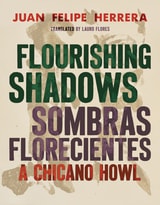
Flourishing Shadows / Sombras Florecientes
A Chicano HowlJuan Felipe Herrera; Translated by Lauro Flores
University of Arizona Press, 2026
From former U.S. poet laureate Juan Felipe Herrera comes a searing bilingual collection that speaks directly to America and all its peoples. Flourishing Shadows / Sombras Florecientes is a lyrical journey through migration, memory, and resistance—an urgent address to a nation grappling with its identity. Blending autobiography and Indigenous, Chicanx, and Beat traditions, Herrera reclaims language as a tool of compassion and truth. With ink drawings and evocative verse, this book honors the migrants who traverse borders and histories, flourishing even in the shadows. A call to listen, to remember, and to act.
More than a poetic critique, this book initiates a conversation—a direct address to readers that invites reflection, solidarity, and action. Drawing on his anthropological training and lived experience, Herrera weaves together the cultural richness of Indigenous Mexico, the urban vibrancy of San Francisco’s literary scene, and the enduring legacy of migrant journeys. Flourishing Shadows / Sombras Florecientes is a vital addition to the Camino del Sol series and a powerful testament to the resilience and humanity of those too often relegated to the margins.