Results by title
18284 books match the query 'United States' and 783 start with f

For Might and Right
Cold War Defense Spending and the Remaking of American DemocracyMichael Brenes
University of Massachusetts Press, 2020
How did the global Cold War influence American politics at home? For Might and Right traces the story of how Cold War defense spending remade participatory politics, producing a powerful and dynamic political coalition that reached across party lines. This “Cold War coalition” favored massive defense spending over social welfare programs, bringing together a diverse array of actors from across the nation, including defense workers, community boosters, military contractors, current and retired members of the armed services, activists, and politicians. Faced with neoliberal austerity and uncertainty surrounding America's foreign policy after the 1960s, increased military spending became a bipartisan solution to create jobs and stimulate economic growth, even in the absence of national security threats.
Using a rich array of archival sources, Michael Brenes draws important connections between economic inequality and American militarism that enhance our understanding of the Cold War's continued impact on American democracy and the resilience of the military-industrial complex, up to the age of Donald Trump.
For Rent
Understanding Landlords, Rental Housing, and Evictions in PhiladelphiaJohn Balzarini and Melody L. Boyd
Temple University Press, 2027
Landlords are often painted as “rich, indifferent, and miserly.” For Rent humanizes small-scale landlords who are highly involved in their property management and tenant interaction. John Balzarini and Melanie Boyd interview small-scale landlords in Philadelphia to understand how they think, why they invest in rental housing, and how their experiences as housing providers shape both their supportive and detrimental behaviors toward renters. They reveal an earnest desire to provide decent rental housing and resolve rent issues through communication, flexibility, and compromise rather than eviction.
For Rent describes these landlords’ challenges, from social problems connected to high poverty rates, to the increasing consolidation of rental housing by large-scale corporate landlords, which can push small-scale landlords out of the rental housing market. The authors argue that the decline of small-scale landlords could reduce housing affordability and increase evictions. Instead, collectively valuing rental housing and implementing policies that support small-scale landlords can strengthen housing stability and improve outcomes for renters.
Providing a regional focus that is indicative of national trends, For Rent shows the many advantages small-scale landlords have over their corporate competitors, while also critically analyzing the broader housing system that places them on the front lines of managing market contradictions.
For Single Mothers Working as Train Conductors
Laura Esther Wolfson
University of Iowa Press, 2018
Laura Esther Wolfson’s literary debut draws on years of immersion in the Russian and French languages; struggles to gain a basic understanding of Judaism, its history, and her place in it; and her search for a form to hold the stories that emerge from what she has lived, observed, overheard, and misremembered.
In “Proust at Rush Hour,” when her lungs begin to collapse and fail, forcing her to give up an exciting and precarious existence as a globetrotting simultaneous interpreter, she seeks consolation by reading Proust in the original while commuting by subway to a desk job that requires no more than a minimal knowledge of French. In “For Single Mothers Working as Train Conductors” she gives away her diaphragm and tubes of spermicidal jelly to a woman in the Soviet Union who, with two unwanted pregnancies behind her, needs them more than she does. “The Husband Method” has her translating a book on Russian obscenities and gulag slang during the dissolution of her marriage to the Russian-speaker who taught her much of what she knows about that language.
In prose spangled with pathos and dusted with humor, Wolfson transports us to Paris, the Republic of Georgia, upstate New York, the Upper West Side, and the corridors of the United Nations, telling stories that skewer, transform, and inspire.

For You, Lili Marlene
A Memoir Of World War IIRobert Peters
University of Wisconsin Press, 1996

For Zion's Sake
The Judeo-Christian Tradition in American CultureFuad Sha'ban
Pluto Press, 2005
This book explores the role of religion, especially religious extremism, in American culture. In particular, it examines the development of the Judeo-Christian tradition, its impact on America's self-image, and the way it has influenced America's attitude to the Arab World.
The Christian Right has become a very powerful force in American politics. Its basic belief in Christian Zionism has resulted in a steadfast commitment to the establishment of the state of Israel and to its aggressive expansion, and has made Zionism a central part of government policy, for both Republicans and Democrats.
Fuad Sha'ban shows how this is not a new phenomenon: what he terms the 'Vision of Zion' in American life has its roots in literature, the arts and internal politics from colonial times until today. Looking in detail at a wealth of resources, including religious and literary texts, as well as official political statements, he pieces together a subtle account of how America's Puritan roots have fostered a specifically religious political culture that encourages hatred and suspicion of the Muslim World in domestic and foreign policy.

For a Short Time Only
Itinerants and the Resurgence of Popular Culture in Early AmericaPeter Benes
University of Massachusetts Press, 2016
By the 1740s, colonists living in North America began to encounter scores of itinerant performers from England and Europe. These show people—acrobats, wire dancers, tumblers, trick riders, painters, dancing-masters, waxworks proprietors, healers, and singing and language teachers—brought novelty and culture to remote areas. Advertising in newspapers, they attracted audiences with the hook of appearing "for a short time only."
In this richly illustrated and deeply researched book, Peter Benes examines the rise of early American popular culture through the lives and work of itinerants who circulated in British North America and the United States from the late seventeenth through the early nineteenth century. Although they were frequently reviled as quacks and absconders by many provincials, these transients enjoyed a unique camaraderie and found audiences among high- and lowbrow alike. Drawing on contemporary diaries, letters, reminiscences, and hitherto inaccessible newspaper ads, broadsides, and images, Benes suggests why some elements of Europe's carnival and folklore traditions failed to gain acceptance in American society while others flourished brilliantly.

For the Children?
Protecting Innocence in a Carceral StateErica R. Meiners
University of Minnesota Press, 2016
“Childhood has never been available to all.” In her opening chapter of For the Children?, Erica R. Meiners stakes the claim that childhood is a racial category often unavailable to communities of color. According to Meiners, this is glaringly evident in the U.S. criminal justice system, where the differentiation between child and adult often equates to access to stark disparities. And what is constructed as child protection often does not benefit many young people or their communities. Placing the child at the heart of the targeted criminalization debate, For the Children? considers how perceptions of innocence, the safe child, and the future operate in service of the prison industrial complex.
The United States has the largest prison population in the world, with incarceration and policing being key economic tools to maintain white supremacist ideologies. Meiners examines the school-to-prison pipeline and the broader prison industrial complex in the United States, arguing that unpacking child protection is vital to reducing the nation’s reliance on its criminal justice system as well as building authentic modes of public safety. Rethinking the meanings and beliefs attached to the child represent a significant and intimate thread of the work to dismantle facets of the U.S. carceral state.
Taking an interdisciplinary approach and building from a scholarly and activist platform, For the Children? engages fresh questions in the struggle to build sustainable and flourishing worlds without prisons.
For the Civic Good
The Liberal Case for Teaching Religion in the Public SchoolsWalter Feinberg and Richard A. Layton
University of Michigan Press, 2014
Why teach about religion in public schools? What educational value can such courses potentially have for students?
In For the Civic Good, Walter Feinberg and Richard A. Layton offer an argument for the contribution of Bible and world religion electives. The authors argue that such courses can, if taught properly, promote an essential aim of public education: the construction of a civic public, where strangers engage with one another in building a common future. The humanities serve to awaken students to the significance of interpretive and analytic skills, and religion and Bible courses have the potential to add a reflective element to these skills. In so doing, students awaken to the fact of their own interpretive framework and how it influences their understanding of texts and practices. The argument of the book is developed by reports on the authors’ field research, a two-year period in which they observed religion courses taught in various public high schools throughout the country, from the “Bible Belt” to the suburban parkway. They document the problems in teaching religion courses in an educationally appropriate way, but also illustrate the argument for a humanities-based approach to religion by providing real classroom models of religion courses that advance the skills critical to the development of a civic public.
For the Love of It
Amateuring and Its RivalsWayne C. Booth
University of Chicago Press, 1999
"If, in truth, Booth is an amateur player now in his fifth decade of amateuring, he is certainly not an amateur thinker about music and culture. . . . Would that all of us who think and teach and care about music could be so practical and profound at the same time."—Peter Kountz, New York Times Book Review
"[T]his book serves as a running commentary on the nature and depth of this love, and all the connections it has formed in his life. . . . The music, he concludes, has become part of him, and that is worth the price."—Clea Simon, Boston Globe
"The book will be read with delight by every well-meaning amateur who has ever struggled. . . . Even general readers will come away with a valuable lesson for living: Never mind the outcome of a possibly vain pursuit; in the passion that is expended lies the glory."—John von Rhein, Chicago Tribune
"Hooray for amateurs! And huzzahs to Wayne Booth for honoring them as they deserve. For the Love of It celebrates amateurism with genial philosophizing and pointed cultural criticism, as well as with personal reminiscences and self-effacing wit."—James Sloan Allen, USA Today
"Wayne Booth, the prominent American literary critic, has written the only sustained study of the interior experience of musical amateurism in recent years, For the Love of It. [It] succeeds as a meditation on the tension between the centrality of music in Booth's life, both inner and social, and its marginality. . . . It causes the reader to acknowledge the heterogeneity of the pleasures involved in making music; the satisfaction in playing well, the pride one takes in learning a difficult piece or passage or technique, the buzz in one's fingertips and the sense of completeness with the bow when the turn is done just right, the pleasure of playing with others, the comfort of a shared society, the joy of not just hearing, but making, the music, the wonder at the notes lingering in the air."—Times Literary Supplement
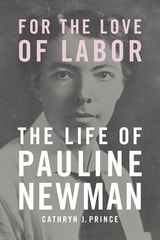
For the Love of Labor
The Life of Pauline NewmanCathryn J. Prince
University of Illinois Press, 2026
Prince follows Newman’s life from a youth split between Lithuania and New York City sweatshops to her work as an advisor to New Deal–era labor secretary Frances Perkins. Newman’s long hours at the Triangle Shirtwaist Factory informed her entrée into labor activism. In the following years, she tirelessly advocated for workers, ran for New York Secretary of State as a socialist, and became the first woman to serve as the ILGWU general organizer. Her interest in the health of workers led to service on the Joint Board of Sanitary Control and a decades-long term as education director of the ILGWU health center. Membership in Eleanor Roosevelt’s circle opened doors to government positions and advisory roles that continued into the postwar era. Prince also weaves in the details of Newman’s fifty-year relationship with a woman, her struggles with her sexual identity, and her final years.
Engaging and panoramic, For the Love of Labor is the first major biography of an important figure in labor and women’s history.
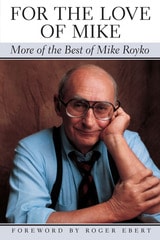
For the Love of Mike
More of the Best of Mike RoykoMike Royko
University of Chicago Press, 2001
Royko, a nationally syndicated Pulitzer Prize winner, wrote for three major Chicago newspapers in the course of his 34 years as a daily columnist. Chosen from more than 7,000 columns, For the Love of Mike brings back more than a hundred vintage Royko pieces-most of which have not appeared since their initial publication-for readers across the country to enjoy. This second collection includes Royko's riffs on the consequences of accepting a White House dinner invitation (not surprisingly, he turned it down); his explanation of the notorious Ex-Cub Factor in World Series play; and his befuddlement at a private screening of Beyond the Valley of the Dolls, to which he was invited by his pal Ebert, the screenplay's author. The new collection also illuminates Royko's favorite themes, topics he returned to again and again: his skewering of cultural trends, his love of Chicago, and his rage against injustice. By turns acerbic, hilarious, and deeply moving, Royko remains a writer of wit and passion who represents the best of urban journalism.
"To read these columns again is to have Mike back again, nudging, chuckling, wincing, deflating pomposity, sticking up for the little guy, defending good ideas against small-minded people," writes Roger Ebert in his foreword to the book. For the Love of Mike does indeed bring Mike back again, and until a Chicago newspaper takes up Ebert's suggestion that it begin reprinting each of Royko's columns, one a day, this collection will more than satisfy Royko's loyal readers.
For the Many or the Few
The Initiative, Public Policy, and American DemocracyJohn G. Matsusaka
University of Chicago Press, 2004
Drawing upon a century of evidence, Matsusaka argues against the popular belief that initiative measures are influenced by wealthy special interest groups that neglect the majority view. Examining demographic, political, and opinion data, he demonstrates how the initiative process brings about systematic changes in tax and expenditure policies of state and local governments that are generally supported by the citizens. He concludes that, by and large, direct democracy in the form of the initiative process works for the benefit of the many rather than the few.
An unprecedented, comprehensive look at the historical, empirical, and theoretical components of how initiatives function within our representative democracy to increase political competition while avoiding the tyranny of the majority, For the Many or the Few is a most timely and definitive work.

For the Prevention of Cruelty
The History and Legacy of Animal Rights Activism in the United StatesDiane L. Beers
Ohio University Press, 2006
Forbidden Fruits
Taboos and Tabooism in CultureUniversity of Wisconsin Press, 1984

Forbidden Relatives
THE AMERICAN MYTH OF COUSIN MARRIAGEMartin Ottenheimer
University of Illinois Press, 1996
A social anthropologist, Martin Ottenheimer questioned U.S. laws against cousin marriage because his international research into marriage patterns showed no European countries prohibit such unions. He examines the historical development of U.S. laws governing marriage, contrasts them with European laws, and analyzes the genetic implications of first cousin marriage. Modern genetic evidence, Ottenheimer says, doesn't support the concept that children of these unions are at any special risk.
Ottenheimer's book, the only volume available that deals with kinship in this way, will challenge readers and give them much to consider and discuss.
Forbidden Signs
American Culture and the Campaign against Sign LanguageDouglas C. Baynton
University of Chicago Press, 1996
The ensuing debate over sign language invoked such fundamental questions as what distinguished Americans from non-Americans, civilized people from "savages," humans from animals, men from women, the natural from the unnatural, and the normal from the abnormal. An advocate of the return to sign language, Baynton found that although the grounds of the debate have shifted, educators still base decisions on many of the same metaphors and images that led to the misguided efforts to eradicate sign language.
"Baynton's brilliant and detailed history, Forbidden Signs, reminds us that debates over the use of dialects or languages are really the linguistic tip of a mostly submerged argument about power, social control, nationalism, who has the right to speak and who has the right to control modes of speech."—Lennard J. Davis, The Nation
"Forbidden Signs is replete with good things."—Hugh Kenner, New York Times Book Review
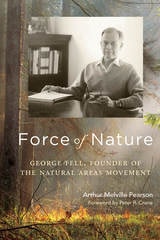
Force of Nature
George Fell, Founder of the Natural Areas MovementArthur Melville Pearson
University of Wisconsin Press, 2020
Force of Nature reveals how a failed civil servant, with few assets apart from his tenacity and vision, initiated the natural areas movement. In the boom years following World War II, as undeveloped lands were being mined, drained, or bulldozed, Fell transformed a loose band of ecologists into The Nature Conservancy, drove the passage of the influential Illinois Nature Preserves Act, and helped spark allied local and national conservation organizations in the United States and beyond.
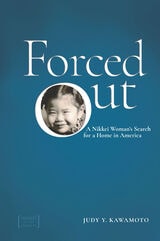
Forced Out
A Nikkei Woman's Search for a Home in AmericaJudy Y. Kawamoto
University Press of Colorado, 2020
Forced Out: A Nikkei Woman’s Search for a Home in America offers insight into “voluntary evacuation,” a little-known Japanese American experience during World War II, and the lasting effects of cultural trauma. Of the roughly 120,000 people forced from their homes by Executive Order 9066, around 5,000 were able to escape incarceration beforehand by fleeing inland. In a series of beautifully written essays, Judy Kawamoto recounts her family’s flight from their home in Washington to Wyoming, their later moves to Montana and Colorado, and the influence of those experiences on the rest of her life. Hers is a story shared by the many families who lost everything and had to start over in often suspicious and hostile environments.
Kawamoto vividly illustrates the details of her family’s daily life, the discrimination and financial hardship they experienced, and the isolation that came from experiencing the horrors of the 1940s very differently than many other Japanese Americans. Chapters address her personal and often unconscious reactions to her parents’ trauma, as well as her own subsequent travels around much of the world, exploring, learning, enjoying, but also unconsciously acting out a continual search for a home.
Showing how the impacts of traumatic events are collective and generational, Kawamoto draws
interconnections between her family’s displacement and later aspects of her life and juxtaposes the impact of her early experiences and questions of identity, culture, and assimilation. Forced Out will be of great interest to the general reader as well as students and scholars of ethnic studies, Asian American studies, history, education, and mental health.
2022 Asian/Pacific American Award for Literature, Honor Title, Adult Non-Fiction Literature
2022 Evans Handcart Award Winner
Forced Passages
Imprisoned Radical Intellectuals and the U.S. Prison RegimeDylan Rodríguez
University of Minnesota Press, 2006
In Forced Passages, Dylan Rodríguez argues that the cultural production of such imprisoned intellectuals as Mumia Abu-Jamal, Angela Davis, Leonard Peltier, George Jackson, José Solis Jordan, Ramsey Muniz, Viet Mike Ngo, and Marilyn Buck should be understood as a social and intellectual movement in and of itself, unique in context and substance. Rodríguez engages with a wide range of texts, including correspondence, memoirs, essays, poetry, communiqués, visual art, and legal writing, drawing on published works by widely recognized figures and by individuals outside the public’s field of political vision or concern. Throughout, Rodríguez focuses on the conditions under which imprisoned intellectuals live and work, and he explores how incarceration shapes the ways in which insurgent knowledge is created, disseminated, and received.
More than a series of close readings of prison literature, Forced Passages identifies and traces the discrete lineage of radical prison thought since the 1970s, one formed by the logic of state violence and by the endemic racism of the criminal justice system.
Dylan Rodríguez is assistant professor of ethnic studies at the University of California, Riverside.
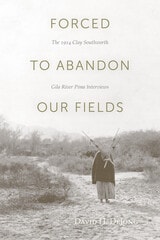
Forced to Abandon Our Fields
The 1914 Clay Southworth Gila River Pima InterviewsDavid H. DeJong
University of Utah Press, 2011
During the nineteenth century, upstream diversions from the Gila River decreased the arable land on the Gila River Indian Reservation to only a few thousand acres. As a result the Pima Indians, primarily an agricultural people, fell into poverty. Many Pima farmers and leaders lamented this suffering and in 1914 the United States Indian Irrigation Service assigned a 33-year-old engineer named Clay “Charles” Southworth to oversee the Gila River adjudication. As part of that process, Southworth interviewed 34 Pima elders, thus putting a face on the depth of hardships facing many Indians in the late nineteenth century.
Foreign Direct Investment
Edited by Kenneth A. Froot
University of Chicago Press, 1993
Chapters cover such topics as theoretical accounts of FDI patterns, the growth of multinational enterprises, and the FDI experiences of Japan, the United States, and selected developing countries. This volume will interest economists, government officials, and business people concerned with FDI today.

Foreign Investment in American Telecommunications
J. Gregory Sidak
University of Chicago Press, 1997
Basing his analysis on legislative history, statutory and constitutional interpretation, and finance and trade theory, Sidak shows that these restrictions no longer serve their national security purpose (if they ever did). Instead they deny American consumers lower prices and more robust innovation, hamper access of American investors to foreign telecommunications markets, and unconstitutionally impinge on freedom of speech. Sidak's study encompasses the Telecommunications Act of 1996, recent global mergers such as British Telecom-MCI, and the 1997 World Trade Organization agreement to liberalize trade in telecommunications services.
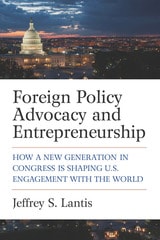
Foreign Policy Advocacy and Entrepreneurship
How a New Generation in Congress Is Shaping U.S. Engagement with the WorldJeffrey S. Lantis
University of Michigan Press, 2019
Cases of entrepreneurship by junior members of Congress represent a puzzle for traditional foreign policy studies that focus on seniority, party discipline, and rigid institutional systems on Capitol Hill. By melding entrepreneurship and policy advocacy literature, this book advances a new typology of foreign policy entrepreneurship, recognizing the impact of multidimensional strategies of influence. The arrival of new members of the 116th Congress, the most diverse in history, provides an exciting laboratory to further test these propositions.
Foreign Policy and Congress
An International Relations PerspectiveMarie T. Henehan
University of Michigan Press, 2000
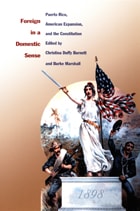
Foreign in a Domestic Sense
Puerto Rico, American Expansion, and the ConstitutionChristina Duffy Burnett and Burke Marshall, eds.
Duke University Press, 2001
More than four million U.S. citizens currently live in five “unincorporated” U.S. territories. The inhabitants of these vestiges of an American empire are denied full representation in Congress and cannot vote in presidential elections. Focusing on Puerto Rico, the largest and most populous of the territories, Foreign in a Domestic Sense sheds much-needed light on the United States’ unfinished colonial experiment and its legacy of racially rooted imperialism, while insisting on the centrality of these “marginal” regions in any serious treatment of American constitutional history. For one hundred years, Puerto Ricans have struggled to define their place in a nation that neither wants them nor wants to let them go. They are caught in a debate too politicized to yield meaningful answers. Meanwhile, doubts concerning the constitutionality of keeping colonies have languished on the margins of mainstream scholarship, overlooked by scholars outside the island and ignored by the nation at large.
This book does more than simply fill a glaring omission in the study of race, cultural identity, and the Constitution; it also makes a crucial contribution to the study of American federalism, serves as a foundation for substantive debate on Puerto Rico’s status, and meets an urgent need for dialogue on territorial status between the mainland and the territories.
Contributors. José Julián Álvarez González, Roberto Aponte Toro, Christina Duffy Burnett, José A. Cabranes, Sanford Levinson, Burke Marshall, Gerald L. Neuman, Angel R. Oquendo, Juan Perea, Efrén Rivera Ramos, Rogers M. Smith, E. Robert Statham Jr., Brook Thomas, Richard Thornburgh, Juan R. Torruella, José Trías Monge, Mark Tushnet, Mark Weiner
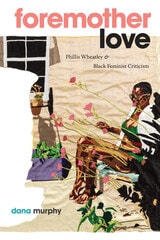
Foremother Love
Phillis Wheatley and Black Feminist CriticismDana Murphy
Duke University Press, 2025

Forensics Under Fire
Are Bad Science and Dueling Experts Corrupting Criminal Justice?Jim Fisher
Rutgers University Press, 2008
Television shows like CSI, Forensic Files, and The New Detectives make it look so easy. A crime-scene photographer snaps photographs, a fingerprint technician examines a gun, uniformed officers seal off a house while detectives gather hair and blood samples, placing them carefully into separate evidence containers. In a crime laboratory, a suspect's hands are meticulously examined for gunshot residue. An autopsy is performed in order to determine range and angle of the gunshot and time-of-death evidence. Dozens of tests and analyses are performed and cross-referenced. A conviction is made. Another crime is solved. The credits roll.
The American public has become captivated by success stories like this one with their satisfyingly definitive conclusions, all made possible because of the wonders of forensic science. Unfortunately, however, popular television dramas do not represent the way most homicide cases in the United States are actually handled. Crime scenes are not always protected from contamination; physical evidence is often packaged improperly, lost, or left unaccounted for; forensic experts are not always consulted; and mistakes and omissions on the autopsy table frequently cut investigations short or send detectives down the wrong investigative path.
In Forensics Under Fire, Jim Fisher makes a compelling case that these and other problems in the practice of forensic science allow offenders to escape justice and can also lead to the imprisonment of innocent people. Bringing together examples from a host of high-profile criminal cases and familiar figures, such as the JonBenet Ramsey case and Dr. Henry Lee who presented physical evidence in the O. J. Simpson trial, along with many lesser known but fascinating stories, Fisher presents daunting evidence that forensic science has a long way to go before it lives up to its potential and the public's expectations.

Forest Park
Exploring Portland's Natural SanctuaryMarcy Cottrell Houle
Oregon State University Press, 2023
Situated in the rugged hills west of downtown Portland, Forest Park is the nation’s premier urban natural sanctuary. It supports essential habitat for hundreds of native plants and animals, including species at risk, and is one of the largest city parks in the world. While extending critical ecosystem services to the region, it offers miles of outstanding hiking trails, all within minutes of the downtown core.
Forest Park: Exploring Portland’s Natural Sanctuary showcases this treasure in new light, offering a compendium of the most up-to-date and comprehensive information available. Twenty-one hikes covering 75 miles bring a full awareness of the park’s outstanding attributes. Hikes are grouped by theme to encourage people to explore Forest Park’s watersheds; geology; lichens and mosses; vegetation; amphibians and reptiles; pollinators; native wildlife; and wildlife corridors. Beautiful photographs and full-color maps accompany each trail description.
Forest Park is a shining example of the Pacific Northwest western hemlock community--an ecosystem unique among all temperate forests of the world. It is also an exciting model for a future Urban Biodiversity Reserve, a concept under development recognizing the park’s scientific, natural, and cultural qualities. Forest Park: Exploring Portland’s Natural Sanctuary will help all visitors discover the beauty and wonders of this extraordinary natural resource.

Forests
A Naturalist’s Guide to Woodland TreesBy Laurence C. Walker
University of Texas Press, 1997
First published in 1990, Forests explores the ecological, economic, and human influences on over thirty significant types of woodlands. Laurence Walker focuses especially on the effects of site factors—climate, physiography, biology, and soils—upon the growth of various kinds of trees. Projects for amateur naturalists, reading lists, and a glossary make this the perfect introduction for general readers.
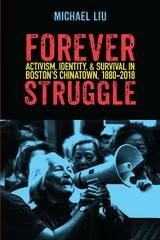
Forever Struggle
Activism, Identity, and Survival in Boston's Chinatown, 1880–2018Michael Liu
University of Massachusetts Press, 2020
In writing about Boston Chinatown's long history, Michael Liu, a lifelong activist and scholar of the community, charts its journey and efforts for survival—from its emergence during a time of immigration and deep xenophobia to the highway construction and urban renewal projects that threatened the neighborhood after World War II to its more recent efforts to keep commercial developers at bay. At the ground level, Liu depicts its people, organizations, internal battles, and varied and complex strategies against land-taking by outside institutions and public authorities. The documented courage, resilience, and ingenuity of this low-income immigrant neighborhood of color have earned it a place amongst our urban narratives. Chinatown has much to teach us about neighborhood agency, the power of organizing, and the prospects of such neighborhoods in rapidly growing and changing cities.
Forever Suspect
Racialized Surveillance of Muslim Americans in the War on TerrorSelod, Saher
Rutgers University Press, 2018
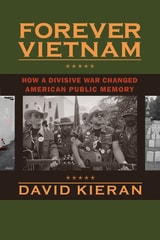
Forever Vietnam
How a Divisive War Changed American Public MemoryDavid Kieran
University of Massachusetts Press, 2014
Kieran focuses his analysis on the recent remembrance of six events, three of which occurred before the Vietnam War and three after it ended. The first group includes the siege of the Alamo in 1836, the incarceration of Union troops at Andersonville during the Civil War, and the experience of American combat troops during World War II. The second comprises the 1993 U.S. intervention in Somalia, the crash of United Airlines Flight 93 on September 11, 2001, and the Iraq and Afghanistan wars.
In each case a range of actors—military veterans, policymakers, memorial planners, and the general public—used memorial practices associated with the Vietnam War to reinterpret the contemporary significance of past events. A PBS program about Andersonville sought to cultivate a sense of national responsibility for the My Lai massacre. A group of Vietnam veterans occupied the Alamo in 1985, seeing themselves as patriotic heirs to another lost cause. A World War II veteran published a memoir in 1980 that reads like a narrative of combat in Vietnam. Through these and other examples, Forever Vietnam reveals not only the persistence of the past in public memory but also its malleability in the service of the political present.
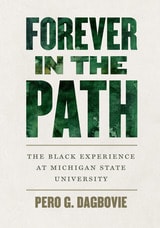
Forever in the Path
The Black Experience at Michigan State UniversityPero G Dagbovie
Michigan State University Press, 2025
Michigan State University—founded in 1855 as the Agricultural College of the State of Michigan—has a fascinating past, a history shaped by vacillating local and national contexts as well as by people from different walks of life. The first Black students arrived on campus during the late nineteenth and early twentieth centuries, and the first full-time Black faculty member was hired in the late 1940s. Before and after the modern Civil Rights Movement, African Americans from various backgrounds were transformed by MSU while also profoundly contributing in vital ways to the institution’s growth and evolving identity.
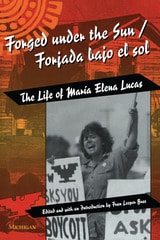
Forged under the Sun/Forjada bajo el sol
The Life of Maria Elena LucasEdited and with an Introduction by Fran Leeper Buss
University of Michigan Press, 1993

Forget Burial
HIV Kinship, Disability, and Queer/Trans Narratives of CareMarty Fink
Rutgers University Press, 2021
Queers and trans people in the 1980s and early ‘90s were dying of AIDS and the government failed to care. Lovers, strangers, artists, and community activists came together take care of each other in the face of state violence. In revisiting these histories alongside ongoing queer and trans movements, this book uncovers how early HIV care-giving narratives actually shape how we continue to understand our genders and our disabilities. The queer and trans care-giving kinships that formed in response to HIV continue to inspire how we have sex and build chosen families in the present. In unearthing HIV community newsletters, media, zines, porn, literature, and even vampires, Forget Burial bridges early HIV care-giving activisms with contemporary disability movements. In refusing to bury the legacies of long-term survivors and of those we have lost, this book brings early HIV kinships together with ongoing movements for queer and trans body self-determination.
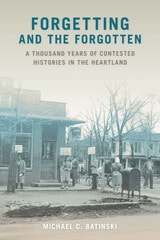
Forgetting and the Forgotten
A Thousand Years of Contested Histories in the HeartlandMichael C. Batinski
Southern Illinois University Press, 2022
Revealing the forgotten in community histories
Histories try to forget, as this evocative study of one community reveals. Forgetting and the Forgotten details the nature of how a community forged its story against outsiders. Historian Michael C. Batinski explores the habits of forgetting that enable communities to create an identity based on silencing competing narratives. The white settlers of Jackson County, Illinois, shouldered the hopes of a community and believed in the justice of their labor as it echoed the national story. The county’s pastkeepers, or keepers of the past, emphasizing the white settlers’ republican virtue, chose not to record violence against Kaskaskia people and African Americans and to disregard the numerous transient laborers. Instead of erasing the presence of outsiders, the pastkeepers could offer only silence, but it was a silence that could be broken.
Batinski’s historiography critically examines local historical thought in a way that illuminates national history. What transpired in Jackson County was repeated in countless places throughout the nation. At the same time, national history writing rarely turns to experiences that can be found in local archives such as court records, genealogical files, archaeological reports, coroner’s records, and veterans’ pension files. In this archive, juxtaposed with the familiar actors of Jackson County history—Benningsen Boon, John A. Logan, and Daniel Brush—appear the Sky People, Italian immigrant workers, black veterans of the Civil War and later champions of civil rights whose stories challenge the dominant narrative.
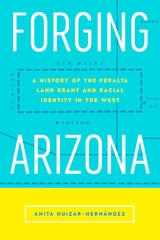
Forging Arizona
A History of the Peralta Land Grant and Racial Identity in the WestAnita Huizar-Hernández
Rutgers University Press, 2019
Forging Identity
The Story of Carlos Nielbock's DetroitPaul J Draus
Michigan State University Press, 2025
Forging a Sustainable Southwest
The Power of Collaborative ConservationStephen E. Strom
University of Arizona Press, 2024
Forging a Sustainable Southwest introduces readers to four conservation efforts that provide insight into how diverse groups of citizens have worked collaboratively to develop visions for land use that harmonized sometimes conflicting ecological, economic, cultural, and community needs. Through the voices of more than seventy individuals involved in these efforts, we learn how they’ve developed plans for protecting, restoring, and stewarding lands sustainably; the management and funding tools they’ve used; and their perceptions of the challenges that remain and how to meet them.
This book details efforts to craft the Sonoran Desert Conservation Plan, establish Las Cienegas National Conservation Area, protect Cienega Ranch, and create the Malpai Borderlands Group. It will appeal to anyone interested in grassroots efforts to protect the vital ecosystems of the western United States.
These inspiring stories of citizens and groups working together demonstrate a path for the future built day-by-day: breaking bread at potlucks, holding informal front-porch discussions, and later finding common purpose in community-wide meetings. Might their efforts reveal a path to rebuilding our democratic systems from the ground up?
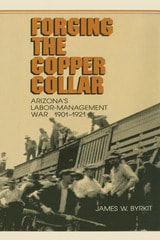
Forging the Copper Collar
Arizona's Labor-Management War of 1901–1921James W. Byrkit
University of Arizona Press, 1982
Just after dawn, two thousand armed vigilantes took to the streets of this remote Arizona mining town to round up members and sympathizers of the radical Industrial Workers of the World. Before the morning was over, nearly twelve hundred alleged Wobblies had been herded onto waiting boxcars. By day's end, they had been hauled off to New Mexico.
While the Bisbee Deportation was the most notorious of many vigilante actions of its day, it was more than the climax of a labor-management war—it was the point at which Arizona donned the copper collar. That such an event could occur, James Byrkit contends, was not attributable so much to the marshaling of public sentiment against the I.W.W. as to the outright manipulation of the state's political and social climate by Eastern business interests.
In Forging the Copper Collar, Byrkit paints a vivid picture of Arizona in the early part of this century. He demonstrates how isolated mining communities were no more than mercantilistic colonies controlled by Eastern power, and how that power wielded control over all the Arizona's affairs—holding back unionism, creating a self-serving tax structure, and summarily expelling dissidents.
Because the years have obscured this incident and its background, the writing of Copper Collar involved extensive research and verification of facts. The result is a book that captures not only the turbulence of an era, but also the political heritage of a state.

Forging the Future of Special Collections
Arnold Hirshon
American Library Association, 2016
Forging the Star
The Official Modern History of the United States Marshals ServiceDavid S. Turk
University of North Texas Press, 2016
Forgive Us Our Debts
How Black Churches Use Bankruptcy to SurvivePamela Foohey
University of Chicago Press, 2026
A revelatory study of how Black churches turn the financial system back against predatory lenders.
When American churches face financial difficulties, a disproportionately high number of Black churches reorganize under chapter 11 bankruptcy. There are no easy explanations for this distinction: not location, denomination, leadership structure, or the reasons for the loans. In Forgive Us Our Debts, legal scholar Pamela Foohey asks why, then, Black churches account for two-thirds of all congregations that file for chapter 11 bankruptcy every year.
Drawing on case studies of six Black churches and one white church, and 150 interviews with church leaders, members, and attorneys, Foohey finds answers in a long history of predatory lending. Unable to negotiate with recalcitrant loan officers, Black churches turn to the legal system to force reasonable concessions from lenders to prevent the stripping of their wealth and the destruction of their communities. While the structural discrimination remains, these churches have found in the bankruptcy system a refuge and some power to fight back.
Forgotten Kingdom
The Mormon Theocracy in the American West, 1847-1896David Bigler
Utah State University Press, 1998
Forgotten Readers
Recovering the Lost History of African American Literary SocietiesElizabeth McHenry
Duke University Press, 2002
Forgotten Readers expands our definition of literacy and urges us to think of literature as broadly as it was conceived of in the nineteenth century. Elizabeth McHenry delves into archival sources, including the records of past literary societies and the unpublished writings of their members. She examines particular literary associations, including the Saturday Nighters of Washington, D.C., whose members included Jean Toomer and Georgia Douglas Johnson. She shows how black literary societies developed, their relationship to the black press, and the ways that African American women’s clubs—which flourished during the 1890s—encouraged literary activity. In an epilogue, McHenry connects this rich tradition of African American interest in books, reading, and literary conversation to contemporary literary phenomena such as Oprah Winfrey’s book club.
Forgotten Towns of Southern New Jersey
Beck, Henry
Rutgers University Press, 1983
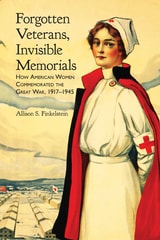
Forgotten Veterans, Invisible Memorials
How American Women Commemorated the Great War, 1917–1945Allison S. Finkelstein
University of Alabama Press, 2021
Investigates the groundbreaking role American women played in commemorating those who served and sacrificed in World War I
In Forgotten Veterans, Invisible Memorials: How American Women Commemorated the Great War, 1917–1945 Allison S. Finkelstein argues that American women activists considered their own community service and veteran advocacy to be forms of commemoration just as significant and effective as other, more traditional forms of commemoration such as memorials. Finkelstein employs the term “veteranism” to describe these women’s overarching philosophy that supporting, aiding, and caring for those who served needed to be a chief concern of American citizens, civic groups, and the government in the war’s aftermath. However, these women did not express their views solely through their support for veterans of a military service narrowly defined as a group predominantly composed of men and just a few women. Rather, they defined anyone who served or sacrificed during the war, including women like themselves, as veterans.
These women veteranists believed that memorialization projects that centered on the people who served and sacrificed was the most appropriate type of postwar commemoration. They passionately advocated for memorials that could help living veterans and the families of deceased service members at a time when postwar monument construction surged at home and abroad. Finkelstein argues that by rejecting or adapting traditional monuments or by embracing aspects of the living memorial building movement, female veteranists placed the plight of all veterans at the center of their commemoration efforts. Their projects included diverse acts of service and advocacy on behalf of people they considered veterans and their families as they pushed to infuse American memorial traditions with their philosophy. In doing so, these women pioneered a relatively new form of commemoration that impacted American practices of remembrance, encouraging Americans to rethink their approach and provided new definitions of what constitutes a memorial. In the process, they shifted the course of American practices, even though their memorialization methods did not achieve the widespread acceptance they had hoped it would.
Meticulously researched, Forgotten Veterans, Invisible Memorials utilizes little-studied sources and reinterprets more familiar ones. In addition to the words and records of the women themselves, Finkelstein analyzes cultural landscapes and ephemeral projects to reconstruct the evidence of their influence. Readers will come away with a better understanding of how American women supported the military from outside its ranks before they could fully serve from within, principally through action-based methods of commemoration that remain all the more relevant today.
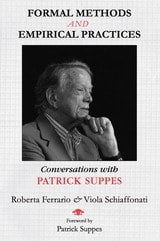
Formal Methods and Empirical Practices
Conversations with Patrick SuppesRoberta Ferrario and Viola Schiaffonati
CSLI, 2012

Formations of United States Colonialism
Alyosha Goldstein
Duke University Press, 2014
Contributors. Julian Aguon, Joanne Barker, Berenika Byszewski, Jennifer Nez Denetdale, Augusto Espiritu, Alyosha Goldstein, J. K?haulani Kauanui, Barbara Krauthamer, Lorena Oropeza, Vicente L. Rafael, Dean Itsuji Saranillio, Lanny Thompson, Lisa Uperesa, Manu Vimalassery
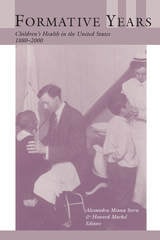
Formative Years
Children's Health in the United States, 1880-2000Alexandra Minna Stern and Howard Markel, Editors
University of Michigan Press, 2004
Much has changed in the lives of children, and in the health care provided to them, over the past century. Formative Years explores how children's lives have become increasingly medicalized, traces the emergence of the fields of pediatrics and child health, and offers fascinating case studies of important and timely issues.
With contributions from historians and physicians, this collection illuminates some of the most important transformations in children's health in the United States since the 1880s. Opening with a history of pediatrics as a medical specialty, the book addresses such topics as the formulation of normal growth curves, Better Babies contests at county fairs, the "discovery" of the sexual abuse of children, and the political radicalism of the founder of pediatrics, Dr. Abraham Jacobi.
One of the first long-term historical and analytical overviews of pediatrics and child health in the twentieth century, Formative Years will be a welcome addition to several fields, including the history of medicine and technology, the history of childhood, modern U.S. history, women's history, and American studies. It also has ramifications for policymakers concerned with child welfare and development and poses important questions about the direction of children's health in the twenty-first century.