61 books match the query 'Action' and 4 start with g
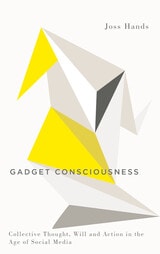
cover of Gadget Consciousness: Collective Thought, Will and Action in the Age of Social Media

Gadget Consciousness

Collective Thought, Will and Action in the Age of Social Media

Joss Hands

Pluto Press, 2019

What impact does our relentless fixation on the gadget have on the struggle for new kinds of solidarity, political articulation, and intelligence? In this groundbreaking study, Joss Hands explores the new political and social forces that are emerging in the age of social media, and examines how they are transforming our individual and class consciousness. Exploring a range of manifestations in the digital commons, he investigates what forms digital solidarity can take and asks how the communisms of the past might shape the solidarities of the future.
 
[more]
cover of Generation at the Crossroads: Apathy and Action on the American Campus

Generation at the Crossroads

Apathy and Action on the American Campus

Loeb, Paul R

Rutgers University Press, 1994

Challenging prevailing media stereotypes, Generation at the Crossroads explores the beliefs and choices of the students who came of age in the 1980s and 1990s. For seven years, at over a hundred campuses in thirty states, Paul Loeb asked students about the values they held. He examines their concepts of responsibility, the links they draw between present and future, and how they view themselves in relation to the larger human community in which they live. He brings us a range of voices, from "I'm not that kind of person," to "I had to take a stand." Loeb looks at how the rest of us can serve young people as better role models, and give them courage and vision to help build a better world.

This insightful book explores the culture of withdrawal that dominated American campuses through most of the eighties. He locates its roots in historical ignorance, relentless individualism, mistrust of social movements, and a general isolation from urgent realities. He examines why a steadily increasing minority has begun to take on critical public issues, whether environmental activism, apartheid, hunger and homelessness, affordable education, or racial and sexual equity. Loeb looks at individuals who have overcome precisely the barriers he has described, and how their journeys can become models. The generational choices he explores will shape our common future.
[more]
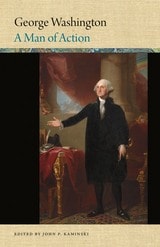
cover of George Washington: A Man of Action

George Washington

A Man of Action

John P. Kaminski

Wisconsin Historical Society Press, 2017
Perhaps no other person could ever achieve the preeminent position in American history and culture occupied by George Washington. Born in 1732, Washington’s life–long commitment to self-improvement and discipline helped him become a legend in his own lifetime. Whether as a statesman, military man, or America’s first president, Washington created a legacy that has scarcely diminished in over two centuries. Yet the passage of time and the superlatives reserved for Washington have knit together and made it difficult to find the real man. Historian and editor John P. Kaminski has amassed an extraordinary body of quotations by and about George Washington that brings us closer to the essence of this great leader. This collection paints an intricate picture of the man who Henry 'Lighthorse' Lee of Virginia eulogized as: "First in war, first in peace, first in the hearts of his countrymen."
[more]
cover of God Is Love: Thomas Aquinas on the Being and Action of the Holy Spirit

God Is Love

Thomas Aquinas on the Being and Action of the Holy Spirit

Michael D. Torre

Catholic University of America Press, 2026

This book dedicates three essays each to three different theological problems regarding the Holy Spirit: In God and for Us (The "Filioque" and "Uncreated Grace"); Thomas's Understanding (Not His Commentators) of the Relation between nature and sanctifying grace; and our ability (and that of the angels at their creation) in fact to resist God' grace and thus be the first cause of sin. This later problem is developed in an "excursus" on the way God moves the free will, one that takes into consideration much recent work on this issue and situates the essays' position in relation to it. The book ends with a brief epilogue on the credibility of God, again giving Thomas's account of this. The principal aim throughout is to understand the doctrine of Thomas Aquinas. It places his views in relation to three audiences: chiefly to the orthodox regarding the first issue; to Catholics in relation to the second; and to Protestants in relation to the third. Thus, its second aim is to join "ecumenical debate" about these matters. The essays were mostly written to be delivered orally, to an informed audience of philosophers and theologians., but one that consisted of "generalists" and serious students of Thomas, as well as of "professional" philosophers and theologians. All three of the debated issues discussed have generated an enormous amount of disagreement and debate, not a little of it being quite "technical." Thus, each issue would easily require a long and significant book to be addressed as it deserves. The essays do not do this, but they do indicate what Torre holds is the "directive line" of Thomas's thought that deserves to be defended and developed in each case, and, in each case, this line is held to be markedly different than many have thought it to be.
[more]
