Results by title
1048 books match the query 'African American & Black' and 24 start with g
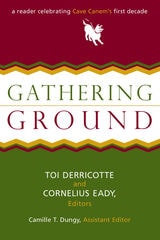
Gathering Ground
A Reader Celebrating Cave Canem's First DecadeToi Derricotte and Cornelius Eady, Editors
University of Michigan Press, 2006
To mark the first decade of this pathbreaking project, Gathering Ground presents more than one hundred poems by Cave Canem participants and faculty. It embraces an impressive and eclectic gathering of forms, including sonnets, a bop (a new form created by a Cave Canem faculty member), blues, sestinas, prose poems, centos, free verse, and more. The roster of distinguished contributors includes Lucille Clifton, Yusef Komunyakaa, Marilyn Nelson, Sonya Sanchez, Al Young, and many others.
For newcomers and aficionados alike, Gathering Ground assembles in one place the most innovative voices in contemporary African American poetry and boldly attests to the important position it holds in verse-making today.
Toi Derricotte is author of the memoir The Black Notebooks and of four books of poetry: Tender, Captivity, Natural Birth, and The Empress of the Death House. She is Professor of English at the University of Pittsburgh. Cornelius Eady is the author of Brutal Imagination, Autobiography of a Jukebox, You Don't Miss Your Water, The Gathering of My Name, and Victims of the Latest Dance Craze. He is Associate Professor of English at the University of Notre Dame.
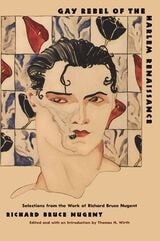
Gay Rebel of the Harlem Renaissance
Selections from the Work of Richard Bruce NugentRichard Bruce Nugent
Duke University Press, 2002
Thomas H. Wirth, a close friend of Nugent’s during the last years of the artist’s life, has assembled a selection of Nugent’s most important writings, paintings, and drawings—works mostly unpublished or scattered in rare and obscure publications and collected here for the first time. Wirth has written an introduction providing biographical information about Nugent’s life and situating his art in relation to the visual and literary currents which influenced him. A foreword by Henry Louis Gates Jr. emphasizes the importance of Nugent for African American history and culture.

Geographies of Flight
Phillis Wheatley to Octavia ButlerWilliam Merrill Decker
Northwestern University Press, 2020
African American writing commonly represents New World topography as a set of entrapments, contesting the open horizons, westward expansion, and individual freedom characteristic of the white, Eurocentric literary tradition. Geographies of Flight: Phillis Wheatley to Octavia Butler provides the first comprehensive treatment of the ways in which African American authors across three centuries have confronted the predicament of inhabiting space under conditions of bondage and structural oppression. William Merrill Decker examines how, in testifying to those conditions, fourteen black authors have sought to transform a national cartography that, well into the twenty-first century, reflects white supremacist assumptions. These writers question the spatial dimensions of a mythic American liberty and develop countergeographies in which descendants of the African diaspora lay claim to the America they have materially and culturally created.
Tracking the testimonial voice in a range of literary genres, Geographies of Flight explores themes of placement and mobility in the work of Phillis Wheatley, Olaudah Equiano, David Walker, Frederick Douglass, Harriet Jacobs, Booker T. Washington, Ida B. Wells-Barnett, W. E. B. Du Bois, Richard Wright, Ralph Ellison, Malcolm X, James Baldwin, Toni Morrison, and Octavia Butler.

Geographies of Relation
Diasporas and Borderlands in the AmericasTheresa Delgadillo
University of Michigan Press, 2024
Not only does Delgadillo offer a rare extended analysis of Black Latinidades in Chicanx literature and theory, but she also considers over a century’s worth of literary, cinematic, and performative texts to support her argument about the significance of these cultural sites and overlaps. Chapters illuminate the significance of Toña La Negra in the Golden Age of Mexican cinema, reconsider feminist theorist Gloria Anzaldúa’s work in revising exclusionary Latin American ideologies of mestizaje, delve into the racial and gender frameworks Sandra Cisneros attempts to rewrite, unpack encounters between African Americans and Black Puerto Ricans in texts by James Baldwin and Marta Moreno Vega, explore the African diaspora in colonial and contemporary Peru through Daniel Alarcón’s literature and the documentary Soy Andina, and revisit the centrality of Black power in ending colonialism in Cuban narratives. Geographies of Relation demonstrates the long histories of networks and exchanges across the Americas as well as the interrelationships among Indigenous, Black, African American, mestizx, Chicanx, and Latinx peoples. It offers a compelling argument that geographies of relation are as significant as national frameworks in structuring cultural formation and change in this hemisphere.

George Dixon
The Short Life of Boxing's First Black World Champion, 1870–1908Jason Winders
University of Arkansas Press, 2021
Winner, 2022 NASSH Book Award (Monograph)
On September 6, 1892, a diminutive Black prizefighter brutally dispatched an overmatched white hope in the New Orleans Carnival of Champions boxing tournament. That victory sparked celebrations across Black communities nationwide but fostered unease among sporting fans and officials, delaying public acceptance of mixed-race fighting for half a century. This turn echoed the nation’s disintegrating relations between whites and Blacks and foreshadowed America’s embrace of racial segregation.
In this work of sporting and social history we have a biography of Canadian-born, Boston-raised boxer George Dixon (1870–1908), the first Black world champion of any sport and the first Black world boxing champion in any division. George Dixon: The Short Life of Boxing’s First Black World Champion, 1870–1908 chronicles the life of the most consequential Black athlete of the nineteenth century and details for the first time his Carnival appearance, perhaps the most significant bout involving a Black fighter until Jack Johnson began his reign in 1908. Yet despite his triumphs, Dixon has been lost to history, overshadowed by Black athletes whose activism against white supremacy far exceeded his own.
George Dixon reveals the story of a man trapped between the white world he served and the Black world that worshipped him. By ceding control to a manipulative white promoter, Dixon was steered through the white power structure of Gilded Age prizefighting, becoming world famous and one of North America’s richest Black men. Unable to hold on to his wealth, however, and battered by his vices, a depleted Dixon was abandoned by his white supporters just as the rising tide of Jim Crow limited both his prospects and the freedom of Blacks nationwide.
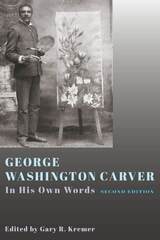
George Washington Carver
In His Own Words, Second EditionGary R. Kremer
University of Missouri Press, 2017
With a new chapter on the oral history interviews Dr. Kremer conducted (several years after publication of the first edition) with people who knew Carver personally, and the addition of newly uncovered documents and a bank of impressive photographs of Carver and some of his friends, this second edition of our classic title commemorates the 75th anniversary of Carver’s death on January 5, 2018.
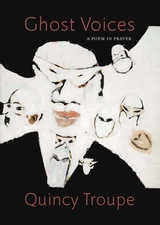
Ghost Voices
A Poem in PrayerQuincy Troupe
Northwestern University Press, 2019
we are crossing, / we are / crossing, / we are crossing in big salt water, // we are crossing, // crossing under a sky of no guilt / we have left home // though we know we will go back / someday, / see our people / as we knew them . . .
Troupe re-creates the history of lost voices between the waters of Africa, Cuba, and the United States. His daring poetics drenched in new forms-notably the seven-elevens-clench transformative narratives spurred on by a relentless, rhythmic language that mimics the foaming waves of the Atlantic Ocean and the Caribbean Sea. His personae speak quantum litanies within one epic, sermonic-gospel to articulate our most ancient ways of storytelling and survival.
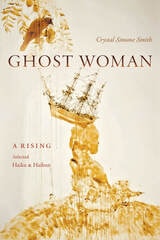
Ghost Woman
A RisingCrystal Simone Smith
Duke University Press, 2026
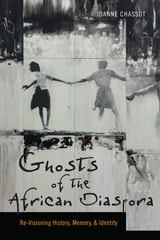
Ghosts of the African Diaspora
Re-Visioning History, Memory, and IdentityJoanne Chassot
Dartmouth College Press, 2018
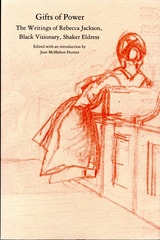
Gifts of Power
The Writings of Rebecca Jackson, Black Visionary, Shaker EldressJean M. Humez
University of Massachusetts Press, 1981
A free black woman in antebellum America, Rebecca Cox Jackson (1795–1871) was an independent itinerant preacher and religious visionary who founded a Shaker community in Philadelphia that survived her death by twenty-five years. Gifts of Power contains her complete extant writings, covering the period 1830 to 1864.
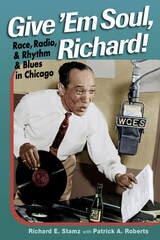
Give 'Em Soul, Richard!
Race, Radio, and Rhythm and Blues in ChicagoRichard E. Stamz with Patrick A. Roberts, Foreword by Robert Pruter
University of Illinois Press, 2010
As either observer or participant, radio deejay and political activist Richard E. Stamz witnessed every significant period in the history of blues and jazz in the last century. From performing first-hand as a minstrel in the 1920s to broadcasting Negro League baseball games in a converted 1934 Chrysler to breaking into Chicago radio and activist politics and hosting his own television variety show, the remarkable story of his life also is a window into milestones of African American history throughout the twentieth century.
Dominating the airwaves with his radio show "Open the Door, Richard" on WGES in Chicago, Stamz cultivated friendships with countless music legends, including Willie Dixon, Sonny Boy Williamson, Little Walter, Howlin' Wolf, Memphis Slim, and Leonard Chess. The pioneering Chicago broadcaster and activist known as "The Crown Prince of Soul" died in 2007 at the age of 101, but not before he related the details of his life and career to college professor Patrick A. Roberts. Give 'Em Soul, Richard! surrounds Stamz's memories of race records, juke joints, and political action in Chicago's Englewood neighborhood with insights on the larger historical trends that were unfolding around him in radio and American history.
Narrated by Stamz, this entertaining and insightful chronicle includes commentary by Roberts as well as reflections on the unlikely friendship and collaboration between a black radio legend and a white academic that resulted in one of the few existing first-hand accounts of Chicago's post-war radio scene.
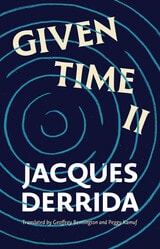
Given Time II
Jacques Derrida
University of Chicago Press, 2026
The long-awaited conclusion to Derrida’s seminar on the gift and time.
In 1991, Jacques Derrida published the first half of a seminar delivered from 1978 to 1979 on gifts and time, but the second installment (though expected) was not completed in his lifetime. Given Time II completes the seminar with eight sessions that showcase Derrida’s most advanced work on the problematic of the gift in Heidegger, with deep dives into some of the most difficult texts in the Heideggerian corpus, including “The Origin of the Work of Art,” “The Thing,” and “On Time and Being.”
Beyond Heidegger, Derrida engages Claude Lévi-Strauss, Marcel Mauss, Maurice Blanchot, Jacques Lacan, and others on the act of giving and receiving, the sacrificial gift, and more. Throughout, Derrida identifies a paradox of gift giving: for the gift to be received as a gift, it must not appear as such, since gifts often involve a cycle of debt and repayment. Given Time II is a uniquely Derridean treatment of an important subject in the work of Heidegger and beyond.
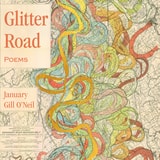
Glitter Road
January Gill O’Neil
CavanKerry Press, 2024
“My poems brought me to Oxford, Mississippi a.k.a. the velvet ditch: / a place you can fall into, get comfortable among confederate rebels,” writes January Gill O’Neil in her stunning new collection, Glitter Road. The poems in this book look back at the end of a marriage, a heartbreaking loss, and a new relationship against the backdrop of a Mississippi season. O’Neil reflects on the history and legacy of Emmett Till, how his story is intertwined with her own, and wades through the incredible grief she feels for herself, her children, and the Black children who won’t come home tonight. These poems reclaim the vulnerable, intimate parts of a life in transition and celebrate womanhood through awakenings, landscapes, meanders, and possibilities. She declares, with both self-love and conviction, “I am done telling the kinder story. I am a myth of my own making.”

Go to the Store with Shakur!
A Shakur Series Board BookAndrea Sonnier
Gallaudet University Press, 2024
About the Shakur Series:
The Shakur Series features Black deaf characters who use American Sign Language, offering a unique and inclusive reading experience for children. The vibrant illustrations showcase a signing family and will captivate young minds, while the engaging text reinforces learning. These charming board books contain positive messages and practical lessons, support early childhood development, and encourage children to explore the world with Shakur. This series honors and celebrates Black deaf experiences through everyday adventures that will resonate with young children and their families.
Published in partnership with The Laurent Clerc National Deaf Education Center.
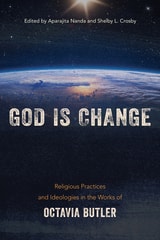
God is Change
Religious Practices and Ideologies in the Works of Octavia ButlerEdited by Aparajita Nanda and Shelby L. Crosby
Temple University Press, 2021
Throughout her work, Octavia E. Butler explored, critiqued, and created religious ideology. Her prescient thoughts on the synergy between politics and religion in America are evident in her 1993 dystopian novel, Parable of the Sower, and its 1998 sequel, Parable of the Talents. They explored, respectively, what happens during a divisive “cultural war” that unjustly impacts the disenfranchised, and the rise of a fascistic president, allied with white fundamentalist Christianity, who chants the slogan, “Make America Great Again.”
But religion, for Butler, need not be a restricting force. The editors of and contributors to God Is Change heighten our appreciation for the range and depth of Butler’s thinking about spirituality and religion, as well as how Butler’s work—especially the Parable and Xenogenesis series—offers resources for healing and community building. Essays consider the role of spirituality in Butler’s canon and the themes of confronting trauma as well as experiencing transformation and freedom. God Is Change meditates on alternate religious possibilities that open different political and cultural futures to illustrate humanity’s ability to endure change and thrive.
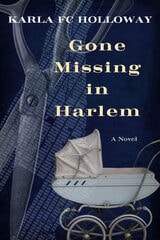
Gone Missing in Harlem
A NovelKarla FC Holloway
Northwestern University Press, 2021
The family arrives as Harlem staggers under the flu pandemic that follows the First World War. DeLilah Mosby and her daughter, Selma, meet difficulties with backbone and resolve to make a home for themselves in the city, and Selma has a baby, Chloe. As the Great Depression creeps across the world at the close of the twenties, however, the farsighted see hard times coming.
The panic of the early thirties is embodied in the kidnapping and murder of the infant son of the nation’s dashing young aviator, Charles Lindbergh. A transfixed public follows the manhunt in the press and on the radio. Then Chloe goes missing—but her disappearance does not draw the same attention. Wry and perceptive Weldon Haynie Thomas, the city’s first “colored” policeman, takes the case.
The urgent investigation tests Thomas’s abilities to draw out the secrets Harlem harbors, untangling the color-coded connections and relationships that keep company with greed, ghosts, and grief. With nuanced characters, lush historical detail, and a lyrical voice, Gone Missing in Harlem affirms the restoring powers of home and family.

Good Morning, Shakur!
A Shakur Series Board BookAndrea Sonnier
Gallaudet University Press, 2024
About the Shakur Series:
The Shakur Series features Black deaf characters who use American Sign Language, offering a unique and inclusive reading experience for children. The vibrant illustrations showcase a signing family and will captivate young minds, while the engaging text reinforces learning. These charming board books contain positive messages and practical lessons, support early childhood development, and encourage children to explore the world with Shakur. This series honors and celebrates Black deaf experiences through everyday adventures that will resonate with young children and their families.
Published in partnership with The Laurent Clerc National Deaf Education Center.
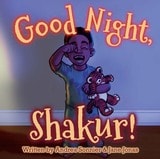
Good Night, Shakur!
A Shakur Series Board BookAndrea Sonnier
Gallaudet University Press, 2024
About the Shakur Series:
The Shakur Series features Black deaf characters who use American Sign Language, offering a unique and inclusive reading experience for children. The vibrant illustrations showcase a signing family and will captivate young minds, while the engaging text reinforces learning. These charming board books contain positive messages and practical lessons, support early childhood development, and encourage children to explore the world with Shakur. This series honors and celebrates Black deaf experiences through everyday adventures that will resonate with young children and their families.
Published in partnership with The Laurent Clerc National Deaf Education Center.
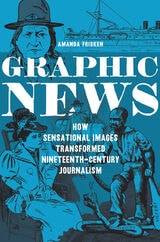
Graphic News
How Sensational Images Transformed Nineteenth-Century JournalismAmanda Frisken
University of Illinois Press, 2020
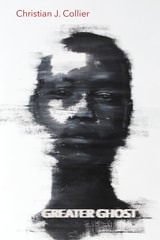
Greater Ghost
Christian J. Collier
Four Way Books, 2024

Grime, Glitter, and Glass
The Body and the Sonic in Contemporary Black ArtNikki A. Greene
Duke University Press, 2024
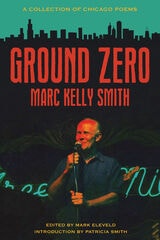
Ground Zero
A Collection of Chicago PoemsMarc Kelly Smith; Edited by Mark Eleveld; With an introduction by Patricia Smith
Northwestern University Press, 2021
Inception and implosion, Chicago’s grit and grandiosity all come together in the finite poetic power of the original Slam igniter, renowned poet Marc Kelly Smith and his retrospect denotation, Ground Zero.
A cultural, community, and adversarial figure, Smith has challenged the status quo and raised new questions about an environment in a state of continuous calamity. Smith’s power and influence have inspired celebrated figures who cut their teeth on both the stage and the page under his watchful eye—always speaking in the traditions of Carl Sandburg and Gwendolyn Brooks. Ground Zero challenges but pays homage to the thousand underbellies of Chicago with Smith’s wicked, cigarette-in-the-beer language: “I ain’t diggin’ no concrete coffin, / No backyard mausoleum / To keep me a pickle sweet aplenty / Plied with sardines and pork sausage wieners / Livin’ out the chance that some bubble-flesh victim / Will come puckered up and scabby lipped / To kiss me in the name of a new mankind.”
Ground Zero leaves no doubt. The Slampapi / instigator / visionary / you-may-love-me-or-hate-me-but-my-history-will-always-be-chiseled-in-everything-the-poetry-world-does-next collects a survey of his land and his experience, no matter how beautiful or flawed. This book lets the landmines of imagery and Chicago’s slow and uneasy drawl showcase one of our most original voices.
Grounds of Engagement
Apartheid-Era African-American and South African WritingStephane Robolin
University of Illinois Press, 2019
Growing Up Ethnic
Nationalism and the Bildungsroman in African American and Jewish American FictionJaptok, Martin
University of Iowa Press, 2005