Results by title
702 books match the query 'America' and 16 start with g
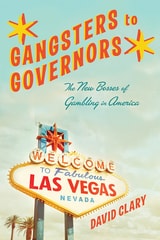
Gangsters to Governors
The New Bosses of Gambling in AmericaClary, David
Rutgers University Press, 2017
Winner of the 2018 Bronze Current Events Book Award from the Independent Publisher Book Awards
Generations ago, gambling in America was an illicit activity, dominated by gangsters like Benny Binion and Bugsy Siegel. Today, forty-eight out of fifty states permit some form of legal gambling, and America’s governors sit at the head of the gaming table. But have states become addicted to the revenue gambling can bring? And does the potential of increased revenue lead them to place risky bets on new casinos, lotteries, and online games?
In Gangsters to Governors, journalist David Clary investigates the pros and cons of the shift toward state-run gambling. Unearthing the sordid history of America’s gaming underground, he demonstrates the problems with prohibiting gambling while revealing how today’s governors, all competing for a piece of the action, promise their citizens payouts that are rarely delivered.
Clary introduces us to a rogue’s gallery of colorful characters, from John “Old Smoke” Morrissey, the Irish-born gangster who built Saratoga into a gambling haven in the nineteenth century, to Sheldon Adelson, the billionaire casino magnate who has furiously lobbied against online betting. By exploring the controversial histories of legal and illegal gambling in America, he offers a fresh perspective on current controversies, including bans on sports and online betting. Entertaining and thought-provoking, Gangsters to Governors considers the past, present, and future of our gambling nation.
Author's website (http://www.davidclaryauthor.com)
Gardens of Prehistory
The Archaeology of Settlement Agriculture in Greater MesoamericaThomas W. Killion
University of Alabama Press, 1992
The prehistoric agricultural systems of the New World provided the foundations for a diverse set of complex social developments ranging from the puebloan societies of the American Southwest to the archaic state polities of Mesoamerica and the Andean region. From the tropical forests of Central America to the arid environments or northern New Mexico, Native American farmers made use of a distinctive set of cultigens and cropping systems that supported—with varying degrees of success—growing populations and expanding economies. Lacking most domesticated animals, so important to the mixed agricultural systems of the Old World, Precolumbian farmers developed intensive and resilient systems of agricultural production. These systems supported large societies of people who altered the landscapes they inhabited and generated a unique archaeological record of the evolution of farming in the New World.
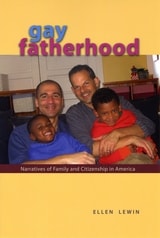
Gay Fatherhood
Narratives of Family and Citizenship in AmericaEllen Lewin
University of Chicago Press, 2009
Men are often thought to have less interest in parenting than women, and gay men are generally assumed to prefer pleasure over responsibility. The toxic combination of these two stereotypical views has led to a lack of serious attention being paid to the experiences of gay fathers. But the truth is that more and more gay men are setting out to become parents and succeeding—and Gay Fatherhood aims to tell their stories.
Ellen Lewin takes as her focus people who undertake the difficult process of becoming fathers as gay men, rather than having become fathers while married to women. These men face unique challenges in their quest for fatherhood, negotiating specific bureaucratic and financial conditions as they pursue adoption or surrogacy and juggling questions about their future child’s race, age, sex, and health. Gay Fatherhood chronicles the lives of these men, exploring how they cope with political attacks from both the "family values" right and the "radical queer" left—while also shedding light on the evolving meanings of family in twenty-first-century America.
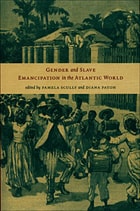
Gender and Slave Emancipation in the Atlantic World
Pamela Scully and Diana Paton, eds.
Duke University Press, 2005
Offering detailed analyses of slave emancipation in specific societies, the contributors discuss all of the diverse actors in emancipation: slaves, abolitionists, free people of color, state officials, and slave owners. Whether considering the construction of a postslavery masculine subjectivity in Jamaica, the work of two white U.S. abolitionist women with the Freedmen’s Bureau after the Civil War, freedwomen’s negotiations of labor rights in Puerto Rico, slave women’s contributions to the slow unraveling of slavery in French West Africa, or the ways that Brazilian abolitionists deployed representations of femininity as virtuous and moral, these essays demonstrate the gains that a gendered approach offers to understanding the complex processes of emancipation. Some chapters also explore theories and methodologies that enable a gendered reading of postslavery archives. The editors’ substantial introduction traces the reasons for and patterns of women’s and men’s different experiences of emancipation throughout the Atlantic world.
Contributors. Martha Abreu, Sheena Boa, Bridget Brereton, Carol Faulkner, Roger Kittleson, Martin Klein, Melanie Newton, Diana Paton, Sue Peabody, Richard Roberts, Ileana M. Rodriguez-Silva, Hannah Rosen, Pamela Scully, Mimi Sheller, Marek Steedman, Michael Zeuske
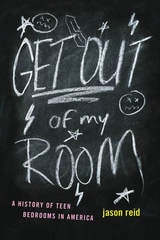
Get Out of My Room!
A History of Teen Bedrooms in AmericaJason Reid
University of Chicago Press, 2016
Even in our era of Snapchat and hoverboards, bedrooms remain a key part of teenage life, one of the only areas where a teen can exert control and find some privacy. And while these separate bedrooms only became commonplace after World War II, the idea of the teen bedroom has been around for a long time. With Get Out of My Room!, Jason Reid digs into the deep historical roots of the teen bedroom and its surprising cultural power. He starts in the first half of the nineteenth century, when urban-dwelling middle-class families began to consider offering teens their own spaces in the home, and he traces that concept through subsequent decades, as social, economic, cultural, and demographic changes caused it to become more widespread. Along the way, Reid shows us how the teen bedroom, with its stuffed animals, movie posters, AM radios, and other trappings of youthful identity, reflected the growing involvement of young people in American popular culture, and also how teens and parents, in the shadow of ongoing social changes, continually negotiated the boundaries of this intensely personal space.
Richly detailed and full of surprising stories and insights, Get Out of My Room! is sure to offer insight and entertainment to anyone with wistful memories of their teenage years. (But little brothers should definitely keep out.)
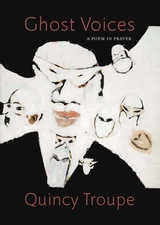
Ghost Voices
A Poem in PrayerQuincy Troupe
Northwestern University Press, 2019
we are crossing, / we are / crossing, / we are crossing in big salt water, // we are crossing, // crossing under a sky of no guilt / we have left home // though we know we will go back / someday, / see our people / as we knew them . . .
Troupe re-creates the history of lost voices between the waters of Africa, Cuba, and the United States. His daring poetics drenched in new forms-notably the seven-elevens-clench transformative narratives spurred on by a relentless, rhythmic language that mimics the foaming waves of the Atlantic Ocean and the Caribbean Sea. His personae speak quantum litanies within one epic, sermonic-gospel to articulate our most ancient ways of storytelling and survival.
Giving Voters a Voice
The Origins of the Initiative and Referendum in AmericaSteven L. Piott
University of Missouri Press, 2003
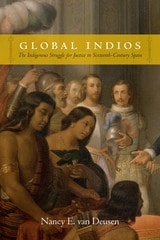
Global Indios
The Indigenous Struggle for Justice in Sixteenth-Century SpainNancy E. van Deusen
Duke University Press, 2015

Globalizing the Sacred
Religion Across the AmericasVásquez, Manuel A
Rutgers University Press, 2003
French and German tourists join Mexican migrant workers to venerate the image of the Virgin Mary at a strip mall in Florida; Latino gang members, deported from the United States to home countries they barely know, find Jesus in transnational churches; U.S. evangelicals use electronic media to preach a “neo liberal” gospel of wealth and health to landless peasants in remote indigenous villages in Guatemala. These are just some examples of how religion in the Americas today intersects in complex ways with the economic, political, and cultural dimensions of globalization.
Drawing on case studies in the United States and Latin America, Manuel A. Vásquez and Marie Friedmann Marquardt explore the evolving roles of religion in the Americas in the face of globalization, transnational migration, the rapid growth of culture industries, the rise of computer mediated technologies, and the crisis of modernity. Combining ethnographic research in local congregations, studies of material culture and sacred space, textual analyses, and approaches to mass and electronic media, the authors challenge dominant paradigms in sociology of religion, such as the secularization and rational choice models. Further, the book offers alternative theoretical and methodological tools to understand the increasing complexity of religious life in the Americas.
By illustratingthe challenges that scholars and students must confront in order to understand the complexity of today’s religious landscape, Globalizing the Sacred makes both important theoretical and methodological contributions to the study of religion’s role in social change.
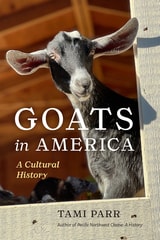
Goats in America
A Cultural HistoryTami Parr
Oregon State University Press, 2025
Since arriving in North America with cattle and other domesticated livestock in the sixteenth century, goats have provided people sustenance and valuable products, including milk, meat, and mohair. But humans did not appreciate the animals, and as a result, throughout much of American history goats were persecuted as public nuisances and symbols of degenerate behavior. Nevertheless, over the centuries the tenacious goat has overcome many of these stereotypes and secured a spot in the hearts and minds of modern Americans, who love goat cheese and embrace goats as social media stars.
Examining key moments and notable developments in goat history and culture, Goats in America outlines the history and evolving role of goats in communities across the country, from San Francisco and New York City to rural Wisconsin and the Navajo Nation. Parr shows that the evolving reputation of goats in American society ultimately reveals more about humans than it does about goats themselves. So, the next time you are enjoying your favorite goat cheese, take a moment to consider the history and role of goats within American culture.

Golf in America
George B. Kirsch
University of Illinois Press, 2008
In this concise social history of golf in the United States from the 1880s to the present, George B. Kirsch tracks the surprising growth of golf as a popular, mainstream sport, in contrast to the stereotype of golf as a pastime enjoyed only by the rich elite. In addition to classic heroes such as Francis Ouiment, Gene Sarazen, Sam Snead, and Ben Hogan, the annals of golf's early history also include African American players--John Shippen Jr., Ted Rhodes, and Charlie Sifford--as well as both white and black female players such as Mildred "Babe" Didrikson Zaharias, Louise Suggs, Betsy Rawls, Ann Gregory, and former tennis champ Althea Gibson. Golf in America tells the stories of these and many other players from different social classes, ethnic backgrounds, races, and genders.
Examining golf's recent history, Golf in America looks at the impact of television and the rivalry between Arnold Palmer and Jack Nicklaus, both of whom in 1996 were impressed by an upstart named Eldrick "Tiger" Woods. Kirsch also highlights the history of public golf courses in the United States, from Van Cortlandt Park in the Bronx to Boston's Franklin Park, Chicago's Jackson Park, and other municipal and semiprivate courses that have gone relatively unnoticed in the sport's history. Illustrated with nearly two dozen photographs, this book shows that golf in America has always reflected a democratic spirit, evolving into a sport that now rivals baseball for the honor of being acclaimed "America's national pastime."
Good Enough for Government Work
The Public Reputation Crisis in America (And What We Can Do to Fix It)Amy E. Lerman
University of Chicago Press, 2019
With Good Enough for Government Work, Lerman uses surveys, experiments, and public opinion data to argue persuasively that the reputation of government is itself an impediment to government’s ability to achieve the common good. In addition to improving its efficiency and effectiveness, government therefore has an equally critical task: countering the belief that the public sector is mired in incompetence. Lerman takes readers through the main challenges. Negative perceptions are highly resistant to change, she shows, because we tend to perceive the world in a way that confirms our negative stereotypes of government—even in the face of new information. Those who hold particularly negative perceptions also begin to “opt out” in favor of private alternatives, such as sending their children to private schools, living in gated communities, and refusing to participate in public health insurance programs. When sufficient numbers of people opt out of public services, the result can be a decline in the objective quality of public provision. In this way, citizens’ beliefs about government can quickly become a self-fulfilling prophecy, with consequences for all. Lerman concludes with practical solutions for how the government might improve its reputation and roll back current efforts to eliminate or privatize even some of the most critical public services.

Good-bye, Piccadilly
BRITISH WAR BRIDES IN AMERICAJenel Virden
University of Illinois Press, 1996
Though the women came to the U.S. from all parts of the British Isles, they were an unusually homogeneous group, averaging 23 years of age, from working- or lower-middle-class families and having completed mandatory schooling to the age of fourteen. For the most part they emigrated alone and didn't move into an existing immigrant population.
Jenel Virden draws on records in the National Archives in Washington, D.C., and the Public Record Office in London, as well as questionnaires and personal interviews, in relating the women's story. Virden finds that the marriages actually took place in spite of, rather than because of, the war.
And, while the women benefited from special nonrestrictive immigration legislation--and found public welcomes and a good deal of favorable publicity when they arrived--they also had much in common with other immigrant groups, including a strong sense of ethnic identity.

Governing Fortune
Casino Gambling in AmericaEdward A. Morse and Ernest P. Goss
University of Michigan Press, 2009
"Goss and Morse provide an outstandingly sound economic understanding of the function and place of casinos in American society, including essential heretofore unavailable grounding in the legal issues that the book accomplishes remarkably effectively. Moreover, this wealth of economic and legal information is transmitted in an engaging and readable manner. Scholarly, thoughtfully collected and authoritative, the book is of interest to any learner of the gambling industry, including students, civic activists, legislators, and scholars."
— Earl Grinols, Baylor University
"In this book, Morse and Goss make important contributions to our understanding of the negative outcomes of the expansion of gambling in America."
— Jon Bruning, Nebraska Attorney General
Edward A. Morse is Professor of Law and holder of the McGrath North Mullin & Kratz Endowed Chair in Business Law at Creighton University School of Law. Ernest P. Goss is Professor of Economics and MacAllister Chair at Creighton University and was a 2004 scholar-in-residence with the Congressional Budget Office.
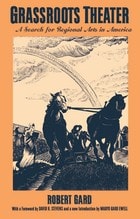
Grassroots Theater
A Search for Regional Arts in AmericaRobert Gard; With a Foreword by David H. Stevens and a new Introduction by Maryo Gard Ewell
University of Wisconsin Press, 1999
Robert Gard’s timeless book is a moving account of one man’s struggle to bring his dream of community-building through creative theater to citizens around the country. He traveled across America—from New York’s Finger Lakes to the prairies of Alberta, Canada, to the backwoods of northern Wisconsin—discovering and nurturing the folklore, legends, history, and drama of the region. He talked to ballad singers, painters, the tellers of tall tales, and farm women, whose poetry and painting reflected the elemental violence of nature and quiet joys of neighborliness. Grassroots Theater reminds us that an individual’s creative vision transcends technology, current events, and changing demographics.
This reprint of Grassroots Theater was generously funded by the Robert E. Gard Wisconsin Idea Foundation, an affiliate of the Wisconsin Academy of Sciences, Arts & Letters.
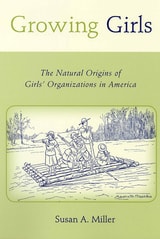
Growing Girls
The Natural Origins of Girls' Organizations in AmericaMiller, Susan A
Rutgers University Press, 2007
Surprisingly, the "girl problem"?a crisis caused by the transition from a sheltered, family-centered Victorian childhood to modern adolescence where self-control and a strong democratic spirit were required of reliable citizens?was also solved by way of traditionally masculine, adventurous, outdoor activities, as practiced by the Girl Scouts, the Camp Fire Girls, and many other similar organizations.
Susan A. Miller explores these girls' organizations that sprung up in the first half of the twentieth century from a socio-historical perspective, showing how the notions of uniform identity, civic duty, "primitive domesticity," and fitness shaped the formation of the modern girl.