Results by title
112 books match the query 'Americans' and 3 start with g
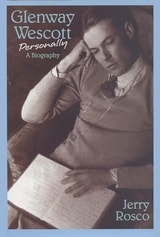
Glenway Wescott Personally
A BiographyJerry Rosco
University of Wisconsin Press, 2002
As a writer, Glenway Wescott (1901–1987) left behind several novels, including The Grandmothers and The Pilgrim Hawk, noted for their remarkable lyricism. As a literary figure, Wescott also became a symbol of his times. Born on a Wisconsin farm in 1901, he associated as a young writer with Hemingway, Stein, and Fitzgerald in 1920s Paris and subsequently was a central figure in New York’s artistic and gay communities. Though he couldn’t finish a novel after the age of forty-five, he was just as famous as an arts impresario, as a diarist, and for the company he kept: W. H. Auden, Christopher Isherwood, Marianne Moore, Somerset Maugham, E. M. Forster, Joseph Campbell, and scores of other luminaries.
In Glenway Wescott Personally, Jerry Rosco chronicles Wescott’s long and colorful life, his early fame and later struggles to write, the uniquely privileged and sometimes tortured world of artistic creation. Rosco sensitively and insightfully reveals Wescott’s private life, his long relationship with Museum of Modern Art curator Monroe Wheeler, his work with sex researcher Alfred Kinsey that led to breakthrough findings on homosexuality, and his kinship with such influential artists as Jean Cocteau, George Platt-Lynes, and Paul Cadmus.
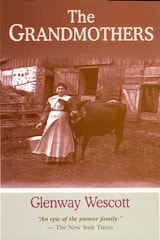
Grandmothers
A Family PortraitWith a New Introduction by Sargent Bush Jr.
University of Wisconsin Press, 1996
The Grandmothers is the chronicle of Alwyn’s ancestors: the bitter Henry Tower, who returned from Civil War battlefields to find his beautiful wife Serena lost in a fatal fever; Rose Hamilton, robust and eager, who yearned to leave the cabin of her bearded, squirrel-hunting brothers for the company of courteous Leander Tower; the boy-soldier Hilary Tower, whose worship of his brother made him desperate; fastidious Nancy Tower, whose love for her husband Jesse Davis could not overcome her disgust with the dirt under his fingernails; Ursula Duff, proud and silent, maligned among her neighbors by her venal husband; Alwyn’s parents, Ralph Tower and Marianne Duff, whose happiness is brought about only by the intervention of a determined spinster.
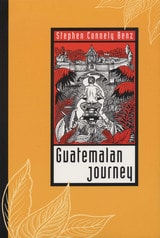
Guatemalan Journey
By Stephen Connely Benz
University of Texas Press, 1996
Guatemala draws some half million tourists each year, whose brief visits to the ruins of ancient Maya cities and contemporary highland Maya villages may give them only a partial and folkloric understanding of Guatemalan society. In this vividly written travel narrative, Stephen Connely Benz explores the Guatemala that casual travelers miss, using his encounters with ordinary Guatemalans at the mall, on the streets, at soccer games, and even at the funeral of massacre victims to illuminate the social reality of Guatemala today.
The book opens with an extended section on the capital, Guatemala City, and then moves out to the more remote parts of the country where the Guatemalan Indians predominate. Benz offers us a series of intelligent and sometimes humorous perspectives on Guatemala's political history and the role of the military, the country's environmental degradation, the influence of foreign missionaries, and especially the impact of the United States on Guatemala, from governmental programs to fast food franchises.