Results by title
653 books match the query 'Animals' and 11 start with g
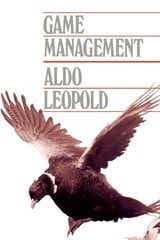
Game Management
Aldo Leopold
University of Wisconsin Press, 1986
With this book, published more than a half-century ago, Aldo Leopold created the discipline of wildlife management. Although A Sand Country Almanac is doubtless Leopold’s most popular book, Game Management may well be his most important. In this book he revolutionized the field of conservation.
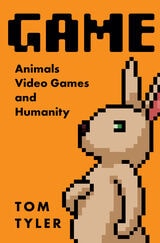
Game
Animals, Video Games, and HumanityTom Tyler
University of Minnesota Press, 2022
A playful reflection on animals and video games, and what each can teach us about the other
Video games conjure new worlds for those who play them, human or otherwise: they’ve been played by cats, orangutans, pigs, and penguins, and they let gamers experience life from the perspective of a pet dog, a predator or a prey animal, or even a pathogen. In Game, author Tom Tyler provides the first sustained consideration of video games and animals and demonstrates how thinking about animals and games together can prompt fresh thinking about both.
Game comprises thirteen short essays, each of which examines a particular video game, franchise, aspect of gameplay, or production in which animals are featured, allowing us to reflect on conventional understandings of humans, animals, and the relationships between them. Tyler contemplates the significance of animals who insert themselves into video games, as protagonists, opponents, and brute resources, but also as ciphers, subjects, and subversive guides to new ways of thinking. These animals encourage us to reconsider how we understand games, contesting established ideas about winning and losing, difficulty settings, accessibility, playing badly, virtuality, vitality and vulnerability, and much more.
Written in a playful style, Game draws from a dizzying array of sources, from children’s television, sitcoms, and regional newspapers to medieval fables, Shakespearean tragedy, and Edwardian comedy; from primatology, entomology, and hunting and fishing manuals to theological tracts and philosophical treatises. By examining video games through the lens of animals and animality, Tyler leads us to a greater humility regarding the nature and status of the human creature, and a greater sensitivity in dealings with other animals.
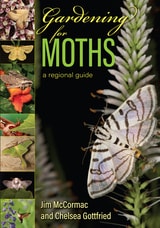
Gardening for Moths
A Regional GuideJim McCormac
Ohio University Press, 2023
This guide to moths, native plants, and their environmental roles is an indispensable resource for gardeners, conservationists, and nature enthusiasts across the midwestern United States.
Gardening for Moths is the first book to show midwestern gardeners and naturalists why they should attract specific moth species to their properties and how to do it. The book’s stunning color photographs and intriguing facts reveal the fascinating world of these insects, inspiring readers to incorporate moth-loving native plants into their landscapes. The authors emphasize the importance of moths and their caterpillars to ecological food webs, widening the book’s appeal to birders and bat lovers as well.
The book consists of three main sections, beginning with a thorough overview of moths, including their
- population decline and conservation,
- importance in ecosystems,
- relationship with native plants, and
- predators and defenses
In the next section the authors profile about 140 plant species, providing brief background, natural history, habitat, and growing notes for each along with lists of potential moths the plants may attract.
The third section highlights approximately 150 moth species, ordered taxonomically. These accounts include interesting facts about the life history of both the caterpillar and adult moth of each species. Each account also features a list of the species’ common host plants.
Throughout the volume, inset text boxes provide additional fascinating moth facts. Beautiful photographs (most by the authors) illustrate every included plant and moth species. Select references, online resources, and quick reference tables round out this valuable resource.
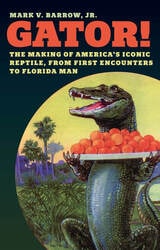
Gator!
The Making of America’s Iconic Reptile, from First Encounters to Florida ManMark V. Barrow, Jr.
University of Chicago Press, 2026
What this intriguing—and unsettling—apex predator reveals about Americans’ attempts to control and connect with the natural world.
Both a flesh-and-blood critter and the stuff of legend, the alligator inspires as much awe as it does fear. While this apex predator survives mainly on fish, birds, snakes, turtles, and small mammals, it will consume almost anything, including pets, livestock, and—in rare cases—humans. Though dreaded as a man-eater, the alligator has also been cast as a lucrative commodity, a popular roadside attraction, a prized hunting trophy, and even an unlikely household pet.
Gator! tells the riveting story of this iconic predator. Historian Mark V. Barrow, Jr.—a native of Florida, a state famous for its alligators—traces the reptile’s ancient lineage from the age of the dinosaurs to its current status as a cherished mascot and regional icon. He explores its role as a surrogate species, offering vital clues about the health of ecosystems, as well as its profound cultural weight as a totem for Indigenous communities, a mythical sewer-dweller in New York lore, and a disturbing tool of racial oppression used to dehumanize African Americans. Once over-hunted, the alligator has long been celebrated as a triumph of the federal Endangered Species Act. Barrow delves into the nuances of this comeback, one that offers both a cautionary tale of market-driven exploitation and a conservation success story.
An entertaining history of one of North America’s most charismatic animals, Gator! explores how this reptile became a Florida emblem and a national enigma, transforming humans and alligators in the process.
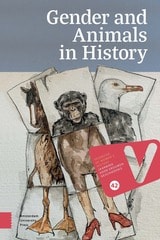
Gender and Animals in History
Yearbook of Women’s History 42 (2023)Sandra Swart
Amsterdam University Press, 2024
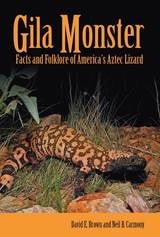
Gila Monster
Facts & Folklore Of Americas Aztec LizardDavid E. Brown
University of Utah Press, 1999
In this volume, authors David Brown and Neil Carmony dig out the tall tales, dispel the myths, and reveal the lizard’s true character. Through a collection of biological and historical facts mixed with entertaining stories, they have created an illuminating account of America’s largest and only poisonous lizard. Written in an engaging style, The Gila Monster is a fun and educational read for all who are intrigued by the Southwest and its most mysterious denizen.
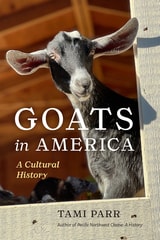
Goats in America
A Cultural HistoryTami Parr
Oregon State University Press, 2025
Since arriving in North America with cattle and other domesticated livestock in the sixteenth century, goats have provided people sustenance and valuable products, including milk, meat, and mohair. But humans did not appreciate the animals, and as a result, throughout much of American history goats were persecuted as public nuisances and symbols of degenerate behavior. Nevertheless, over the centuries the tenacious goat has overcome many of these stereotypes and secured a spot in the hearts and minds of modern Americans, who love goat cheese and embrace goats as social media stars.
Examining key moments and notable developments in goat history and culture, Goats in America outlines the history and evolving role of goats in communities across the country, from San Francisco and New York City to rural Wisconsin and the Navajo Nation. Parr shows that the evolving reputation of goats in American society ultimately reveals more about humans than it does about goats themselves. So, the next time you are enjoying your favorite goat cheese, take a moment to consider the history and role of goats within American culture.
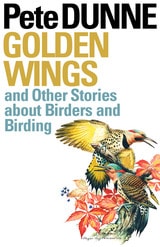
Golden Wings and Other Stories about Birders and Birding
By Pete Dunne
University of Texas Press, 2003
Dubbed the "Bard of America's Bird-Watchers" by the Wall Street Journal, Pete Dunne knows birders and birding—instinctively and completely. He understands the compulsion that drives other birders to go out at first light, whatever the weather, for a chance to maybe, just maybe, glimpse that rare migrant that someone might have spotted in a patch of woods the day before yesterday. And yet, he also knows how . . . well . . . strange the birding obsession becomes when viewed through the eyes of a nonbirder. His dual perspective—totally engrossed in birding, yet still aware of the "odd birdness" of some birders—makes reading his essays a pure pleasure whether you pursue "the feather quest" or not.
This book collects forty-one of Dunne's recent essays, drawn from his columns in Living Bird, Wild Bird News, the New Jersey Sunday section of the New York Times, Birder's World, and other publications. Written with his signature wit and insight, they cover everything from a moment of awed communion with a Wandering Albatross ("the most beautiful thing I'd ever seen") to Dunne's imagined "perfect bird" ("The Perfect Bird is the size of a turkey, has the wingspan of an eagle, the legs of a crane, the feet of a moorhen, and the talons of a great horned owl. It eats kudzu, surplus zucchini, feral cats, and has been known to predate upon homeowners who fire up their lawn mowers before 7:00 A.M. on the weekend."). The title essay pays whimsical, yet heartfelt tribute to Dunne's mentor, the late birding legend Roger Tory Peterson.
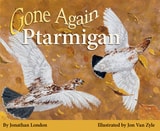
Gone Again Ptarmigan
Jonathan London
University of Alaska Press, 2013
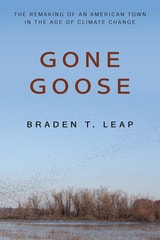
Gone Goose
The Remaking of an American Town in the Age of Climate ChangeBraden T. Leap
Temple University Press, 2019
Sumner, MO, pop. 102, near the Swan Lake National Wildlife Refuge, proclaims itself “The Wild Goose Capital of the World.” It even displays Maxie, the World’s largest goose: a 40-foot tall fiberglass statue with a wingspan stretching more than 60 feet. But while the 200,000 Canada geese that spent their falls and winters at Swan Lake helped generate millions of dollars for the local economy—with hunting and the annual Goose Festival—climate change, as well as environmental and land use issues, have caused the birds to disappear. The economic loss of the geese and the activities they inspired served as key building blocks in the rural identities residents had developed and treasured.
In his timely and topical book, Gone Goose, Braden Leap observes how members of this rural town adapted, reorganized, and reinvented themselves in the wake of climate change—and how they continued to cultivate respect and belonging in their community. Leap conducted interviews with residents and participated in various community events to explore how they reimagine their relationships with each other as well as their community’s relationship with the environment, even as they wish the geese would return.
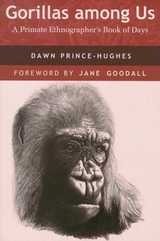
Gorillas among Us
A Primate Ethnographer’s Book of DaysDawn Prince-Hughes; Foreword by Jane Goodall
University of Arizona Press, 2001
Dawn Prince-Hughes is an extraordinary researcher. She does not experiment or measure but instead sits on a wooden bench for hours each day, watching captive gorillas through the enclosure where other visitors average five-second stops. Her patience is rewarded with astounding observations—she watches gorillas make and use tools, bury a dead crow, give birth, and comfort and care for each other.
In Gorillas among Us, Prince-Hughes has compressed years of gorilla observation into a composite diary chronicling the days of one gorilla family. She creates a blended portrait of both peoples—gorilla and human. The entries capture significant observations, which often prompt brief discussions of gorillas’ captivity, diet, communication, aesthetic preferences, social behavior, and play. Several chapters end with thought-provoking meditations on human values. The final section, “More about Gorillas,” provides a concise, accessible introduction to gorilla natural history.
This book will delight and move anyone with an interest in animals, and it also makes a significant contribution to the scarce literature on captive gorillas. Prince-Hughes's observations of tool use by gorillas will interest scientists, and even a casual reader will come away with a new sense of the power of observation. The author hopes to change the way we look at animals in the wild and in captivity, and laments that zoo visitors pause so briefly in front of the gorilla enclosure, rushing on with their assumptions unchanged, without really seeing the gorillas.
By turns opinionated and descriptive, quirky and authoritative, Prince-Hughes draws us into the family life of captive gorillas and into a consideration of our own culture. Readers will learn something new about gorillas and themselves on every page of this poignant story. The book testifies to the potential for interspecies compassion and the love that one person can find in a family of gorillas.