Results by title
428 books match the query 'Authorship' and 15 start with g
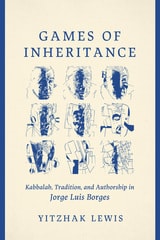
Games of Inheritance
Kabbalah, Tradition, and Authorship in Jorge Luis BorgesYitzhak Lewis
Rutgers University Press, 2025
Gender Influences
Reading Student TextsDonnalee Rubin. Foreword by Nan Johnson
Southern Illinois University Press, 1993
Donnalee Rubin examines the responses of thirty-one freshman composition teachers to student writing and shows the negative effects of gender bias on assessment to prove that gender perceptions and expectations can influence assessment decisions that seem neutral on the surface. Arguing that certain pedagogies are more likely to minimize gender bias than others, Rubin believes that teachers are more likely to overcome the influence of gender bias on their teaching if they adopt a process-based method and work intimately with their students through nondirective, supportive conferences.
Rubin characterizes the conference/process-centered class as the type of environment in which maternal teaching can be cultivated. She stresses that maternal can describe any teacher, male or female, who exhibits the nurturing and supportive qualities that the conference/process approach embodies. With a primary focus on the student’s well-being and development as a person and a writer, the maternal teacher is in a better position to overcome gender bias that could distort the interpretation of student texts. In order for writing instructors to increase their sensitivity to gender issues in assessment, Rubin recommends that they self-consciously engage in what she calls "responsive reading." Responsive reading occurs when the teacher reads with an eye toward providing the sorts of supportive feedback and dialectic exchange that will encourage student writers to think for themselves and to revise effectively. Rubin argues that when teachers commit to a responsive-reading pedagogy, they are more likely to question their reactions to student writing along the lines of gender influence and to strive for self-conscious awareness of how their own inner male-female voices may distort their reading of student texts. She challenges all writing teachers to become more aware of the inevitable challenge gender influence presents.
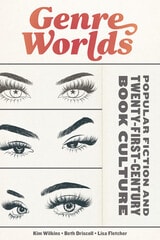
Genre Worlds
Popular Fiction and Twenty-First-Century Book CultureKim Wilkins, Beth Driscoll, and Lisa Fletcher
University of Massachusetts Press, 2022
Works of genre fiction are a source of enjoyment, read during cherished leisure time and in incidental moments of relaxation. This original book takes readers inside popular genres of fiction, including crime, fantasy, and romance, to reveal how personal tastes, social connections, and industry knowledge shape genre worlds. Attuned to both the pleasure and the profession of producing genre fiction, the authors investigate contemporary developments in the field—the rise of Amazon, self-publishing platforms, transmedia storytelling, and growing global publishing conglomerates—and show how these interact with older practices, from fan conventions to writers’ groups.
Sitting at the intersection of literary studies, genre studies, fan studies, and studies of the book and publishing cultures, Genre Worlds considers how contemporary genre fiction is produced and circulated on a global scale. Its authors propose an innovative theoretical framework that unfolds genre fiction’s most compelling characteristics: its connected social, industrial, and textual practices. As they demonstrate, genre fiction books are not merely texts; they are also nodes of social and industrial activity involving the production, dissemination, and reception of the texts.
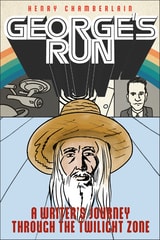
George's Run
A Writer's Journey through the Twilight ZoneHenry Chamberlain
Rutgers University Press, 2023
Later in life, Johnson befriended comics journalist and artist Henry Chamberlain, and the two had long chats about his amazing life and career. Now Chamberlain pays tribute to his late friend in the graphic novel George’s Run, which brings Johnson’s creative milieu to life in vividly illustrated color panels. The result feels less like reading a conventional biography and more like sitting in on an intimate conversation between friends as they recollect key moments in pop culture history, as well as the colorful band of writers known as the “Rat Pack of Science Fiction.”
Getting It Published, 2nd Edition
A Guide for Scholars and Anyone Else Serious about Serious BooksWilliam Germano
University of Chicago Press, 2008
But a lot has changed in the past seven years. With the publishing world both more competitive and more confusing—especially given the increased availability of electronic resources—this second edition of Germano’s best-selling guide has arrived at just the right moment. As he writes in a new chapter, the “via electronica” now touches every aspect of writing and publishing. And although scholars now research, write, and gain tenure in a digital world, they must continue to ensure that their work meets the requirements of their institutions and the needs of their readers.
Getting It Published, Fourth Edition
A Guide for Scholars and Anyone Else Serious About Serious BooksWilliam Germano
University of Chicago Press, 2026
For more than two decades, writers have turned to William Germano’s Getting It Published as a guide to the world of serious book publishing, including university presses. A professor, author, and thirty-year veteran of the book industry, Germano knows what editors want and what writers need to do to get their work published.
This fourth, thoroughly updated edition of Getting It Published accounts for new challenges facing authors and changed conditions in the publishing industry. From open access to peer review, from approaching a press to considering an agent, publishing can be confusing for authors trying to understand their options. This new edition continues to offer the clear, practicable guidance on choosing the best path to publication that has made the book such a trusted resource. Its latest revisions include an expanded chapter on proposals (and their covering emails) as well as current information on the shifting landscape of ebook publishing. But this book is more than a nuts-and-bolts guide. It takes up a writer’s biggest challenges: how to frame a book-length project, shape its argument, conceive its audience, and pitch it convincingly to an editor.
Getting It Published reflects the latest changes and technologies in the publishing industry but keeps its eye on what remains constant: Whether working on their first book or their fifth, writers can make their work stronger by knowing what publishers do and why they do it.
Getting It Published, Third Edition
A Guide for Scholars and Anyone Else Serious about Serious BooksWilliam Germano
University of Chicago Press, 2016
Today there are more ways to publish than ever, and more challenges to traditional publishing. This ever-evolving landscape brings more confusion for authors trying to understand their options. The third edition of Getting It Published offers the clear, practicable guidance on choosing the best path to publication that has made it a trusted resource, now updated to include discussions of current best practices for submitting a proposal, of the advantages and drawbacks of digital publishing, and tips for authors publishing textbooks and in open-access environments.
Germano argues that it’s not enough for authors to write well—they also need to write with an audience in mind. He provides valuable guidance on developing a compelling book proposal, finding the right publisher, evaluating a contract, negotiating the production process, and, finally, emerging as a published author.
“This endlessly useful and expansive guide is every academic’s pocket Wikipedia: a timely, relevant, and ready resource on scholarly publishing, from the traditional monograph to the digital e-book. I regularly share it, teach it, and consult it myself, whenever I have a question on titling a chapter, securing a permission, or negotiating a contract. Professional advice simply does not get any savvier than this pitch-perfect manual on how to think like a publisher.”—Diana Fuss, Princeton University
Goatfoot Milktongue Twinbird
Interviews, Essays, and Notes on Poetry, 1970-76Donald Hall
University of Michigan Press, 1978
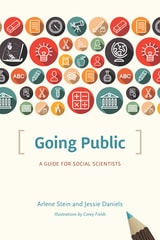
Going Public
A Guide for Social ScientistsArlene Stein and Jessie Daniels
University of Chicago Press, 2017
While there has been an increasing call for social scientists to engage more broadly with the public, concrete advice for starting the conversation has been in short supply. Arlene Stein and Jessie Daniels seek to change this with Going Public, the first guide that truly explains how to be a public scholar. They offer guidance on writing beyond the academy, including how to get started with op-eds and articles and later how to write books that appeal to general audiences. They then turn to the digital realm with strategies for successfully building an online presence, cultivating an audience, and navigating the unique challenges of digital world. They also address some of the challenges facing those who go public, including the pervasive view that anything less than scholarly writing isn’t serious and the stigma that one’s work might be dubbed “journalistic.”
Going Public shows that by connecting with experts, policymakers, journalists, and laypeople, social scientists can actually make their own work stronger. And by learning to effectively add their voices to the conversation, researchers can help make sure that their knowledge is truly heard above the digital din.
Going to the Moon
Sally Ashton
Duke University Press, 2026
In 2022, poet Sally Ashton learned that one of her poems would be included in a time capsule to be sent to the Moon via Astrobotic’s 2024 Griffin/VIPER as part of the Lunar Codex project. For her, this event seemed like the high point in a life spent chasing the Moon, from a childhood inspired by the space race of the 1960s to an adulthood spent in contemplation and conversation with the sky. In Going to the Moon, Ashton marvels at the Moon’s powerful influence since the dawn of humanity—how we have, in our own ways, gone to the Moon, and what we have found. Contemplating lunar settlement in the light of history, culture, the rise of the space industry, and geopolitical conflict, Ashton shares her sense of wonder at the simple beauty of our unchanged Moon and reveals what is at stake in our contemporary attempts to colonize it.
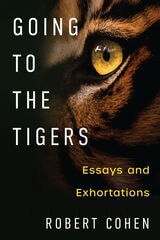
Going to the Tigers
Essays and ExhortationsRobert Cohen
University of Michigan Press, 2022
In this funny and perceptive collection, novelist and essayist Robert Cohen shares his thoughts on the writing process and then puts these prescriptions into practice—from how to rant effectively as an essayist and novelist (“The Piano Has Been Drinking”), how to achieve your own style, naming characters (and creating them), how one manages one’s own identity with being “a writer” in time and space, to the use of reference and allusion in one’s work. Cohen is a deft weaver of allusion himself. In lieu of telling the reader how to master the elements of writing fiction, he shows them through the work of the writers who most influenced his own development, including Roth, Ellison, Kafka, and Robinson. Rooted in his own experiences, this collection of essays shows readers how to use their influences and experiences to create bold, personal, and individual work. While the first part of the book teaches writing, the essays in the second part show how these elements come together.
Good Naked
Reflections on How to Write More, Write Better, and Be HappierJoni B. Cole
University Press of New England, 2017
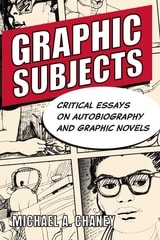
Graphic Subjects
Critical Essays on Autobiography and Graphic NovelsMichael A. Chaney
University of Wisconsin Press, 2011
Some of the most noteworthy graphic novels and comic books of recent years have been entirely autobiographical. In Graphic Subjects, Michael A. Chaney brings together a lively mix of scholars to examine the use of autobiography within graphic novels, including such critically acclaimed examples as Art Spiegelman’s Maus, David Beauchard’s Epileptic, Marjane Satrapi’s Persepolis, Alan Moore’s Watchmen, and Gene Yang’s American Born Chinese.
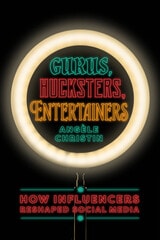
Gurus, Hucksters, Entertainers
How Influencers Reshaped Social MediaAngèle Christin
University of Chicago Press, 2026
An illuminating investigation of the complex work of social media content creators—their lives, conflicts, and controversies.
In this eye-opening book, digital studies scholar Angèle Christin demystifies the content creator economy, explaining its long history and the pitfalls of its professionalization. Drawing on in-depth fieldwork with digital creators as varied as vegan YouTubers, dads of Instagram, and self-described drama commentators, Christin shows how individuals enter social media creation, how they make money, and how their online environments shape their content.
Aspiring creators often dream of a better life in social media careers. Yet these dreams soon turn into exhaustion as influencers try to meet the contradictory demands of platforms, brands, and audiences. Over time, Christin shows, creators cluster into three types: hucksters, who work on behalf of brands; entertainers, who chase virality and platform payments; and gurus, who monetize the loyalty of their fans. Platform dynamics push entertainers and gurus to create extreme and incendiary content to maintain audience engagement, while brands and marketers nudge hucksters toward repetitive, staid commercial performances. Concerns about algorithmic manipulation and conflicts between creators further lead to reputation-damaging, harassment-laden scandals. Christin reveals how platform labor repeatedly—and structurally—fosters precarity and inequality, destructive drama, and inflammatory content online.
Gut Feelings
A Writer'S Truths And Minute InventionsMerrill Joan Gerber
University of Wisconsin Press, 2003
Gerber writes of her apprenticeships with celebrated writing teachers Andrew Lytle and Wallace Stegner and recounts her ghostly (and ghastly) experiences during a month at Yaddo, the famous retreat for artists. Gerber includes three pieces in the book—originally published as stories—but which blur the line between fiction and memoir, demonstrating Gerber’s contention that the deepest secrets in life beget the most passionate fictions.