478 books match the query 'Bible' and 9 start with g
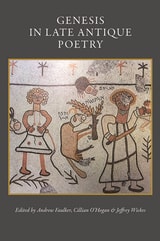
cover of Genesis in Late Antique Poetry

Genesis in Late Antique Poetry

Andrew Faulkner

Catholic University of America Press, 2022
The biblical book of Genesis stands nearly without parallel in the shared history of Judaism, Christianity, and Islam. Because of its abiding importance to late antique theology and practical life across religious boundaries, it gave rise to a wide range of literary responses. The essays in this book study an array of Jewish and Christian responses to Genesis as they took shape in specific literary forms—the unique genres of late antique poetry. While late antique and early medieval Jews and Christians did not always agree in their interpretations of Genesis, they participated broadly in a shared culture of poetic production. Some of these poetic genres paralleled one another simply as distinct examples of metered speech, while others emerged in conversation and through mutual influence. Though late antique poems developed in a variety of languages and across religious boundaries, scholarly study of late antique poetry has tended to isolate the phenomenon according to language. As a corrective to this linguistic isolation, this book initiates a comparative conversation around the Jewish and Christian poetry that emerged in late antique Aramaic, Greek, Hebrew, Latin, and Syriac. Tending equally to exegetical content and literary form, the essays in this book sit at the intersection of a variety of scholarly conversations—around the history of biblical exegesis, the formation of late antique and early medieval literature and literary culture, and the comparative study of Judaism and Christianity.
[more]
cover of Genre and Openness in Proverbs 10:1-22:16

Genre and Openness in Proverbs 10

1-22:16

Suzanna R. Millar

SBL Press, 2020

A fruitful reading strategy that reveals expansive meaning in Proverbs

Interpreters often characterize Proverbs 10:1–22:16 as a dead-end of cold, disengaged dogma closed off from the realities of the world. In Genre and Openness in Proverbs 10:1–22:16, Suzanna R. Millar takes a different view, arguing that the didactic proverbs in these chapters are not dull and dry but are filled with poetic complexities open to many possible interpretations and uses. By incorporating paremiology, the technical study of the proverb genre, Millar sheds light on important debates such as character development, kingship, the connection between act and consequence, and the acquisition of wisdom.

Features

  • A clarification of the genre of the sayings in light of modern genre theory
  • A linguistic analysis of how openness is generated in biblical proverbs
  • An examination of the didactic use of proverbs to train the hearer’s mind
[more]
cover of Glaphyra on the Pentateuch, Volume 1

Glaphyra on the Pentateuch, Volume 1

Nicholas P. St. Cyril of Alexandria

Catholic University of America Press, 2019
Cyril of Alexandria (ca. 376–444) is best known for his defense of orthodoxy at the time of the Nestorian controversy over the nature of Christ. However, by far the larger part of Cyril’s literary output consisted of commentaries on books of both Old and New Testaments, written before the Christological debate was sparked off in 428. One of these works, of major proportions, was the so-called Glaphyra (“elegant comments”) on the Pentateuch. This comprises a total of thirteen separate “books,” or volumes: seven on Genesis, three on Exodus, and one each on Leviticus, Numbers and Deuteronomy. The comments primarily concern the narrative portions of the Pentateuch, hence the greater space given to Genesis, though a number of the legal prescriptions are also treated. This present volume, containing all seven books on Genesis, is the first of a projected two-volume set which will offer a translation of the whole Glaphyra for the first time in English. Cyril’s aims within the commentary are both theological and pastoral. His chosen method begins with a consideration of the historia. Here the Alexandrian patriarch deals with the text at the literal level. At this stage he explains any historical, cultural, and at times even linguistic and textual issues presented within the passage, which is then followed by some theological instruction or lessons of a more practical nature based upon the literal interpretation. The exposition then moves on to the theoria. This is Cyril’s preferred term for the contemplation of the spiritual sense, that is to say, the mystery of Christ which he firmly held lay hidden beneath the surface of the Old Testament text. With great adeptness and consistency Cyril identifies elements within the ancient narratives as figures, or “types and shadows,” of the Lord Jesus Christ, the Church, and the teachings of the gospel.
[more]
cover of Glaphyra on the Pentateuch, Volume 2

Glaphyra on the Pentateuch, Volume 2

St. Cyril of Alexandria

Catholic University of America Press, 2019
The translation of the commentary of Cyril of Alexandria (ca. 376-444) on the Pentateuch, known as the Glaphyra, or “elegant comments,” is now completed by this second volume. Volume 1 contained the whole of his remarks on Genesis, and now Volume 2 presents his comments on Exodus, Leviticus, Numbers, and Deuteronomy, along with indices for the entire work. At this early stage in his patriarchate Cyril was an avid expositor of Scripture, on books of both Testaments, possibly undertaking this work as a model and guide for the clergy under his direction. While Cyril’s other large-scale commentaries on Old Testament books, such as Isaiah and the Minor Prophets (the latter commentary also published in translation by CUA Press), followed a verse-by-verse approach, the Glaphyra is more thematic. As Cyril works through the narrative passages of the Pentateuch, he pauses to explain those elements within the text that present possible difficulties or admit alternative interpretations, and invariably concludes each section by bringing out spiritual lessons of benefit to the congregation. Many of these latter relate to Christ, since, for Cyril, a Christological reading of the Old Testament was unavoidable. While in the Glaphyra it was not Cyril’s purpose to tackle the legal passages within the Pentateuch, a task that he wished to reserve for a separate work of an entirely different character (De adoratione et cultu in spiritu et veritate, “Concerning Worship and Service in Spirit and in Truth”), he does nevertheless here depart from his own remit on occasion and deal with some of the more prominent ceremonial passages. Cyril gives considerable space, for example, to the sacrifice of the Passover lamb and the levitical ritual for the cleansing of the leper, among others. As with Volume 1, Cyril’s treatment of these books is published here for the first time in English translation.
[more]
cover of Gospel Jesuses and Other Nonhumans: Biblical Criticism Post-poststructuralism

Gospel Jesuses and Other Nonhumans

Biblical Criticism Post-poststructuralism

Stephen D. Moore

SBL Press, 2017

Essential reading for biblical studies students and scholars interested in cutting-edge critical theory

The current global ecological crisis has prompted a turn to the nonhuman in critical theory. This book breaks new ground in biblical studies as the first to bring nonhuman theory to bear on the gospels and Acts. Nonhuman theory, a confluence of several of the main theoretical streams that have issued forth since the heyday of high poststructuralism, includes affect theory, posthuman animality studies, critical plant studies, object-oriented new materialisms, and assemblage theory. Nonhuman theory dismantles and reassembles the Western concept of “the human” that coalesced during the Enlightenment and testifies to other conceptions of the human and of the nonhuman, not least those found in the canonical gospels and Acts. Stephen D. Moore’s exegetical explorations and defamiliarizations of these overly familiar texts and excavations of their incessantly erased strangeness are the central feature of this provocative book.

Features

  • New paths in biblical ecotheology and ecocriticism
  • A significant contribution to the analysis of emotions in biblical texts
  • Class resource for courses in methods for biblical studies, the gospels, and the Bible and ecology
[more]
cover of Gospels: Narrative and History

Gospels

Narrative and History

Mercedes Navarro Puerto

SBL Press, 2015

An international collection of ecumenical, gender-sensitive interpretations

In this volume of the Bible and Women Series, contributors examine how biblical studies intersects with feminist interpretive methods with regard to the Gospels. Authors examine the lives of women in Roman Palestine, named and unnamed women in the Gospels, and the role of gender in the reception of the Hebrew scriptures in the New Testament.

Features:

  • Essays by scholars from scholars from around the world
  • An introduction and twenty essays focused on women and gender relations
  • Coverage of power relations and ideologies within the texts and in current interpretations
[more]
cover of Gregory of Nyssa: Homilies on the Song of Songs

Gregory of Nyssa

Homilies on the Song of Songs

Richard A. Norris Jr.

SBL Press, 2012

Gregory of Nyssa’s fifteen Homilies on the Song of Songs offer an important resource for the history of Christian biblical exegesis, as well as for the history of Christian ascetical and spiritual teaching, and stand alongside Origen’s commentary on the Song as a source for the later interpretative tradition. In addition to offering the original text and an English translation of all fifteen homilies, Norris provides an analysis of the characteristic themes of Gregory’s ascetical teaching, emphasizes its connection in his mind with the institution of baptism, and stresses the degree to which Gregory sees the teaching of the Song as addressed not to a special class of believers but to any and all Christians.
[more]
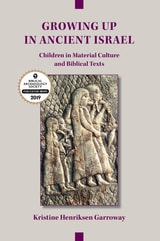
cover of Growing Up in Ancient Israel: Children in Material Culture and Biblical Texts

Growing Up in Ancient Israel

Children in Material Culture and Biblical Texts

Kristine Henriksen Garroway

SBL Press, 2018

The first expansive reference examining the texts and material culture related to children in ancient Israel

Growing Up in Ancient Israel uses a child-centered methodology to investigate the world of children in ancient Israel. Where sources from ancient Israel are lacking, the book turns to cross-cultural materials from the ancient Near East as well as archaeological, anthropological, and ethnographic sources. Acknowledging that childhood is both biologically determined and culturally constructed, the book explores conception, birth, infancy, dangers in childhood, the growing child, dress, play, and death. To bridge the gap between the ancient world and today’s world, Kristine Henriksen Garroway introduces examples from contemporary society to illustrate how the Hebrew Bible compares with a Western understanding of children and childhood.

Features:

  • More than fifty-five illustrations illuminating the world of the ancient Israelite child
  • An extensive investigation of parental reactions to the high rate of infant mortality and the deaths of infants and children
  • An examination of what the gendering and enculturation process involved for an Israelite child
[more]
cover of Guiding to a Blessed End: Andrew of Caesarea and His Apocalypse Commentary in the Ancient Church

Guiding to a Blessed End

Andrew of Caesarea and His Apocalypse Commentary in the Ancient Church

Eugenia Scarvelis Constantinou

Catholic University of America Press, 2013

In this interesting and insightful work, Eugenia Scarvelis Constantinou, the leading expert on Andrew of Caesarea and the first to translate his Apocalypse commentary into any modern language, identifies an exact date for the commentary and a probable recipient. Her groundbreaking book, the first ever written about Andrew, analyzes his historical milieu, education, style, methodology, theology, eschatology, and pervasive and lasting influence. She explains the direct correlation between Andrew of Caesarea and fluctuating status of the Book of Revelation in Eastern Christianity through the centuries.
[more]