Results by title
159 books match the query 'Birds' and 4 start with g
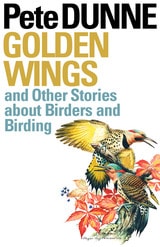
Golden Wings and Other Stories about Birders and Birding
By Pete Dunne
University of Texas Press, 2003
Dubbed the "Bard of America's Bird-Watchers" by the Wall Street Journal, Pete Dunne knows birders and birding—instinctively and completely. He understands the compulsion that drives other birders to go out at first light, whatever the weather, for a chance to maybe, just maybe, glimpse that rare migrant that someone might have spotted in a patch of woods the day before yesterday. And yet, he also knows how . . . well . . . strange the birding obsession becomes when viewed through the eyes of a nonbirder. His dual perspective—totally engrossed in birding, yet still aware of the "odd birdness" of some birders—makes reading his essays a pure pleasure whether you pursue "the feather quest" or not.
This book collects forty-one of Dunne's recent essays, drawn from his columns in Living Bird, Wild Bird News, the New Jersey Sunday section of the New York Times, Birder's World, and other publications. Written with his signature wit and insight, they cover everything from a moment of awed communion with a Wandering Albatross ("the most beautiful thing I'd ever seen") to Dunne's imagined "perfect bird" ("The Perfect Bird is the size of a turkey, has the wingspan of an eagle, the legs of a crane, the feet of a moorhen, and the talons of a great horned owl. It eats kudzu, surplus zucchini, feral cats, and has been known to predate upon homeowners who fire up their lawn mowers before 7:00 A.M. on the weekend."). The title essay pays whimsical, yet heartfelt tribute to Dunne's mentor, the late birding legend Roger Tory Peterson.
Gone Again Ptarmigan
Jonathan London
University of Alaska Press, 2013
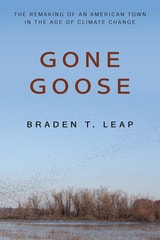
Gone Goose
The Remaking of an American Town in the Age of Climate ChangeBraden T. Leap
Temple University Press, 2019
Sumner, MO, pop. 102, near the Swan Lake National Wildlife Refuge, proclaims itself “The Wild Goose Capital of the World.” It even displays Maxie, the World’s largest goose: a 40-foot tall fiberglass statue with a wingspan stretching more than 60 feet. But while the 200,000 Canada geese that spent their falls and winters at Swan Lake helped generate millions of dollars for the local economy—with hunting and the annual Goose Festival—climate change, as well as environmental and land use issues, have caused the birds to disappear. The economic loss of the geese and the activities they inspired served as key building blocks in the rural identities residents had developed and treasured.
In his timely and topical book, Gone Goose, Braden Leap observes how members of this rural town adapted, reorganized, and reinvented themselves in the wake of climate change—and how they continued to cultivate respect and belonging in their community. Leap conducted interviews with residents and participated in various community events to explore how they reimagine their relationships with each other as well as their community’s relationship with the environment, even as they wish the geese would return.
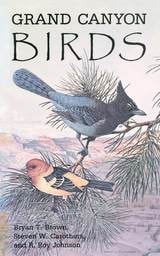
Grand Canyon Birds
Historical Notes, Natural History and EcologyBryan T. Brown
University of Arizona Press, 1987
"Will benefit all amateur naturalists because of its survey of the life zone patterns in [the] southwestern United States." —Science Books & Films
"The subtitle accurately reflects the contents of this excellent book on the birds of a unique natural wonder and national treasure. . . . An annotated checklist discusses the status and abundance of each of the over 300 species of birds known to have occurred in the Grand Canyon region, which is defined here as the river between Glen Canyon Dam and Lake Mead and the contiguous plateaus to the north and south." —Journal of Arizona History