Results by title
379 books match the query 'Botany' and 18 start with g
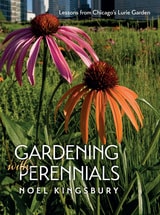
Gardening with Perennials
Lessons from Chicago's Lurie GardenNoel Kingsbury
University of Chicago Press, 2014
With Gardening with Perennials horticulturalist and garden writer Noel Kingsbury brings a global perspective to the Lurie oasis through a wonderful introduction to the world of perennial gardening. He shows how perennials have much to offer home gardeners, from sustainability—perennials require less water than their annual counterparts—to continuity, as perennials’ longevity makes them a dependable staple.
Kingsbury also explains why Lurie is a perfect case study for gardeners of all locales. The plants represented in this urban oasis were chosen specifically for reliability and longevity. The majority will thrive on a wide range of soils and across a wide climatic range. These plants also can thrive with minimal irrigation, and without fertilizers or chemical control of pests and diseases. Including a special emphasis on plants that flourish in sun, and featuring many species native to the Midwest region, Gardening with Perennials will inspire gardeners around the world to try Chicago-style sustainable gardening.
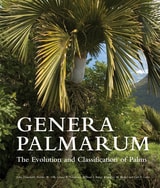
Genera Palmarum
The Evolution and Classification of PalmsJohn Dransfield, Natalie W. Uhl, Conny B. Asmussen, William J. Baker, Madeline Harley, and Carl Lewis
Royal Botanic Gardens, Kew, 2008
In this new edition, genus treatments now include complete descriptions, nomenclature, and etymology, as well as discussions of diversity, distribution, phylogeny, morphology, uses and ecology. All genera are fully illustrated with full-color photographs alongside analytic illustrations, distribution maps, and even electron micrographs of pollen. An updated introduction provides readers with essential background information via authoratative essays on the structure of palms, their chemistry, their history, and much more.
Fully revised for a new generation of researchers and gardening enthusiasts, Genera Palmarum continues to be the gold-standard reference work on palms.
Generic Tree Flora of Madagascar
George E. Schatz
Royal Botanic Gardens, Kew, 2001
Gentry's Rio Mayo Plants
The Tropical Deciduous Forest and Environs of Northwest MexicoRevised and Edited by Paul S. Martin, David Yetman, Mark Fishbein, Phil Jenkins, Thomas R. Van Devender, and Rebecca K. Wilson
University of Arizona Press, 1998
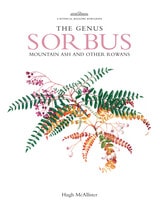
Genus Sorbus
mountain ash and other rowansHugh McAllister
Royal Botanic Gardens, Kew, 2005
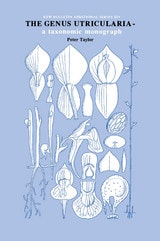
Genus Utricularia
a taxonomic monographP. G. Taylor
Royal Botanic Gardens, Kew, 1989
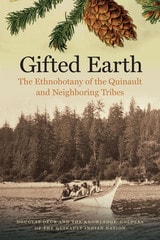
Gifted Earth
The Ethnobotany of the Quinault and Neighboring TribesDouglas Deur
Oregon State University Press, 2022
Gifted Earth features traditional Native American plant knowledge, detailing the use of plants for food, medicines, and materials. It presents a rich and living tradition of plant use within the Quinault Indian Nation in a volume collaboratively developed and endorsed by that tribe.
The Quinault Reservation on the Olympic Peninsula of Washington state is a diverse tribal community, embodying the traditional knowledge of tribes along the entire Pacific Northwest coast. Its membership consists of descendants of many tribes—from the northwestern Olympic Peninsula to the northern Oregon coast—including the Quinault, but also many others who were relocated to the reservation in the nineteenth and early twentieth centuries. Individuals descended from these tribal communities, including Chinook, Chehalis, Hoh, Quileute, Queets, Cowlitz, Tillamook, Clatsop, and others, have contributed to Gifted Earth, giving it remarkable breadth and representation.
A celebration of enduring Native American knowledge, this book will help non-specialists as they discover the potential of the region’s wild plants, learning how to identify, gather, and use many of the plants that they encounter in the Northwestern landscape. Part ethnobotanical guide and part “how-to” manual, Gifted Earth also prepares plant users for the minor hazards and pitfalls that accompany their quest—from how to avoid accidentally eating a bug hidden within a salal berry to how to prevent blisters when peeling the tender stalks of cow parsnip.
As beautiful as it is informative, Gifted Earth sets the standard for a new generation of ethnobotanical guides informed by the values, vision, and voice of Native American communities eager to promote a sustainable, balanced relationship between plant users and the rich plant communities of traditional tribal lands.
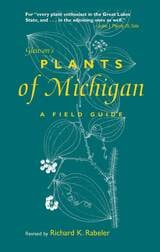
Gleason's Plants of Michigan
A Field GuideRevised by Richard K. Rabeler
University of Michigan Press, 1998
“For every plant enthusiast in the Great Lakes State, and . . . in the adjoining ones as well.”
—John J. Pipoly III, SIDA
“A very handy field guide . . . this book will be of use to anyone in northeastern North America.”
—C. Barre Hellquist, Rhodora
“It can be used to identify most of the plants . . . in Michigan and adjacent areas.”
—James E. Eckenwalder, Wildflower
Gleason’s Plants of Michigan is a major revision and expansion of The Plants of Michigan by Henry A. Gleason—the 1918 classic field guide to the flowering plants and trees found in Michigan, neighboring Great Lakes States, and southern Ontario. Richard K. Rabeler has completely updated the family descriptions and added easy-to-use keys. Information on habitats and geographical distribution is now included as well as a comprehensive index of plant names, an illustrated section on terminology, a glossary, and an introduction to botany in Michigan.
Gleason’s Plants of Michigan will be useful to naturalists, environmental specialists, botanists, and everyone who loves the wildflowers and native flora of Michigan and the surrounding areas.
Grasses of Wisconsin
The Taxonomy, Ecology, and Distribution of the Gramineae Growing in the State without CultivationNorman C. Fassett
University of Wisconsin Press, 1997
Grasses of the Intermountain Region
Laurel K. Anderton and Mary E. Barkworth
Utah State University Press, 2009
Grasses of the Northeast
A Manual of the Grasses of New England and Adjacent New YorkDennis W. Magee
University of Massachusetts Press, 2014
This book is designed to serve as a reference work, classroom textbook, and field manual for botanists, naturalists, and students interested in learning to identify and learn about the distinguishing features of grasses of the northeastern United States. Included are more than 380 species of grasses that have been documented as occurring in the region. The volume contains 246 range maps and 269 line drawings that clarify descriptions used in the keys and illustrate characteristics of the various kinds of grasses. Dennis Magee also provides a description of each genus and species along with synonyms and habitats. For anyone interested in an up-to-date treatment of the grasses of greater New England, this volume will be an invaluable resource. It is the only comprehensive technical guide devoted exclusively to the grasses of this region and presents a wealth of information in a precise, clear format.
The geographic scope of the work extends from the Canadian border south through Long Island and west to the Hudson River. But given the considerable overlap with the grass flora to the adjacent north, south, and west, the book will also be useful beyond New England and the bordering New York counties.
The volume includes an illustrated glossary of essential terms and concepts and a “how to use this manual” section. A CD-ROM with a multiple-entry identification guide, and hundreds of accompanying photographic images of individual species, is provided in a sleeve inside the back cover of the book.
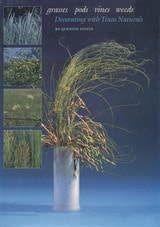
Grasses, Pods, Vines, Weeds
Decorating with Texas NaturalsQuentin Steitz
University of Texas Press, 1987
Purple three-awn.
Tree of heaven.
Alamo vine.
Narrowleaf cattail.
These exotic and fanciful names conjure up visions of lush foliage, colorful grasses, and dense plant life. They are, in fact, names of native and naturalized Texas plants—grasses, pods, vines, and weeds. Lovely and all-too-often overlooked in nature, they become ornamental delights when used imaginatively and decoratively.
Grasses, Pods, Vines, Weeds introduces 44 of Texas' most common and important naturals. Quentin Steitz shows how to recognize them and discover their aesthetic wealth. By taking the reader through all of the steps involved in utilizing naturals—from harvest to design—her book becomes an important tool for floral and landscape designers, decorators, horticulturalists, home gardeners, botanists: all those people who enjoy hands-on experience with Texas' vast array of native and naturalized plants.
The book presents clear and concise descriptions of many Texas naturals, accompanied by approximately 150 full-color photographs showing each in one or more stages of growth and also in a design. The reader can see the plant as it looks not only in the wild but also in an arrangement. The author offers techniques on how the species can be prepared for display, discussing drying and arranging. And a chapter on cultivation and conservation suggests to outdoor enthusiasts species they can grow for decorative natural materials as well as conserve and appreciate in the wild.
Grasses, Pods, Vines,Weeds is enhanced by flora selected, collected, prepared, and dried by the author. These hand-culled materials have been used in designs contributed by some nineteen notable floral designers as well as the author. The text and designs combine to reveal the fresh, creative applications of Texas' decorative naturals and to increase our pleasure in the wonders of natural Texas.
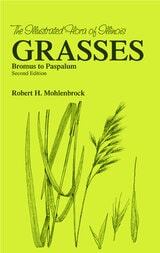
Grasses
Bromus to Paspalum, Second EditionRobert H. Mohlenbrock
Southern Illinois University Press, 2002
Since the publication of the first edition of Grasses: Bromus to Paspalumin 1972, twenty-two additional taxa of grasses have been discovered in Illinois that are properly placed in this volume. In addition, numerous nomenclatural changes have occurred for plants previously discovered, and many distributional records have been added. New keys have been prepared for each genus where additional species from Illinois are known. For new species, full-page illustrations are provided. This second edition updates the status of Illinois grasses. The book features 263 figures from the first edition plus 21 new figures for this edition by Paul W. Nelson.
Genera of grasses included in this work are Aegilops, Agropyron, Agrostis, Aira, Alopecurus, Anthoxanthum, Avena, Beckmannia, Briza, Bromus, Calamagrostis, Cinna, Dactylis, Deschampsia, Elyhordeum, Elymus, Elytrigia, Festuca, Hierochloe, Holcus, Hordeum, Koeleria, Lolium, Milium, Paspalum, Pennisetum, Phalaris, Phleum, Poa, Puccinellia, Sclerochloa, Secale, Sphenopholis, Torreyochloa, Triticum, and Vulpia.
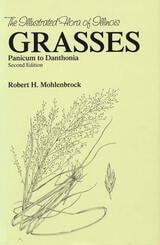
Grasses
Panicum to Danthonia, Second EditionRobert H. Mohlenbrock
Southern Illinois University Press, 2001
Since the publication of the first edition of Grasses: Panicum to Danthonia in 1973, twenty additional taxa of grasses have been discovered in Illinois that are properly placed in this volume. In addition, numerous nomenclatural changes have occurred for plants already known from the state, and many distributional records have been added. This second edition updates the status of grasses in Illinois. Paul W. Nelson has provided illustrations for all of the additions.
Because the nature of grass structures is generally so different from that of other flowering plants, a special terminology is applied to them. In his introduction, Robert H. Mohlenbrock cites these terms, with descriptions that make the identification of unknown specimens possible. Mohlenbrock’s division of the grass family into subfamilies and tribes is a major departure from the sequence usually found in most floristic works in North America.
Synonyms that have been applied to species in the northeastern United States are given under each species. A description based primarily on Illinois material covers the more important features of the species. The common names—Paflic Grass, Billion Dollar Grass or Japanese Millett, Thread Love Grass, and Goose Grass—are the ones used locally in the state. The habitat designation and dot maps showing county distribution of each grass are provided only for grasses in Illinois, but the overall range for each species is also given.

Green Planet
How Plants Keep the Earth AliveRice, Stanley A
Rutgers University Press, 2012
Beginning with an overview of how human civilization has altered the face of the Earth, particularly by the destruction of forests, the book details the startling consequences of these actions. Rice provides compelling reasons for government officials, economic leaders, and the public to support efforts to save threatened and endangered plants. Global campaigns to solve environmental problems with plants, such as the development of green roofs and the Green Belt Movement—a women's organization in Kenya that empowers communities worldwide to protect the environment—show readers that efforts to save wild plants can be successful and beneficial to the economic well-being of nations.
Through current scientific evidence, readers see that plants are vital to the ecological health of our planet and understand what can be done to lead to a better—and greener—future
Benefits of plants:
- Help modulate greenhouse gases
- Produce almost all oxygen in the air
- Create cool shade that reduces energy costs
- Prevent floods, droughts, and soil erosion
- Produce all of the food in the world
- Create and preserve soil
- Create natural habitats
- Heal the landscape after natural and human disasters
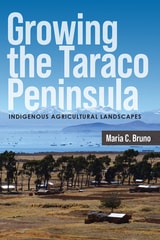
Growing the Taraco Peninsula
Indigenous Agricultural LandscapesMaria C. Bruno
University Press of Colorado, 2024
Beginning with the first small-scale communities of the Formative period (1500 BCE–500 CE) through the development of the Tiwanaku state (500–1100 CE), Bruno draws upon ethnographic insights from modern-day Indigenous farming practices on the peninsula as well as archaeological evidence from excavations at four sites to explore the landscapes and human-plant relationships that Taraco communities created through their agricultural practices. Through evaluation of environmental data on climate and land-use dynamics—rainfall, lake level, and soil character and distribution—she proposes a new hypothesis of how raised-field agriculture may have emerged in the region. With a detailed analysis of foodways at the Kala Uyuni site, her study reveals how Indigenous Taraco communities sustainably incorporated crops and wild plants into their daily and special-occasion meals, connecting the agricultural landscapes to local and regional social and political dynamics.
Bringing together several indicators of the region’s long-term history and demonstrating that shifts in agriculture do not neatly correspond to the changes traditionally highlighted by archaeological culture histories, Growing the Taraco Peninsula reveals Indigenous landscape creation through farming on the Taraco peninsula as a critical example of sustainability. This valuable contribution to Andean archaeology is also of interest to scholars, students, and the general reader concerned about the environment, sustainable farming, sustainability, Andean history, and the Indigenous peoples of the Americas.

Guide to the Flowers of Western China
Christopher Grey-Wilson and Phillip Cribb
Royal Botanic Gardens, Kew, 2011
Unrivaled in the temperate latitudes of the world, China’s rich flora comprises 30,000 species of plants, and nowhere is this floral richness more evident than in western China. With its lush forests, meandering rivers, and majestic mountains, the west of China has been a center of plant exploration for over two centuries, giving rise to many well-known species of trees, shrubs, perennials, and bulbs that populate our parks and botanical institutes, including rhododendron, orchids, peonies, and roses.
Guide to the Flowers of Western China describes and illustrates more than two thousand species, from the common to the endemic to the extremely rare. Plant families are arranged following the latest DNA-based classification, making this pictorial guide— the largest and most comprehensive on western China ever published—essential for gardeners and plant scientists.
Celebrating the wealth of western China’s vast flora, this magnificent volume will enable the horticulturally inclined traveler (or armchair traveler) to identify many of the plants encountered in the wild.
Guide to the Flowers of Western China
Christopher Grey-Wilson and Phillip Cribb
Royal Botanic Gardens, Kew, 2023
Since the publication of the first edition of Guide to the Flowers of Western China in 2011, there have been great strides in knowledge of the flora of China through international collaboration. Many plants included in the first edition have been revisited in the wild, while areas hitherto inaccessible have opened up, if sometimes only temporarily. Great advances in systematic botany have occurred since the publication of the first edition, particularly with the widespread availability of rapid DNA analysis. The result of this has been an influx of new photographs and data, and the need for a second edition of Guide to the Flowers of Western China.