Results by title
260 books match the query 'Central America' and 9 start with g
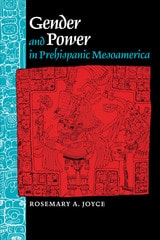
Gender and Power in Prehispanic Mesoamerica
By Rosemary A. Joyce
University of Texas Press, 2001
Gender was a fluid potential, not a fixed category, before the Spaniards came to Mesoamerica. Childhood training and ritual shaped, but did not set, adult gender, which could encompass third genders and alternative sexualities as well as "male" and "female." At the height of the Classic period, Maya rulers presented themselves as embodying the entire range of gender possibilities, from male through female, by wearing blended costumes and playing male and female roles in state ceremonies.
This landmark book offers the first comprehensive description and analysis of gender and power relations in prehispanic Mesoamerica from the Formative Period Olmec world (ca. 1500-500 BC) through the Postclassic Maya and Aztec societies of the sixteenth century AD. Using approaches from contemporary gender theory, Rosemary Joyce explores how Mesoamericans created human images to represent idealized notions of what it meant to be male and female and to depict proper gender roles. She then juxtaposes these images with archaeological evidence from burials, house sites, and body ornaments, which reveals that real gender roles were more fluid and variable than the stereotyped images suggest.
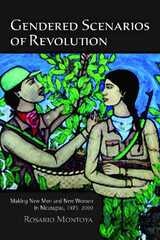
Gendered Scenarios of Revolution
Making New Men and New Women in Nicaragua, 1975–2000Rosario Montoya
University of Arizona Press, 2012
In 1979, toward the end of the Cold War era, Nicaragua's Sandinista movement emerged on the world stage claiming to represent a new form of socialism. Gendered Scenarios of Revolution is a historical ethnography of Sandinista state formation from the perspective of El Tule-a peasant village that was itself thrust onto a national and international stage as a "model" Sandinista community. This book follows the villagers´ story as they joined the Sandinista movement, performed revolution before a world audience, and grappled with the lessons of this experience in the neoliberal aftermath.
Employing an approach that combines political economy and cultural analysis, Montoya argues that the Sandinistas collapsed gender contradictions into class ones, and that as the Contra War exacerbated political and economic crises in the country, the Sandinistas increasingly ruled by mandate as vanguard party instead of creating the participatory democracy that they professed to work toward. In El Tule this meant that even though the Sandinistas created new roles and possibilities for women and men, over time they upheld pre-revolutionary patriarchal social structures. Yet in showing how the revolution created opportunities for Tuleños to assert their agency and advance their interests, even against the Sandinistas´ own interests, this book offers a reinterpretation of the revolution´s supposed failure.
Examining this community’s experience in the Sandinista and post-Sandinista periods offers perspective on both processes of revolutionary transformation and their legacies in the neoliberal era. Gendered Scenarios of Revolution will engage graduate and undergraduate students and scholars in anthropology, sociology, history, and women’s and gender studies, and appeal to anyone interested in modern revolution and its aftermath.
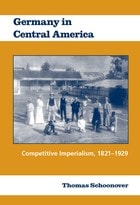
Germany in Central America
Competitive Imperialism, 1821-1929Thomas Schoonover
University of Alabama Press, 1999
Analyzes the German role in Central American domestic and international relations
Using previously untapped resources including private collections, the records of cultural institutions, and federal and state government archives, Schoonover analyzes the German role in Central American domestic and international relations.Of the four countries most active in independent Central America-Britain, the United States, France, and Germany- historians know the least about the full extent of the involvement of the Germans.German colonial expansion was based on its position as an industrialized state seeking economic well-being and security in a growing world market. German leaders were quick to recognize that ties to the cheap labor of overseas countries could compensate for some of the costs and burdens of conceding material and social privileges to their domestic labor force. The Central American societies possessed limited resource bases; smaller and poorly educated populations; and less capital, communications, and technological development than Germany. They saw the borrowing of development as a key to their social, economic, and political progress. Wary Central American leaders also saw the influx of German industrialists as assurance against excessive U.S. presence in their political economies and cultures.
Although the simplistic bargain to trade economic development for cheap labor appeared to succeed in the short term, complex issues of German domestic unemployment and social disorder filtered to Central American countries and added to their own burdens. By 1929, Germany had recovered most of its pre-World War I economic position.
Good Maya Women
Migration and Revitalization of Clothing and Language in Highland Guatemalaby Joyce N. Bennett
University of Alabama Press, 2022
Good Maya Women: Migration and Revitalization of Clothing and Language in Highland Guatemala analyzes how Indigenous women’s migration contributes to women’s empowerment in their home communities in Guatemala. This decolonial ethnographic analysis of Kaqchikel Maya women’s linguistic and cultural activism demonstrates that marginalized people can and do experience empowerment and hope for the future of their communities, even while living under oppressive neoliberal regimes. Joyce N. Bennett contests dominant frameworks of affect theory holding that marginalized peoples never truly experience unrestricted hope or empowerment, and she contributes new understandings of the intimate connections between Indigenous women, migration, and language and clothing revitalization.
Based on more than twenty months of fieldwork, the study begins with an ethnographic investigation of how economic policies force Indigenous women into migration for wage work. To survive, many, like the three young women profiled in this ethnography, are forced to leave their schooling, families, and highland homes to work in cities or other countries. They might work, for example, as vendors, selling crafts to tourists, or as housekeepers or waitresses. Their work exposes them to structural violence, including anti-Indigenous slurs, sexual harassment and violence, and robbery.
Furthermore, the women are pressured to wear Western clothing and to speak Spanish, which endangers Indigenous culture and language in Guatemala. Yet the Indigenous migrant women profiled do not abandon their Indigenous clothing and language, in this case Kaqchikel Maya. Instead, they find inspiration and pride in revitalizing Kaqchikel traditions in their hometowns post-migration. As women attempt to revitalize Kaqchikel Maya language and clothing, they seek to earn the title of “good” women in their home communities.
Unpacking women’s daily activisms reveals that women attempt to retain their language and clothing and also collectively seek to make space for Indigenous people in the modern world. Bennett reveals that women find their attempts at revitalization to be personally empowering, even when their communities do not support them.
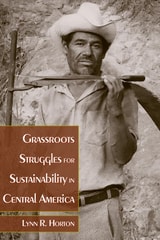
Grassroots Struggles for Sustainability in Central America
Lynn R. Horton
University Press of Colorado, 2007
With a comparative, empirical approach, Horton also analyzes dominant practices linked to sustainable development - neoliberal reforms, project interventions, and environmental protection. She reveals how these practices support or undermine economic, cultural, and political opportunities for the rural and indigenous poor and impact these communities' advancement of their own visions of sustainability. Finally, the author explores processes of empowerment that enable communities to articulate and put into practice local visions of sustainability, which contribute toward broader social and structural transformations.
Grassroots Struggles for Sustainability in Central America will interest sociologists, anthropologists, and others who study the theory and practice of sustainable development.
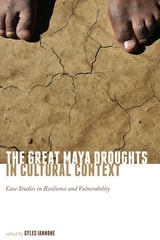
Great Maya Droughts in Cultural Context
Case Studies in Resilience and VulnerabilityGyles Iannone
University Press of Colorado, 2014
The Great Maya Droughts in Cultural Context offers new insights into the complicated series of events that impacted the decline of Maya civilization. This significant contribution to our increasingly comprehensive understanding of ancient Maya culture will be of interest to students and scholars of archaeology, anthropology, geography, and environmental studies.

Guatemala
Past and PresentChester Lloyd Jones
University of Minnesota Press, 1940
Guatemala was first published in 1940. Minnesota Archive Editions uses digital technology to make long-unavailable books once again accessible, and are published unaltered from the original University of Minnesota Press editions.
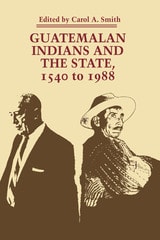
Guatemalan Indians and the State
1540 to 1988Edited by Carol A. Smith
University of Texas Press, 1990
Violence in Central America, especially when directed against Indian populations, is not a new phenomenon. Yet few studies of the region have focused specifi cally on the relationship between Indians and the state, a relationship that may hold the key to understanding these conflicts. In this volume, noted historians and anthropologists pool their considerable expertise to analyze the situation in Guatemala, working from the premise that the Indian/state relationship is the single most important determinant of Guatemala’s distinctive history and social order. In chapters by such respected scholars as Robert Cormack, Ralph Lee Woodward, Christopher Lutz, Richard Adams, and Arturo Arias, the history of Indian activism in Guatemala unfolds. The authors reveal that the insistence of Guatemalan Indians on maintaining their distinctive cultural practices and traditions in the face of state attempts to eradicate them appears to have fostered the development of an increasingly oppressive state.
This historical insight into the forces that shaped modern Guatemala provides a context for understanding the extraordinary level of violence that enveloped the Indians of the western highlands in the 1980s, the continued massive assault on traditional religious and secular culture, the movement from a militarized state to a militarized civil society, and the major transformations taking place in Guatemala’s traditional export-oriented economy. In this sense, Guatemalan Indians and the State, 1540 to 1988 provides a revisionist social history of Guatemala.
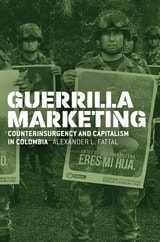
Guerrilla Marketing
Counterinsurgency and Capitalism in ColombiaAlexander L. Fattal
University of Chicago Press, 2018
Full of rich, unforgettable ethnographic stories, Guerrilla Marketing is a stunning and troubling analysis of the mediation of global conflict.