Results by title
57 books match the query 'Classification' and 4 start with g
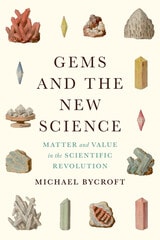
Gems and the New Science
Matter and Value in the Scientific RevolutionMichael Bycroft
University of Chicago Press, 2026
The first book-length history of gems in early modern science offers a thought-provoking new take on the Scientific Revolution.
In Gems and the New Science, Michael Bycroft argues that gems were connected to major developments in the “new science” between the sixteenth and nineteenth centuries. As he explains, precious and semiprecious stones were at the center of dramatic shifts in natural knowledge in early modern Europe. They were used to investigate luminescence, electricity, combustion, chemical composition, and more. They were collected by naturalists; measured by mathematicians; and rubbed, burned, and dissolved by experimental philosophers. This led to the demise of the traditional way of classifying gems—which grouped them by transparency, color, and locality—and the turn to density, refraction, chemistry, and crystallography as more reliable guides for sorting these substances.
The science of gems shows that material evaluation was as important as material production in the history of science. It also shows the value of seeing science as the product of the interaction between different material worlds. The book begins by bringing these insights to bear on five themes of the Scientific Revolution. Each of the subsequent chapters deals with a major episode in early modern science, from the expansion of natural history in the sixteenth century to the emergence of applied science early in the nineteenth century. This important work is not only the first book-length history of the science of gems but also a fresh interpretation of the Scientific Revolution and an argument for using a new form of materialism to understand the evolution of science.
[more]
Genera Of The Myxomycetes
George W. Martin
University of Iowa Press, 1983
Social historians today are calling into question the persuasiveness of the master narratives that have dominated our stories about the past. Motivated now by personal and professional commitments to solving problems by telling stories, not by epistemological and ontological certitude, social historians are constructing alternative narratives relevant to an expanded, more inclusive audience. The essays in this thoughtful volume reflect an explicit self-consciousness about historians' choices of narrative strategies, a new skepticism of the rhetorical strategies embedded in all scholarly arguments, and a recognition that every historian has a point of view.
Critically examining past master narratives in light of emerging alternatives, these essayists ask us to reevaluate the stories we tell, the narrative traditions within which they are situated, and the audiences they are designed to persuade. The first essays explore the gendered character of social history rhetoric by exposing alternative, feminist traditions of social scientific and social historical writing. The second section focuses on alternative narrative traditions of historical writing in non-European contexts, specifically India, Japan, and China. And the third group spotlights the rhetorical uses of synthesis in the writings of social historians.
The essays feature the range of narrative possibilities available to historians who have become self-critical about the pervasive use of unexamined master narratives; they show how limited that tradition can be compared with the diverse alternatives derived from, for example, gendered traditions of Latin American travel writers of the nineteenth century, Victorian women's historical writing, or the lively subaltern tradition in Indian social history. Together they argue not for the abandonment of historical materialism or the elimination of all master narratives but for the reinvigoration of social history through the use of new and more persuasive arguments based on alternative narratives.
[more]
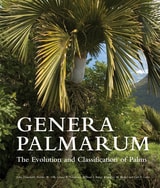
Genera Palmarum
The Evolution and Classification of PalmsJohn Dransfield, Natalie W. Uhl, Conny B. Asmussen, William J. Baker, Madeline Harley, and Carl Lewis
Royal Botanic Gardens, Kew, 2008
Palms are iconic in our culture, representing everything from victory to vacation. And for nearly three decades, Genera Palmarum has been the stand-out reference for anyone interested in this economically and horticulturally important plant family. Now, this award-winning book has been completely updated and revised, bringing it in line with new research and newly discovered genera.
In this new edition, genus treatments now include complete descriptions, nomenclature, and etymology, as well as discussions of diversity, distribution, phylogeny, morphology, uses and ecology. All genera are fully illustrated with full-color photographs alongside analytic illustrations, distribution maps, and even electron micrographs of pollen. An updated introduction provides readers with essential background information via authoratative essays on the structure of palms, their chemistry, their history, and much more.
Fully revised for a new generation of researchers and gardening enthusiasts, Genera Palmarum continues to be the gold-standard reference work on palms.
[more]
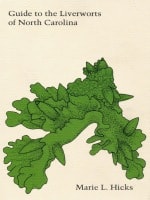
Guide to the Liverworts of North Carolina
Marie L. Hicks
Duke University Press, 1992
North Carolina is home to 66 genera and 195 species of liverworts--small, mosslike plants occupying moist microhabitats that form an inconspicuous part of the vegetation. Marie L. Hicks’ Guide to the Liverworts of North Carolina provides the first complete field guide to the hepatic flora in North Carolina. The volume offers a key to genera, species descriptions, distribution maps, a glossary, and 120 original drawings of liverworts as they appear in North Carolina.
North Carolina’s varied physiography creates a diversity of flora, ranging from boreal plants in the mountains to subtropical plants in the coastal plain. Collections of hepatics in North Carolina have been sporadic over the years, and knowledge of their distribution within the state has accumulated gradually. Guide to the Liverworts of North Carolina builds on earlier field studies, including those of Hugo L. Blomquist and R. M. Schuster, to provide keys and illustrations to aid identification. This important, comprehensive field guide will also be useful in states adjoining North Carolina and is designed for students, botanists, and all those interested in identifying local liverworts.
North Carolina’s varied physiography creates a diversity of flora, ranging from boreal plants in the mountains to subtropical plants in the coastal plain. Collections of hepatics in North Carolina have been sporadic over the years, and knowledge of their distribution within the state has accumulated gradually. Guide to the Liverworts of North Carolina builds on earlier field studies, including those of Hugo L. Blomquist and R. M. Schuster, to provide keys and illustrations to aid identification. This important, comprehensive field guide will also be useful in states adjoining North Carolina and is designed for students, botanists, and all those interested in identifying local liverworts.
[more]