Results by title
75 books match the query 'Death & Dying' and 5 start with g

Ghosts and The Japanese
Cultural Experience in Japanese Death LegendsMichiko Iwasaka & Barre Toelken
Utah State University Press, 1994
The Japanese have ambivalent attitudes toward death, deeply rooted in pre-Buddhist traditions. In this scholarly but accessible work, authors Iwasaka and Toelken show that everyday beliefs and customs--particularly death traditions--offer special insight into the living culture of Japan.
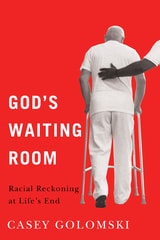
God's Waiting Room
Racial Reckoning at Life's EndCasey Golomski
Rutgers University Press, 2025
Winner of the Elliott P. Skinner Award from the Association of Africanist Anthropology, part of the American Anthropological Association
Third Place in the Victor Turner Prize in Ethnographic Writing from the American Anthropological Association's Society for Humanistic Anthropology
Can older racists change their tune, or will they haunt us further once they're gone? Rich in mystery and life's lessons, God's Waiting Room considers what matters in the end for older white adults and the younger Black nurses who care for them. An innovation in creative nonfiction, Casey Golomski's story of his years of immersive research at a nursing home in South Africa, thirty years after the end of apartheid, is narrated as a one-day, room-by-room tour. The story is told in breathtakingly intimate and witty conversations with the home's residents and nurses, including the untold story of Nelson Mandela's Robben Island prison nurse, and readers learn how ageism, sexism, and racism intersect and impact health care both in South Africa and in the United States, as well as create conditions in which people primed to be enemies find grace despite the odds.
Course or Book Club Reading and Discussion Guide (https://dhjhkxawhe8q4.cloudfront.net/rup-wp-v2/wp-content/uploads/2025/02/04135941/gods-waiting-room_reading-questions.pdf)
For copyright reasons, this edition is not available in the South African Development Community and Kenya.
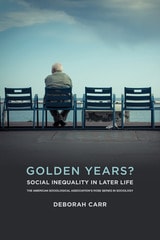
Golden Years?
Social Inequality in Later LifeDeborah Carr
Russell Sage Foundation, 2019
Carr connects research in sociology, psychology, epidemiology, gerontology, and other fields to explore the well-being of older adults. On many indicators of physical health, such as propensity for heart disease or cancer, black seniors fare worse than whites due to lifetimes of exposure to stressors such as economic hardships and racial discrimination and diminished access to health care. In terms of mental health, Carr finds that older women are at higher risk of depression and anxiety than men, yet older men are especially vulnerable to suicide, a result of complex factors including the rigid masculinity expectations placed on this generation of men. Carr finds that older adults’ physical and mental health are also closely associated with their social networks and the neighborhoods in which they live. Even though strong relationships with spouses, families, and friends can moderate some of the health declines associated with aging, women—and especially women of color—are more likely than men to live alone and often cannot afford home health care services, a combination that can be isolating and even fatal. Finally, social inequalities affect the process of dying itself, with white and affluent seniors in a better position to convey their end-of-life preferences and use hospice or palliative care than their disadvantaged peers.
Carr cautions that rising economic inequality, the lingering impact of the Great Recession, and escalating rates of obesity and opioid addiction, among other factors, may contribute to even greater disparities between the haves and the have-nots in future cohorts of older adults. She concludes that policies, such as income supplements for the poorest older adults, expanded paid family leave, and universal health care could ameliorate or even reverse some disparities.
A comprehensive analysis of the causes and consequences of later-life inequalities, Golden Years? demonstrates the importance of increased awareness, strong public initiatives, and creative community-based programs in ensuring that all Americans have an opportunity to age well.

Gone Gone
Todd Meyers
Duke University Press, 2025

Gypsy World
The Silence of the Living and the Voices of the DeadPatrick Williams
University of Chicago Press, 2003
In Gypsy World, Patrick Williams argues that these customs are at the center of how Manuš see the world and their place in it. The Manuš inhabit a world created by the "Gadzos" (non-Gypsies), who frequently limit or even prohibit Manuš movements within it. To claim this world for themselves, the Manuš employ a principle of cosmological subtraction: just as the dead seem to be absent from Manuš society, argues Williams, so too do the Manuš absent themselves from Gadzo society—and in so doing they assert and preserve their own separate culture and identity.
Anyone interested in Gypsies, death rituals, or the formation of culture will enjoy this fascinating and sensitive ethnography.