Results by title
1038 books match the query 'Economic conditions' and 31 start with g

Gambling Debt
Iceland's Rise and Fall in the Global EconomyE. Paul Durrenberger
University Press of Colorado, 2014
Gambling Debt is a game-changing contribution to the discussion of economic crises and neoliberal financial systems and strategies. Iceland’s 2008 financial collapse was the first case in a series of meltdowns, a warning of danger in the global order. This full-scale anthropology of financialization and the economic crisis broadly discusses this momentous bubble and burst and places it in theoretical, anthropological, and global historical context through descriptions of the complex developments leading to it and the larger social and cultural implications and consequences.
Chapters from anthropologists, sociologists, historians, economists, and key local participants focus on the neoliberal policies—mainly the privatization of banks and fishery resources—that concentrated wealth among a select few, skewed the distribution of capital in a way that Iceland had never experienced before, and plunged the country into a full-scale economic crisis. Gambling Debt significantly raises the level of understanding and debate on the issues relevant to financial crises, painting a portrait of the meltdown from many points of view—from bankers to schoolchildren, from fishers in coastal villages to the urban poor and immigrants, and from artists to philosophers and other intellectuals.
This book is for anyone interested in financial troubles and neoliberal politics as well as students and scholars of anthropology, sociology, economics, philosophy, political science, business, and ethics.
Publication supported in part by the National Science Foundation.
Contributors:
Vilhjálmur Árnason, Ásmundur Ásmundsson, Jón Gunnar Bernburg, James Carrier, Sigurlína Davíðsdóttir, Dimitra Doukas, Níels Einarsson, Einar Mar Guðmundsson, Tinna Grétarsdóttir, Birna Gunnlaugsdóttir, Guðný S. Guðbjörnsdóttir, Pamela Joan Innes, Guðni Th. Jóhannesson, Örn D. Jónsson, Hannes Lárusson, Kristín Loftsdóttir, James Maguire, Már Wolfgang Mixa, Evelyn Pinkerton, Hulda Proppé, James G. Rice, Rögnvaldur J. Sæmundsson, Unnur Dís Skaptadóttir, Margaret Willson
Gender and Planning
A ReaderServon, Lisa J
Rutgers University Press, 2005
Increasingly, experts recognize that gender has affected urban planning and the design of the spaces where we live and work. Too often, urban and suburban spaces support stereotypically male activities and planning methodologies reflect a male-dominated society.
To document and analyze the connection between gender and planning, the editors of this volume have assembled an interdisciplinary collection of influential essays by leading scholars. Contributors point to the ubiquitous single-family home, which prevents women from sharing tasks or pooling services. Similarly, they argue that public transportation routes are usually designed for the (male) worker's commute from home to the central city, and do not help the suburban dweller running errands. In addition to these practical considerations, many contributors offer theoretical perspectives on issues such as planning discourse and the construction of concepts of rationality.
While the essays call for an awareness of gender in matters of planning, they do not over-simplify the issue by moving toward a single feminist solution. Contributors realize that not all women gravitate toward communal opportunities, that many women now share the supposedly male commute, and that considerations of race and class need to influence planning as well. Among various recommendations, contributors urge urban planners to provide opportunities that facilitate women's needs, such as childcare on the way to work and jobs that are decentralized so that women can be close to their children.
Bringing together the most important writings of the last twenty-five years, this book is essential reading for students and scholars of planning theory as well as anyone concerned with gender and diversity.
Gentrification Down the Shore
Molly Vollman Makris
Rutgers University Press, 2021
Germany in Central America
Competitive Imperialism, 1821-1929Thomas Schoonover
University of Alabama Press, 1999
Analyzes the German role in Central American domestic and international relations
Using previously untapped resources including private collections, the records of cultural institutions, and federal and state government archives, Schoonover analyzes the German role in Central American domestic and international relations.Of the four countries most active in independent Central America-Britain, the United States, France, and Germany- historians know the least about the full extent of the involvement of the Germans.German colonial expansion was based on its position as an industrialized state seeking economic well-being and security in a growing world market. German leaders were quick to recognize that ties to the cheap labor of overseas countries could compensate for some of the costs and burdens of conceding material and social privileges to their domestic labor force. The Central American societies possessed limited resource bases; smaller and poorly educated populations; and less capital, communications, and technological development than Germany. They saw the borrowing of development as a key to their social, economic, and political progress. Wary Central American leaders also saw the influx of German industrialists as assurance against excessive U.S. presence in their political economies and cultures.
Although the simplistic bargain to trade economic development for cheap labor appeared to succeed in the short term, complex issues of German domestic unemployment and social disorder filtered to Central American countries and added to their own burdens. By 1929, Germany had recovered most of its pre-World War I economic position.

Getting Rich in Late Antique Egypt
Ryan E. McConnell
University of Michigan Press, 2017
Ryan E. McConnell connects the family’s rise in wealth and status to its role in tax collection on behalf of the Byzantine state, rather than a reliance on productive surpluses. Close analysis of low- and high-level accounts from the Apion estate, as well as documentation from comparable Roman and Byzantine Egyptian estates, corroborate this conclusion. Additionally, McConnell offers a third way into the ongoing debate over whether the Apions’ relationship with the state was antagonistic or cooperative, concluding that the relationship was that of parties in a negotiation, with each side seeking to maximize its own benefit. The application of modern economic concepts—as well as comparisons to the economies of Athens, Rome, Ptolemaic Egypt, and Early Modern France—further illuminate the structure and function of the estate in Late Antique Egypt.
Getting Rich in Late Antique Egypt will be a valuable resource for philologists, archaeologists, papyrologists, and scholars of Late Antiquity. It will also interest scholars of agricultural, social, and economic history.
Ghost Protocol
Development and Displacement in Global ChinaCarlos Rojas and Ralph A. Litzinger, editors
Duke University Press, 2016
Contributors. Yomi Braester, Alexander Des Forges, Kabzung, Rachel Leng, Ralph A. Litzinger, Lisa Rofel, Carlos Rojas, Bryan Tilt, Robin Visser, Biao Xiang, Emily T. Yeh
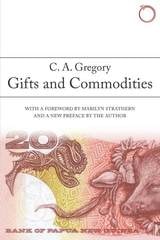
Gifts and Commodities
C. A. Gregory
HAU, 2015
Christopher A. Gregory’s Gifts and Commodities is one of the undisputed classics of economic anthropology. On its publication in 1982, it spurred intense, ongoing debates about gifts and gifting, value, exchange, and the place of political economy in anthropology.
Gifts and Commodities is, at once, a critique of neoclassical economics and development theory, a critical history of colonial Papua New Guinea, and a comparative ethnography of exchange in Melanesian societies. This new edition includes a foreword by anthropologist Marilyn Strathern and a new preface by the author that discusses the ongoing response to the book and the debates it has engendered, debates that have become more salient in our evermore neoliberal and globalized era.
Global Cinderellas
Migrant Domestics and Newly Rich Employers in TaiwanPei-Chia Lan
Duke University Press, 2006
Lan demonstrates how economic disparities, immigration policies, race, ethnicity, and gender intersect in the relationship between the migrant workers and their Taiwanese employers. The employers are eager to flex their recently acquired financial muscle; many are first-generation career women as well as first-generation employers. The domestics are recruited from abroad as contract and “guest” workers; restrictive immigration policies prohibit them from seeking permanent residence or transferring from one employer to another. They care for Taiwanese families’ children, often having left their own behind. Throughout Global Cinderellas, Lan pays particular attention to how the women she studied identify themselves in relation to “others”—whether they be of different classes, nationalities, ethnicities, or education levels. In so doing, she offers a framework for thinking about how migrant workers and their employers understand themselves in the midst of dynamic transnational labor flows.
Global Decisions, Local Collisions
Urban Life In The New World OrderDavid Ranney
Temple University Press, 2002
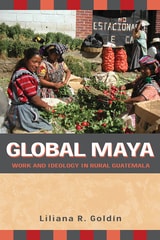
Global Maya
Work and Ideology in Rural GuatemalaLiliana R. Goldín
University of Arizona Press, 2009
For more than a decade, Liliana Goldín observed in highland towns both the intensification of various forms of production and their growing links to wider markets. In this first book to compare economic ideology across a range of production systems, she examines how people make a living and how they think about their options, practices, and constraints. Drawing on interviews and surveys—even retellings of traditional narratives—she reveals how contemporary Maya respond to the increasingly globalized yet locally circumscribed conditions in which they work.
Goldín presents four case studies: cottage industries devoted to garment production, vegetable growing for internal and border markets reached through direct commerce, crops grown for export, and wage labor in garment assembly factories. By comparing generational and gendered differences among workers, she reveals not only complexities of change but also how these complexities arereflected in changing attitudes, understandings, and aspirations that characterize people’s economic ideology. Further, she shows that as rural people take on diverse economic activities, they also reinterpret their views on such matters as accumulation, cooperation, competition, division of labor, and community solidarity.
Global Maya explores global processes in local terms, revealing the interplay of traditional values, household economics, and the inescapable conditions of demographic growth, a shrinking land base, and a global economy always looking for cheap labor. It offers a wealth of new insights not only for Maya scholars but also for anyone concerned with the effects of globalization on the Third World.

Global Shadows
Africa in the Neoliberal World OrderJames Ferguson
Duke University Press, 2006
In Global Shadows the renowned anthropologist James Ferguson moves beyond the traditional anthropological focus on local communities to explore more general questions about Africa and its place in the contemporary world. Ferguson develops his argument through a series of provocative essays which open—as he shows they must—into interrogations of globalization, modernity, worldwide inequality, and social justice. He maintains that Africans in a variety of social and geographical locations increasingly seek to make claims of membership within a global community, claims that contest the marginalization that has so far been the principal fruit of “globalization” for Africa. Ferguson contends that such claims demand new understandings of the global, centered less on transnational flows and images of unfettered connection than on the social relations that selectively constitute global society and on the rights and obligations that characterize it.
Ferguson points out that anthropologists and others who have refused the category of Africa as empirically problematic have, in their devotion to particularity, allowed themselves to remain bystanders in the broader conversations about Africa. In Global Shadows, he urges fellow scholars into the arena, encouraging them to find a way to speak beyond the academy about Africa’s position within an egregiously imbalanced world order.
Globalization and the Circumpolar North
Edited by Lassi Heininen and Chris Southcott
University of Alaska Press, 2010
Globalization in Rural Mexico
Three Decades of ChangeBy Frances Abrahamer Rothstein
University of Texas Press, 2007
Winner, Society of the Anthropology of Work Book Prize, 2010
When the ever-intensifying global marketplace "modernizes" rural communities, who stands to gain? Can local residents most impacted by changes to their social fabric ever recover or even identify what has been lost?
Frances Abrahamer Rothstein uses thirty years of sustained anthropological fieldwork in the rural Mexican community of San Cosme Mazatecochco to showcase globalization's complexities and contradictions.
Rothstein's lucid work chronicles the changes in production, consumption, and social relations during three distinct periods: the Mexican "miracle," when economic development fueled mobility for a large segment of the population, including San Cosme's worker-peasants; the lost decade of the 1980s, when much of what had been gained was lost; and the recent period of trade liberalization and globalization, considered by many in Mexico and beyond as a panacea and a disaster at the same time.
After Mexico's textile industry decline in the late 1980s, some families of former textile workers in San Cosme opened home workshops—talleres—and a small-scale, textile-based economy took root. These families, who managed to prosper through their own trade and industry, demonstrate that those who rely on consumer demand for their livelihood need not always follow the dictate of the marketplace, but rather can position themselves assertively to influence alternative economic possibilities held close to their culture.
Employing rich ethnography and broad analysis, Rothstein focuses on how everyday life has been transformed by these processes, but shows also how important continuities with the past persist. She strikes a delicate balance between firmly grounded scientific study and a deep compassion for the subjects of her work, while challenging contemporary views of globalization and consumption.
Globalized Authoritarianism
Megaprojects, Slums, and Class Relations in Urban MoroccoKoenraad Bogaert
University of Minnesota Press, 2018
A rich investigation into Morocco’s urban politics
Over the past thirty years, Morocco’s cities have transformed dramatically. To take just one example, Casablanca’s medina is now obscured behind skyscrapers that are funded by global capital and encouraged by Morocco’s monarchy, which hopes to transform this city into a regional leader of finance and commerce. Such changes have occurred throughout Morocco. Megaprojects are redesigning the cityscapes of Rabat, Tangiers, and Casablanca, turning the nation’s urban centers into laboratories of capital accumulation, political dominance, and social control.
In Globalized Authoritarianism, Koenraad Bogaert links more abstract questions of government, globalization, and neoliberalism with concrete changes in the city. Bogaert goes deep beneath the surface of Morocco’s urban prosperity to reveal how neoliberal government and the increased connectivity engendered by global capitalism transformed Morocco’s leading urban spaces, opening up new sites for capital accumulation, creating enormous class divisions, and enabling new innovations in state authoritarianism. Analyzing these transformations, he argues that economic globalization does not necessarily lead to increased democratization but to authoritarianism with a different face, to a form of authoritarian government that becomes more and more a globalized affair.
Showing how Morocco’s experiences have helped produce new forms of globalization, Bogaert offers a bridge between in-depth issues of Middle Eastern studies and broader questions of power, class, and capital as they continue to evolve in the twenty-first century.
Globalizing the Caribbean
Political Economy, Social Change, and the Transnational Capitalist ClassJeb Sprague
Temple University Press, 2019
The beautiful Caribbean basin is fertile ground for a study of capitalism past and present. Transnational corporations move money and labor around the region, as national regulations are reworked to promote conditions benefiting private capital. Globalizing the Caribbean offers a probing account of the region’s experience of economic globalization while considering gendered and racialized social relations and the frequent exploitation of workers.
Jeb Sprague focuses on the social and material nature of this new era in the history of world capitalism. He combines an historical overview of capitalism in the region with theoretical analysis backed by case studies. Sprague elaborates upon the role of class formation and the restructuring of local states. He considers both U.S. hegemony, and how various upsurges from below and crises occur. He examines the globalization of the cruise ship and mining businesses, looks at the growth of migrant labor and reverse flow of remittances, and describes the evolving role of export processing and supranational associations. In doing so, Sprague shows how transnationally oriented elites have come to rule the Caribbean, and how capitalist globalization in the region occurs alongside shifting political, institutional, and organizational dynamics.

Globalizing the Lower Rio Grande
European Entrepreneurs in the Borderlands, 1749-1881Kyle Carpenter
University of North Texas Press, 2024
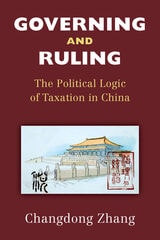
Governing and Ruling
The Political Logic of Taxation in ChinaChangdong Zhang
University of Michigan Press, 2021
Rapid social economic changes, the transition from a planned economy to a market economy, or even economic liberalization can lead to political instability and the collapse of authoritarian regimes. Despite experiencing all of these unprecedented changes in the past forty years, China under the Chinese Communist Party’s leadership has so far successfully transformed and improved both its governance capacity and its ruling capacity. Governing and Ruling: The Political Logic of Taxation in China addresses this regime resilience puzzle by examining the political logic of its taxation system, especially the ways in which taxation helps China handle three governance problems: maneuvering social control, improving agent discipline, and eliciting cooperation. Changdong Zhang argues that a taxation system plays an important role in sustaining authoritarian rule, in China and elsewhere, by combining co-optation and repression functions. The book collects valuable firsthand and secondhand data; studies China’s taxation system, intergovernmental fiscal relationships, composition of fiscal revenue sources, and tax administration; and discusses how each dimension influences the three governance problems.
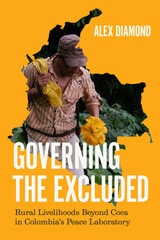
Governing the Excluded
Rural Livelihoods Beyond Coca in Colombia's Peace LaboratoryAlex Diamond
University of Chicago Press, 2026
The Colombian village of Briceño might, at first glimpse, look like many communities in the rural Global South. Many of the people living there rely on small-scale farming, even as a newly constructed hydroelectric dam threatens traditional livelihoods. Yet after decades where Briceño suffered from a bloody conflict, the village has more recently become central to the nation’s hopes for peace. In Governing the Excluded, sociologist Alex Diamond shares a closer look at Briceño and offers unique insight not only into the contemporary Colombian state but to how people across the Global South are struggling to maintain rural livelihoods amid economic dispossession.
Governing the Excluded describes a landmark peace process between the Colombian government and the radical FARC guerrillas from the perspective of Colombian farmers, drawing links between economic transformation, drug economies, and armed conflict. Exclusion from global markets for traditional crops like coffee first pushed farmers to grow coca, the raw material for cocaine. This ushered in an era of violent conflict for control of the illicit economy, while farmers continued to be priced out of legal markets. In exchange for peace and state protection, farmers ultimately agreed to sacrifice profitable coca. But with its disappearance, they now find themselves dependent on the state: for machinery to maintain the roads they need to get legal harvests to market, municipal jobs that are the only decent work available, and for public resources to subsidize food crops with razor-thin profit margins. Ongoing economic struggles in the legal sector make the state’s newfound authority tenuous, as some villagers replant coca, abandon the village for uncertain urban futures, or join a rearmed guerrilla group.
Informed by deep ethnographic research and firsthand stories from Briceño residents, Governing the Excluded shows that when it comes to the forces driving dispossession—be they international corporate megaprojects, global food prices, or national initiatives to replace coca cultivation—state authority goes only so far as its ability to sustain local livelihoods.
Government and Society in Afghanistan
The Reign of Amir ‘Abd al-Rahman KhanBy Hasan Kawun Kakar
University of Texas Press, 1979
This is an authoritative study of the administrative, social, and economic structure of Afghanistan during a decisive stage in its history. The period covered—the reign of the "Iron" Amir Rahman Khan—was in many ways the beginning of modern Afghanistan as a cohesive nation. Although Afghanistan had emerged as an entity in 1747, it was actually under the Amir that its borders were established, its internal unification completed, and the modern concept of nationhood implanted.
Kakar approaches this complex process by taking into consideration both the internal and the external forces that influenced its development. Thus, modernization, centralization, and nationalization are seen as both defensive reactions to European imperialism and necessary preconditions to capital formation and, consequently, industrialization.
The first part of the book covers the government of the Amir, from the personality of the ruler down to the operation of his new bureaucrats at the local level. Here Kakar presents a comprehensive treatment of the Afghan system of taxation and local government. The second part views these economic and social institutions from the perspective of the major segments of the populace—nomads, townsmen, tribes, women, slaves, landowners, mullahs, merchants, and so forth.
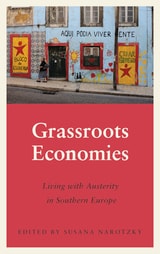
Grassroots Economies
Living with Austerity in Southern EuropeSusana Narotzky
Pluto Press, 2020
Grassroots Economies interrogates the effects of the economic crisis on the livelihood of working people, providing insight into their anxieties. Drawing on a rich seam of ethnographic material, it is a distinctive comparative analysis that explores the contradictions of their coping mechanisms and support structures.
With a focus on gender, the book explores values and ideologies, including dispossession and accumulation. Ultimately it demonstrates that everyday interactions on the local scale provide a significant sense of the global.
Grassroots Struggles for Sustainability in Central America
Lynn R. Horton
University Press of Colorado, 2007
With a comparative, empirical approach, Horton also analyzes dominant practices linked to sustainable development - neoliberal reforms, project interventions, and environmental protection. She reveals how these practices support or undermine economic, cultural, and political opportunities for the rural and indigenous poor and impact these communities' advancement of their own visions of sustainability. Finally, the author explores processes of empowerment that enable communities to articulate and put into practice local visions of sustainability, which contribute toward broader social and structural transformations.
Grassroots Struggles for Sustainability in Central America will interest sociologists, anthropologists, and others who study the theory and practice of sustainable development.
Great Basin Kingdom
An Economic History of the Latter-day Saints, 1830-1900, New EditionLeonard J. Arrington
University of Illinois Press, 2004
A classic in Mormon studies and western history, Great Basin Kingdom offers insights into the ‘underdeveloped' American economy, a comprehensive treatment of one of the few native American religious movements, and detailed, exciting stories from little-known phases of Mormon and American history.
This edition includes thirty new photographs and an introduction by Ronald W. Walker that provides a brief biography of Arrington, as well as the history of the work, its place in Mormon and western historiography, and its lasting impact.
Green Barons, Force-of-Circumstance Entrepreneurs, Impotent Mayors
Rural Change in the Early Years of Post-Socialist Capitalist DemocracyNigel Swain
Central European University Press, 2013

Green Lands for White Men
Desert Dystopias and the Environmental Origins of ApartheidMeredith McKittrick
University of Chicago Press, 2024
In 1918, South Africa’s climate seemed to be drying up. White farmers claimed that rainfall was dwindling, while nineteenth-century missionaries and explorers had found riverbeds, seashells, and other evidence of a verdant past deep in the Kalahari Desert. Government experts insisted, however, that the rains weren’t disappearing; the land, long susceptible to periodic drought, had been further degraded by settler farmers’ agricultural practices—an explanation that white South Africans rejected. So when the geologist Ernest Schwarz blamed the land itself, the farmers listened. Schwarz held that erosion and topography had created arid conditions, that rainfall was declining, and that agriculture was not to blame. As a solution, he proposed diverting two rivers to the Kalahari’s basins, creating a lush country where white South Africans could thrive. This plan, which became known as the Kalahari Thirstland Redemption Scheme, was rejected by most scientists. But it found support among white South Africans who worried that struggling farmers undermined an image of racial superiority.
Green Lands for White Men explores how white agriculturalists in southern Africa grappled with a parched and changing terrain as they sought to consolidate control over a Black population. Meredith McKittrick’s timely history of the Redemption Scheme reveals the environment to have been central to South African understandings of race. While Schwarz’s plan was never implemented, it enjoyed sufficient support to prompt government research into its feasibility, and years of debate. McKittrick shows how white farmers rallied around a plan that represented their interests over those of the South African state and delves into the reasons behind this schism between expert opinion and public perception. This backlash against the predominant scientific view, McKittrick argues, displayed the depth of popular mistrust in an expanding scientific elite.
A detailed look at the intersection of a settler society, climate change, white nationalism, and expert credibility, Green Lands for White Men examines the reverberations of a scheme that ultimately failed but influenced ideas about race and the environment in South Africa for decades to come.
Greenlanders, Whales, and Whaling
Sustainability and Self-Determination in the ArcticRichard A. Caulfield
Dartmouth College Press, 2000
Growing Apart
Oil, Politics, and Economic Change in Indonesia and NigeriaPeter M. Lewis
University of Michigan Press, 2007
"Growing Apart is an important and distinguished contribution to the literature on the political economy of development. Indonesia and Nigeria have long presented one of the most natural opportunities for comparative study. Peter Lewis, one of America's best scholars of Nigeria, has produced the definitive treatment of their divergent development paths. In the process, he tells us much theoretically about when, why, and how political institutions shape economic growth."
—Larry Diamond, Senior Fellow, Hoover Institution
"Growing Apart is a careful and sophisticated analysis of the political factors that have shaped the economic fortunes of Indonesia and Nigeria. Both scholars and policymakers will benefit from this book's valuable insights."
—Michael L. Ross, Associate Professor of Political Science, Chair of International Development Studies, UCLA
"Lewis presents an extraordinarily well-documented comparative case study of two countries with a great deal in common, and yet with remarkably different postcolonial histories. His approach is a welcome departure from currently fashionable attempts to explain development using large, multi-country databases packed with often dubious measures of various aspects of 'governance.'"
—Ross H. McLeod, Editor, Bulletin of Indonesian Economic Studies
—Nicolas van de Walle, John S. Knight Professor of International Studies, Cornell University
Peter M. Lewis is Associate Professor and Director of the African Studies Program, Johns Hopkins University, School of Advanced International Studies.
Growth Theories in Light of the East Asian Experience
Edited by Takatoshi Ito and Anne O. Krueger
University of Chicago Press, 1995
The theory explored in this volume attributes the phenomenal economic success of these countries to, among other factors, the role of an outward orientation—a focus on exporting rather than on protecting home markets. In addition, the importance of exchange rate behavior, of the supportive role of government policy, and of the accumulation and promotion of physical and human capital are explored in detail. This collection also examines the extent to which growth in each country became self-sustaining once it began.
Demonstrating the relevance of endogenous growth theory for studying this important region, this fourth volume in the NBER-East Asia Seminar on Economics series will be of interest to observers of East Asian affairs.
Growth and Productivity in East Asia
Edited by Takatoshi Ito and Andrew K. Rose
University of Chicago Press, 2004
Takatoshi Ito and Andrew K. Rose have organized a group of collaborators from several Asian countries, the United States, and other parts of the globe who ably balance both macroeconomic and microeconomic study with theoretical and empirical approaches. Growth and Productivity in East Asia gives special attention to the causes for the unusual success of Australia, one of the few nations to maintain unprecedented economic growth despite the 1997 Asian financial crisis and the 2001 global downturn. A new database comprising eighty-four Japanese sectors reveals new findings for the last thirty years of sectoral productivity and growth in Japan. Studies focusing on Indonesia, Taiwan, and Korea also consider productivity and its relationship to research and development, foreign ownership, and policy reform in such industries as manufacturing, automobile production, and information technology.
Growth, Equality, and the Mexican Experience
By Morris Singer
University of Texas Press, 1969
Central to the research that went into the preparation of this monograph is the relationship between economic development and equality. To determine and characterize that relationship Morris Singer focuses on the various components of equality at different stages of development. The author particularly explores the behavior of income distribution, together with its bearing on the components of aggregate demand.
Mexico provided an excellent case to examine in depth because of its impressive growth and the fact that it experienced Latin America’s first successful twentieth-century revolution.
Although the Revolution of 1910 hastened social equality and introduced other changes that stimulated Mexico’s economic growth, it could not prevent a serious increase in the inequality of income distribution. By the early 1960s the government found it necessary to rectify this increasing imbalance through a program of expenditures designed to counteract widespread poverty and weak aggregate demand. To ward off inflation, this program in turn could be implemented only by tax reform.
In discussing the relationship between development and equality in its various dimensions, noneconomic as well as economic, this monograph points out that, at the time of this study, government policies in Mexico were dictated by an elite concerned primarily with the country’s economic advancement. Singer concludes that if programs of government expenditure and tax reform succeed in remedying the inequalities of income distribution, this could gradually make possible the development of a more genuine political as well as economic democracy.
This book reflects Singer’s interest in the relationship between equality and development. It is the result of five months of intensive in-residence study in Mexico, financed in part by a grant from the Social Science Research Council.
Guatemaltecas
The Women's Movement, 1986–2003By Susan A. Berger
University of Texas Press, 2006
After thirty years of military rule and state-sponsored violence, Guatemala reinstated civilian control and began rebuilding democratic institutions in 1986. Responding to these changes, Guatemalan women began organizing to gain an active role in the national body politic and restructure traditional relations of power and gender. This pioneering study examines the formation and evolution of the Guatemalan women's movement and assesses how it has been affected by, and has in turn affected, the forces of democratization and globalization that have transformed much of the developing world.
Susan Berger pursues three hypotheses in her study of the women's movement. She argues that neoliberal democratization has led to the institutionalization of the women's movement and has encouraged it to turn from protest politics to policy work and to helping the state impose its neoliberal agenda. She also asserts that, while the influences of dominant global discourses are apparent, local definitions of femininity, sexuality, and gender equity and rights have been critical to shaping the form, content, and objectives of the women's movement in Guatemala. And she identifies a counter-discourse to globalization that is slowly emerging within the movement. Berger's findings vigorously reveal the manifold complexities that have attended the development of the Guatemalan women's movement.
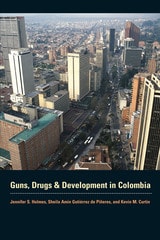
Guns, Drugs, and Development in Colombia
By Jennifer S. Holmes, Sheila Amin Gutiérrez de Piñeres, and Kevin M. Curtin
University of Texas Press, 2009
For decades, Colombia has contended with a variety of highly publicized conflicts, including the rise of paramilitary groups in response to rebel insurgencies of the 1960s, the expansion of an illegal drug industry that has permeated politics and society since the 1970s, and a faltering economy in the 1990s. An unprecedented analysis of these struggles, Guns, Drugs, and Development in Colombia brings together leading scholars from a variety of fields, blending previously unseen quantitative data with historical analysis for an impressively comprehensive assessment. Culminating in an inspiring plan for peace, based on Four Cornerstones of Pacification, this landmark work is sure to spur new calls for change in this corner of Latin America and beyond.