Results by title
453 books match the query 'Economic policy' and 19 start with g

Gangsters to Governors
The New Bosses of Gambling in AmericaClary, David
Rutgers University Press, 2017
Winner of the 2018 Bronze Current Events Book Award from the Independent Publisher Book Awards
Generations ago, gambling in America was an illicit activity, dominated by gangsters like Benny Binion and Bugsy Siegel. Today, forty-eight out of fifty states permit some form of legal gambling, and America’s governors sit at the head of the gaming table. But have states become addicted to the revenue gambling can bring? And does the potential of increased revenue lead them to place risky bets on new casinos, lotteries, and online games?
In Gangsters to Governors, journalist David Clary investigates the pros and cons of the shift toward state-run gambling. Unearthing the sordid history of America’s gaming underground, he demonstrates the problems with prohibiting gambling while revealing how today’s governors, all competing for a piece of the action, promise their citizens payouts that are rarely delivered.
Clary introduces us to a rogue’s gallery of colorful characters, from John “Old Smoke” Morrissey, the Irish-born gangster who built Saratoga into a gambling haven in the nineteenth century, to Sheldon Adelson, the billionaire casino magnate who has furiously lobbied against online betting. By exploring the controversial histories of legal and illegal gambling in America, he offers a fresh perspective on current controversies, including bans on sports and online betting. Entertaining and thought-provoking, Gangsters to Governors considers the past, present, and future of our gambling nation.
Author's website (http://www.davidclaryauthor.com)
Gentrification Down the Shore
Molly Vollman Makris
Rutgers University Press, 2021
Geopolitical Economy
The South Korean FTA StrategyJonathan Krieckhaus
University of Michigan Press, 2018
Geopolitical Economy examines the significance and nature of free trade agreements (FTAs), the primary policy tool through which modern nations seek access to international markets and promote economic growth. The book focuses specifically on how South Korea, the world’s leader in the number and significance of FTAs as well as the world’s sixth largest export economy, uses FTAs.
Jonathan Krieckhaus argues that geopolitics—the struggle between powerful nations over specific geographic regions around the globe—influenced FTA strategy and economic policy in South Korea and beyond. This perspective illustrates the security approach to FTAs, but adds that the geographic specificity of security concerns deeply shape FTA policy.
Geopolitical Economy also looks at Korean FTAs through the lens of development strategy. South Korea is singularly successful in garnering FTAs with all three players in the global economy: the United States, the European Union, and China. This unprecedented success was built on a strong commitment from three consecutive Korean presidential administrations, each operating within a favorable state-society context that enjoyed the existence of a centralized and effective trade bureaucracy.
Germany and the Politics of Europe's Money
Karl Kaltenthaler
Duke University Press, 1998
Moving away from state-centered and Marxist approaches to the study of the European monetary integration process, Karl Kaltenthaler offers a new analytical framework to assess the dynamics within and among the participating countries. Using official and unofficial documents as well as interviews with players ranging from presidents of the Bundesbank to functionaries in the trade unions, Kaltenthaler argues that the number of decision makers negotiating policy and their accountability to interest groups, political parties, government ministries, and Germany’s central bank have made Germany’s fluctuations in policy inevitable. Germany and the Politics of Europe’s Money examines twenty years of German policy through an analysis of four key episodes: the creation of the European Monetary System, the creation of the Franco-German Economic and Financial Council, the establishment of policy toward the European Monetary Union, and the institutional transformation of the EMS in the 1990s. It thus brings a new understanding to Germany’s dynamic policies and the political forces behind them.
Ghost Protocol
Development and Displacement in Global ChinaCarlos Rojas and Ralph A. Litzinger, editors
Duke University Press, 2016
Contributors. Yomi Braester, Alexander Des Forges, Kabzung, Rachel Leng, Ralph A. Litzinger, Lisa Rofel, Carlos Rojas, Bryan Tilt, Robin Visser, Biao Xiang, Emily T. Yeh
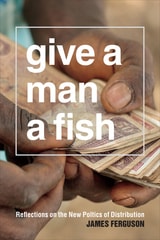
Give a Man a Fish
Reflections on the New Politics of DistributionJames Ferguson
Duke University Press, 2015

Global Political Economy
A Marxist CritiqueBill Dunn
Pluto Press, 2008
This is an ambitious survey of the history and state of the world economy, covering the major upheavals of the capitalist system over the last 100 years.
Bill Dunn provides an original and enlightening explanation of the state of the world economy. He covers all the main aspects of global political economy explaining the theories behind production, trade, finance and relations between rich and poor countries. He also tackles the question of the origin of capitalism, a debate that always proves popular among students and academics. Dunn also includes a critique of alternative perspectives, showing that Marxism still provides the best analytical tools for understanding the global economy.
This comprehensive text is a must for students of politics and economics who are keen to understand how the economy reached its current stage and what the future is likely to bring.
Global Trends and Global Governance
Edited by Paul Kennedy, Dirk Messner, and Franz Nuscheler
Pluto Press, 2001
Globalizations and Social Movements
Culture, Power, and the Transnational Public SphereJohn A. Guidry, Michael D. Kennedy, and Mayer N. Zald, Editors
University of Michigan Press, 2000
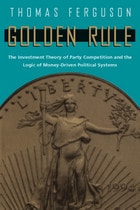
Golden Rule
The Investment Theory of Party Competition and the Logic of Money-Driven Political SystemsThomas Ferguson
University of Chicago Press, 1995
Thomas Ferguson breaks completely with traditional voter centered accounts of party politics. In its place he outlines an "investment approach," in which powerful investors, not unorganized voters, dominate campaigns and elections. Because businesses "invest" in political parties and their candidates, changes in industrial structures—between large firms and sectors—can alter the agenda of party politics and the shape of public policy.
Golden Rule presents revised versions of widely read essays in which Ferguson advanced and tested his theory, including his seminal study of the role played by capital intensive multinationals and international financiers in the New Deal. The chapter "Studies in Money Driven Politics" brings this aspect of American politics into better focus, along with other studies of Federal Reserve policy making and campaign finance in the 1936 election. Ferguson analyzes how a changing world economy and other social developments broke up the New Deal system in our own time, through careful studies of the 1988 and 1992 elections. The essay on 1992 contains an extended analysis of the emergence of the Clinton coalition and Ross Perot's dramatic independent insurgency. A postscript on the 1994 elections demonstrates the controlling impact of money on several key campaigns.
This controversial work by a theorist of money and politics in the U.S. relates to issues in campaign finance reform, PACs, policymaking, public financing, and how today's elections work.
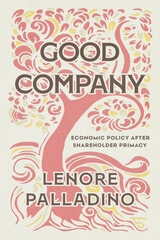
Good Company
Economic Policy after Shareholder PrimacyLenore Palladino
University of Chicago Press, 2024
On the faulty intellectual origins of shareholder primacy—and how policy can win back what’s been lost.
In an era of shareholder primacy, share price is king. Businesses operate with short-term goals to deliver profits to shareholders, enjoying stability (and bonuses) in the process. While the public bemoans the doctrine for its insularity and wealth-consolidating effects, its influence over corporate governance persists. Good Company offers an exacting argument for why shareholder primacy was never the right model to follow for truly understanding how corporations operate.
Lenore Palladino shows that corporations draw power from public charters—agreements that allow corporations to enjoy all manner of operational benefits. In return, companies are meant to innovate for the betterment of the societies that support them. However, that debt—increasingly wielded for stock buybacks and shareholder bonuses—is not being repaid. Palladino theorizes a modern corporation that plays its intended role while delivering social and economic good in the process and offers tangible policy solutions to make this a reality. Good Company is both an expert introduction to the political economy of the firm—as it was, as it is, as it can be—and a calibrating examination of how public policy can shape companies, and societies, for the better.
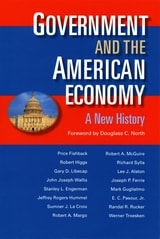
Government and the American Economy
A New HistoryPrice V. Fishback et al.
University of Chicago Press, 2007
The American economy has provided a level of well-being that has consistently ranked at or near the top of the international ladder. A key source of this success has been widespread participation in political and economic processes. In The Government and the American Economy, leading economic historians chronicle the significance of America’s open-access society and the roles played by government in its unrivaled success story.
America’s democratic experiment, the authors show, allowed individuals and interest groups to shape the structure and policies of government, which, in turn, have fostered economic success and innovation by emphasizing private property rights, the rule of law, and protections of individual freedom. In response to new demands for infrastructure, America’s federal structure hastened development by promoting the primacy of states, cities, and national governments. More recently, the economic reach of American government expanded dramatically as the populace accepted stronger limits on its economic freedoms in exchange for the increased security provided by regulation, an expanded welfare state, and a stronger national defense.
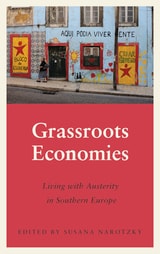
Grassroots Economies
Living with Austerity in Southern EuropeSusana Narotzky
Pluto Press, 2020
Grassroots Economies interrogates the effects of the economic crisis on the livelihood of working people, providing insight into their anxieties. Drawing on a rich seam of ethnographic material, it is a distinctive comparative analysis that explores the contradictions of their coping mechanisms and support structures.
With a focus on gender, the book explores values and ideologies, including dispossession and accumulation. Ultimately it demonstrates that everyday interactions on the local scale provide a significant sense of the global.
Green Barons, Force-of-Circumstance Entrepreneurs, Impotent Mayors
Rural Change in the Early Years of Post-Socialist Capitalist DemocracyNigel Swain
Central European University Press, 2013
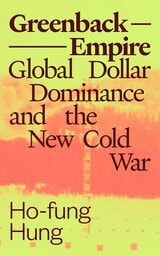
Greenback Empire
Global Dollar Dominance and the New Cold WarHo-fung Hung
University of Chicago Press, 2026
A critical history of the US dollar’s dominance in the world economy—and what has kept China’s currency from overtaking it.
The dollar is the primary currency of the world economy. With China now rivaling the United States on the world stage, a critical question hangs in the balance: will the Chinese renminbi challenge the status of the dollar and, in doing so, deprive America of its “exorbitant privilege”?
In GreenbackEmpire, Ho-fung Hung offers a powerful account of why, even as American shares of global production, ownership, and trade continue to decline, its currency has retained the support of governments and investors around the world. For six decades, Hung shows, the dominance of the dollar has rested on the security umbrella that the US offers to the world’s wealthiest countries—including oil producers. To these countries, support for the value of the dollar is tantamount to maintaining US protection. While China has become a serious geopolitical and economic rival to the US, the Chinese state’s airtight control of its financial system has delayed the free trading of the renminbi, limiting the currency’s internationalization. In short, the same strategy that engineered growth in China’s economy is restraining its currency's rise in opposition to the dollar. Hung’s Greenback Empire is an essential history of the dollar’s prowess, indispensable for understanding the future of the global monetary system.
Growing Apart
Oil, Politics, and Economic Change in Indonesia and NigeriaPeter M. Lewis
University of Michigan Press, 2007
"Growing Apart is an important and distinguished contribution to the literature on the political economy of development. Indonesia and Nigeria have long presented one of the most natural opportunities for comparative study. Peter Lewis, one of America's best scholars of Nigeria, has produced the definitive treatment of their divergent development paths. In the process, he tells us much theoretically about when, why, and how political institutions shape economic growth."
—Larry Diamond, Senior Fellow, Hoover Institution
"Growing Apart is a careful and sophisticated analysis of the political factors that have shaped the economic fortunes of Indonesia and Nigeria. Both scholars and policymakers will benefit from this book's valuable insights."
—Michael L. Ross, Associate Professor of Political Science, Chair of International Development Studies, UCLA
"Lewis presents an extraordinarily well-documented comparative case study of two countries with a great deal in common, and yet with remarkably different postcolonial histories. His approach is a welcome departure from currently fashionable attempts to explain development using large, multi-country databases packed with often dubious measures of various aspects of 'governance.'"
—Ross H. McLeod, Editor, Bulletin of Indonesian Economic Studies
—Nicolas van de Walle, John S. Knight Professor of International Studies, Cornell University
Peter M. Lewis is Associate Professor and Director of the African Studies Program, Johns Hopkins University, School of Advanced International Studies.
Growth Theories in Light of the East Asian Experience
Edited by Takatoshi Ito and Anne O. Krueger
University of Chicago Press, 1995
The theory explored in this volume attributes the phenomenal economic success of these countries to, among other factors, the role of an outward orientation—a focus on exporting rather than on protecting home markets. In addition, the importance of exchange rate behavior, of the supportive role of government policy, and of the accumulation and promotion of physical and human capital are explored in detail. This collection also examines the extent to which growth in each country became self-sustaining once it began.
Demonstrating the relevance of endogenous growth theory for studying this important region, this fourth volume in the NBER-East Asia Seminar on Economics series will be of interest to observers of East Asian affairs.
Growth and Productivity in East Asia
Edited by Takatoshi Ito and Andrew K. Rose
University of Chicago Press, 2004
Takatoshi Ito and Andrew K. Rose have organized a group of collaborators from several Asian countries, the United States, and other parts of the globe who ably balance both macroeconomic and microeconomic study with theoretical and empirical approaches. Growth and Productivity in East Asia gives special attention to the causes for the unusual success of Australia, one of the few nations to maintain unprecedented economic growth despite the 1997 Asian financial crisis and the 2001 global downturn. A new database comprising eighty-four Japanese sectors reveals new findings for the last thirty years of sectoral productivity and growth in Japan. Studies focusing on Indonesia, Taiwan, and Korea also consider productivity and its relationship to research and development, foreign ownership, and policy reform in such industries as manufacturing, automobile production, and information technology.
Growth, Trade, and Systemic Leadership
Rafael Reuveny and William R. Thompson
University of Michigan Press, 2004