Results by title
158 books match the query 'End' and 5 start with g
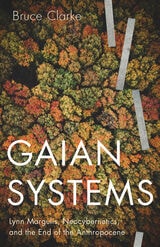
Gaian Systems
Lynn Margulis, Neocybernetics, and the End of the AnthropoceneBruce Clarke
University of Minnesota Press, 2020
A groundbreaking look at Gaia theory’s intersections with neocybernetic systems theory
Often seen as an outlier in science, Gaia has run a long and varied course since its formulation in the 1970s by atmospheric chemist James Lovelock and microbiologist Lynn Margulis. Gaian Systems is a pioneering exploration of the dynamic and complex evolution of Gaia’s many variants, with special attention to Margulis’s foundational role in these developments.
Bruce Clarke assesses the different dialects of systems theory brought to bear on Gaia discourse. Focusing in particular on Margulis’s work—including multiple pieces of her unpublished Gaia correspondence—he shows how her research and that of Lovelock was concurrent and conceptually parallel with the new discourse of self-referential systems that emerged within neocybernetic systems theory. The recent Gaia writings of Donna Haraway, Isabelle Stengers, and Bruno Latour contest its cybernetic status. Clarke engages Latour on the issue of Gaia’s systems description and extends his own systems-theoretical synthesis under what he terms “metabiotic Gaia.” This study illuminates current issues in neighboring theoretical conversations—from biopolitics and the immunitary paradigm to NASA astrobiology and the Anthropocene. Along the way, he points to science fiction as a vehicle of Gaian thought.
Delving into many issues not previously treated in accounts of Gaia, Gaian Systems describes the history of a theory that has the potential to help us survive an environmental crisis of our own making.

Glossary for the End of Days
StoriesIan Stansel
Acre Books, 2020
In Boulder, a man calls into a radio program with an altered tale of his brother’s murder—and faces the consequences when the story goes viral. In Tampa, a woman attends a convention of people believing themselves to be targets of clandestine government agencies. In Houston, a family with many secrets attempts to escape an oncoming tropical storm. In an East Coast college town, a professor has a charged run-in with a young woman from the radical right. And in Iowa, a cult suicide spurs the lone survivor to create a “glossary” in an effort to come to terms with his experience.
Simultaneously gritty and lyrical, grounded and visionary, Glossary for the End of Days gives us characters grappling with how to push on through dark days and dark times. This arresting, relevant collection tunes into and seeks to illuminate shared anxieties about the present—and future—of our world.

God and The End of Satan / Dieu and La Fin de Satan
Selections: In a Bilingual EditionVictor Hugo
Swan Isle Press, 2014
This book brings together abbreviated editions of these two book-length poems—unfinished and unpublished at the time of the author’s death—comprised of selections that capture their visionary and mystical essence. The poems are accompanied by an introduction framing them within the author’s experience as an exile and tracing their publication history.
Victor Hugo is one of the most important figures in the history of French literature, and this beautifully rendered translation brings two of his lesser-known works deservedly to the forefront.

Going Viral
Zombies, Viruses, and the End of the WorldSchweitzer, Dahlia
Rutgers University Press, 2018
In Going Viral, Dahlia Schweitzer probes outbreak narratives in film, television, and a variety of other media, putting them in conversation with rhetoric from government authorities and news organizations that have capitalized on public fears about our changing world. She identifies three distinct types of outbreak narrative, each corresponding to a specific contemporary anxiety: globalization, terrorism, and the end of civilization. Schweitzer considers how these fears, stoked by both fictional outbreak narratives and official sources, have influenced the ways Americans relate to their neighbors, perceive foreigners, and regard social institutions.
Looking at everything from I Am Legend to The X Files to World War Z, this book examines how outbreak narratives both excite and horrify us, conjuring our nightmares while letting us indulge in fantasies about fighting infected Others. Going Viral thus raises provocative questions about the cost of public paranoia and the power brokers who profit from it.
Supplemental Study Materials for "Going Viral": https://www.rutgersuniversitypress.org/going-viral-dahlia-schweitzer
Dahlia Schweitzer- Going Viral: https://www.youtube.com/watch?v=5xF0V7WL9ow
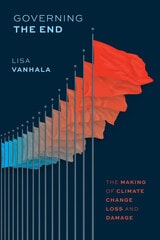
Governing the End
The Making of Climate Change Loss and DamageLisa Vanhala
University of Chicago Press, 2025
A searing account of how the international community is trying—and failing—to address the worst effects of climate change and the differential burdens borne by rich and poor countries.
Climate change is increasingly accepted as a global emergency creating irrevocable losses for the planet. Yet, each country experiences these losses differently, and reaching even inadequate political agreements is fraught with contestation. Governing the End untangles the complex relationship between deteriorating environmental conditions, high politics, and everyday diplomatic practices, focusing on the United Nations’ agreement to address “loss and damage” and subsequent battles over implementation.
Lisa Vanhala looks at the differing assumptions and strategic framings that poor and rich countries bring to bear and asks why some norms emerge and diffuse while others fail to do so. Governing the End is based on ethnographic observation of eight years of UN meetings and negotiations and more than one hundred and fifty interviews with diplomats, policymakers, UN secretariat staff, experts, and activists. It explores explicit political contestation, as well as the more clandestine politics that have stymied implementation and substantially reduced the scope of compensation to poor countries. In doing so, Governing the End elucidates the successes and failures of international climate governance, revealing the importance of how ideas are constructed and then institutionally embodied.