Results by title
225 books match the query 'Modernism' and 18 start with a
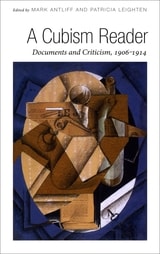
A Cubism Reader
Documents and Criticism, 1906-1914Mark Antliff and Patricia Leighten
University of Chicago Press, 2008
This definitive anthology covers the historical genesis of cubism from 1906 to 1914, with documents that range from manifestos and poetry to exhibition prefaces and reviews to articles that address the cultural, political, and philosophical issues related to the movement. Most of the texts Mark Antliff and Patricia Leighten have selected are from French sources, but their inclusion of carefully culled German, English, Czech, Italian, and Spanish documents speaks to the international reach of cubist art and ideas. Equally wide-ranging are the writers represented—a group that includes Guillaume Apollinaire, Gertrude Stein, Jean Metzinger, Albert Gleizes, Fernand Léger, Francis Picabia, André Salmon, Raymond Duchamp-Villon, Henri Le Fauconnier, and many others.
These diverse selections—unabridged and freshly translated—represent a departure from the traditional view of cubism as shaped almost exclusively by Picasso and Braque. Augmented by Antliff and Leighten’s insightful commentary on each entry, as well as many of the articles’ original illustrations, A Cubism Reader ultimately broadens the established history of the movement by examining its monumental contributions from a variety of contemporary perspectives.
A Mythology of Forms
Selected Writings on ArtCarl Einstein
University of Chicago Press, 2019
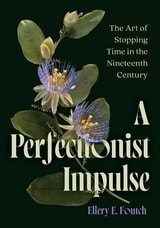
A Perfectionist Impulse
The Art of Stopping Time in the Nineteenth CenturyEllery E. Foutch
University of Minnesota Press, 2026
Exploring a collection of wondrous objects to understand the nineteenth-century desire to preserve the perfect moment
Cultural studies of the nineteenth century often categorize their subjects as being motivated by one of two opposing notions: a wholehearted embrace of progress or an antimodernist nostalgia. A Perfectionist Impulse centers a different kind of response to the period’s newly intensified awareness of temporality and history: an obsession with preserving perfection. Engaging a diverse set of case studies, Ellery E. Foutch explores the era’s desire to forestall the march of time and immortalize the fleeting moment through art and technology.
Beginning with an investigation of artist and naturalist Titian Peale’s butterfly illustrations and specimen boxes, Foutch assesses the implications of attempts to fix animal life in the “perfect state.” She then turns to Harvard’s Ware Collection of Glass Flowers, botanical models meticulously crafted to serve as instructional tools but most famous internationally as a spectacle for tourists. Finally, she scrutinizes the period’s preoccupation with the fragility of the human body, examining artistic representations of the legendary bodybuilder Eugen Sandow, widely known during his time as the “Perfect Man.” Highlighting the paradoxical way in which these attempts at preservation ultimately sap the vitality from the organic processes they seek to arrest, Foutch uses these curious objects to unpack a deep set of cultural anxieties around decay and death.
By analyzing objects of mass culture and natural history using methods typically reserved for works of art, A Perfectionist Impulse provides a unique window into how nineteenth-century scientists, technologists, artists, and entertainers rendered a common desire for perfection and immortality. Itself a wondrous collection of attempts to capture the idealized moment, this extensively illustrated book serves as a shining example of our enduring fascination with the ephemeral.
Retail e-book files for this title are screen-reader friendly with images accompanied by short alt text and/or extended descriptions.
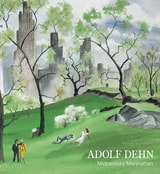
Adolf Dehn
Midcentury ManhattanAdolf Dehn
The Artist Book Foundation, 2017
Adolf Dehn (1895–1968), American painter in multimedia and acclaimed master lithographer, left his Minnesota hometown after formal training at the Minneapolis Art Institute to study at the Art Students League in New York. He toured Europe in the early 1920s, quickly acclimating to the continental lifestyle and adeptly depicting its nuances and idiosyncrasies with prolific lithographs and sketches. His critical and satirical renderings of the political movements, social conventions, and governmental policies in post-World War I Europe during "Le Crazy Years" gave the Midwestern artist ample material for his growing body of work.
Sailing back to the United States in 1929, Dehn survived the Great Depression with commercial artwork and contributions to popular magazines such as The New Yorker, Vogue, and Vanity Fair. His clever drawings that reflected the Jazz Age's culture and fashionable society made him a favorite of Frank Crowninshield, Vanity Fair's renowned editor.
During this time, while Dehn captured the heyday of Manhattan's burlesque theaters, lively Harlem nightclubs, impressive skyline, and busy harbor, he was continuously drawn to Central Park—his predilection for the city's magnificent green space was a sustaining source of inspiration and subject matter. Adolf Dehn: Midcentury Manhattan candidly examines the life and work of this exceptional, adventurous, and intrepid artist as he moved skillfully and capably between lithography, ink-wash drawings, gouache, casein painting, and watercolors. Combining numerous vintage photographs with newly discovered, Manhattan-inspired prints and drawings from the collections of, among others, the Whitney Museum of American Art, MoMA, and The Metropolitan Mesuem of Art, Adolf Dehn: Midcentury Manhattan traces how Dehn's art reflected the spirit, pulse, and uniquely American tonalities of The City of Dreams.
Afterlives of Modernism
Liberalism, Transnationalism, and Political CritiqueJohn Carlos Rowe
Dartmouth College Press, 2015
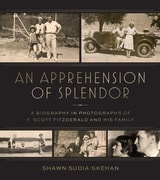
An Apprehension of Splendor
A Biography in Photographs of F. Scott Fitzgerald and His FamilyShawn Sudia-Skehan; Foreword by Jackson R. Bryer; Introduction by Eleanor Lanahan
University of Alabama Press, 2025
A unique collection of Fitzgerald family photographs, many never before published, hand selected by a curator of the Scott and Zelda Fitzgerald Museum.
Enter the Jazz Age glamour of F. Scott and Zelda Fitzgerald and their daughter, Scottie. An Apprehension of Splendor is a rich pictorial biography that illuminates the lives of this brilliant literary family in 344 rare photographs, 180 of which have never been published.
The Fitzgeralds are chiefly known from a small number of iconic, posed images, but the dashing couple and their daughter amassed hundreds of candid snapshots now housed in archives and university library collections throughout North America. These rare photos reveal the full, vivid lives behind the icons—a Buffalo boy cradling a velvety puppy, a jaunty southern gamine in the shade of a loblolly pine laughing at a secret, the stoic gloom of an enlistee in a scratchy woolen uniform, a plot taking shape in the mind of a fledgling writer with bed-tousled hair, an amorous young couple struggling to light a cigarette in the chiaroscuro of a Riviera beach, an unhappy baby tugged through the snow in a laundry basket lashed to a sled, and a myriad of other images that will rekindle fascination with the Fitzgeralds and their time.
With unparalleled access to the family’s personal papers and photographs, Shawn Sudia-Skehan, former director of acquisitions at the Scott and Zelda Fitzgerald Museum, handpicked and annotated this collection of images that brings readers closer to the Fitzgeralds than any other work. Readers of Tender Is the Night, The Beautiful and Damned, and many other works by F. Scott and Zelda will recognize some of the places and experiences that inspired their unforgettable fictions.
A captivating portrait of Jazz Age celebrity, young passion, and artistic ambition, An Apprehension of Splendor returns the perfume to the luminous flower of the Fitzgeralds.
Anarchy and Culture
The Aesthetic Politics of ModernismDavid Weir
University of Massachusetts Press, 1997
Anarchism is generally understood as a failed ideology, a political philosophy that once may have had many followers but today attracts only cranks and eccentrics. This book argues that the decline of political anarchism is only half the story; the other half is a tale of widespread cultural success.
David Weir develops this thesis in several ways. He begins by considering the place of culture in the political thought of the classical anarchist thinkers William Godwin, Pierre-Joseph Proudhon, Mikhail Bakunin, and Peter Kropotkin. He then shows how the perceived “anarchy” of nineteenth-century society induced writers such as Matthew Arnold, Henry James, and Fyodor Dostoyevsky to turn away from politics and seek unity in the idea of a common culture.
Yet as other late-nineteenth-century writers and artists began to sympathize with anarchism, the prospect of a common culture became increasingly remote. In Weir's view, the affinity for anarchism that developed among members of the artistic avant-garde lies behind much of fin de siècle culture. Indeed, the emergence of modernism itself can be understood as the aesthetic realization of anarchist politics. In support of this contention, Weir shows that anarchism is the key aesthetic principle informing the work of a broad range of modernist figures, from Henrik Ibsen and James Joyce to Dadaist Hugo Ball and surrealist Luis Buñuel.
Weir concludes by reevaluating the phenomenon of postmodernism as only the most recent case of the migration of politics into aesthetics, and by suggesting that anarchism is still very much with us as a cultural condition.

Antidiets of the Avant-Garde
From Futurist Cooking to Eat ArtCecilia Novero
University of Minnesota Press, 2009
Discussing an aspect of the European avant-garde that has often been neglected-its relationship to the embodied experience of food, its sensation, and its consumption-Cecilia Novero exposes the surprisingly key roles that food plays in the theoretical foundations and material aesthetics of a broad stratum of works ranging from the Italian Futurist Cookbook to the magazine Dada, Walter Benjamin's writings on eating and cooking, Daniel Spoerri's Eat Art, and the French New Realists.
Starting from the premise that avant-garde art involves the questioning of bourgeois aesthetics, Novero demonstrates that avant-garde artists, writers, and performers have produced an oppositional aesthetics of indigestible art. Through the rhetoric of incorporation and consumption and the use of material ingredients in their work, she shows, avant-garde artists active in the 1920s and 1930s as well as the neo-avant-garde movements engaged critically with consumer culture, memory, and history.
Attention to food in avant-garde aesthetics, Novero asserts, reveals how these works are rooted in a complex temporality that associates memory and consumption with dynamics of change.

Antiquarians of Nineteenth-Century Japan
The Archaeology of Things in the Late Tokugawa and Early Meiji PeriodsHiroyuki Suzuki
J. Paul Getty Trust, The, 2022
Originally published in Japanese, Antiquarians of Nineteenth-Century Japan looks at the approach toward object-based research across the late Tokugawa and early Meiji periods, which were typically kept separate, and elucidates the intellectual continuities between these eras. Focusing on the top-down effects of the professionalizing of academia in the political landscape of Meiji Japan, which had advanced by attacking earlier modes of scholarship by antiquarians, Suzuki shows how those outside the government responded, retracted, or challenged new public rules and values. He explores the changing process of evaluating objects from the past in tandem with the attitudes and practices of antiquarians during the period of Japan’s rapid modernization. He shows their roots in the intellectual sphere of the late Tokugawa period while also detailing how they adapted to the new era. Suzuki also demonstrates that Japan’s antiquarians had much in common with those from Europe and the United States.
Art historian Maki Fukuoka provides an introduction to the English translation that highlights the significance of Suzuki’s methodological and intellectual analyses and shows how his ideas will appeal to specialists and nonspecialists alike.
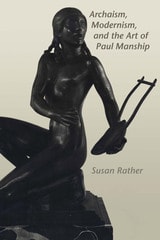
Archaism, Modernism, and the Art of Paul Manship
By Susan Rather
University of Texas Press, 1993
Archaism, an international artistic phenomenon from early in the twentieth century through the 1930s, receives its first sustained analysis in this book. The distinctive formal and technical conventions of archaic art, especially Greek art, particularly affected sculptors—some frankly modernist, others staunchly conservative, and a few who, like American Paul Manship, negotiated the distance between tradition and modernity. Susan Rather considers the theory, practice, and criticism of early twentieth-century sculpture in order to reveal the changing meaning and significance of the archaic in the modern world. To this end—and against the background of Manship’s career—she explores such topics as the archaeological resources for archaism, the classification of the non-Western art of India as archaic, the interest of sculptors in modem dance (Isadora Duncan and Ruth St. Denis), and the changing critical perception of archaism.
Rather rejects the prevailing conception of archaism as a sterile and superficial academic style to argue its initial importance as a modernist mode of expression. The early practitioners of archaism—including Aristide Maillol, André Derain, and Constantin Brancusi—renounced the rhetorical excess, overrefined naturalism, and indirect techniques of late nineteenth-century sculpture in favor of nonnarrative, stylized and directly carved works, for which archaic Greek art offered an important example. Their position found implicit support in the contemporaneous theoretical writings of Emmanuel Löwy, Wilhelm Worringer, and Adolf von Hildebrand.
The perceived relationship between archaic art and tradition ultimately compromised the modernist authority of archaism and made possible its absorption by academic and reactionary forces during the 1910s. By the 1920s, Paul Manship was identified with archaism, which had become an important element in the aesthetic of public sculpture of both democratic and totalitarian societies. Sculptors often employed archaizing stylizations as ends in themselves and with the intent of evoking the foundations of a classical art diminished in potency by its ubiquity and obsolescence. Such stylistic archaism was not an empty formal exercise but an urgent affirmation of traditional values under siege. Concurrently, archaism entered the mainstream of fashionable modernity as an ingredient in the popular and commercial style known as Art Deco. Both developments fueled the condemnation of archaism—and of Manship, its most visible exemplar—by the avant-garde. Rather’s exploration of the critical debate over archaism, finally, illuminates the uncertain relationship to modernism on the part of many critics and highlights the problematic positions of sculpture in the modernist discourse.
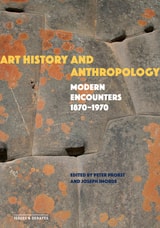
Art History and Anthropology
Modern Encounters, 1870–1970Peter Probst
J. Paul Getty Trust, The, 2023
While today we are experiencing a revival of world art and the so-called global turn of art history, encounters between art historians and anthropologists remain rare. Even after a century and a half of interactions between these epistemologies, a skeptical distance prevails with respect to the disciplinary other. This volume is a timely exploration of the roots of this complex dialogue, as it emerged worldwide in the colonial and early postcolonial periods, between 1870 and 1970.
Exploring case studies from Australia, Austria, Brazil, France, Germany, and the United States, this volume addresses connections and rejections between art historians and anthropologists—often in the contested arena of “primitive art.” It examines the roles of a range of figures, including the art historian–anthropologist Aby Warburg, the modernist artist Tarsila do Amaral, the curator-impresario Leo Frobenius, and museum directors such as Alfred Barr and René d’Harnoncourt. Entering the current debates on decolonizing the past, this collection of essays prompts reflection on future relations between these two fields.

Art and Production
Boris Arvatov
Pluto Press, 2017
Derived from the internal struggles of Soviet Constructivism, as it confronted the massive problems of cultural transformation after 'War Communism', Arvatov's writing is a major force in the split that occurred in the revolutionary horizons of Constructivism in the early 1920s. Critical of early Constructivism's social-aesthetic process of art's transformation of daily life - epitomised in studio-based painting, photography and object making - Arvatov polemicises for the devolution of artistic skills directly into the relations of production and the factory.
Whilst acknowledging the problems of a pure factory-based Productivism, Arvatov remains overwhelmingly committed to a new role and function for art outside the conventional studio and traditional gallery. Addressing issues such as artistic labour and productive labour, the artist as technician, art and multidisciplinarity and a life for art beyond 'art' - finding new relevance amidst the extensive social turn of contemporary participatory art - Art and Production offers a timely and compelling manifesto.
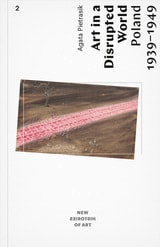
Art in a Disrupted World
Poland 1939–1949Agata Pietrasik
Museum of Modern Art in Warsaw, 2020
Employing an accessible, essayistic style, Pietrasik offers a new look at life in the ten years following the outbreak of World War II and features artists—including Marian Bogusz, Jadwiga Simon-Pietkiewicz, and Józef Szajna—whose work has not yet found substantial audiences in the English-speaking world. Her reading of the art and artists of this period strives to capture their autonomous artistic language and poses critical questions about the ability of traditional art history writing to properly accommodate artworks created in direct response to traumatic experiences.
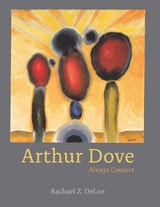
Arthur Dove
Always ConnectRachael Z. DeLue
University of Chicago Press, 2016
Rachael Z. DeLue rejects the traditional assumption that Dove can only be understood in terms of his nature paintings and association with photographer and gallerist Alfred Stieglitz and his circle. Instead, she uncovers deep and complex connections between Dove’s work and his world, including avant-garde literature, popular music, meteorology, mathematics, aviation, and World War II. Arthur Dove also offers the first sustained account of Dove’s Dadaesque multimedia projects and the first explorations of his animal imagery and the role of humor in his art. Beautifully illustrated with works from all periods of Dove’s career, this book presents a new vision of one of America’s most innovative and captivating artists—and reimagines how the story of modern art in the United States might be told.
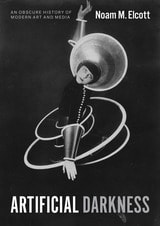
Artificial Darkness
An Obscure History of Modern Art and MediaNoam M. Elcott
University of Chicago Press, 2016
In exploring how artificial darkness shaped modern art, film, and media, Noam M. Elcott addresses seminal and obscure works alongside their sites of production—such as photography darkrooms, film studios, and laboratories—and their sites of reception, including theaters, cinemas, and exhibitions. He argues that artists, scientists, and entertainers like Étienne-Jules Marey, Richard Wagner, Georges Méliès, and Oskar Schlemmer revolutionized not only images but also everything surrounding them: the screen, the darkness, and the experience of bodies and space. At the heart of the book is “the black screen,” a technology of darkness that spawned today’s blue and green screens and has undergirded numerous advanced art and film practices to this day.
Turning familiar art and film narratives on their heads, Artificial Darkness is a revolutionary treatment of an elusive, yet fundamental, aspect of art and media history.
At the Edge of Sight
Photography and the UnseenShawn Michelle Smith
Duke University Press, 2013

Atlas, or the Anxious Gay Science
Georges Didi-Huberman
University of Chicago Press, 2018
In this illustrated exploration of Warburg and his great work, Georges Didi-Huberman leaps from Mnemosyne Atlas into a set of musings on the relation between suffering and knowledge in Western thought, and on the creative results of associative thinking. Deploying writing that delights in dramatic jump cuts reminiscent of Warburg’s idiosyncratic juxtapositions, and drawing on a set of sources that ranges from ancient Babylon to Walter Benjamin, Atlas, or the Anxious Gay Science is rich in Didi-Huberman’s trademark combination of elan and insight.
Avant-Garde Fascism
The Mobilization of Myth, Art, and Culture in France, 1909–1939Mark Antliff
Duke University Press, 2007
Antliff considers three French fascists: Georges Valois, Philippe Lamour, and Thierry Maulnier, demonstrating how they appropriated the avant-garde aesthetics of cubism, futurism, surrealism, and the so-called Retour à l’Ordre (“Return to Order”), and, in one instance, even defined the “dynamism” of fascist ideology in terms of Soviet filmmaker Sergei Eisenstein’s theory of montage. For these fascists, modern art was the mythic harbinger of a regenerative revolution that would overthrow existing governmental institutions, inaugurate an anticapitalist new order, and awaken the creative and artistic potential of the fascist “new man.”
In formulating the nexus of fascist ideology, aesthetics, and violence, Valois, Lamour, and Maulnier drew primarily on the writings of the French political theorist Georges Sorel, whose concept of revolutionary myth proved central to fascist theories of cultural and national regeneration in France. Antliff analyzes the impact of Sorel’s theory of myth on Valois, Lamour, and Maulnier. Valois created the first fascist movement in France; Lamour, a follower of Valois, established the short-lived Parti Fasciste Révolutionnaire in 1928 before founding two fascist-oriented journals; Maulnier forged a theory of fascism under the auspices of the journals Combat and Insurgé.