Results by title
25 books match the query 'Rhetorics'

Banning Queer Blood
Rhetorics of Citizenship, Contagion, and ResistanceJeffrey A. Bennett
University of Alabama Press, 2009
In Banning Queer Blood, Jeffrey Bennett frames blood donation as a performance of civic identity closely linked to the meaning of citizenship. However, with the advent of HIV came the notion of blood donation as a potentially dangerous process. Bennett argues that the Food and Drug Administration, by employing images that specifically depict gay men as contagious, has categorized gay men as a menace to the nation. The FDA's ban on blood donation by gay men served to propagate the social misconceptions about gay men that continue to circulate within both the straight and LGBT/Queer communities.
Bennett explores the role of scientific research cited by these banned-blood policies and its disquieting relationship to government agencies, including the FDA. Bennett draws parallels between the FDA's position on homosexuality and the historical precedents of discrimination by government agencies against racial minorities. The author concludes by describing the resistance posed by queer donors, who either lie in order to donate blood or protest discrimination at donation sites, and by calling for these prejudiced policies to be abolished.

Baseball and Rhetorics of Purity
The National Pastime and American Identity During the War on TerrorMichael L. Butterworth
University of Alabama Press, 2010
An investigation into the culture and mythology of baseball, a study of its limits and failures, and an invitation to remake the game in a more democratic way.
Baseball has long been considered America’s “national pastime,” touted variously as a healthy diversion, a symbol of national unity, and a model of democratic inclusion. But, according to Michael Butterworth, such favorable rhetoric belies baseball’s complicity in the rhetorical construction of a world defined by good and evil.
Baseball and Rhetorics of Purity is an investigation into the culture and mythology of baseball, a study of its limits and failures, and an invitation to remake the game in a more democratic way. It pays special attention to baseball’s role in the reconstruction of American identity after September 11, 2001. This study is framed by a discussion that links the development of baseball to the discourses of innocence and purity in 19th-century America. From there, it examines ritual performances at baseball games; a traveling museum exhibit sponsored by the National Baseball Hall of Fame and Museum; the recent debate about the use of performance-enhancing drugs; the return of Major League Baseball to Washington, D.C., in 2005; and the advent of the World Baseball Classic in 2006.
Butterworth argues that by promoting myths of citizenship and purity, post-9/11 discourse concerning baseball ironically threatens the health of the democratic system and that baseball cannot be viewed as an innocent diversion or escape. Instead, Butterworth highlights how the game on the field reflects a more complex and diverse worldview, and makes a plea for the game’s recovery, both as a national pastime and as a site for celebrating the best of who we are and who we can be.
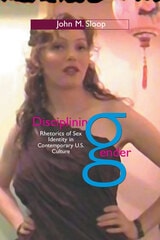
Disciplining Gender
Rhetorics of Sex Identity in Contemporary U.S. CultureJohn M. Sloop
University of Massachusetts Press, 2004
An expert on the rhetoric of the mass media, John M. Sloop has written several books on how the spoken and written word can influence political and cultural debate. In Disciplining Gender, he turns his attention to a topic that has attracted widespread public discussion—the treatment of gender ambiguity in American culture. He offers critical readings of five cases, showing the extent to which, in each instance, public discourse and media representations have served to reinforce dominant norms and constrain or “discipline” any behavior that blurs or subverts conventional gender boundaries.
The five cases include John/Joan or David Reimer, Brandon Teena, k.d. lang, Janet Reno, and Barry Winchell/Calpernia Addams. Sloop draws on queer theory and research in the field of critical rhetoric to examine representations of “gender trouble” in these much-publicized stories. In each case, he provides a comprehensive analysis of the public discussions of their significance. In short, rather than simply study the people and circumstances involved in each case, he examines the public meanings attached to them and the implications of those meanings for how contemporary culture comes to understand what “man” and “woman” mean and which sexual behaviors are appropriate and inappropriate.
In highlighting the ideological constraints imposed by our society, Sloop also suggests the ways that these constraints might be loosened and understandings of gender and sexuality diversified.
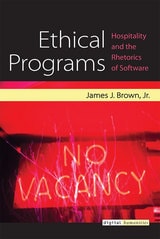
Ethical Programs
Hospitality and the Rhetorics of SoftwareJames J. Brown, Jr.
University of Michigan Press, 2015

Imagining China
Rhetorics of Nationalism in an Age of GlobalizationStephen J. Hartnett
Michigan State University Press, 2017

Inscrutable Eating
Asian Appetites and the Rhetorics of Racial ConsumptionJennifer Lin LeMesurier
The Ohio State University Press, 2023
“You are what you eat,” but what if you’re seen as a rat eater, bat lover, or MSG user? In Inscrutable Eating, Jennifer Lin LeMesurier considers how everyday assumptions about Asian food influence the perception of Asian and Asian American identity within the US racial landscape, demonstrating that beliefs about how certain people eat are inseparable from attitudes that support hierarchies around race, gender, and sexuality. Drawing on rhetorical theory, affect theory, and Asian American studies, LeMesurier analyzes messages in US popular culture about Asian eating to develop the concept of gut orientations: rhetorically dominant ways of interacting with food that scale upward to feelings of desire and disgust toward social groups. Looking at examples from fears around MSG to uproar over wet markets as the source of COVID-19, she argues that these “gut” reactions establish certain racial views as common-sense truths rather than cultural biases, reinforcing dominant norms about what belongs on whose plate, or who belongs at what table. In demystifying marginalizing discourse around food and eating, LeMesurier shows how exposing the tacit, felt ideas of consumption is necessary to contest broader forms of discrimination.
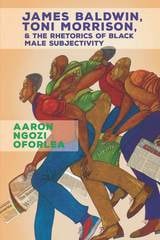
James Baldwin, Toni Morrison, and the Rhetorics of Black Male Subjectivity
Aaron Ngozi Oforlea
The Ohio State University Press, 2017
Oforlea’s book offers new analyses of the character dynamics in Baldwin’s Go Tell It on the Mountain, Tell Me How Long the Train’s Been Gone, and If Beale Street Could Talkand Morrison’s Beloved, Song of Solomon, and Tar Baby. The black male characters in these novels encounter the discursive divide, or a cultural dissonance, when they encounter dominant representations of black male identities. They use these opportunities to construct a counter-discourse about black male subjectivity. Ultimately, Oforlea argues, these characters are strategic about when and how they want to appropriate and subvert dominant ideologies. Their awareness that post-racial discourses perpetuate racial inequality serves as a gateway toward participation in collective struggles for racial justice.
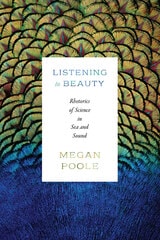
Listening to Beauty
Rhetorics of Science in Sea and SoundMegan Poole
University of Chicago Press, 2025
Our attempts to understand the world are always more than simply rational. Our bodies learn through lived experience, our natural environments challenge what we think we know, and we take lessons from our nonhuman kin. Even scientists, often considered paragons of rationality, frequently describe their findings in the language of beauty. For rhetorician Megan Poole, beauty is integral to how scientific research works.
Drawing on interviews with leading biologists, Poole explores what happens when scientists set aside objectivity and listen for beauty around them. The wonder we feel at the plumage of birds, the melodies of whales, or the caretaking of elephants may not help us (on its own) to isolate a given fact, but such encounters may teach us to open ourselves to a different way of knowing entirely. Through stories about researchers’ encounters with wonder, Listening to Beauty reveals how scientific discovery happens sometimes unsystematically, sometimes incoherently, often beautifully.
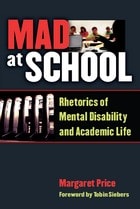
Mad at School
Rhetorics of Mental Disability and Academic LifeMargaret Price
University of Michigan Press, 2011
"A very important study that will appeal to a disability studies audience as well as scholars in social movements, social justice, critical pedagogy, literacy education, professional development for disability and learning specialists in access centers and student counseling centers, as well as the broader domains of sociology and education."
---Melanie Panitch, Ryerson University
"Ableism is alive and well in higher education. We do not know how to abandon the myth of the 'pure (ivory) tower that props up and is propped up by ableist ideology.' . . . Mad at School is thoroughly researched and pathbreaking. . . . The author's presentation of her own experience with mental illness is woven throughout the text with candor and eloquence."
---Linda Ware, State University of New York at Geneseo
Mad at School explores the contested boundaries between disability, illness, and mental illness in the setting of U.S. higher education. Much of the research and teaching within disability studies assumes a disabled body but a rational and energetic (an "agile") mind. In Mad at School, scholar and disabilities activist Margaret Price asks: How might our education practices change if we understood disability to incorporate the disabled mind?
Mental disability (more often called "mental illness") is a topic of fast-growing interest in all spheres of American culture, including popular, governmental, aesthetic, and academic. Mad at School is a close study of the ways that mental disabilities impact academic culture. Investigating spaces including classrooms, faculty meeting rooms, and job searches, Price challenges her readers to reconsider long-held values of academic life, including productivity, participation, security, and independence. Ultimately, she argues that academic discourse both produces and is produced by a tacitly privileged "able mind," and that U.S. higher education would benefit from practices that create a more accessible academic world.
Mad at School is the first book to use a disability-studies perspective to focus specifically on the ways that mental disabilities impact academic culture at institutions of higher education. Individual chapters examine the language used to denote mental disability; the role of "participation" and "presence" in student learning; the role of "collegiality" in faculty work; the controversy over "security" and free speech that has arisen in the wake of recent school shootings; and the marginalized status of independent scholars with mental disabilities.
Margaret Price is Associate Professor of English at Spelman College.
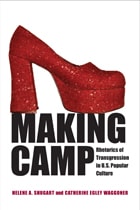
Making Camp
Rhetorics of Transgression in U.S. Popular CultureHelene A. Shugart and Catherine Egley Waggoner
University of Alabama Press, 2008
Making Camp examines the rhetoric and conventions of “camp” in contemporary popular culture and the ways it both subverts and is co-opted by mainstream ideology and discourse, especially as it pertains to issues of gender and sexuality.

Planting the Anthropocene
Rhetorics of NaturecultureJennifer Clary-Lemon
Utah State University Press, 2019
Using the results of interviews with seasonal Canadian tree planters, Jennifer Clary-Lemon interrogates the complex and messy imbrication of nature-culture through the inadequate terminology used to describe the actual circumstances of the planters’ work and lives—and offers alternative ways to conceptualize them. Although silvicultural workers do engage with the limiting rhetoric of efficiency and humanism, they also make rhetorical choices that break down the nature-culture divide and orient them on a continuum that blurs the boundaries between the given and the constructed, the human and nonhuman. Tree-planting work is approached as a site of a deep-seated materiality—a continued re-creation of the land’s “disturbance”—rather than a simplistic form of doing good that further separates humans from landscapes.
Jennifer Clary-Lemon’s view of nature and the Anthropocene through the lens of material rhetorical studies is thoroughly original and will be of great interest to students and scholars of rhetoric and composition, especially those focused on the environment.
Reaction and Revolution
Rhetorics of the Radical RightKevin Musgrave
Michigan State University Press, 2027
Reaction and Revolution situates the resurgence of far-right movements and thinkers within a longer intellectual history that emerged primarily in interwar Germany—a philosophical conversation centered on political theology. Arguing that the more radically democratic modes of political theology offer better ways to understand and to counter the far right’s rhetorical appeal, this book offers a rhetorical-intellectual critique of three key thinkers and their allied movements: Paul Gottfried and the American paleoconservatives, Guillaume Faye and the French Identitarians, and Nick Land and the Dark Enlightenment. Kevin Musgrave argues that a radical political theology of race offers meaningful ways of challenging the right’s efforts to build a global imperium of whiteness and of reclaiming the promise of human dignity.
Rhetorics of Exile
Emergent Cartographies of LiberationKate Siegfried
The Ohio State University Press, 2027
Rhetorics of Exile forwards the concept of rhetorical cartographies of liberation to offer an alternative history of the Cold War period. Exile, Kate Siegfried argues, is used as a powerful rhetorical practice that reveals alternative maps of power, resistance, and liberation. Drawing on archival research, she reveals how political insurgents from Paul Robeson to Gerry Adams leveraged experiences of exile and containment to advocate for the eradication of colonialism, imperialism, racialization, and global capitalism and to advance a vision of transnational solidarity that defied the hegemonic political and geographic binaries of the time. Examining movements and political figures across the globe, from Cuba to the American Black Belt, through southern Africa’s colonial borders, to China, Ireland, and elsewhere, Rhetorics of Exile reveals how seemingly disparate political ruptures during the second half of the twentieth century shaped an emergent world system. Siegfried not only broadens our view of Cold War–era social movements but also adapts rhetorical cartography to better account for racialized power dynamics—showing its applicability to understanding activism today.
Rhetorics of Literacy
The Cultivation of American Dialect PoetryNadia Nurhussein
The Ohio State University Press, 2013
Rhetorics of Motherhood
Lindal Buchanan
Southern Illinois University Press, 2013
Becoming a mother profoundly alters one’s perception of the world, as Lindal Buchanan learned firsthand when she gave birth. Suddenly attentive to representations of mothers and mothering in advertisements, fiction, film, art, education, and politics, she became intrigued by the persuasive force of the concept of motherhood, an interest that unleashed a host of questions: How is the construct defined? How are maternal appeals crafted, presented, and performed? What do they communicate about gender and power? How do they affect women? Her quest for answers has produced Rhetorics of Motherhood, the first book-length consideration of the topic through a feminist rhetorical lens.
Although both male and female rhetors employ motherhood to promote themselves and their agendas, Buchanan argues it is particularly slippery terrain for women—on the one hand, affording them authority and credibility but, on the other, positioning them disadvantageously within the gendered status quo. Rhetorics of Motherhood investigates that paradox by detailing the cultural construction and performance of the Mother in American public discourse, tracing its use and impact in three case studies, and by theorizing how, when, and why maternal discourses work to women’s benefit or detriment. In the process, the reader encounters a fascinating array of issues—including birth control, civil rights, and abortion—and rhetors, ranging from Diane Nash and Margaret Sanger to Sarah Palin and Michelle Obama.
As Buchanan makes clear, motherhood is a rich site for investigating the interrelationships among gender, power, and public discourse. Her latest book contributes to the discipline of rhetoric by attending to and making a convincing case for the significance of this understudied subject. With its examination of timely controversies, contemporary and historical figures, and powerful women, Rhetorics of Motherhood will appeal to a wide array of readers in rhetoric, communications, American studies, women’s studies, and beyond.
Rhetorics of Refusal
Medical Dissent and the US-Somali DiasporaKari Campeau
The Ohio State University Press, 2025
Rhetorics of Refusal focuses on a recent public health crisis—Minnesota’s 2017 measles outbreak—to recast vaccine refusals less as products of poor health literacy or disinformation and more as strategic and generative acts of noncompliance. The outbreak, which primarily affected unvaccinated Somali children, occurred at the nexus of declining vaccination rates, spiking autism concerns, antivaccination predation, and a fraying public health infrastructure. However, during a year-long ethnographic study at a Somali health center, Kari Campeau found that personal stories from parents offered a much different picture of vaccine refusal than the one painted by news media. Tracking refusals across four sites, Campeau argues for the importance of approaching refusals as rhetorical and participatory strategies that hold institutions accountable, press for change, and practice care within emergent biosocial communities. Moreover, she views refusal as necessary and potentially transformative in situations where refusers have little access to power or platform. By contextualizing refusals in longer cultural and political histories, Campeau unsettles traditional narratives of medical dissent while offering new entry points into discussions on racialized biopolitics, care, disability, and public health.
Rhetorics of Value
Exhibition Design and Communication in Museums and BeyondCorinne A. Kratz
Duke University Press, 2025
Rhetorics of Whiteness
Postracial Hauntings in Popular Culture, Social Media, and EducationEdited by Tammie M. Kennedy, Joyce Irene Middleton, Krista Ratcliffe, with a foreword by Lilia D. Monzó and Peter McLaren
Southern Illinois University Press, 2017
With the election of our first black president, many Americans began to argue that we had finally ended racism, claiming that we now live in a postracial era. Yet near-daily news reports regularly invoke white as a demographic category and recount instances of racialized violence as well as an increased sensitivity to expressions of racial unrest. Clearly, American society isn’t as color-blind as people would like to believe. In Rhetorics of Whiteness: Postracial Hauntings in Popular Culture, Social Media, and Education, contributors reveal how identifications with racialized whiteness continue to manifest themselves in American culture.
The sixteen essays that comprise this collection not only render visible how racialized whiteness infiltrates new twenty-first-century discourses and material spaces but also offer critical tactics for disrupting this normative whiteness. Specifically, contributors examine popular culture (novels, films, TV), social media (YouTube, eHarmony, Facebook), education (state law, the textbook industry, dual credit programs), pedagogy (tactics for teaching via narratives, emotional literacy, and mindfulness) as well as cultural theories (concepts of racialized space, anti-dialogicism, and color blindness). Offering new approaches to understanding racialized whiteness, this volume emphasizes the importance of a rhetorical lens for employing whiteness studies’ theories and methods to identify, analyze, interpret, and interrupt representations of whiteness.
Although whiteness studies has been waning as an active research field for the past decade, the contributors to Rhetorics of Whiteness assert that it hasn’t lost its relevancy because racialized whiteness and issues of systemic racism persist in American society and culture today. Few whiteness studies texts have been published in rhetoric and composition in the past decade, so this collection should quickly become mandatory reading. By focusing on common, yet often overlooked, contemporary examples of how racialized whiteness haunts U.S. society, Rhetorics of Whiteness serves as a valuable text for scholars in the field as well as anyone else interested in the topic.
Rhetorics of the Digital Nonhumanities
Alex Reid
Southern Illinois University Press, 2021
In Rhetorics of the Digital Nonhumanities, author Alex Reid fashions a potent vocabulary from new materialist theory, media theory, postmodern theory, and digital rhetoric to rethink the connections between humans and digital media. Addressed are the familiar concerns that scholars have with digital culture: how technologies affect attention spans, how digital media are used to compose, and how digital rhetoric is taught.
Rhetoric is now regularly defined as including human and nonhuman actors. Each actor influences the thoughts, arguments, and sentiments that journey through systems of processors, algorithms, humans, air, and metal. The author’s arguments, even though they are unnerving, orient rhetorical practices to a more open, deliberate, and attentive awareness of what we are truly capable of and how we become capable. This volume moves beyond viewing digital media as an expression of human agency. Humans, formed into new collectives of user populations, must negotiate rather than command their way through digital media ecologies.
Chapters centralize the most pressing questions: How do social media algorithms affect our judgment? How do smart phones shape our attention? These questions demand scholarly practice for attending the world around us. They explore attention and deliberation to embrace digital nonhuman composition. Once we see this brave new world, Reid argues, we are compelled to experiment.
The Border Crossed Us
Rhetorics of Borders, Citizenship, and Latina/o IdentityJosue David Cisneros
University of Alabama Press, 2013
Explores efforts to restrict and expand notions of US citizenship as they relate specifically to the US-Mexico border and Latina/o identity.
Borders and citizenship go hand in hand. Borders define a nation as a territorial entity and create the parameters for national belonging. But the relationship between borders and citizenship breeds perpetual anxiety over the purported sanctity of the border, the security of a nation, and the integrity of civic identity.
In The Border Crossed Us, Josue David Cisneros addresses these themes as they relate to the US-Mexico border, arguing that issues ranging from the Mexican-American War of 1846–1848 to contemporary debates about Latina/o immigration and border security are negotiated rhetorically through public discourse. He explores these rhetorical battles through case studies of specific Latina/o struggles for civil rights and citizenship, including debates about Mexican American citizenship in the 1849 California Constitutional Convention, 1960s Chicana/o civil rights movements, and modern-day immigrant activism.
Cisneros posits that borders—both geographic and civic—have crossed and recrossed Latina/o communities throughout history (the book’s title derives from the popular activist chant, “We didn’t cross the border; the border crossed us!”) and that Latina/os in the United States have long contributed to, struggled with, and sought to cross or challenge the borders of belonging, including race, culture, language, and gender.
The Border Crossed Us illuminates the enduring significance and evolution of US borders and citizenship, and provides programmatic and theoretical suggestions for the continued study of these critical issues.
The Rhetorics of Life-Writing in Early Modern Europe
Forms of Biography from Cassandra Fedele to Louis XIVThomas Mayer and D. R. Woolf, Editors
University of Michigan Press, 1995
The volume is especially timely in light of the growing interest in "microhistory," and in the histories that are emerging from nonliterary documents. Chapters consider numerous genres, including hagiography, epistolary and verse biography, and less familiar forms such as parodic prosopography, life-writing in funeral sermons, and comic martyrology.
Contributors to the volume come from history, art history, and literature, and they include F.W. Conrad, Sheila ffolliott, Robert Kolb, James Mehl, Diana Robin, T.C. Price Zimmerman, and Elizabeth Goldsmith and Abby Zanger, among others.
Thomas F. Mayer is Associate Professor of History, Augustana College. D. R. Woolf is Professor of History, Dalhousie University.
The Rhetorics of Thomas Hobbes and Bernard Lamy
John T. Harwood
Southern Illinois University Press, 1986
Makes accessible to modern readers the 17th-century rhetorics of Thomas Hobbes (1588–1677) and Bernard Lamy (1640–1715)
Hobbes’ A Briefe of the Art of Rhetorique, the first English translation of Aristotle’s rhetoric, reflects Hobbes’ sense of rhetoric as a central instrument of self-defense in an increasingly fractious Commonwealth. In its approach to rhetoric, which Hobbes defines as “that Faculty by which wee understand what will serve our turne, concerning any subject, to winne beliefe in the hearer,” the Briefe looks forward to Hobbes’ great political works De Cive and Leviathan.
Published anonymously in France as De l’art de parler, Lamy’s rhetoric was translated immediately into English as The Art of Speaking. Lamy’s long association with the Port Royalists made his works especially attractive to English readers because Port Royalists were engaged in a vicious quarrel with the Jesuits during the last half of the 17th century.

Toxic Tourism
Rhetorics of Pollution, Travel, and Environmental JusticePhaedra C. Pezzullo
University of Alabama Press, 2009
The first book length study of the environmental justice movement, tourism, and the links between race, class, and waste
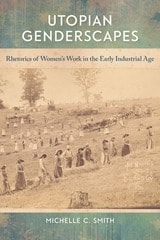
Utopian Genderscapes
Rhetorics of Women's Work in the Early Industrial AgeMichelle C. Smith
Southern Illinois University Press, 2021
A necessary rhetorical history of women’s work in utopian communities
Utopian Genderscapes focuses on three prominent yet understudied intentional communities—Brook Farm, Harmony Society, and the Oneida Community—who in response to industrialization experimented with radical social reform in the antebellum United States. Foremost among the avenues of reform was the place and substance of women’s work. Author Michelle C. Smith seeks in the communities’ rhetorics of teleology, choice, and exceptionalism the lived consequences of the communities' lofty goals for women members.
This feminist history captures the utopian reconfiguration of women’s bodies, spaces, objects, and discourses and delivers a needed intervention into how rhetorical gendering interacts with other race and class identities. The attention to each community’s material practices reveals a gendered ecology, which in many ways squared unevenly with utopian claims. Nevertheless, this volume argues that this utopian moment inaugurated many of the norms and practices of labor that continue to structure women’s lives and opportunities today: the rise of the factory, the shift of labor from home spaces to workplaces, the invention of housework, the role of birth control and childcare, the question of wages, and the feminization of particular kinds of labor.
An impressive and diverse array of archival and material research grounds each chapter’s examination of women’s professional, domestic, or reproductive labor in a particular community. Fleeting though they may seem, the practices and lives of those intentional women, Smith argues, pattern contemporary divisions of work along the vibrant and contentious lines of gender, race, and class and stage the continued search for what is possible.
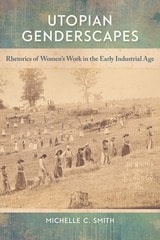
Utopian Genderscapes
Rhetorics of Women’s Work in the Early Industrial AgeMichelle C. Smith
Southern Illinois University Press, 2021
A necessary rhetorical history of women’s work in utopian communities
Utopian Genderscapes focuses on three prominent yet understudied intentional communities—Brook Farm, Harmony Society, and the Oneida Community—who in response to industrialization experimented with radical social reform in the antebellum United States. Foremost among the avenues of reform was the place and substance of women’s work. Author Michelle C. Smith seeks in the communities’ rhetorics of teleology, choice, and exceptionalism the lived consequences of the communities' lofty goals for women members.
This feminist history captures the utopian reconfiguration of women’s bodies, spaces, objects, and discourses and delivers a needed intervention into how rhetorical gendering interacts with other race and class identities. The attention to each community’s material practices reveals a gendered ecology, which in many ways squared unevenly with utopian claims. Nevertheless, this volume argues that this utopian moment inaugurated many of the norms and practices of labor that continue to structure women’s lives and opportunities today: the rise of the factory, the shift of labor from home spaces to workplaces, the invention of housework, the role of birth control and childcare, the question of wages, and the feminization of particular kinds of labor.
An impressive and diverse array of archival and material research grounds each chapter’s examination of women’s professional, domestic, or reproductive labor in a particular community. Fleeting though they may seem, the practices and lives of those intentional women, Smith argues, pattern contemporary divisions of work along the vibrant and contentious lines of gender, race, and class and stage the continued search for what is possible.