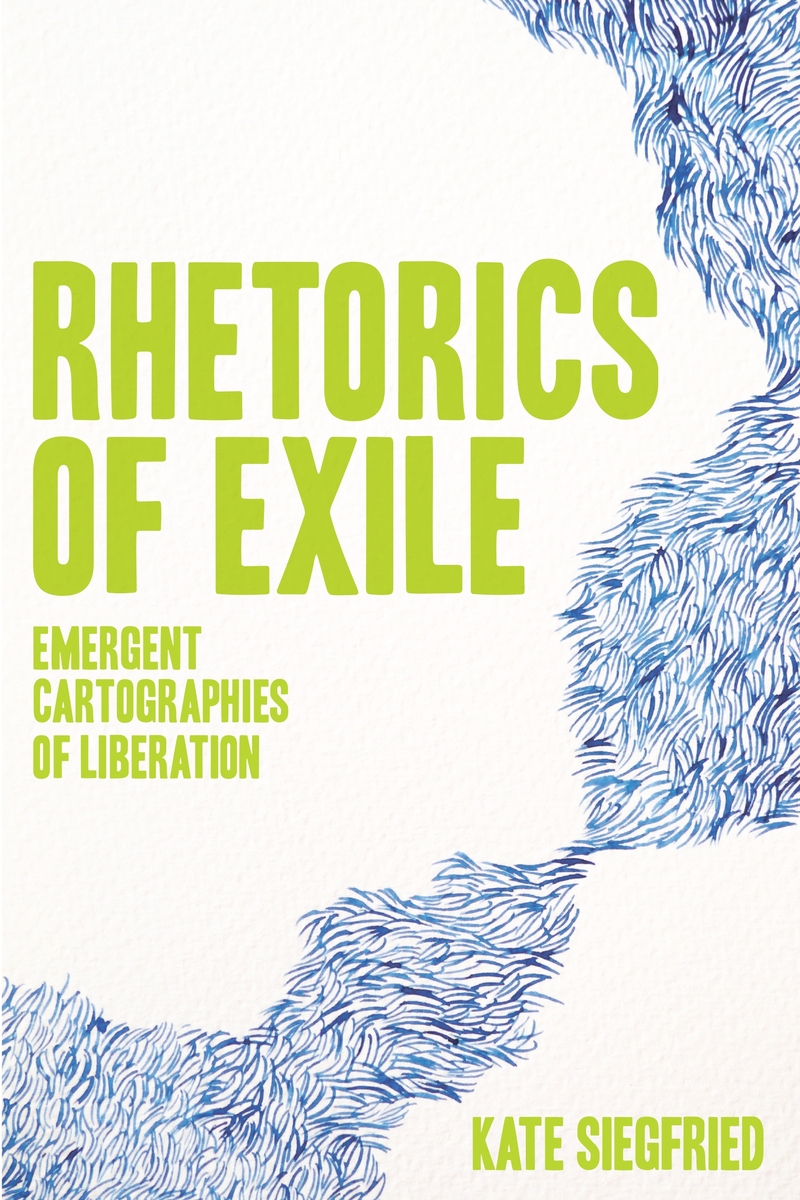
Rhetorics of Exile: Emergent Cartographies of Liberation
The Ohio State University Press, 2027
Cloth: 978-0-8142-1632-3 | Paper: 978-0-8142-6010-4 | eISBN: 978-0-8142-8555-8 (individual)
See other books on: Cold War | Colonialism & Post-Colonialism | Exile | Rhetoric | Rhetorics
See other titles from The Ohio State University Press
Cloth: 978-0-8142-1632-3 | Paper: 978-0-8142-6010-4 | eISBN: 978-0-8142-8555-8 (individual)
ABOUT THIS BOOK | AUTHOR BIOGRAPHY | REVIEWS | TOC
ABOUT THIS BOOK
Examines how Cold War–era insurgent figures leveraged experiences of exile and containment as powerful rhetorical tools to advocate for anti-colonial liberation and global solidarity.
Rhetorics of Exile forwards the concept of rhetorical cartographies of liberation to offer an alternative history of the Cold War period. Exile, Kate Siegfried argues, is used as a powerful rhetorical practice that reveals alternative maps of power, resistance, and liberation. Drawing on archival research, she reveals how political insurgents from Paul Robeson to Gerry Adams leveraged experiences of exile and containment to advocate for the eradication of colonialism, imperialism, racialization, and global capitalism and to advance a vision of transnational solidarity that defied the hegemonic political and geographic binaries of the time. Examining movements and political figures across the globe, from Cuba to the American Black Belt, through southern Africa’s colonial borders, to China, Ireland, and elsewhere, Rhetorics of Exile reveals how seemingly disparate political ruptures during the second half of the twentieth century shaped an emergent world system. Siegfried not only broadens our view of Cold War–era social movements but also adapts rhetorical cartography to better account for racialized power dynamics—showing its applicability to understanding activism today.
Rhetorics of Exile forwards the concept of rhetorical cartographies of liberation to offer an alternative history of the Cold War period. Exile, Kate Siegfried argues, is used as a powerful rhetorical practice that reveals alternative maps of power, resistance, and liberation. Drawing on archival research, she reveals how political insurgents from Paul Robeson to Gerry Adams leveraged experiences of exile and containment to advocate for the eradication of colonialism, imperialism, racialization, and global capitalism and to advance a vision of transnational solidarity that defied the hegemonic political and geographic binaries of the time. Examining movements and political figures across the globe, from Cuba to the American Black Belt, through southern Africa’s colonial borders, to China, Ireland, and elsewhere, Rhetorics of Exile reveals how seemingly disparate political ruptures during the second half of the twentieth century shaped an emergent world system. Siegfried not only broadens our view of Cold War–era social movements but also adapts rhetorical cartography to better account for racialized power dynamics—showing its applicability to understanding activism today.
See other books on: Cold War | Colonialism & Post-Colonialism | Exile | Rhetoric | Rhetorics
See other titles from The Ohio State University Press