Results by title
615 books match the query 'England' and 14 start with g
GENDER AND PETTY VIOLENCE IN LONDON, 1680-1720
JENNINE HURL-EAMON
The Ohio State University Press, 2005
Looking at a heretofore overlooked set of archival records of London in the late 17th and early 18th centuries, Hurl-Eamon reassesses the impact of gender on petty crime and its prosecution during the period. This book offers a new approach to the growing body of work on the history of violence in past societies. By focusing upon low-cost prosecutions in minor courts, Hurl-Eamon uncovers thousands of assaults on the streets of early modern London. Previous histories stressing the masculine nature of past violence are questioned here: women perpetrated one-third of all assaults. In looking at more mundane altercations rather than the homicidal attacks studied in previous histories, the book investigates violence as a physical language, with some forms that were subject to gender constraints, but many of which were available to both men and women. Quantitative analyses of various circumstances surrounding the assaults—including initial causes, weapons used, and injuries sustained—outline the patterns of violence as a language.
Hurl-Eamon also stresses the importance of focusing on the prosecutorial voice. In bringing the court’s attention to petty attacks, thousands of early modern men and women should be seen as agents rather than victims. This view is especially interesting in the context of domestic violence, where hundreds of wives and servants prosecuted patriarchs for assault, and in the Mohock Scare of 1712, where London’s populace rose up in opposition to aristocratic violence. The discussion is informed by a detailed knowledge of assault laws and the rules governing justices of the peace.
Gaming the Stage
Playable Media and the Rise of English Commercial TheaterGina Bloom
University of Michigan Press, 2018
Gaming the Stage also introduces a new archive for game studies: scenes of onstage gaming, which appear at climactic moments in dramatic literature. Bloom reveals plays to be systems of information for theater spectators: games of withholding, divulging, speculating, and wagering on knowledge. Her book breaks new ground through examinations of plays such as The Tempest, Arden of Faversham, A Woman Killed with Kindness, and A Game at Chess; the histories of familiar games such as cards, backgammon, and chess; less familiar ones, like Game of the Goose; and even a mixed-reality theater videogame.
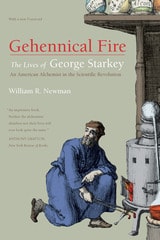
Gehennical Fire
The Lives of George Starkey, an American Alchemist in the Scientific RevolutionWilliam R. Newman
University of Chicago Press, 2002
Gender in Play on the Shakespearean Stage
Boy Heroines and Female PagesMichael Shapiro
University of Michigan Press, 1996
Shapiro's study centers on the five plays in which Shakespeare employed the figure of the "female page": The Two Gentlemen of Verona, The Merchant of Venice, As You Like It, Twelfth Night, and Cymbeline. Combining theater and social history, Shapiro locates Shakespeare's work in relation to controversies over gender roles and cross-dressing in Elizabethan England.
The popularity of the "female page" is examined as a playful literary and theatrical way of confronting, avoiding, or merely exploiting issues such as the place of women in a patriarchal culture and the representation of women on stage. Looking beyond and behind the stage for the cultural anxieties that found their way into Shakespearean drama, Shapiro considers such cases as cross-dressing women in London being punished as prostitutes and the alleged homoerotic practices of the apprentices who played female roles in adult companies. Shapiro also traces other Elizabethan dramatists' varied uses of the cross-dressing motif, especially as they were influenced by Shakespeare's innovations.
"Shapiro's engaging study is distinguished by the scope of interrelated topics it draws together and the balance of critical perspectives it brings to bear on them." --Choice
Michael Shapiro is Professor of English, University of Illinois, Urbana.

Gendering Bodies/Performing Art
Dance and Literature in Early Twentieth-Century British CultureAmy Koritz
University of Michigan Press, 1995

George Cruikshank's Life, Times, and Art
George Cruikshank's Life, Times, and Art, vol. 1Patten, Robert L
Rutgers University Press, 1991
"Patten consistently manages with great deftness to intertwine the personal and the historical, the strands of Cruikshank's life and those of his caricatures, illustrations, and moralities without a sign of jargon or pedantry. . . . This is a monumental life and works."--Ronald Paulson, The Johns Hopkins University
"At last, an authoritative, exhaustively researched biography of one of nineteenth-century England's greatest popular artists! It will rescue him from the biographical obscurity in which he has dwelt and inspire a fresh estimate of his achievement as a rough-and-tumble caricaturist and prolific book illustrator."--Richard D. Altick, Ohio State University
The etchings and wood engravings by George Cruikshank (1792-1878) recorded, commented on, and satirized his times to such an extent that they have been frequently used to represent the age. Cruikshank, a popular artist in the propaganda war against Napoleon, an ardent campaigner for Reform and Temperance, and the foremost illustrator of such classics as Grimms' Fairy Tales, Scott's novels, and Dickens's Oliver Twist, is known for his versatility, imagination, humor, and incisive images. His long life, marked by a ceaseless struggle to win recognition for his art, intersected with many of Britain's important political, social, and cultural leaders.
Robert Patten provides the first documentary biography of Cruikshank. In this first volume of a two-volume work, which covers the artist's Regency caricatures and early book illustrations, Patten demonstrates the ways that Cruikshank was, as his contemporaries frequently declared, the Hogarth of the nineteenth century. Having reviewed over 8,500 unpublished letters and most of Cruikshank's 12,000 or more printed images, Patten gives a thorough and reliable account of the artist's career. He puts Cruikshank's achievement into a variety of larger contexts--publishing history, political and cultural history, the traditions of figurations practiced by Cruikshank's contemporaries, and the literary and social productions of nineteenth-century Britain.
Published to coincide with the Fall 1992 bicentennial celebrations of the artist's birth, this biography provides both the general reader and the specialist with a wealth of new information conveyed in a lively, non-technical prose. Patten's book contributes to current investigation of the rich interactions between high art and low art, texts and pictures, politics and imagination.
George Eliot’s Serial Fiction
Carol A. Martin
The Ohio State University Press, 1994
Give Them Stones
Mary Beckett
Catholic University of America Press, 2024
Glamorous Sorcery
Magic and Literacy in the High Middle AgesDavid Rollo
University of Minnesota Press, 2000

Glanz und Abglanz
Two Centuries of German Studies in the University of LondonEdited by John L. Flood and Anne Simon
University of London Press, 2017
Governing Pleasures
Pornography and Social Change in England, 1815-1914Sigel, Lisa Z.
Rutgers University Press, 2002
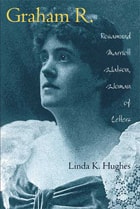
Graham R.
Rosamund Marriot Watson, Woman of LettersLinda K. Hughes
Ohio University Press, 2005
Rosamund Marriott Watson was a gifted poet, an erudite literary and art critic, and a daring beauty whose life illuminates fin-de-siècle London and the way in which literary reputations are made—and lost. A participant in aestheticism and decadence, she wrote six volumes of poems noted for their subtle cadence, diction, and uncanny effects. Linda K. Hughes unfolds a complex life in Graham R.: Rosamund Marriott Watson, Woman of Letters, tracing the poet’s development from accomplished ballads and sonnets, to avant-garde urban impressionism and New Woman poetry, to her anticipation of literary modernism.
Despite an early first divorce, she won fame writing under a pseudonym, Graham R. Tomson. The influential Andrew Lang announced the arrival of a new poet he assumed to be a man. She was soon hosting a salon attended by Lang, Oscar Wilde, and other 1890s notables. Publishing to widespread praise as Graham R., she exemplified the complex cultural politics of her era. A woman with a man’s name and a scandalous past, she was also a graceful beauty who captivated Thomas Hardy and left an impression on his work. At the height of her success she fell in love with writer H. B. Marriott Watson and dared a second divorce.
Graham R. combines the stories of a gifted poet, of London literary networks in the 1890s, and of a bold woman whose achievements and scandals turned on her unusual history of marriage and divorce. Her literary history and her uncommon experience reveal the limits and opportunities faced by an unconventional, ambitious, and talented woman at the turn of the century.
Grammars of Approach
Landscape, Narrative, and the Linguistic PicturesqueCynthia Wall
University of Chicago Press, 2019
Green Victorians
The Simple Life in John Ruskin's Lake DistrictVicky Albritton and Fredrik Albritton Jonsson
University of Chicago Press, 2016
At the center of their social experiment was the charismatic art critic and political economist John Ruskin. Albritton and Albritton Jonsson show how Ruskin’s followers turned his theory into practice in a series of ambitious local projects ranging from hand spinning and woodworking to gardening, archaeology, and pedagogy. This is a lively yet unsettling story, for there was a dark side to Ruskin’s community as well—racist thinking, paternalism, and technophobia. Richly illustrated, Green Victorians breaks new ground, connecting the ideas and practices of Ruskin’s utopian community with the problems of ethical consumption then and now.